China Briefing 20 August 2026: Oil and gas plan | Xi on climate change | Coal five-year plan
In this issue, Carbon Brief examines China’s five-year plan for coal.
Get the latest as our experts share their insights on global energy policy.
President Trump issued a proclamation on August 6 imposing tariffs on polysilicon and solar products.

Hear in-depth conversations with the world’s top energy and climate leaders from government, business, academia, and civil society.
Abundance and affordability have become buzzwords among policymakers, who often have sharply different interpretations of how to attain them. To some, an energy abundance agenda means fewer regulatory...

Find out more about our upcoming and past events.
PCCMs facilitate the generation, trading, and retirement of carbon credits from projects that remove, reduce, or avoid greenhouse gas emissions. By creating a revenue stream from verified climate...

Insights from the Center on Global Energy Policy
This Energy Explained post represents the research and views of the author(s). It does not necessarily represent the views of the Center on Global Energy Policy. The piece may be subject to further revision. Contributions to SIPA for the benefit of CGEP are general use gifts, which gives the Center discretion in how it allocates these funds. More information is available here. Rare cases of sponsored projects are clearly indicated.
The US Export-Import Bank (EXIM) is preparing to close the first funding tranche of Project Vault, a public-private partnership establishing the US Strategic Critical Minerals Reserve. While details and official guidelines for the program, catalyzed through a $10 billion EXIM loan and $2 billion in private capital, have not been released, how the first funding allotment is made could reveal priorities.
This blog examines four structural tensions within the program and finds that each tension points to the same underlying problem: Project Vault has not publicly decided on the hard choices that would define what kind of instrument it actually is.
EXIM president John Jovanovic stated that Project Vault was “designed not to be a stockpile alone.” Based on his public statements, the program carries three distinct objectives:
However, these objectives are not easily compatible. Emergency access requires volume and speed, which today would require sourcing many critical minerals from China. In essence then, the stockpile would source from China to absorb a shock from China. Market-making outside of China would require concentrating on illiquid minerals markets currently dominated by China rather than on other, broadly traded commodities. A third objective, demand aggregation, works best when standardized forms of critical minerals are needed, but OEMs can often have customized specifications.
Whichever minerals are selected in the first tranche, and from where, will reveal priorities among these three objectives. For example, purchasing niche minerals at a price premium from non-Chinese suppliers could signal market-making ambition.
The public-private structure reflects a judgment that the private sector is better positioned than government to run a minerals reserve effectively. The structure is different from the Strategic Petroleum Reserve, which is operated by the federal government.
To help source critical minerals, EXIM has partnered with three commodity trading firms: Hartree Partners, Traxys, and Mercuria. They bring market intelligence, established supplier relationships, and physical logistics infrastructure that would be difficult for the government to replicate quickly. The use of commodity trading firms to assist in sourcing minerals has also been used in Japan (Japan’s successful partnership with Lynas Rare Earths includes Sojitz, the Japanese trading house).
But this structure has significant risks. Commodity trading firms profit from price differentials and market volatility—the very conditions Project Vault aims to stabilize. Without transparent sourcing rules and published governance criteria, filling the stockpile at the lowest available cost could serve traders’ proprietary books at the expense of national security goals. This risk is sharpest for liquid, broadly traded commodities such as copper, because the deeper the market, the more arbitrage opportunities exist.
On the demand side, the commitment-fee structure, in which OEMs pay a fee to get access to the stockpiled minerals, only delivers strategic value if participation is broad. However, Boeing and GE Vernova, for example, have different mineral needs and greater financial capacity than mid-tier manufacturers deeper in the defense supply chain. Smaller firms are often more exposed to supply disruptions but less able to pay upfront fees. A reserve shaped by the largest OEMs may protect an important slice of US industry but leave strategic, mid-sized firms exposed.
It will be instructive to see whether sourcing rules, governance criteria, and triggers for releasing reserves are published. Their absence three months after launch could mean that the arbitrage risk is unmanaged. It will also become clear which OEMs are committing to purchases, large corporations only or mid-tier firms as well.
Project Vault risks running into the same issue as the United States’s broader critical minerals strategy: lack of prioritization among minerals. The White House stated that any of the 60 commodities on the US Geological Survey Critical Minerals List is eligible for the program—a scope that risks diluting the program’s effectiveness.
Copper illustrates this problem. Wood Mackenzie estimates a 60-day supply of copper would cost $4.9 billion, which is 40% of the entire Project Vault budget. Copper has a deep, globally traded market for which China does not dominate supply or pricing. Spending government capital on copper could leave insufficient resources for smaller-market minerals for which Chinese market power is most acute.
Finally, the form in which a mineral is stockpiled (raw or refined) determines shelf life and usefulness during supply disruptions. Stockpiling raw ore is strategically compromised if the processing capacity to turn it into a usable product remains in China. Unfortunately, Western processing capacity for many minerals does not yet exist at commercial scale. Refined material, however, degrades over time, and so continuous turnover is needed to maintain any such stockpile. Project Vault’s structure does not resolve this constraint; it defers it. Commitments to source processed materials can provide demand signals for potential US or allied midstream processors or refineries, but differences in OEM mineral requirements may limit the ability to aggregate demand.
If the government chooses to focus on niche minerals in refined form, it will signal genuine prioritization and an acknowledgment of the processing challenge. Broad inclusion of widely available commodities would suggest the opposite.
Trump administration officials recently announced Project Vault would source minerals globally, including from China. Sourcing from China fundamentally contradicts market-making and demand-aggregation objectives, reducing the program—for now—to a shock absorber. But the uncomfortable reality is that if the US wants to stockpile several key critical minerals this year, it will have to source them from China due to limited alternative production.
In the medium term, Project Vault can transition to sourcing from domestic and allied sources to function as a demand anchor for allied producers. For example, Project Vault could direct purchases toward projects already backed by government funding, such as gallium production in Louisiana or Australia. But this requires paying a premium and filling the reserve more slowly. The question is whether the transition to allied sourcing represents a concrete plan or an aspiration. It is a good reflection of how one policy cannot build out supply chains alone—Project Vault require concurrent government financing and industrial policy to succeed.
If the government continues to source heavily from China long term, it will indicate that Project Vault is more of a stockpile than a market-making tool. If allied sourcing commitments or transition timelines are published, that would signal a plan to develop Western supply.
Despite not playing a role in the initial creation of Project Vault, Congress will now shape its future. EXIM’s current authorization expires on December 31, 2026. Congress is debating bills on reauthorization. However, the timeline is uncertain given the midterm elections. For Project Vault to be successful, reauthorization would need to proceed swiftly with the described tensions acknowledged and addressed.
The White House has just announced over $2 billion in new critical minerals, magnets, and battery investments.

Raw material vulnerability was once again at the center of the G7 agenda at the summit in Evian, France.

Critical minerals were once again near the top of the agenda for G7 leaders as they met in Évian, France, this week, a year after the G7 launched the Critical Minerals Action Plan.

One of the central objectives of the second Trump administration has been to pursue a maximalist trade policy toward China.

In early 2026, CGEP held a roundtable and several hybrid closed-door meetings in Mexico City on Mexico's mining sector.
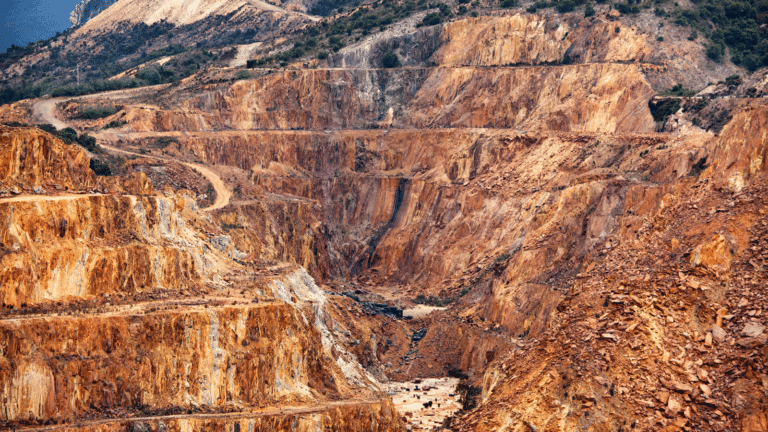
This paper proposes a de-risking framework of policy interventions to provide the risk allocation, revenue certainty and delivery confidence required by mainstream private finance.