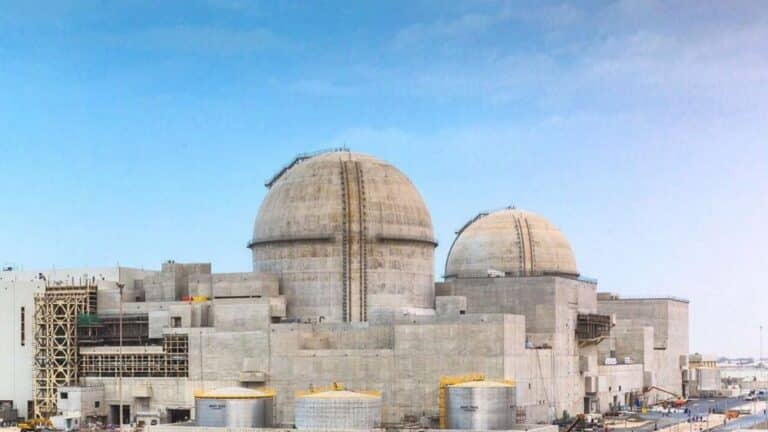
Net Power Surrendered Its Clean Dreams to Data Center Demand
The zero-emission pioneer is doing the dirty work for the AI boom.
Get the latest as our experts share their insights on global energy policy.
This Energy Explained post represents the research and views of the author(s). It does not necessarily represent the views of the Center on Global Energy Policy. The piece...

Hear in-depth conversations with the world’s top energy and climate leaders from government, business, academia, and civil society.
After years of trying, the US may be on the cusp of a nuclear renaissance. Commercial nuclear generation began in this country in 1958. Today, the US has...

Find out more about our upcoming and past events.
Dr. Claudia Castro will share insights into her professional journey and the role of financial markets in shaping energy investments.

Insights from the Center on Global Energy Policy
This Energy Explained post represents the research and views of the author(s). It does not necessarily represent the views of the Center on Global Energy Policy. The piece may be subject to further revision. Contributions to SIPA for the benefit of CGEP are general use gifts, which gives the Center discretion in how it allocates these funds. More information is available here. Rare cases of sponsored projects are clearly indicated.
CGEP is closely following the conflict in Iran. See all of our coverage here.
On February 28, 2026, the United States and Israel launched attacks on Iran, killing Iranian Supreme Leader Ali Hosseini Khamenei and a group of senior Iranian officials. Iran retaliated by attacking US allies in the region and restricting access to the Strait of Hormuz, a key regional waterway that served as a transit point for approximately 20 percent of the world’s oil and liquified natural gas. The resulting disruption to global energy flows has been the largest in history, with profound and ongoing impacts on markets and geopolitics around the world.
Qatar, Kuwait and Bahrain are expected to sustain the largest contractions in headline GDP growth this year, at 16.2 percent, 12.6 percent, and 7.3 percent, respectively (JP Morgan MENA Research, September 14, 2026).
Saudi Arabia is better positioned because of its ability to export via both the Red Sea and the Strait of Hormuz. Its headline GDP growth is projected at just -1.0 percent for the year. However, oil exports have been volatile, with Saudi flows reaching near 7.5 million barrels per day in January 2026 before a severe drop between February 28 and June followed by a recovery in July. August averages were much lower at less than 3 million barrels per day before Red Sea loadings started inching up somewhat just before the East-West pipeline attack.
The impact on Saudi Arabia’s non-oil GDP has varied by sector. The hydrocarbon sector is the main drag on growth, contracting by 24.8 percent year-on-year in the second quarter of 2026. Retail trade, hospitality, and tourism declined by only 2 percent year-on-year, while financial services and construction continued to experience positive, if weak, growth. In GCC project awards, the largest investment allocations—pledges of more than $500 million—in 2026 remain in Saudi Arabia, including the planned expansion of Ma’aden mining operations, real estate development at Diriyah, and Aramco’s planned gas expansion at Jafurah.
The Trump administration has proposed a joint infrastructure investment fund for the Gulf Arab States to help rebuild war-damaged energy infrastructure from the conflict with Iran. A $5 billion US contribution would be matched by funds from the UAE, Saudi Arabia, Qatar, Oman, Kuwait, Bahrain, Iraq, and Jordan, with a total fund goal of $10 billion. The US Development Finance Corporation would manage the US investments.
While a US focus on the detrimental impacts of the war on Gulf Arab economies is welcome in the region, there is a limit to what a US fund can achieve while the conflict remains unresolved. And energy infrastructure is a target not just in the Persian Gulf but also in the Red Sea corridor.
In light of the severity of the damage, bank reports estimate a need for as much as $100 billion or more to rebuild energy infrastructure, as well as for new and redundant pipeline and port infrastructure in the Arabian Peninsula. A Rystad analysis in April estimated $56 billion in energy infrastructure repair costs.
Given these figures, a $10 billion fund alone would be grossly inadequate. Private investment in infrastructure is also likely to show strong interest in the region, and the credit profiles of most of the GCC states (with some concern for Bahrain) remain strong.
Moreover, the June memorandum of understanding (MOU) between the US and Iran had committed to a much larger scale of investment and reconstruction (though not explicitly US government funded) of $300 billion. The Iranian request in the MOU acknowledged the need for support in its domestic economy but also highlighted the lack of multilateral vehicles or private investors willing to engage there.
The damage has been extensive, though it has varied from country to country (Table 1). Qatar faces the most severe damage to LNG infrastructure. Qatar Energy estimates as much as $20 billion per year in lost revenue over the next three to five years, and $26 billion in costs in construction for the Pearl gas to liquids facility that was damaged and rebuild two damaged LNG trains. Given the lack of an alternative to shipping LNG through the Strait of Hormuz, the costs continue to mount. While Qatar has ample sovereign assets as buffers, both in the sovereign wealth fund and in reserves, its headline GDP contracted by 7 percent in the first quarter of 2026 and as much as 16 percent this year (JP Morgan MENA Research, September 14, 2026). The Qatari government has cut its budget and planned expenditures by 30 percent for the year. Qatar hasn’t asked for a US investment fund; it wants to export LNG—and to do so via the Strait of Hormuz, rather than via new pipelines. The U.S. insistence on the coming irrelevance or reduced importance of the Strait of Hormuz is not a welcome signal for Qatar, especially coming from a competitor that has benefited from the absence of Qatari gas from the market.
In terms of oil production and refining infrastructure, drone strikes and falling debris damaged a refinery at Ras Tanura in Saudi Arabia and at Ruwais in the United Arab Emirates (UAE) in March, though in both cases recovery was relatively quick and damages were repaired. The Jizan refinery along the Red Sea coast in Saudi Arabia has been attacked repeatedly since July by Ansarallah from Yemen. A planned restart in late August is now uncertain. Bapco’s Sitra refinery in Bahrain was attacked in March by Iran and has declared force majeure with no timeline for recovery. The Mina Al Ahmadi refinery in Kuwait sustained Iranian attacks in March, with full recovery not expected until mid-2027.
Table 1. Infrastructure recovery timelines and operational status following strikes

Source: Rystad Energy, QatarEnergy, Saudi Press Agency, Reuters, Bloomberg and Wood Mackenzie.
The extent of damage to the East-West pipeline and pumping station in Saudi Arabia is still unclear, though there are signs of gradual recovery, with the pipeline now operating at 40 percent of capacity and expected to return to full capacity in six to eight weeks. It is possible, however, to estimate the lost revenue from lower export volumes. Saudi Aramco is now toggling between the Strait of Hormuz and the East-West pipeline, increasing exports through the Strait when pipeline flows may be operating at reduced capacity. A severe restriction of crude exports could affect GDP significantly, with a one-month supply disruption of 50 percent capacity causing a 0.2 percent decline in the fiscal GDP balance and a 0.6 percent decline in the current account balance on an annual basis in 2026 (JP Morgan MENA Research, September 17, 2026).
Overnight Monday into Tuesday, July 7, the laden Qatari LNG carrier Al Rekayyat was struck on its port side near Limah, Oman, as it exited the Strait of Hormuz via the southern Omani route. Coming after previous incidents since the June 17 Memorandum of Understanding (MOU), this attack was hardly unexpected. Indeed, Iran had explicitly warned ships that it would use force to compel them to use its designated northern route rather than the southern corridor. Additionally, the LNG cargo was traveling dark with its transponder off, a practice that had already become increasingly common before the MOU and has continued since. The only surprise is the target’s nationality, given Qatar’s role in brokering the ceasefire agreement.
European gas prices increased from €44 per megawatt-hour (MWh) on July 6 to €49/MWh on July 8 following the attack, though prices had already been trending upward since June 26 (€40/MWh) amid growing anxiety over the future of the ceasefire. While other laden Emirati and Qatari LNG tankers remain in the Gulf, they are now likely to hesitate before attempting to exit. In fact, Qatar’s Al Areesh abruptly halted its outbound movement today.
While most market observers have been forecasting a gradual return to full production by September or October, Qatar’s energy minister recently noted that a restart of the country’s twelve undamaged trains remains strictly conditional on safe passage through the Strait of Hormuz. Consequently, a normalization of LNG exports could take much longer.
This situation creates significant upside risk for prices. Asian LNG demand has been recovering, increasing by 3 percent year-over-year in June, a trend that could be further amplified by hotter summer weather associated with El Niño. Meanwhile, EU gas storage levels stood at only 50.67 percent on July 6, well below the 2017–2021 average of 62 percent. This raises the risk of intense competition for LNG cargoes between Asia and Europe in the coming months.
Primarily, they mean that confidence in the security of the route used to transport Qatari LNG has once again been undermined. While Iran’s first attack on Qatari energy infrastructure targeted Ras Laffan, yesterday’s attack struck an LNG tanker. This creates a whole new set of logistical challenges that will likely push back the timeline for a return to unrestricted LNG exports. It also undermines confidence among both the Qataris and their LNG buyers outside the Strait of Hormuz that normal operations can resume without further disruption. Given that a verifiable agreement not to attack commercial shipping will be difficult to secure, a sustained recovery in LNG flows before September is unlikely.
The plunge in crude oil prices to pre-crisis levels in the low $70s per barrel following the signing of the US-Iran memorandum of understanding (MOU) on June 17 assumed a rapid normalization in energy flows through the Strait of Hormuz. But that was not justified by ongoing disruptions to Gulf production and the all-too-clear risk that maritime transit would remain far below pre-war levels for many months ahead. The latest exchange of fire will keep many shippers wary of sailing through the Strait, and logistical limitations on inbound vessel transit will slow or halt a recovery in oil production. The revocation of US sanctions waivers on the sale of Iranian oil and petrochemicals, meanwhile, will once again limit the pool of potential buyers of Iranian oil to Chinese teapot refiners and force Iran to sell its oil at substantial discounts.
Physical crude oil markets have recently been amply supplied, as the MOU enabled a wave of stranded tankers to exit the Strait and Iranian barrels flooded the market after the US lifted its naval blockade. Weekly transits through the Strait of Hormuz had picked up sharply over the past few weeks through both an Iranian-controlled route and a southern Omani route that Iran now wants to block. But overall, maritime transit has remained at roughly a third of pre-war levels, according to private vessel trackers, with outbound transits exceeding inbound vessel movements and the trade dominated by Middle Eastern national oil companies and a small number of private shippers.
At the peak of the crisis, Saudi Arabia, the UAE, Kuwait, Iraq, Iran, and Qatar collectively shut in more than 12 million barrels per day (b/d). While production has been coming back in recent weeks, industry outages still exceed an estimated 8 million b/d. So-called dark transits by vessels with their transponders turned off along both the Omani and Iranian routes are likely to continue, as will Saudi and UAE utilization of pipelines bypassing Hormuz. But treacherous maritime security conditions (including Iranian mines in parts of the strait) will keep insurance and freight rates high, and logistical limits will prevent a normalization of Gulf production.
Given that short bets against oil prices had been increasing in recent weeks as oil markets had been anticipating oversupplied market conditions would return later this year and in 2027, Brent crude oil prices have quickly snapped back above $80 per barrel as traders covered short positions, but prices can rise further if the MOU completely collapses.
While the breakdown of the US-Iran ceasefire is not a surprise, we might have expected it to hold 60 days through summer, if only for President Donald Trump’s concern for domestic gas prices and avoiding what was a risk of severe market reaction to industrial fuel product shortages. Negotiations may again paper over what is essentially an unresolved conflict and an emboldened Iranian leadership. The approach of kicking the can down the road can continue to delay a return to full war, but it likely will not change Iranian strategy or ambition. And it guarantees energy price and volume volatility and delays economic recovery in the Gulf.
The US and US Central Command operations are demonstrating deterrence capabilities, and these have been progressively more severe since the first violations of the Islamabad memorandum of understanding signed June 18. And the Gulf Cooperation Council states are absorbing retaliation from Iran, especially in Kuwait and Bahrain currently, where both suffered power outages as a result of Iranian strikes.
This brings the medium-term problem of accommodation of Iran by its neighbors to the forefront. Some are more willing and more financially able to negotiate their security. The precedent is a region held hostage by Iran and vulnerable to swings in US negotiation tactics. What is different in the ceasefire fragility this time is the midweek nature of reprisals, something we know the Trump administration and markets like to avoid because of their effects on stock markets and oil prices alike, as we have seen already today with oil prices up 7% and global markets rattled.
The U.S.–Iran Memorandum of Understanding (MOU), signed separately on June 18 by U.S. President Donald Trump at Versailles and Iranian President Masoud Pezeshkian in Tehran, was always at risk of collapse because of its vague terms and the differing interpretations they inspired. But, more fundamentally, the Versailles MOU suffered from the parties’ mutual belief that the other was negotiating in bad faith and incapable of being trusted. This makes it harder to negotiate a longer, more comprehensive agreement—an experience the Biden administration also had in 2021–2022—and to weather the inevitable frictions that have arisen during the MOU’s implementation. For this reason, it has long seemed likely that the best outcome would be a fragile, weak ceasefire that would be routinely tested. This still appears to be the case. We may be seeing the start of a renewed U.S. campaign against Iran, but all of the factors that have been pushing against the United States prolonging the war—diminished munitions stocks, heightened political anxieties ahead of the U.S. midterm congressional elections, and challenging global economic conditions—are still present. If Trump feared in June that the war would create a 1929-style depression, he presumably still fears that same outcome now. As for Iran, a renewed campaign would risk further damaging civil infrastructure and an economy that was already in sufficient disrepair back in January to propel millions of people to take to the streets in protest. For these reasons, we should expect, after a short interlude, a resumption of talks and a ceasefire, but one that is constantly tested and periodically breaks down. This will likely be the new normal for the foreseeable future.
The announcement of the US-Iran memorandum of understanding (MOU) sent Brent oil prices tumbling to $81/barrel (bbl) on Tuesday, down from a wartime peak of $125/bbl. The forward curve for the Middle Eastern crude benchmark Dubai moved into contango—the future price is higher than the current price—a sign of optimism that physical markets will soon be amply supplied as the Strait of Hormuz reopens.
An initial rush to evacuate laden tankers that have been trapped in the Strait for months will release much-needed inventory into the market, but a normalization in oil flows and production will extend over weeks and months. Flows will be subject to bottlenecks in shipping logistics, sea mines, war-risk insurance, the demand pull from Asian refiners, and the details of sanctions waivers on Iranian oil.
It will take time to evacuate the inventory currently waiting to traverse the Strait as sea mines are constricting vessel traffic to narrower shipping lanes along the Omani and Iranian coastlines. The Pentagon has stated that mine-clearing operations could take up to six months. Even if that timeline is accelerated, restrictions on inbound and outbound lanes mean vessel traffic will need to be managed, likely by an ad hoc consortium involving Iran, Oman, the United States, and Gulf states. Until it has been certified that safe lanes are consistently open—and that the cease-fire will last beyond an initial 60 days—war insurance rates will remain high and some charterers will be cautious about sending vessels back in.
How quickly might oil production ramp back up in the Middle East?
Gulf producers have incentives to quickly restore shut-in oil production, which industry sources estimate could take two weeks for most fields in Saudi Arabia and the United Arab Emirates, a bit longer for Kuwait, and up to six weeks for Iraq. But even for Saudi Arabia, aligning the logistics of tankers and fields can take a month or more. Reliable availability of inbound tankers for offtake is a prerequisite for restoring production, and tanker logistics may need months to unravel.
Floating storage, tankers trapped inside the Strait of Hormuz, and very large crude carriers tied up on longer voyages between the Americas and Asia are all constraining vessel availability. It could take several monthly crude buying cycles by Asian refiners before laden tankers can discharge and be free to re-enter the spot trade to pick up barrels in the Gulf.
The Strait also needs to accommodate a return of Iranian oil exports, subject to US sanctions waivers. Given that the MOU only extends a cease-fire for a 60-day negotiating window, uncertainty will hang over producers, shippers, and insurers as to whether a final peace agreement will be reached in that span.
Will oil demand return to pre-crisis levels?
The demand side may recover more swiftly than supply. Most of the reduction in oil demand since the crisis began has been cyclical rather than structural. The deepest early cuts in consumption—mostly affecting Asian demand for naphtha, liquefied petroleum gas, marine bunker fuel, aviation fuel and diesel—were a function of availability of products disrupted by the conflict, not because of price-induced demand destruction. And the release of strategic oil reserves, the drawdown of inventories of crude and refined products, and US oil exports helped cushion the supply shock. Most policy responses to the crisis—US Strategic Petroleum Reserve releases, fuel tax holidays, subsidies—have aimed to cushion consumption below demand destruction levels, and many government-backed energy saving initiatives are temporary.
The crisis has reinforced energy security imperatives, which are likely to speed up the electrification of transport, especially in countries without domestic auto or other industries to protect from competition with Chinese supply chains. But for this crisis to leave lasting impacts, akin to the post-1970s replacement of oil in power generation and the emergence of a more efficient US auto fleet, more permanent policy changes—such as efficiency standards or fiscal incentives to lower capital costs to electrify transportation fleets or for industrial uses—will be needed.
China’s Ministry of Transportation is targeting 40% of heavy-duty truck sales to be electric by 2030 and the country is creating coal-to-chemicals incentives to reduce oil demand in petrochemicals. But if oil prices settle at more moderate levels, a three-month crisis is unlikely to accelerate structural replacement of oil demand.
Meanwhile, replenishing depleted global oil inventories will add to oil demand over roughly the next two years. The crisis revealed that some of the most vulnerable Asian consumers (India, Indonesia, Thailand, the Philippines, and Vietnam) lie outside the International Energy Agency strategic reserves system and will likely need to invest in building oil storage. And ongoing energy security vulnerabilities in the Strait make it prudent for refiners in oil importing countries to carry higher inventories compared with pre-crisis “just in time” inventories.
It would be a mistake to see this crisis as over for three reasons. First, we still lack crucial details about what the Memorandum of Understanding (MOU) contains. Moreover, in Pakistani Prime Minister Sharif’s message from June 14, he stated that “pre-implementation discussions” are still needed, suggesting that while an agreement may have been reached on the text itself, the parties may not yet share a common understanding of what that text means. Given the deep distrust the sides share for one another, miscalculations and misunderstandings could easily result in a collapse of the entire arrangement.
Second, the MOU is reportedly intended to address only the conflict’s most significant near-term global consequences, including the closure of the Strait of Hormuz and the U.S. blockade of Iran. U.S. concerns about Iran’s nuclear program, missiles and drones stockpiles, and human rights record remain to be negotiated, as do Iran’s concerns about U.S. capabilities and policy, not least U.S. military bases in the region. These issues are expected to be taken up in future talks mandated to occur within a 60-day timeframe for a comprehensive agreement. However, resolving them in such a short period is a tall order, and Trump has indicated he would be prepared to relaunch a military campaign against Iran at the end of that period if the nuclear issue in particular has not been settled.
It is reasonable to doubt Trump’s commitment to this posture given that he has repeatedly threatened strikes since the generalized ceasefire in April and found reasons to back off. However, Trump is not the only decision maker who could initiate the resumption of hostilities. Israeli Prime Minister Benjamin Netanyahu may be forced to accept the MOU, although even this is debatable, given that Israeli officials have already stated that they will not be bound by its terms regarding Lebanon. Israeli and Hezbollah attacks could serve as a spoiler even before the signing ceremony planned for Friday in Geneva, and especially during the 60-day negotiating period. Moreover, if Israel does not agree with the terms of any agreement reached during that period, it could decide to deal with Iran’s residual nuclear or missile programs on its own.
Third, it is not clear that an agreement can even be reached, whether in 60 days or thereafter, meaning that Iran’s nuclear and missile programs could continue to be a source of insecurity. The issues involved are complicated. To cite just one example, designing a nuclear verification scheme for an Iran whose nuclear facilities have all been badly damaged will be contentious, time-consuming, and at risk of failure. Moreover, Iranian leaders appear convinced that they have won the war and that the United States will not restart it. Whether or not this is accurate, Iran’s newfound confidence in its ability to coerce its neighbors and even the world by flexing its muscles over the Strait of Hormuz could impede talks. Iran has learned valuable lessons about how far it can push the United States and the limits of U.S. retaliation.
Far from ushering in sustainable peace, this MOU may merely serve as an interlude for the next war.
Until we see the terms, it is impossible to say how the two frameworks differ. But two things jump out from the comments and leaks thus far in U.S., Iranian, and international media. First, unlike the Joint Comprehensive Plan of Action (JCPOA), this Memorandum of Understanding (MOU) is far from comprehensive. It does not address the Iranian nuclear issue beyond vague references to future talks and will not provide Iran with systemic sanctions relief, though limited economic concessions could be made to ensure the Strait of Hormuz remains open. In fact, Vice President Vance has implied that this is not even the only MOU that may be required along the path toward an actual diplomatic resolution. In other words, both sides still have much to negotiate.
Second, the international community is largely excluded from the talks. This has simplified the negotiations to some extent, but it also reduces the rest of the world’s stake in their success once the disruption of the Strait of Hormuz has ended. While Pakistani mediation between the United States and Iran may have been sufficient to secure an MOU, a comprehensive agreement may be difficult to reach without assurances of cooperation from China, Europe, and Russia on lifting UN sanctions, a likely key Iranian demand. Similar dynamics apply to sanctions relief from Europe, cooperation on limiting Iran’s access to sensitive military technology from Russia and China, and certainly any security guarantees from Israel or the Gulf Arab states to Iran (and vice versa).
The MOU may result in a de-escalation of current tensions, but negotiations still have a long way to go before they can match what the JCPOA accomplished.
Despite the closure of the Strait of Hormuz on February 28, European and Asia spot gas prices have stayed far below 2022 peaks—Dutch TTF prices remained around €50/megawatt-hour (MWh), while Japan/Korea Marker (JKM) prices ranged between $17 and $20/million British thermal units (mmBtu) (against €30/MWh and $11/mmBtu, respectively, before the crisis). Several factors explain this relatively moderate price response. First, LNG cargoes that departed before the blockade were delivered during the month of March. Second, incremental LNG supplies from new liquefaction facilities commissioned in 2025—Plaquemines LNG, Canada LNG, Corpus Christi, and Tortue FLNG—have offset between 40% and 50% of the lost Gulf volumes. Third, several LNG suppliers stepped up LNG exports slightly, while Nigeria and Malaysia delivered significant export surges. Finally, global LNG imports dropped, though unevenly. Imports fell sharply in China and Pakistan, while Japan, Korea, and India registered modest declines. European Union LNG imports also dropped year-on-year in April and May, resulting in historically low storage levels.
The announcement of the memorandum of understanding (MOU) triggered a sharp sell-off in European TTF gas prices on Monday, June 15, with front month contracts dropping from €47/MWh on Friday to €42/MWh, while Asian JKM spot prices registered only a small decline. As gas supply-and-demand fundamentals have hardly changed overnight, the market is clearly trading on peace expectations rather than actual shipping movements. In practice, maritime logistics remain highly restricted. Only a single Qatari LNG cargo heading to India has officially crossed the Strait since the deal was announced. While several LNG cargoes are present on both sides of the Strait, many have their transponders switched off, making it difficult to monitor LNG flows in real time.
The terms of the MOU, which is expected to be signed on Friday, lack clarity on many operational issues. First, the need to clear mines will likely delay the resumption of normal LNG flows. Second, the agreement needs to provide sufficient confidence for Qatar and the United Arab Emirates to restart LNG exports at full capacity. The return to normal LNG flows could be fast for the small LNG facility in the UAE, but Qatar’s 12 undamaged LNG trains could take up to three or four months to progressively restart and operate at full capacity, even though three trains are already operational. Finally, the terms of the MOU lack clarity on whether crossings of the Strait will be free in the future: while Iran agreed not to levy explicit tolls during the 60-day ceasefire window, it explicitly stated that it will enforce its own regulatory protocols and collect “service fees” for passage.
This war has already tarnished the way LNG buyers look at Gulf LNG exporters. Once considered reliable LNG exporters, the UAE and Qatar may find it more difficult to sign long-term contracts. This is particularly important for Qatar, which is increasing its LNG export capacity with the North Field Expansion, a large part of which remains uncontracted. LNG buyers are now looking for alternative LNG supplies in countries such as the United States, Canada, Argentina, and Papua New Guinea, raising the risk of creating a massive oversupply once the situation normalizes.
The US-Israeli war on Iran has demonstrated that some of the oil demand the market saw leading up to the closing of the Strait of Hormuz (and the disruption of as much as 20 million barrels a day [mbd] of crude and refined product) was demand that filled inventories and storage, substantially in China. Chinese oil imports declined from February 28 through May by nearly 40 percent. That decline in global oil demand helped offset the shortfall in flows from the Gulf, but also demonstrated that oil demand for storage and oil demand for industrial and transport use in China was not as robust as expected. In addition, the ability to divert crude volumes through pipelines in Saudi Arabia (as much as 7 mbd) and the United Arab Emirates (as much as 1.8 mbd) softened the blow to markets and price sensitivity. Going forward, the war with Iran may incentivize countries to reduce oil demand, including across their transportation sectors, with an advantage to China and its supply chain of renewable products and electric vehicles.
With a memorandum of understanding in place, any increased export crude volumes from the Strait should continue downward price pressure, and there are plenty of vessels laden and ready to exit. There are also signals that increased production in some, but not all, places in the Gulf could come on line within weeks. Refilling global inventories over time will increase global demand, but that will not be consistent or coordinated across countries or regions. The likelihood, though, of a return to the same oil traffic flows of pre-February 28 in the Strait is minimal, but with pipelines, the region can get to similar overall exports relatively quickly, especially if Iran has the right to export without sanctions or impediments in a 60-day window. But this depends entirely on a ceasefire that is unlikely to hold in Lebanon and real insecurities on Iran’s potential retaliations in the region.
This war will create a structural change to regional oil exports. Iran has increased the threat premium, making pipelines a necessity. For international oil companies and regional state-owned energy companies, energy security concerns will likely prompt capital investment in production across other regions, including the Americas and Africa, as a balance of energy security for importers and a geographic diversification of exposure for exporters. It could weaken OPEC cohesion too, as Gulf exporters will seek to offer discounts against each other. For domestic economic policy in the Gulf, we are entering a period of inward-looking, defensive postures; hardening of energy infrastructure; and duplication of export diversion routes where possible. Fiscal policy will likely prioritize defense spending, including protection insurance payments and transfers, such as of Iranian frozen assets.
In the short-term, the UAE’s withdrawal from OPEC is more important as a political signal than as a change in oil market fundamentals. The UAE is in no position to raise oil output because the closure of the Strait of Hormuz is limiting UAE oil production to around 1.6 million barrels per day (mb/d), less than half its full OPEC quota of 3.4 mb/d and well below its sustainable production capacity of 4.7-4.8 mb/d. When the Strait eventually reopens, OPEC quotas are unlikely to be a constraint on UAE output, because even Saudi Arabia is likely to suspend OPEC discipline to support replenishing depleted global inventories as quickly as possible.
But politically, the UAE is capitalizing on the current moment to free itself from constraints it has complained about for years. It is alone among major OPEC producers for having invested to increase production capacity and has chafed at bearing what it sees as a disproportionate share of successive OPEC cuts since the pandemic. Although the UAE threatened to exit OPEC in 2021 and 2024, it remained in the group despite frustration at being pressed into “compensation cuts” for past overproduction, in addition to earlier voluntary reductions, creating a double constraint. (The UAE’s voluntary cuts are some 100,000 b/d below its formal OPEC quota, and compensation cuts require the UAE to withhold an additional 300,000 b/d from April–June 2026).
OPEC withdrawal frees Abu Dhabi of both the compensation cuts and broader OPEC limits when the Strait reopens, and the UAE has not ruled out future cooperation with OPEC in the event of a severe market collapse. If both the UAE and Saudi Arabia were to maximize production after the war, global spare capacity would be limited, which could amplify price strength in tight markets but also exacerbate price weakness in oversupplied conditions.
In the immediate term, the UAE’s withdrawal will have no impact on oil markets but potentially carries massive political significance, particularly given that it appears to have occurred without prior consultation with Saudi Arabia. Prominent former UAE officials have said that Abu Dhabi feels that countries like the United States, Israel, France, and South Korea have proven to be more reliable wartime partners than its neighbors, and is contemplating withdrawal from the Gulf Cooperation Council and the Arab League. Pulling out of OPEC may allow the UAE to signal its discontent without incurring the political costs of withdrawing from those regional bodies.
The UAE had been hinting at a major announcement, and senior officials have been voicing frustration with regional organizations for some time now. We might see more independence and movement from the UAE across a number of issues beyond oil production. This is a moment of staking themselves as leaders and independent actors—there is a chance the UAE could also decide to exit the Gulf Cooperation Council (GCC).
The Emirati’s OPEC announcement seems to be part of a broader energy strategy to be able to move volumes and products (oil, gas, renewables) when and how they see fit and to prepare themselves for a new era of global energy security conflict and partnerships. New announcements that UAE state-owned oil company ADNOC/XRG is planning to invest in a US gas business can also be read in this light.
This exit from OPEC fits into the UAE’s need for flexibility with key energy consumers as well, including a future relationship with China and a more competitive relationship with Saudi Arabia. In the near term, the Strait of Hormuz being blocked and controlled by Iran has not changed export capacity for the UAE at all—the Fujairah pipeline is at capacity. But it signals that regional cooperation and coordination is weak, as is the GCC as a unit. Above all, this war has demonstrated a failure of mutual defense.
One of the ways the oil shock caused by the latest Persian Gulf crisis differs from earlier ones is that for the first time, cleaner substitutes exist not just for power and transport, but for the traded commodities underpinning the global economy — ammonia fertilizers, methanol, and plastics feedstocks (olefins).
Industrial decarbonization has been harder to pursue than power and transport sector decarbonization because it’s more trade-exposed and less amenable to unilateral policy – in other words, countries that are among the first to shift to producing more costly but cleaner commodities are likely to lose market share. That’s unlikely to change in a more politically fragmented world. But supply security may prove a stronger motivation than climate policy, and the Iran crisis makes it an even more compelling concern. Ammonia fertilizer is particularly exposed to geopolitical risk as 35 percent of global supply comes from the Gulf. In the case of methanol, while the Gulf produces only 12 percent of global output, it accounts for 39 percent of global trade, making the Strait of Hormuz a critical chokepoint.
The most plausible near-term substitutes for ammonia fertilizer, methanol, and olefins are geographically dispersed gas-based facilities — potentially drawing on the vast volumes of wasted associated gas currently flared at oil fields globally. Renewable-powered production with alternative carbon sources, already emerging in western China, is also becoming increasingly viable over time.
More broadly, sustained high and volatile oil, gas, and liquefied natural gas prices may create additional incentives to diversify supply across both conventional and clean-energy pathways. China, for example, will likely swing toward increased coal use initially, but as the world’s largest oil importer, it has powerful reasons to accelerate supply diversification. Given China’s manufacturing scale, it is well positioned to become the dominant exporter of modular ammonia and Haber Bosch catalyzers; methane-to-methanol and methanol-to-olefins reformers; coal and biomass gasifiers; solar photovoltaics; electrolyzers and other equipment needed to diversify global supplies. China can thus create demand and supply-side pressure to reduce dependence on the Gulf while also presenting potential opportunities for a clean industrial transition.
The war in Iran has significantly enhanced Latin America’s geopolitical advantage as a reliable source of hydrocarbon resources, given it is unencumbered by the type of chokepoint risks of producers in the Middle East. Natural gas export projects in Argentina, Mexico, and, potentially, Venezuela could stand to benefit. And the region, already expected to be the most dynamic source of non-OPEC oil supply, could attract more foreign direct investment, given the now higher premium on supply diversification away from the Middle East.
However, higher prices on oil and gas and related products, of which the region is a net importer, carry political risks and could encourage a swifter transition to clean energy options, such as renewables, EVs, and batteries.
In this Q&A, Dr. Luisa Palacios and Diego Rivera Rivota examine the risks and opportunities of the Iran war for the region. They find that energy security considerations because of the war both enhance Latin America’s role as a strategic source of oil and gas supply diversification globally and incentivize acceleration of the clean energy transition domestically to enhance resilience.
The escalation of the Iran conflict to the Middle East’s natural gas infrastructure, impacting Qatar’s Ras Laffan LNG facility, could enhance Latin America’s LNG export potential. The region accounts for just 3% of global LNG exports, with Peru and Trinidad and Tobago (T&T) exporting 4 million and 9 million tons, respectively, in 2024. Latin America could double its LNG export capacity by 2030, given the expected expansion of this capacity particularly in Argentina but also in Mexico.
In Argentina, natural gas production reached a record high in 2025 due to abundant reserves in the Vaca Muerta formation. This has put LNG exports within reach, and two floating LNG (FLNG) export projects have been lined up: Southern Energy, with a 6 million ton per annum (MTPA) export capacity expected to come on stream in the second half of 2027, and Argentina LNG, a 12 MTPA FLNG project expected to receive a final investment decision in mid-2026. The current crisis provides strong incentives for these projects, especially given their geographical location that avoids chokepoints like the Panama Canal.
While Mexico is traditionally a natural gas and LNG importer, it began reexporting limited volumes of US natural gas (imported via pipelines) through the Altamira FLNG1 terminal on Mexico’s Atlantic Coast in 2024. A new Sempra ECA LNG reexport terminal, expected to come on stream in the summer of 2026, will dramatically increase export volumes. The 3.2 MTPA terminal is located on Mexico’s Pacific Coast, geared toward the high-LNG-demand Asian market. Other similar projects are under consideration.
Venezuela, which holds the largest natural gas reserves in Latin America and the Caribbean and wastes gas equivalent to Colombia’s annual consumption, has various potential export projects to supply neighbors Colombia and T&T. The seemingly most realistic option is the 10-mile pipeline connecting the Shell-operated Dragon Field on the Venezuelan side to the company’s nearby Hibiscus offshore platform in T&T, for export via Trinidad’s Atlantic LNG export complex, currently operating at less than 60% capacity.
Latin America, which represents about 10% of global oil production, was already poised to be the main source of non-OPEC crude supply growth in 2026, with a potential 700,000–800,000 barrels per day (b/d) of output coming on stream before the Iran war—mainly from Brazil, Guyana, and Argentina. The impact of the war will likely enhance Latin America’s potential as a medium-term source of oil supply diversification from these three producers. In particular, Brazil’s government expects oil production to reach almost 5 million b/d by 2030, a 30% increase from current levels, and Guyana is expected to double its current output to 1.7 million b/d by the same year. Depending on the investment outlook, Argentina could see upside beyond the 1 million b/d expected at the end of 2026.
The biggest wildcard remains Venezuela, which holds 17% of the world’s oil reserves. While Venezuela’s oil production could return to pre-sanctions levels of 1.5 million b/d within the next 12–24 months (from around 1 million currently), it is not clear how much of that can be advanced this year. A recovery of its oil industry to its historical peak of around 3.5 million b/d will remain elusive without significant private investments and improvements to the country’s rule of law.
As net importers of LNG, natural gas byproducts, and petroleum products, Latin American governments face serious challenges from fuel price hikes caused by Middle East supply disruptions. These higher fuel prices might accelerate the clean energy transition as an energy security strategy to ease dependence on imported fuels.
The disruption in global LNG supply leaves the nine LNG importers in Latin America—including Brazil, Chile, and Colombia—exposed to high and volatile prices. The region’s considerable renewable power mix and active natural gas interregional trade might help contain pressure on electricity prices, but the resolve to continue diversifying into non-hydro renewable energy is likely to gain momentum, particularly given progress in battery storage penetration.
Due to insufficient refining capacity and low refining utilization rates, Latin America’s weakest link remains its petroleum product imports. Political risks associated with fuel price hikes have begun to emerge, with governments responding in different ways. While Chile is allowing pass-through of costs to consumers, Mexico is moving to subsidize gasoline and diesel. Brazil is cutting diesel taxes, providing subsidies to shield agricultural exporters, and revising freight rates to fend off a trucker strike. Higher fuel prices might accelerate EV adoption, which already increased by around 40% last year, albeit from a low base.
Some countries in the region, particularly in the Caribbean, are not only dependent on fuel imports for transportation but also for power generation. Nowhere is this clearer than in Cuba with the collapse of its electricity system—which had already been hampered by US policy and Venezuela’s halt of oil shipments.
With the Middle East a large supplier of fertilizer and petrochemicals in addition to refining products and liquefied petroleum gas (LPG), the closure of the Strait of Hormuz is affecting availability of these other key products. Argentina, already a regional supplier of LPG, is helping to ease supply disruptions of the fuel in Asia, exporting 50 million tons to India year-to-date, double its annual 2025 exports. But Latin America still imports a significant share of its fertilizer and diesel needs from outside the region, which makes any related supply issue a major problem, especially for agricultural powerhouses Brazil and Argentina.
The Iran conflict could increase the appeal of Russia as an energy supplier for China, as the effective closure of the Strait of Hormuz—through which China imported about half of its oil and a third of its LNG last year—compels Beijing to seek alternative supply routes. Although some Iranian oil likely continues to reach China due to Iran’s control of the Strait, and Saudi Arabia and the United Arab Emirates are likely sending limited barrels via export terminals that avoid the Strait, China still faces a sizeable crude oil and liquefied natural gas (LNG) shortfall. Exacerbating matters for China, QatarEnergy’s CEO stated that damage to its Ras Laffan LNG facility from Iranian attacks would force the company to declare force majeure on some LNG supply contracts with Chinese buyers. In response, China’s national oil companies, which suspended purchases of Russian seaborne crude after the United States sanctioned Russia’s Rosneft and Lukoil in October, are now seeking Russian cargoes again, perhaps signaling future trends.
Meanwhile, Russia continues to be a stable and reliable supplier of oil and natural gas to China via both land and sea routes. The Power of Siberia 1 natural gas pipeline is operating slightly above capacity, and increasing volumes of Russian LNG are being delivered to China, reaching 9.8 million tons in 2025—an 18 percent annual increase—according to China’s General Administration of Customs. Russia has also shown it is ready to benefit from the conflict—through additional fuel oil shipments, higher realized prices, and a renewed strategic opportunity to present itself to Asian buyers amid the Gulf shock and growing regional demand as a politically safe and logistically reliable supplier. The crisis also creates an opportunity for Moscow to frame its exports as part of the solution to global market volatility, a narrative potentially reinforced by Washington’s consideration of easing enforcement of oil-related sanctions. Even limited regulatory flexibility can improve Russia’s pricing power and reduce transaction frictions.
Most importantly, Russia is poised to reap substantial, long-term rewards if the conflict prompts China to turn to its northern neighbor for more oil and natural gas. Three key signposts will indicate whether this shift is occurring:
Progress on Power of Siberia 2: The long-discussed natural gas pipeline, which Moscow has been lobbying Beijing to approve since Russia’s invasion of Ukraine, would likely be Russia’s biggest strategic prize, offering it a new market for about a third of the pipeline gas previously sent to Europe. As the authors argued in September 2025, Power of Siberia 2 has mattered to China primarily as a form of strategic insurance rather than an urgent supply necessity. The Gulf shock increases the value of that insurance as a hedge against prolonged disruption in the Middle East. But China still retains substantial leverage over price, timing, and terms. Its recently released 15th Five-Year Plan for 2026-2030 includes “early work” on the pipeline, suggesting the project remains under active consideration. For now, Russia will likely try to accelerate construction of the Far Eastern route, which is a more immediate and lower-friction way to expand pipeline deliveries, as it builds on an already functioning corridor. Supplies are scheduled to begin in 2027 at around 2 billion cubic meters (bcm) per year before ramping up to 12 bcm annually.
Greater use of the Northern Sea Route (NSR): Chinese and Russian political and business leaders discussed this option at the China-Russia Logistics Business Forum on Monday, March 16. Increasing shipments of Russian energy, notably LNG, from the Arctic LNG 2 and Yamal LNG projects, to China through the NSR during the navigable season (roughly July–November, though escorted navigation can extend this into December or January depending on ice and vessel conditions) aligns with China’s efforts over the past two decades to diversify its energy import channels away from key transit chokepoints. But only five of the 22 LNG cargoes delivered from Russia to China last year went via the NSR, indicating that this corridor remains more of a strategic option than a high-volume route. This could change if Middle Eastern supply disruptions persist.
Increased helium exports to China: This is a less visible but potentially important indicator of energy ties given the importance of helium to semiconductor manufacturing. The disruption to Qatar’s gas processing has exposed the fragility of the global helium market, with Qatar accounting for close to a third of world supply. China relies on imports for 85 percent of its helium, of which Qatar alone supplied 54 percent last year. China’s helium imports rose by 22 percent in 2025 to 1.04 billion cubic feet, with record imports in December and Russia as the main source of incremental growth. Russian helium exports to China averaged 38 million cubic feet (mmcf) per month in 2025, up 60 percent year-on-year, and December volumes reached 71 mmcf, suggesting a substantial ramp-up from Amur. If Qatari disruptions persist, Russia is well placed to further expand its role in China’s helium supply mix.
Whether and to what extent the conflict in the Middle East deepens China-Russia energy ties will largely depend on China’s tolerance for increased dependence on Russia, which is already its largest supplier of oil and natural gas. Last year, Russia accounted for 17 percent of China’s crude oil imports and 30 percent of its natural gas imports (pipeline and LNG combined). Beijing will have to weigh the advantages of Russia’s ability to supply large volumes of energy without transiting key oil chokepoints against the risks of departing from its longstanding strategy of avoiding overreliance on any single supplier.
The escalation of the 2026 U.S.-Iran crisis has fundamentally shifted the risk profile for global energy and digital infrastructure. For the U.S. gas industry, the conflict acts as a powerful catalyst for two divergent trends: a rush to establish new LNG export projects and a strategic reshoring of data center infrastructure. In both bases, this will mean higher U.S. gas demand.
U.S. LNG exports will be extremely profitable as long as Qatar LNG is off the market. Even before that loss, the Russian invasion of Ukraine had taken 15 billion cubic feet per day (Bcf/d) of Russian pipeline exports off the market, which had supported strong U.S. export prices. The disruptions from these two major gas exporters will likely embolden U.S. LNG project developers to build out additional LNG capacity that could be pitched as a secure and flexible alternative supply to buyers. But now, importing countries may be reconsidering increasing dependence on LNG. Supplies that might have once been considered secure may appear far less so, and the flexibility offered by LNG means that in a tight market, the fuel needed in one market can wind up in another one offering higher profits.
Security and flexibility are also two selling points for increasing U.S. data center construction. The current conflict undermines Mideast sitings for data production and management, despite low regional electricity prices. Countries may consider data siting within their own borders for security reasons. Drone attacks were well behind cyber attacks and physical perimeter security in assessing appropriate siting for data centers. Not anymore. AWS (Amazon Web Services) reports confirmed that two facilities, one in the UAE and one in Bahrain, were hit by Iranian drone and missile strikes in early March. Millions of people across Dubai and Abu Dhabi were reportedly unable to pay for taxis, order food, or access mobile banking as outages rippled through payments apps, ride-hailing platforms, and major banks.
A widespread delay in gas turbine manufacturing globally makes the immediate impact of data centers on gas demand less of an issue. Estimates of how much additional U.S. gas demand will come from data center use range widely, from 3 to 10 Bcf/d by the early 2030s, according to different predictions. This type of demand is particularly attractive to gas producers, as it is believed to have low price sensitivity, even though its initial appeal to producers was as a way to sell gas that might otherwise not have been marketable.
The United States is currently in the midst of an expansion of liquefied natural gas (LNG) export capacity that will require a surge in U.S. gas production to feed it. Disruptions to global oil trade in the Middle East are driving up oil prices, creating incentives for companies to increase production. In certain parts of the United States, higher oil output means more natural gas production. As U.S. shale oil production has matured, the gas-to-oil ratio of production from shale fields has also increased significantly, meaning new oil wells drilled in areas such as the Permian Basin in Texas are producing more incremental gas than previous oil fields. Indeed, more gas than oil is produced every time a new well is drilled there.
The additional U.S. gas associated with increased oil production should keep U.S. gas prices low relative to other regions. With U.S. benchmark gas prices hovering around $3 per MMBtu compared to over $20 per MMBtu in Europe and Asia, sellers of U.S. LNG are currently making at least $40 million per cargo compared to less than $5 million per cargo prior to the Russian invasion of Ukraine. With U.S. LNG production now approaching 18 billion cubic feet per day (Bcf/d), sellers of U.S. LNG are generating revenues of $190-220 million per day.
In short, if LNG companies in the United States could export more LNG right now, they would. New production trains at Golden Pass, Calcasieu Pass, and Corpus Christi are all scheduled to ramp up this year, adding 3.5 Bcf/d of new LNG production by the end of 2026. This assumption is based on a 6-month ramp-up estimate for each train. Due to fuel consumption and process loss, about 4.0 Bcf/d of gas will be needed to feed these projects, an increase of roughly 15 percent from the current 21 Bcf/d. Most of this incremental gas production is expected to come from a combination of fields in the Permian and Haynesville gas basins, where companies are increasing pipeline takeaway capacity to reach markets. It should be noted that adding 3.5 Bcf/d of LNG production would eventually replace only a portion of the 10 Bcf/d of Qatari production currently disrupted by the crisis.
Will there be enough pipeline capacity ready to move U.S. gas to new LNG export plants to help ease global markets?
Despite rising gas production in the region, the Permian basin is struggling to provide enough pipeline capacity to take incremental gas to U.S. Gulf Coast LNG export facilities. Since early September, prices at the Waha Hub in West Texas have been mostly negative, dropping as low as -$7.79/MMBtu in mid-March, due to the increasing gas-to-oil production ratios in Permian fields. These volumes have emerged ahead of several planned pipeline expansions that would deliver additional gas supplies to market. The pipeline expansions include the 0.6 Bcf/d Gulf Coast Express addition, scheduled for mid-2026, and the 2.5 Bcf/d Blackcomb expansion, scheduled to start by the end of the year. Note that the Gulf Coast Express expansion will increase capacity immediately upon completion, as it only requires adding compression capacity. Blackcomb will take longer, as it requires a new pipeline and needs to ramp up throughput incrementally.
Note that Mexico’s 3.25 million ton per year (MTPA) Costa Azul project is also scheduled to start in Q3 2026 and will be fed by an additional 0.5 Bcf/d of gas production from West Texas once it is operating at capacity. Pipeline constraints are not an issue at this time for U.S. gas flowing west and south into Mexico.
So, while gas prices are surging into double digits in Europe and Asia, prices in West Texas will remain negative until the new pipeline capacity is brought online. The negative prices in the Permian Basin could drop even further if high crude oil prices prompt more drilling to capitalize on rising oil prices abroad. The growing output of oil and associated gas that lacks pipeline capacity to reach markets could also lead to more flaring and venting of gas in the Permian, driven by economic incentives. In a global market desperate for LNG to make up for supply losses in the Middle East, U.S. producers could face no choice but to release unmarketable natural gas into the air.
If gas from the Permian Basin cannot immediately meet the demand from new LNG projects, Haynesville gas production will likely step in to fill the hole. Connectivity between Haynesville and the various LNG export points is not a constraint on the system. However, Haynesville gas is largely dry gas (not associated with oil production) and located in deeper underground pockets, so the incremental cost of producing that gas is higher than the cost of using associated gas from the Permian Basin. This could lead to higher gas prices. Appalachian gas is shallower than both Permian and Haynesville gas but constrained by a lack of pipeline capacity to bring it to the major LNG-producing facilities on the U.S. Gulf Coast.
The US Treasury’s Office of Foreign Assets Control (OFAC) issued on March 18 its most expansive license yet for US companies to operate in Venezuela’s oil sector. General License 52 authorizes any US company to transact, contract, or operate with Venezuela’s national oil and gas company, PDVSA, which will allow PDVSA to sell oil to more US companies (though proceeds from such sales need to be deposited in a US-government-controlled account). Notably, the license also allows US-based companies to enter into new investment contracts in the oil industry or joint ventures with PDVSA and perform any necessary due diligence. Such an expansive, blanket license—as the Middle East conflict escalates to oil and gas infrastructure—is intended to accelerate investments and production in Venezuela’s oil and gas sector.
With Venezuela holding 17% of the world’s oil reserves and 3.3% of natural gas reserves, few countries outside of the Middle East have the resource base to grow its hydrocarbon production in a substantial way. Critically for oil markets, though, will be how quickly production growth can come online. While the aim of this license is to get more Venezuelan oil to market, a question remains about how much more oil the country can pump in the near term. Venezuela’s vast onshore Orinoco oil resources are the type of short-cycle brownfield oil resources needed at the moment. And oil prices above $100 per barrel might help offset the still-high level of operational, safety, and governance risks.
A recovery of Venezuela’s oil production to pre-sanctions levels of 1.5 million or more barrels per day (b/d) over the next 18–24 months seems more possible now, particularly with this new license for US operators, but it is not yet clear how much of that production increase could happen this year. And rebuilding Venezuela’s oil and gas industry to reach its historically high production level of more than 3 million b/d would take time, significant investments, human capital, and infrastructure improvements, among other things.
While this license improves the investment outlook in the country, what will matter more for Venezuela’s near-term production are the plans of the country’s existing private operators, Chevron, ENI, Maurel & Prom, Repsol, and Shell. These companies had already received a specific license granting this type of expansive operational coverage. Reportedly, Chevron and Shell have been negotiating with the Venezuelan government to expand into new oil production areas, as confirmed during US Interior Secretary Doug Burgum’s visit to Caracas in early March.
The challenge for Venezuela is whether and how it might seize this moment for its own development. Strengthening the rule of law and the Venezuelan government’s institutional capacity is key to rebuilding the country’s oil and gas sector and expanding production. A first test of this could be oil contract negotiations following recent changes to the hydrocarbon law, which opens the door for better fiscal and contractual terms in the oil sector. Existing operators will be eligible to convert their existing contracts, seeking to improve from the maximum royalty rate of 30% and new Hydrocarbons Tax capped at 15% of gross revenues, given the government’s significant discretion to lower them. Such negotiations face at least two unknowns: Is the Venezuelan government going to improve the fiscal terms given where oil prices are at the moment? And how are these contracts going to satisfy the OFAC license requirement that US laws govern the contracts and their dispute resolution?
A good indicator of whether more oil production can be expected in Venezuela—and how soon it might counteract higher oil prices from the Iran war—will be whether Chevron, the country’s largest private oil producer, finalizes its contract negotiations with the Venezuelan government satisfactorily and within a reasonable timeframe, given that an expansion of its producing areas is on the table.
On March 18, Israel launched a strike on Iran’s South Pars natural gas field. This field is the largest gas field in the world and is shared between Iran (South Pars) and Qatar (North Field). It accounts for around 70 percent of Iran’s gas production and is absolutely critical to the country’s energy system and its economy. Gas represented 69 percent of Iran’s energy mix and 86 percent of its power generation in 2024. The gas field has been developed in 24 phases, and Phases 3 to 6, representing around 40 billion cubic meters per year (bcm/y) of capacity, are reported to have been hit.
Iran retaliated on the same day by attacking Ras Laffan in Qatar. Initial missile strikes caused “extensive damage” to the Pearl Gas-to-Liquids facility. On March 19, QatarEnergy reported that “several of its Liquefied Natural Gas (LNG) facilities were the subject of missile attacks, causing sizeable fires and extensive further damage.” This is the worst-case scenario mentioned in a previous blog.
QatarEnergy operates 14 trains, with capacities ranging from 3.1 to 7.8 million tons per year (mtpa). According to QatarEnergy’s CEO, two trains representing 12.8 mtpa have been damaged, accounting for 17 percent of existing LNG export capacity. Repairs could take three to five years, indicating significant damage. Based on previous incidents at LNG plants such as Snøhvit in Norway and Freeport LNG in the United States, which were down for 1.5 years and 8 months, respectively, such repairs will be difficult to carry out as long as the conflict is ongoing.
The main question has now shifted from how long the Strait of Hormuz will be closed to how much LNG capacity has been damaged and how long it will take to bring it back online. The supply shock will be stronger than most had previously estimated. Should Qatar’s LNG facilities remain offline for the rest of 2026, global LNG supply will effectively revert to 2021’s level, representing a five-year setback.
Gulf states—including their national oil companies and sovereign and related entities—are energy giants. They understand the risks of a prolonged threat from Iran and did not choose this war. They also recognize the risks of their geographic location, should the region endure another bout of instability and dislocation from a fragmented and collapsing neighbor. For years, they have been thinking systemically about their role in energy markets, not only for oil and gas but also for renewables. The Gulf states have worked hard to diversify their economies, including in broadening their exposure and ownership within the energy system. They have invested in US liquefied natural gas, solar, storage, and refineries across Asia, and have backed corporates such as Masdar, owned by ADNOC, and Saudi Arabia’s ACWA, partially owned by the PIF, which supply renewable power and water to the world’s fastest-growing energy markets. They have also invested at home in AI and carbon capture and storage to make their oil and gas production cleaner and more efficient.
The approach of these countries to strategic partnerships is characterized by central decision making—the hallmark of state capitalism. They see China as a reliable partner—not only as a consumer of the oil and gas they produce, but also as a provider of both an affordable supply chain for their renewable projects and technology transfer and manufacturing capacity for domestic application. The Gulf states understand the ticking clock of oil and gas demand, and they are methodical about finding ways to ensure their products last in a more discerning market of the future.
That is an “all of the above strategy.” That is energy dominance—not policy ideology. By comparison, US policy is less strategic, more partisan, and less driven by empirical evidence of demand. Another difference relates to ownership structure. In the United Arab Emirates, ADNOC can be an owner of Masdar and gas powerhouse XRG, while parallel investment vehicles can oversee AI allocations and coordinate power demand and gas/electricity delivery. In the United States, experiments with state direction are moving towards stockpiling rather than synergy. (And on the stockpiling idea, the United States did not do itself any favors by selling off parts of the SPR as a piggy bank.)
Beyond energy, Gulf industries in tourism, manufacturing (including aluminum powered by domestic gas resources), financial services, technology and AI, real estate, and construction are growing. But the Gulf is still not firmly entrenched as a major global trading partner or re-exporter. The non-energy trade of the GCC states is just 1 percent of global trade. So, while the crisis clearly affects global oil and gas prices, the availability of refined fuel products like diesel and jet fuel, and prices of second order products like petrochemicals and fertilizer, the global economic impact is somewhat contained. This is not necessarily a major alarm for global inflation or recession, with some analysts projecting a roughly 0.3 percent hit to global GDP this year, assuming the conflict can be contained and transit restored by May. That assumption is key. Whereas the global economy can absorb some inflationary pressure from higher energy costs in the short term, the stakes are higher for the Gulf states, whose continued economic development depends on energy diversification, investment abroad, and maintaining national political economies that support large foreign worker populations, tourists, and safe logistics hubs.
The economic stress points vary considerably across the Gulf. Assuming a resumption of exports by May, Kuwait, Iraq, Bahrain, and Qatar still face sharply declining revenues and contracting GDP—as much as 14 percent in Kuwait and Qatar—because of shut ins, time to restart, and lack of alternative delivery routes.[i] After the Iranian attacks on Ras Laffan, Qatar’s economic outlook and time to recovery look much more difficult. Iraq relies on oil exports for 90 percent of government revenue, and is beginning to export through a pipeline in Iraqi Kurdistan, but volumes will be low (approximately 250,000 barrels per day), and the opening depends on a delicate political agreement between the regional and central governments. In addition to blocked oil exports, Iraq also now faces a lack of gas supply to its electricity sector following Israeli attacks on Iran’s gas supply, which has flowed to Iraq. Bahrain does not export crude but does export refined products, and direct attacks on its refining capacity, along with its lack of transit access, will make recovery difficult and slow. Oman will likely see a very small contraction in GDP, given its location outside the Strait of Hormuz, but it, too, has been a target of Iranian attacks on port infrastructure.
The picture is somewhat less precarious for the larger Gulf economies, Saudi Arabia and the United Arab Emirates (UAE), which invested heavily in pipelines and ports. If the conflict and blockage of the Strait of Hormuz continues through April, they face the prospect of declines of 3 percent and 5 percent, respectively, in real GDP this year. But given that pre-crisis growth expectations for Saudi Arabia and the UAE were roughly equal to that in positive terms, and they will be earning much higher prices on the exports they do manage to get to market, their fiscal positions may be bearable by comparison to other regional states. Saudi Arabia faces greater stress points in domestic spending commitments than the UAE, but it had already embarked on a reform program and the crisis could help legitimate broader fiscal tightening.
The destabilization of the Gulf, especially the UAE, as a financial center and deployer of capital may pose the greatest risk to the many emerging market economies that rely on Gulf capital to fuel development, from grants that support solar power plants to FDI in Africa and investments in AI. It will also challenge Gulf countries’ relationships with strategic partners. Indeed, the US relationship may in many ways prove the most difficult to manage. Saudi, Qatari and Emirati commitments of foreign direct investment to the United States were already hard to quantify amid existing defense procurement and aspirational nuclear and technology cooperation. That investment calculus, and the prospect of synergy, may become more difficult to justify.
[i] Farouk Soussa, “Value at Risk: Quantifying Losses to GCC Economic Output in a Prolonged War Scenario,” Goldman Sachs Research, March 11, 2026.
The six Gulf Cooperation Council (GCC) countries have planned for and anticipated risks in the Gulf, but the current crisis poses a huge test for their domestic energy systems. They have to ensure the provision of fuel, electricity, and water to their populations and industries in the face of major disruption.
Problems with delivering these services fall into a couple of groups. First is physical damage to facilities by Iranian attack. So far this has been limited, and shutdowns of refineries have been mainly precautionary. A strike on a desalination plant in Bahrain on March 9 caused concern about whether it would set a precedent, but so far it has not been repeated. However, drone hits on fuel storage tanks at airports in Dubai, Bahrain, and Kuwait have caused fires and could interrupt operations. On March 16, a drone attack caused a fire at the Shah oil and gas field in Abu Dhabi.
Second is the near-total closure of the Strait of Hormuz, which in turn has required GCC countries to cut back sharply on oil and gas production because they cannot export it and storage is filling up. If the interruption of shipping continues much longer, oil production will have to be reduced to levels that can be exported through bypass pipelines (by Saudi Arabia and the UAE), sent on any tankers that are able to run the gauntlet of the Strait of Hormuz, or refined domestically.
In December 2025, 1.33 million barrels per day (bbl/d) of liquefied petroleum gas (LPG) and 2.89 million bbl/d of refined oil products (gasoline, diesel, jet fuel, and others) were exported through the Strait. But Bahrain’s Sitra refinery (with 405,000 bbl/d capacity following a recent upgrade), the UAE’s Ruwais (922,000 bbl/d), and Saudi Arabia’s Ras Tanura (550,000 bbl/d) all closed down following attacks, although there has been no confirmation of serious damage. Oman’s Duqm refinery (255,000 bbl/d), located well outside the Strait, ran last year on 54% Kuwaiti crude, and also sourced volumes from Iraq and Qatar, all of which are now not available.
Shutdowns or runs at reduced rates as storage fills up, combined with the difficulty of importing products, may make it challenging to provide the right mix of products for the domestic market. Jet fuel demand, for example, is likely to be substantially reduced because of interruptions to air travel. Diesel demand, conversely, might rise if required for power generation and for more transport of goods by truck.
The reductions in oil output also cut the supply of associated gas, which is a by-product of oil production. This is a key part of domestic natural gas supply in Kuwait, Saudi Arabia, and the UAE in particular (and in Oman, but Oman’s oil production has not been affected so far, as it exports from outside the Strait). Gas is the main source of electricity generation across the GCC. Demand is seasonally low currently but will increase into summer, as the requirement for air-conditioning increases. On the other hand, the interruption to normal travel and tourism may cut electricity demand, particularly in the UAE.
The stoppage of gas is most serious in the case of Kuwait, which consumed 2.4 billion cubic feet per day of it in 2024, of which 40% was liquefied natural gas (LNG) imports, mostly from Qatar (now stopped) and 35% was domestic associated gas. Even if Kuwait can run its refineries at their full 1.4 million bbl/d capacity, oil production would fall from the pre-war 2.57 million bbl/d (as of January 2026), and proportionately associated gas output would be cut by about 46% and overall available gas by 56%. In fact, it already had to reduce refinery output by nearly 0.6 million bbl/d as of March 8, making the situation even more serious. This will require Kuwait’s already overstretched power plants to run primarily on liquid fuels (crude oil, fuel oil, and diesel), especially if the crisis continues into the summer.
The gas and power problem is less acute in Saudi Arabia and the UAE, which have large production of non-associated gas (produced independently from oil) and also significant and growing renewable energy sectors. Saudi Arabia retains the option to burn more fuel oil and crude oil for power generation (34% of generation was from oil in 2024), while the UAE has the Baraka nuclear power plant, which produces almost a quarter of its electricity. Dubai’s Hassyan power plant, converted to run on natural gas, could possibly return to burning coal if it has stocks. It is not clear whether the important gas deliveries from Qatar to the UAE and Oman via the Dolphin pipeline will continue. The extent of damage at the Shah field from the March 16 drone attack has not been publicly disclosed, but the field is an important one, producing about 0.7 billion cubic feet (Bcf) per day of treated gas, from the UAE’s total output of 5.9 Bcf/d (2024). Its sour gas (hydrogen sulfide–bearing) production could be dangerous to health in the locality in case of leaks.
For now, Qatar’s power sector appears to be running normally on its non-associated gas production, despite the shut-down of its LNG plants and much of its gas-based industry. Bahrain also relies mostly on domestic non-associated gas.
GCC countries obtain most of their potable water from desalination, more than 90% in general. Desalination plants could be affected by military attacks or by sabotage, cyberattacks, or oil spills near their intakes. The desalination plants run either on waste heat from thermal power plants, or on electricity for reverse osmosis. Balancing their output is another critical task. Qatar has four months of emergency water storage and the UAE 45 days, whereas other countries may only have a few days.
Iraq has the capacity to store only about six days of oil production, so it quickly had to cut back oil output after exports were interrupted by the start of the conflict. The country’s production dropped from 4.42 million bbl/day in February to 1.5–1.7 million bbl/day by March 8, and further to 1.4 million bbl/day by March 12. The loss of about 3 million bbl/day represents the largest production reduction of any country as a result of the war and the blockage of the Strait of Hormuz. The reduced level of production is equivalent to what Iraq’s refining sector can absorb, about 1.1 million bbl/day, plus minor exports.
Major international oil and service companies responsible for most of Iraq’s oil and gas output, including BP, TotalEnergies, Halliburton, KBR, and SLB, have withdrawn nonessential personnel. This will halt ongoing field development activities, which could in turn significantly delay crucial projects aimed at maintaining and expanding oil and gas output. The war will also disrupt negotiations by ExxonMobil and Chevron to reenter Iraq, advance major field developments, and take over the operations of Russia’s Lukoil after it was forced by US sanctions to exit the country.
In any case, Iraq’s ability to export oil, already constrained and vulnerable to technical breakdowns in normal times, is now highly limited. The country exports most of its oil by sea through the Gulf, and its maritime routes are very exposed due to the conflict, as evidenced by attacks on oil tankers in Iraqi waters, most recently on March 12. Unlike Saudi Arabia and the United Arab Emirates, Iraq does not have a large-scale alternative export route.
Even Iraq’s more limited pipeline exports are facing constraints. On March 3, the Iraq–Turkey Crude Oil Pipeline (ITP), which had been carrying about 200,000 bbl/day, was shut down. It appears this shutdown is being used by the Kurdistan Regional Government to pressure Baghdad into making concessions over salaries and customs revenues. Around the same time, several fields in the semi-autonomous Kurdistan region were closed down as a precaution. In the months before the current full-scale conflict, they were the targets of sporadic drone and rocket attacks, which some Kurdish officials have blamed on Iran-aligned groups in Iraq seeking to exert pressure on Kurdish political parties. On March 5, the Sarsang field, operated by the US firm HKN, was hit by a drone.
Iraq hopes to divert 200,000–300,000 bbl/day of crude from its southern fields to the northern refinery of Baiji, allowing 200,000 bbl/day of northern (Kirkuk-area) production to be exported through the ITP. But its actual capacity to move oil to Baiji may only be about 80,000 bbl/day. Oil minister Hayan Abdel-Ghani said that 200,000 bbl/day were being transported by truck through Turkey, Syria, and Jordan, but this appears to be either an aspiration or heavily overstated.
Iraq has long-standing plans to boost the capacity of the Strategic Pipeline (which moves oil between southern and northern Iraq), construct an export pipeline with 1–2.25 million bbl/day capacity to the port of Aqaba in Jordan, rehabilitate the ITP to carry larger volumes, and reactivate the Kirkuk-Baniyas pipeline through Syria (300,000 bbl/day capacity). But none of these projects have progressed, primarily due to indecision and, in the case of the Jordan pipeline, opposition from Iran-linked militias.
Oil is the backbone of Iraq’s economy, representing 88 percent of its 2025 government budget, 99.6 percent of 2024 exports, and about 40 percent of its GDP, so the implications are significant.
Revenues from recent oil sales should cover salaries and other major government expenditures until April. If large-scale oil exports do not resume by then, Iraq will face a growing budgetary and balance of payments crisis. Total government debt (61 percent of GDP) and external debt (20.8 percent) were moderate at the end of 2025, but even before the war, both were expected to rise sharply in 2026 because of a large budget deficit.
The IMF expected Iraq would earn $79 billion in 2026 from oil exports projected to average 3.5 million bbl/day. At assumed prewar prices, it now faces a loss of about $6.6 billion for each month of near-zero exports. In the optimistic case that it manages to use the ITP to export a combination of 200,000 bbl/day from the Kurdish region plus 200,000 bbl/day of “federal” crude, and to truck 10,000 bbl/day to Jordan as in previous years, it may earn $1.25–1.5 billion at current elevated crude oil prices.
At the current, significantly lower level of oil production, Iraq also faces a severe electricity crunch. Nearly all of its natural gas supplies are associated (produced as a byproduct of oil extraction). Despite efforts to prioritize production from fields with higher associated gas levels and operational gas processing facilities, the closure of oil production has reduced available gas by at least 0.5 billion cubic feet per day.
Gas supplies from Iran, crucial for Iraqi power generation, were cut off in December as Iran itself ran short, before resuming on February 25, just before the war, at a rate of about 0.25 billion cubic feet per day. It is not clear if they have ceased again, but continuation is doubtful.
Even in normal times, Iraq has a huge gas and power deficit, especially in summer. With generation at about 20 gigawatts, peak summer demand is estimated at 45–55 GW. The country suffered a massive power outage on March 4 as gas supplies dropped unexpectedly. Large-scale solar power is just beginning to come online, but installation may be interrupted by the war. If the situation does not improve by summer, Iraq will attempt to offset part of the gas deficit by burning crude oil directly, as well as fuel oil that it cannot currently export.
By contrast, the Kurdistan Region has much better provision of gas and power, and can reach near 24-hour service, as long as its key field, Khor Mor, remains operating. But Khor Mor production was halted on March 2, more out of concern about possible renewed strikes from Iran-aligned groups within Iraq than out of fear of direct attacks by Iran. Nevertheless, drones from Iran have struck various sites in and around the Kurdish capital of Erbil, including the airport, hotels, and Western military bases. Even absent these disruptions, the pipeline capacity to export gas to the rest of Iraq is currently extremely limited, although electricity transfer does occur, reaching up to 1.2 GW recently.
The state of Iraqi politics makes it hard to act decisively amid this crisis. Following elections in November 2025, Iraq entered its usual lengthy process of government formation. Incumbent and caretaker prime minister Mohammed Shia al-Sudani hopes to secure a second term, after the US strongly lobbied against the return of Nouri al-Maliki (prime minister from 2006 to 2014), seen as close to Iran. The US-Iran war has further highlighted divisions within the country, as several political parties and associated militias are aligned with Iran. If the crisis continues into summer, austerity measures, such as public-sector salary cuts, and further electricity outages are likely. These pressures could trigger further public anger and even a domestic political crisis in Iraq itself.
Thus far, the announcement has had no effect in moderating oil prices. To some extent, this could be due to the temporary nature of the relief – it is only allowable for 30 days per the license granted by the Treasury Department – or due to the relatively small amount of oil involved. Press reports indicate that approximately 120-130 million barrels of Russian oil would be affected by this sanctions relief, which equates to around 8-10 days’ worth of the supply that normally transits the Strait of Hormuz. Even assuming the redirection of some of that oil through the East-West pipeline in Saudi Arabia, the overall reassurance provided by Russian oil sanctions relief to a suddenly jittery market does not seem substantial.
The geopolitical effects are more serious. For Russia, this constitutes some degree of rehabilitation of Russian oil, even if only on a temporary basis, and sends a signal that Russian oil is a necessary stabilizer for global economics. It may be difficult to persuade countries to take a stiffer line on Russian oil exports if, in the end, other conflicts make this source of supply appear more important. This decision undermines Ukraine’s position, even if only rhetorically, and may embolden Russian policymakers in the on/off negotiations that have taken place. Russia may not derive immediate economic benefits from the oil already on the water being finally sold, as it primarily collects taxes when the oil is produced, though there are also some taxes on oil profits, and some of these cargoes are still under the control of Russian companies.
Russia’s entire posture on the conflict has been ambiguous. Notionally an ally of Iran, Russia abstained on a vote at the UN Security Council that condemned Iran’s strikes on Gulf States. Yet, perversely, Russia is reportedly giving Iran advice on its drone strikes and other military activities. With sanctions relief, Russia now has a confirmed incentive to keep the conflict going in the Middle East, perhaps including more destructive strikes on Gulf States’ oil infrastructure. After all, this license is temporary but could be extended should the Iran crisis continue. To that point, if new production and exports are eventually greenlit, Russia’s economic benefits would be substantial unless additional sanctions measures are put in place to prevent Russian access to oil revenues. Such sanctions concepts exist and have been used against Iran, but thus far have not been adopted against Russia.
More importantly, this decision will do nothing to hasten the end of the conflict. It is too small and too slight to shift oil market dynamics, and Iran itself will still see value in targeting Straits’ traffic. This, in turn, will keep production shut-in and ships bottled up.
Shipments of many essential materials from the Gulf have been disrupted. The supply of various commodities has faced disruption either because the transit of ships carrying the commodity out of the Gulf has been blocked or because gas production required as an input for manufacturing the commodity has been shut down.
On March 3, following an Iranian drone attack, QatarEnergy announced it was stopping liquefied natural gas (LNG) production at its Ras Laffan complex, and that output of downstream products based on gas—including urea, polymers, methanol, and aluminum—would be halted. Although the drone attack itself may not have caused serious damage, and the shutdown was more precautionary, ceasing production was required because of the inability to export LNG and the related by-products, condensate, and natural gas liquids and because available storage was imminently filling up.
Commodities from Oman ship from Sohar, Salalah, and other ports outside the Gulf, but as the March 11 drone attack on Salalah shows, these ports are not immune from disruption either. Iran is an important supplier of some of these commodities, notably methanol, and it might be assumed that it will not target its own ships. However, its exports are likely to be disrupted by war activities, sanctions, and shortages of gas.
Table 1 shows key materials and commodities for which the Gulf is an important global exporter, other than oil and natural gas.
Table 1: Main non-energy materials and commodities exported from the Gulf
| Commodity | Gulf share of world production | Main regional exporters | Uses |
| Ammonia and urea | 35%–45% (urea), 30% (ammonia) (of world exports) | Bahrain, Iran, Kuwait, Oman, Qatar, Saudi Arabia, UAE | Fertilizer, basic chemical input |
| Helium | 38.8% | Qatar | Chip-making, medical imaging |
| Sulfur | 21.6% (45% of exports) | Iran, Iraq, Kuwait, Oman, Qatar, Saudi Arabia, UAE | Fertilizer, mining and metals processing, uranium extraction |
| Methanol | 32%–35% (of world exports) | Bahrain, Iran, Oman, Qatar, Saudi Arabia | Fuel, basic chemical input, biodiesel manufacturing |
| Polyethylene | 15% (capacity) | Iran, Kuwait, Qatar, Saudi Arabia, UAE | Packaging, pipes, bottles, electrical insulation |
| Polypropylene | 9% (capacity) | Iran, Oman, Qatar, Saudi Arabia, UAE | Packaging, automotive manufacture, consumer goods |
| Aluminum | 9% (22% of non-China supply) | Bahrain, Oman, Qatar, Saudi Arabia, UAE | Key industrial metal |
| Phosphate | 3.9% | Saudi Arabia | Fertilizer |
Aluminum
Qatar’s Qatalum aluminum smelter announced on March 12 that instead of a complete shutdown it will run at 60% of its total capacity of 648,000 tons per year. Aluminum smelters will be keen to continue operating if at all possible, even at reduced rates, because if they have to shut down completely a restart is a long and complex process: it costs from $10–$50 million, can take from 6–12 months, and risks permanent damage to equipment. Bahrain, Oman, Qatar, Saudi Arabia, and the UAE all contain world-class aluminum smelters, while Iran also exports the commodity.
In the case of aluminum, smelters require alumina as an input, usually imported from countries such as Australia, Guinea, and Brazil (directly or as bauxite, which is then processed in-country), although Saudi Arabia does mine bauxite itself. These inputs will be interrupted because of the danger to ships entering the Gulf. Smelters typically have 30–45 days of alumina inventory for full operations, so they should be able to continue operating at reduced rates for 1.5–2 months, if new alumina imports are not possible.
Fertilizers
The Gulf accounts for 63% of India’s import of nitrogen fertilizers, 52% of Australia’s, 24% of Brazil’s, and 21% of the US’s. Saudi Arabia also provides 32% of India’s imports of diammonium phosphate (a fertilizer) and 33% of the US’s. The northern hemisphere is approaching planting season, making a loss of fertilizer particularly critical. LNG from the Gulf is also a key part of gas supply for several Asian countries, such as India and Pakistan, where it is used to make nitrogen fertilizers. Rising natural gas prices have already caused Slovakia’s largest fertilizer plant to reduce operations.
The impact of a disruption of these materials depends on the state of the world market, the potential to substitute other inputs or cut back on low-value uses, the ability of other producers to increase output, and the quantity of stocks held. In the case of aluminum, for example, the market was already very tight in January. For sulfur, Canada (11.7 million tons as of July 2025) and Kazakhstan (at least 0.38 million tons as of April 2025) have large stocks compared to annual Gulf exports of 12–13 million tons, although it would take time to move these to market. The sulfur market was already in deficit of about 2 million tons in 2025. For helium, South Korean chipmakers are reported to have about six months of inventory.
Proposals to escort oil tankers through the Strait of Hormuz have been announced. They do not appear to be ready, and extending this to other ships would considerably raise the military and logistical burden. Some of these vessels, such as methanol carriers, also contain a volatile, flammable cargo, which poses serious risks to crew in case of an attack. In some cases, it might be possible to export materials by road or rail to ports outside the Gulf, although volumes are likely to be constrained.
The indefinite loss of Qatari liquefied natural gas (LNG) to the global gas market due to a precautionary shutdown creates problems for buyers in need of alternatives. Once turned into gas, LNG can be used as fuel or feedstock and in some industrial cases both. While replacing imported LNG as a feedstock in making petrochemicals or fertilizer is nearly impossible in the short term, substituting it as fuel in power generation is realistic and achievable.
Based on my analysis of existing LNG contracts and spot sales, roughly 40% of the world’s LNG ends up in power generation, which equates to roughly 160 million tons per year (MTPA), or over twice the loss of current Qatari LNG capacity. Not all this LNG can be substituted—markets such as Japan, Korea, and Taiwan have limited domestic alternatives. But I would estimate that 80–90 MT of LNG is likely substitutable in power generation.
Three countries/regions can substitute LNG with alternatives or simply make gas demand disappear temporarily. China, which uses most of its 60 MTPA of gas in power generation for peaking, has a high reserve capacity margin in power generation. Two-thirds of total gas use in power generation in China is realistically substitutable. Its coal fleet, which is utilized at under 50% capacity, is rapidly becoming more flexible in terms of its ability to ramp up and down on short notice due to improved design in new plant construction and retirement of older, more rigid plants. Where it remains rigid, more coal could instead be burned due to a surge in battery storage for peak power use. Renewables are also increasingly available.
Another 20–30 MTPA of gas used for power in South and Southeast Asia could drop precipitously due to higher prices in Pakistan, Bangladesh, and Thailand. Industrial use could cease and therefore not need to be replaced. Coal will provide some ability to replace gas in the power sector, but most of the loss of gas will likely be managed by lower use in power and industry.
In Europe, 20–25 MT of gas use in power can be eliminated with higher use of coal, whereas any major shifts in nuclear, hydro, renewables, and even oil is extremely limited. Prices for power are likely to climb depending on solar and wind availability on any given day. Some power demand will also be lost due to higher prices and buyers’ choice to ration.
Recent events suggest that European and Asia LNG importers might consider a transition from emergency “fuel switching” to a more permanent reduction in gas-fired power dependency. The emergence of LNG as a less-secure source for power generation raises the question of why any lost LNG demand during this crisis would return. Qatar had always billed itself as a security-of-supply option within the LNG space and the broader energy complex. This image has now been tarnished by the events of last week, along with the idea that long-term contracts are dependable at moments when reliability is needed most.
Qatar’s misfortune opens the door for policymakers to focus on alternatives to LNG, which is now both a high-cost and less-reliable option. More coal now and more renewables later will emerge as a credible alternative in many markets. New coal plants are becoming increasingly flexible in their use of coal, and the rapid deployment of batteries will allow all forms of generation to operate at a higher load. The use of gas as a peaking fuel is particularly vulnerable in an increasingly competitive power generation landscape.
LNG does have a future in industry. Its use as a feedstock in petrochemicals and fertilizer is difficult and costly to replace, as other forms of producing hydrogen or biomethane for this purpose remain cost prohibitive. Imported LNG use in the residential/commercial sector, such as for home heating or cooking, is also fairly stable, although growth prospects outside of China are limited by cost.
The decision ahead for policymakers is how much LNG to cut from the energy mix on a sustained basis when so many low-cost alternatives have gained traction.
In response to oil market disruptions caused by the Iran conflict, the International Energy Agency (IEA) announced on March 11 that it would make available 400 million barrels from strategic stockpiles—the largest strategic stock release in history. IEA members collectively hold about 1.8 billion barrels in emergency reserves, including 1.2 billion barrels of government-owned oil and 600 million barrels in industry stock holding obligations imposed by some countries. The announcement offered few details, notably omitting a drawdown timeframe or rate.
Oil prices increased on March 12, the day after the announcement, with Brent up about $10 to near $100/bbl. This may reflect that a release was already baked into expectations and that the oil’s delivery rate is likely limited relative to the shortfall.
Several IEA members have provided additional details about the volume of their releases. Japan intends to release 80 million barrels starting March 16. Asia faces the most direct impacts since it receives 84 percent of the oil that typically flows through the Strait of Hormuz. Many Asian and European IEA members have industry stockholding requirements. Relaxing those requirements would quickly make available fuel already in the system, should commercial parties choose to drawdown those stockpiles.
Late on March 11, the US Department of Energy announced it would release 172 million barrels from the Strategic Petroleum Reserve (SPR) over 120 days—a 1.4 million barrels per day (Mb/d) rate. The SPR currently holds 415 million barrels of government-owned oil, including 155 million barrels of sweet crude and 260 million barrels of sour crude. It has a nameplate drawdown capacity of 4.4 Mb/d. Actual deliveries to market, however, are constrained, since rising shale production increasingly utilizes the same pipelines and ports that the SPR relies on to reach customers.
SPR releases can reach customers via competitive sales in as few as 13 days. The announced US drawdown rate is above the 1 Mb/d that some market watchers expected based on the rate achieved in 2022 in response to the Russian invasion of Ukraine.
The United States tends to be the largest source of oil in IEA coordinated releases. Even if IEA members match or go as far as doubling the US release rate, the incremental ~3-4.5 Mb/d remains far short of the 16 Mb/d gap from lost Persian Gulf supply. Consequently, oil market participants remain focused on the potential duration and outcome of the conflict.
Around 110 billion cubic meters per year (bcm/y) of net LNG exports that travel through the Strait of Hormuz – representing 19 percent of global LNG trade in 2025 — have been disrupted since February 28, 2026. In addition, Israel halted gas production at the Karish and Leviathan fields on the same day, resulting in an additional 13-14 bcm/y of disrupted supply to Egypt and Jordan. Iranian pipeline gas exports to neighbouring countries (around 8 bcm in 2025) are still ongoing as of March 10, but they remain under threat.
On an annualized basis, this shock is therefore greater than the 2022 crisis, when Russian pipeline gas exports to EU countries dropped by around 80 bcm, a decline slightly offset by an increase in global LNG supplies. On March 2, QatarEnergy ceased LNG production from its 77 million tons per annum (mtpa) facility in Ras Laffan following military attacks, although constraints related to storage and the availability of LNG carriers on the Western side of the Strait would have forced the company to halt LNG production sooner or later.
Similar to what has happened in the oil market, European and Asian gas prices have been volatile, surging to levels above €50/MWh in Europe and $25/mmBtu in Asia. Such levels are well below those observed in 2022 and reflect expectations that the crisis should be short-lived (a few weeks).
A few Qatari LNG cargoes have been loaded so that LNG flows could resume as soon as ship owners deem the Strait safe. Qatar is estimated to need at least one month to restart the whole complex and ramp it up to capacity, while Qatar’s energy minister has mentioned “weeks to months” to return to a normal cycle of deliveries. This wide range of estimates represents a key source of uncertainty.
It differs in many ways. First, gas prices were already very high before Russia’s invasion of Ukraine in February 2022, ranging between $20 and $40/mmBtu since September 2021, reflecting unprecedented tightness in global gas markets. By contrast, spot prices were only $10-11/mmBtu before the conflict in the Middle East started, reflecting a progressive rebalancing of the market.
The volumes at stake are also very different, as mentioned above, although it is worth noting that the exact volume lost in 2026 will only be known once this crisis is over. The market is currently losing around 10 bcm per month at the current rate of disruption of the Strait, and volumes will remain reduced for a while after Qatar LNG restarts as the project ramps back up. Another major difference is that supply was lost immediately in February 2026, whereas the drop in Russian pipeline gas to EU countries was much more gradual, accelerating between April and June 2022 due to supply cuts to several European buyers and declining volumes through Nord Stream 1.
Additionally, Europe was the main market affected in 2022, with other LNG importers impacted mainly indirectly through high gas prices. This time, all LNG importers, notably in Asia but also in Europe, are directly impacted.
But the endgame is fundamentally different. In March 2022, most European countries were adamant that Europe would never again be so dependent on Russian gas. The REPowerEU strategy called for a complete halt to Russian fuel imports by 2027. In the present case, all LNG importers want exports from Qatar and the UAE to resume as soon as possible.
Unlike what may be possible in the oil market, there is no way to reroute gas from Qatar and the UAE to the global gas market. The Dolphin pipeline runs from Qatar to the UAE and Oman, but Oman’s LNG facilities are already exporting at capacity.
An increase in supply will come from the facilities which have started operations over the past year and are still ramping up to capacity, as well as those expected to start in 2026 – Golden Pass in the United States, Pluto LNG train 2 in Australia, Cap Lopez FLNG in Gabon, and Energia Costa Azul in Mexico, although this increase in volume will be gradual. Other LNG facilities usually operate at capacity, and those that are not (in countries such as Algeria, Trinidad and Tobago, and Egypt) are actually facing upstream gas supply shortages. The IEA had estimated that global LNG supply would increase by around 40 bcm in 2026, but this estimate has already been reduced by at least one-third. Companies with existing facilities could defer maintenance to keep volumes steady, while other companies with plants coming online could accelerate the ramp-up of supply. However, such solutions should be used with caution as they risk damaging facilities.
Russia has three LNG facilities under U.S. sanctions: Vysotsk LNG (still closed), Portovaya, and Arctic LNG 2 (partially operational). These projects could add a few bcm to the market if the United States continues to turn a blind eye to sanctions, but logistical shipping issues remain, and the LNG carrier Arctic Metagaz was severely damaged, resulting in the rerouting of other shadow fleet vessels . There is little upside to be expected from Russian pipeline gas: Power of Siberia 1 pipeline is already operating above capacity, and the Far East pipeline only starts in early 2027. Restarting the pipelines to Poland or through Ukraine is politically unacceptable – except perhaps for the current governments of countries such as Slovakia and Hungary. However, there may be some upside in Turkey, which imported only 22 bcm of Russian pipeline gas in 2024.
Iran simultaneously has virtually no nuclear fuel cycle yet the ability to quickly produce nuclear weapons. Iran cannot produce enriched uranium from natural uranium because its uranium mines, mills, conversion facilities, and enrichment plants were destroyed. Iran may have reserves of uranium gas or centrifuges that were not destroyed that could form the basis of a reconstituted nuclear program, though it would take Iran potentially 1–2 years to rebuild from the damage done to the program over the last year.
Iran’s residual centrifuges could support clandestine enrichment. Iran had a stock of highly enriched uranium (HEU) in excess of 400 kilograms as of June 2025, the last date the International Atomic Energy Agency (IAEA) was able to verify the quantity. This material could be further enriched quite quickly and then turned into uranium metal using small scale production equipment; IAEA reports on Iran are replete with mentions of undeclared equipment that could support this effort. Iran could manufacture nuclear weapons using the resulting uranium metal.
First and foremost, this is a crisis of energy product delivery to market for Saudi Arabia, Iraq, Kuwait, Bahrain, Qatar, the UAE, and even Oman, which sits outside the Strait of Hormuz. Like all of its Gulf Cooperation Council (GCC) neighbors and Iraq, Oman has been targeted by Iran’s missiles and drones. The Gulf’s economic resilience depends on oil and gas export revenue, and countries that are already experiencing shut-ins to production or calling force majeure on their product deliveries are paying a heavy price economically for the US and Israeli war with Iran.
Iran immediately targeted the Gulf Arab states to widen the conflict and inflict a heavy cost on these states’ exports as well as their domestic non-hydrocarbon economies. Saudi Arabia, with its more extensive energy storage capacity and its East-West pipeline, has more runway before shut-ins have to occur. But successive attacks on energy infrastructure, including a BABCO refinery in Bahrain and an ADNOC refinery in Abu Dhabi at Ruwais, heighten the threat of longer-term damage to energy output. Amin Nasser, CEO of Aramco, warned of “catastrophic consequences” to the oil sector but also to second-order economic effects, as a chain reaction of this crisis.
The second-order effects of reduced crude oil, refined oil products, and natural gas getting to markets are critical. Given the Gulf states’ integration into the global economy, the duration of the conflict and the duration of the active threat from Iran, which could persist even after the United States decides to end its military operations, will determine how energy markets and associated risk endure.
Though President Donald Trump seemed able to manipulate oil prices with comments on March 9 that the end of the conflict was near, after which oil prices fell from $120 per barrel of Brent to $92 per barrel, this effect is not a fair barometer of risks to investment and to rising material costs for oil- and gas-derived products. For example, the input costs to fertilizer, paint, cement, and plastics are considerably higher as oil, gas, and refined fuels are blocked from exiting the Strait of Hormuz. Investment risk to Asia will be the first affected because of the region’s heavy reliance on Middle East oil and gas as a proportion of imports and on the petrochemicals and refined products central to industrial production in Asia. Companies like Sumitomo Chemical Asia and Formosa Petrochemical Corp of Taiwan are already calling force majeure in their ability to deliver their products, for lack of access to refined fuels.
Inside the GCC, risks to businesses that are associated with large construction projects—which will have difficulty accessing materials from ports and will face rising material costs—will start to affect project delivery timelines and payments. Associated industries new to the Gulf are also at risk, as direct attacks on Amazon data centers in Bahrain and the UAE threaten communications inside the region and beyond, in reservation systems, banking systems, and software applications. Tourism is clearly suffering now, and the duration of the conflict and the extent of civilian targeting could sharply impact how foreigners view the region as a luxury haven as well as a site for medical tourism and second homes—impacting the real estate markets key to GCC growth. Again, threats from the war hit the GCC hard but extend beyond it: Egyptian tourism bookings, for example, have already been implicated in the regional crisis.
Finally, and more long term, is the role that Gulf sovereign investment will play as a source of capital for new technology and renewable energy on a global scale. While there is reporting that some Gulf state investment may be reallocated to meet domestic defense spending needs, a concern is how the Gulf states see their future relationship with the United States. This will depend on US decisions around when and how to exit the conflict, and on which acceptable risks the US perceives it can leave for its Gulf partners.
The Gulf states will be thinking long term about the US partnership, which appears increasingly transactional as Trump is clearly not putting Gulf security first, second, or third in his wartime calculations. These countries may begin to see China as providing a better future synergy of economic and security interests.
The disruption of roughly 15 million barrels per day (bpd) in crude oil and 5 million bpd in oil production through the Strait of Hormuz is the largest volumetric supply shock in the history of the modern oil market. Roughly 20 percent of global supply and 31 percent of seaborne oil trade have effectively halted, compared with 7 percent during the 1973 Arab oil embargo, 6 percent in the 1990 Gulf war, 4 percent during the 1979 Iranian Revolution, and 3 percent at the outset of the 2022 Russia-Ukraine war. While the volumes affected are far larger, the 40 percent rise in oil prices (from $70 per barrel to $100/bbl for Brent) since the start of the war, the US-Israeli campaign is (so far) less than those prior oil shocks.
Transport disruptions through the Strait have quickly overwhelmed storage capacity among most Gulf producers, forcing them to shut down some oil production. As of March 10, cumulative production shut-ins by Iraq, Qatar, Kuwait and the UAE 6 million bpd, according to market sources, and are likely to rise the longer Hormuz remains shut. While crude and refined products currently in tankers on water will quickly come to market as soon as the Strait is passable, shut-in production can take days to weeks to resume, depending on the field.
Saudi Arabia is implementing contingency plans to re-route crude oil from the Gulf to the Red Sea port of Yanbu, which has nameplate loading capacity of 4.3 million bpd but may be able to handle as much as 5.5 million bpd. The UAE’s Fujairah terminal can carry 1.5 million bpd to the Gulf of Oman. Neither of these outlets is immune to Houthis and Iranian missile and drone threats, however.
Beyond re-routed production, some 50 million barrels of unsold sanctioned Russian crude is available to the market, with volumes already flowing to China and India, which received a one-month U.S. waiver. More than 45 million barrels of Iranian floating storage is on tankers in Asian waters, available to Chinese private refiners.
China has some 1.46 billion barrels of oil in its enormous commercial and strategic reserves. The United States has 411 million barrels in its strategic petroleum reserve (SPR), and IEA member countries have a collective 1.2 billion barrels in strategic reserves of crude oil and oil products. China has halted filling its SPR and may already be drawing down commercial storage, and G7 countries have discussed a possible coordinated SPR release, which could be on the order of 300-400 million barrels. While there are ample reserves to cover an extended disruption in the Strait of Hormuz, logistical constraints mean the flow rate from government stockpiles may only cover a fraction of the 20 million bpd in disrupted volumes.
U.S. oil production may also increase in response to higher prices, although the increase would not be immediate. The rise in deferred oil prices down the crude futures curve has created hedging opportunities for U.S. shale and other producers to lock in prices in the high $60s and low-$70s for later in 2026 and 2027. Over $70 per barrel will likely see production in the lower 48 states, which is currently flat, return to growth. But this will be slow to develop and is unlikely to exceed more than a couple of hundred thousand barrels per day.
To date, the most critical oil production and export facilities have been spared. There has been damage reported to Bahrain’s BAPCO refiner, Saudi Aramco’s Ras Tanura refinery, Oman’s Duqm port, and Iran’s Jask oil terminal, but irreplaceable facilities such as Aramco’s Abqaiq, the world’s largest crude oil processing and stabilization plant, and Kharg Island, Iran’s main oil storage and export terminal, have been spared. So far, all parties appear to be adhering to red lines around attacks on these facilities, given the high likelihood of mutual attacks across critical Gulf infrastructure. Damage to such critical facilities would point to long-lasting disruptions, even if Hormuz is re-opened, and add significant further upside pressure to oil prices.
The Trump administration has said it will organize naval escorts to accompany commercial ships through the Strait as soon as it is reasonable to do so. Unlike U.S.-led naval convoys during the 1980-1988 Iran-Iraq war, the United States is now a combatant. Organizing armed escorts would require diverting U.S. Navy destroyers and littoral combat ships from other missions to protect commercial ships, and U.S. and allied forces remain vulnerable to Iranian drones, short-range missiles, torpedoes, and sea mines in the Strait’s narrow sea lanes. It will likely require further suppression of Iran’s retaliatory capacity and the organization of an allied naval task force, possibly involving Gulf Cooperation Council (GCC) countries and European naval forces modelled on past task forces to safeguard shipping in the Red Sea. Even with armed naval escorts, many commercial vessels, their crews, or insurers may not be willing to risk transiting the Strait without a significant reduction in hostilities or a formal cease-fire.
President Trump’s March 9 remarks that the war will be over “very soon” signal he has the flexibility to halt the campaign should he declare the United States has sufficiently met core war objectives, including the destruction of Iran’s ballistic missile arsenal, residual nuclear program, and navy. Transit through Hormuz is unlikely to normalize without a cease-fire agreed by all sides. But that alone may not end threats to shipping through the Strait, depending on developments in Iran. If the war ends with Iran’s Revolutionary Guards battered but still in control, it is difficult to see Israel in particular being comfortable with a resumption in Iranian oil flows that could give Tehran revenues to try to rebuild. In addition, any sustained blockage of Iran’s 1.5 million bpd of oil exports would likely see continued Iranian threats to GCC oil transit.
Indeed, it is far from certain when — or even if — Middle East oil market flows will return to the pre-war status quo ante.
In 2025, China imported about half of its crude oil and almost one-third of its liquefied natural gas from the Middle East.
According to China’s General Administration of Customs (GAC), China imported 42 percent of its crude oil – 4.9 million barrels per day (bpd) – from Saudi Arabia (14 percent), Iraq (11 percent), United Arab Emirates (7 percent), Oman (6 percent), Kuwait (3 percent), and Qatar (1 percent). China’s GAC has not reported any crude oil imports from Iran since 2022. However, according to analytics firm Kpler, which tracks tankers, China imported 1.38 million bpd of crude from Iran in 2025, accounting for 12 percent of China’s total crude oil imports. While most of these barrels were almost certainly relabeled as Malaysian to disguise their origins, some may have been rebranded as Indonesian, Iraqi, Omani, or Emirati.
China also imported 31 percent of its LNG from the Middle East. Qatar supplied 28 percent, with the remainder shipped from Oman and the United Arab Emirates.
Although 45-50 percent of China’s crude oil imports transit the Strait of Hormuz, China is well-prepared to weather a multi-month disruption of its crude oil supplies from the Middle East because of its substantial oil stockpiles, the large volume of Iranian barrels on the water and in bonded storage in China. As of March 2, China had 1.39 billion barrels of oil in storage, according to Kayrros, a geospatial analytics company, which would cover 120 days of net crude oil imports at the 2025 level.[1] There are also more than 46 million barrels of Iranian oil in floating storage in Asia and more in bonded storage in the ports of Dalian and Zhoushan, where the National Iranian Oil Company leases tanks. (Oil in bonded storage has not been cleared by customs.) Additionally, Saudi Arabia and the United Arab Emirates have the capacity to reroute a combined 5 million bpd to avoid the Strait of Hormuz, and some of that oil will likely flow to China.
China’s options for addressing a disruption of the 30 percent of its LNG imports that arrive via the Strait of Hormuz (supplies from Qatar and the United Arab Emirates, but not Oman), especially in the short term, are limited to consuming less or paying more, with lower consumption likely to be the dominant approach given the limited appetite for higher import bills.
Consuming Less: China is likely to consider measures such as voluntary demand reduction or replacing LNG with other fuels in the power sector to lower LNG use. State-owned energy companies are also considering raising prices to limit use. The fact that China is currently transitioning away from the winter heating season should also help.
Paying More: Chinese buyers are likely to be reluctant to pay the higher prices needed to compete against other LNG importers, especially in Europe, for LNG supplies that do not transit the Strait of Hormuz. Traders at state-owned companies told S&P Global that there currently is little appetite for spot cargoes due to high prices, but that they can’t be ruled out in the longer term, given the paramount importance of supply security.
Although China’s pipeline gas imports are cheaper than its LNG imports, increasing pipeline gas deliveries from Russia is unlikely to be an option before 2027, when the Far Eastern Route becomes operational. The Power of Siberia pipeline is already operating slightly above capacity. Similarly, increasing pipeline gas imports from Central Asia is also challenging due to supply and infrastructure bottlenecks.
The attacks are more bad news for China’s independent teapot refineries, which operate on thin margins and purchase most of the sanctioned crudes that China imports because of the discounts available. After the United States removed Venezuelan President Nicolas Maduro from power, the teapots began to purchase more Iranian heavy crude, the cheapest available substitute. As the conflict in the Middle East threatens the flow of Iranian oil to China, these teapot refiners are unlikely to face an immediate shortfall in sanctioned crudes because they can purchase Iranian and Russian oil in floating storage in Asia and bonded storage in Chinese ports.
A prolonged disruption of China’s Qatari LNG imports might prompt China to reconsider the role of LNG in China’s natural gas import portfolio. The disruption may make the proposed Power of Siberia 2 pipeline from Russia more attractive, especially if China can secure a lower price than what it pays for gas delivered via the Power of Siberia 1 pipeline and flexibility on volumes. To be sure, a hallmark of China’s approach to supply security is avoiding becoming too dependent on any single supplier, and 30 percent of China’s natural gas imports (LNG and pipeline gas combined) came from Russia last year. But if LNG imports that transit the Strait of Hormuz prove less reliable than pipeline gas from Russia, Beijing’s concerns about overreliance on Russia might take a back seat to supply security.
More broadly, the conflict is likely to reinforce China’s commitment to increase its reliance on domestic energy sources. While China’s leader Xi Jinping called for China to “firmly hold the energy rice bowl in its own hands” while visiting the Shengli oil field in 2021, China’s push to become more self-sufficient in energy involves not only producing more oil and natural gas domestically but also continuing with its orderly transition away from fossil fuels. This transition entails the ongoing transformation of China’s power system to better integrate more renewables and improve flexibility. To cite just one example, China plans to more than double its energy storage capacity from 73.8 GW in 2024 to 180 GW in 2027. The conflict is likely to reaffirm Beijing’s commitment to transforming China into an “energy superpower” that derives strength from its leading role in deploying green energy technologies at home and abroad.
Frustrating as it is, no one knows, partly because neither the United States nor Israel has provided a clear and consistent strategic objective. In a recorded address released shortly after the first missiles struck Iran, President Donald Trump invoked Iran’s nuclear program, its missile capabilities, and its repression of protesters earlier this year. But subsequent US and Israeli messages have varied in their description of the objectives of the attacks. While Trump called on Iran’s population to rise up against the Islamic Republic, strongly implying regime change was the real goal, he has also indicated a willingness to cut a deal with remaining elements of the Iranian government. Chairman of the Joint Chiefs of Staff Dan Caine said on March 2 that “the objectives are to eliminate Iran’s ability to project power beyond its borders, eliminate its missile capabilities, and destroy its Navy.”
Despite Khamenei’s death, the Iranian state still seems intact: President Masoud Pezeshkian is alive as of this writing and, together with the remaining leadership, has formed a temporary leadership council to govern Iran during the transition to a new Supreme Leader. If Trump is prepared to talk with the Iranian government, then he’ll be dealing with this council—suggesting he’s not conditioning an end to hostilities on regime change beyond the need for a successor to Khamenei.
As for whether a deal could be struck, an eventual ceasefire is probable as Iran, the United States, and Israel all exhaust their stockpiles of munitions and, in the case of the latter two, missile defense interceptors. But it will likely take time to unfold since the United States and Israel have a lengthy list of targets in Iran and the Iranians have shown no signs of abandoning their retaliation. A more durable agreement on major issues like the nuclear or missile programs is unlikely. An Israeli source alleged that the date of the operation was set weeks ago, suggesting that the entire negotiations process over the last month was a ruse—a claim that was also made about the negotiations preceding the twelve-day war in June. Even if this is not true, there are already enough complications in the negotiations to make a deal difficult to envision.
Unlike with Venezuela, the Iranian government is prepared to continue the fight. In fact, it is notable that Khamenei died in the first blows from the United States and Israel. So, all of Iran’s retaliatory strikes have taken place after his death. This strongly suggests that Iran’s government has no intention of folding with Khamenei’s end.
Iran has demonstrated a willingness to expand the war through its targeting of Gulf Arab and fixed energy assets such as Ras Tanura (Saudi Arabia) and Ras Laffan (Qatar). Any halt to this activity will likely be tied to an Iranian effort to get Gulf Arab states and outside actors (like China) to pressure the United States to end hostilities. Although no one wants to see energy flows interrupted (including Iran, which is dependent on the associated revenue), the tacit bargain against targeting these assets appears to be breaking down. Likewise, with the expansion of the conflict into Lebanon following Hezbollah’s attacks on Haifa on March 1, it seems most likely that Iran is committed to creating enough chaos and threat that the United States and Israel stop their attacks.
All six of the Gulf Cooperation Council (GCC) states are under direct attack from Iran. Iranian officials have said they are targeting US bases, but the attacks (or their falling debris) have hit energy infrastructure, a data center, airports, ports, hotels, and civilian apartment buildings. In the United Arab Emirates (UAE), three people were killed and airports were attacked. In Bahrain, Iranian barrages have targeted US and British bases as well as residential buildings. In Kuwait, a US base was targeted. Across the GCC, Iraq, and Jordan, injuries and damage have mostly been due to falling debris from intercepted missiles, though drone attacks have been frequent, especially in the UAE where the government reported that 506 of 541 Iranian drones on its territory had been intercepted as of early Sunday, March 1.
If the goal of these attacks was to move the GCC states to push the US and Israel to conclude their attacks on Iran, the opposite has occurred. As in June 2025, the GCC states share a sense of collective anger and distrust of Iran. There have been no counter-attacks yet against Iran from any of the Gulf states, but there is a growing frustration that Iran has abused mediation efforts—especially by Oman—and is purposefully regionalizing the conflict by threatening the security and economic vitality of the entire Gulf.
DP World reportedly suspended operations at the Jebel Ali port in Dubai temporarily as a precautionary measure. Traffic in the Strait of Hormuz is not blocked, but it is severely limited and slowed, raising questions about both the volume of energy exports as well as imports of food and necessities to the Gulf states. Bourse and Bazaar, a regional consultancy, estimates that within twenty days, fresh fruits, fish, dairy, beef, and other food items will be in shortage if maritime capacity in the Strait of Hormuz drops by 50 percent and air freight imports are unavailable. Shipping in the Red Sea corridor is also at risk, causing Danish shipping company Maersk to pause trips through the Bab Al Mandeb strait temporarily. The Iran-aligned Yemeni Houthis threatened to start attacks on Saturday night, but have not yet engaged, instead encouraging their supporters to hold mass rallies in the capital Sanaa in support of Iran. Aviation, logistics, and tourism are critical economic drivers across the GCC, and the current attacks have both disrupted trade, air, and maritime traffic and threatened citizens and non-citizens alike, with foreigners accounting for all casualties so far.
Gulf regional stock markets have been mixed, with the Boursa Kuwait suspended on Sunday and equity markets closed in the UAE and Qatar. In Saudi Arabia, the Tadawul fell Sunday by nearly 5 percent before paring losses (though Aramco shares gained 3.7 percent), with declines also in Oman and Bahrain. These losses seem relatively modest given the unprecedented nature of Iran’s simultaneous attacks on the GCC states.
Two lingering questions are how long the Iranian retaliations will continue and whether the Gulf states will join the war in an offensive capacity. That uncertainty will be destabilizing, as foreign direct investment may delay allocations, and non-oil economic activity, including tourism, may decline sharply. Even if oil prices spike only briefly, the economic impacts will pose sustained challenges to diversification and the ecosystem of multinational, multicultural population centers. The region will want to portray these attacks as limited shocks, but the newly formed provisional government in Iran gives no illusion of moderation.
Brent crude oil prices jumped $10/bbl to just below $80/bbl on the first trading day since the war erupted, up almost $20/bbl since Iranian protests intensified in late January. At the time of writing, there are widespread disruptions to energy transit through the Strait of Hormuz. A handful of oil tankers have been attacked, carriers are suspending shipments, risk insurance underwriters are canceling coverage, and freight rates are skyrocketing. Whether the price gains are sustained or extended depends heavily on the conflict’s path and duration, and on the extent of any actual disruptions to physical supplies.
The conflict is widening to energy infrastructure, and substantial damage to critical production and export facilities would have longer-lasting fundamental impacts. At the time of writing, the most prominent piece of oil infrastructure to be struck is Saudi Arabia’s 550,000 b/d Ras Tanura refinery. There are no reports of attacks on upstream facilities, though there have been precautionary shutdowns of small fields in northern Iraq. In 2019, Iran targeted Saudi Arabia’s irreplaceable Abqaiq oil processing and export hub; damage there would create an extended disruption to oil markets. With Tehran targeting energy infrastructure, there is a high risk that Iran’s key export facilities at Kharg Island will be struck.
The Strait of Hormuz is an irreplaceable chokepoint for nearly 15 million barrels per day (mb/d) of crude and condensate and over 4 mb/d of oil products, and there will be significant impacts on world oil balances if current disruptions last more than several days. These figures include between 1.3 and 1.5 mb/d in Iranian crude exports that the US and/or Israel may elect to impede to increase financial pressure on Tehran. If the Iranian regime survives the current conflict, the United States and/or Israel may be tempted to cripple the Iranian Revolutionary Guard Corps’ (IRGC) ability to finance itself through oil revenues.
Together, Saudi Arabia and the UAE can reroute roughly a quarter of the volumes transiting the Strait, with a combined 5 mb/d in capacity that avoids Hormuz via the UAE port of Fujairah and Saudi outlets on the Red Sea. In the run-up to the war, Iran moved an estimated 25 mb of floating storage to Asia, Saudi Arabia filled inventories in Japan and Egypt, and Saudi Arabia and the UAE preemptively increased crude exports in February by an estimated 0.5 mb/d – 1.0 mb/d. But these inventory buffers will be swiftly worked through if Hormuz is disrupted for an extended period of time.
On March 1, OPEC+ decided to resume the unwinding of past production cuts, boosting supplies by 210,000 b/d from April 1. This move is more symbolic than substantive: most OPEC countries lack spare capacity to increase output, and such small production hikes are meaningless if the oil cannot move to market. Extended disruptions will likely require major consumers, including the US and China, to release strategic stockpiles.
Many oil traders have assumed this conflict will play out like last June’s war, in which oil prices saw a short, sharp spike before swiftly falling when it became clear the conflict would end without meaningful supply disruptions. As such, the current geopolitical risk premium could quickly evaporate if President Trump signals he will abandon maximalist regime change objectives, preferring to negotiate an off-ramp or declare victory as a result of severe damage to Iran’s missile capabilities. The crisis is occurring at the weakest part of the year seasonally for an oversupplied oil market, which has prevented even larger price increases. At the same time, the market is not positioned for extended disruptions, so lasting damage or a long conflict could push prices higher.
The current spike in oil prices, as with last June, will create opportunities for US shale producers to hedge 2026 and 2027 prices, which could bring some selling pressure to the back end of the crude futures curve and lock in somewhat higher US supplies late this year and next year.
Global gas markets face a triple whammy: LNG transiting through the Strait of Hormuz has been disrupted since February 28, as Daniel noted; Israel has halted gas production at the Karish and Leviathan fields, impacting pipeline exports to Egypt and Jordan; and Iranian pipeline exports (mostly to Turkey) are under threat, albeit not yet halted. Together, these disruptions could amount to around 130 billion cubic meters (bcm) on an annualized basis, with the bulk of flows related to LNG transit through the Strait (110 bcm/y). With around one-fifth of global LNG flows effectively halted, the disruption to global gas markets is enormous and without precedent. However, the annualized picture is somewhat misleading: the critical variable will be the duration of the disruption, which at the moment remains uncertain.
Nearly 90 percent of the LNG transiting the Strait is destined for Asian markets, which will therefore be the most directly impacted. While China accounts for the largest share—approximately one-quarter—of the disrupted LNG volumes, Pakistan is uniquely exposed, since nearly all of its LNG imports originate from the Gulf. Europe imports relatively little LNG directly from the region, but it will be exposed to higher spot prices at a time when European gas storage levels are already critically low—only 30 percent as of the end of February.
In a market that has been in a near-constant state of crisis since 2022, there is virtually no spare LNG capacity. Some limited relief may come from LNG facilities that are ramping up production, but this will scarcely offset the loss of disrupted volumes. Intense competition for LNG cargoes is therefore likely, with only buyers able to absorb very high prices prevailing. The adjustment will mainly have to occur on the demand side—through demand reduction or even destructive measures, and fuel switching, including to coal, given that oil supplies will also be disrupted.
European spot prices jumped by more than 20 percent on Monday morning, reaching around €38/megawatt-hour (MWh) and then €48/MWh following the news of the attack on Qatar’s LNG facilities, which have been shut down. The destruction of Qatar’s LNG facilities would have a significant impact on global gas markets, as the country is currently the second-largest LNG exporter. Still, these price levels remain well below those observed in 2022, when prices stayed above €100/MWh for much of the year. However, if the disruption of LNG flows persists for more than a few weeks, and if competition among importers intensifies, prices could quickly return to those levels.
Reporting in the New York Times suggests a key element in the Trump administration's Russia-Ukraine peace plan involves Europe resuming Russian gas imports.
Last week's summit between US President Trump and Chinese President Xi was the second meeting between the two leaders since the US and Israel attacked Iran.
The White House announced last week an oil deal for more than 65 billion barrels of oil reserves in Venezuela and a 35% equity stake in North American Blue Energy Partners (NABEP).
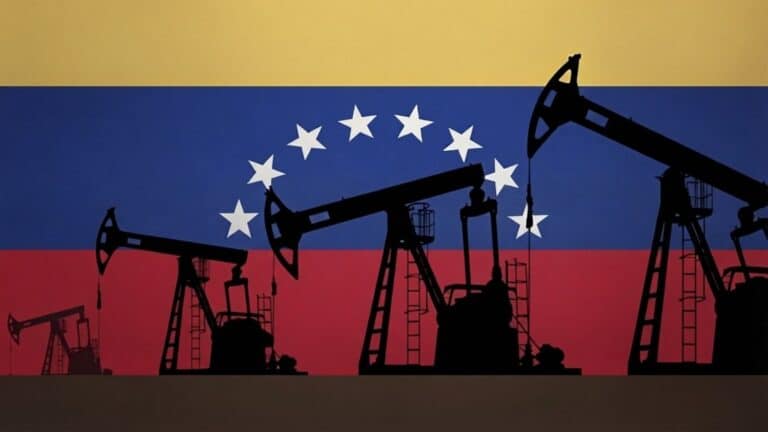
The Trump administration and Saudi leadership have reportedly agreed to a nuclear agreement that could enable US nuclear technology transfers to Saudi Arabia.
In this edition of Global Institute Dialogues Jason Bordoff discusses how the Iran crisis, China’s electrification strategy, and the US shale revolution have changed energy geopolitics.
As inventories run dry and the Iran war continues to disrupt transit routes, oil has surged back to more than $100 per barrel. Diesel fuel—the workhorse of the agricultural and trucking sectors—has now soared to historic highs, pushing U.S. exports to record levels.
The Trump administration has submitted to Congress a new nuclear energy cooperation agreement with Saudi Arabia.