Prix des carburants : pourquoi les raffineries sont au cœur de la tempête
Plus que d'un problème pétrolier, la flambée des prix du carburant résulte de tensions sur les capacités mondiales de raffinage.
Get the latest as our experts share their insights on global energy policy.
Last week's summit between US President Trump and Chinese President Xi was the second meeting between the two leaders since the US and Israel attacked Iran.

Hear in-depth conversations with the world’s top energy and climate leaders from government, business, academia, and civil society.
Carbon credit markets have become one of the most hotly debated tools in the fight against climate change. Supporters call them essential to closing the gap between corporate...

Find out more about our upcoming and past events.
Apply to Register The Center on Global Energy Policy at Columbia University SIPA’s Women in Energy initiative invites Columbia University students to a roundtable discussion with Pam Brown,...



Doug Arent (00:04):
I think that there is a real need for transparency and clarity in terms of what should be connected to the grid, what’s committed to get connected to the grid, both on the load side as well as on a generation side.
Robin Millican (00:19):
There’s a lot of latent capacity industry estimates are something on the order of 260 gigawatts of incremental load that could be met just by using solutions like grid enhancing technologies, so just trying to get more out of what we have today.
Bill Loveless (00:35):
Concerns about the affordability of electricity in the United States have been rising along with prices. And while the headlines have pointed to AI and data centers as the underlying factors, the exact causes are more complex. The problem reflects a convergence of preexisting structural failures, including inefficient infrastructure planning, utility and centers that are misaligned with cost efficiency, slow permitting times and storm damage and wildfire costs. And now higher electricity demand, including from data centers, is accelerating all of these pressures and adding some of their own. New research released last week by the Center on Global Energy Policy examines the structural roots of rising electricity prices. The findings draw on recent research and discussions on electricity affordability. They also identify near, medium, and long-term solutions at the state and federal levels.
(01:37):
This is Columbia Energy Exchange, a weekly podcast from the Center on Global Energy Policy at Columbia University. I’m Bill Loveless. Today on the show, Doug Arent and Robin Millican. Doug is a global fellow here at the center and the emeritus executive director at the Foundation for the National Laboratory of the Rockies, a nonprofit established to support the Department of Energy lab. He also holds emeritus status at the lab where he served for nearly 30 years rising to the role of deputy associate director. Robin directs research programs and strategic partnerships here at the center, leading its research agenda. Previously, she was the head of strategic initiatives and integration at Breakthrough Energy, the global organization founded by Bill Gates to accelerate the transition to affordable, reliable, and clean energy. We discussed what their research shows about what’s really behind electricity rate increases in many US states. We got into the mechanics of electricity prices and parsed the term large load to put data centers into context amid other pressures on the grid.
(02:52):
And we looked at approaches to improving grid investments and resilience, things that could make electricity more affordable and reliable in the long term. Here’s our conversation. Doug Arent, Robin Millican, welcome to Columbia Energy Exchange.
Doug Arent (03:08):
Thanks, Bill.
Robin Millican (03:08):
Thanks so much, Bill.
Bill Loveless (03:10):
Yeah, I’m glad to have you here on this topic that’s getting so much attention these days as we know. Hardly a day goes by, it seems when we don’t see one of these stories as a headline someplace, but high electricity prices have become a prominent energy concern in the US with much of the public discussion focused on the energy demands of AI and data centers, but your research finds that the real answer is more complicated, broadly speaking — and we’ll break this down — what does that mean, Doug?
Doug Arent (03:43):
Yeah, thanks, Bill. When one looks at the history of the electricity sector and pricing in the United States over 20 years, electricity growth has been relatively flat and prices have basically tracked with inflation. And in particular, the last five years they’ve tracked with inflation in most states, not every state, but we’re now entering a new era, an era of load growth, AI data centers being some part of that load growth. There is load growth from other areas, as well. But the fact is that at this stage, multiple factors are increasing prices for electricity and it’s not load growth alone and it’s not load growth in every area, as well. So we can talk about the details of that as we would go forward. But in 43 states, consumers saw electricity prices increase just last year, so from 2024 to 2025. And I think that combined with gas price increases is really raising awareness of energy prices broadly and electricity prices specifically.
Bill Loveless (04:57):
So Robin, we’re not really facing or are we facing a national affordability crisis or a collection of regional challenges?
Robin Millican (05:05):
I think it’s decidedly regional if you look at the data. So in the research that we did, we drew very heavily from analysis that was done by Lawrence Berkeley National Lab and Brattle Group. And what they found is if you look at the period from 2019 to 2025, you had 23 states that saw price declines in real terms, meaning adjusting for inflation, while 27 states saw increases. And what you see is the drivers differ by region where you have wildfire costs in California really is a key driver. Fuel volatility in the Northeast, particularly natural gas prices and capacity market dynamics in the PJM interconnection. So citing national averages really does kind of obscure the key facts around where the real pain is concentrated.
Bill Loveless (05:56):
Well, I guess everybody talks about data centers. How much of this is driven by data centers versus electrification, manufacturing, and other factors that you and Robin have cited?
Doug Arent (06:07):
Yeah, that’s a great question, Bill. And we touched upon it yesterday in our conversations on Capitol Hill as well. Estimates of data center growth are very broad from tens, maybe a low of a hundred gigawatts to hundreds of gigawatts, i.e. 300 or 400. It’s a very broad range. A lot of it may in fact not turn out to be realized, but others are quoting that growth overall, that’s only about 50% of growth. But the challenge with data centers, and maybe we’ll get into this a little bit deeper, is that at least those that are in the news are large, concentrated, and get a lot of news for many other reasons than just electricity demand. But if we were in a, say, slightly different political economy era, electric vehicle anticipated demand growth would be much, much higher than it is today and anticipated to be just given the politics of where we’re at on the vehicle side as well.
(07:14):
And there’s other electrification happening across the country, remanufacturing increased capacity of manufacturing for defense purposes, domestic manufacturing for other purposes as well, given the Foreign Consumption Act, et cetera.
Bill Loveless (07:31):
Yeah. As someone who lives in Northern Virginia, your comment resonates with me because all we seem to hear about and read about is the burgeoning collection of data centers in that particular part of the country. I guess it raises questions to go, how confident should we be in these forecasts?
Doug Arent (07:48):
I think we should be, in fact, fairly skeptical. That’s my takeaway. What we know from a few early trials of adding financial commitment to those proposed connections to the electricity grid. So Texas is moving in that direction, Illinois, a few other states, is that the “expected demand” is down by a third from the prospective demand as well. Similarly, on the grid connection side of generation, those generators, which are in the queue to get connections, only on average about 75% of them get built. So I think that there is a real need for transparency and clarity in terms of what should be connected to the grid, what’s committed to get connected to the grid, both on the load side as well as on a generation side.
Bill Loveless (08:48):
Interesting. For years, electricity demand was relatively flat. Why does load growth create affordability challenges rather than lowering costs through the economies of scale, Doug?
Doug Arent (09:01):
Well, actually both dynamics are at play. We write about work and experiences in Nebraska, North Dakota, New Mexico, in which load growth in those states, because of a number of factors, they had excess generation, they had transmission capacity. They’re in effective operating what are called regional transmission organizations. They actually had load growth and they had price decreases. And that’s because adding more load growth to a fixed capital base spreads those costs over larger sales and therefore the opportunity to lower the marginal cost per kilowatt hour. In other states, Virginia being one as an example, or in what’s called the PJM, again, RTO regional transmission organization, it’s anticipated that load growth, and I say anticipated here because it’s not yet real, that load growth will be fairly substantial and will need new generation. In that particular case, the anticipation has marginal costs greater than the average cost today and therefore it will be inflationary in that region.
(10:18):
So the dynamics are not straightforward. Load growth can lower prices, load growth under current tariff structures, under appropriate tariff structures can also be, I’ll call it appropriate and just. We can talk about that maybe when we get into the solutions side of the equation.
Bill Loveless (10:37):
So Robin, it seems that the patterns are changing from what we’ve seen historically with utilities, which typically spread infrastructure costs over a growing customer base. What’s different today?
Robin Millican (10:48):
For sure. So I think there are two things that are markedly different in the current situation. I think number one, you have just the speed and urgency of demand where for the hyperscalers, there’s a race to improve the models, get more compute, gain market share and all of that has led to a pretty intense amount of demand. And as a result, you have developers that are looking to build data centers in one to two years, which is a mismatch, frankly, with how our lumbering slow to evolve power system works where as Doug mentioned, we have a interconnection queue where it can take five years for projects to get out of the queue and it’s congested with a lot of these speculative projects that may never come to fruition. You also have the fact that transmission lines take 10 years to energize from the time that they’re first proposed.
(11:44):
So we have a system that physically just cannot keep up with the reality of “speed to power.” And then the other thing that’s fundamentally different is just concentration and scale where you have individual data center facilities that now rival small cities and scale. If you look at, this is a cluster, not an individual facility, but Meta’s proposed Hyperion cluster in Louisiana, that’s five gigawatts, which is comparable to the scale of the state of New Hampshire in terms of their total install capacity. So it’s pretty remarkable. You also have AI training loads that can swing from 450 megawatts to seven megawatts in 36 seconds, which is something that we spoke to in our literature review, which creates just an operational volatility that the grid was not built to accommodate.
Bill Loveless (12:37):
Yeah, Doug, getting back to a point you made earlier, how much of the recent bill increases are attributable to grid modernization, reliability investments, new generation and transmission, wildfire spending and other causes?
Doug Arent (12:51):
It’s a great question. And I have to give kudos out to Ryan Wiser and his team at Lawrence Berkeley National Lab in partnership with the Brattle Group who put out two really good data-driven reports on looking at state level impacts on prices. And I’m going to refer to work that they’ve done here and it’s surprising that load growth does not stand out as a national driver of price increases. I’ve mentioned this before. There are a few states where it actually led to price decreases and others. What really is driving prices dominantly it’s fuel price, wholesale electricity is a price. So for retail customers, for example, of course, the price in most electricity markets around the country is set by natural gas turbines. And so when natural gas prices fluctuate, they set the price for all electricity, which is sold and those price increases pass through to customers.
(13:53):
So that’s the number one driver. The second driver is, in fact, increased distribution costs, transmission costs. Those are being driven by required upgrades, i.e. aged infrastructure that needs to be upgraded. It’s also being driven by extreme storm recovery. So think hurricanes in Florida, think wildfires in the west, significant costs associated with line burying, i.e. underground lines in California to avoid future wildfires. And then you’ve got overall inflation of equipment as a very significant driver. This is wood poles, those classic wood poles you see on your street, 50% increase since 2019 wires and cables 150% increase since 2019. So a lot of drivers and not overall load growth.
Bill Loveless (14:49):
So Robin, are customers increasingly paying for the consequences of underinvestment in the past? Have we deferred grid investments for too long?
Robin Millican (14:57):
This is a tricky question because in my opinion, I think it’s a bit of both where if you look at the historical trend for several decades, electricity demand in this country was essentially flat. And in that environment, regulators were understandably quite reluctant to approve large investments and new infrastructure that customers didn’t yet need. And so the result wasn’t necessarily under investment during that period of time. It was really just a focus on maintaining existing assets rather than expanding the system. The challenge now is that much of the existing grid is now reaching the end of its useful life. So you have roughly 70% of power transformers that are more than 25 years old. You have 60% of circuit breakers that are over 30 years old and about 70% of transmission lines are more than 25 years old. And at the same time, now we have all these new pressures that the current combination of things like extreme weather events, storms, wildfires, et cetera, cybersecurity, internet of things, AI, quantum on top of that pose. Electrification.
(16:11):
And now you’ve got this rapid load growth from data centers and manufacturing and all those things are combining to really drive a wave of capital spending. So if you look at the period of time from 2003 to 2023, so 20-year period, you saw, and we cite this in our paper, annual distribution CapEx increased about 160% during that period of time, which Doug mentioned earlier and that’s reached nearly $51 billion and it currently accounts for about 43% of IOU, so investor-owned utility capital expenditures. Much of that spending is going toward, again, replacing and hardening existing infrastructure rather than expanding capacity, but going forward, we will need to do much more of the latter and the former. And so to me, the key question isn’t whether that investment is needed or not because a lot of it very clearly is, but I think the question we should all sort of take away is whether those investments are really well-planned, cost-effective and allocated to the customers who actually benefit from them.
(17:20):
We talk about this in our paper and we’ll expand upon it more, but because utilities, investor-owned utilities specifically earn their rate of return on capital investments, you really have to, as a regulator, just be on the ball to scrutinize those investments and ensure projects are prudent and that customers are receiving good value for the money they’re spending because the incentive in that situation to be specific is to build because that’s how you make money rather than to do things like efficiency.
Bill Loveless (17:51):
Well, Doug, that brings us to the elephant in the room and that is data centers, right? At least that’s the creature in the minds of so many people these days. And the most visible source of new demand is AI related data centers. And I say visible in the sense, maybe more of in a public sense rather than in the detailed observations that you’re making. Are current utility planning processes equipped to evaluate these very large load requests?
Doug Arent (18:17):
Yeah, it’s a really good question and I would say that they’re evolving. So right now we are in what is classically, I would call a regulatory sandbox, a set of experiments evolving around the country because the real rubber meets the road at the state level. So you’re seeing different processes roll out in Texas versus Virginia versus Utah, et cetera. And I think the challenge is maybe twofold. One is that there is an enormous demand or request for new data centers. More than 1,200 of them are proposed at, as I said, somewhere between 100 and maybe 300 gigawatts of new demand. Put that in context, the overall total electricity generation capacity in the United States stands at 1,400 gigawatts right now. So you’re talking literally about a third of new potential demand across the United States and I say potential there. The second challenge is for some of the large training models and campuses that are being proposed, these are enormous electricity consumers, not only land, water, we have to think about other things as well.
(19:44):
There are more than 10 data centers being proposed that are greater than five gigawatts. A gigawatt is essentially the output of a traditional large nuclear plant and you’re thinking of a campus that could consume the output of five of those — up to 10 of them. That in and of itself is a paradigm shift for utility planning, frankly, and utility operations, transmission planning, et cetera. And it’s not just about serving the load, it’s also about from a reliability standpoint, the potential loss of that load. So grid operators are very concerned about grid reliability and having a single load like that is effectively the same as having a single generator that might trip off. And so we have to think about the technical issues as well, not just the regulatory issues underneath it.
Bill Loveless (20:40):
Yeah. And of course these data centers need to operate or operate at very high rates of utility, right? At 99.99%, some say reliability is necessary, placing additional burdens on the utility of whoever the power generator is.
Doug Arent (20:59):
Yeah, I think that’s a general, I’ll call it perception. The data centers want to operate at F9’s reliability. There is a lot of work happening now on data center flexibility where data centers can be quote grid-friendly assets and be able to not only ramp their operations inside the data center, but an aggregate be a bit more flexible to operate as a grid-friendly asset, which means that they could lower their load requirements when needed. That’s called a curtaillable load or a controllable load. There’s a whole procedure going on in Texas for that. There are numerous pilots being conducted around the country and frankly, around the world. This will help reduce peak stress, not necessarily average electricity consumption.
Bill Loveless (21:50):
Interesting. Robin, one concern is that residential customers could end up subsidizing infrastructure built for large commercial loads. Is that concern justified and are there examples of where this is already happening?
Robin Millican (22:05):
That’s a great question, Bill. I really think that this is at the crux of the data center issue, this so- called cross subsidization problem. In my view, I think yes, it is a legitimate concern, although the answer really depends on how those costs are allocated as we’ve already sort of alluded to. To back up a bit, if you look at how the grid has been managed historically, we’ve had a paradigm where the costs of the grid and the benefits of the grid were broadly socialized across rate payers and that generally made sense at a time when load growth was more diffuse, you had many customers and investments that were made could really be made for the benefit of many, if not all. And today’s environment is just frankly very different where you have these very large loads including data centers, but not exclusively. You also have industrial customers — even EV fleet charging customers fall into that bucket — where they can require dedicated generation transmission and distribution investments that can number in the billions. And to me, that raises real questions about whether those costs should continue to be spread across all customers or be born primarily by the customers driving them. And to respond to another question that you posed, we are already seeing this play out in some places. So in the PJM interconnection place that we’ve mentioned before, an estimated $4.3 billion in transmission projects were approved in 2024 that were associated with data center load and then another 2.5 billion under consideration. And again, whether those costs benefit the broader grid or should be assigned more directly to new loads is the subject of active regulatory debate, so we do need to figure that out.
(23:58):
And it’s worth saying two things. Number one, PJM is a special situation where they have a capacity market that’s a bit dysfunctional. They also are supply constrained. It’s really hard for new projects to come online. And so it’s very different in a place like PJM than in some of the other states that we’ve mentioned or other places that we’ve mentioned rather PJM is a grid operator, of course. But in the places like Nebraska, Nevada, New Mexico, you would have a very different paradigm to cost allocation. So that’s point number one. And point number two is no one’s necessarily doing anything wrong. Utilities are applying the rules that were designed for a different pattern of growth. And so the challenge ahead of us now is just determining where traditional cost sharing still makes sense. Again, in places where supply is available, I think that’s fine versus places where supply is constrained and exceptionally large loads, in my opinion, probably should bear a greater share of that responsibility.
Bill Loveless (25:00):
I don’t know quite what to make of the so- called ratepayer protection pledge that AI companies and hyperscalers made earlier this year, Amazon, Google, Meta, Microsoft, OpenAI among them where if I’m reading this correctly, they agreed to build, bring or buy new generation resources and cover the cost of all power delivery infrastructure upgrades required for their data centers. What do you make of that pledge, Doug?
Doug Arent (25:27):
Yeah, it’s a really good question. So of course it’s non-binding, but it is backed by a significant amount of goodwill. And I think that at least those companies that signed it recognized that one, they’re in a competitive race for build out and leadership in the AI space. And in order to do that, they need compute power and in order to get compute power, you need power. And therefore you need to find workable solutions to be able to build that power, whether or not that’s a commitment to pay for power, but also multiple other elements on what I call the social license to operate. So we’re also now seeing this growth in opposition to data center, local opposition sometimes at the state level, proposals for moratoriums, absolute objection to having a data center in my backyard. It reminds me of NIMBYism or bananaism for any other project that might come bananaism being “build absolutely nothing anywhere.”
(26:38):
And so I think it’s an important signal, but I think it needs to be backed up with real action. And you’re seeing some of those companies come through with good approaches to dealing with both the affordability, i.e. the cost structure and some of the social license operate issues, though there’s work to be done on that in terms of inclusion dealing with local concerns over water, air pollution, noise, things like that. I think the other thing maybe just to put in the back of listeners’ minds is that data centers, and particularly the large hyperscalers have a very different economic paradigm than what I’d call traditional industrial or large load users in the United States. The United States built out their industrial electrification processes and manufacturing decades ago when we were rebuilding and building an economy post World War II, when there was a collective will to work together to build up a great america at that point in time.
(27:48):
And there were provisions offered in most regulatory constructs to allow or to provide lower cost electricity to commercial and industrial customers in order to attract the manufacturing and build the job space. This segment that we’re now generally calling hard load actually is a special segment of industrial load that has a greater ability and willingness to pay is very different on the jobs front at that local facility, but in terms of an economic driver, I think we need to see it in context and therefore not all large loads are created equal and we need to be maybe speaking a litle bit more specifically as we go forward.
Bill Loveless (28:37):
Getting back to that rate payer protection pledge, maybe it’s all politics we’ve seen that pledge reflected in legislation that’s pending in Congress today. I don’t want to get into a big discussion of what’s of individual bills on The Hill right now, but Robin, it seems as though that we also have to consider how politics may be taking effect here right now on this issue and maybe even getting ahead of the issue to some extent.
Robin Millican (29:01):
Oh, absolutely. I think one of the takeaways I had from the time that Doug and I spent on The Hill yesterday was we put out this research showing that the narrative is much more nuanced on what’s driving price increases and the role of data centers than the kind of prevailing narratives would suggest. And yet in a way, the politics has sort of run ahead of all of that and it may not actually matter because people do have just fundamental anxieties about things like the role of AI in job displacement. And as Doug mentioned, there are community specific concerns around noise and aesthetics and prices are in there. People do care about them clearly, but there’s a whole sort of broader range of issues we have to contemplate. And the public polling suggests that the backlash is well underway. And so we do have to be sort of savvy and responsive to the politics.
(30:07):
I think one of the things to mention just quickly on the how do you make some of these voluntary commitments to pay your own way more real is there are examples of where hyperscalers are partnering with utilities to do so-called large load tariffs where for things like, for example, the risk of a utility taking on the responsibility to invest in a whole bunch of new infrastructure and then the data center demand doesn’t materialize who is responsible for that cost. It addresses issues like that where they do things like take or pay contracts, upfront contributions, et cetera, and properly designed, and we speak to this in our paper, these large load tariffs can reduce the risk that households end up paying for infrastructure that’s really built for those large loads, including data centers and it also can have the effect of reducing household bills.
Doug Arent (31:04):
Bill, could I add just a little bit there?
Bill Loveless (31:07):
Yeah, yeah, absolutely, Doug. Go ahead.
Doug Arent (31:09):
Yeah, I think the politics can be informed by some data and facts. What are we seeing? Why is it ahead of the curve and why are they looking for someone to blame? While electricity burden, i.e. the percent of household disposable income that’s spent on electricity is generally flat or decreasing on average, it’s not uniform. So electricity burdens are greater than 5% for low-income households and that’s about a third of households around the country. So when you look at overall inflation growth and you’ve got pressure on food, you’ve got pressure on gasoline and you’ve got pressure on electricity, i.e. the core utilities, the core functionality, you’re seeing increased attention being paid. And this increase that I mentioned before, 43 states seeing net increases in residential electricity prices I think raises a political moment for that. Maybe more interesting as well is that residential prices rise faster than consumer and industrial prices.
(32:20):
And so with general population, consumer advocates are aware of that data. They are saying our customers, i.e. my customers, the general rate base, is overexposed to price increases and we need to figure out how to spread this more evenly or not overburden the residential customer at the expense of other customers on the system.
Robin Millican (32:45):
If I could add on to that, I think Doug made a very important point that I totally agree with in that I also suspect that the “affordability of electricity” would not be such a focal point if there weren’t greater affordability challenges. If you look at housing, medical bills, housing consumes something on the order of 35 to 40% of many households income and in the sense that there are many more dollars going to those things, I think a $15 increase on your monthly electricity bill feels just much more material today than it would have before. But in the grand scheme of things, 5% of your household income going toward electricity versus 35% to 40% going to housing, it’s quite a big delta.
Bill Loveless (33:37):
Yeah, that’s an interesting point, Robin. And yet here we are and it’s such a big issue and a political issue and an election year and we’ll see how that plays out. I should mention, you mentioned, Robin, your being in Washington, you, Doug, former chairman of the FERC, Neil Chatterjee did do an event on Capitol Hill yesterday that addressed many of these same issues for folks up there and seem to be pretty well attended. Robin, while we’re in Washington or on Washington topics, I can’t help but bring up the action recently by the Federal Energy Regulatory Commission. It took steps to accelerate the connection of very large loads such as data centers. I read that it would require regional grid operators to justify or revise their rules for connecting very large loads, especially data centers, and develop clearer processes for assigning the cost of infrastructure needed to serve them.
(34:35):
One of the key issues is whether large new customers should be at those costs themselves or whether some of those costs should be spread across rate payers as we’ve been discussing. What do you make of this action by FERC?
Robin Millican (34:47):
Well, as you mentioned, our friend and a distinguished visiting fellow at CGEP Neil Chatterjee is really the maestro, but I’ll do my best to stand in for him. So in short, as you mentioned, FERC issued a series of show cause orders to the regional grid operators, the RTO ISOs to essentially ask them to justify why their existing tariff structure is “just and reasonable” and if they find that it isn’t to propose changes. So instead of doing what we originally thought, or at least what I originally thought, which was to do a rulemaking, which would’ve gotten into some thorny challenges around pursuing a one-size-fits-all approach, getting into state jurisdiction around retail tariffs in particular. Instead, they chose a very practical path, which is just asking the grid operators to reflect the realities of what’s happening in their own territories and to propose a tailored approach. That allows reforms to reflect those differences and again, doesn’t unnecessarily intrude on areas that the states feel very strongly about.
(36:04):
My read is I think this is a very smart move and it’s very promising because the broader objective is to create more predictable processes for connecting those very large loads that we’ve been speaking about while ensuring infrastructure costs are allocated fairly between new customers and existing rate payers. And as electricity demand accelerates, that kind of regulatory clarity is more important than ever. One of the really interesting things to keep an eye on is FERC oversees interregional transmission as part of their interstate commerce authorities. And I think transmission is actually an area where you’re going to encounter the thorniest challenges around cost causation because as opposed to something like one single transmission line or a substation that’s clearly needed for a particular project, interregional transmission upgrades that might be required to serve data centers are the type of thing where you could imagine over time those infrastructure investments will benefit more customers than just the initial large load customers themselves.
(37:14):
And the RTO has proposed some kind of rebate structure to compensate those entities over time if costs are directly assigned. I think that’s a space to watch.
Bill Loveless (37:24):
Doug, are there state regulatory models that stand out as particularly effective? I mean, I guess the question there is who’s getting this right?
Doug Arent (37:32):
Yeah, I used the term before regulatory sandbox. I think this is appropriate here as well, which is we have 50 states and 50 state public utility commissions and they’re very diverse in how they handle particularly load growth and particularly large load growth. There are some which are in the evolving stages, relatively early evolving stages of what’s called performance-based rate making. So this is in contrast to what Robin described before, which is a rate of return on capital or total expenditures.
(38:12):
These are a set of rules which are around meeting certain performance goals. The details of those goals can vary by state. Many of them do include, I’ll call it better operations and efficiency, effective management of rates, lowering of rates, in fact, if possible, et cetera. But that’s an evolving landscape here in the United States. I would call it no state really stands out. There are evolving and other examples from around the world that we should be cognizant of as well. I won’t mention those here because they get into the kind of regulatory details, but I think we really need to think about that. And it’s not just the regulatory approach, it’s also the processes. Texas, for example, stands out, one, because it has its own grid operator, ERCOT. It has a state regulatory commission, and it operates principally not under FERC jurisdiction. And so it has a lot of self-determination, good Texas spirit, if we would have Michael Weber on here again.
(39:22):
And they are evolving processes to deal with the large loads. They have, I’ll call it a notional request queue that is three times larger than the Texas total electricity system today. And they’re not freaking out about it. They are in fact saying, well, those that are real, you can pay money to get into the queue for interconnection, $55,000 a megawatt, if I remember the number correctly. And you have to show real proof that you’re going to get to financial closure and you’re going to build and you have permitting and local permitting, et cetera. So a sense of transparency and reality to the load. And then they’re developing two other processes, which I think are really important. One is they’re taking a whole bunch of requests and they’re putting them into what’s called a batch and they’re doing the batch analysis for reliability, new generation needs, new transmission needs, et cetera, rather than sequentially.
(40:25):
That sequential process is incredibly slow when the customers are asking for speed to power, i.e., get me on the grid quickly. That’s one. The other piece is that they’re evolving the ability of, as I mentioned before, these large loads to be controllable. And so to get higher in the queue, i.e. to get speed to power faster, those customers have to agree that they can become controllable loads. And so there’s some evolving set of practices I think Texas in their self-determination mode are really pushing on pieces that they think that can really work for their system. And then frankly, the interesting takeaway from the round table that we had down there was one, they aren’t concerned about price increases because they know how to build generation, they know how to build transmission. They’re very confident that they can build low cost resources to meet the load growth.
(41:22):
And two, that 300 gigawatts or something of request is not real. What they look at is what’s really in the queue, who’s willing to pay to get in the queue and that’s incrementally tens of gigawatts going forward per year, which they think they can manage.
Bill Loveless (41:40):
That’s interesting. And perhaps among the developments in the states that bear close scrutiny. Robin, I recall efforts in the past in Washington in Congress at the Department of Energy, at the Federal Energy Regulatory Commission to try to facilitate the development of long transmission lines, new transmission lines across the country. It didn’t go so well. Are there federal tools today that are underutilized in addressing this whole question of reliability, affordability on the grid?
Robin Millican (42:11):
Yes, 100%. First of all, expanding transmission is an essential. We’ve talked a lot about the sort of system as a whole, but I really think transmission in particular is the major unlock. It specifically allows lower cost generation to reach more customers if you can really place lines where you’ve got low cost resources, for example, solar in the Southwest, when in the Midwest, you can take power from those places and deliver it to largely urban demand centers, et cetera, that may be long distances away. So that’s one benefit. It also reduces congestion, improves reliability, and just frankly gives the grid more flexibility to respond to things like extreme weather events if you can, again, move power from place to place more efficiently. But it’s really hard to do transmission because one of the problems is the FERC, unlike with natural gas pipelines, does not have what’s called plenary sighting authority for transmission lines.
(43:15):
They were not granted that in the Federal Power Act. Permitting right now and siting decisions are largely at this state and local level. And it’s really difficult because one of the problems with transmission lines, unlike highways, these things are compared often. It’s like, why can’t we have a national transmission network like we did with a national highway system? Well, with highways, you have on ramps and off ramps where everyone can use it, but for long distance, high voltage transmission lines, it’s actually quite expensive to build off ramps to local communities. So you’re basically asking these places to bear the responsibility of having this infrastructure placed in their eye line, but they don’t actually get the benefit of the quote unquote cheap power. And so in a lot of cases, these lines get blocked and they get litigated. And as mentioned earlier, if they do get built, they take 10 years to get built.
(44:10):
And so one of the big things that could happen at the federal level to get back to your original question around underutilized tools is the FERC could have a more muscular ability to do what’s called backstop sighting authority. Right now what happens is it’s an authority that exists on the books, but there’s a fairly Byzantine process that you have to go through in order to exercise it where the Department of Energy has to do a national transmission needs assessment first to assess overall demand or need. Then you have to go through the process of designating the corridors where the transmission line should go. And then after those steps happen, if a developer proposes a line in a corridor and a state either fails to act or denies that line, then FERC can step in and exercise its backstop setting authority. And in practice, this just hasn’t happened before.
(45:05):
It’s too complicated. So there are proposals to just do things like not have the DOE part of the process, just have FERC be able to decide where lines should go. This is very complicated, would require legislation from Congress and does get into very thorny issues between the federal government and the states, but that would be one really big development.
Bill Loveless (45:28):
The impression I’m getting, Doug, is that the solution is not in Washington, it’s in the individual states.
Doug Arent (45:34):
It’s really a combination of those. The FERC has authority over interstate transmission That’s for sure as just discussed, but over large load tariff design or local permitting or intra state, i.e. within the state transmission and distribution planning, that generally resides with the local state public utility commission. So states have a significant role to play here and that we have a lot of discussion about what happens at the federal level, but frankly, there are a lot of organizations including the National Association of Regulatory Utility Commissioners, NARUC, that are doing a lot of work on this as well and sharing experiences and practices.
Bill Loveless (46:24):
In our final minutes, I’d like to get back to the root issue here with all of this research that has been done. The research emphasizes fixing the problem, Robin. What are the most promising solutions?
Robin Millican (46:37):
Well, in one of our papers, we outline three different buckets of solutions and these are not necessarily meant to be sequential where you do on and then you pursue the other. We’re recommending that we move out on all these things as soon as possible, but we sort of rank them in order of nearness to deployment, ease of deployment. So the first bucket of near term solutions is really around optimizing the existing grid. There’s a lot of latent capacity industry estimates are something on the order of 260 gigawatts of incremental load that could be met just by using solutions like grid enhancing technology, so dynamic line rating, reconductoring, demand flexibility, demand response, et cetera. So really just trying to get more out of what we have today. That, of course, is not a full solution. We do need to build new things, but it can deliver real value and sort of build the case for structural reform.
(47:39):
There have been some deployments of this already. So PPL electric, utility deployed dynamic line rating in its territory and they reported that they were able to reduce congestion by 65%, deliver $50 million in savings to customers. So a lot of promise with that solution set. The next bucket that we outline is what we’re calling medium-term structural reform solutions. So it’s things like, as we discussed, figuring out how to properly incentivize utilities who again are not the bad guys, but they are responding to the incentives they have in front of them to reform those incentives so that they have the right signal to do things like the system optimization that we’re talking about, making it financially attractive to them. Number two under that would be, as we’ve also discussed, performing cost allocation where appropriate so that large loads can pay their incremental grid costs through things like large load tariffs.
(48:36):
And then number three is really making sure that supply can efficiently rise to meet demand by doing things like queue reform, as Doug mentioned, and then addressing siding and permitting problems like the transmission one I just spoke to. And then the third bucket that we outline in the paper is around long-term solutions to risk management. So one of the really core drivers of costs in places like California is wildfires. Wildfire resilience investments added four cents per kilowatt hour surcharge to California ratepayers bills, which is substantial. Electricity prices are like 18 and 19 cents per kilowatt hour nationally on average. So they’re paying a lot for that. Those investments will yield dividends over time in that they won’t hopefully experience such severe events in the future by making those investments. But we should be doing really smart resilience measures in the form of doing things like building interregional transmission so there’s more redundancy, making sure that smart investments and distribution resilience are made and then also dealing with things like cybersecurity, internet of things, as mentioned earlier.
(49:51):
There are creative tools that you can use like insurance mechanisms to also relieve some of the burden on utilities because utilities have, like PG&E in California has really been teetering on the edge of bankruptcy several times because of these wildfire events and we need to address that at some point through policy.
Bill Loveless (50:12):
Doug, are there reforms that can improve affordability without sacrificing reliability or decarbonization goals?
Doug Arent (50:20):
Yeah, that’s a great question. I think there are operational planning, operational, as well as regulatory market design constructs, all which can improve reliability and address affordability. Robin mentioned unleashing GETs — grid enhancing technologies. I mean, just to double down on that, the average grid utilization in the United States is around 40%. Some of that is built into the reliability requirements and processes by rules and processes that were set up more than a hundred years ago. They’re evolving, but they don’t fully account for modern technologies abilities to reroute electricity on other lines, et cetera. So I think there’s both planning and process development that needs to happen that would be able to get more out of the existing system that lowers costs because we get more bang for our buck with the capital that’s already been expended and also the average utilization of most natural gas turbines that are connected to the grid is around 50%.
(51:34):
That’s up from 35 or 40% from years ago, but it’s not 80% because they’re used on the margin. Is that a good thing or a bad thing? It’s certainly not the 90 plus percent of an airplane, for example, for very expensive assets. And then peaker plants are used only one or 2% of the time in a given year. So we can squeeze more out of the orange, shall we say, and get more juice out of what we’ve already got, which would overall lower rates. And that’s both in the planning, it’s in the operations, it’s in the rules as we go forward.
Bill Loveless (52:11):
I’d like to close with a question for each of you, this is it. If there’s one misconception about electricity affordability that you’d like listeners to abandon after considering your research, what is it? Robin?
Robin Millican (52:26):
I think it’s two things. Number one, that it’s monolithic. As I think we’ve shown in our research, it’s highly regional, it’s highly variable. This is also validated by the really important work that’s been done by Lawrence Berkeley National Laboratory and Brattle Group. So that’s point number one. And then point number two is the role of data centers. I think we’ve shown that demand in and of itself is not a problem if supply can efficiently rise to meet demand and demand is actually sometimes an asset where if you can spread fixed costs over a larger customer base, it’s actually quite helpful. And in a lot of ways, I think we’ve sort of lost the plot on the opportunity that the data centers propose or rather present in that these hyperscalers have massive balance sheets and they can underwrite really important long-term investments in everything from new transmission that’s needed for the grid to advanced technology, so geothermal, advanced nuclear, things that they’ve all expressed interest in.
(53:30):
And so I really think that we should try and take advantage of the opportunity. That said, there are cases where when supply is constrained, new demand can increase costs. And I think we’ve also shown that there are a variety of solutions and tools available to respond.
Bill Loveless (53:46):
Doug?
Doug Arent (53:47):
Yeah, it’s a really intricate question. Thinking about it for a long time and being involved in conversations around electricity and electricity modernization for decades, I’d say the one thing that stands out in addition to what Robin said is that I think electricity is an underappreciated enabler of quality of life. And while it is a burden for the low income households around the country, I think many of us don’t appreciate that $3 a day for a household, so $100 a month, but maybe it’s $6 a day, maybe it’s a couple hundred dollars a month or more. Less than we spend generally on a cup of coffee these days really enables such a high quality of life that we need to build greater appreciation for the electric system itself and all of the engineers, professionals, and others that are working in it and really understand what value it brings to our lives itself.
(54:51):
We’ve been very used to low cost and it varies around the country, of course, but if we look at prices here compared to Europe, et cetera, we’re still very privileged in terms of the pricing of electricity, even though it’s under inflationary demands now.
Bill Loveless (55:10):
It’s an important discussion. And Robin, Doug, thanks for taking the time today to discuss it with us on Columbia Energy Exchange.
Robin Millican (55:17):
Thank you, Bill.
Doug Arent (55:18):
Appreciate it.
(55:24):
That’s it for this week’s episode of Columbia Energy Exchange. Thank you again, Doug Arent and Robin Millican, and thank you for listening. The show is brought to you by the Center on Global Energy Policy at the Columbia University School of International and Public Affairs. The show is hosted by Jason Bordoff and me, Bill Loveless. Mary Catherine O’Connor, Caroline Pitman, and Kyu Lee produced the show. Greg Vilfranc engineered it. You’ll find more information about the show and the Center on Global Energy Policy, including Doug and Robin’s electricity price research reports, online at energypolicy.columbia.edu or follow us on social media at @ColumbiaUnergy. If you like this episode, leave us a rating on Apple, Spotify, or wherever you get your podcasts. You can also share it with a friend or colleague to help us reach more listeners. Either way, we appreciate your support. Thanks again for listening.
(56:20):
See you next week.
Concerns about the affordability of electricity in the US have been rising along with prices. And while the headlines have pointed to AI and data centers as the underlying factors, the exact causes are more complex.
The problem reflects a convergence of pre-existing structural failures, including inefficient infrastructure planning, utility incentives that are misaligned with cost efficiency, slow permitting times, and storm damage and wildfire costs. And now, higher electricity demand, including from data centers, is accelerating all of these pressures and adding some of their own.
Today on the show, Bill Loveless speaks to Doug Arent and Robin Millican about their recent reports for the Center on Global Energy Policy that examine the structural roots of rising electricity prices and look at approaches to improving grid investments and resilience.
Doug is a global fellow at the Center on Global Energy Policy and the emeritus executive director at the Foundation for the National Laboratory of the Rockies, a nonprofit established to support the Department of Energy lab, where he served for nearly 30 years, rising to the role of deputy associate director.
Robin directs research programs and strategic partnerships at CGEP, leading its research agenda. Previously, she was the head of strategic initiatives and integration at Breakthrough Energy, the global organization founded by Bill Gates to accelerate the transition to affordable, reliable, and clean energy.
Carbon credit markets have become one of the most hotly debated tools in the fight against climate change. Supporters call them essential to closing the gap between corporate...
Global gas markets, especially in Europe, are approaching winter under serious pressure. With storage inventories lagging behind historical averages and shipping disruptions from the Middle East threatening key...

Seven months into the largest oil supply disruption in history, there's still no resolution in sight. This week, on the sidelines of the UN General Assembly, US and Iranian officials held their first indirect talks since the Memorandum of Understanding collapsed in July—but neither side appears ready for concessions.

This week, Chinese President Xi Jinping travels to Washington for a state visit with President Trump, their second face-to-face meeting this year. Energy is likely to be high...

After decades without growth, electricity demand is surging, driven by energy-hungry data centers, new energy-intensive manufacturing facilities, and the increasing electrification of transportation and heating.
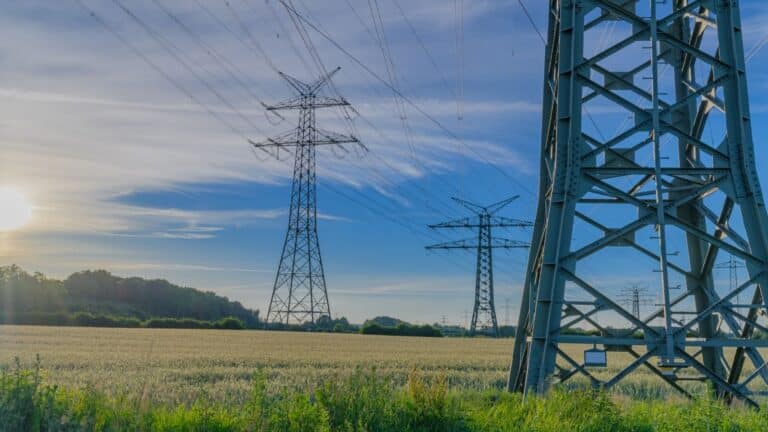
Data centers face growing local opposition as states impose moratoriums on hyperscale projects and grid connections. Communities can negotiate deals for tax revenue and jobs.
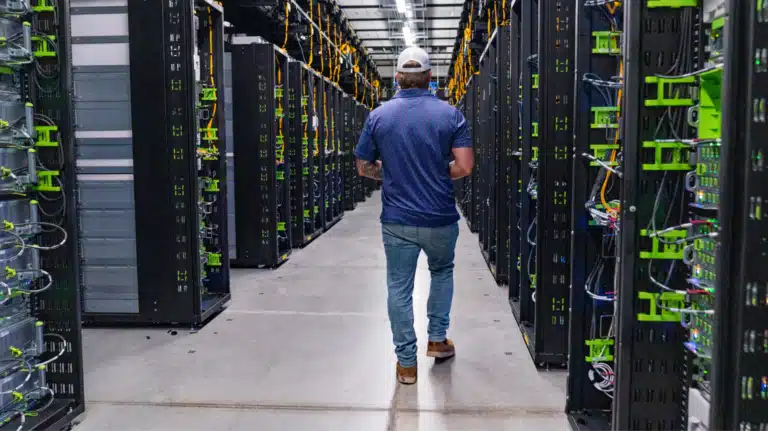
When the One Big Beautiful Bill Act was enacted, a widespread reading was that US power-sector decarbonization had been derailed.