How Ukraine’s drone strikes on Russia crippled the world’s second-largest diesel supplier
President Donald Trump has blamed Ukraine for surging diesel prices that are hurting Republicans' election chances with the midterms just two weeks away.
Get the latest as our experts share their insights on global energy policy.
Reporting in the New York Times suggests a key element in the Trump administration's Russia-Ukraine peace plan involves Europe resuming Russian gas imports.
Hear in-depth conversations with the world’s top energy and climate leaders from government, business, academia, and civil society.
After years of trying, the US may be on the cusp of a nuclear renaissance. Commercial nuclear generation began in this country in 1958. Today, the US has...

Find out more about our upcoming and past events.
Registration is closed. Join Women in Energy and Pillsbury in Washington, D.C., for a conversation examining the key trends and developments shaping the energy industry, where opportunities are...
Insights from the Center on Global Energy Policy

This Energy Explained post represents the research and views of the author(s). It does not necessarily represent the views of the Center on Global Energy Policy. The Center on Global Energy Policy would like to thank Blue Horizon Foundation for its grant in support of CGEP.
Critical minerals were once again near the top of the agenda for G7 leaders as they met in Évian, France, this week, a year after the G7 launched the Critical Minerals Action Plan. The meeting was an opportunity for the United States to garner support for its plurilateral trade agreements, which would use trade mechanisms to support production outside of China. The final G7 declaration on minerals includes new initiatives but states only an intent “to continue to discuss the feasibility and development of policies and mechanisms that would be necessary to ensure supply chain resilience and diversification.” The lack of agreement on trade mechanisms reflects the disagreement among members of the supply chain over how best to balance the need for critical minerals diversification against the challenges of manufacturing competitiveness.
This disagreement is best seen in the comments filed to the United States Trade Representative (USTR) on the Design of a Plurilateral Agreement on Trade in Critical Minerals and Policy Actions to Strengthen the Resilience of Critical Mineral Supply Chains. Over 200 mining companies, battery producers, automakers, and industry and civil society groups provided public comment. They reveal broad agreement on the core challenges: China dominates the pricing of key critical minerals and policy should target the midstream, at the mineral processing or refining stage. Outside of mining companies seeking support for their own production, there is agreement that government action should focus on thinly traded, concentrated mineral markets—such as rare earths, germanium, gallium, antimony, and tungsten—rather than on deep, liquid markets.
But the comments also expose fissures, as mineral producers and original equipment manufacturers (OEMs) diverge on key questions of execution that continue to hamper momentum on critical minerals policy. Critical minerals diversification requires someone to pay the cost of a “resiliency premium,” but neither the private sector nor the government has decided who will bear the burden.
The proposed plurilateral trade agreement attempts to solve a central problem in critical minerals production, according to the United States and allies: firms in China are the lowest cost producers and companies outside of China are unable to compete on price, leading to severe market concentration. The goal of the trade agreement is to create a market that better aligns with the prices required to incentivize production outside of China. But this leads to a key disagreement between producers and refiners (the upstream) and OEMs (the downstream).
Companies across the supply chain advocate for an MP Materials style deal in which the government agrees to a contracts-for-difference scheme—funding the difference between the market price and a strike price. Under this approach, price certainty improves the producer’s access to private capital, while the cost bypasses the OEM. However, this deal is unlikely to be replicated beyond a few unique situations, as it would require significant public expenditure.
Instead, the plurilateral trade agreement would use tariffs and other trade mechanisms to raise prices with the trade bloc to a “reference” or “resiliency” price. Redwood Materials, a battery recycler and refiner, states that support is necessary because it would make “private investment in domestic and allied supply chains a rational investment proposition.”
One of the biggest challenges is how that price should be calculated. Several mining companies state the price should be based on the full cost of extraction and processing, which includes energy, transportation, and regulatory compliance, in addition to a commercial margin. USA Rare Earth recommends a reference price that allows for a minimum internal rate of return of 15% to attract private capital.
Regardless of how the cost is calculated, prices will rise and manufacturers worry additional costs will be passed to them. LG Energy Solution, a Korean battery maker with US facilities, warns of the impact of higher prices, stating in its comments to the proposal that higher input costs will be passed to manufacturers and throughout the value chain. It gave the example of the price-sensitive electric vehicle market, in which costs may not be fully passed to consumers. In this case, battery manufacturers may absorb much of the cost.
But mining companies say OEMs want lower Chinese prices that domestic producers cannot match. OEMs, for their part, compete globally and fear any increase in input costs will erode their market position. The tension can be eased through government support like MP Materials’ contracts-for-difference scheme or longer-term tax incentives, but only by shifting the burden onto the taxpayer.
Expanding domestic battery production has been a central tenet of US industrial policy since the Inflation Reduction Act (IRA). Yet Panasonic, with battery cell facilities in Nevada and Kansas, warns new trade mechanisms could undercut the very production that previous and ongoing industrial policies are meant to encourage. In its comments on the proposal, the company said tariffs on battery inputs such as copper, steel, and other critical minerals could make batteries manufactured in the United States more expensive than imports.
SK On, a Korean battery maker also producing in the US, commented that battery and other domestic manufacturers need assistance to offset any additional costs of mineral inputs to compete with imports. Several comments from other companies accordingly recommended price support, capital support, or tax benefits.
This amounts to layering new industrial policy atop the old—protecting investments that earlier industrial policy induced. One policy mechanism that has been mentioned by mining companies and manufacturers alike—incentives for domestic or allied mineral sources—was included in the IRA through the 30D tax credit but eliminated in the One Big Beautiful Bill Act. But measures involving taxation would require legislation from Congress and would also need to be replicated by allies such as Germany, Japan, and South Korea to help build a larger bifurcated market.
These fault lines are amplified among the G7, as each government carries its own industry’s position into the room. The same producer-versus-manufacturer divide that runs through the comments will run between allied capitals. These disagreements sit against the backdrop of rising prices due to the war in the Middle East, European trade tensions with China, and the fact that China is a crucial supplier of key minerals and technologies to industries in G7 countries.
The G7 could start supporting the diversification of critical minerals supplies with what has been missing from such policy so far: prioritization. Governments could focus on thinly traded, concentrated markets facing export restrictions. Any intervention would most likely need to be coupled with low-cost financing and potential offtake support. Beginning there and widening the scope through a published roadmap for future minerals, rather than trying to come to agreement on an upfront grand bargain, would not resolve who ultimately bears the resiliency premium but would get the ball rolling where consensus exists.
The White House has just announced over $2 billion in new critical minerals, magnets, and battery investments.

Raw material vulnerability was once again at the center of the G7 agenda at the summit in Evian, France.

One of the central objectives of the second Trump administration has been to pursue a maximalist trade policy toward China.
In March 2026, the Office of the US Trade Representative (USTR) announced it was investigating "structural excess capacity and production in manufacturing sectors" in 16 economies.

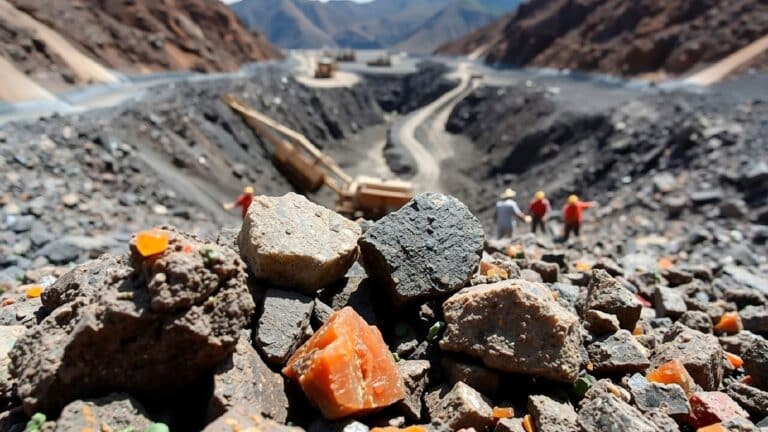
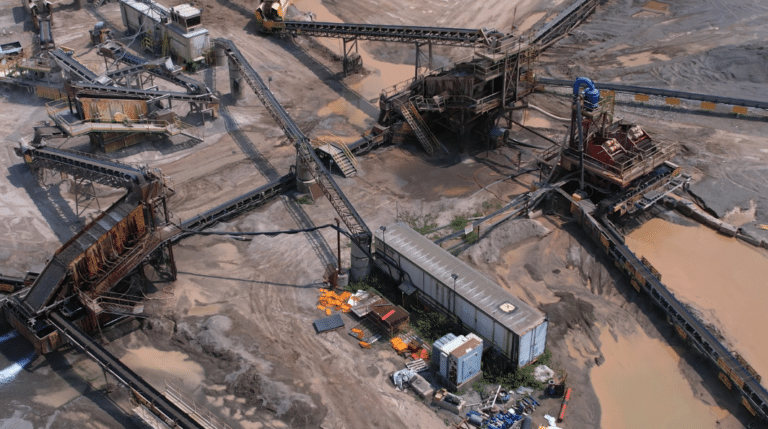
In early 2026, CGEP held a roundtable and several hybrid closed-door meetings in Mexico City on Mexico's mining sector.