Net Power Surrendered Its Clean Dreams to Data Center Demand
The zero-emission pioneer is doing the dirty work for the AI boom.
Get the latest as our experts share their insights on global energy policy.
This Energy Explained post represents the research and views of the author(s). It does not necessarily represent the views of the Center on Global Energy Policy. The piece...

Hear in-depth conversations with the world’s top energy and climate leaders from government, business, academia, and civil society.
After years of trying, the US may be on the cusp of a nuclear renaissance. Commercial nuclear generation began in this country in 1958. Today, the US has...
Find out more about our upcoming and past events.
The Center on Global Energy Policy (CGEP) at Columbia University’s School of International and Public Affairs and ReNew invite you to Columbia India Energy Dialogue 2026, taking place...

Vice President of GRIDS, Breakthrough Energy
Alice Yake:
If you were to put blinders on in a planning environment, sit there and say, “Can we produce enough kilowatt hours to manage and supply that energy to all customers around the world?” The answer would be yes. The next question has to be, can you deliver it? And then the next question has to be, is it affordable?
Jason Bordoff:
Grid operators sit at the center of many of the biggest forces reshaping the global energy system. They’re navigating rising electricity demand, a lack of transmission infrastructure, shifting regulatory policies, and maintaining the tricky balance between affordability, reliability, and the need for dispatchable power. Both here in the US and around the world, operating a reliable and resilient grid in the face of increasingly severe weather and complex interconnection demands is more difficult than ever. And these challenges are felt well outside the power sector. Spiking utility rates in some regions have turned electricity into a major political issue. So what does the future of grid planning tell us about the ultimate pace of the energy transition? How can system operators manage the surge and demand from AI and data centers without compromising reliability? And how can open source grid planning tools help both developed and developing markets build a flexible power system for the next 30 to 50 years?
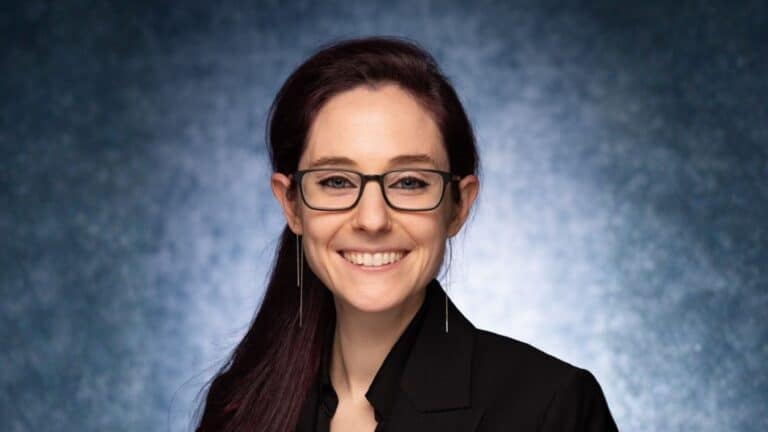
This is Columbia Energy Exchange, a weekly podcast from the Center on Global Energy Policy at Columbia University. I’m Jason Bordoff. Today on the show, Alice Yake. Alice is vice president of grids at Breakthrough Energy, where she leads a team focused on the development of an open source grid planning ecosystem designed to make energy system modeling transparent, accessible, and trustworthy.
Previously, Alice spent 14 years at the utility Xcel Energy where she rose to chief planning officer. Before that, she worked for the oil and gas company, Occidental, and she started her career at Enron. Alice joined me to talk about the opportunities, but also challenges in building cleaner electrical grids. We talked about the state of grid reliability and the need for long-term grid planning. We explored the regulatory landscape, the need to better align generation transmission and flexible load factors to improve grid management. And we looked at how energy policy and energy security intersect with the power sector in the US and elsewhere.
I hope you enjoy our conversation. Alice Yake, thanks so much for joining us on Columbia Energy Exchange. Really good to talk to you here on this podcast for the first time.
Alice Yake (02:41):
It’s a pleasure to be here. Thank you for having me.
Jason Bordoff (02:44):
So for people who they will have heard your bio just a moment ago before we got started, but give a little more context to it, your role at Breakthrough Energy, what your team focuses on, and then we’ll get into a discussion about all of those things.
Alice Yake (02:57):
Absolutely. So inside of Breakthrough Energy, I lead the GRIDS organization and we spend our time focusing on deploying philanthropic dollars in order to ease the pathway in order to plan a grid, an electric grid specifically. So we focus on making sure that the ecosystem of open source tools from capacity expansion to power flow to production costs are accessible and available, particularly in developing countries. But I also believe that with my extensive history here in the US, that they could be leveraged significantly to help with some of the gaps, namely the human conflict gaps that cause delays in the infrastructure building process.
Jason Bordoff (03:38):
So let’s unpack what you just said, because there may be people listening who are deeply versed in how power systems work and how utilities work. And maybe just remind people for a moment before we do that of your background, because you obviously worked in the utility sector for a while as well as in other parts of the energy sector before you were doing Breakthrough Energy, what you were doing at Excel and elsewhere.
Alice Yake (03:59):
Yeah, absolutely. So I graduated from Texas A&M a long time ago, it feels like, and started working at Enron. Everybody knows how that one ended.
Jason Bordoff (04:10):
I had John Arnold on the podcast not long ago and talked about his start at Enron before tremendous success and impact after that.
Alice Yake (04:18):
Yeah. John is an amazing individual and he had a longer tenure at Enron than I did, but I think he saw the writing on the wall earlier too. I was one of those that came in and I was still a baby in the industry coming out of college and was doing programming for various trading applications, including broadband, which was a really cutting edge area that nobody else was working on at that point in time. I was very fortunate though in that when I was laid off with 3000 of my closest friends at that same time, I was picked up by Occidental Petroleum, known as Oxy, and spent almost a decade of my career there starting on the IT side and once again, programming trading applications that kind of morphed into programming shadow settlement systems for the ERCOT market and the retail elector provider that Oxy started.
(05:04):
And that expanded into learning industry, the energy industry across the country, intervening in utility rate cases, running the business side because electricity procurement inside of a company such as Oxy is a number one feedstock cost of enhanced oil recovery and the number two feedstock cost of chlorine production. And so it’s a very integral piece of the system. So really learned how that impacted business as well as how that system worked. About 15 years ago, Xcel Energy called and said, “Hey, instead of taking apart our rate cases, because Oxy was one of the largest customers of Xcel, how would you like to put them together?” So I went from building substations and helping acquire power and watching policies and intervening at FERC and a variety of things to building rate cases inside of utility. Spent 14 years at Xcel Energy doing everything from regulatory to I was the operating company president in Colorado for four years and then ultimately spent the last portion of my career with them as the chief planning officer where I had all of the different teams, transmission, distribution, generation and gas pipeline infrastructure that ran the models to look at what do we need to build, what needs to be maintained and replaced?
(06:16):
What do we need to put together in order to make sure that we’re meeting the customer’s needs in the field? And that’s when I got the call from Breakthrough and they said, “Hey, you’ve been doing some interesting work here at Excel and bringing these teams together and figuring out how the pieces of the puzzle work, but we have all these people around the world that need help that are in underdeveloped and undeveloped areas. Can we put together a different methodology to help there too?” And that’s when I joined the team about a year ago inside of Breakthrough.
Jason Bordoff (06:41):
And just remind people what Breakthrough is now and what it’s doing. Some people will have read about how the policy operation folded and ended up being a stroke of good fortune for this organization, given that Robin Millican joined us as a result of that. Some people listening will be familiar with that aspect of Breakthrough Energy, but there are many other parts to it.
Alice Yake (07:00):
There are. And the primary part of Breakthrough is the venture capital side. So if you’ve read how to avoid a climate disaster and the different pieces of the puzzle there, we need to invest in technologies that allow us to decarbonize and electrify different components of our ecosystem, whether that’s from cement to steel to electricity production. And so the venture capital side of the business looks for those startup organizations, invest in them and helps them grow in order to be able to bring these revolutionary changes, particularly focusing on driving the green premium down, which is the incremental cost of some of these technologies over what we have today. And so focusing on how do you get to manufacturing, development and supply in a volume that brings that cost down. The other components of Breakthrough are philanthropic that includes my team on the GRID side and then also the discovery team, which invests in even before the VC side, kind of the seeding of the ideas and the universities of what do we still need to research and develop and design in order to keep solving this problem?
Jason Bordoff (08:03):
Okay. So let’s go back to what you said a moment ago about your role running grids and then you said you are responsible for building an ecosystem of open source tools for grid planning. And I would count myself in this category to some extent. I can imagine some people sort of hearing the teacher’s voice in peanuts with sort of unintelligible monotone like, wait, what do all those words mean? So explain what all those words mean in practice.
Alice Yake (08:29):
Yeah, absolutely. So I’m sitting here chuckling because I’m pretty sure that’s what my son’s here when we’re sitting around the dinner table is mom just going, wa, wa, wa, wa. So when it comes down to building a energy system, first you have to design it. Think about going on a family vacation. If you’re going to go on a camping trip and you’re driving, you have a lot of planning you have to do. You have to figure out where am I going to camp, get those reservations. You got to figure out how am I going to get there each of the days? What am I going to drive? When am I going to stop? Is there anything interesting along the way that I’m going to want to stop and see the largest ball of twine, whatever.
Jason Bordoff (09:04):
Or if you have to charge, it requires even more planning. It’s even harder.
Alice Yake (09:06):
That’s correct. Yeah. If you’re having to charge your EV as you’re on the routes, where are you going to stop and let the kids take a walk or the dog take his pause? Whatever it is along those lines, you have to put planning into it. It’s the same thing for our energy systems. There’s a lot of planning that has to go into, where are you going to put the wire? Is it going to be above ground? It’s going to be below ground. What size of wire do you need? Okay. Now that we have wires, what kind of generation are we going to have? How are you going to produce the electrons at the time that customers are going to need it? When are customers going to need it? Are they going to change the way they need it between now and 50 years from now when that infrastructure is still being used?
(09:45):
What kind of things do you need to take into consideration? What are the differences between a capital upfront investment versus higher O&M? What are the trade offs for the things that you can look at? So all of these things have to be put together. Traditionally, the way that we have done this throughout history is we’ve had different teams that look at different parts of the system. So for the generation component, are you going to build a coal plant, a gas plant, a wind farm, a solar farm? That type of planning or a nuclear facility, that type of planning took place in a resource planning team. And that would be triggered whenever you were running out of capacity because the system was growing or you had an asset that was coming to retirement. So it was that end of life. Or you had a policy issue.
(10:32):
So we’ve had lots of policy items come up and change the way that we were doing this planning and what we’re looking at. So all of those things change over time. I’m not just talking policy decisions around clean energy. In the 1970s we had policy decisions that we were no longer building gas in this country, which prompted a different set of build cycle that we’re now looking at coming to end of life on. So lots of different pieces. So that team will look at that. Then you would have transmission. So when the generation team said, “Okay, we’re going to build this asset. We’re going to put it in this location.” Then a phone call would go to the transmission team to move the power from that generator, which was usually not located right in the middle of the city or next to the load. You call the transmission team and then they would make a design to move that energy from where it was generated to the customers that were using it.
(11:18):
Now transmission is a really high voltage. Think of it as you’ve gone and you’ve gotten a really thick milkshake and you need that really big straw to move the milkshake through it because it’s really cold. That’s transmission. Once it melts a little bit, you can use the smaller straw and you can move a little bit more easily. That’s distribution. So you have to move it between transmission and distribution. You don’t have the big straw to your house. If you have the big straw, it’s usually an industrial process, high energy consuming industrial process. That small straw though is what comes to our home. So that’s the distribution network. That would also be another team that would be separate and doing planning. And so they all have their own models. They all have these different things that were going on. The distribution team would call the transmission team when they got two full.
(12:09):
The generation team would call the transmission team when they got too full or they needed an interconnection. And that’s how we’ve been doing this for probably about 60 years.
Jason Bordoff (12:19):
It’s really fascinating. And just step back to first principles and help people understand why we do this. A lot of sources of energy like people need to consume oil and gasoline for their cars. And we have a system where companies like Occidental, which you worked for and others in the midstream sector. We have a market-based system. People operating in that market-based system see opportunities for investment and profit and they produce energy and then a midstream company builds a pipeline to get it to where it needs to go and then a refiner refines it. There’s not a master planner who kind of says, “All right, here’s how the whole thing should work and I’m going to design it top down.” It’s thousands, tens of thousands, hundreds of thousands individual profit maximizing decisions leading to a system that gives us the energy we need. You’re describing something different with the concept of planning for the utility sector, I think.
(13:18):
And I’m wondering if you could explain why it’s different and is it different in different places, regulated versus deregulated markets, for example?
Alice Yake (13:24):
Yeah, absolutely. It’s a great question. And back over a century ago when we started creating this incredible machine that we call the energy system from an electric perspective, we knew that the capital costs, the upfront cost of even entering into building this space precipitated what’s called a natural monopoly being the ideal outcome initially. And what that looked at as a natural monopoly, now many people hear the word monopoly and you think of the monopoly game, this is bad. You don’t want anybody to have all the hotels and have price setting capabilities, et cetera.
Jason Bordoff (14:03):
Or monopoly in what I did which was just the oil system. That was what Rockefeller had.
Alice Yake (14:08):
Yeah. And so when you think about it that way, this is a little bit different, but that’s why we also have regulation on top of it.
Jason Bordoff (14:15):
Because it’s naturally a monopoly is what you’re saying. Correct. There isn’t competition.
Alice Yake (14:19):
Yes. And so think about it this way as cities were growing and energy was first electricity was first coming to those cities, number one, you don’t want multiple sets of wires coming to your house. It would be incredibly annoying for all of us, especially if you have above ground systems to have in your backyard four, five, six sets of those above ground systems. It’s not cost effective. It’s also not visually appealing. And so ideally having a single service provider for those was better from an economic standpoint and provision of service. Plus it used to be these generation facilities were all very large. You did not have many options aside from small hydro in select locations, but clearly we don’t have hydro across our country or everywhere around the world. But generally they were large centralized stations. So you had to have a significant size of customer base to make it economic to produce it for the customers and the cities in those areas.
(15:18):
So jurisdictional boundaries, geographic jurisdictional boundaries were set for utilities to serve customers within those geographic boundaries in order to make it economic. This is how it’s spread across the country and around the world, but then you also had areas that didn’t have high volumes of customers and that’s why we have rural electric cooperatives or small municipalities for those small cities. And this is how the system was created. Now today we have a variety of approaches. So we’ve also reevaluated California did this, Texas did this, the Northeast has done this to look at should there not be a natural monopoly in some of these places? And where we have seen separation has been on the generation aspect primarily You can have multiple transmission providers, but you really do have a monopoly. You don’t have multiple transmission providers in the same corridor for the same purpose. Those are still assigned individually.
(16:16):
Generation is market competitive in a number of places and we can have lots of conversations. There’s pros and cons. There’s people that think it has worked out great. There’s others that think it’s horrible, but we see all kinds of different environments that we can talk pros and cons on, but largely the natural monopoly still exists for distribution and transmission around the world and for significant portions of the world for the generation aspects as well, which is once again why we have the regulator on top because they come in and evaluate the operations of that natural monopoly, especially price setting. So you have lots of activities that you have to perform in front of your regulator to explain why are you spending the money, where you’re spending it, why it’s in the best interest of customers and why you should have the opportunity to earn it back.
Jason Bordoff (17:03):
And one of the criticisms of that system of regulator rate of return is that it incentivizes people to build to spend CapEx, not to find other ways perhaps to reduce demand or think about demand flexibility. Is that a valid concern to that business model?
Alice Yake (17:18):
What I would say is yes, those are debates that have gone through in time. Having sat inside of a utility for 14 plus years of my career, I would say there’s so few of those conversations, quite frankly, that it’s just like, “Okay, let’s go find more capital spend, capital spend, capital spend.” As there is more conversations about, okay, how are we going to keep the system reliable? Where are the investments that we need to make? There are more opportunities and needs on the system, especially as we talk about the average system age is now 55 years old across the US average asset life is around 60 years old. Then layer on top of that technology needs. So you need to have better insights, better operations, more flexibility. You’re integrating new technologies in like distributed energy resources, battery storage, where are those going to… So there’s a long list of things that are opportunities to be taken care of on the grid such that I would really debate with a lot of people around this premise that everything should be capital based or the utility is continuously pressing on the capital side of the scale.
Jason Bordoff (18:26):
So you very helpfully and clearly explain sort of the business model, how the system works, why planning is required. And when you talk about the open source approach you’re taking and the model you’re building, what problem are you solving? What’s not working in that model you described that’s existed for a very long time?
Alice Yake (18:45):
That’s a wonderful question. And one of the biggest issues that I have personally faced is when you go into that regulated process, the whole idea is that utility has to present, this is our evaluation, this is what we think we should have to do. And then you have all kinds of stakeholders that can participate in that conversation, whether they’re industrial customer groups or they’re the consumer advocacy group that’s in every single one of the states, or it’s the staff of the utilities commission where you are filing that, or a non-governmental organization that has an environmental interest or another interest that they’re bringing to the table. But you spend a ton of time in those proceedings arguing and you’re arguing about data or arguing about methodology or arguing about assumptions. I have personally been cross-examined for more than 250 hours on a stand. Now, that sounds atrocious —
Jason Bordoff (19:39):
Not all at the same time.
Alice Yake (19:41):
No, no. On a variety of cases across the number of years that I’ve had the pleasure to serve inside of utilities or at Oxy, quite frankly. And so those are things that it prolongs the timeframe of getting to a decision. And one of the major components of this is most people cannot replicate the model that the utility is operating and that’s because that model has like we’ll called kind of a black box in the middle of it where the assumptions go in, things happen, results come out the other side and people are like, “Well, I don’t trust that. I don’t understand that. I can’t unpack how that works.” And so it makes it incredibly difficult. These models are so complex. We used to have a much simpler way of solving the problem of the complex machine that we have built of our energy grid. And that is as many years ago, you would really plan for one hour a year and that was the peak hour because you knew if you just opened a valve or shoveled some coal that you were going to get more generation or you had your nuclear plants or you had a hydro facility you could call on.
(20:51):
So you had assurances about what that looked like. And as long as you had enough of it available for that peak hour, you were golden for every other hour of the year. Then you had to manage outages and other things. Now we have a much more complex dynamic system when you ad wind and solar and battery storage to this, there’s no red back phone that you can pick up and call and say, “Hey, whatever higher power you believe in, can you please move that cloud or can you increase the wind or even lower the wind in order to make something generate?” You have to plan for every single hour of the year now as these resources have become more proliferated on our systems. That increases the complexity of this tremendously, especially because you’re doing probabilistic planning versus actual dispatchable understood planning. So that’s what has made this a much more complex engine for us to solve in.
(21:49):
And what I will tell you upfront is we’re still not solving all 8,760 hours in a year in choosing between assets because the complexity of it is so much that we still don’t have a sover mathematically that can get to an answer with that many different choices. So lots of things to unpack there, Jason, but I’ll let you steer where you want to go.
Jason Bordoff (22:09):
Well, I’m just curious what that observation should tell listeners how you feel with that background about dramatic expansion of renewables on the grid. You’re describing a challenge and a problem to solve that wasn’t there before from increasing amounts of intermittent energy as opposed to a thermal plant, I suppose, that you just shovel some more coal into at the peak hour of the year. And let’s accept for a moment that yes, we need to decarbonize much more rapidly, but just put that off to the side, the question is how do we do that? Yes. Carbon removal, carbon capture, nuclear, but there’s some options. I think many people have a sense that they’ve often heard that there’s lots of estimates with studies from different academic and other institutions of 80, 90, 100% renewables and renewables are the cheapest form of energy and it’s just cheaper to do it that way.
(23:06):
And I’m wondering if you kind of have a perspective that yes, we need to move to a lower carbon system, but this is a lot harder than is often understood for the reasons you just said.
Alice Yake (23:17):
And reasons I haven’t enumerated, but that is exactly right. So when you think about it, if you were to line up side by side the generation types, nuclear, coal, natural gas, solar, wind, hydro, line those up next to each other. Yes, I would agree. Solar is the least expensive of those assets on the system right now, that’s thanks to a lot of production advancement that has happened in China, you name it. And then the science behind getting more out of the polysilicons, all of those things, right? Those have really added benefits from that particular resource and attribute to the fact that per kilowatt hour, everything else excluded, it is the lowest cost resource. There’s a big but behind that though. And the but is, well, how do you get it where you need it? How do you make sure that, I mean, a really obvious thing, the sun only shines during the day and the intensity of that solar radiance decreases as you get further and further away from the equator.
(24:20):
So for different regions of the planet for different times of day, well, we kind of like air conditioning at night, especially in the southern portion of the US during this hot summers. And so how do you make sure energy’s available all the time? Those are the pieces of the puzzle that are complicated. And then if we really wanted to get geeky, we could start talking about inertia and VAR support and all the other pieces that we don’t talk about a whole lot that are invisible to people that really make a difference as well, make it more complex and add cost to the equation. So when you mention getting to 90 to 100%, if you were to put blinders on in a planning environment, sit there and say, “Can we produce enough kilowatt hours to manage and supply that energy to all customers around the world?” The answer would be yes, because you can, you can physically sit there and produce from each of these individual components enough kilowatt hours to get there.
(25:17):
The next question has to be, can you deliver it? And then the next question has to be, is it affordable? So all of these things kind of have to come in sequence when you ask those questions and the system that you have to build is a combination of lots of different elements. If you live in the far north regions of the world and you don’t have hydro available, you are still going to need either natural gas, nuclear, some kind of dispatchable. Now there’s some great technologies that are coming very encouraged by what’s happening with geothermal, particularly leveraging fracking technologies that I know a lot of people frown upon for oil and gas extraction, but that was a revolutionary scientific invention that now gives us access potentially to geothermal in many more regions of the world. So really it’s a balance of looking at all of these equations.
(26:11):
Fundamentally, I believe I think about 55% of the planet can probably be provided or 80% plus of their energy around the clock for wind, solar and battery storage. The rest of it, I should say affordably as well. The rest of it’s going to be a mix. And so we have to talk about the mix. We have to develop the mix. We have to be flexible with understanding what that mix is and there’s a lot of ifs, ands, and buts that go with this. Are we going to build cross Atlantic or cross country boundaries transmission? Are we going to build HVAC from Africa to Europe? Those are the kinds of questions that is like the answer becomes something different if you say yes or no.
Jason Bordoff (26:57):
And for that 55% you described, just to be clear, that 80% is not what’s technically possible. It is in fact what you would argue would be the most cost effective approach. I mean, if you were to dramatically overbuild generation, dramatically overbuild transmission across long distances, of course you could get to higher renewable numbers. The question is the marginal cost –
Alice Yake (27:17):
Affordability.
Jason Bordoff (27:18):
Goes up. So that statistic you just gave is your best understanding of including a cost comparison metric. Yes. What makes sense?
Alice Yake (27:27):
Yes.
Jason Bordoff (27:28):
And give a ballpark sense of the regions of the world in the 55 and in the 45?
Alice Yake (27:33):
What I would say is that anything north or south of the 40th degree becomes very, very difficult, but then you have it marginally. So if you were to draw a heat coated map, put red at the poles, bring that down to the 40th, put some yellow and then it kind of gets to more green areas. And then it varies east to west as well. I mean, we clearly know from the science that we have gone through of measurement, wind and solar in the US, or if you want a common corridor, it’s the central US, north and south. So that doesn’t necessarily operate within going east and west withdrawing those lines, but in most places, that’s the easiest way of cutting things off and looking at where is it available.
Jason Bordoff (28:16):
Do you have a ballpark sense of what share of global power demand that is? Because Central African countries might have very strong solar capacity and you would say they can get 90, 100%, but it’s a pretty small amount of energy at least they’re using today. We want to change that with economic growth. But yeah, do you have a sense of your band of the 40s, how much of global energy are we talking about?
Alice Yake (28:41):
Yeah. What I would say is that we tend to cluster towards the equator because it tends to be warmer and some more populous areas. So you do hit a higher percentage of the developed areas or where the populations of the world are. I don’t know the exact percent though, Jason, I haven’t calculated that one.
Jason Bordoff (28:56):
That’s okay. Just a super interesting way to think about it. So let’s come back to the moment we are in today where this is interesting and wonky and technical and not many people are thinking about electricity and nobody can tell you what their electricity costs. It looks different now. Everybody’s talking about electricity. Everyone’s talking about the power sector and electricity prices are a key political issue. So just talk about this moment we’re in and how your work relates to that. There’s a sense that this is all about AI and data centers and is that accurate or what is changing in the power system? Maybe start with the United States. In the power sector, what are the challenges we’re trying to solve now demands kind of rising after two decades roughly of flat electricity growth?
Alice Yake (29:43):
Yeah. What I would say is it’s not at all about the data centers. And I think there’s a couple of facts that people need to be aware of. If you look at the energy systems that we have, they were largely developed and expanded. This includes that generation build I was alluding to before that happened In the 1970s and ’80s, those assets are now significantly aged. The average asset life for this infrastructure is around 60 years old. You have some components that are longer, you have some components that are less, but then the average age of that infrastructure across the US is around 55 years. And so that means right there, we’re looking to replace a significant portion of the infrastructure that we rely on on a daily basis. The piece that people don’t necessarily connect to all the time after that is how does that translate into cost?
(30:33):
Now, having been a regulatory wonk for a long time now on looking at rate cases and how these things go, let’s just talk about some really easy basics here. When a utility makes a capital investment, so that’s the down payment effectively to build the power plant or to set the pole or the wires in the ground, that capital investment is paid back by the customers that are using it based off of straight line depreciation across the asset life. And so just basic math here, if you have $100 million assets you’re investing in and it has a 50 year asset life, you’re depreciating at $2 million a year. But in year one, when you put that into customer’s rates and you’re calculating what that bill is going to be, it’s included at $100 million. Assuming you have a rate case every year in year two, it’s at 98 and then 96 and then 94 and so on and so forth.
(31:28):
So when you are early in the life cycle and you have a brand new asset, the cost of that asset is at the highest. It’s not depreciated yet. So your bill is more significantly impacted by that asset and that investment. But at the asset’s end of life, the opposite is true. You’ve largely depreciated that asset and it’s very inexpensive from a capital investment perspective. Now we can talk O&M, right? Because just like when you have a really old car, you’re having to replace the heat pump or the water pump or the radiator or those kinds of things because you have to replace those things otherwise the car doesn’t run. So that happens too on these systems. But from a capital investment, those costs go down. So right now I’ll ask you, Jason, if we have an average age of 55 years of this infrastructure on our system, do we have a cheap system, inexpensive, or do we have an expensive system?
(32:25):
We have a low cost old system. So I would argue even without data centers, even without load growth, and quite frankly, the load growth outside of data centers helps this equation because you want the denominator to grow so that you can spread the cost over more kilowatt hours and more customers. But we have a lot of investment that has to happen across this country just to maintain the existing energy infrastructure that we have. As we do that, energy prices are going to increase. I’ve been telling people for a year now, it’s like you should not be expecting your energy costs to go down. The question really becomes what are they going up to? And that’s where planning has to come into the equation. Because once again, this infrastructure is a 30 to 50 year investment. So if we build the wrong thing and then 10 years from now we have to rip it out and put something else in, it’s not like that mortgage goes away.
(33:22):
You have to pay for that in its total and then still pay for what you replaced it with. So this is why I am so focused and my team is so focused on how do we make sure the planning is transparent, it’s accessible, it’s repeatable, people can see it because we have a time issue, we have a planning issue. And then of course we’re also focused very much globally on undeveloped and underdeveloped regions because they need this infrastructure and they can’t afford the commercial tools that are out there to do the planning right now.
Jason Bordoff (33:51):
So power prices would be going up for people in the coming years, even if we weren’t building lots of data centers all over the place because we need to make capital investments to upgrade the grid, perhaps because there’s greater wildfire risk in parts of the country or physical damage as well. Is that right?
Alice Yake (34:09):
Yes.
Jason Bordoff (34:09):
And I assume that data center issue is real though and is a significant contributing strain maybe in certain regions of the country much more than others.
Alice Yake (34:18):
I agree. And it really, some of it depends on how loaded different areas of the system are. If you can locate a data center where there is high generation and low load, that’s potentially a very valuable location to build that data center and doesn’t have a lot of incremental infrastructure that needs to be added to the system. But one of the geeky things I’ll call it that people don’t talk about a lot with data centers is they do change what’s known as load factor on the system. Think of it this way. When you build a generation asset, let’s say it’s a hundred megawatt, we’re just going to use round numbers, 100 megawatt natural gas plant. That natural gas plant doesn’t usually turn on and run at a hundred megawatts all the time. It runs at 50. It runs at 75. During the day when air conditioning load is running, it’s going to run higher.
(35:08):
During the night, it’s going to run lower because you just don’t have as much load on the system. Load factor is the evaluation of what is happening on total loads. You build your transmission and distribution to meet the peak of the system and then have a reserve margin. So have some extra in case something goes wrong or you have growth. The measure of load factor is how much of that, what percentage of the time are you using all of that? Load factor for data centers is much higher than a typical customer. When you add that to the system, you increase the overall system load factor because the size of the data centers is so big. That means utilities as the operator or the independent system operators that are operating the system have to operate it differently because you have to call on assets more frequently.
(35:52):
When you run a generator more, you typically have higher impact on the maintenance of that asset as well as the shortened life. And so there are cost impacts associated with that as well. So there’s all kinds of different things here, especially if you want to talk variable energy and clean energy resources, it’s a different equation to solve with a high load factor system versus a low load factor system. And so there’s different ways and this is why once again, planning, planning, planning. We have to come back to looking at what are our options, how do we make intelligent decisions and how are we building for the next 30 to 50 years versus just bandaiding what we are seeing today.
Jason Bordoff (36:31):
How should people understand the state of the grid? The grid regulators, the ISOs seem to have been issuing kind of flashing red warning lights that we have a problem. So when you talk about maintaining a reserve margin and grid reliability, should people be really worried about the state of art grid today and the ability to keep the lights on, which everybody takes for granted? Or is this not as big a problem?
Alice Yake (36:56):
What I would say is my opinion is that the grid is less reliable today than it was five years ago. And five years ago it was less reliable than it was 10 years ago. And some of that is just naturally the age of the system, but next is also the loading that we do have on the system. We have to do a lot of planning that looks at N-1 contingencies, meaning if something fails, can you still operate? Those studies and that planning is incredibly important. We also have to go all the way down to planning of something called black start. Meaning if everything were to shut down like the Northeast blackout, how do you restart things? The Iberian Peninsula experienced this. Australia has had items. You’ve looked at Texas and what has happened in the winter storms and the concerns there. These are all parts of the planning process.
(37:46):
And while a lot of people like to say that things are gold plated or we’re too conservative or look at the loadings, the percentages of the system that’s actually utilized, there are reasons for all of those. And yes, we can have conversations around should we change those reasons? And what are people’s expectations of reliability? But I would say today is we are less reliable than we were five, 10 years ago, but for different reasons. And there’s aging components supply chain to replace that. From my perspective, I don’t think it’s going to get easier before it gets harder. And we’re going to have to do a really diligent job of figuring out how do we solve the next problem that’s facing us.
Jason Bordoff (38:29):
It seems like PJM has been kind of a recent flashpoint for some of these broader issues you’re bringing up of rapid load growth and a tight capacity market and cost allocation fights and planning. For people who have seen headlines about what’s happening in PJM, what’s your assessment of it and what are the lessons not just for that region, but other parts of the country?
Alice Yake (38:48):
Yeah. I think one of the lessons we should all take away from looking at this is we really have to have a respect for history. We have to understand what policy decisions have as an impact. You and I spoke a little bit earlier about, we alluded to incentives and disincentives for decision making inside of utilities. I think all of those things have converged into right now PJM’s experience on the load growth that they’re facing, what resources are available on that system. You probably remember Jason, just a couple of years ago, the articles that were coming out about capacity payments potentially either to coal plants or nuclear plants to keep them open because they were uneconomic as compared to other assets on the system and what should we do about that? So the markets are not always flawless in the way that they operate. And there’s a time dimension to them as well that is hard to balance.
(39:48):
So this is where I think the combination of regulatory oversight, utility planning, as well as the markets have to all be considered and what are the next steps. I encourage people to read two particular books that I think help frame the concept to think about this. One of the books is Abundance and that book, I see you chuckling, but I think it talks about, to me, I read that book and I walked away with what are some of the unintended consequences of some of the decisions and policies that we put in place short term and long term? And I think that’s an interesting way of looking at that book and going, okay, we’re making those decisions now. And we have a tendency to intervene when there’s a problem. Clearly people feel that there is a problem here and I don’t disagree with them, but the question is what are we going to put in place?
(40:41):
Is it just for the short term? Are we considering the long term and what might be those unintended consequences? The second book I recommend people read specifically around this area and this topic is California Burning. And not for the wildfire component of it, but really read it for all of the influences. What were the incentives and disincentives for decision making, whether it was inside of the utility, at the legislature, et cetera, that led to some of these outcomes? We really have to understand what that looks like. And then the last thing I tell people to remember is it doesn’t matter what our preferences or our politics are. Physics is going to rule the day when it comes to delivering electrons and having a reliable system. And those little things that I talked about that are in the really geeky weeds, like the VARs and the inertia and all, they matter.
(41:34):
They really matter. And so we really have to look at this from a physics and operations standpoint. And that’s why I keep harping on the planning side of this. If you want a highly reliable, flexible system that gives you options, you have to plan for it, you have to build it, you have to be proactive and you have to look long term.
Jason Bordoff (41:54):
Talk about what the barriers are. You mentioned abundance and the idea that sometimes our legalistic society and the environmental review process and all of those, all of which are important to an extent, but maybe they’ve gone too far and made it impossible to build anything. But there are other challenges too, like you talked about transmission, which can take 10, 15 years to build. Long distance transmission faces an issue that nobody wants to pay for a line that benefits someone else’s rate payers. So is there a cost allocation framework that actually works or is this just like a political problem that policy can’t really solve?
Alice Yake (42:35):
Yeah, that is such a hard one. It’s a big question that is not just here in the US but around the world. And I kind of refer to it as who pays, who benefits and who bears the pylons? Because it really matters not just who’s getting the benefit and who’s paying for it, but also who’s seeing it. And this is something we run into time and again is that local really matters. And a lot of this comes back to all of the research on where this has been successfully done. It brings a lot of people together to get alignment and figure out what is our mission? What is our goal? Are we truly aligned? And I think there are unique times in history we can point to, Jason, where we did achieve alignment and that’s where you move faster. One of the examples of it’s yes, it’s a smaller system in a smaller country, but Uruguay has done an incredible thing with their energy system over the past decade and getting to alignment across the people and the politics and completely revolutionize their generation fleet and what they’re focusing on.
(43:42):
It’s an interesting case study granted, once again, small scale, but it’s an example of where alignment makes such a huge difference. And alignment could be different in one place versus another. Maybe it’s we want a school bus in our community and we’re happy for you to build your transmission line across it. Maybe that’s the answer that they’re looking for. Maybe it’s how do we partner better with railroads and use right of way that’s there instead of building a new one? Maybe it’s, is there really an option to figure out how do we underground some of this stuff? Some countries, and in fact, if you go driving near Disney World in Florida, they have transmission towers that are shaped like Mickey Mouse ears. It’s like you never know exactly maybe what that community needs.
Jason Bordoff (44:26):
You must have been excited when transmission featured so prominently in the Super Bowl halftime show.
Alice Yake (44:31):
Yes. Wasn’t that an interesting way of looking at the world? And rightly so because their energy system has faced incredible extremes with reliability issues. And so those are all things to take into consideration, but community matters. Top down doesn’t necessarily work in this environment.
Jason Bordoff (44:50):
So this sounds again, technical and regulators are in charge of this. So I’m wondering what the role of policy is in the federal level, in Congress, in state houses. I mean, modeling is what you do. Modeling is usually framed as sort of a technical utility planning tool, but I think you’ve argued that it’s one of the most consequential policy inputs that we have. So what decisions are impacted when the models are wrong and what is the role of policy?
Alice Yake (45:18):
Oh goodness. So one of the things that I struggled with mightily, especially when I was inside of the utility, were kind of the nationwide models that would had done. And what they do is they have to back off on a number of assumptions to do something at that high level. And so those are directionally accurate is what I would say. They give you options from a directional standpoint. But when it comes to delivering the outcomes, it is local. And so translating that, it was very difficult at times to sit on the stand and somebody have put a report in front of you that says, “This is possible.” And then you have to argue back, “Yes, but because it is local. It is specific. And so I do believe that consequentially, decisions from a policy standpoint, you can look at directionally for what types of resources, what types of assets can best serve the communities that you are responsible for.
(46:16):
But the other piece of the puzzle that you also have to think about is how much do I want to rely on or support my neighbors? And I think you see this a lot outside of the US. We have these cross-state rules that we’ve come up with for ISOs and RTOs for cost sharing on transmission. And those have been effective to a point. We still have, and we’re in better places now than we were, but I remember days where there was a lot of infighting between RTOs, whether it was for share of territory or trying to resolve problems or not deliberately. So those are all parts of our history here in the US. But when you talk about significantly changing fuel mixes in the EU, for example, you don’t have a choice but to cross boundaries. And so then the dependence and the questions on long-term, short term, really of a line going across Sweden, for example, that doesn’t stop in Sweden.
(47:12):
How does that benefit those people? Those are all difficult questions to have. But from a policy standpoint, we’re watching right now what’s happening in the EU for the 10-year network development plan. Are they going to have energy corridors? Are people going to accept those energy corridors? Once again though, as I would come back to arguing is just like we started talking about is for many, many decades people have not paid close attention to energy costs. They have not paid close attention to energy facts and components. That is changing now rapidly and that education is a big piece of the puzzle, but then it also needs to have involvement and inclusion without significant delay. And that is the crux of a problem that we’re facing right now.
Jason Bordoff (47:57):
Yeah. You’re starting to come to some topics that are a little more, I guess, in my wheelhouse and things I’ve spent my career on, which is the intersection of geopolitics and how we think about energy security, which often in history has been oil and gas and obviously what we’re seeing in the Strait of Hormuz today. But as you think about a more electrified world, and as you said, it is possible to do some of these things, but you need to connect a lot of different regions around the world. And if you want, how do people in Europe feel about maybe not being dependent on Russia for gas, but being dependent on North Africa for power? And that might seem stable now, but things can change and it’s a lot harder to store months worth of power consumption in underground salt caverns than it is, say, oil.
(48:39):
So this is just a whole interesting new set of energy security questions that come up. In a world where countries are looking to disconnect more, they’re looking to be more self-sufficient because everyone is worried about the world of kind of geopolitical breakdown that we are in today. I don’t know if you see that in the power sector or not as much. That’s more kind of a traditional oil and gas conversation.
Alice Yake (49:00):
Oh no, I see it entirely in the power sector. I mean, it’s a massive consideration of where are you going to get your energy from? How much do we want to be dependent on the different energy sources, particularly if you have to depend on liquid fuels and where do they come from? How do you get them? What’s the routing to get them there? What price volatility are you facing if something upends in that market? There’s a lot of different pieces to it. And I think for those of us in developing or developed environments, we have a different equation we’re trying to solve for than those in developing areas. Because you have choices you can make to leapfrog or not go the same direction that we have that might be more cost effective in those regions. So lots of different pieces. And depending upon the region of the world you’re in, this is once again why I go back to is like this is not a one size fits all for everywhere.
(49:55):
And it very much comes back to the planning and the considerations that you are taking into account, the priorities you have. But then also I keep pushing this particular button, Jason, is we have to look long-term because the investments we are making are not short-term investments. And the future we’re building is one that we have to consider for an extensive period of time. And that just simply makes it hard because the uncertainty increases the longer you go out over time. But then if you don’t build in the flexibility that you might need, you’re also decreasing your probability of success and only increasing cost.
Jason Bordoff (50:31):
I assume that in the open source modeling work you’re doing, that’s a sort of significant political economy obstacle, meaning politicians tend to be fine kicking costs down the road in order for savings today. So I don’t know if you see a lot of challenge trying to get people to undertake long-term thinking.
Alice Yake (50:49):
Yeah. I think if you are looking at a system that is entirely within a single country, it’s a lot easier than if you’re crossing states or you’re crossing boundaries of a country and you can get to much better top down. And I do believe that artificial intelligence, the compute power that’s coming, those are going to give us better insights because we have a lot of data we can look at. It’s a matter of getting that data in the right place and aggregating it appropriately.
Jason Bordoff (51:19):
Yeah. So I mean, AI is often viewed as a source of stress that’s making this problem harder, but you actually see it as part of the toolkit of solutions to address the challenges you’re talking about?
Alice Yake (51:30):
Absolutely. So if you think about it just from an operator standpoint, if you’re sitting in a dispatch operations room, whether it’s generation transmission or distribution, and your data points have gone from say the 15 plants you used to operate, generation plants you used to operate, to now you have thousands if not millions of data points. You have not only temperature and water availability that you’re dealing with, but you’re also dealing with wind and solar and clouds and all the different components. And you have battery storage. So you’re looking at, am I needing to store something for three days out, two days out? Do I have a cold front coming? Do I have a heat wave coming? Is it a weekday, a weekend, a peak season, a shoulder season? What outages do I have? My transmission’s all overloaded. Oh no, I lost a line. All of this stuff.
(52:20):
The human comprehension of the complexity of the data that is coming to us hitting a limit. We need assistance. We need more possibilities. And we could go down a philosophical conversation here too. It’s like, will we ever turn operations over to the computer that’s running the calculations because it has much more capability to look at potentials and decide probabilities? Or is it just going to be an assistant in that operator’s room? But clearly we need the assistance because like I was saying, the number of permutations, the considerations are so complex and so varied that it is beginning to get, or it is beyond our own capabilities to comprehend it and understand this is the best outcome that we can get to.
Jason Bordoff (53:07):
And then the other thing that this AI revolution is doing is it means these massive companies with extraordinarily large balance sheets, hyperscalers, infrastructure funds are spending an ungodly amount of money on the grid. And you just said we need to modernize the grid. So there’s been a number of efforts to write up what it looks like to harness that opportunity, take advantage of these enormous investments we’re making, not just to do what needs to be done in the next 18 months to meet power demand, but to really help solve some of these challenges long term. Is that being done? What would it look like to do that? My friend Jane Flagel has written a paper on this a few other people have. What would it look like to actually take advantage of how much capital is being spent to make progress on the challenges you’re describing?
Alice Yake (53:52):
Yeah. I mean, just sitting here and looking at the numbers themselves, the amount of money that needs to be spent on the grid as compared to the amount of money that data centers are spending on the infrastructure, the servers, all of the other components, it’s a rounding error at the end of the day. But it is an incredible amount that is being spent and is necessary. I think there are layers to this one, Jason, that I unpack. So it is not unusual to have large load customers with high load factors. That is the definition of the oil and gas, especially enhanced oil recovery. And fortunately or unfortunately, I was situated in a utility that has a significant portion of the Permian Basin. And I would say Southwestern Public Service Company, which is one of the subsidiaries of Xcel Energy is the perfect learning laboratory if you want data to go and look at working with high load factor, large customers and what you need to do to solve those problems.
(54:45):
And as working at Oxy, I used to sign agreements with utilities for these high load factor, large loads that I was bringing online that sat there and said, “This is how much more transmission infrastructure is needed to interconnect us. This is what’s going to happen. And this is our share of that cost versus the share of that cost that’s going to be recovered over time as a utility customer.” And there’s a calculation that would be run by the utilities and they say, “You have to pay us upfront this cost plus taxes and then you’re going to pay your ongoing utility bill and that’ll cover the rest of the cost so that it does not adversely impact other customers on a system.” Now that’s a cost equation to solve the problem specifically for that customer. But the upgrades that we were having to pay for on the system didn’t just benefit our industrial company.
(55:35):
They also benefit the remaining customers on the system because it made a more high reliable system. That’s going to happen as we replace other things. The difference that we’re facing now than what we were facing over the past say 20, 30 years in this happening is our system is largely full across the US. So it’s not like you can add them and get the kilowatt hours or the kilowatts on the system and they pay for an existing system and just make it cheaper for everyone. We have to add a lot. We have to add a lot of infrastructure. And that’s where the difference is in looking at, okay, how much of this is going to benefit the existing base customer? Number one, I think there are benefits to a slightly higher load factor system. We were talking about this earlier, but not too high of a load factor system for the operations.
(56:25):
It does stabilize certain things for operators and bring down costs of those operations. But there’s also a tipping point. The infrastructure that’s going to be added, can it move power at times when the data center isn’t operating? Yes. But many data centers, not all of them, many of them have very high load factors, meaning they’re going to use that infrastructure a lot of the time. So those are the trade-offs and the balances. If we can, and I know there’s a lot of pressure and a lot of interest in investigating how can the data centers be more flexible, whether it’s in the short term until we get the infrastructure built or if it’s over the long term to be a grid asset. Those are things that we have to keep focusing on. The other piece, selfishly from my perspective of looking at the system, building behind the meter generation at these data centers can be a great asset to the grid if there’s a way to access it in times of need.
(57:21):
So if we were to have a grid emergency, could we access that energy to maintain the resiliency and the reliability system? That could be a great benefit to the grid and to the customers that are out there. But that would also have to take collaboration and cooperation with the data center to turn down their load during those times or to fire up that generation in the event that it was needed. So these are all about making arrangements, building flexibility into the system, looking at the potential, knowing when we need to call on it, planning appropriately and handing the tools to the operators to be able to be successful.
Jason Bordoff (57:58):
So the sort of bring your own power concept that seems to be gaining popularity politically, that makes sense or not?
Alice Yake (58:04):
I think it makes sense in certain places. I don’t think it’s an across the board. And I hate saying it depends all the time, but it really does. Where are you? What’s the state of the system? How big is your asset? What’s your load factor going to be? What are your alternatives? Are you willing to provide some of that back to the grid? All of these things are a series of questions that you have to answer in order to balance.
Jason Bordoff (58:27):
Right. And you have all again, all of these tech companies, data center developers, infrastructure funds that are ready to invest capital looking for some guidance about the answers to the questions you just described, which almost makes it sound like planning is needed and maybe an open source model to do better planning. I’m just saying, you should think about that. That might be a good use of that.
Alice Yake (58:50):
Thanks, Jason. We’ll get right on it.
Jason Bordoff (58:53):
Alice, this has been a fascinating conversation. We could talk for many more hours, but I learned an enormous amount. I hope everyone listening did as well. Thanks for the work you’re doing and thanks for explaining it to us.
Alice Yake (59:03):
Thank you so much for having me. It’s been a real pleasure.
Jason Bordoff (59:10):
Thank you again, Alice Yake, and thanks to all of you for listening to this week’s episode of Columbia Energy Exchange. The show is brought to you by the Center on Global Energy Policy at Columbia University. The show is hosted by me, Jason Bordoff, and by Bill Loveless. Mary Catherine O’Connor, Caroline Pitman, and Kyu Lee produced the show. Gregory Vilfranc engineered the show. For more information about the podcast or the Center on Global Energy Policy, please visit us online at energypolicy.columbia.edu or follow us on social media @columbiauenergy. And please, if you feel inclined, give us a rating on Apple, Spotify, or wherever you get your podcasts. It really helps us out. Thanks again for listening. We’ll see you next week.
Grid operators sit at the center of many of the biggest forces reshaping the global energy system. They’re navigating rising electricity demand, a lack of transmission infrastructure, shifting regulatory policies, and maintaining the tricky balance between affordability, reliability, and the need for dispatchable power.
Both here in the US and around the world, operating a reliable and resilient grid—in the face of increasingly severe weather and complex interconnection demands—is more difficult than ever. And these challenges are felt well outside the power sector. Spiking utility rates in some regions have turned electricity into a major political issue.
So, what does the future of grid planning tell us about the ultimate pace of the energy transition? How can system operators manage the surge in demand from AI and data centers without compromising reliability? And how can open-source grid planning tools help both developed and developing markets build a flexible power system for the next 30 to 50 years?
Today on the show, Jason Bordoff speaks to Alice Yake about the opportunities but also the challenges in building cleaner electrical grids.
Alice is vice president of GRIDS at Breakthrough Energy, where she leads a team focused on the development of an open-source grid planning ecosystem designed to make energy system modeling transparent, accessible, and trustworthy. Previously, she spent 14 years at the utility Xcel Energy, where she rose to chief planning officer. Before that, she worked for the oil and gas company Occidental. She started her career at Enron.
And for more about the Center on Global Energy Policy’s work on electricity affordability, read here.
After years of trying, the US may be on the cusp of a nuclear renaissance. Commercial nuclear generation began in this country in 1958. Today, the US has...
Permitting reform—to allow for faster approvals on new projects—is one thing that both climate advocates and energy developers have wanted for a long time. With demand for power...

Carbon credit markets have become one of the most hotly debated tools in the fight against climate change. Supporters call them essential to closing the gap between corporate...

Global gas markets, especially in Europe, are approaching winter under serious pressure. With storage inventories lagging behind historical averages and shipping disruptions from the Middle East threatening key...

America needs to build more to achieve its energy goals of lower costs, greater security, and more clean energy.
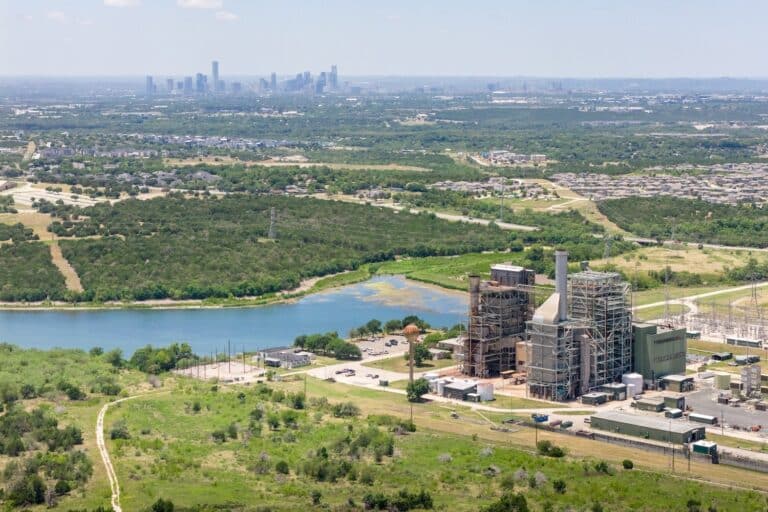
After decades without growth, electricity demand is surging, driven by energy-hungry data centers, new energy-intensive manufacturing facilities, and the increasing electrification of transportation and heating.
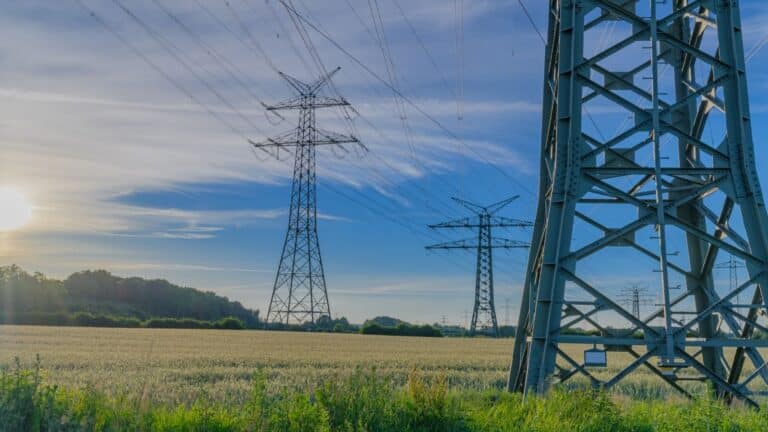
Data centers face growing local opposition as states impose moratoriums on hyperscale projects and grid connections. Communities can negotiate deals for tax revenue and jobs.
When the One Big Beautiful Bill Act was enacted, a widespread reading was that US power-sector decarbonization had been derailed.