Prix des carburants : pourquoi les raffineries sont au cœur de la tempête
Plus que d'un problème pétrolier, la flambée des prix du carburant résulte de tensions sur les capacités mondiales de raffinage.
Get the latest as our experts share their insights on global energy policy.
Last week's summit between US President Trump and Chinese President Xi was the second meeting between the two leaders since the US and Israel attacked Iran.
Hear in-depth conversations with the world’s top energy and climate leaders from government, business, academia, and civil society.
Carbon credit markets have become one of the most hotly debated tools in the fight against climate change. Supporters call them essential to closing the gap between corporate...

Find out more about our upcoming and past events.
Apply to Register The Center on Global Energy Policy at Columbia University SIPA’s Women in Energy initiative invites Columbia University students to a roundtable discussion with Pam Brown,...

Report by Tom Moerenhout, Cina Vazir & Irina Patrahau • July 09, 2025
This report represents the research and views of the authors. It does not necessarily represent the views of the Center on Global Energy Policy. The piece may be subject to further revision.
Contributions to SIPA for the benefit of CGEP are general use gifts, which gives the Center discretion in how it allocates these funds. More information is available here. Rare cases of sponsored projects are clearly indicated.
Corporate Partnerships
Occidental Petroleum Corporation
Tellurian Inc.
Foundations and Individual Donors
Anonymous
Anonymous
Aphorism Foundation
the bedari collective
Children’s Investment Fund Foundation
David Leuschen
Mike and Sofia Segal
Kimberly and Scott Sheffield
Bernard and Anne Spitzer Charitable Trust
Ray Rothrock
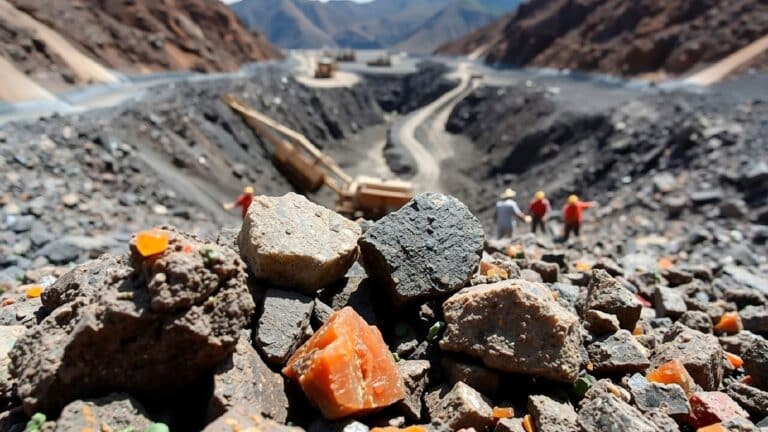
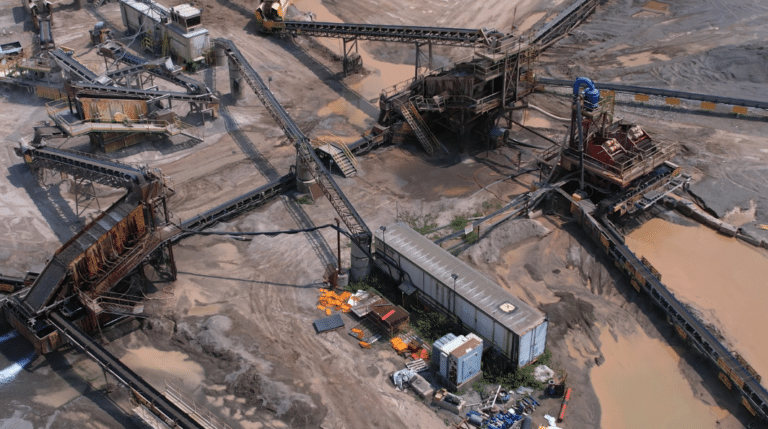
The United States is at a pivotal moment to modernize its approach to critical mineral stockpiling. Minerals are increasingly central to American strategic interests, yet the US remains heavily reliant on foreign suppliers, particularly China, for processed materials. This dependency exposes the US to major vulnerabilities in national, economic, and climate security. The National Defense Stockpile (NDS) can be a key policy lever to reduce these vulnerabilities. At present, however, the NDS is underfunded, covering only a fraction of projected needs in a national emergency. It also may not be realizing its potential to address underlying market failures that threaten US economic interests in addition to its historical defense role.
This report, part of the Critical Materials Initiative at the Center on Global Energy Policy at Columbia University SIPA, finds that an economic stockpile with market-shaping quantities of material may cost more than six times the amount of a defense-oriented stockpile. It is therefore important to integrate stockpiling choices into the wider array of policy options, analyzing whether a stockpile is the most efficient tool to address the specific market failure at hand for each material and transaction.
The report outlines five foundational choices if a stockpiling strategy is adopted, as bipartisan support suggests is possible, and offers related recommendations for US policymakers designing such a system:
The US would need to ensure that the NDS is properly funded to meet its current mandate before considering expanding its scope to industrial resilience and economic security, which would require additional sustained investment over decades rather than a one-off appropriation. But the country does face an important window to align mineral stockpiles with the strategic landscape of the 21st century. A well-designed system can reduce supply chain vulnerabilities, support domestic and allied industries, and enhance America’s geopolitical leverage.
The White House has just announced over $2 billion in new critical minerals, magnets, and battery investments.

Full report
Report by Tom Moerenhout, Cina Vazir & Irina Patrahau • July 09, 2025