US oil stockpiles offset Saudi Arabia supply worries
Oil prices fell on Wednesday as US crude stockpiles rose, with fears of further escalation in the Saudi Arabia and Houthis conflict
Get the latest as our experts share their insights on global energy policy.
The White House announced last week an oil deal for more than 65 billion barrels of oil reserves in Venezuela and a 35% equity stake in North American Blue Energy Partners (NABEP).
Hear in-depth conversations with the world’s top energy and climate leaders from government, business, academia, and civil society.
More than six months into the war with Iran, the Strait of Hormuz crisis continues to cause turmoil in the Gulf region and global energy markets with no...

Find out more about our upcoming and past events.
Join industry leaders, innovators, employers, and emerging talent for an evening exploring the technologies, trends, and career opportunities shaping the future of climate tech.

Insights from the Center on Global Energy Policy
This Energy Explained post represents the research and views of the author(s). It does not necessarily represent the views of the Center on Global Energy Policy. The piece may be subject to further revision. Contributions to SIPA for the benefit of CGEP are general use gifts, which gives the Center discretion in how it allocates these funds. More information is available here. Rare cases of sponsored projects are clearly indicated.
Abby Wulf is Founder and CEO of Lattice Strategies and previously served as Critical Minerals Lead at the US Department of Energy. She also serves on the board of Allied Graphite. She writes here in her personal capacity.
Raw material vulnerability was once again at the center of the G7 agenda at the summit in Evian, France, last week. Leaders announced a new Critical Minerals Resilience and Production Alliance, committed to reducing dependence on dominant suppliers and, notably, declared that member countries would work together to reduce dependence on a single supplier for rare earths and permanent magnets to below 60 percent by 2030. The G7 also launched a platform for Critical Minerals Cooperation to coordinate data sharing and decision-making, and leaders committed to expanding cooperation on project financing, stockpiling, and recycling of critical minerals and reaffirmed their commitment to a standards-based marketplace.
Taken together, these measures represent strong commitments and a recognition that critical mineral supply chains require sustained international coordination. But despite acknowledging the need for holistic market change to truly support the long-term viability of G7-funded critical minerals projects, the group hasn’t meaningfully addressed key market-making mechanisms that the world’s largest economies are best suited to tackle. A brief nod to “market structuration” within the leaders’ statement lists potential policies that could be deployed, but little follow-up on how the group will work to implement them, if at all.
The risk is that G7 members declare victory too soon, pointing to the new alliance, the growing pipeline of projects, the ambition to reduce dependence on a single supplier, and the continued development of a standards-based marketplace. These are important achievements but fail to fully address an underlying enabler of supply-chain concentration, namely, the lack of a G7+ demand-side strategy that changes purchasing decisions, creates predictable markets for diversified supply, and reshapes critical mineral value chains for the foreseeable future.
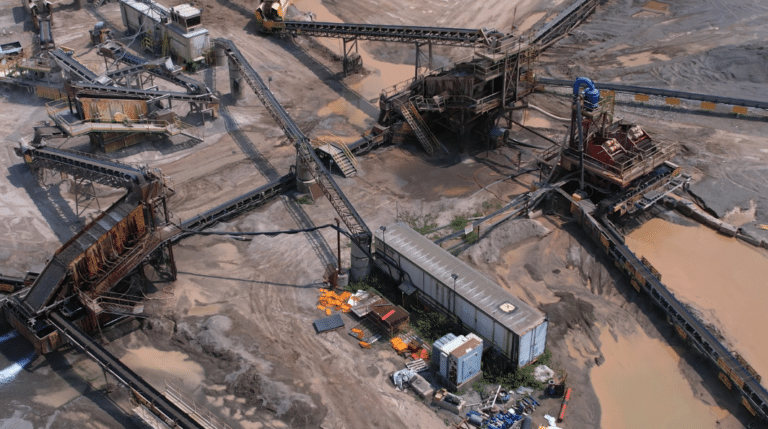
In the 1970s, oil shocks exposed how a handful of producers could turn supply into leverage over advanced economies. The response was to create institutions and coordination mechanisms that let consumer countries manage demand, share information, build stockpiles, and align policy. Today’s critical minerals problem looks different but feels familiar. Critical minerals mining and processing capacity are concentrated in a small number of countries and run by a small number of companies, with one clear dominant player: China. Mining and especially refining of key minerals have become more concentrated in recent years, despite all the speeches and strategies.
Australia, Canada, the European Union, Japan, the United States, and others have all launched strategies, funds, and co-financing tools. The G7 Critical Minerals Action Plan, agreed to last year, was a useful start. The Minerals Security Partnership (MSP) and its evolution into the Forum on Resource Geostrategic Engagement (FORGE) have also begun to coordinate finance and tariffs.
Yet structurally, the vulnerability remains. Supply-side initiatives have not been enough to change the purchasing decisions of downstream manufacturers that still find it cheaper, easier, and less risky to stick with incumbent suppliers.
The G7 has spent years trying to diversify supply, including with the announcement of the G7 production alliance last week and by aligning financing tools. While helpful, supply-side tools run into hard limits.
First, new projects take years. Even with streamlined permitting and state-backed finance, mines and refineries cannot be developed on summit timelines. In the meantime, incumbents continue to invest, often with deeper, more coordinated, and longer-lasting state support.
Second, supply-side support does not guarantee a market. New entrants need bankable offtake, qualification into existing supply chains, and confidence from downstream buyers that switching is worth the hassle and risk. Without that, public money risks propping up stranded assets or triggering boom-and-bust cycles that scare investors away. This is where demand-side policy comes in.
While the G7’s proposed standards-based marketplace attempts to stimulate demand for more responsibly produced material to diversify critical mineral supply chains, the idea does not as of yet account for quality, manufacturer preferences, and the wherewithal of incumbents to actually meet (and even exceed) the standards. And although the previous action plan hints at attempting to block market access to those that employ anticompetitive practices, there have yet to be any concrete steps to implement that criterion. The G7 announced pilots for lithium and nickel are useful in this regard, because they will start showing implementation challenges and how to address them.
When the United States tied consumer tax credits and production credits to the sourcing of critical minerals and components in the Inflation Reduction Act, it demonstrated how powerful standards-anchored demand signals can be. The incentives quickly moved private capital, created jobs, and forced boardrooms to plan around diversified supply, even if subsequent political decisions weakened that architecture in key respects.
Evian decisions create an opportunity to move from discussion to implementation. The challenge now is turning those concepts into coordinated policy rather than leaving them as aspirational language in a communiqué and particularly anchoring them to coordinated demand-side policies.
If the new G7 platform for Critical Minerals Cooperation is to succeed, it cannot simply map projects and publish vulnerability dashboards. It must advance and coordinate demand-side measures: tax credits, procurement rules, tariff-rate quotas, stockpiling approaches, and marketplace access conditions that reward diversified, responsible supply.
In practice, three things can be done after Evian and leading into the US presidency of the G7 in 2027.
First, define criteria for market access beyond environmental, social, and governance (ESG) standards to help achieve diverse supply. While the idea of a standards-based marketplace has merit, it is difficult to implement without firm criteria, such as carbon content, tailings management, forced labor restrictions, and assumes material quality is fungible when it’s not.
Second, prioritize where to start, rather than treating every mineral and every sector the same. The G7 could focus first on the sectors where demand is large and growing, including the grid, data centers, and defense, and potentially shift focus from low-volume “critical” minerals to the money-making base metals, where critical minerals are often natural by- and co-products.
Third, G7 leaders could agree to tie tax credits, procurement preferences, and other tools, predictably but gradually, to diversified and certified sourcing—and not just based on ESG metrics but also on supply chain concentration. Year-one thresholds can be modest. what matters is that the trajectory is credible enough for investors and manufacturers to bet on it.
This agenda is not just about minerals across the G7, but also about a reset in the transatlantic relationship. Over the past years, the United States and Europe have been at odds over industrial policy and climate tools, from the Inflation Reduction Act to the Carbon Border Adjustment Mechanism to repeated tariff skirmishes. Critical minerals are in danger of becoming just another battlefield.
The new EU-US Critical Minerals Action Plan shows there is still room for serious cooperation. It lays out a framework for coordination on trusted supply chains, data sharing, and investment across the value chain. The post-Evian G7 presidency handover from France to the US is the moment to plug that bilateral framework into the broader G7 strategy.
If the G7 can align on a marketplace that builds on the EU-US plan, and then progressively open it to other major consuming partners such as India and Brazil, it gives diversified suppliers a scalable market to sell into, makes it harder for noncompliant material to flow to the path of least resistance, and starts to heal the political wounds that recent transatlantic trade fights have opened.
The White House has just announced over $2 billion in new critical minerals, magnets, and battery investments.

Critical minerals were once again near the top of the agenda for G7 leaders as they met in Évian, France, this week, a year after the G7 launched the Critical Minerals Action Plan.

One of the central objectives of the second Trump administration has been to pursue a maximalist trade policy toward China.

The US Export-Import Bank is preparing to close the first funding tranche of Project Vault, a public-private partnership establishing the US Strategic Critical Minerals Reserve.
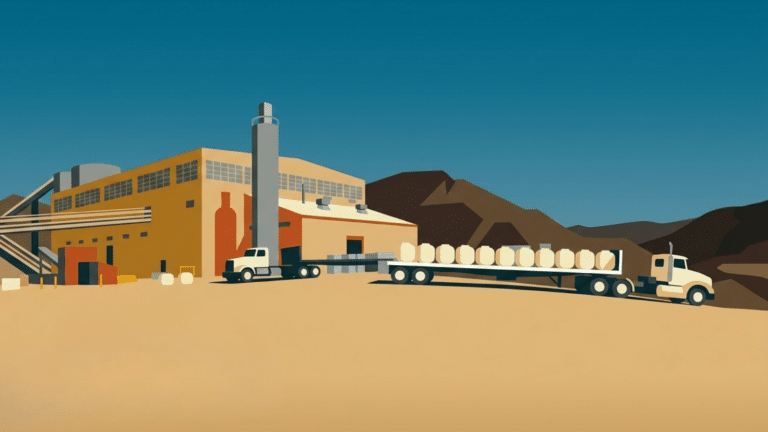
In early 2026, CGEP held a roundtable and several hybrid closed-door meetings in Mexico City on Mexico's mining sector.