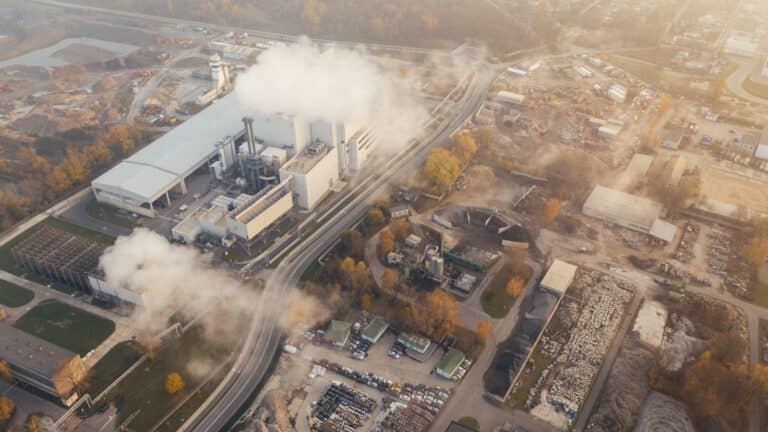
Prix des carburants : pourquoi les raffineries sont au cœur de la tempête
Plus que d'un problème pétrolier, la flambée des prix du carburant résulte de tensions sur les capacités mondiales de raffinage.
Get the latest as our experts share their insights on global energy policy.
Last week's summit between US President Trump and Chinese President Xi was the second meeting between the two leaders since the US and Israel attacked Iran.

Hear in-depth conversations with the world’s top energy and climate leaders from government, business, academia, and civil society.
Carbon credit markets have become one of the most hotly debated tools in the fight against climate change. Supporters call them essential to closing the gap between corporate...

Find out more about our upcoming and past events.
Apply to Register The Center on Global Energy Policy at Columbia University SIPA’s Women in Energy initiative invites Columbia University students to a roundtable discussion with Pam Brown,...

Chairman of Market and Investment Strategy, J.P. Morgan Asset Management
Michael Cembalest:
I’m just telling you the facts on the ground are that we are in a linear transition and not what is often portrayed as a geometric one.
Jason Bordoff:
The energy conversation today is full of confidence and also confusion. We debate whether data centers are driving up power prices, whether solar plus storage can replace natural gas as base load power, whether small modular reactors can become commercially viable, whether emerging technologies like geothermal or hydrogen or carbon capture are real solutions or still mostly hype. And whether today’s energy crisis in the strait of hormones will accelerate a transition away from oil and gas.
But underneath all those debates is a more basic question. Do we have the data, the evidence, the analytic clarity that is needed to understand where the energy world is actually headed? That’s the focus of Michael Cembalest’s latest annual energy paper from JP Morgan. The report takes on some of the most contested claims in the energy world today from the so-called primary energy fallacy, which can obscure how much useful energy renewables actually provide to China’s dominance of clean energy supply chains and the economics of electric vehicles or the role of demand response.
Michael’s work is a reminder that the energy transition is not just one story. It’s a messy collision of climate ambition, energy security, industrial policy, technology, capital costs, and consumer behavior. And to make sense of it, we need to separate what’s real from what’s wishful thinking; what’s material from what is marginal; and what the data show from what the headlines seem to suggest. So where’s the global energy system really headed today? Which technologies are gaining meaningful traction and which are not? What are the most common fallacies distorting the energy debate? And as electricity demand grows and costs rise and geopolitical competition intensifies, what should we be paying closer attention to?
This is Columbia Energy Exchange, a weekly podcast from the Center on Global Energy Policy at Columbia University. I’m Jason Bordoff. Today on the show, Michael Cembalest. Michael is chairman of market and investment strategy for JP Morgan Asset Management. Prior to his current role, he was the chief investment officer for JP Morgan’s global private bank. Michael has spent his entire career at JP Morgan joining the securities division in 1987. Michael joined me to discuss his 2026 Eye on the Market Energy Report, which takes a hard look at the state of the energy transition and the many battles shaping the energy world today. It was a wide-ranging conversation about what the data actually tell us and what they don’t. I hope you enjoy it. Michael Cembalest, great to have you for the first time on the podcast. Really good to see you again.
Michael Cembalest (02:59):
Thank you.
Jason Bordoff (02:59):
So I always want to talk to you about what is happening in the world and we will no doubt do that. One of the immediate impetus for asking you to come on was I think many people in the energy world, but I don’t know, maybe not as many as should be, like myself, find your annual energy paper must read event of the year that we look forward to and spend enormous amounts of time consuming. So we’re going to talk about what you put in that paper this year when it came out, I think that was back in March at this point. But maybe you could just, for those who may not be aware of it, talk about what that paper is, how long you have been doing it. I know Vaclav Smil has been involved for a while, what you’re trying to achieve with that paper.
Michael Cembalest (03:41):
Yeah. My day job is I’m the chief investment officer in the asset management business here and we deal with a lot of clients, institutional clients, individual clients, and a lot of them are extremely knowledgeable in the industries they work in, whether it’s real estate, pharmaceuticals, technology, healthcare, you name it. And I noticed about 20 years ago that one common feature of all these people is many of them knew a lot about their own sector and a couple of other ones, but didn’t understand anything about energy. And I didn’t understand that much about energy. And I would go out to Silicon Valley and people would say things like, “Well, we should just shut down all the coal plants tomorrow because that would provide a market signal to come up with a replacement.” And I remember thinking, well, that’s an interesting theory and certainly it’s played out that way during certain technological revolutions, but energy may be different.
(04:38):
So I started doing a deep dive on energy fundamentals and 16 years ago we wrote the first one. So this year was our 16th one and each year we do cover more topics, more modeling. And for me, it’s less about 2035 and 2050 projections. Plenty of people do that. And if you want them, you can get them. The EIA will give it to you. The IEA will give it to you. IRENA will give it to you and Baird will give it to you. There’s an alphabet soup of people making projections of the future. What I’m trying to deliver is a forensic analysis of where we are and what’s been happening because I think for our clients that want to invest in energy or participate in energy discussions, we got to cross that bridge first.
Jason Bordoff (05:32):
And so we’ll go into a number of specifics in this year’s paper, and you wrote this, I guess, just as the invasion of Iran, the attack on Iran had happened. It was just must have been a couple of days after. So obviously that has impacted a lot, but where are we? And when you say a forensic analysis of where we are, so at a very high level, tell us where we are in the energy sector today and what big themes you are paying the closest attention to.
Michael Cembalest (05:59):
Well, I like to look at the bottom line on things. I mean, you can focus on EV sales and heat pump sales if you want, but that doesn’t really answer the question of are those cars second cars or are they replacing internal combustion engine vehicles? So it doesn’t answer those questions. And so I like to do my forensic analysis at the final energy consumption level. And so for instance, EV sales can distract you from the percentage of the fleet. When I went to college a long time ago, I remember my roommate had a Ford Mustang. Back then, a 1986 Ford Mustang would probably last you about eight years before you had to scrap it. It was a terrible car. And the average life of vehicles today is much longer. And so the percentage of sales doesn’t impact the fleet the way that it must did.
(06:59):
My wife and I, when we have cars that are 15 years old, we have friends and relatives that are more than happy to take them from us. So I focus on the renewable share of final energy consumption. Now that sounds simple, but it’s not. It’s the renewable share of final energy consumption. So there’s a lot going on there. So first of all, I’m not just talking about electricity. And if electricity is 33%, somewhere between 25 and 33% depending on the country, if electricity is 25 to 33% of overall final energy consumption, it should consume or represent 25 to 33% of all the stuff that you read write about energy, but it doesn’t. It gets 70 to 80% of the airtime about the energy transition and related things. And so I’m interested in overall energy consumption.
Jason Bordoff (07:54):
And is that because in your view people … I’m just laughing by the way as you were talking about your car because I dropped my Tesla off at the dealer this morning, it’s 10 years old and the battery is not performing the way it once did. Is there a way to extend the life of this thing? Can you do an inspection of the battery health? But you’re right, especially those cars should be lasting a pretty long time. Just the misunderstanding between electricity and energy, is that’s what’s not well understood at a high level?
Michael Cembalest (08:20):
People understand that electricity is a subcomponent to vulnerable energy consumption, but because so much of your peripheral vision is about power consumption, people overestimate. So if you do a random sample of the average person, professional person and ask them to estimate what electricity is as a share of total energy consumption, their numbers are typically way too high because it’s kind of like one of my sons went to Middlebury. And Middlebury, it’s a very progressive school and talks about the fact that it’s a green campus because they have wind and solar that power the lights and the HVAC, but that has nothing to do with how the food has grown and how people come and go from the university and how they make cement to build the campus buildings. So elect power consumption is very easily visible. The rest of the energy consumption less so. So I’m focused on renewable as a share final energy consumption. Those numbers are going up-
Jason Bordoff (09:26):
Can I interrupt for one second? Because you said the word final, which I think is important and you use numbers like 25 to 33, not maybe around 20, which is how some people would talk about the global average at least.
(09:39):
Well let me get that in a second, but you said, where are we? Renewables as a share final energy consumption are growing at about 1% a year in China and Europe at about half that pace in the US and the rest of Asia. So now we’ll see, I think there’s a decent chance that the pace of those numbers picks up in the next couple of years, but we’re still talking about one and a quarter to 1.5%, not 5%. So for everybody that’s expecting some kind of rapid transition, even in Europe, which is the world’s transition leader, this is going to take a really long time.
(10:16):
And just to give the listener a sense of scale, solar today and wind today are what percent of the world’s total energy use?
Michael Cembalest (10:25):
I’m going to add hydro on top of that. So if you look at, let’s look at Europe, because Europe’s the transition leader. They’re at the top 18% of their final energy consumption is renewables. Now that’s wind and solar, which is roughly half of that and then hydro, biomass and geothermal and a bunch of other cats and dogs. So 18% growing at one, maybe one and a half percent a year, good progress, faster progress than a few years ago, but it’s way too premature to talk about Europe no longer needing acces to natural gas and coal.
(11:04):
And I’m all in favor of the things that can accelerate that transition. Certainly Europe’s doing a bunch of them by subsidizing EV purchases and making it easier to build high voltage transmission lines and things like that. And subsidies for heat pump adoption, thinking about heat pump adoption for industrial applications and not just commercial and residential ones. Those are all great ideas, but I’m just telling you the facts on the ground are that we are in a linear transition and not what is often portrayed as a geometric one.
Jason Bordoff (11:36):
As you’re speaking-
Michael Cembalest (11:36):
Want to talk about the final energy consumption?
Jason Bordoff (11:38):
Yeah. Well, I have the report in front of me and I was looking at the cover art of three people shooting each other, which I think speaks a little bit to what you were just saying about people not fully appreciating we probably still for a while need all of these things. We want to tell people who haven’t seen it what the cover art is?
Michael Cembalest (11:57):
Yeah. The cover art was motivated by this movie, The Good, The Bad and The Ugly, and it was with Lee Van Cleef, Eli Wallach and Clint Eastwood. And in the last scene, there’s a three-way shootout where they’re all pointing at each other in this triangular shape and inspired me for this year’s cover because we have the wind and solar people shooting at nuclear and fossil fuels. We have the fossil fuel people shooting at both, and then we have the nuclear people shooting in both directions. And because I end up a lot of discussions with policymakers and clients who are fixated as is the secretary of energy on one particular edge of that triangle to the exclusion of the others. And I’m more in the camp of our chairman and other people who are like, at least for now, we need a decent mix of all of these things.
(12:50):
So that’s the cover. That’s why the paper’s called Fighting Words.
Jason Bordoff (12:54):
So yes, you do talk in the paper about the primary energy fallacy. So without getting too wonky and technical, help people understand why you thought it was important to call that out in the paper.
Michael Cembalest (13:05):
Yes. So for many years using the people that was available in these databases, the convention was to think about energy and primary energy term. And so how much oil do we consume? How much gas do we consume? How much coal do we consume and then some renewables on top of that. And the problem with that is that there are enormous losses with fossil fuels when converting to power, smaller losses maybe on the order of 10 to 15% where you’re using them just for direct heat because you’re using boilers and furnaces at that point rather than a combustion cycle, combined cycle turbine. But there was a period of time where people were underestimating a potential contribution from electrification because they were looking at those gains relative to overall energy consumption without adjusting those fossil fuel flows for the losses that they experience. And using a lot of estimates and analytics, we’ve built a multifactor model that looks by sector, by fuel and by country using Sankey diagrams from the IEA as inputs to kind of figure out what’s the real final energy consumption adjusting for all of those combustion losses in the different ways that they’re used.
(14:27):
And that just gives us a cleaner look at what the contribution of electrification and renewable energy and nuclear for that matter are providing. I think it’s more accurate. There are some people on LinkedIn and in other forums that are absolutely out of their minds about the fact that people aren’t paying enough attention to this. I think it’s reasonably well understood at this point, but there are some people that have kind of just have a cottage industry and have established their entire reputation by pointing out the primary energy fallacy everywhere. And I just think that at some point they’re just talking to themselves.
Jason Bordoff (15:06):
The point being that in the end, what someone cares about is a kettle of hot water and whether it’s heated with electric coils or heated with burning fossil fuels in the end, you’re consuming different amounts of primary energy, but you’re getting the same thing, which is as-
Michael Cembalest (15:23):
I think the easiest way to think about it is if you look at the total amount of fossil fuels that are used by passenger cars and you translate those into the amount of energy that you’d need for electrification, you’d be massively overstating the amount of power that you need because combustion engine passenger cars are only, let’s call it 20% efficient at converting that fuel to motion, whereas an electric motor is maybe 90% efficient. So you just have to do the conversions correctly to figure out how much power you might need in the future in a more electrified world where you’re displacing fossil fuels with electrification.
Jason Bordoff (16:07):
And you have a good way to give people a sense of the scale of that if we had solar wind, nuclear, or generating electricity and we had a more electrified economy, how significantly that would change total energy needs?
Michael Cembalest (16:23):
We’ve done a lot of modeling on this, but again, I try not to get carried away with it. People have been talking, for example, about the electrification of industrial energy consumption for 20 years and in the United States it’s unchanged. So the electricity component of industrial energy consumption has been stuck at 20% for a really long time. And so we can do all sorts of modeling on what if industrial heat pumps replace this or that, and then how much gas, coal — mostly gas — and coal with that offset and you can run the numbers and we’ve done it, but I’d like to see more evidence that’s happening for us before we start breaking our brain cells on that kind of modeling.
(17:11):
And one of the things that is insufficiently understood about everyone loves to talk about electrification, but just think about this image that I remember seeing as a kid. There were people that used to throw things out the bus window on the way to school and on very windy days they would just come right back in and hit them in the face. And sometimes there can be offsetting forces that you have to think about in life. So it’s true and I’ve done this personally, so I know the numbers. I’m sitting in a house right now that used to have an oil furnace for winter heat. I switched to a Bosch heat pump That’s good. The amount of energy that I need for heat is a third less than it used to be is one third of what it used to be.
(18:08):
Because heat pumps are extremely efficient at converting electricity to heat. So if I needed exit joules of heat before, now I only need one exit joule of electricity. Sounds great. What’s the problem? Electricity is in most places roughly three times the cost of a megajoule or a joule of natural gas per unit of BTU. So I have this new device that can generate heat and it does so three times more efficient, but it runs on electricity, which costs three times more than the natural gas it used to power my furnace. And so that’s one of the reasons why electrification of heat is a rather slow process. Now subsidies can help that in countries where there are explicit carbon taxes can help that, but that’s one of the challenges that people don’t pay enough attention to is electrification is great until you start looking at the cost of electricity versus other forms of energy.
Jason Bordoff (19:10):
And some people listening may hear what you said and say, well, that’s all because of data centers. That’s why electricity prices are so high and rising. Obviously electricity prices are much more front of mind as a political issue these days than we’ve seen in the past.
Michael Cembalest (19:24):
Electricity prices have been roughly three to four times the cost per megajoule versus natural gas and propane for 20 years. That nothing to do with the data technology.
Jason Bordoff (19:36):
Talk about the national conversation we’re having about power prices right now. Is it as bad as everyone says? Is it different in different places and what’s causing the price increases where we see them?
Michael Cembalest (19:48):
I spend a lot of time on this energy piece. It’s not my day job, but I have a passion for it, but I don’t particularly enjoy a lot of the dialogues I end up having with people because I feel like I’m in divinity school because people have these religious notions that cannot be dislodged no matter how much evidence is put in front of them. And similarly, there’s so much different studies going around that if you want to make the point that data centers are pushing up power prices, you can find all the studies you need. If you want to make the point that data centers are not having an impact on power prices, you can find all the studies you need. Economics as a discipline has dealt with this issue and you know this working at Columbia years ago by producing something called meta studies.
(20:40):
And for example, on immigration, there’s all these debates about whether immigration displays its local jobs and depresses wages. The studies are all over the place, but what’s interesting is the meta studies paint a clearer picture by looking at all the different studies. We’re not there yet at energy. So you’ll have people posting on LinkedIn, “Oh my God, look, I found this study that was just posted online that makes it clear that there either is or is no impact. Therefore, the debate is settled and everybody that disagrees with me is an idiot.” So from my perspective, the reality is first of all, when you deflate electricity prices from inflation, obviously since 2021, 2022, they’re only up a couple percent, I’m sorry, two cents a kilowatt hour. So because we had this inflation surge and why that happened is a whole different discussion. You have to have the discipline to look at things in real terms across the economy and electricity no different.
(21:43):
But yes, there are studies that show in certain places, particularly in PJM, that data centers have on the margin pushed up power prices in some location and not in others.
Jason Bordoff (21:57):
But what I hear you saying is also at a national average level, which may or may not be a useful metric, this is not that big an issue. It may be an issue in certain places in PJM.
Michael Cembalest (22:07):
Well, yes. Well, hold on, but it hasn’t been an issue in certain places because the data center construction has up until now, very recently, been so concentrated. There are certain parts of the country where power prices are negative parts of the day where you have excess wind or something like that and all of a sudden we’re starting to see an expansion of where data centers being built to take advantage of those negative power prices. I think we have to see how it goes. It is interesting to see the backlash against data centers that’s emerged over the last six months. It’s interesting because it feels as ferocious as the anti-fracking stuff, but I mean, at least with hydraulic fracturing, you can make the credible argument that under certain circumstances it screws around with the water table and aquifers and is actually having real damage, particularly when some of those lined pools overflow and things like that.
(23:10):
So it’s interesting to see this level of discomfort over the data centers when there’s less evidence when compared to fracturing. I think part of it has to do with the low labor intensity. I mean, outside the construction process, data centers have a very low labor intensity benefit for the community.
(23:33):
Some of the tax deals they’ve gotten have been on the order of what stadiums get and look what’s happening in Chicago and the Bears. I mean, all of a sudden communities are rethinking some of those super generous subsidies. And I also, if I had to pick, I think the anxiety about job loss is probably the largest subliminal factor in some of the resistance-
Jason Bordoff (23:55):
Not from AI, not from the data centers, you mean from the –
Michael Cembalest (23:59):
From what the data centers are doing.
Jason Bordoff (24:00):
Exactly. Can you talk a litle bit about, so where you see power prices going, but also power demand, like these exponential straight line increases when people take AI technology today and the way we do the algorithms of AI, the way we build data centers, the way we do inference and training and just draw straight lines up. And we’ve done that before for the internet for cryptocurrency. It doesn’t always quite work out that way. I’m wondering where you think power demand growth is actually headed.
Michael Cembalest (24:30):
I hate hockey stickers. I’ve always hated hockey stick charts everywhere I’ve seen them because they rarely end up looking like that. Sometimes they do and solar adoption has actually been even more accelerated than hockey stick, which we can talk about. So sometimes the hockey stick approach is too pessimistic. But if you go back, electricity demand rose at like two, 2.5% a year from 1950 to around the year 2000. It was very, very, very consistent. Starting in the year 2000, electricity consumption started a flat line and was almost completely flat until 2020, 2021. And what appeared to be happening was obviously you have a growing economy and a growing population growth, but increased improvements in energy consumption, washing machines, refrigerators, windows. You’ve got to go down the list of incandescent lighting, you just kind of go down the list and those efficiency gains offset the population growth.
(25:37):
Over that period of that flat electricity demand, there were multiple expectations of power demand growing that just didn’t happen. So we have a lot of evidence that people can be wrong about this kind of thing. We’re probably in the very early stages of what we understand in terms of what AI can do and how it’s going to be used and the balance between training frontier labs and inference models. One of the things I’ve been working on recently for a piece that we’re doing is tokens themselves, which are the kind of units of trade in the AI world, have been heavily subsidized and we’re starting to see a movement towards usage-based pricing for tokens. What’s happening? All of a sudden companies are saying, “Well, wait a minute, I’m only interested in doing it this way if I get heavily subsidized. If you’re going to actually pass through all the power consumption costs and infrastructure costs of these tokens, forget it. I’m going to use a free downloadable Chinese open-source open-weight model.”
(26:44):
And so I think it’s way too premature to be extrapolating some of this power demand from data centers because we know that there’s going to be some changes along the way. In most countries, I think electrification of passenger cars and of winter heating is probably going to be faster than the data center growth. So I’m taking the under on some of the McKinsey, Bain, BCG type numbers I’m seeing.
Jason Bordoff (27:16):
And does that mean we’re going to overbuild or we’re still short of even what might be not quite as extreme growth rate?
Michael Cembalest (27:23):
Yeah, like everything else, the US is kind of having this binge right now where you can’t five years for a combustion turbine, people are scrambling to get these Bloom fuel cells because they think they’ll be able to connect their data center sooner. Interestingly enough, the CEO of Mitsubishi, Siemens and GE Vernova, which are the three companies that produce these combined cycle turbines are kind of expanding production capacity a little like on the order of 10 to 20% because they’ve seen this movie before and so I just think it’s too early and yes, there’s a chance that we end up with some of this stuff that gets overbuilt relative to future consumption.
Jason Bordoff (28:11):
And what’s your take on the importance of that surge and investment for the health of the US economy now, which seems remarkably resilient given that we’re in the middle of an energy price shock and other headwinds?
Michael Cembalest (28:23):
I would say that this is the luckiest thing that’s ever happened to the Trump administration because if you strip out the tech boom from the GDP numbers or S&P earnings or the capital spending numbers, we have a very different economy.
(28:40):
And one of the most interesting charts was we did a lot of work on the tariffs when they first came out and every time they would announce a tariff, they would announce what was exempt in some exhibits someplace. And we did all the modeling on this. It was a giant spreadsheet we had of this matrix and it turns out that a lot of AI related stuff was 80 to 85% exempt from tariffs. So what’s buried in there is an acknowledgement from the administration that they can’t afford to get in the way of this locomotive right now because it’s driving so much of economic growth. I have some charts where we track the percentage of GDP both coming from the tech capital spending numbers, percentage of capital spending, rough numbers there are something like 70, 75% of earnings, revenues, and capital spending over the last three years have been tech related.
(29:49):
So it’s very, very elevated. There’s all this kind of talk of what if you get this antitrust wave and this and that. I’ll believe it when I see it. I think the administration’s going to be very careful not to get the way of this thing.
Jason Bordoff (30:02):
That makes sense. That sounds right. You talked about relative to the perception some have the modest growth of renewables 1% roughly you started, I think the conversation with help people listening understand how you view the cost of say solar and solar plus storage, which one often hears is the cheapest form of energy. So presumably we should be doing vastly more of it.
Michael Cembalest (30:32):
It is, right solar and storage are being bought off the shelves at a pretty rapid pace. What I object to is the kind of simple marginal LCOE analysis where let’s say you and I lived, we were creating two cities from scratch and you built your city first and it’s powered 100% by natural gas and I built the same megawatts of solar. Well, obviously I’ve got a problem because of intermittency and things like that. So I’m going to have to do a combination of overbuilding the solar and buying some swords to smooth out my power demand or power generation in order to match what you’re able to do. And so system-wide cost is more relevant than marginal cost. I think that’s important to understand.
Jason Bordoff (31:35):
And when you look at system-wide cost, how do you understand then the cost of solar plus storage, whereas today versus say natural gas as baseload power?
Michael Cembalest (31:50):
So for example, suppose you have a data center and you want it to do some kind of behind the meter application solar plus storage to fulfill 90% plus of your power demand is 50% more expensive than a combined cycle turbine. Now that is excluding the benefit of whatever subsidies may be in place, but those get phased in and out and be, more importantly, they’re not free. I mean, somebody’s paying for those subsidies. I always tell people, let’s assume that the ITC or PTC was 100% instead of what it is. Power costs could be very, very low, but that wouldn’t represent the true economic cost of that power because the taxpayers are essentially funding it. So you can’t exclude those. And to their credit, Lazard does a lot of the questionable things, but at least their primary cost numbers exclude government subsidies. And solar costs have come down a lot, but they’re very different depending on what country you’re in and the same holds true for utility scale solar.
(33:14):
You also have to build in the right degradation factors for solar and for batteries as you’ve learned with your Tesla. People tend to underestimate those as well. And so we work directly with NREL and with LBNL. They’re the ones that are doing the most work on issues related to degradation, capacity factors, things like that.
Jason Bordoff (33:36):
So I mean, that’s still a pretty optimistic story and optimistic in terms of the potential for solar with storage to contribute to meeting rising power demand. Why is solar in particular maybe wind also not growing faster than the numbers you gave us at the start? Is it just supply chains can only be scaled so quickly or are there other constraints?
Michael Cembalest (33:58):
They are growing. I mean, the solar adoption around the world is, I mean, I hesitate to use this word because it gets people too excited, but you do see a geometric growth in adoption of new solar power. And in some parts of the world, natural gas, levelized cost of natural gas is very different than in the US because they have to pay for gasification and multifaction facilities, which at the same time the natural gas can be $3 in the US, it can be $12 elsewhere of the same jewel of energy because of what it costs to get it there. So whenever you think about relative costs in Pakistan, it’s a different story. And in Europe, it’s a different story. So that’s a big part of the equation. Solar and storage are having their moment and I do anticipate a mild uptick. But again, when solar and storage gets added, what it’s primarily doing right now is displacing some coal or gas on that country’s grid.
(35:14):
It’s not really yet displacing material amounts of energy consumption that is not electrified.
Jason Bordoff (35:21):
Yeah. So come back to that point, how would you describe, when I saw you present a couple of months ago, we were in a room and I think you were helping people understand that maybe this transition is happening a little faster than some people might appreciate. Is that an accurate way to assess where you think we are right now in the state of the energy transition?
Michael Cembalest (35:47):
When I show people the chart, and I’ve had a lot of people react to it in different ways, some people tell me that they read my energy paper each year and they go into a deep depression, but that’s only because they had acclimated themselves to a set of expectations that were completely unrealistic.
Jason Bordoff (36:06):
That we were headed for net zero 2050 and that was the current business as usual trajectory.
Michael Cembalest (36:12):
When the Biden Energy Bill was passed, and this is the kind of thing I have a lot of experience with because I do a lot of work on tax bills. And when there’s a tax bill passed, the CBO, which is truly an independent entity, the CBO is going to go and do the analysis. And even under the Trump administration, which is saying a lot, the CBO has maintained its independence. They’re the last of a dying breed. So the CBO will do an independent analysis. Now the OMB can do their own analysis, the Office of Management and Budget, but that’s an agency of the president of the White House. The CBO will do an independent thing. When the energy bill got passed, the DOE did not do any kind of assessment of its impact on decarbonization.
(37:03):
They hired three outside firms to do it. I’m not going to name any names. I think there was a lot of pressure on those consulting firms to back into a set of assumptions that would result in substantial decarbonization. And that’s why even before Trump took office, the pace of decarbonization was nowhere near what was being forecast in some of it. So I think people were led down a little bit of a guarding path in terms of what … I mean, one of the assumptions I remember reading was 90% EV percentage of sales for class eight semi-trucks by 2030. It could happen. Right now, we’re not just anywhere near that kind of trajectory. But I’m optimistic when I look at it because it’s definitely moving. It’s going up every year. It’s continuing to go up even in the climate that we’re in, even with the administration falling all over itself to make life as difficult as possible as it can for people that want to do new projects and wind and solar.
Jason Bordoff (38:09):
Is that a lot of headlines and marginal or is that real? I mean, solar is going to be the fastest growing form of energy as hyperscalers and others look to deploy. Is the loss of the tax credits, given what you just said, maybe the benefits were overestimated.
Michael Cembalest (38:25):
It is material. There’s an analysis that just came out.
Jason Bordoff (38:30):
There are a lot of headlines about large payments for companies to pull back from offshore wind plans and invest in gas instead, but the economics of offshore wind didn’t look that favorable in the first place. It’s not clear these projects were going to move forward in any event. I’m not saying the company should have received their payments to the government back, but
Michael Cembalest (38:48):
Companies shouldn’t be told they have to invest in the oil and gas sector instead of investing in offshore wind. I mean, that’s kind of crazy, but there’s an analysis that just came out that I thought was very interesting that looked at in 2025 the amount of capital investment in low carbon energy and relative to prior trends. And when you look at those numbers, the US is on a very different trajectory than the rest of the world and the Middle East. So this looks at from 2015 to 2026, the share of total power generation investment from low emission sources. The US did a major U-turn in 2025, 2026. Europe is up, Japan is up, China’s up, Latin America’s up, India, Africa, other Asia, Southeast Asia. The US and the Middle East are the only ones that have kind of taken a U-turn there. Some of the administration policies are feeding through to the kind of capital investment that will affect the pace of renewable adoption. They’ve put a lot of their eggs in SMRs and geothermal. We’ll see.
Jason Bordoff (40:12):
So you’ve talked about the pace of the transition and what people understand and don’t. We talked a lot about renewables, but as you said earlier, that’s only part of it. There are molecules, not just electrons. Talk about the other full range of technology. You mentioned a couple of these already, nuclear, geothermal, hydrogen, heavy industry. Where do you see some of that, which helps us understand the outlook for clean energy and for fossil fuel demand globally?
Michael Cembalest (40:43):
There’s a bucket of lost souls on the journey to a clean future. And right now, electrified shipping, electrified aviation, and anything related to hydrogen are the three lifeless bodies floating at the bottom of the bucket of lifeless soils. So every time I write about hydrogen, I call it hydrogen because it just doesn’t really have a purpose in terms of green hydrogen. The costs are just phenomenally high and every time anybody actually runs the numbers, they come to the same epiphany. So let’s not waste too much time on that. I’ve written a lot about this and people can read what me and other people have written. Nuclear is probably the biggest head scratching puzzle in a way in the energy world because China, India, and some other emerging market countries and Korea, by the way, have demonstrated that you can build on a cost per megawatt basis at roughly 20 to 25% of the cost of the big four white elephants that have been built in the West.
(42:00):
And I’m talking about Flamanville in France, Olkiluoto in Finland, Hinckley in the UK, and then Vogtle in Georgia and the US.
(42:11):
Every energy conference I’ve ever been to, there are panels about why this gap exists and how to close it, but panels aren’t going to close the gap. And until I actually see the facts on the ground like this, the government can do this and that, but look, at the end of the day, until we see some evidence that that gap is closing, I have every reason to be very suspicious about it. A nuclear power is the best cocktail napkin idea in the history of energy. And then everything about it after that is execution. In China, is it 20 to 25% of the cost because of lax regulations? And every time they’re supposed to use five-eighths sheet rock, they use three-eighths and because they’re taking other shortcuts, there’s some evidence that that’s it. Is it because the cost of raw materials, labor and concrete and things like that are cheaper in China?
(43:08):
That’s some of it. China has less class action lawyers. I think any Chinese class action lawyers that gets away of a new government project gets disappeared and goes off some reeducation farm and has never heard from again. So there’s a lot of different factors that explain those numbers. I’ve just not seen enough evidence that the lawyer-heavy regulation-heavy Western countries can replicate that experience. I’d love to see it. I’d love to see evidence that it could be done, but so far I can’t find it.
Jason Bordoff (43:45):
Well, does that just mean China makes all of this cheap for the rest of the world and that’s their contribution?
Michael Cembalest (43:53):
Well, that’s certainly what they’ve been doing with batteries and solar panels and EVs. And so at some point, yeah, they’re going to start exporting their nuclear technology as well.
Jason Bordoff (44:07):
Somehow we have talked for roughly 45 minutes and this may be the first conversation I’ve had since I last saw you in which two energy folks have talked for that long without discussing the Strait of Hormuz. So has the loss of something like 14 or 15 million barrels a day and obviously the natural gas spikes being felt elsewhere, not so much in the US, just the whole crisis that we have seen, does that change anything you put in that paper, your thoughts about where we’re headed, or does it reconfirm, maybe accelerate some of those trends?
Michael Cembalest (44:40):
I do think that as a person that’s … I’m in my 60s, I like to have the discipline to look at certain numbers and figures. And when I was a kid and my father had to look at the last digit of the license plate to go get gas, the oil intensity of the US economy was five times higher than it is today. During the Iraq war in 1990, the oil intensive US economy was three times higher than today. And at some point, we’re not there yet, obviously, but at some point we will reach a de minimis level of oil intensity to the point where the economic impact is very modest. I don’t think we’re there yet, but I think people are underappreciating the degree to which oil and broader energy intensity of growth has declined. And that’s mostly a function of increased deficiencies as we’ve discussed and also to a lesser extent, some oil to gas deal switching. The gas thing is complicated because while people talk about 20% of the gas market being offline, it’s 20% of the LNG market. And LNG is only 20% of the global gas consumption. So it’s 4% offline, which is having of global gas consumption. So it’s having very concentrated impacts on countries that are very sensitive to that.
(46:09):
The stocks are being drawn down and based on the energy people that I talked to where in a month or so, we’re going to be at some pretty dire levels if the stocks continue to be drawn down at the same pace that they are and there’ll be an economic cost to that and I’m not sure exactly what it’s going to be. One of the big fallacies of some people in the administration and others has been underappreciating or sorry, overestimating the benefits, I should say, of US energy independence. So the US is now almost completely energy independent. We are a net exajoule exporter of gas, coal and oil. Now that said, in the US, methanol prices are up 80%, shipping fuels up 52%, NAPTA up 52%, wholesale gasoline up 50%.
(47:16):
Same thing with toluene and propylene and benzene and retail diesel prices, retail gasoline, jet fuels up 40%. So in a global market, when some of these things are priced globally, being energy independent, it does not give you the immunity to these price shocks that I think some people were anticipating.
Jason Bordoff (47:38):
Yeah, as it does for natural gas. I mean, there we have $3 Henry Hub and $17 in Europe and 20 in Asia. So that’s a pretty big disconnect, more immunity to your point. Oil’s priced in a global market. I do wonder, you’re right, of course, you’re still seeing gasoline prices go up, although they come off about 40 cents in recent weeks, but you’re affected by what happens halfway around the world, whether you’re a net importer or exporter because it’s a global market. And at the same time, I wonder if you agree we don’t quite see as much of this now, markets have adjusted at least for a period of time, but the large spreads we saw between the physical price like dated Brent and other parts of the world and the traded price, we didn’t see those to the same extent in the US. The negative effect on GDP, the macroeconomic effect of an oil price shock I presume is lower if the more consumer spending is transferred to domestic producers rather than foreign producers. So you’re not immune, but you’re more resilient, right?
Michael Cembalest (48:37):
I think in the overall numbers, yeah, in the overall GDP numbers, yes. But again, we are in this weird moment with the largest capital spending boom that I think has ever been recorded is taking place, which is why I think the Trump administration is so lucky that the US economy doesn’t have to absorb the consequences of this war directly and without any offset. One of my favorite charts that I started showing people last year is in 2025, tech capital spending as a percentage of GDP was equal to the moon landing plus the electrification of farms in the 1950s, plus the Manhattan project, plus Eisenhower’s Interstate Highway Project as a percentages of their respective GDP. So this is an unbelievable experimental capital spending boom that is at least in the near term, less sensitive to crude oil prices and so therefore hasn’t been derailed because the power that’s behind all these data centers is mostly natural gas whose prices are roughly flat this year in the US. But that’s the mother of all coincidences that I think have mitigated what would otherwise be a more depressing set of facts about what the economy’s up to.
Jason Bordoff (50:09):
You mentioned a few different kinds of fallacies, which I appreciate what’s misunderstood, what do people get wrong? And in the intro to your paper, when you lay out, here’s what I’m talking about this year, one of the items is the misplaced fascination with small country energy transitions. What did you mean by that?
Michael Cembalest (50:26):
Yeah, well, that’s me being obnoxious and I’m not above that. And I’ve worked really hard on LinkedIn to curate a feed and it works. I mean, credit to them. You can create a feed if you work hard on it that really just isolates your feed to the topics you’re interested in. So I have general economics, markets, IPOs and stuff, but a lot of energy stuff. I cannot-
Jason Bordoff (50:58):
I have to say, you were unaware of this podcast until I invited you. So something is not working with the feed to get the best energy information, but go ahead. We’ll rectify that.
Michael Cembalest (51:07):
I’m talking about LinkedIn and I, there’s no podcast feed. It’s a LinkedIn as far as I know. So I can’t tell you the number of times that I see reasonably serious people posting long enthusiastic love letters to Uruguay and Costa Rican and Norway and Panama and Iceland and all sorts of places and Denmark and all sorts of places that have very little bearing on the 20 to 25 countries that represent 80 to 90% of global energy consumption. So what those countries are doing is great, but what an under-industrialized country like Costa Rica can do with abundant hydropower is just totally irrelevant to what it’s like in Poland or India or Turkey. I think there are more articles about Norwegian EV adoption than there are Norwegians. Norway’s a country with five million people, God bless them. They have structured their economy around EV adoption. I just don’t think that tells us enough about what can be accomplished elsewhere in places with congested urban centers that don’t have the benefit of highly subsidized cheap hydropower.
(52:30):
And so part of that second is just my way of saying, let’s put all of these little countries in context. How big are they? 75% of their power is coming from hydropower. For the most part, we’re a hundred years into this hydropower journey. Most good hydropower locations have already been tapped.
(52:55):
So I just think there’s a little bit of sloppiness. I mean, I don’t see it anywhere else on my job. When we are analyzing the health of consumer retail, I don’t see people writing articles about Papaya King as a proxy for the overall retail experience, that’s how I feel sometimes when I read these articles. And one more point, and the reason why this is so important, you can be one of those little birds that sits on top of a hippo and picks off ticks and other bugs and it’s a symbiotic relationship. The moment the hippo tries to sit on the bird, the whole relationship falls apart. So yes, Denmark can import and export 60 to 70% of its power consumption because of the swings in wind, because they’re connected to the German grid and can smooth out what they need by doing that. Germany doesn’t have that option.
(53:57):
If Germany had that large of a deficit, Denmark’s not going to be able to deliver food. And I think there’s a lack of discipline in terms of how some of those countries are used as a proxy for what’s achievable elsewhere.
Jason Bordoff (54:12):
I mean, it’s a good note to end on, not just for that topic of smaller countries, but just broadly what I find so interesting, enjoyable, informative about the paper and the work that you and your colleagues do and the motivation for starting the Center on Global Energy Policy 13 years ago, your point about … And you start the paper, as I recall, with a reference to someone you came across on the beach in Miami and the disagreement, but it was your point about divinity school. It was like there are beliefs and you can’t wedge people from their beliefs even with facts, data, and evidence.
Michael Cembalest (54:44):
Yes. I do want to close with one thing though, because I have been accused of something that I think is fair and I’m trying to figure out how to address it. There are people that have read the paper and say, “I don’t have any problem with your facts, your figures, your charts, your inferences.” But the one thing you don’t do enough is try to quantify the cost of inaction.
Jason Bordoff (55:09):
That’s fair. Yeah, I agree with that.
Michael Cembalest (55:11):
Now, I do have a section that I work on with somebody from NOAA on all sorts of ocean heat content and acidification of the ocean I do a lot of work on, but there are people that find my work to be under stressed out about the long-term implications of a slow transition when there’s so much evidence in front of us that it’s happening more rapidly. And I think that’s a fair criticism. And so I’ve asked one of our clients who reads the paper and cares a lot about these issues to find some people who have done more work on this than I have, and I’m going to give somebody a guest section in next year’s paper to lay out what they think I’m missing. And I think that would be a good discipline for me to see.
Jason Bordoff (56:03):
Yeah, no, it’s a very good point. I think it’s helpful to know that sometimes the costs of an energy transition are underappreciated, but the cost of not having one may be underappreciated as well. And I think that is a fair point, a good one to end on. And if we can be helpful in following up and collaborating as you pull that together, please let me know. But I learn a lot reading it. As you said, you can find a study saying anything you want and the question is how to use facts and evidence, not predetermined views or advocacy to figure out what’s true and what’s not. And it’s a really, really helpful resource to do that. So appreciate you and your colleagues and all the work you put into it and for your taking so much time today to explain it to us.
Michael Cembalest (56:44):
Thank you very much, Jason. Good to see you.
Jason Bordoff (56:46):
You too. Thanks, Michael. Thank you again, Michael Cembalest, and thanks to all of you for listening to this week’s episode of Columbia Energy Exchange. The show is brought to you by the Center on Global Energy Policy at Columbia University. The show’s hosted by me, Jason Bordoff, and by Bill Loveless. Mary Catherine O’Connor, Caroline Pitman, and Kyu Lee produced the show. Gregory Vilfranc engineered the show. For more information about the podcast or the Center on Global Energy Policy, please visit us online at energypolicy.columbia.edu or follow us on social media at ColumbiaUEnergy. And please, if you feel inclined, give us a rating on Apple, Spotify, or wherever you get your podcasts. It really helps us out. Thanks again for listening. We’ll see you next week.
The energy transition is in the midst of its own transition. Spiking electricity demand and geopolitical events are driving up energy prices, while debates over the best sources of generation play out amid supply chain constraints and questions about whether or not the energy crisis in the Strait of Hormuz will accelerate a transition away from oil and gas.
But underneath all those debates is a more basic question: do we have the data, evidence, and analytical clarity that is needed to understand where the energy world actually stands?
Today on the show, Jason Bordoff speaks with Michael Cembalest about “Fighting Words: The Energy Transition in 2026,” the latest installment of Michael’s annual “Eye on the Market” energy report. It takes a hard look at the state of the energy transition and the many battles shaping the energy world today, from the so-called “primary energy fallacy,” which can obscure how much useful energy renewables actually provide, to China’s dominance in the sector, to the economics of electric vehicles.
Michael is chairman of market and investment strategy for J.P. Morgan Asset Management. Prior to this role he was chief investment officer for J.P. Morgan’s Global Private Bank, and has spent his entire career at the bank, joining the securities division in 1987.
Carbon credit markets have become one of the most hotly debated tools in the fight against climate change. Supporters call them essential to closing the gap between corporate...
Global gas markets, especially in Europe, are approaching winter under serious pressure. With storage inventories lagging behind historical averages and shipping disruptions from the Middle East threatening key...

Seven months into the largest oil supply disruption in history, there's still no resolution in sight. This week, on the sidelines of the UN General Assembly, US and Iranian officials held their first indirect talks since the Memorandum of Understanding collapsed in July—but neither side appears ready for concessions.

This week, Chinese President Xi Jinping travels to Washington for a state visit with President Trump, their second face-to-face meeting this year. Energy is likely to be high...

Project-based carbon credit markets (PCCMs) facilitate the generation, trading, and retirement of carbon credits from projects that remove, reduce, or avoid greenhouse gas emissions.

The World Bank is revisiting one of its most entrenched positions, publicly questioning its long-standing emphasis on market-led approaches in economic policy.