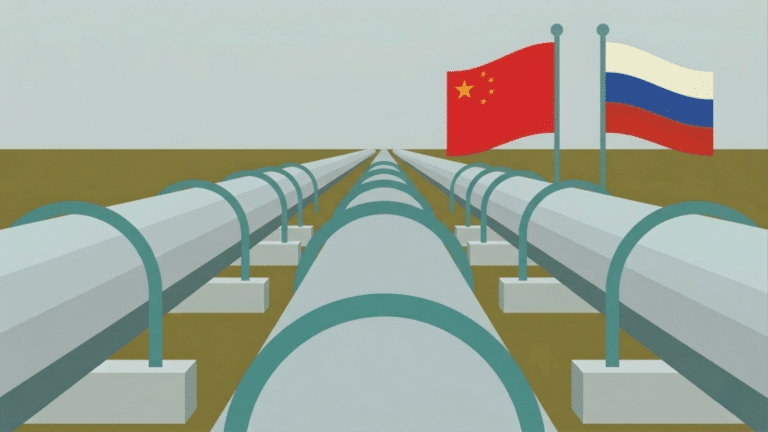
Après la Russie, comment le piège du gaz naturel américain s’est refermé sur l’Europe
DÉCRYPTAGE - Les Vingt-Sept cherchent désormais des solutions pour sortir de cette nouvelle dépendance à l’égard d’un État qui ne leur veut pas toujours du bien.
Current Access Level “I” – ID Only: CUID holders, alumni, and approved guests only
Insights from the Center on Global Energy Policy
Wednesday, February 18, 2026
In July, Republicans in Congress passed their signature domestic policy package, the One Big Beautiful Bill Act (or, H.R. 1).
Securing critical minerals is a top priority of governments around the world.
Iran has among the world's largest natural gas resource bases, but its ability to supply regional and global markets is constrained by sanctions, underinvestment, and limited export infrastructure.
The United States is at a rare inflection point for nuclear energy, with unprecedented momentum behind deployment and regulatory reform as nuclear becomes central to energy security, AI competitiveness, and state and corporate climate goals.
Securing critical minerals is a top priority of governments around the world.
Iran has among the world's largest natural gas resource bases, but its ability to supply regional and global markets is constrained by sanctions, underinvestment, and limited export infrastructure.
The United States is at a rare inflection point for nuclear energy, with unprecedented momentum behind deployment and regulatory reform as nuclear becomes central to energy security, AI competitiveness, and state and corporate climate goals.
Multiple US–Iran conflict scenarios carry materially different risks for global oil infrastructure, transit routes, and prices.
China’s crude oil imports hit a record-high 11.6 million barrels per day in 2025, as geopolitical tensions, low oil prices, and global oversupply spurred China to increase its oil stockpiles, a trend likely to continue in 2026.
Iran appears to be a natural gas giant, due to its large proved gas reserves and significant gas production and consumption.
Venezuela holds 70% of Latin America's natural gas reserves, which it could export to Colombia and Trinidad to increase revenues.
The US intervention in Venezuela may jeopardize both the flow of discounted Venezuelan oil to China's teapot refineries and the role of Chinese oil companies in Venezuela’s upstream business.
Early on 3 January 2026, the United States launched a military operation to arrest President Nicolás Maduro and remove him from Venezuela.
This Energy Explained post represents the research and views of the author(s). It does not necessarily represent the views of the Center on Global Energy Policy. The piece...
Geopolitical uncertainty associated with Russian gas exports could swing the range of those exports by an estimated 150 bcm per year.
From the east to west and north to south, in red states and blue states, attention to data centers is skyrocketing in state capitals across the United States.