This website uses cookies as well as similar tools and technologies to understand visitors’ experiences. By continuing to use this website, you consent to Columbia University’s usage of cookies and similar technologies, in accordance with the Columbia University Website Cookie Notice.
Last week's summit between US President Trump and Chinese President Xi was the second meeting between the two leaders since the US and Israel attacked Iran.
Global gas markets, especially in Europe, are approaching winter under serious pressure. With storage inventories lagging behind historical averages and shipping disruptions from the Middle East threatening key...
Apply to Register The Center on Global Energy Policy at Columbia University SIPA’s Women in Energy initiative invites Columbia University students to a roundtable discussion with Pam Brown,...
Event
• Center on Global Energy Policy
Large Conference Room
About Us
We are the premier hub and policy institution for global energy thought leadership. Energy impacts every element of our lives, and our trusted fact-based research informs the decisions that affect all of us.
This Energy Explained post represents the research and views of the author(s). It does not necessarily represent the views of the Center on Global Energy Policy. The piece may be subject to further revision.Contributions to SIPA for the benefit of CGEP are general use gifts, which gives the Center discretion in how it allocates these funds. More information is available here. Rare cases of sponsored projects are clearly indicated.
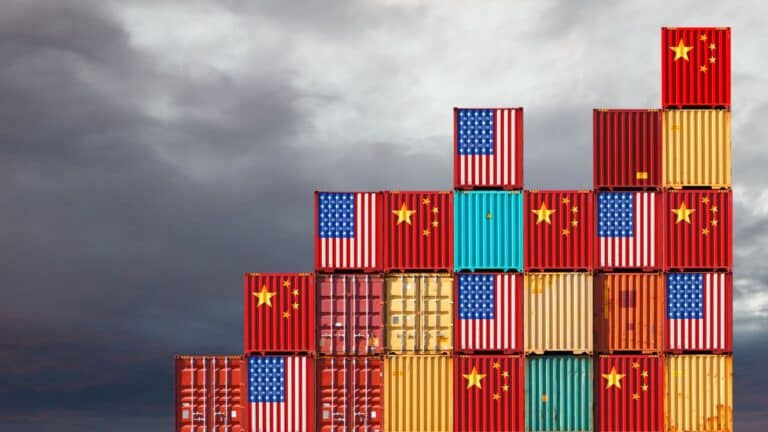
In May 2026, the Office of the U.S. Trade Representative (USTR) held hearings on 16 pending investigations into “structural excess capacity and production in manufacturing sectors” under the Trade Act of 1974, which authorizes tariffs for unfair trade practices.
The hearings surfaced tensions and ambiguities over the definition of excess capacity, the environmental and energy impacts of overproduction of manufactured goods, and the motivation behind the investigations themselves.
Both the hearings and USTR’s preliminary filings suggest that the environmental and energy practices of other countries are likely to provide a key rationale for re-establishing sweeping tariffs struck down by the Supreme Court earlier this year.
New tariffs arising from the investigations could spur foreign governments to curb environmentally harmful and carbon-intensive industrial practices, but they could also increase prices on clean energy technologies and discourage subsidies aimed at decarbonizing hard-to-abate sectors.
In March 2026, the Office of the U.S. Trade Representative (USTR) announced it was investigating “structural excess capacity and production in manufacturing sectors” in 16 economies, including major trading partners such as China, the European Union, Japan, and India. The investigations were brought under Section 301 of the Trade Act of 1974, which authorizes tariffs to address unfair trade practices. Excess capacity refers to the production of a good in volumes greater than market demand, typically in connection with subsidies or government directives, leading to depressed prices and undermining the competitiveness of producers operating in market economies.
In May, a USTR-led interagency committee held four days of hearings in connection with these investigations, during which nearly 150 interested parties offered testimony. The hearings offered a window into the key questions that USTR will need to grapple with in deciding whether to impose tariffs. In particular, the hearings suggest that the environmental and energy practices of other countries are likely to provide a key rationale for re-establishing broad-based tariffs similar to those struck down by the Supreme Court earlier this year. Should USTR move forward with tariffs at the conclusion of the investigation, foreign governments could in turn curb environmentally harmful and carbon-intensive industrial practices. Depending on their scope and USTR’s legal rationale, however, the tariffs could also increase prices on clean energy technologies and discourage subsidies aimed at decarbonizing hard-to-abate sectors.
Excess Capacity and Section 301
Section 301 authorizes tariffs and other retaliatory trade measures in situations where a foreign government violates the terms of a trade agreement to which the United States is party or engages in a practice that “is unjustifiable and burdens or restricts United States commerce.” Before the president can take action under Section 301, USTR must conduct an investigation, which typically includes a public hearing, and publish a determination in the Federal Register.
Excess capacity is a novel issue for Section 301, despite being a recurring source of tension in the multilateral trade system. Most international action on excess capacity has been focused on the steel sector. In 2018, President Trump announced tariffs on steel and aluminum under Section 232 of the Trade Expansion Act of 1962 on the grounds that excess capacity in those metals undermined national security. By contrast, the pending investigations identify excess capacity in over twenty sectors, an unprecedentedly broad scope. Some of these sectors, such as steel, cement, and chemicals, are energy-intensive. Others, such as solar modules, batteries, and non-ferrous metals, are important in energy systems.
Key Takeaways from the Hearings
How should excess capacity be defined–and is it a basis for tariffs?
Over 100 representatives of industry associations and companies participated in the hearings, spanning olive oil producers to fiberglass door manufacturers to producers of synthetic graphite used in anodes. A central question was how to define and measure excess capacity consistently across heterogeneous sectors and markets.
In an initial filing, USTR identified trade surpluses and capacity utilization rates as primary indicators of structural excess capacity, and listed a range of government interventions that may generate or sustain it, including subsidies, wage suppression, and lax enforcement of environmental and labor standards. This framework has already come under scrutiny for methodologicalinconsistencies, for example, by pointing to aggregate trade imbalances as evidence of excess capacity in some countries and product-level imbalances in others.
Some witnesses at the hearing questioned whether excess capacity is actionable under Section 301 at all. Some foreign government representatives argued the law requires identification of specific acts, policies, or practices, and that aggregate trade outcomes are not actionable conduct under Section 301 but rather a description of market conditions.
Is excess capacity an obstacle to the energy transition and environmental conservation?
Most industrial processes contribute to pollution, greenhouse gas emissions, and the consumption of finite resources. Excess capacity that results in additional use of those processes beyond what would be expected in normal market conditions generates avoidable environmental harms. In addition, excess capacity is enabled by cheap production costs, which in energy-intensive sectors generally means using the cheapest energy source, usually coal. In hard-to-abate sectors, furthermore, excess capacity can create economic headwinds for industrial decarbonization by shrinking profit margins. For example, EU officials have argued that a distorted global steel market is an existential threat to the development of a European green steel industry.
Despite these connections, environmental and energy issues have not been a focus of U.S. and international efforts around excess capacity. However, in USTR’s new assessment, it argues that weak environmental standards are a cause of excess capacity. The Climate Leadership Council argued that lax environmental enforcement functions as an implicit production subsidy that drives cross-border pollution, an idea that USTR and some trade experts have endorsed in other contexts. The Steel Manufacturers Association and the largest U.S. steel producer, Nucor, took a more provocative position that subsidies to support low-carbon manufacturing, specifically EU financial support for steel decarbonization, are a driver of excess capacity. This logic, if reflected in USTR’s final determinations, could have a chilling effect on global efforts to reduce the carbon footprint of the steel sector, which accounts for around eight percent of all greenhouse gas emissions.
In addition, representatives from the solar and various steel derivative industry groups contended that overproduction of solar modules and electric vehicles in China gave Chinese firms a prohibitive cost advantage in global markets. The debilitating impact of China’s steel industry on the US and EU steel industries suggests there could be merit to these concerns. On the other hand, meeting mid-century climate targets will require deploying clean energy technologies at a scale that exceeds current global production. Tariffs aimed at penalizing Chinese solar and other clean technologies, such as electric vehicles, may bring prices in line with market demand, but at the cost of a slower energy transition.
What problems are the 301s designed to solve?
A third recurrent theme during the hearings was disagreement over what the Section 301 investigations are designed to accomplish, and how they relate to the trade remedy architecture already in place.
At the hearings, domestic industry participants argued that the 2018 Section 232 tariffs on steel and aluminum have been undermined by systematic circumvention, citing persistent import surges as evidence of third-country routing. Yet none of the witnesses explained how Section 301 tariffs would fare differently when applied to these same countries and sectors. Measures that would directly tackle circumvention concerns, for example, stricter rules of origin and customs enforcement, did not feature prominently in the discussion.
The hearings also did little to clarify whether the goal of the investigations is to change the behavior of foreign governments, as has historically been the case with Section 301. Neither USTR nor the hearing witnesses addressed how governments could avoid tariffs; for example, would it be enough to discontinue specific policies, or would tariffs persist as long as trade imbalances and underutilization persist? Nor did the investigations offer insight into how USTR might apply tariffs under Section 301—for example, would USTR apply tariffs on specific products contributing to global excess capacity, like the Section 232 tariffs, or on all exports from an investigated country? The timing of the investigations, initiated three weeks after the Supreme Court voided the liberation day tariffs, has led someobservers to conclude that USTR’s aim is to backfill those tariffs, rather than deter unfair trade practices.
Looking Forward
U.S. Trade Representative Jamieson Greer has stated that USTR will produce final determinations for the investigations by July 24. New tariffs resulting from these determinations would represent more of a continuation than a break with the status quo. The second Trump administration has been unambiguous in its intent to raise tariffs on a wide range of trading partners using all available legal tools. In this sense, the excess capacity tariffs would pick up where the liberation day tariffs left off.
At the same time, the scope and legal rationale of the tariffs could substantially influence energy and industrial practices both in the United States and abroad. Should USTR determine that highly polluting or carbon-intensive manufacturing is driving excess capacity, the tariffs could serve as a powerful incentive for foreign firms to adopt more sustainable production methods. On the other hand, were USTR to identify subsidies aimed at decarbonizing hard-to-abate sectors or encourage manufacturing of clean energy technologies as burdens on U.S. commerce, it could have a chilling effect on green industrial policies around the world.
Critical minerals were once again near the top of the agenda for G7 leaders as they met in Évian, France, this week, a year after the G7 launched the Critical Minerals Action Plan.
The US Export-Import Bank is preparing to close the first funding tranche of Project Vault, a public-private partnership establishing the US Strategic Critical Minerals Reserve.
The global clean energy economy today looks starkly different than it did even 10 years ago. Not only have production and deployment of clean energy technologies expanded significantly, the geographic distribution of clean energy manufacturers, resellers, and end-users has shifted dramatically.