This website uses cookies as well as similar tools and technologies to understand visitors’ experiences. By continuing to use this website, you consent to Columbia University’s usage of cookies and similar technologies, in accordance with the Columbia University Website Cookie Notice.
Energy Explained
Get the latest as our experts share their insights on global energy policy.
Postwar LNG: The New Guiding Principles Borrow from the Past
The Iran crisis, whenever it ends, will materially change how the LNG market operates.
Podcasts
Hear in-depth conversations with the world’s top energy and climate leaders from government, business, academia, and civil society.
Iran Conflict Brief: How Renewed Strikes Impact Global Energy
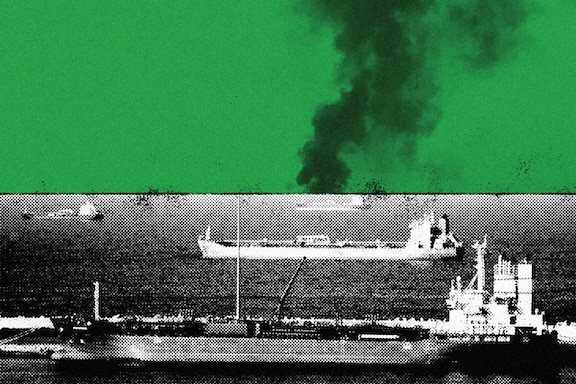
In the 23 days since the US and Iran agreed to a ceasefire, strikes have returned, following a familiar pattern: Iran attacks vessels using an internationally backed sea...

Podcast
Iran Conflict Brief: How Renewed Strikes Impact Global Energy
July 10, 2026
Guests


-
Transcript
-
Daniel Sternoff
Events in the Middle East are changing quickly and the complexities of understanding the global energy landscape grow deeper by the hour. Join me as we talk to leading experts on the latest developments in the region and what it means for the rest of the world. Welcome to our rapid response series, the Iran Conflict Brief, a special edition of the Columbia Energy Exchange Podcast. I’m Daniel Sternoff, a senior fellow at the Center on Global Energy Policy.
We are recording this podcast on Friday, July 9th at 9:30 AM in Washington, DC, 5:00 PM in Tehran, and 5:30 and 4:30 PM respectively in Abu Dhabi and Riyadh. 23 days ago, President Trump signed the US-Iran Memorandum of Understanding in the same palace where Woodrow Wilson signed the ill-fated Treaty of Versailles in 1919, a treaty that set up German resentments that fed into World War II. It was an inauspicious location to sign a deal and events this week showed why.
The deal extended the ceasefire until late August, but in the three weeks since it was signed, the US and Iran have been exchanging fire every five or six days. These incidents have followed the same pattern. Iran attacks vessels using an internationally backed sea lane in Omani territorial waters followed by US retaliatory strikes on Iranian military infrastructure, then followed by Iranian strikes on US bases across the region. This week, alongside funeral possessions for the assassinated Ayatollah Ali Khameni, Iran struck three more vessels, including a Qatar flag LNG carrier and a Saudi flag crude oil tanker. The US amped up its reaction, rescinding an Iranian oil export license and then hitting 170 Iranian targets over two nights in the largest operation since April. Trump called Iranian officials scum and declared the ceasefire over, but has quietly blessed efforts by Qatari and Pakistani mediators to deescalate tensions and continue negotiations.
Both the US and Iran are still signaling they preferred diplomacy over a return to full scale war. The MOU was always a flawed and fragile document that papered over deep strategic differences over Iran’s nuclear program, Lebanon, and the Strait of Hormuz, but it has succeeded at least partly in one key goal to bring some relief to global energy markets. Despite this week’s events, Brent crude oil prices are trading at $77 a barrel, only $5 above levels that preceded the war. Some 200 million barrels of oil stranded on vessels and in storage have managed to exit the straits since late May and Gulf producers have restored and estimated four to five million barrels per day and shut in production. Physical spot oil markets are amply supplied, especially with Chinese and other Asian demands still weaker, but this crisis is far from over. Inventories of crude oil and oil products have been severely depleted.
The trapped oil that has exited Hormuz represents only several weeks of supply and perhaps eight million barrels per day of production remains shut in and Qatar has yet to restore its LNG production. Sustainably restoring output requires reliable and secure flow of tankers both in and out of the state. Some traffic will continue along Iranian controlled lanes to those who play by the IRGC’s rules and the US will continue supporting dark transits from GCC countries through Omani territorial waters. But current flows are only somewhere between a third and a half of pre-war levels and it’s hard to see stability if shooting will erupt on a weekly basis, not withstanding President Trump’s statement that in the Middle East, a ceasefire is when you are shooting in a more moderate manner. I’m joined today by Anne-Sophie Corbeau and Karen Young, experts here at the Center on Global Energy Policy.
Given all of this news and the rapidly developing implications, I can think of no one better to give us an idea of what’s actually happening and break down these latest events. So good morning Anne-Sophie and Karen. Actually, good morning, Karen, and good afternoon Anne’So, and thank you for joining.
Karen Young (04:09):
Thank you, Daniel.
Daniel Sternoff (04:10):
Thank you. So Karen, let me start with you. When this MOU was signed, many noted it was front loaded on benefits for Tehran just for promising nuclear talks. It got a lot of benefits, the release of frozen assets, the end of the US Naval blockade, sanctions waivers that could let it sell oil to any buyer without discounts and with no limits on how that money is spent. So even if this agreement would ultimately break down, it’s a little surprising that they’ve been taking actions to undo it within weeks. Why is Iran doing this?
Karen Young (04:48):
That is the question, Daniel. I mean, is the motive to really demonstrate the political and coercive control over the strait and to be able to set into place a system that could last for decades? We’re talking about a tolling system or a fee system or simply the power of intimidation of the neighbors. And this extends, of course, across the Gulf, but also through the Levant. And so we’ve got a parallel process really happening inside of Lebanon right now, which is very important where Iranian supported group Hezbollah is really at the center of internal Lebanese discussions of who will be in control and have military power in that territory. And it of course then brings in the issue of Israel. Israel was not a party to the MOU and this has been one of the sticking points. Of course, part of the MOU says that there will be a ceasefire on all fronts, that means Lebanon.
(05:52):
And so the Israeli withdrawal from Southern Lebanon is potentially something the Iranians say, “Well, you weren’t abiding by your side of the deal, United States, in controlling Israel. So why do we? ” The other thing of course is that Iran is desperately in need of revenue. And so the tolling system is one way, but of course the release of frozen assets, about $12 billion, that has not happened so quickly, but the sanctions relief did. And so that was really has traditionally been a number one demand of the Iranian government is to be able to export its oil and get to market and refine products as well and petrochemicals and to be able to earn money. So yes, they had that pass. And I’d love to hear, Daniel, you can tell us a little bit about what happened to the oil that exited. I think a lot of it just sort of sat outside of ports in China, but you would think that would be a motivating factor.
(06:56):
But it hasn’t. So Iran is sticking to its strategic goals of essentially extortion of intimidation and what would bring it back to the table? Well, it’s got leverage. And it does appear even today, there are Qatari mediators in Iran today on Friday trying to get negotiations moving again. And it does seem that both the United States and Iran would like that to happen. So we enter into this pattern that you described where we don’t have a true ceasefire. We have this mediation process where the Iranians continue to exert pressure, intimidation tactics, and it’s been working for them. They got the sanctions relief. They got the commitment of frozen assets relief. So I assume they think they can push for more. And what that more looks like, and President Trump has already made statements that were somewhat concessionary on its missile program, for example. And Iran has already been able to rebuild a substantial part, estimates are, of the missile program and supply that was destroyed since last summer at the beginning of Israel and US strikes on Iran in the summer of 2025.
(08:17):
So yeah, I think that’s what’s happening. The problem is this means a period of extended violence, of volatility in transit flows, in energy pricing. And I think what people are not taking into account is that we got a bit of a respite and a sense that everything is okay, but it doesn’t mean that inventories were refilled. And it doesn’t mean that we’re going to have an ease in refined products. And so when is the next really sort of critical point where we don’t just have a little bit of a price spike, but we have a real kind of global problem. So Daniel, I hope you will give us a little bit of insights on that perhaps later in the program, but I think that is where we’re headed.
Daniel Sternoff (09:11):
Yeah, absolutely. So maybe before talking a little bit about oil markets, keeping focused a little bit on the Hormuz question. So obviously one consequence of these attacks is war insurance risk premia are staying very high. Lots of shippers are staying away from the route because it’s unsafe. It looks like most of the traffic, other than what has been coming out that either the Iranians have allowed, but most of the transits that are going through Omani waters, either dark transits with transponders turned off or some were open with US convoys or support. They’ve really been shippers like NOCs like Bahrain from Saudi Arabia or private players like Sinokor from Korea that they’ve kind of shuttling Emirati crude in and out of Hormuz and transferring it being ship to ship transfers and going back. So like some oil is flowing and some are willing to do this, but the flows are still a fraction of what they were pre-war.
(10:21):
Iran seems pretty determined that it does not view any of these transits through Omani waters as legitimate. It wants either to get paid or to set up a permit system. And so it is shooting to basically say you can’t do this. How are Gulf states thinking about continuing along this route? I mean, on the one hand, clearly this is an international waterway. They are managing to get some things out and want to continue it and don’t want to bow to Iran’s terms. On the other hand, it might just be cheaper and more practical to kind of pay the ransom. So what do you think about how the Gulf States are thinking on just these specific questions of reaching a transit accommodation with Iran or just continuing dark transits under these insecure conditions? Well,
Karen Young (11:14):
I think it will depend on the level of attacks and the severity of attacks if we start to see accidents and how this disrupts how customers feel and certainly the shipping industry as well. But there is division within the GCC on this issue. There’s broadly I think an acceptance that we are in at least a short to medium term period of accommodation and states are willing to pay for their security to make commitments of investment into Iran, that sort of thing. And that’s normal in some ways in the region, but we are seeing some division and I’ll point out a couple of examples. Just today, Friday, we’re seeing reporting from Axios that there is some telephone diplomacy happening. And if you look at who is calling the United States and the Iranian side to encourage them to get back to the negotiating table, it’s Saudi Arabia, Turkey, Pakistan and Egypt.
(12:08):
It is not the UAE, Kuwait, or Bahrain. Second point, who attended the Supreme Leader Ali Khamenei’s funeral procession, which just happened over the last few days? Who sent delegations? Qatar and Saudi Arabia sent not top level foreign ministry, but kind of vice or deputy foreign minister level delegations. But the UAE, Bahrain and Kuwait did not. Now in the Gulf, that’s a signal. It’s a diplomatic signal. It signals like, we don’t want to engage with you. It’s a little bit of a lack of respect with the Iranians might say. But that denotes the division. And of course the retaliations that Iran sent in the last couple of days were directed towards Kuwait and Bahrain. And Kuwait and Bahrain are probably the weakest in terms of their ability to defend themselves and certainly to strike back on Iran. And there are questions. There is some reporting that it wasn’t just US strikes on Iran, that maybe there were other actors involved, not the Israelis.
(13:12):
So big question marks on are certain members of the GCC reentering in a military way to protect themselves and to demonstrate that they don’t appreciate their infrastructure being under attack. We had power outages in both Bahrain and Kuwait because of Iranian strikes just in the last four days.
Daniel Sternoff (13:32):
Right. Thanks. So let me bring Anso into the conversation, speaking specifically on Qatar. And Qatar obviously has been one of the main mediators with the Iranians, but that did not seem to stop Iran from shooting at a Qatari LNG carrier earlier this week. Why do you think that is? What’s happening on the ground with Qatari flows and their efforts to resume production at Ras Laffan?
Anne-Sophie Corbeau (14:01):
Yeah, that’s a very good question. And I have to say that the fact that it was a Qatari LNG cargo which was hitting during the night between Monday and Tuesday was a little bit surprising given the role of Qatar in the negotiation so far. Because I mean, we have two countries which are inside the Gulf and are trying to basically move the ships outside. It’s Qatar and the UAE. And there are some notable differences between the two. When the conflict started, I mean Qatar had a certain number of LNG cargoes, but they really had difficulties exiting. It was only because there were some agreements, for example, between Qatar, Iran and Pakistan that some ships were exiting. However, the UAE at the beginning had only one single LNG cargo inside the Gulf, but very surprisingly they actually moved cargoes in and out. All of them were going dark, but that was really surprising.
(14:55):
This is not something that Qatar did. They only started bringing LNG cargoes within the Gulf when the ceasefire agreement was signed, not before. But we have seen quite a lot of LG cargoes moving in. And I was looking at it this morning and between so the Qataris and the Emirates, I was counting 21 LNG cargoes within the Gulf. So some of them are Ladon. Some were trying to exit, but after what happened on Monday night, they have stopped. So they are going round and they are waiting probably to see how the situation is unfolding. What I should say, however, is that there is a lot of dark activity and suddenly a ship that you are not seen coming. You find it in the middle of the Gulf of Oman or the Indian Ocean and you realize, oh, must have gone in and out, but nobody knew, which is even more complicated.
(16:01):
So it has happened quite a lot. So what I can say is that I think at least 10 LNG cargos, [unclear] exited the Gulf since the MOU was signed. There may be more and we are going to discover that later. All of them are going to Asia. That’s a certainty. Now what Qatar said, the Qatari Energy Minister said is that they could actually bring production back to 50% within one month and 80% within two months, which basically means the 12 undamaged LNG trains because two LNG trains are damaged and they’re not going to come back immediately. But after there is safe passage for the strait. And that is very important. And I don’t think we’re there yet. One of the reasons why this specific LNG tanker was actually attacked was that it was actually going through the southern Omani route. And I think that was a signal that okay, you are not going through that route.
(17:03):
That’s very important. But we are still in a situation where the markets are tight and where there are a lot of LNG ships in the Gulf, but we don’t know how they can get out.
Daniel Sternoff (17:16):
Right. So let me ask the same question I put to Karen. From a Qatari perspective, do you think they will try to continue to do these dark transits with transponders off and use the Omani route? Or will they be intimidated by the events of this week and just reach a deal with Iran, pay some kind of toll or service fees in order to get production back up?
Anne-Sophie Corbeau (17:45):
Well, Qatar is really losing much more than for example, the Emirates because there is no bypass for Ormos. So it’s either they are going through the straits or they are not exporting anything at all besides the volume that they are currently exporting to Kuwait, which has been ongoing without any problems. But that means that their energy revenues, and they’re all revenues as a matter of fact, are really done significantly. So I think they would want to resume as soon as possible because otherwise this is going to be a real disaster for them. And it’s even more a disaster. And this is also damaging their reputation as a reliable supplier. So I think they want to be back in the game very rapidly. And if that means going through the Northern route and then paying a fee, it seems to me that they may have to do that, especially since they have been the one trying to broker an agreement.
(18:46):
They have been really a very important party in all these negotiations.
Daniel Sternoff (18:52):
Right. So even let’s say they do that or they manage to come back within a couple of months to 50, 60, 70% of pre-crisis levels. Given the security situation looks to be unresolved for quite some time, how are buyers looking at this and what is this meaning for LNG markets this year, next year, especially given kind of competition between Europe and Asia for scarcer supplies?
Anne-Sophie Corbeau (19:29):
Yeah. I mean, usually you would think summer is quiet. Well, summer is not quiet. First of all, because in Europe, the storage levels are very low. I mean much lower than what you would see at that time of the year. This is because we started the winter with lower storage levels. And on top of that, we are the normal winter for once, big surprise. That happens from time to time. So right now we are at 51%, which should be at least 10% higher. So people are thinking if everything goes well, we may end up anywhere between the low 70 and the high 70%. So if we have a mild winter, that’s okay. If we have a cold winter and a lot of [unclear], that’s a problem. But this is compounded by the fact that we have a potentially stronger Nino coming, which is going to result into additional air conditioning needs in Asia.
(20:23):
I mean, Japan, Korea are already saying it’s going to be warmer than usual and therefore they are going to need more electricity, more energy. So this is also putting some pressure on the Asian energy demand. And when everything started, I though, okay, we are going to see quite a bit of Asian energy demand extraction. But that happened in March, in April and to some extent in May. In June, sorry, we have seen Asian energy demand coming back in particular in China. But across countries, it’s actually stronger than what you would have expected. Even though prices are anywhere between 17 and $20 per MMBTU, they are tenders. So that’s very important. So we are going to see that competition. And therefore there is definitely an upside risk because of that competition between Europe, which wants to refill its storage and which is where the situation is quite tense right now, even though the gas coordination group said, it’s all okay.
(21:34):
We are fine. And Asia. And okay, we may be able to go forward, but the system is very vulnerable. If there is something else which is happening on top of everything, let’s say the Ukrainians decide, for example, to target Turkstream or Blue Stream or Yemen LNG, or there is a hurricane which is impacting US energy plants because there is always an energy plant somewhere which is going to be done. Then we are going to see prices increasing very likely. It’s very important compared to the oil market that you talked about that gas prices have not come back to the pre-war level. At the minimum, we were at 30 Euro per megawatt hour, $11 per MBTU before everything started. At the lowest level in June, we were at 40 Euro per megawatt hour in Europe and something like $15 per MBTU. And now we are at 15 and 17, $18 per MMBTU.
(22:37):
So we are at much higher level. It’s not the oil market at all.
Daniel Sternoff (22:42):
Right. Yeah. The oil market dynamic has been completely different, partly because I think you had a lot of, for shorter term markets, a lot of refiners, especially in Asia that were planning their refinery run programs for August, September at lower levels. And importantly, one of the big adjustments in the oil market is refiners just adjusted runs lower. That’s produced a lot less refined products and it’s drawn down inventories and the pricing of products is super high, but it helped crude adjust. And then suddenly we have a huge dump of inventory from all of these stranded tankers plus Iran that are able to move out. And most refiners had kind of already locked in what they wanted to buy in this cycle. So you actually have been seeing really significant discounting in oil markets and Iran. So Karen, to your question, there’s a lot of Iranian oil that is around, but there really haven’t been a lot of buyers for it.
(23:44):
And part of that is even these non-Chinese buyers who theoretically could take Iranian barrels with the sanctions waiver A, have had plenty of other sources of supply. And so just kind of taking the risk on Iran given that there are still the IRGC is still designated with terrorism sanctions and you’re not sure about the banking issues and you don’t know whether the sanctions relief would last very long all of which kept a lot of buyers cautious. And I think the caution is warranted because these waivers lasted three weeks and have now been pulled. So we’re kind of back to a situation where there’s quite a lot of Iranian oil that is now floating around and it needs to clear. And that basically means they’ll have to discount it and their buyers will again be mainly Chinese teapots who could pick it up. I think though, it really helps to get all this inventory out into the market and prices are lower.
(24:45):
And maybe that’s why President Trump is a little bit more assertive in being able to take some short term military actions. But clearing out of storage, which is what has happened, it also means, okay, if everything shuts in again for a bit, there is now room to rebuild some storage and there’s tanks. I mean, the oil market maybe has a little bit more flexibility here. And there’s been workarounds and we have between what Saudi is sending out to the Red Sea and the UAE through Fujairah, there’s kind of five and a half million barrels per day that will continue and will expand over time. China is buying les. And if dark transits are even seeing 30 to 40% of pre-war flows, the gap is kind of more manageable. So it makes sense that oil isn’t back at these 100, $120 levels. It certainly could go higher if this all collapses and more breaks out again, but we’ve seen a little bit more flexibility in oil and are kind of rebuilding those buffers a little bit.
Karen Young (25:53):
But Daniel, tell us what is the delta? What is the shortage? What are we missing from the market?
Daniel Sternoff (26:00):
Well, I mean the prompt market for crude, we’re not missing anything. Meaning if we’re looking at the very near term, August, September, the market’s flipped into a contango, which is telling you there is more crude than the market can currently absorb. And so it’s creating a structure that sits out, put some of this into storage. So that’s a little bit artificial. It kind of was unexpected to get this huge dump of inventory out of the Gulf. And China is still not buying very much. China cut its imports almost four million barrels per day. It’s one of the most surprising things of this crisis. And they did that by stopping fills into their SPR, but mostly they cut refinery runs. Maybe they’re drawing down on some of their own inventory and certainly their inventories of things like petrochemical products have been coming down. But there was a big drop.
(26:53):
China is absent from this market. I’m talking on crude. If we’re talking on all global liquids, demand only fell a little bit during this crisis. Not a lot. I mean, separate from the initial month when people couldn’t get any supplies and you had governments rationing supplies and so forth. But there’s been very little impact on demand in the US and in Europe and in much of the OECD. And prices, they just kind of went. They went from the 70s up to 100. They basically averaged $93 per barrel for three months during the crisis and are right back down in the 70s. That is not like a shock that forces permanent demand changes. So I think demand should start coming back relatively quickly. The biggest imbalance in the market is in refined products. So we have still inventories, especially of diesel on a global basis outside of China and in the US is pretty low.
(27:56):
And one of the biggest market reactions this week on the firefights is actually where diesel cracks just shot up really high. So the market is kind of saying, “Oh, we’re not going to bring Middle Eastern refineries back. That’s going to keep diesel tight.” And meanwhile, the Ukrainians are doing a number on Russian refineries and that is impacting Russian diesel supplies. So that’s where the problem is. So I think if, and there’s clearly a deficit, it’ll take time. We need to see global refiners taking advantage of the fact that there’s enough crude around now to start cranking out products to replenish these inventories. And that’ll take many, many months or even into the first part of 2027 to get back to kind of normal levels of inventory. And that will be a problem if all that we’ve seen is three weeks of some material getting out of Hormuz and then it all stops again.
(28:52):
So that’s really where the problem lies.
Karen Young (28:55):
So why then is there sort of a market expectation that prices are going to be lower in the future?
Daniel Sternoff (29:02):
Well, I mean, I think a lot of players in the market are trying to look and say, “Okay, how do I project what is 2027 going to look like? ” We started this year with an oversupply estimated between, depending on who you believe, one and a half to three million barrels per day, which was historically really big because OPEC had been unwinding production and so forth. And you can kind of try to do the barrel math and say, “Okay, if Hormuz is coming back, let’s say it is back to 85% of normal volumes by the end of the year and the UAE, which is now not in OPEC, is going to be maxing production.
(29:46):
We’re going to be back into that oversupply story. Yes, we’ve got inventories to refill, but maybe demand will be on a little bit weaker footing.” And so you’ve had various banks and some of the forecasting agents You look at the EIA, you look at the IEA and they’ve put out preliminary 2027 balances. They’re all saying, “Oh, we’ve got a big glut coming.” So that’s putting pressure downward on the back end of the crude curve. I think the problem with any of these is in a normal year, your uncertainty about the oil market is measured in maybe some hundreds of thousands of barrels on what could happen to demand or what supplies would be there. We’re in millions, right? So we’ve got eight million barrels per day still shutting in the Gulf. Is that going to stay at eight? Is it going to go back up to 10?
(30:33):
Is it going to go down to four? It’s a huge supply question mark all around the security situation and there’s no way to know. I could give you a scenario all across the board. Likewise, China. Is Chinese demand going to go back to where it was or has something happened structurally where there’s just they’re using a lot less jet and diesel and gasoline because this crisis is causing accelerating a structural trend in the electrification of transport and then maybe it’s moving faster than we think. So I mean again, China dropped four million barrels per day of imports. Is it going to come back one or two or four? So I mean, these are big questions. And so anyone who’s saying my 2027 balance is we will be oversupplied by one million barrels per day and therefore the back end of the crude curve should be lower.
(31:28):
Most traders I know will not take a position on this because they recognize it’s simply too uncertain and there’s too much volatility around it. But I do think that there’s a very strong embedded expectation that the market is not going to be massively tight and that if this is still treating this as a shorter affair that depleted a lot of inventory, we might need to rebuild some inventory, but the supply side is going to normalize. And there’s a lot of risk around that assumption, but that sentiment seems to be out there.
Karen Young (32:04):
Seems like an unrealistic expectation, doesn’t it? Yeah.
Daniel Sternoff (32:10):
At least based off of what we saw this week, absolutely. So I guess Karen, let me ask you, where are we? Are we going to break down into full hostilities again, maybe after the midterms? Are we going to stay in no war, no deal limbo forever? Are these guys going to be talking while fighting but come up with something that’s a little bit more durable? I mean, how do you see the trajectory of this?
Karen Young (32:47):
I mean, I think it’s just important to keep in mind it is very much unresolved, but both parties, US and Iran, would rather at least be in nominal negotiations rather than full scale war. What the rest of the region wants is a more important question, how Israel responds, how the Gulf States themselves and the UAE in particular decides to defend itself or not. Those could change. And I think from an American strategic perspective right now or the Trump administration perspective, this is a kick the can down the road strategy. Maybe make it Marco Rubio’s problem in a next administration or a Democrat president’s problem when those two reactions I think would be very different in terms of willingness to escalate. But we have not come to a new nuclear agreement on Iran’s capacities or materials. And that’s going to take a long time and this is a different kind of government in Iran, which feels very much entrenched and emboldened.
(33:58):
Now that government in Iran can change. And I think that is still the hope and expectation certainly of some people in the US administration, but also people in other countries. And certainly that was perhaps an Israeli expectation that there could be regime change in Iran. I think there will be change, right? This is a country that has enormous economic stress right now and a government that has been so far really unwilling to see or meet the needs of its population in terms of getting people back to work, dealing with… I mean, they truly have an affordability and cost of living crisis. It’s something that I think most Americans would not tolerate, cannot fathom. And that will create pressure. And there are opportunities for different leaders and coalitions of leaders to emerge. We have seen just over the last month since the MOU was signed, there’s still active assassination attempts happening inside of Iran.
(35:06):
And so what do we see in the next six months to 12 months to the end of the Trump administration? I would say continued volatility, upswings in violence and reprisals, uncertainty of leadership, meaning that there will be negotiations internally, but there will also be attacks on individuals. And that violence I think has the real potential to spread certainly within the region, but even beyond it.
Daniel Sternoff (35:39):
Thanks. I have one last question for you. I probably could continue with both of you for another hour, but we’re tight on time. Just speaking about Saudi Arabia. So you had mentioned earlier that Saudi sent a deputy foreign minister to Khameni’s funeral. Saudi has been very quiet in what they’ve been saying publicly. They’ve certainly managed to not be targeted by the Iranians. Why are they so quiet? How have they avoided being targeted and how are they positioning themselves in this environment?
Karen Young (36:18):
I think it’s key to think of the GCC states as so diverse in terms of the buffers they have to pay for resilience, for defense spending, for supporting local economies and populations. And Saudi Arabia of course has a very or the largest population in the GCC and are more vulnerable in terms of their ability to maintain their reform momentum, Vision 2030, to attract foreign investment, to deal with what is going to be really dual pressure on their fiscal account. And so this means they want to keep things quiet. And they have an existing truce with the Houthis and Yemen. They don’t want to see any sort of reignition of conflict along the Red Sea because of this important pipeline diversion. They’re really relying on transit from the Red Sea. And they are at odds I think with other approaches, particularly the UAE approach in the region.
(37:22):
And that is coming out more now. It doesn’t mean that it won’t change. I mean, we’ve seen even this week from Emirati leadership, Mohammed bin Zaid, calling for GCC unity. He made a trip to Kuwait just on Thursday as a show of support to Kuwait. So there is some politicking inside the region which is happening and mines can be changed. But I think for now, the Saudi approach is to pursue diplomacy first, to pursue there have been some commitments of foreign investment sending some used airplanes and selling them to Iran, for example. So they’re on the carrots rather than the sticks right now, but I can imagine a scenario where we might have a buildup and really an intolerable condition of export through the strait that requires a unified regional response.
Daniel Sternoff (38:16):
Wonderful. Thanks. And so I guess a last question and a last word for you, do you think Qatari production will be back to 80% in the second half of this year?
Anne-Sophie Corbeau (38:31):
I mean, it really depends on what is happening with the Strait of Hormuz at the end of the day. I mean, this is absolutely the critical factor, but I think it’s also very important to really highlight the differences between the oil market and the gas market. I mean, you mentioned alternative routes. We don’t have that on the gas market because the LNG has to go through the Strait of Hormuz, period. I mean, there is no alternative. What has saved the gas market so far has been the fact that alternative LNG supply sources have stepped in. I mean, LNG coming from the US, from the facilities which have recently started from Canada, from Senegal and Mauritania. We have been also lucky that more LNG has been coming from Nigeria, from Malaysia, and from actually pretty much all the LNG suppliers. So that has said we have also seen some demand destruction in particular gas to coal switching, notably in Asia.
(39:24):
But contrary to what is happening in the old market, there is no storage. There is no strategic storage to be released. I mean, there is some strategic storage on gas, but nothing comparable in size and importance compared to what you can find on the old market. And also the role of China is very interesting. I mean, China has become sort of the balancing market on the gas and energy side as well. It’s very important. But you said that they had actually cut oil imports. Well, on the energy side, it’s the opposite. They are coming back. Their energy imports were 20% below last year in March and April. In May, it was pretty much at the same level as last year. And in June, they were above. So what is going to happen to China, which has a lot of contracted energy, is very, very important.
(40:21):
But I think longer term, the key question is what the hell is going to happen to Qatari energy in general? Because behind the United States, Qatar is going to be the second largest contributor in terms of additional energy supply when you think about this north field expansion. So what are they going to do if these trader foremost is on, off, on, off? What does that mean for their reputation and availability as a supplier? Because they have not actually contracted all this energy from the Northfield expansion and they are looking at renewing a certain number of their long-term contracts. And it’s very interesting to see now that the United States presenting itself as the alternative reliable and secure source of additional energy. So we may end up down the road with a situation where certain number of energy projects take FID because they say we are more reliable than Qatar.
(41:22):
Eventually the situation in the Gulf is solved. So Qatar comes back. But at the same time, if you are a buyer right now in Asia and you want to have a secure and stable source of energy, you are thinking, well, maybe not actually. You know what? I’m going to stick with coal because coal is more secure, has been much less volatile and I’m going to double down on renewables. And that means that ultimately our energy demand is going to be slightly lower than what people usually expect. Because if you look at the shared energy outlook, you see that most of the additional demand between now and 2050 is going to come from all these developing Asia. So from Pakistan to Bangladesh, Vietnam, Philippines, et cetera. Well, that I would not take that for granted. And even China, I would say China has options. They can invest more in production.
(42:18):
They can have coal to gas. They can actually decide to sign the deal with Russia. So because this is a soil and gas crisis in four years, I think that could have a long-term impact on the energy demand that people who are really bullish on energy right now don’t want to see. Very simply, they don’t want to see it.
Daniel Sternoff (42:39):
And on that note, there’s obviously still huge uncertainties on how this will resolve in the short term and that is raising all of these very long-term questions. Thank you and Sophie. Thank you, Karen, for a really fascinating conversation. And I am sure, unfortunately, we are going to be back relatively soon continuing to talk through these issues.
Karen Young (43:02):
Thank you, Daniel. Thanks.
Daniel Sternoff (43:04):
That’s it for this episode of Iran Conflict Brief, a limited series from the Columbia Energy Exchange Podcast. Thank you again, Anne-Sophie and Karen, and thank you for listening. The show is brought to you by the Center on Global Energy Policy at the Columbia University School of International and Public Affairs. I’m Daniel Sternoff. This podcast was produced by Mary Catherine O’Connor, Caroline Pittman, and Kyu Lee. Greg Vilfrank engineered it. For more information about the show or the Center on Global Energy Policy, visit us online at energypolicy.columbia.edu or follow us on social media at ColumbiaUenergy. If you like this episode, leave us a rating on Apple, Spotify, or wherever you get your podcasts. You can also share it with a friend or colleague to help us reach more listeners. If you have any questions, comments, or feedback, we’d love to hear from you. Email us at [email protected]. Thanks for listening.
In the 23 days since the US and Iran agreed to a ceasefire, strikes have returned, following a familiar pattern: Iran attacks vessels using an internationally backed sea lane in Omani territorial waters, the US retaliates against Iranian military infrastructure, and Iran strikes back at US bases across the region. This week, alongside funeral processions for the assassinated Ayatollah Ali Khamenei, both physical and verbal attacks escalated.
Yet, both the US and Iran are still signaling they prefer diplomacy over a return to full-scale war. Despite this week’s events, Brent crude oil prices are only $5 above levels that preceded the war. Some 200 million barrels of oil stranded on vessels and in storage have managed to exit the straits since late May.
But this crisis is far from over. Inventories of crude oil and oil products have been severely depleted. The trapped oil that has exited Hormuz represents only several weeks of supply, perhaps eight million barrels per day of production remain shut in, and Qatar has yet to restore its LNG production.
Today, host Daniel Sternoff sits down with Center on Global Energy Policy experts Anne-Sophie Corbeau and Karen Young to consider the near- and long-term outlook for energy markets. They discuss what’s at stake for Iran, how renewed strikes impact traffic through the Strait of Hormuz, and how a sustained uptick in hostility could impact the LNG market heading into winter.
More Episodes
Alice Yake on Planning for a Reliable, Cleaner Grid
Grid operators sit at the center of many of the biggest forces reshaping the global energy system. They’re navigating rising electricity demand, a lack of transmission infrastructure, shifting...

Doug Arent and Robin Millican on What’s Really Driving Electricity Prices
Concerns about the affordability of electricity in the US have been rising along with prices. And while the headlines have pointed to AI and data centers as the...
Michael Cembalest Does the Math on the Energy Transition
The energy transition is in the midst of its own transition. Spiking electricity demand and geopolitical events are driving up energy prices, while debates over the best sources...
Jake Sullivan and Jon Finer on the US-Iran Deal, Hormuz Realities, and Iran’s Nuclear Future
Yesterday, the US and Iran signed a memorandum of understanding starting the clock on a 60-day truce. The agreement intends to halt attacks, begin lifting the US naval...
Columbia Energy Exchange Podcast
• June 18, 2026
Relevant
Publications

Gulf Energy Disruption and the Fragility of Global Markets
The US-Israeli war against Iran highlights the Gulf’s dual role as the backbone of global energy supply and a major source of systemic risk.
The Iran Shock
Within days of the initial U.S. and Israeli attack on Iran on February 28, 2026, the world was plunged into an energy crisis.