Net Power Surrendered Its Clean Dreams to Data Center Demand
The zero-emission pioneer is doing the dirty work for the AI boom.
Get the latest as our experts share their insights on global energy policy.
This Energy Explained post represents the research and views of the author(s). It does not necessarily represent the views of the Center on Global Energy Policy. The piece...

Hear in-depth conversations with the world’s top energy and climate leaders from government, business, academia, and civil society.
After years of trying, the US may be on the cusp of a nuclear renaissance. Commercial nuclear generation began in this country in 1958. Today, the US has...

Find out more about our upcoming and past events.
Dr. Claudia Castro will share insights into her professional journey and the role of financial markets in shaping energy investments.

Insights from the Center on Global Energy Policy
This Energy Explained post represents the research and views of the author(s). It does not necessarily represent the views of the Center on Global Energy Policy. The piece may be subject to further revision. Contributions to SIPA for the benefit of CGEP are general use gifts, which gives the Center discretion in how it allocates these funds. More information is available here. Rare cases of sponsored projects are clearly indicated.
The Center on Global Energy Policy at Columbia University SIPA is closely following the escalating conflict in Iran and its implications for US national security, Middle East geopolitics, and global energy markets. See all of our coverage here.
The Iran crisis, whenever it ends, will materially change how the LNG market operates. No postwar scenario is too far-fetched, and disruptions to LNG supply, demand, or transport could be a central feature of many of them. In this context, the underlying assumptions of LNG trade, long considered sacred, must be questioned. While long-term LNG contracts may still offer greater security of supply, the nature of those contracts is changing, and exposure to a highly liquid spot market is not the risk it once was. In the post-Russian-and-Qatari supply-disruption era, concerns about reliability are prompting changes in strategy. New ideas, such as swapping inland Canadian gas for global LNG exposure, are emerging, even as older ideas buried in the origins of the LNG business, such as more linear vertical integration, are being unearthed to mitigate future risk.
Even before the war began, the LNG market was changing. Long-term contracts have been the backbone of the LNG business since its inception, providing financial stability for both buyers and sellers. Many sellers rely on these contracts to obtain financing for sizable up-front capital costs, while buyers depend on contracted supply when making downstream investments intended to serve the power sector, industrial feedstocks, and residential and commercial users.
While this remains the case, recent years have seen a shift toward smaller volumes and new participants in these contracts. LNG buyers have diversified beyond the traditional large, often state-owned companies, such as Japan’s JERA, Korea Gas Corporation or China National Offshore Oil Corporation. These traditional buyers continue to seek the same size long-term deals for the supply security they provide, but new players, such as Atlantic SEE in Greece and private city gas distributors in China and India, are seeking smaller volumes. Thus, although nearly 70 percent of all contracts signed are still over 15 years in length, the average contract volume has dropped (Figure 1).

Moreover, the pool of buyers and sellers has deepened, making it easier for them to establish long-term relationships. At the start of the current century, the global LNG trade was characterized by rigid, point-to-point sales dominated by a small circle of state-owned enterprises and international energy companies. The entire business was operated by only ten to fifteen companies that maintained established long-term relationships with an equally small number of buyers (e.g., Adnoc and Tokyo Electric). This made it exceedingly difficult for many aspiring buyers, such as trading companies, to access LNG supply. However, the US shale and LNG revolution and multiple large and equity-diverse projects in Australia precipitated a structural shift over the past decade that cracked the old paradigm. Today’s market involves well over fifty distinct entities positioned to sell LNG, reducing the need for dependence on a handful of large LNG producers.
The temporary loss of Qatari production capacity since early March has meaningfully undermined the longer-term position of this key Gulf producer in global markets. Qatar can no longer lean on its reputation as a secure, reliable supplier, and it will have to rebuild its image, perhaps on different terms. Of course, in the age of drones and asymmetrical warfare, it is difficult to say that any LNG producer or transporter is secure or reliable, so the Qataris are not unique in this regard. The Straits of Hormuz and the US Gulf Coast have more in common than most people realize, as do the Red Sea and the Straits of Singapore. The advantage the Qataris have and will continue to have is their ability to compete on price. But even before the war, they were having difficulty selling their upcoming LNG expansion to end users, and most of the volumes remained completely unsold, mainly because Qatar has remained rigid in its contract terms.
As such, the greater reputational risk lies not with any individual supplier but in buyers’ perception that LNG represents an import vulnerability. While the recent spike in short-term LNG prices has undermined demand growth for price-sensitive users, the bigger question is whether the war has undermined some future uses of LNG. The rise of renewable energy and batteries was already denting the growth prospects for LNG as a fuel source in the power sector—a trend reinforced by coal’s resurgence as a result of its lower price and reputation as a more secure commodity. The temporary loss of Qatari volumes will likely only further encourage governments around the world to limit exposure to LNG imports. Several countries, including Pakistan, have already adopted this path, and others will likely follow. Indeed, no country is currently considering buying more LNG in the future as a result of the Qatari disruption coupled with the ongoing disruption of Russian pipeline gas exports.
Even as LNG demand growth prospects falter, the push to create additional LNG supply is red hot. This mismatch certainly increases the prospects for lower LNG prices in the future, assuming both trends hold, though not consistently low enough to attract most baseload power investment. Following the temporary loss of Qatari LNG, many supply projects once considered marginal, such as US-based Delfin and Commonwealth LNG, are now moving forward rapidly. The long-planned but never-executed Alaska LNG project is also receiving significant US government support.
LNG buyers are not sitting still. In addition to increasing exposure to the spot market, buyers are also starting to invest in vertical integration. With no part of the LNG value chain particularly secure, buyers are moving upstream to take additional spot market price risk out of the equation by selling their own equity gas production into LNG facilities they own or with which they have an offtake agreement. From Japanese buyers to Swiss-based trading companies, many firms are investing in US shale production to reduce or eliminate additional US price risk by establishing an internal transfer price.
In the case of the United States, price risk typically comes in two forms. The first form is exposure to global gas prices via Henry Hub, which will be influenced by both domestic and international factors going forward, now that close to 30 percent of US gas supply will leave the country via LNG or pipeline exports to Mexico. The second and rapidly emerging form—arguably greater than the first—is the growing domestic demand for gas from data centers. The outlook for data center gas consumption varies widely, with forecasts ranging from 3 to 12 Bcf/d of additional consumption. Even the low end of this range would represent a significant new source of gas demand. Equally significant, however, is the price that data centers are willing to pay for the gas, which could transition them from price takers to price setters. Their focus on the “five 9s availability”—or a reliability level of 99.999 percent—suggests that supply reliability is more important to them than price, but there is good reason to believe that data centers are willing to pay as much, if not more, for gas than US LNG projects. What can be said with certainty is that the price level is sufficiently high to have generated considerable local and state opposition to data centers on the grounds that they pose an inflationary threat.
As a result, equity gas production to feed LNG projects is becoming a much more popular investment choice. The commercial LNG business originally relied on a specialized, tight form of vertical integration known as the “closed-loop model.” Ironically, this operating strategy is once again moving to center stage.
Amid the surge in US gas demand coming from LNG exporters, there is a lack of equivalent new working gas storage capacity in the US.
Europe is entering the 2026 gas injection season with its lowest level of gas in storage since 2018.
Almost 90 percent of the LNG that transited the Strait of Hormuz in 2025 was destined for Asian countries.
Iran has among the world's largest natural gas resource bases, but its ability to supply regional and global markets is constrained by sanctions, underinvestment, and limited export infrastructure.
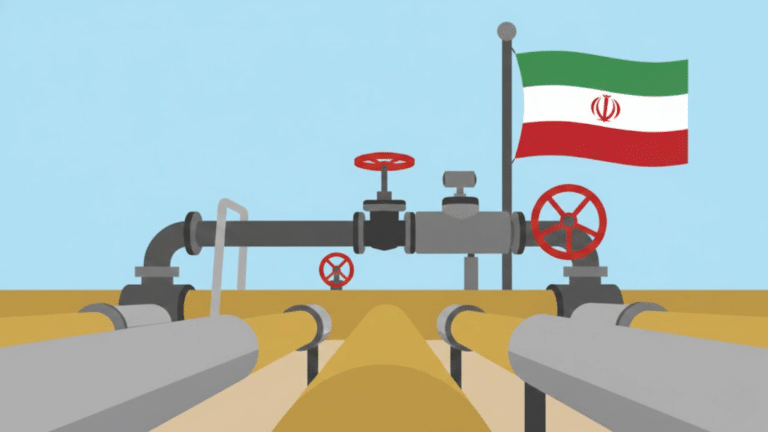
CHRONIQUE. Plus de gaz naturel liquéfié russe dès le 1er janvier, plus de gaz via gazoduc au 1er octobre 2027, mais l’UE est-elle prête? se demande la spécialiste de l’énergie Anne-Sophie Corbeau, qui rappelle que le gaz naturel liquéfié ne va pas disparaître des marchés mondiaux – il ira juste ailleurs…
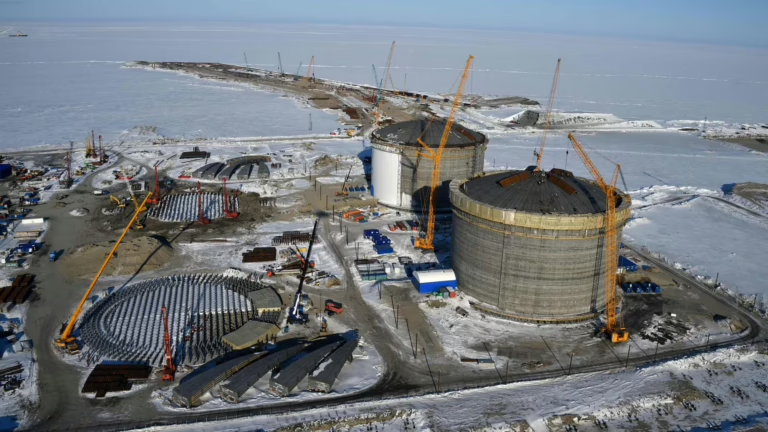
For almost seven months, energy markets have looked at LNG flows through the Strait of Hormuz in binary terms: either LNG cargoes go through, or they do not.
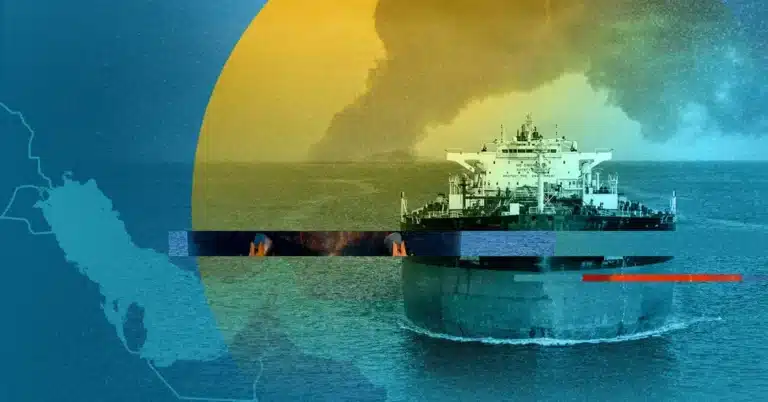
CHRONIQUE. Les réserves de gaz européennes affichent des taux de remplissage dangereusement faibles en ce début d’automne; que se passera-t-il si l’hiver est très froid, se demande la spécialiste de l’énergie de l’Université Columbia Anne-Sophie Corbeau