Net Power Surrendered Its Clean Dreams to Data Center Demand
The zero-emission pioneer is doing the dirty work for the AI boom.
Get the latest as our experts share their insights on global energy policy.
This Energy Explained post represents the research and views of the author(s). It does not necessarily represent the views of the Center on Global Energy Policy. The piece...

Hear in-depth conversations with the world’s top energy and climate leaders from government, business, academia, and civil society.
After years of trying, the US may be on the cusp of a nuclear renaissance. Commercial nuclear generation began in this country in 1958. Today, the US has...

Find out more about our upcoming and past events.
Dr. Claudia Castro will share insights into her professional journey and the role of financial markets in shaping energy investments.

Insights from the Center on Global Energy Policy
This Energy Explained post represents the research and views of the author(s). It does not necessarily represent the views of the Center on Global Energy Policy. The piece may be subject to further revision.
Contributions to SIPA for the benefit of CGEP are general use gifts, which gives the Center discretion in how it allocates these funds. More information is available here. Rare cases of sponsored projects are clearly indicated.
The European Commission released a proposed regulation on Oct. 7 that would replace the EU’s existing “safeguard” duties on imported steel products set to expire in June 2026 with higher ad valorem tariffs of 50 percent. Like the safeguard duties, these new tariffs would only apply to steel products imported into the EU in excess of country-specific volume thresholds, formally referred to as “tariff rate quotas” or TRQs. Unlike the safeguard duties, the tariffs would not have a defined expiration date.
The proposed regulation is the latest chapter in European leaders’ years-long struggle to effectively manage the persistent and deepening challenge of global excess capacity in steel production. If adopted, the proposed regulation could contribute significantly to Brussels’s efforts to build a more resilient, greener European steel sector. But implementation of the regulation could likewise lead to increased trade tensions and reduced compliance with established trade rules and norms.
This post examines the economic, energy, and climate considerations behind the Commission’s steel tariff proposal and assesses how the proposal compares to previous efforts to address global excess steel capacity and decarbonize steel production. It also identifies key decisions the Commission would need to make in implementing the regulation and their potential broad impacts.
Steel has high political salience in most countries where it is produced because it is a backbone of strategically important industries and a source of livelihoods both in the steel sector and its upstream (e.g., mining) and downstream (e.g., automobile manufacturing, construction). In Europe, steel manufacturing generates nearly €200 billion in revenues annually and directly employs more than 300,000 workers.
Nearly all “primary” (that is, made from raw materials rather than recycled scrap) steel is produced using fossil fuels. In China and India, which collectively account for around 60 percent of all steel production, the large majority of steel is made using coal-based blast furnaces—the most carbon-intensive of all production methods. By contrast, steel production in the United States and Europe has, over the past 20 years, shifted toward greater use of natural gas and hydrogen as well as electricity-based recycling of steel scrap, all of which are less carbon-intensive than coal-based methods but still significant sources of emissions.
The high energy demands of steel production and the widespread use of steel in many value chains make decarbonizing the steel sector a critical element of achieving international climate targets. Globally, steel accounts for around 8 to 10 percent of all greenhouse gas emissions across all sources. European steel production is responsible for around 5 percent of the EU’s total emissions and a quarter of the region’s industrial emissions. But despite substantial state subsidies and other derisking measures, “green” steel produced with hydrogen derived from non-fossil fuel energy sources is not yet cost-competitive. The green steel project closest to commercial scale operations, the Stegra mill in northern Sweden, is now facing insolvency.
The shaky economic logic of green steel stems from multiple factors, but the biggest culprit is the widespread practice of producing steel at levels well beyond both domestic and foreign demand. Although the vast majority of steel is consumed in its country of production, steel is one of the most highly traded commodities. As a result, overproduction in one country can depress steel prices globally, disadvantaging steel producers in regions with comparatively high labor, energy, and environmental compliance costs. And while certain countries—above all China, which makes over half the world’s steel—tend to be singled out for criticism, the global nature of steel markets means that raising tariffs on one country’s steel is rarely an adequate solution.
Since 2016, the OECD has organized a Global Forum on Steel Excess Capacity (GFESC) aimed at information sharing, dialogue, and identification of best practices to address steel overproduction. The GFSEC now includes most of the world’s largest steel producers, but notably not China or India. At its last ministerial meeting earlier this month, GFSEC members provisionally committed to developing a comprehensive framework for addressing a “crisis” in excess capacity.
Alongside these international efforts, governments have enacted a range of market barriers to limit their exposure to global markets. For example, during the first Trump administration, the United States imposed duties on steel imports on national security grounds, and separately on Chinese steel products in connection with unfair trade practices. Around the same time, in 2019, the EU established safeguard duties levied at 25 percent on a TRQ basis.
Under President Biden, the United States pursued a novel approach to managing the dual challenges of steel excess capacity and steel decarbonization that blended cooperative and unilateral elements: a proposed Global Arrangement on Sustainable Steel and Aluminum (GASSA) with the EU. Although the final details of GASSA were never hammered out, the US vision for the arrangement contemplated reciprocal lowering of tariffs on low-carbon steel and an increase in market barriers on steel from countries with carbon-intensive industry and a pattern of non-market practices around steel production. Ultimately, Brussels and Washington were unable to reach an agreement on how GASSA ought to be structured, and the initiative did not come to fruition.
Viewed against current and prior efforts to address excess steel capacity, the EU proposal could be interpreted as a significant shift in Brussels’s thinking on the issue, in several key respects.
First, the proposal explicitly acknowledges that current approaches to addressing steel overproduction, including current safeguards, have failed to adequately insulate the European market from global production trends. The Commission has provisionally concluded that more drastic action is required to protect European interests. Specifically, the proposal calls for a renegotiation of the EU’s bound tariff commitments at the WTO to the proposed 50 percent rate, an unusual move that will entail substantial bureaucratic resources and possibly compensation of affected trading partners. If it is successful in such negotiations, the EU would be entitled to impose the new tariffs on trading partners without the constraints imposed on trade remedies under WTO rules.
Second, in justifying permanent tariffs, the proposal invokes decarbonization and defense readiness in addition to more conventional justifications for restricting trade flows, such as imminent harm to industry and job losses. Such concerns constitute a broader, more strategic, and more values-driven justification for market barriers than the Commission used when establishing steel safeguard duties in 2019, which (like most other measures imposing trade remedies) focused on compliance with legal criteria set out in domestic legislation and WTO rules.
Third, the proposal would confer on the Commission flexibility to create “managed” trade conditions and restructure supply chains to align with Brussels’s vision for how the global steel market should function. In particular, the proposal calls for establishing country-by-country TRQs (meaning different countries would be allocated different ceilings on the number of steel goods that could enter the EU market duty-free) in proportion to those countries’ respective share of the global steel market in 2013—the last year before excess capacity significantly impacted global steel markets. Such country-by-country TRQs would effectively aim to recreate trade conditions as they existed over a decade ago, even though the distribution of global steel production has evolved over the past 12 years in ways that cannot be exclusively attributed to non-market practices.
The proposal confers considerable leeway to the Commission in setting TRQs, which, depending on those choices, could exacerbate trade tensions at an already fraught moment in the international economic environment. In the worst-case scenario, the proposal could be implemented in a way that undermines the legitimacy of the multilateral trading system and Brussels’s credibility as a champion of established trade norms.
One key decision-point would be how the tariffs should be applied to countries with which the EU has a free trade agreement (FTA). FTAs are binding bilateral and plurilateral legal instruments that allow countries (or regions, in the case of the EU) to trade with one another on more favorable terms than they grant other WTO members, including commitments to fix tariffs at lower rates than those applied to non-parties. The proposal does not state in clear terms whether the Commission would be empowered to unilaterally raise tariffs on FTA partners in setting TRQs. Rather, it identifies “existing and future trade agreements” as one of seven criteria that the Commission should look to in exercising that authority.
It is possible that the Commission would negotiate and compensate FTA partners through separate channels and on separate terms from non-FTA partners before imposing 50 percent tariffs on their steel products. But it is also possible that the EU would elect to treat all its trading partners equally under the proposal. The latter option would raise legitimate concerns that Brussels is prepared to disregard foundational trade rules to advance high priority economic, climate, and national security goals. Alternatively, Brussels could pursue a middle-ground approach, for example excluding low-carbon steel from the TRQs and maintaining the current 25 percent tariff rate for a grace period of 2 years to encourage major steel exporters to take stronger action against overproduction.
A second question hanging over implementation is whether Brussels would use its discretion in setting TRQs to ease trade relations with the United States. The claim that raising market barriers will simultaneously address excess capacity and enable steel decarbonization recalls the logic of GASSA; at least one commenter has observed that the proposal could conceivably allow for more favorable treatment of US steel exports as a component of a larger political “deal” currently being negotiated between the US and European officials. The proposal’s inclusion of “non-binding understandings” as a criterion that can guide TRQs would seem to encompass the type of informal agreements the current US administration prefers in its trade relations. Under such an arrangement, the Commission might set a high ceiling for duty-free imports of US steel products in exchange for lower US tariffs on European steel and possibly other goods.
Brussels has not provided any indication it would be open to an agreement of this nature, but given European leaders’ strong desire to avoid punishing tariffs on exports to the US market, it would not be shocking if the Commission entertained the idea. European industry would almost certainly welcome such a compromise.
Yet an arrangement along these lines would not be without costs. In particular, a steel deal would advance the Trump administration’s aggressive campaign to restructure the rules of global trade around reciprocity instead of non-discrimination. It would also suggest an equivalence between EU tariffs adopted through established WTO procedures and US tariffs imposed under interpretations of trade authorities that have been rejected at the WTO and by multiple US courts. Finally, if adopted as a component of the broader US-EU trade deal, a steel agreement would link the EU’s enhanced tariffs to its pledge to buy $750 billion in US oil and gas products, weakening the climate rationale for the tariffs. For these reasons, it may be more prudent for the Commission to exercise its flexibility around the TRQs in the context of active FTA negotiations with major steel producers, such as the pending EU-India FTA.
Whether the solutions offered in the proposal will succeed where earlier ones did not remains to be seen—not least of which because of the potential collateral impacts on the trade system and Europe’s international reputation.
President Trump issued a proclamation on August 6 imposing tariffs on polysilicon and solar products.

In March 2026, the Office of the US Trade Representative (USTR) announced it was investigating "structural excess capacity and production in manufacturing sectors" in 16 economies.
This Energy Explained post represents the research and views of the author(s). It does not necessarily represent the views of the Center on Global Energy Policy. The piece...
Two trade agreements recently negotiated by the Trump administration contain novel and coercive provisions with little precedent in US trade policy or the global trade system.
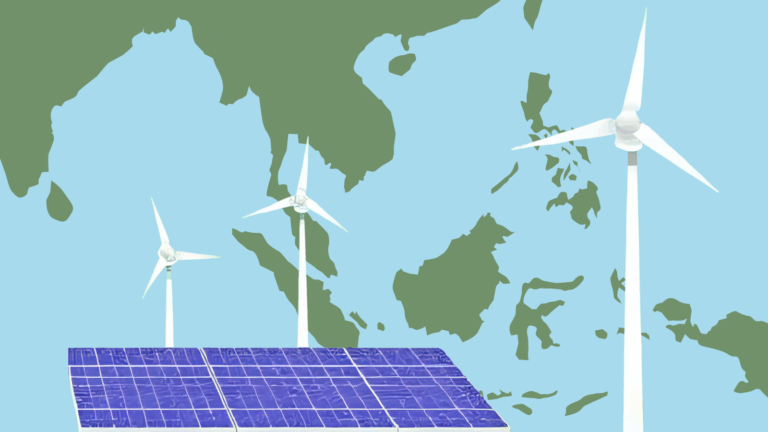
As the Senate weighs the CLARITY Act, gaps in oversight could hand adversaries new ways to evade sanctions and launder money.

Trump’s tariff mess offers a chance to restore legislative oversight.
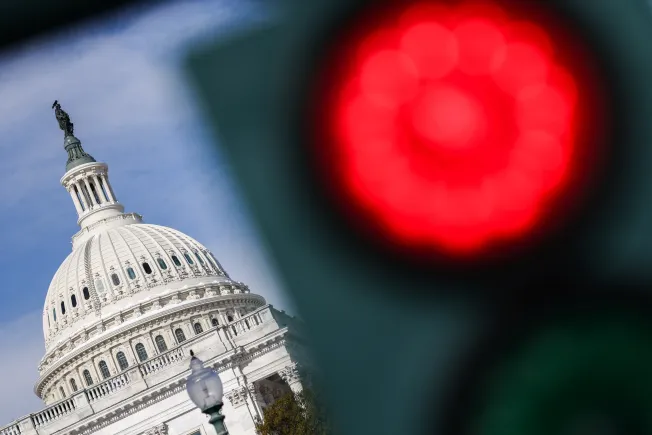
The global clean energy economy today looks starkly different than it did even 10 years ago. Not only have production and deployment of clean energy technologies expanded significantly, the geographic distribution of clean energy manufacturers, resellers, and end-users has shifted dramatically.