LIVE: Daily Energy Markets Podcast 2026
Enjoy the videos and music you love, upload original content, and share it all with friends, family, and the world on YouTube.
Get the latest as our experts share their insights on global energy policy.
A House committee voted to allow the Advisory Committee on Reactor Safeguards (ACRS) to decline certain application reviews.
Hear in-depth conversations with the world’s top energy and climate leaders from government, business, academia, and civil society.
The US may finally, after years of trying, be on the cusp of a nuclear renaissance. Commercial nuclear generation began in this country in 1958. Today, the US...

Find out more about our upcoming and past events.
Putting data centers in space once seemed fanciful. Today, a growing number of companies have started doing so.
Head of Supply Chain and Critical Minerals Research at Trivium China
Daniel Sternoff: Events in the Middle East are changing quickly, and the complexities of understanding the global energy landscape grow deeper by the hour. Join me as we talk to leading experts on the latest developments in the region and what it means for the rest of the world.
Welcome to our rapid response series, “The Iran Conflict Brief,” a special edition of the Columbia Energy Exchange Podcast. I’m Daniel Sternoff, a senior fellow at the Center on Global Energy Policy.
We are recording this podcast on Monday, May eighteenth at two PM in Washington, DC, ten thirty PM in Tehran, and ten and nine PM respectively in Abu Dhabi and Riyadh.
The Iran crisis is in its eightieth day. Many of you may remember “Around the World in Eighty Days,” the classic adventure novel by Jules Verne, in which his protagonist circumnavigated the globe in eighty days by train, ship, and elephant. The novel was a nineteenth-century celebration of an interconnecting world, published in 1873 just after the completion of the Suez Canal, the first American transcontinental railway, and the linking of rail lines across the Indian subcontinent.
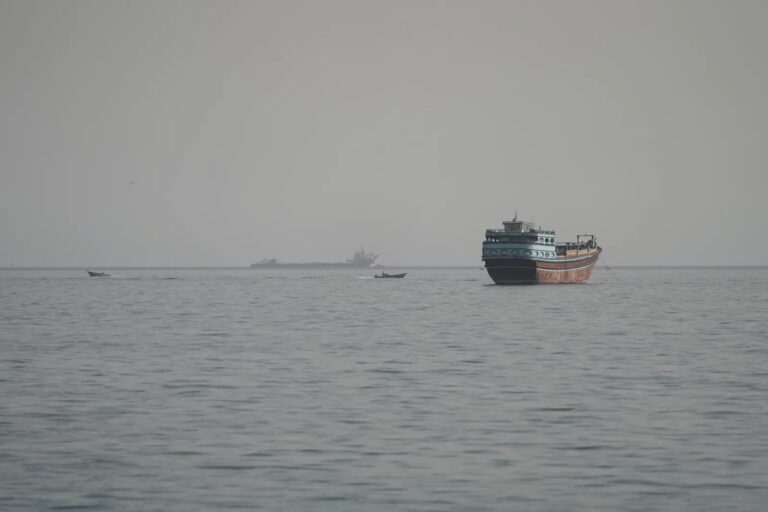
These past eighty days have been the story of a disconnecting world, with some fifteen hundred vessels laden with crude oil, oil products, natural gas, fertilizers, chemicals, and other goods trapped in the Persian Gulf by a dual US-Iranian blockade. It seems clear this standoff can’t last another 80 days without catastrophic economic consequences.
Crude oil prices have settled into an illusory equilibrium. The largest supply disruption in history is being cushioned by the release of inventories, strategic and commercial oil stocks, oil on water, waivers of sanctions crude. But inventories are rapidly depleting and will probably hit critical levels by the end of June.
These supply disruptions are simply untenable for the global economy and, like most things that can’t go on forever, probably won’t. But how will they end? Pakistan continues indirect mediation between the U.S. and Iran over a memorandum of understanding to end the war. But leaks suggest gaps over nuclear issues in the Strait of Hormuz remain irreconcilably wide.
An impatient President Trump will reportedly hold a situation room meeting early this week to discuss military options to break the deadlock. This might include taking a mulligan to resurrect Project Freedom, a short-lived attempt by the U.S. Navy to encourage commercial shipping through Hormuz. Over the weekend, a drone struck the edge of the UAE’s sole nuclear power plant, a clear reminder that Iran is prepared to target critical energy infrastructure in the Gulf states if military hostilities resume.
President Trump appears to have only bad options. And if his choice lies in acquiescing to the reality of Iranian strategic power over the Strait or a risky military escalation, the path of least resistance may be to keep maintaining a naval blockade of Iranian oil sales to China. That embargo was reinforced this month by sanctions on Hengli Petrochemical, China’s second-largest independent oil refiner, a step that pushed Beijing to deploy, for the first time ever, new blocking rules to counter U.S. sanctions.
I am joined today by Cory Combs, the head of supply chain and critical minerals research at Trivium China, a strategic advisory firm. Cory directs Trivium’s cross-cutting research on climate, energy, and industrial policy and advises governments and multinational corporations. Prior to joining Trivium, Cory consulted on renewable and nuclear energy technology commercialization at the U.S. Department of Energy, and he studied Chinese politics and energy economics at the Johns Hopkins School of Advanced International Studies.
Given that President Trump has just concluded a summit in Beijing with President Xi Jinping, I can think of no one better to discuss the triangular relationship between Iran, China, and the United States relating to oil flows, sanctions, and the Strait of Hormuz.
Good afternoon, Cory, and thanks for joining.
[00:03:53] Cory Combs: Thank you so much. Absolute pleasure to be on.
[00:03:55] Daniel Sternoff: Wonderful. So, Cory, I’d like to get your impressions of the Trump-Xi meetings, particularly as it relates to Iran and Hormuz and some of the broader industrial impacts on China. But before getting to the summit let’s wind back the clock to some of the developments that preceded it. So China obviously has essentially been Iran’s only oil customer, pre-war buying around one and a half million barrels per day of crude oil despite a US sanctions regime that has driven China’s mega state-owned refiners away from Iranian oil.
Earlier this month, the Treasury added Hengli Petrochemical to its sanctions list, and this development caused MOFCOM, China’s Ministry of Commerce for the first time to activate new blocking sanctions to counter the US move. So the US has sanctioned smaller Chinese oil terminals and refiners before.
What, what was it about Hengli that caused China to roll out these blocking sanctions? So, maybe walk us through what’s different here and how exactly these blocking sanctions will work.
[00:04:55] Cory Combs: Absolutely. So the blocking rules were initially formalized in 2021, right? So it’s been a little while, and critically they round out China’s lawfare playbook. Really, this is Beijing’s phrasing. Obviously different observers can disagree with the framing here or the characterization, but they’re viewed more as a defensive mechanism.
Basically, China has these outbounds, you know, the anti-foreign sanctions law. It has these other tools. But domestically, how do you, how do you limit the impacts of foreign sanctions on China? And the blocking rules are that theoretical piece of the puzzle. And as you say, they had not been imposed until just this past month.
I think what is critical here is, as you know, the Office of Foreign Asset Control in the Treasury in the US side had sanctioned many refiners before, but most of the teapots, these small refiners in, in Shandong. Broadly speaking, though, those sanctions had limited impact. They don’t have much teeth.
And the key reason is that the teapots, the true teapots– We’ll get to the distinction in a second. Um, the true teapots have very limited exposure to the US dollar. The banks that finance them have very limited exposure to the US dollar, and that’s by design. I mean, this has been, this has been years and years of effort to insulate that segment.
Hengli is different. Hengli is one of the private mega refiners that has integrated operations, , across different– across, , transportation fuels, across petrochemicals of other sorts, um, and it has significant exposure to the US dollar in global trading. And more importantly, the banks that give it lines of credit have direct exposure to the US dollar system.
And so I think for Beijing, you know, it can tolerate a significant number of sanctions on the shadow fleet and certainly on its own teapots. But when it comes to Hengli, what that is pressing on, what is that conte- what that’s contesting is US– is Chinese banks’ access to the US dollar system. That is a line that Beijing has to hold.
So more than Hengli specifically, I think this is about the precedent. Where can the US impose its influence, and where does China have to step in and say, “No, you’re not allowed to press on this piece, and we’re not going to allow anyone to comply with those sanctions”? Now, there is a bit of a wrinkle just in terms of the US has threatened but has yet to actually activate secondary sanctions on banks and others.
But I think this is, this is both sides drawing lines in the sand right now.
[00:07:06] Daniel Sternoff: Well, um, thank you for that. Just a couple of quick follow-ups. There was a Bloomberg report that China had guided financial institutions to pause lending to Hengli, and that’s a little bit contradictory to rolling out the blocking sanctions in order to tell everyone not to comply.
And I don’t know if that report preceded the blocking sanctions, but it’s very contradictory. What, what’s going on here?
[00:07:31] Cory Combs: Yeah, I think from Beijing’s perspective, it’s not contradictory. There are two different goals being served. One is the signaling exercise saying, “Hey, we will, we will draw a line in the sand, and there is a limit at which we will really mess– , really threaten, , or attempt to threaten the US’s ability to impose sanctions.”
At the same time, they’re not actually trying to incur secondary sanctions right now. And so I think, I think in the immediate term… I mean, we saw this when Iran– when Russia invaded Ukraine very early on. There’s a lot of disanalogies in this case, but there are certain pieces to note.
One of the first things that Beijing did was actually limit, , consumption of Russian by the state refiners, not by the independents, of Russian oil and gas. Why was that? Not because it was fully complying with the US sanctions, but because it was trying to figure out its strategy and make sure that what needs to be safe in the system is safe, and the parts that can get away with continuing to consume the sanctioned material could do that.
So there’s always a bit of planning, um, buffer around that. There’s a bit of timing buffer. So I think both things are true. Beijing is, especially for the entities that are really exposed to the US dollar, Beijing doesn’t really want to, you know, accelerate the process of, of US rolling out secondary sanctions.
At the same time, it’s making clear that it will push back if and when needed.
[00:08:45] Daniel Sternoff: needed.
Right. So what do you think this means for international entities that have exposure both to the US dollar and who, , who, and to expos-exposure to China? So I mean, If you were the lawyer inside of commodity trading houses, your Vitol, your Trafigura, or maritime insurers, and you’re sitting here and seeing here is a law on the books that says, “If you comply with US sanctions, you could be exposed to, , being sued,” or maybe you could speak a little bit about what the, the consequences would be.
And at the same time, obviously, you need to transact in US dollars. So this, this is the horrible position to be squeezed between these two. So- What does this mean for international entities? And, and, and what sector or type of firm might kind of get put in the crosshairs first to test these two regimes?
[00:09:38] Cory Combs: Yeah. So I think the, the first, the first is, is somewhat optimistic news. I think, I think a lot of, a lot of entities that have the, the greatest, the single greatest secondary exposure risk, they’ve pretty much bought into one system or the other. Most actors have aligned themselves to be very exposed to the RMB and less exposed to the USD or vice versa.
Obviously more in the latter camp. But when it comes to dealing with sanctions, you know, a lot of actors on China’s side are already in that former camp. But there are a lot of teapots, they sell domestically, but that product still moves through the rest of the world.
And so a lot of the issues are tracing this. One of the questions is how far down the list do secondary sanctions go? Now, the first, the first real risk is, is, is banking. I mean, there are a lot of lenders, and again, the teapots themselves are pretty much funded by, um, you know, local Shandong mid-sized banks, right?
But then you get to the larger banks, the national banks, international banks that are lending to the likes of Hengli and again, it comes back to why China responded so much more vigorously to Hengli than to the teapots, um, the small private financiers. That gets a lot messier, and I know that many companies, many financiers are still, lenders are still kind of unraveling the full extent of their exposure to see who their, who their clients’ clients’ clients are, you know, and if that could roll back on them.
The other, as you say, is insurance, logistics. There’s a lot of entities directly exposed. One of the key issues is, you know, pulling back a sec- a step here, the US has sanctioned a huge portion of the, um, the shadow fleet that moves sanctioned oil, right, sanctioned crude. But there’s still an awful lot of sanctioned crude moving, moving to China, and a large part of that’s because it’s been restructured so that, so that a small number of ships can cover the last stage.
You can move the ships off the coast of Indonesia, off the coast of elsewhere in Southeast Asia, and it’s that last leg. So there’s still, there’s a lot of gaps where you might think that, oh, you know, we’ve kind of cleared up our exposure. But if you somehow have unintentional exposure to the last leg in this, , step in the chain, you’re still liable.
And the, and the other thing here is that ultimately we do expect someone to get pincered. It hasn’t happened yet, but not only is there the US sanctions and then the blocking rules, which China says basically you’re not allowed to comply with the sanctions, there’s also the anti-foreign sanctions law, and there’s also other mechanisms.
At some point, some company is going to be forced into the position of either not being able to deal in China or not being able to deal with the USD while being incredibly exposed to China. It is not a good situation. So, as the kind of legal mind on, again, I’m not a lawyer, it’s not legal advice, but from the strategic advisory perspective, we are being very clear with clients.
No one will expect to be the sacrificial lamb here, but there will be one. So just have in your s- in, in your, in your, your horizon scanning, in your scenario planning, have the exercise, how would you respond, especially if you’re caught off guard and, and you know, some, some OFAC sanction comes in, a blocking rule comes in and on the back of it.
Um, how do you respond on day one, , and how do you position yourself? You need to figure that out now before someone ends up being the first pick.
[00:12:44] Daniel Sternoff: So there could be problems for somebody in the future. Right now, for Hengli, do you think this is going to dissuade them from dealing with Iranian oil blocking sanctions notwithstanding?
[00:12:55] Cory Combs: It’s a very good question. I think — I mean, there are, there are a lot of details with, you know, I mean, Zhejiang Petrochemical has slightly different operations and, and operational capabilities than Hengli, so we can get into detail. But broadly speaking, I expect Hengli to adapt. The bigger issue for China is if the US goes after all of the private mega refiners, or at least a bigger chunk of them.
If it goes after Zhejiang Petrochemical, Hengli, and Zhongsheng significantly all at once, that fundamentally changes the game because a lot of, a lot of what this is about, like the teapots have been traditionally the kind of the sponge, as, as your listeners know very well, , for, for the sanctioned crude.
Hengli and others operate in a more, more mixed space, and they will protect themselves. They do need to operate in USD. But there are limits to how far the US activity can go before you start to see these impacts creep up and become more of a macro issue.
[00:13:44] Daniel Sternoff: So let’s turn to the Trump-Xi summit. Obviously Iran and the Strait of Hormuz are not the central issue.
Because there are many, many issues on the table, but it’s an important one.
And for this podcast, it’s the one that we focus on. The White House readout after the meeting, it stated that the two sides agreed that the strait should remain open, and the White House said that Xi made clear China’s opposition to militarization of the strait and for Iran to charge tolls, et cetera.
It’s pretty unusual for the US to characterize what Xi said rather than to actually hear it from China, and we did not hear those words in that way from China. So how, how do you read the handling of the issue overall?
[00:14:32] Cory Combs: Absolutely. This is, this is actually, you know, you’re right. We’ll focus on Hormuz and Iran.But generally, there was a lot that was said by the US side that was not said by the Chinese side. Now, there, there are two, two angles here, two pieces here that are both relevant. On one hand, this is a typical problem.
This is not a political statement. This is a very practical issue. I-in almost every major negotiation between this Trump administration and China, there has been a significant gap between what the US readout says and what China says it agreed to. This was most notable in the case of Busan, and really the, the many meetings leading up to Busan, at which ultimately we were able to see a relative détente and, and China backed off on or postponed the implementation of threatened export controls, , that were announced October ninth in retaliation to the September 29th BIS rules, um, that would have basically, you know, ended up sanctioning a ton of Chinese companies.
Um, but the US readout made claims such that- China had agreed to roll back other export controls that in no way or shape or form had that happened and has since been confirmed that China’s readout was, was accurate and both sides eventually agreed that that’s what had been agreed. So this is, this is not the first time this kind of gap has occurred.
I will say in this case, it’s a little less dangerous — Last time it was very dangerous, right? Because markets react to what supply will I and won’t have in the next year, right? If you get that wrong, if the president of the US says the wrong thing there, that reshapes markets very directly. Um, that was sorted, but it was very dangerous.
In this case, I think what’s most important is that there is a genuine credible commitment on both sides to stability. That includes Iran, that includes Hormuz. There are probably going to be continued differences about exactly what that looks like in practice, but both sides have generally agreed to bilateral stability, or at least a floor under the relationship stability in the region and stability of trade, right?
And so within that, I would expect two things. One is that Beijing is, if not in the letter, at least in the spirit of what the White House is saying, I think there is alignment. I think it is consistent with the spirit that Beijing has been indicating through other policy discussions domestically, et cetera.
I would also expect that they are trying not to catalyze certain agreements or crystallize, excuse me, crystallize certain agreements yet, to give themselves more space for discussions. We know for a fact a lot of this meeting — a lot of what happened in these meetings was very rushed, right? Iran has been taking a lot of the White House’s attention.
I was… You know, we’d said before, the summit that we don’t expect a grand bargain, rare earths or anything else because there wasn’t time. I mean, the summit was known to be happening, but the actual negotiations had not been. At least there was no evidence that they had moved far enough to have a final signed document.
President Trump may be willing to negotiate on the fly. President Xi is not. That China was never going to agree to something that hadn’t been through 20 levels of bureaucracy. And so on, on one hand, you could imagine that Beijing more or less did say versions of what Trump had said, but is waiting for further negotiation and further agreement to get to the details before they crystallize that as policy.
So that’s entirely possible in this case.
[00:17:43] Daniel Sternoff: Right. Um, do you think this commitment to, , stability in the relationship, so, you know, in addition to the oil sanctions that we recently saw, um, coming out of Treasury, Scott Bessent, had threatened to put sanctions on two Chinese banks. We don’t know exactly which banks they were, but he had kind of thrown it out there, and I think the, you know, the impression was he’s trying to say to China, you know, “Cool it on the Iran oil or else we escalate.”
Do you think that a move like that is off the table now under this commitment to stability, or that’s still a space that the US could, could go to?
[00:18:28] Cory Combs: There’s two different questions. There’s what I would say strategically and then what might actually happen politically. I would say strategically, it is absolutely not, , in, in the US’s interest to escalate this. The threat of secondary sanctions makes sense as a negotiating tactic, right? , if you’re looking at it tactically, right?
If you’re very much… You, you want to be credible in, in threatening China if you’re coming from the White House’s perspective and trying to get them to, you know, roll down, um, you know, sanctioned oil purchases, et cetera, et cetera. But if you really go… I think this is where it really matters to understand why Hengli is fundamentally different in China’s industrial economy and financial economy, where the banks there are separate in the financial economy from everything involved in the teapots.
If the US thinks that this is something that China can just live with, it can afford to throw its weight around, it can afford to threaten and, and to try to build leverage, it would be mistaken, and it would be mistaken specifically for the reasons we would’ve talked about. But what would happen is not only would you probably not…
Like, if you actually start sanctioning these particular Chinese banks that have USD exposure, I do not think for a minute that Beijing would roll back. In fact, you’d probably lose all of what Beijing has been supporting in getting Tehran to the table, getting them to discuss. Not that that has solved the war at this point, but it would be a lot harder without China, and China has a lot of leverage in terms of, “Fine, do it yourself. We’re not gonna help.” That is the worst case, and I think you only understand that that is a real possibility if you understand wha- how impactful Hengli and these banks are for China right now. If you think of them as teapots, your strategy’s gonna be misplaced. That’s my take right now. At the same time, I mean, it is also difficult with, like, in negotiation, of course, everyone’s trying to maximize the leverage, and frankly, when you keep making threats and don’t follow through, your leverage does eventually erode.
But in this case, I would strongly, strongly say that not actually following through is very much in not only everyone’s interest, but specifically the US interest at this point, is my view.
[00:20:19] Daniel Sternoff: Okay. So let’s, let’s turn away from these sanctions questions to some of the broader impacts on China from the energy disruptions through Hormuz.
You know, we’ve seen imports of crude oil and petrochemical feedstocks. They’ve tumbled really sharply. , you know, there’s a perception that China is better insulated than most economies in the APAC region. Obviously, electrified power system, lots of coal, big inventories of oil, low oil intensity to GDP, et cetera. But it’s still a really big disruption.
[00:20:53] Cory Combs: yeah. Absolutely.
[00:20:55] Daniel Sternoff: So how are you seeing the broader industrial impacts? Like, who is being affected and how, and how is this rippling through, , the industrial economy?
[00:21:02] Cory Combs: Yeah, I think, I think there are two fascinating pieces here. One has been really well covered and, and I actually turn to people like Erica Downs, I think doing incredible work on a lot of this. So I just want to shout-out to one of my favorite people in the space there. But there’s, how is China managing or weathering the crisis?
And then another layer I’d like to talk through a little bit here, which is how, – This is still a very bad situation on that, just to be very clear. No one’s winning. Some are just losing less badly. I would not personally characterize that as a win per se, um, I guess everything’s relative, but still. Um, but the other piece here is how Beijing has actually been leveraging some of the exogenous shock to use as political cover for some long-suffering domestic industrial policy objectives.
And I think that’s one piece that is really interesting to map out here. So if you don’t mind, I can jump into a few pieces. I think there’s probably four layers here. Is it okay if I jump into those? Great. So in terms of impacts, right? First off, we have PetroChina, CNPC, you know, the, the, the, the, the trading, trading entity.
They are really safe from a lot of the disruption because they have so much of the– they’re the main off-taker of the Russian oil both pipeline and seaborne, right? So a lot of that flows through PetroChina, and that’s what’s keeping a lot of Chinese transportation fuels. Yeah, that’s what’s keeping it running, and that’s the major piece where people rightly point to China’s more insulated, not just from the electric state piece of it, but the, you know, PetroChina’s getting other sanctioned oil that is not being priced at wartime prices and is not disrupted by Hormuz, right? So still a huge disruption, but there is a level of protection there that most countries just don’t have, esp- in the region at least.
Then you have Sinopec. I think Sinopec is a fascinating layer because, um, on one hand, they don’t have the protection of the, the, the kind of security that PetroChina has. They have a lot of exposure. But what they have actually seen is what we have seen after, after the central government in March initially rejected state reque- , state-owned enterprises’ request for access to the Strategic Petroleum Reserve, right?
In April, they allowed some. And it turns out of a specific piece of that, Sinopec got a very nice carve-out, , specifically allowing to d- them to do two things at once. One is to dominate a lot of the production of jet fuel. Um, and just to, just as a bit of background, China has imposed export controls to, to safeguard domestic industry.
This is not a weaponized control. This is a very much protect domestic industry control on gasoline, diesel, and with a huge caveat, jet fuels. And the caveats are not for in… This doesn’t apply to international flights or Macau and Hong Kong. Um, but the rest of the world is still kind of cut off because of the feedstock issue.
And so Sinopec has been able to, with access to the SPR now, Beijing has been able to select who exactly is able to capitalize on the high cost of those fuels. And specifically, Sinopec has gotten a large, large piece of that pie. The other thing is that, again, only Sinopec and the, the, the mega refiners like Hengli have the ability to switch between are they fu- you know, producing are they refining transportation fuels or petrochemicals, polymers, olefins, things like that, right?
The tea pots can’t really do that, certainly not easily and not in a short timeframe. Sinopec and Hengli and Wangchung, they can do that. And so we’ve seen both Sinopec and Hengli with less SPR access, um, specifically eat up some of the market for petrochemicals, not transportation fuels, that Basically, not only are they getting high premiums in the short term, their revenues are about to flip back to the positive there, in terms of growth.
But we’re also seeing them basically take up market share while the rest of the world’s petrochemical production is, is, you know, suffering from feedstock issues. Beijing has specifically opened the SPR to enable increasing market share in the chemical space, which I find is just really an incredibly important piece of this.
Hengli and everything, I think we’ve talked about that. With the teapots are the last interesting piece of this. The teapots had been, again, the sponge as everyone I think well knows at this point for sanctioned crude. But there’s also been this back and forth that, you know, I know you all know well, but for certain listeners who might not be following this day to day, one of the issues is that China has– Beijing, the central government, has been wanting to consolidate the teapots for ages, right?
There’s huge overcapacity issues. And part of the political issue, and, and this really does matter when it comes to fights between the NDRC, the macro planner, National Development Reform Commission, and the local governments. One of the issues is that for local governments, they are a huge portion of the tax base.
And so even if they’re relatively unprofitable in general as, as a group, that whole group of hundreds and hundreds of independent refiners, they’re essential to Shandong’s economy. And so it’s really hard to force them offline. It’s really hard to force consolidation politically, in the political economy sense.
But right now, they’re being forced offline anyway. I mean, this, this, this disruption is, you know, Beijing doesn’t have to be the bad guy here and cut them off. It’s just being cut off and, “Oh no, what if we just don’t help them? And what if we allow that consolidation to be accelerated a little bit?” So I don’t want to say this is the end of the capacity, not in the slightest.
But I think what’s fascinating is Beijing has– clearly has the option to help here and is very specifically allowing this exogenous shock to give political cover to accelerate the consolidation that it’s been seeking for a long time.
[00:26:15] Daniel Sternoff: That’s an excellent point, and I imagine that if this disruption continues for a long time, then that window will be open.
Cory, I would love to dig into many of these issues more deeply and, , and others, but I think we are, we are out of time. , so I really appreciate you joining us today. Your insights are really appreciated. Thanks a lot.
[26:38] Cory Combs: Cheers. A pleasure to be on and continue the great work you guys are doing. Really love referring clients and everyone else to, to your expertise and, and the work you put out is fantastic. So again, pleasure to be on and we’ll keep following this closely.
[26:49] Daniel Sternoff: Wonderful. Thanks.
That’s it for this episode of Iran Conflict Brief, a limited series from the Columbia Energy Exchange podcast.
Thank you again, Cory Combs, and thank you for listening. The show is brought to you by the Center on Global Energy Policy at the Columbia University School of International and Public Affairs. I’m Daniel Sternoff. This podcast was produced by Mary Catherine O’Connor, Caroline Pittman, and Kyu Lee. Greg Vilfrank engineered it.
For more information about the show or the Center on Global Energy Policy, visit us online at energypolicy.columbia.edu or follow us on social media at ColumbiaUEnergy. If you like this episode, leave us a rating on Apple, Spotify, or wherever you get your podcasts. You can also share it with a friend or colleague to help us reach more listeners. If you have any questions, comments, or feedback, we’d love to hear from you.
Email us at [email protected]. Thanks for listening.
The Iran crisis is in its 80th day. Right now, roughly 1,500 vessels laden with oil, natural gas, fertilizers, and oil products sit trapped in the Persian Gulf by a dual US-Iranian blockade. One thing is certain: prolonging this standoff for another 80 days risks triggering profound global economic consequences.
Global oil inventories are depleting fast and are projected to hit critical levels by the end of June.
For the Trump administration—caught between accepting Iranian power over the Strait of Hormuz or risking a major military escalation—the path of least resistance may be to keep maintaining a naval blockade of Iranian oil sales to China.
The stakes escalated further this month when Washington sanctioned Hengli Petrochemical—China’s second-largest independent refiner—prompting Beijing to retaliate with unprecedented blocking rules against US sanctions.
How will this high-stakes standoff play out in the coming weeks? And how will the worsening US-China rivalry reshape the Middle East conflict?
Today, host Daniel Sternoff sits down with Cory Combs, Head of Supply Chain and Critical Minerals Research at Trivium China. Cory leads Trivium’s cross-cutting research on climate, energy, and industrial policy, advising both governments and multinational corporations. He joins us to break down the volatile triangular relationship between Washington, Beijing, and Tehran, and what it means for global energy security and the Strait of Hormuz.
The US may finally, after years of trying, be on the cusp of a nuclear renaissance. Commercial nuclear generation began in this country in 1958. Today, the US...
Permitting reform—to allow for faster approvals on new projects—is one thing that both climate advocates and energy developers have wanted for a long time. With demand for power...

Carbon credit markets have become one of the most hotly debated tools in the fight against climate change. Supporters call them essential to closing the gap between corporate...

Global gas markets, especially in Europe, are approaching winter under serious pressure. With storage inventories lagging behind historical averages and shipping disruptions from the Middle East threatening key...

The Middle East crisis has increased demand for China's clean technologies.
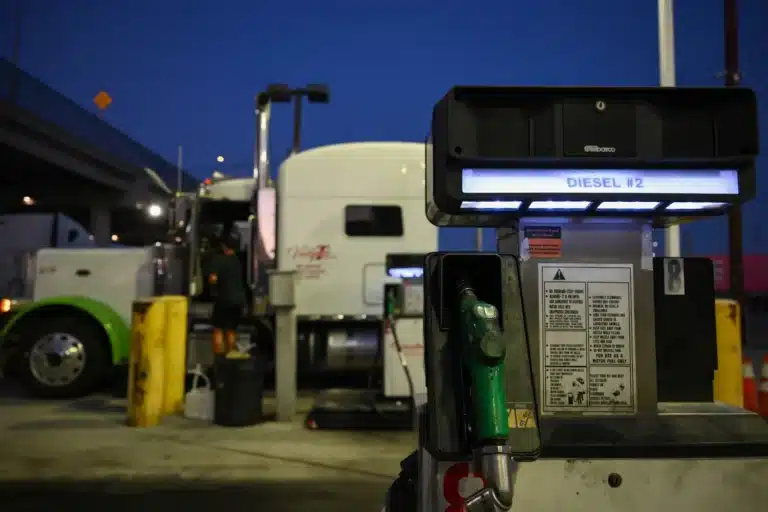
As inventories run dry and the Iran war continues to disrupt transit routes, oil has surged back to more than $100 per barrel. Diesel fuel—the workhorse of the agricultural and trucking sectors—has now soared to historic highs, pushing U.S. exports to record levels.
By almost any measure, the world should be suffering a far more severe energy crisis.