This Energy Explained post represents the research and views of the author(s). It does not necessarily represent the views of the Center on Global Energy Policy. The piece may be subject to further revision. Contributions to SIPA for the benefit of CGEP are general use gifts, which gives the Center discretion in how it allocates these funds. More information is available here. Rare cases of sponsored projects are clearly indicated.
The Center on Global Energy Policy at Columbia University SIPA is closely following the escalating conflict in Iran and its implications for US national security, Middle East geopolitics, and global energy markets. See all of our coverage here.
- The US blockade of Iran’s oil exports is intended to force Tehran to cut production sharply once storage fills up.
- Iran has shut in and restarted oil production in the past, and while there are challenges, such actions are unlikely to cause serious technical problems or reduce production capacity permanently.
- Forced reductions in natural gas output due to a lack of outlets for associated hydrocarbon liquids may be more problematic, leading to rationing gas between power generation, industry, residential users, and exports.
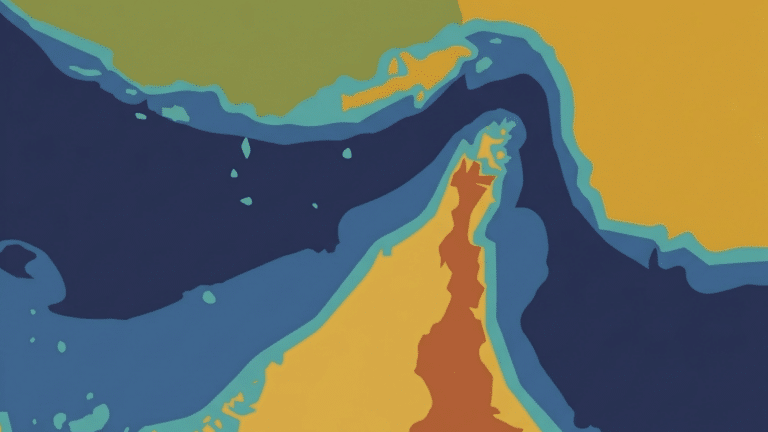
The U.S. blockade of tankers serving Iran’s oil exports is intended to cut Iranian oil exports to near-zero. This would sharply reduce oil export revenues, damage the economy and government budget, and perhaps compel Tehran to make concessions in negotiations, reopen the Strait of Hormuz to free passage, diminish its military power, or even lead to serious internal challenges to the Islamic Republic.
A separate analysis has covered the amount of practical oil storage Iran has and how long it can continue producing before needing to reduce output. There is some anticipation that the need to shut-in producing wells and fields will cause damage to facilities, cause them to “explode”, or permanently reduce Iran’s oil production capacity even if and when the blockade is eased. The reality, however, is that Iran has shut in oil production in the past without serious repercussions (as have other oil producers), although gas production may have to be cut back because of the lack of outlets for associated hydrocarbon liquids. That would require rationing of gas between the power, industrial, and residential sectors, as well as exports.
An accurate assessment of the risk of shutdowns to Iran’s hydrocarbon production is critical for the diplomatic and military plans of both the United States and Iran, and for understanding the potential future course of the conflict, and the longer-term impacts on the global energy market.
Iran’s crude oil production hovered between 3.2-3.3 million barrels per day (bpd) during 2025 and 2026. Crude oil output appears to have dropped somewhat to 3.06 million bpd in March 2026. In addition, Iran derives about 1.3 million bpd of condensate (effectively very light oil) and natural gas liquids (NGLs) from natural gas production.
Iran’s refining throughput averaged around 2.1 million bpd pre-war out of a total 2.4 million bpd capacity, and domestic oil consumption averaged about 2 million bpd. Tehran might be able to export small quantities by tankers that evade the U.S. blockade, as well as by trucks and rail. The required production cut to avoid filling storage entirely is therefore up to 50 percent of pre-war levels, the remaining production being refined and used domestically.
The country’s hydrocarbon liquid production, broadly defined, comes from four main areas, each with distinct production histories and geological properties. How easily Iran can close down and restart production depends on the characteristics of these areas. Required production cuts can, to some extent, be allocated between fields, and Iran will likely prioritize those fields that have output that can be reduced without serious problems.
As the Journal of Petroleum Technology observes, “For the prolific conventional fields in the Middle East, there is very little technical concern about shut-ins and startups.” Indeed, Iranian production rebounded quickly from low levels following the Joint Comprehensive Plan of Action in 2016, and post-Covid in 2023.
Iran’s fields do not include most of the cases where production restarts could be difficult: very cold climates (such as Siberia), waxy crudes (such as East Africa), extra-heavy crude (such as Venezuela and Canada), reservoir rocks with swelling clays, fields using chemical or thermal enhanced oil recovery, or hydraulically-fractured shale/tight oil (United States). The exception may be marginal wells with very high water-cuts (that produce a large share of water along with oil), low reservoir pressure, or very old wells with mechanical failures, which do not account for a large fraction of production. Water coning, the excessive ingress of water from the reservoir into the well, is a possible consequence of over-production, not of shutting in wells as some commentary has suggested.
Iran’s oil has a moderate wax content. Some of its crudes contain high levels of asphaltenes, heavy complex hydrocarbons that can solidify and block wells and pipelines. Scale – solid minerals – can precipitate from formation waters. These problems can be removed by chemical, mechanical, or thermal treatments.
Wells with a high water-cut may not flow naturally after being shut-in. They can be restarted by pumping or by temporarily injecting nitrogen to lighten the fluid column. Fluid blocking and cross-flow between reservoir zones with different pressures or water contents can create problems. Long-term shut-ins could lead to corrosion of wells and pipelines, the settling of sand and debris in the wellbore or pumps, or the mechanical deformation of the wells. Careful technical planning of shutdowns and restarts and the use of chemical corrosion inhibitors can fix most of these problems.
The Iranian oil heartland in the province of Khuzestan and adjoining areas of the Zagros mountains contains mostly very mature giant fields such as Gachsaran, Agha Jari, Marun, Ahvaz, and others, discovered between the 1920s and 1960s. These fields produce about 2.2 million bpd, primarily from the Oligo-Miocene-aged Asmari formation, a fractured carbonate (limestone and dolomite) reservoir, and from the Bangestan and other deeper carbonate Cretaceous reservoirs.
The main natural oil recovery mechanism for these fields is gas-oil gravity drainage, typical for highly fractured rocks with a porous but low-permeability matrix, but uncommon in the global oil industry. Natural gas is injected to enhance this process, although Iran has long struggled to allocate enough gas for optimal recovery. Nevertheless, a period of ceased or lower production would enable more oil to drain naturally from the matrix into the fractures. The upshot would be that when normal operations restart, production and ultimate recovery might be higher than before the stoppage.
The newer West Karoun area, along the Iraqi border, includes the giant Azadegan, Yadavaran, Yaran, and other fields with a variety of sandstone and less-fractured carbonate reservoirs, mostly Cretaceous-aged, very similar to those of southern Iraq. It produces about 500,000 bpd and is the main driver of future Iranian crude oil output growth, with an eventual target of pumping 1 million barrels per day.
Resumption from these fields will be a similar process to that for Iraq. To meet its OPEC+ commitments, Iraq has frequently reduced and then restarted production from fields such as Majnoon, which lies just across the border from Azadegan, without apparent ill effects. Iran has begun installing locally-made electrical submersible pumps at Azadegan.
The offshore Persian Gulf contains mature fields that produce approximately 500,000 bpd from a variety of mostly Cretaceous-aged sandstone and carbonate reservoirs. Water and sometimes gas injection is often used to maintain reservoir pressure. These fields are similar to those of its GCC neighbors, Saudi Arabia, Qatar, and the UAE. Production levels from these fields have varied historically because of OPEC+ commitments, and most of their production is currently offline due to the disruption of transit through the Strait of Hormuz.
Finally, in the Fars and Bushehr provinces and the adjoining offshore, giant gas fields produce from the Permo-Triassic carbonates. The most notable is South Pars, the Iranian sector of the North Field in Qatar, the world’s largest non-associated gas field (i.e., a gas field not containing oil). These fields yield large quantities of condensate and NGLs, and have been a major source of growth in Iran’s overall output of hydrocarbon liquids.
Production from South Pars has been affected in recent years by declining pressure. Iran would need to install compression facilities offshore, as Qatar has done, to sustain output in the longer term. However, it has had trouble constructing or sourcing the required equipment due to sanctions, even before the war. Onshore processing facilities for South Pars were damaged by an Israeli attack in March 2026, which has reduced condensate output by about 100-120,000 bpd.
If Iran cannot export, consume, or store all the condensate and NGLs, it would have to cut back gas production. This would require rationing between gas exports (to Turkey and Iraq), power generation, industry, reinjection in oil fields, and city gas distribution (heating and cooking). War damage to petrochemical plants and the blockade of exports will, in any case, reduce demand for industrial gas, and the peak period of residential use comes in winter, which is still six months away. Power generation uses can partly be substituted with oil.
This analysis suggests that the U.S. blockade of Iran’s oil exports will not cause catastrophic, or even very serious, damage to its upstream oil industry. If and when the blockade is relaxed, Iran will probably be able to resume production promptly at about 70 percent and regain most of its pre-war capacity within a few months.
Of course, the loss of oil and petrochemical revenue to the government due to the embargo is serious and will intensify economic pressure on Iran. Reductions in gas injection, sanctions, and lack of access to finance and technology will erode production capacity over time and delay new projects. But these effects will play out over a rather longer period.