This website uses cookies as well as similar tools and technologies to understand visitors’ experiences. By continuing to use this website, you consent to Columbia University’s usage of cookies and similar technologies, in accordance with the Columbia University Website Cookie Notice.
The Trump administration and Saudi leadership have reportedly agreed to a nuclear agreement that could enable US nuclear technology transfers to Saudi Arabia.
Advanced technologies, a return to domestic manufacturing, and the race to control energy production while also confronting surging demand for electricity—all of these factors mean that for the...
PCCMs facilitate the generation, trading, and retirement of carbon credits from projects that remove, reduce, or avoid greenhouse gas emissions. By creating a revenue stream from verified climate...
Event
About Us
We are the premier hub and policy institution for global energy thought leadership. Energy impacts every element of our lives, and our trusted fact-based research informs the decisions that affect all of us.
This Energy Explained post represents the research and views of the author(s). It does not necessarily represent the views of the Center on Global Energy Policy. The piece may be subject to further revision.Contributions to SIPA for the benefit of CGEP are general use gifts, which gives the Center discretion in how it allocates these funds. More information is available here. Rare cases of sponsored projects are clearly indicated.
The Center on Global Energy Policy at Columbia University SIPA is closely following the escalating conflict in Iran and its implications for US national security, Middle East geopolitics, and global energy markets. See all of our coverage here.
The US-Israeli war against Iran highlights the Gulf’s dual role as the backbone of global energy supply and a major source of systemic risk.
The scale of the war’s shock to global energy markets continues to depend on two factors: its duration and the extent of long-term damage to energy infrastructure. The longer and more extensive the disruptions, the deeper the price and global economic impact.
While Saudi Arabia has demonstrated an ability to rapidly repair damaged infrastructure, additional attacks and retaliations could limit the Gulf states’ capacity to respond with the same speed.
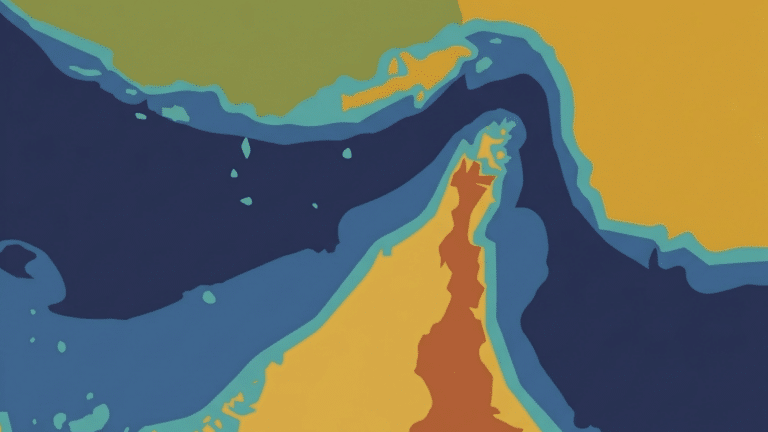
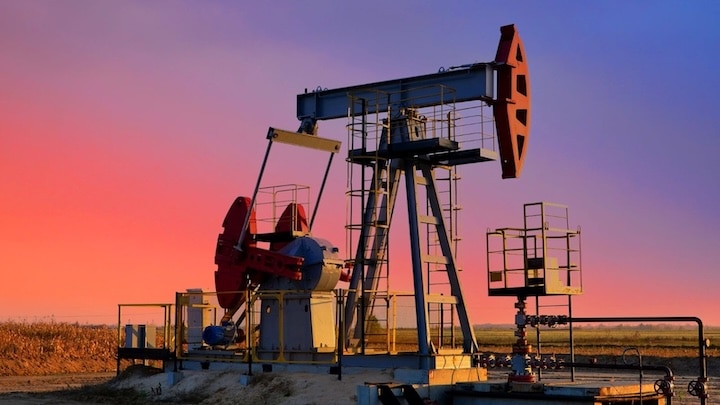
The full energy implications of the US-Israeli war against Iran depend on two variables: the duration of the conflict, which has heavily impeded crude, refined products, chemicals, and liquefied natural gas (LNG) flows through the Strait of Hormuz, and the extent of longer-term damage to energy infrastructure across the Gulf. But even at this stage, the war has underscored a structural reality: the Gulf is both the backbone of global energy supply—accounting for a substantial share of global oil and gas production as well as refining and LNG capacity—and one of its most concentrated risk points. While this concentration has long supported efficiency and scale, the disruption of multiple assets simultaneously shows how a localized shock can massively disrupt global markets.
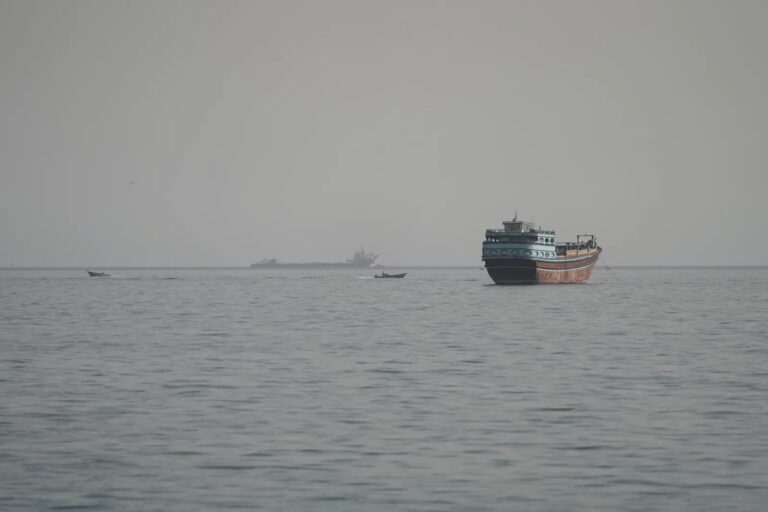
Since the war’s outbreak on February 28, traffic flows have deteriorated to less than 5 to 10 percent of prewar flows, and as many as 230 tankers carrying as much as 136 million barrels of crude and refined fuel remain locked in the Persian Gulf. A US blockade of the strait, including the flows of countries willing to pay a toll to Iran’s military for unimpeded transit, now threatens the limited exports still moving through the Gulf. About 12 million barrels per day of “missing” crude exports and refined fuels (e.g., jet fuel and diesel) from the Gulf are currently unable to reach the market. This is the current market deficit, along with six weeks of cumulative traffic and deliveries that have not arrived at their expected destinations, notably in Asia. Approximately nine million barrels per day of crude is being diverted through the Saudi East–West pipeline, the Emirati Fujairah pipeline, along with continued exports from Iran (now under threat of blockade) and Omani exports that avoid the Strait—all of which has been instrumental to continue to meet global demand, though recent Iranian coordinated drone and missile attacks threaten these flows.
In terms of longer-term damage, more than 60 energy infrastructure facilities across the Gulf have been targeted, with roughly 50 sustaining physical damage and at least eight experiencing severe damage requiring lengthy repair. The latter include the Sitra refinery in Bahrain with around 500,000 barrels per day (bpd) of capacity offline, two RasGas LNG facilities in Qatar with a combined outage of 30 million tonnes per annum (mtpa), and the Habshan Complex in the United Arab Emirates with 6 billion standard cubic feet per day (bscfd) of gas processing capacity. Refining capacity has absorbed the most immediate and measurable shock. Approximately 2.4 million bpd of refining capacity across the Gulf Cooperation Council countries has been taken offline following attacks on around 20 refineries, representing roughly 40 percent[1] of the affected facilities’ total capacity. This directly impacts the supply of diesel, gasoline, and jet fuel globally.
Beyond refining, in Saudi Arabia, the world’s largest oil exporter, attacks cut production capacity by about 600,00 bpd and reduced flows through the East-West pipeline by 700,000 bpd. The pipeline, which links Abqaiq to Yanbu on the Red Sea, has become a critical export route during the disruption, offering a bypass to the Strait of Hormuz, though drone damage to a pumping station limited its throughput temporarily. Iranian strikes on the Manifa and Khurais oilfields have further reduced Saudi output by roughly 300,000 bpd each. Taken together, these disruptions have cut into the kingdom’s spare capacity buffer, historically one of the largest in the global system.
On April 12, the Saudi Ministry of Energy reported that operational and technical teams moved quickly to stabilize the system. Within just days of the initial disruptions on April 8, the ministry confirmed that full pumping capacity through the East–West pipeline—around 7 million bpd—had been restored, alongside roughly 300,000 bpd from the Manifa field. Work is still underway to bring output at the Khurais field back to full capacity. This pattern of recovery echoes the 2019 attacks on Abqaiq and Khurais, which caused the largest sudden supply outage in modern oil market history, removing about 5.7 million bpd, or roughly 5 percent of global supply at the time. Aramco restored around 2 million bpd within 48 hours and returned to full production capacity within two to three weeks. The current response, while dealing with smaller but more distributed disruptions across multiple assets, again points to a system built to absorb shocks and restore flows quickly, even if recovery at specific sites may take longer.
The broader regional picture is less certain. Several neighboring countries are now dealing with more complex and widespread damage, particularly in refining and LNG infrastructure. Qatar’s Ras Laffan has the most severe damage, with as much as 17 percent of its LNG production halted for three to five years, including damage to Pearl GTL, a gas-to-liquids facility owned by Shell. These systems are harder to restart and require longer, more technical repair processes. Moreover, many of these countries have not faced disruptions of this scale before.
From a market perspective, the timing of recovery is critical. Short-term losses can be managed, but longer disruptions, especially in refining and LNG, can tighten supply and shift trade flows. The key question now is less how much supply has been lost than how quickly it can return. Whether other Gulf producers can move as swiftly as Saudi Arabia will shape the scale of the shock and what it means for global energy markets.
[1] JP Morgan, “OIl Flash Note: Degrees of Damage,” April 9, 2026.
Share
CGEP @ Climate Week 2026
September 21-25, 2026 | Columbia University | New York City
The Center on Global Energy Policy will host a series of energy
and climate focused events this September during Climate Week NYC.
The Trump administration and Saudi leadership have reportedly agreed to a nuclear agreement that could enable US nuclear technology transfers to Saudi Arabia.