Net Power Surrendered Its Clean Dreams to Data Center Demand
The zero-emission pioneer is doing the dirty work for the AI boom.
Get the latest as our experts share their insights on global energy policy.
This Energy Explained post represents the research and views of the author(s). It does not necessarily represent the views of the Center on Global Energy Policy. The piece...
Hear in-depth conversations with the world’s top energy and climate leaders from government, business, academia, and civil society.
After years of trying, the US may be on the cusp of a nuclear renaissance. Commercial nuclear generation began in this country in 1958. Today, the US has...

Find out more about our upcoming and past events.
Dr. Claudia Castro will share insights into her professional journey and the role of financial markets in shaping energy investments.

Insights from the Center on Global Energy Policy
This Energy Explained post represents the research and views of the author(s). It does not necessarily represent the views of the Center on Global Energy Policy. The piece may be subject to further revision. Contributions to SIPA for the benefit of CGEP are general use gifts, which gives the Center discretion in how it allocates these funds. More information is available here. Rare cases of sponsored projects are clearly indicated.
The Center on Global Energy Policy at Columbia University SIPA is closely following the escalating conflict in Iran and its implications for US national security, Middle East geopolitics, and global energy markets. See all of our coverage here.
The Eastern Mediterranean countries—Cyprus, Egypt, Israel, Jordan, Lebanon, and Syria—lie outside the main theater of the US-Israel war with Iran. However, several of them are engaged in active combat or face spillover impacts. Their energy systems are potential and actual targets, and their domestic economies are exposed to rising energy prices and supply cutoffs. While these immediate term threats are significant, the region also faces longer-term risks to its potential role as an alternative gas supplier to Europe and continued energy investments from the Gulf and beyond.
Israel’s three offshore gas fields are apparently vulnerable but have not been attacked successfully, whether by Iran directly or by Hezbollah, the Houthis, or Hamas. Leviathan (1.4 billion cubic feet per day [Bcf/d]) and Tamar (1.1 Bcf/d) produce both for the domestic and export markets, while Karish (0.78 Bcf/d), operated by UK-listed Energean, solely serves the domestic market. The fields are protected by Israel’s C-Dome maritime defense system.
Leviathan and the Karish floating production facility, which handles both the Karish and Tanin fields, were closed down as a precaution when the war began on February 28. Their production facilities are in the northern Israeli offshore, relatively close to Lebanon and therefore more exposed to potential attacks from Hezbollah.
But Leviathan was allowed to restart from April 2 and Karish from April 9. Tamar, whose production platform is located in the southern Israeli offshore near Gaza, has continued producing throughout the war. Energean’s Katlan gas development will be paused if the war continues beyond May. Expansion of pipeline capacity to Egypt has been delayed, probably by a few months.
On April 7, in response to President Donald Trump’s threats to destroy Iran’s power plants, the Islamic Revolutionary Guards Corps issued a statement identifying energy targets in Israel. It specifically mentioned the Karish and Tanin gas fields.
Ukrainian intelligence reportedly found that Russia gave Iran a list of 55 critical infrastructure targets in Israel. The list included the Orot Rabin power plant, a coal plant being converted to gas, which accounts for about 15 percent of Israel’s generating capacity. A missile landed near the plant on March 25, apparently without damaging it.
Israel’s phase-out of coal in favor of gas, while positive economically and environmentally, has increased its vulnerability to attacks on gas infrastructure. However, the rapid increase of solar, wind, and battery capacity in Israel, including distributed solar, should gradually diminish this exposure.
Just before the war, on March 20, Italian supermajor ENI withdrew from its offer for Zone G, on the Israel–Egypt maritime border, which it had been awarded in Israel’s fourth bid round. The fifth bid round was scheduled to launch soon after March 25 but is now delayed. The war, along with reputational concerns among European countries around operating in Israel, will probably diminish interest. Major new discoveries were not expected anyway, meaning Israel will continue to rely on the three main existing projects and some limited near-field exploration around Karish and Tanin.
While gas is the most significant vulnerability to conflict, oil has also come under attack. In the June 2025 war, an Iranian missile hit one of Israel’s two oil refineries, Bazan in Haifa (197,000 bbl/d capacity), putting it out of action for several months. Bazan was then struck twice in March, again disrupting operations. The smaller Ashdod refinery (100,000 bbl/day) was apparently also targeted but does not appear to have been hit. The outages, though small relative to the Gulf, could further tighten the Mediterranean refined product balance.
Egypt has not been a target of Iranian attack during the war. Nor has Jordan, other than numerous drones and missiles apparently aimed at US military sites. However, both faced a near-total cutoff of gas imports from Israel that has forced them to rely on higher liquefied natural gas (LNG) imports. Fortunately, from their point of view, the war has occurred in early spring, when air conditioning and hence electricity demand is lower.
Normally Israel supplies 1.1 Bcf/d to Egypt and 0.3 Bcf/d to Jordan. Jordan generates about 68 percent of its electricity from gas, and Egypt 82 percent. Gas from Israel makes up about 85 percent of Jordanian and 16 percent of Egyptian consumption.
Jordan imported two LNG cargoes in March and reduced gas deliveries to industry to make up for the outage. Egypt’s monthly gas import bill roughly tripled in March because of the higher cost of spot LNG versus pipeline volumes. Energy conservation measures include early closures of offices, shops, and restaurants. Both countries have major renewables programs, and Egypt is building a nuclear power plant, easing reliance on gas in power over the medium term. But Egypt is still unlikely to return to exporting significant LNG volumes.
Before the war, Jordan also intended to supply Syria with gas by swapping LNG (practically, this would have been molecules from Israel). Supplies were cut at the start of the war, but it was announced on April 12 that they would resume within a few days.
Lebanon demarcated its offshore border with Israel in October 2022 after many years of negotiation. The unsuccessful Qana well near the border was drilled in October 2023. A consortium of TotalEnergies, QatarEnergy, and ENI took up Block 8 along the maritime boundary in January 2026, but it may be affected by reported Israeli intentions to occupy southern Lebanon.
By contrast, the disruption has not affected progress in Cyprus. On April 10, ExxonMobil confirmed it had declared its Pegasus and Glaucus discoveries—holding a total of 7 trillion cubic feet of gas in place—commercial. The Aphrodite field, with 3.7 trillion cubic feet (Tcf) of reserves discovered in 2011, also appears to be moving ahead, with likely first production in 2031. All three will likely be tied back to facilities in Egypt. Cyprus has struggled to move its mid-sized offshore fields to development, but they now look more attractive, especially to Cairo as a diversification of supply.
Gulf companies had been prominent investors in the Eastern Mediterranean energy sector recently. Abu Dhabi state entity Mubadala Energy has a stake in Israel’s Tamar gas field and Egypt’s Zohr gas field, while Abu Dhabi National Oil Company set up a joint company with BP, Arcius Energy, which holds assets in Egypt and on April 3 took a final investment decision for the Harmattan gas field. In 2024, ADNOC and BP sought to buy 50 percent of Israel’s NewMed Energy, which holds 45.34 percent of Leviathan, but this was derailed by valuation differences and the war in Gaza. QatarEnergy has positions in Lebanon, Cyprus, and Egypt, and Qatari companies are developing gas power in Syria.
Both Qatar and the United Arab Emirates (UAE) may seek additional international LNG in case of future interruptions to their Gulf operations. However, the United States, Sub-Saharan Africa, and Latin America appear more likely near-term LNG priorities for them than the Eastern Mediterranean. The Gulf countries’ need to spend at home to repair facilities and revive domestic economies may also limit their appetite for international ventures. Further investment in Israel, in particular, depends on the state of UAE–Israel relations after the war.
The Eastern Mediterranean has been repeatedly proposed as a source of gas for Europe, either by pipeline or LNG. This might appear more attractive now because of the long-term loss of some Qatari LNG, and the desire to diversify from the Gulf, Russia, and the United States. However, the prospect remains unlikely because of the relatively modest size of the gas resources involved, fragmented between several fields, countries and companies; difficult political relations; and Europe’s unwillingness to sign up for long-term commitments to fossil fuel infrastructure and contracts given its climate change plans.
Reporting in the New York Times suggests a key element in the Trump administration's Russia-Ukraine peace plan involves Europe resuming Russian gas imports.
Last week's summit between US President Trump and Chinese President Xi was the second meeting between the two leaders since the US and Israel attacked Iran.
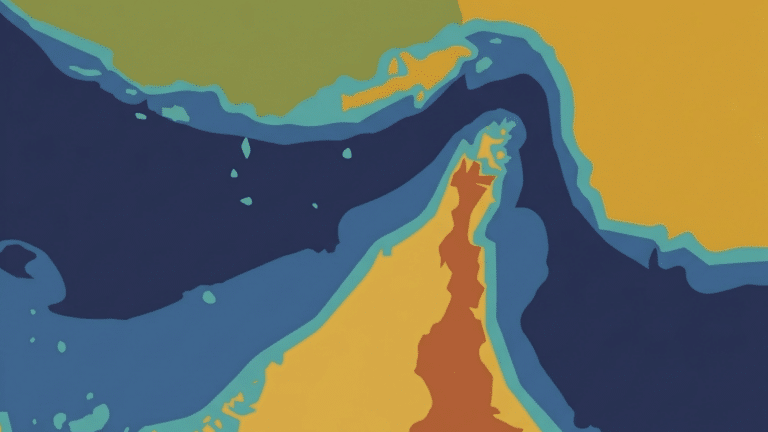
The Center on Global Energy Policy is providing live updates on key developments related to the Iran crisis. Check back here for the latest.
The White House announced last week an oil deal for more than 65 billion barrels of oil reserves in Venezuela and a 35% equity stake in North American Blue Energy Partners (NABEP).
In this edition of Global Institute Dialogues Jason Bordoff discusses how the Iran crisis, China’s electrification strategy, and the US shale revolution have changed energy geopolitics.
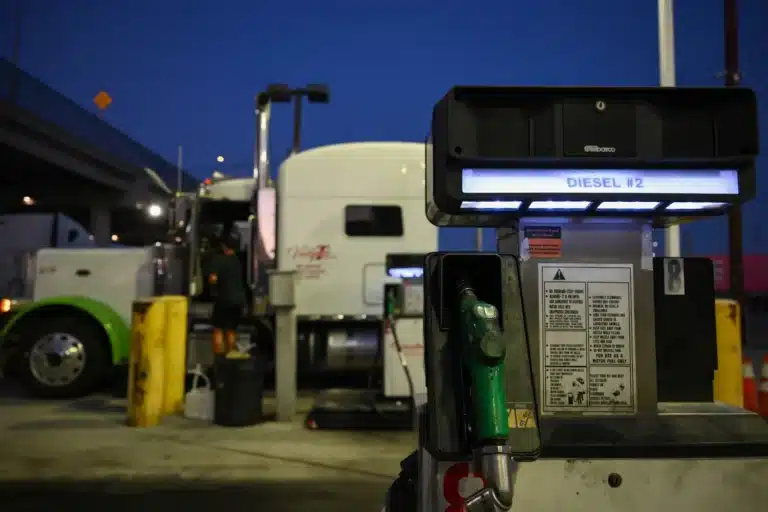
As inventories run dry and the Iran war continues to disrupt transit routes, oil has surged back to more than $100 per barrel. Diesel fuel—the workhorse of the agricultural and trucking sectors—has now soared to historic highs, pushing U.S. exports to record levels.
The Trump administration has submitted to Congress a new nuclear energy cooperation agreement with Saudi Arabia.