This website uses cookies as well as similar tools and technologies to understand visitors’ experiences. By continuing to use this website, you consent to Columbia University’s usage of cookies and similar technologies, in accordance with the Columbia University Website Cookie Notice.
Energy Explained
Get the latest as our experts share their insights on global energy policy.
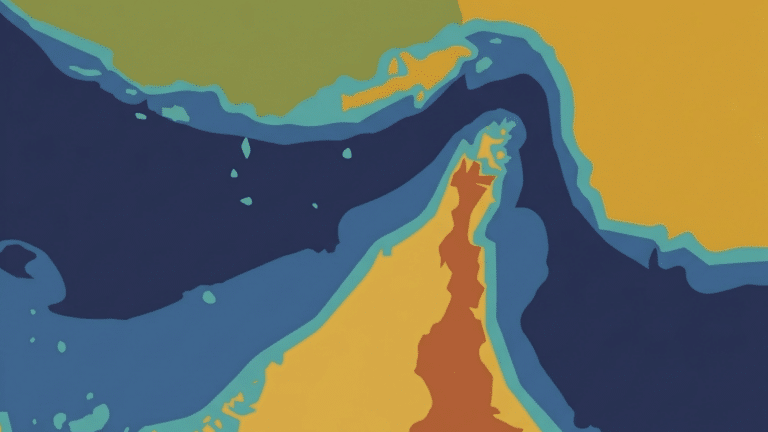
Live Updates: Iran and the Conflict in the Middle East
The Center on Global Energy Policy is providing live updates on key developments related to the Iran crisis. Check back here for the latest.
Blog
by Anne-Sophie Corbeau, Erica Downs, Ira Joseph, Richard Nephew, Daniel Sternoff, Karen E. Young, Robin Mills & Neelesh Nerurkar • September 23, 2026
Podcasts
Hear in-depth conversations with the world’s top energy and climate leaders from government, business, academia, and civil society.
Erica Downs and Michal Meidan on China’s Oil Shock That Wasn’t
This week, Chinese President Xi Jinping travels to Washington for a state visit with President Trump, their second face-to-face meeting this year. Energy is likely to be high...
Columbia Energy Exchange Podcast
• September 22, 2026

Events
Find out more about our upcoming and past events.
September 21, 2026 - September 25, 2026
CGEP @ Climate Week 2026
The Center on Global Energy Policy at Columbia University SIPA will host a series of energy and climate focused events this September during Climate Week NYC.
Event

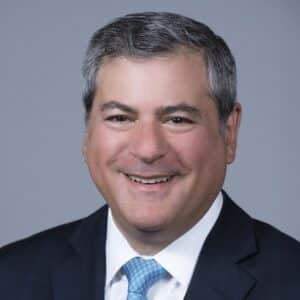
Jason Bordoff
Founding Director, Center on Global Energy Policy; Professor, Columbia SIPA; Professor and Co-Founding Dean Emeritus, Columbia Climate School
Biography
Jason Bordoff is the Founding Director of the Center on Global Energy Policy at Columbia University’s School of International and Public Affairs, where he is a Professor of Professional Practice. He is also on the faculty of the Columbia Climate School, where he is Co-Founding Dean Emeritus.
He previously served as Special Assistant to President Barack Obama and Senior Director for Energy and Climate Change on the Staff of the National Security Council. Prior to that appointment, he held senior policy positions on the White House’s National Economic Council and Council on Environmental Quality. Earlier in his career, he was a scholar at the Brookings Institution, served in the Treasury Department during the Clinton Administration, and was a consultant with McKinsey & Company.
One of the world’s leading energy and climate policy experts, Bordoff’s research and policy interests lie at the intersection of economics, energy, environment, and national security. As a member of the Columbia SIPA faculty since 2013, he teaches and mentors the world’s future energy and climate leaders in government, business and civil society.
In 2013, Bordoff created the Center on Global Energy Policy (CGEP), which is now widely recognized as among the world’s leading energy policy research institutes, advancing evidence-based and actionable energy and climate solutions through research, dialogue, and education. (Learn more here.) In addition to serving as CGEP’s Founding Director, Bordoff co-led and created the nation’s first graduate school devoted to tackling climate change, the Columbia Climate School, from 2021 to 2023. Bordoff is a columnist for Foreign Policy Magazine and has authored numerous essays and articles for Foreign Affairs. He frequently publishes articles in leading outlets such as The New York Times, The Wall Street Journal, Financial Times, The Economist, and appears on NPR, CNN, NBC, Bloomberg, CNBC, CBS, and the BBC as a commentator.His Foreign Affairs article with Meghan O’Sullivan, “Green Upheaval: The New Geopolitics of Energy,” was selected as one of the “Top Ten” print articles published in that journal in 2022.
Bordoff has extensive experience advising the private sector and non-profit organizations. He is a Senior Advisor at Permira, a global investment firm. He serves on the Temasek Sustainability Advisory Panel, and on numerous advisory boards and leadership councils, including the Federal Reserve Bank of Dallas, Sustainable Energy for All at the United Nations, The Nature Conservancy of New York, Foreign Policy 4 America, the New York Energy Forum. He is a member of the Council on Foreign Relations, the Trilateral Commission, the Oxford Energy Club, and is a Distinguished Fellow at the Institute of Energy Economics, Japan.
Bordoff graduated with honors from Harvard Law School, where he was Treasurer of the Harvard Law Review, and clerked on the U.S. Court of Appeals for the D.C. Circuit. He also holds an MLitt degree from Oxford University, where he studied as a Marshall Scholar, and a BA magna cum laude and Phi Beta Kappa from Brown University.
Relevant Articles
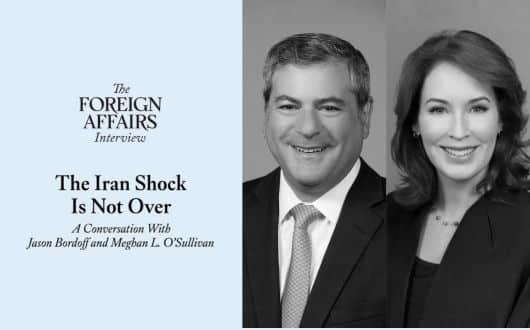
The Iran Shock Is Not Over
A Conversation With Jason Bordoff and Meghan L. O'Sullivan. Podcast hosted by Foreign Affairs Editor Dan Kurtz-Phelan.
News and Publications
with Jason Bordoff & Meghan L. O'Sullivan •
Foreign Affairs
• September 10, 2026
Trump says the Strait of Hormuz is open. But traffic is nowhere near what it used to be.
Six months into the war with Iran, traffic through the world’s busiest oil route has fallen from hundreds of vessels a day to a handful and sent prices sharply higher.