This website uses cookies as well as similar tools and technologies to understand visitors’ experiences. By continuing to use this website, you consent to Columbia University’s usage of cookies and similar technologies, in accordance with the Columbia University Website Cookie Notice.
Global gas markets, especially in Europe, are approaching winter under serious pressure. With storage inventories lagging behind historical averages and shipping disruptions from the Middle East threatening key...
Apply to Register The Center on Global Energy Policy at Columbia University SIPA’s Women in Energy initiative invites Columbia University students to a roundtable discussion with Pam Brown,...
Event
• Center on Global Energy Policy
Large Conference Room
About Us
We are the premier hub and policy institution for global energy thought leadership. Energy impacts every element of our lives, and our trusted fact-based research informs the decisions that affect all of us.
This Energy Explained post represents the research and views of the author(s). It does not necessarily represent the views of the Center on Global Energy Policy. The piece may be subject to further revision.Contributions to SIPA for the benefit of CGEP are general use gifts, which gives the Center discretion in how it allocates these funds. More information is available here. Rare cases of sponsored projects are clearly indicated.
The Center on Global Energy Policy at Columbia University SIPA is closely following the escalating conflict in Iran and its implications for US national security, Middle East geopolitics, and global energy markets. See all of our coverage here.
Latin America was already poised to become the main source of non-OPEC oil supply growth in 2026; with the Iran war, the region’s strategic value to oil markets will only become more evident.
Escalation of the war to energy infrastructure supports pending investments in liquefied natural gas (LNG) projects and natural gas pipelines in the region, benefiting Argentina, Mexico, and, potentially, Venezuela.
The price surge for fossil fuels is, however, heightening political risks, given the region’s dependence on imported fuel and fuel-related products. This development could accelerate Latin America’s transition toward renewable energy, electric vehicles, and batteries.
The war in Iran has significantly enhanced Latin America’s geopolitical advantage as a reliable source of hydrocarbon resources, given it is unencumbered by the type of chokepoint risks of producers in the Middle East. Natural gas export projects in Argentina, Mexico, and, potentially, Venezuela could stand to benefit. And the region, already expected to be the most dynamic source of non-OPEC oil supply, could attract more foreign direct investment, given the now higher premium on supply diversification away from the Middle East.
However, higher prices on oil and gas and related products, of which the region is a net importer, carry political risks and could encourage a swifter transition to clean energy options, such as renewables, EVs, and batteries.
In this Q&A, Dr. Luisa Palacios and Diego Rivera Rivota examine the risks and opportunities of the Iran war for the region. They find that energy security considerations because of the war both enhance Latin America’s role as a strategic source of oil and gas supply diversification globally and incentivize acceleration of the clean energy transition domestically to enhance resilience.
How will the Iran war affect the region’s LNG export potential?
The escalation of the Iran conflict to the Middle East’s natural gas infrastructure, impacting Qatar’s Ras Laffan LNG facility, could enhance Latin America’s LNG export potential. The region accounts for just 3% of global LNG exports, with Peru and Trinidad and Tobago (T&T) exporting 4 million and 9 million tons, respectively, in 2024. Latin America could double its LNG export capacity by 2030, given the expected expansion of this capacity particularly in Argentina but also in Mexico.
In Argentina, natural gas production reached a record high in 2025 due to abundant reserves in the Vaca Muerta formation. This has put LNG exports within reach, and two floating LNG (FLNG) export projects have been lined up:Southern Energy, with a 6 million ton per annum (MTPA) export capacity expected to come on stream in the second half of 2027, and Argentina LNG, a 12 MTPA FLNG project expected to receive a final investment decision in mid-2026. The current crisis provides strong incentives for these projects, especially given their geographical location that avoids chokepoints like the Panama Canal.
While Mexico is traditionally a natural gas and LNG importer, it began reexporting limited volumes of US natural gas (imported via pipelines) through the Altamira FLNG1 terminal on Mexico’s Atlantic Coast in 2024. A new Sempra ECA LNG reexport terminal, expected to come on stream in the summer of 2026, will dramatically increase export volumes. The 3.2 MTPA terminal is located on Mexico’s Pacific Coast, geared toward the high-LNG-demand Asian market. Other similar projects are under consideration.
Venezuela, which holds the largest natural gas reserves in Latin America and the Caribbean and wastes gas equivalent to Colombia’s annual consumption, has various potential export projects to supply neighbors Colombia and T&T. The seemingly most realistic option is the 10-mile pipeline connecting the Shell-operated Dragon Field on the Venezuelan side to the company’s nearby Hibiscus offshore platform in T&T, for export via Trinidad’s Atlantic LNG export complex, currently operating at less than 60% capacity.
Is the current disruption of Middle East oil supply creating greater interest in oil supply diversification, particularly from Latin America?
Latin America, which represents about 10% of global oil production, was already poised to be the main source of non-OPEC crude supply growth in 2026, with a potential 700,000–800,000 barrels per day (b/d) of output coming on stream before the Iran war—mainly from Brazil, Guyana, and Argentina. The impact of the war will likely enhance Latin America’s potential as a medium-term source of oil supply diversification from these three producers. In particular, Brazil’s government expects oil production to reach almost 5 million b/d by 2030, a 30% increase from current levels, and Guyana is expected to double its current output to 1.7 million b/d by the same year. Depending on the investment outlook, Argentina could see upside beyond the 1 million b/d expected at the end of 2026.
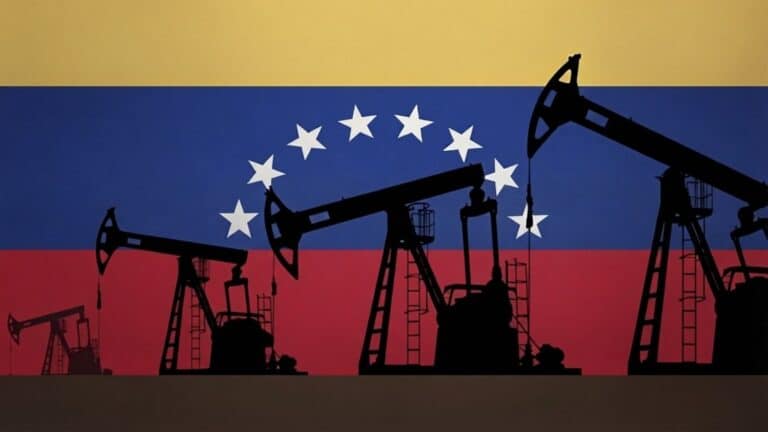
The biggest wildcard remains Venezuela, which holds 17% of the world’soil reserves. While Venezuela’s oil production could return to pre-sanctions levels of 1.5 million b/d within the next 12–24 months (from around 1 million currently), it is not clear how much of that can be advanced this year. A recovery of its oil industry to its historical peak of around 3.5 million b/d will remain elusive without significant private investments and improvements to the country’s rule of law.
Are there any costs to Latin America related to the Iran war?
As net importers of LNG, natural gas byproducts, and petroleum products, Latin American governments face serious challenges from fuel price hikes caused by Middle East supply disruptions. These higher fuel prices might accelerate the clean energy transition as an energy security strategy to ease dependence on imported fuels.
The disruption in global LNG supply leaves the nine LNG importers in Latin America—including Brazil, Chile, and Colombia—exposed to high and volatile prices. The region’s considerable renewable power mix and active natural gas interregional trade might help contain pressure on electricity prices, but the resolve to continue diversifying into non-hydro renewable energy is likely to gain momentum, particularly given progress in battery storage penetration.
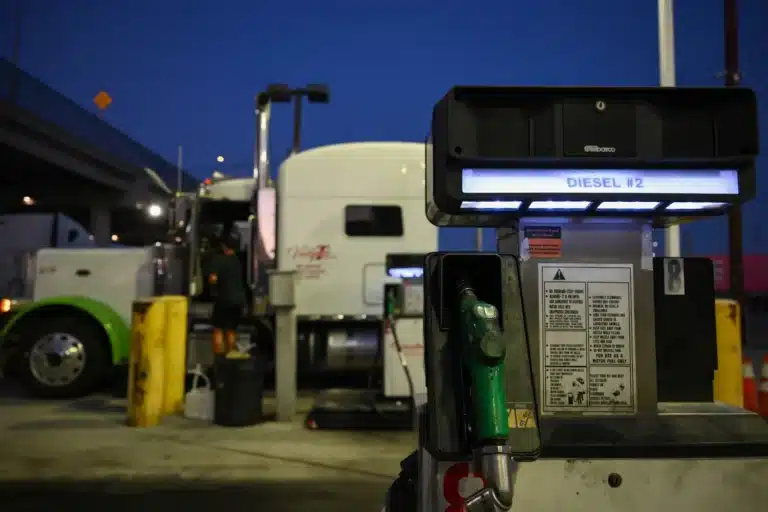
Due to insufficient refining capacity and low refining utilization rates, Latin America’s weakest link remains its petroleum product imports. Political risks associated with fuel price hikes have begun to emerge, with governments responding in different ways. While Chile is allowing pass-through of costs to consumers, Mexico is moving to subsidize gasoline and diesel. Brazil is cutting diesel taxes, providing subsidies to shield agricultural exporters, and revising freight rates to fend off a trucker strike. Higher fuel prices might accelerate EV adoption, which already increased by around 40% last year, albeit from a low base.
Some countries in the region, particularly in the Caribbean, are not only dependent on fuel imports for transportation but also for power generation. Nowhere is this clearer than in Cuba with the collapse of its electricity system—which had already been hampered by US policy and Venezuela’s halt of oil shipments.
With the Middle East a large supplier of fertilizer and petrochemicals in addition to refining products and liquefied petroleum gas (LPG), the closure of the Strait of Hormuz is affecting availability of these other key products. Argentina, already a regional supplier of LPG, is helping to ease supply disruptions of the fuel in Asia, exporting 50 million tons to India year-to-date, double its annual 2025 exports. But Latin America still imports a significant share of its fertilizer and diesel needs from outside the region, which makes any related supply issue a major problem, especially for agricultural powerhouses Brazil and Argentina.
The White House announced last week an oil deal for more than 65 billion barrels of oil reserves in Venezuela and a 35% equity stake in North American Blue Energy Partners (NABEP).
The Trump administration and Saudi leadership have reportedly agreed to a nuclear agreement that could enable US nuclear technology transfers to Saudi Arabia.
As inventories run dry and the Iran war continues to disrupt transit routes, oil has surged back to more than $100 per barrel. Diesel fuel—the workhorse of the agricultural and trucking sectors—has now soared to historic highs, pushing U.S. exports to record levels.