This website uses cookies as well as similar tools and technologies to understand visitors’ experiences. By continuing to use this website, you consent to Columbia University’s usage of cookies and similar technologies, in accordance with the Columbia University Website Cookie Notice.
Two economic planning documents released at the March meeting of China's National People’s Congress include the term "energy powerhouse" for the first time.
It has been a tumultuous 24 hours for the global energy landscape. Yesterday, the United Arab Emirates sent shockwaves through the oil industry by announcing its withdrawal from...
We are the premier hub and policy institution for global energy thought leadership. Energy impacts every element of our lives, and our trusted fact-based research informs the decisions that affect all of us.
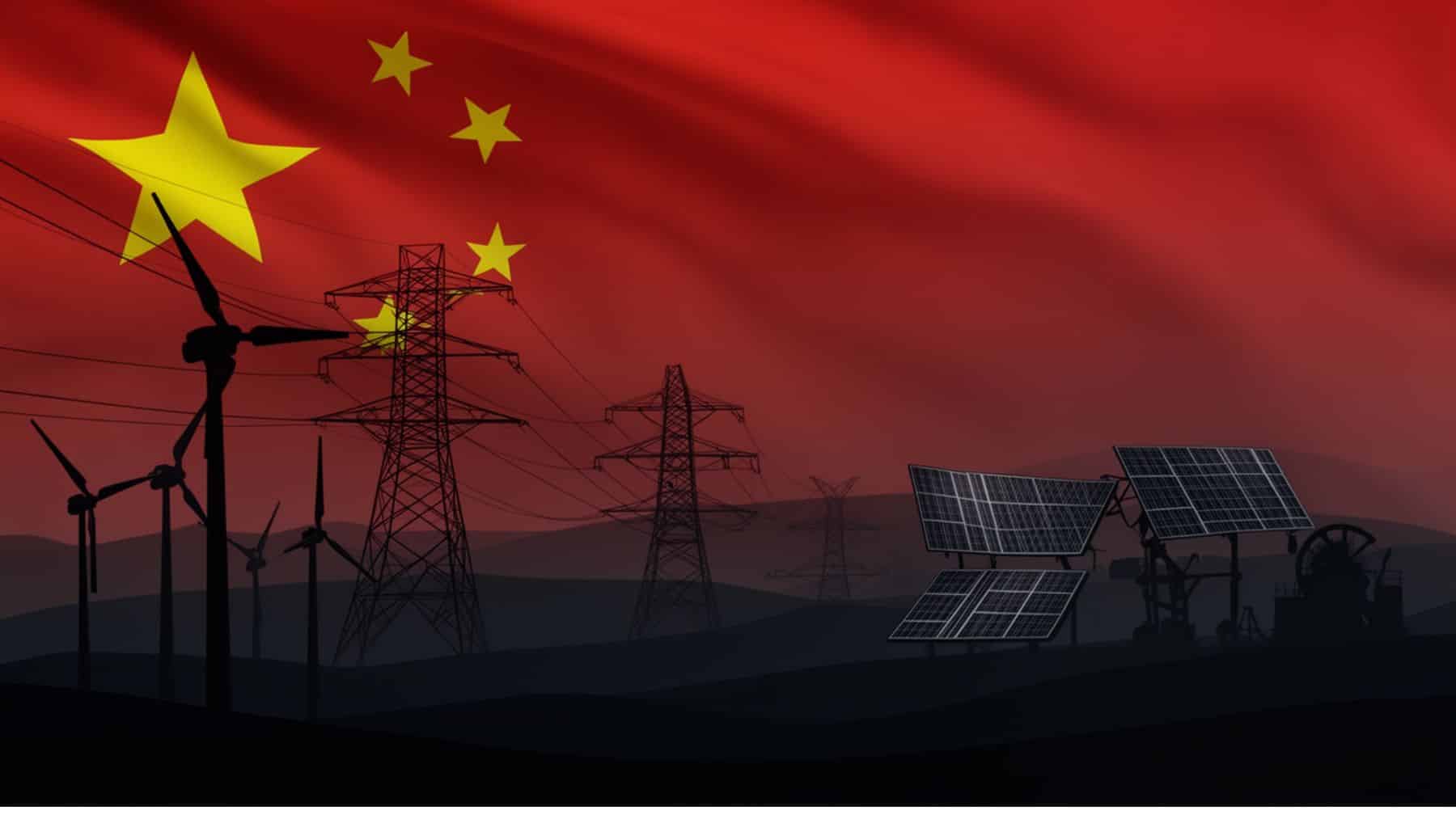
China’s 15th Five-Year Plan calls for becoming an “energy powerhouse”—a country with a more resilient and independent energy supply system capable of better weathering energy shocks, and a global leader in core energy technologies and supply chains.
The inclusion of this goal in the 15th Five-Year Plan signifies a strategic shift in China’s conception of energy security, from one centered on abundant supply to one centered on technological sovereignty and systemic resilience.
The US-Israel war with Iran is reinforcing China’s energy powerhouse ambitions by heightening energy security concerns and creating new opportunities to expand exports of clean energy technologies to countries seeking greater energy independence, thereby enhancing China’s influence over the energy systems of recipients.
Two economic planning documents released at the March meeting of China’s National People’s Congress include the term “energy powerhouse” (能源强国) for the first time. China’s 15th Five-Year Plan (FYP) for 2026–2030 endorses the goal of becoming an energy powerhouse, a priority set out earlier by the Central Committee of the Chinese Communist Party (CCP) in its recommendations for the plan’s drafting. Premier Li Qiang’s 2026 government work report calls for a stand-alone plan to advance the same objective. Although the Central Economic Work Conference, which outlines China’s priorities for the coming year, first proposed the goal of building an energy powerhouse in 2021, and the term had already appeared in China’s energy security discourse, its inclusion in these new documents sparked widespreaddebate among policymaking circles, the energy industry, state media, and academia.
In this Q&A, Dr. Erica Downs and Ziyue Zhou draw on Chinese government documents and expert commentary to explore what it means for China to become an “energy powerhouse.” They find that Beijing seeks to build a more resilient and independent energy supply system centered on non-fossil energy that can better withstand domestic and international energy shocks. The authors also contend that the US-Israeli war with Iran is reinforcing China’s commitment to this goal, and that Beijing may seek to capitalize on the conflict by promoting its clean energy technologies as instruments of energy security, particularly in Global South countries affected by disruptions to Persian Gulf energy exports.
What does “energy powerhouse” mean, and what does China becoming one entail?
Consequently, becoming an energy powerhouse entails building a more diversified clean energy system, boosting energy self-sufficiency, and becoming a global leader in core technologies such as wind, solar, hydrogen storage, nuclear energy, and smart grids. The 15th Five-Year Plan’s embrace of this goal marks a strategic pivot in how Beijing defines energy security: from a volume-based model centered on supply abundance to one centered on technological sovereignty and systemic resilience.
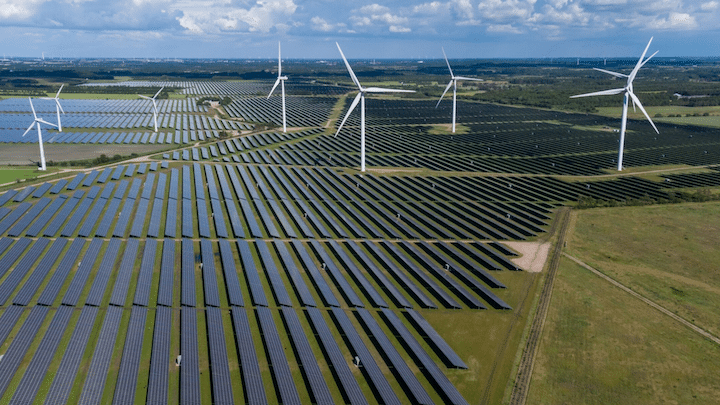
To achieve its energy powerhouse goal, China intends to transform its power sector so that non-fossil energy the dominant source of supply. Toward this end, it is expanding energy storage (including pumped-storage hydropower and batteries), developing large-scale wind and solar bases, building long-distance transmission lines, and deploying smart grids—all underpinned by a national electricity market expected to be fully operational by 2030.
Within China’s “new energy system” (新型能源体系) coal is expected to shift from a primary baseload fuel to a flexible backup, providing grid stability as intermittent renewables scale up. As Chinese leader Xi Jinping recently stated, “coal-fired power is our energy foundation and should play a supporting role.” However, the 15th FYP does not provide a timeline for this transition. It also calls for “promoting a peak” in coal consumption—softer language than Xi’s 2021 pledge to “gradually reduce” coal use.
Why is the energy powerhouse goal included in the 15th FYP?
There are three reasons. First, clean energy investment contributed RMB 15.4 trillion to the national economy in 2025—11.4 percent of China’s GDP—making the transition an economic engine as much as a policy imperative.
Second, 2026 marks the start of the planning cycle that ends in 2030, China’s carbon-peaking target date. Strong renewable growth is now outpacing rising electricity demand, creating a political window for more ambitious targets.
Third, Russia’s invasion of Ukraine in 2022, and the resulting disruption of global energy flows, reinforced Beijing’s pursuit of greater energy self-sufficiency as a strategic imperative independent of climate goals by exposing the vulnerability of import-dependent energy systems. Since then, Beijing’s energy security rhetoric has only intensified. China’s energy powerhouse ambitions reflect this shift toward greater energy independence through the electrification of the economy based on non-fossil energy.
How might the US-Israel war with Iran affect China’s energy powerhouse ambitions?
What are the implications for China-Global South energy cooperation?
For the Global South, China’s energy transition represents a commercial opportunity to access clean energy technology. China’s solar manufacturing capacity is projected to reach 1,255 gigawatts per year by 2030—well above projected global demand—and solar panel prices have fallen over 80 percent over the past decade. In the first half of 2025, Belt and Road green energy engagement reached US$9.7 billion across wind, solar, and waste-to-energy projects. These efforts are not only about commercial gain—they also diffuse Chinese technology standards and create long-term infrastructure dependencies across the Global South. For many developing countries, Chinese clean energy technologies offer a path to energy self-sufficiency that might otherwise be difficult to achieve.
How about for great power competition?
Chinese media and policy analysts at Chinese research institutions view China’s energy powerhouse ambitions as enhancing its global competitiveness, including vis-à-vis the United States. A commentary published by Xinhua and republished by Qiushi, the CCP Central Committee’s flagship theoretical journal, contends that becoming an energy powerhouse will help China “gain the initiative” in great power competition and as energy becomes increasingly weaponized. It argues China must secure control over global clean energy supply chains—not merely develop the technologies—to gain a strategic advantage over the United States. (Chinese companies now account for 75 percent of global clean energy patent applications, up from 5 percent in 2000—a lead Beijing wants to consolidate.) The imperative of complete supply chain control is echoed in the analysis of Xu Qinhua. She also supports China’s export of bundled packages combining equipment, software, and operation and maintenance services to gain influence over recipients’ energy systems.
On March 20, Governor Kathy Hochul proposed significant changes to New York’s Climate Leadership and Community Protection Act (CLCPA), the landmark climate law passed in 2019.
The United States is at a rare inflection point for nuclear energy, with unprecedented momentum behind deployment and regulatory reform as nuclear becomes central to energy security, AI competitiveness, and state and corporate climate goals.
The war in Iran is not just another energy shock. It is arriving at a moment when Europe is already under cumulative strain: a war on its eastern border, the lingering aftershocks of the 2022 energy crisis, industrial decline, political fragmentation, fiscal limits, and a widening debate over how much of its own security it must now provide.