Daniel Sternoff:
Events in the Middle East are changing quickly and the complexities of understanding the global energy landscape grow deeper by the hour. Join me as we talk to leading experts on the latest developments in the region and what it means for the rest of the world. Welcome to our rapid response series, The Iran Conflict Brief, a special edition of the Columbia Energy Exchange Podcast. I’m Daniel Sternoff, a senior fellow at the Center on Global Energy Policy. We are recording this podcast on Wednesday, April 29 at 2:00 PM in Washington DC, 9:30 PM in Tehran and 10:00 and 9:00 PM respectively in Abu Dhabi and Riyadh. The Iran crisis is now in its third month suspended somewhere between war, peace, and economic disaster. The US and Iran have suspended major military operations and neither side seems eager to return to kinetic fighting that is highly likely to lead to the mutual destruction of energy and economic infrastructure in Iran and across the Gulf States.
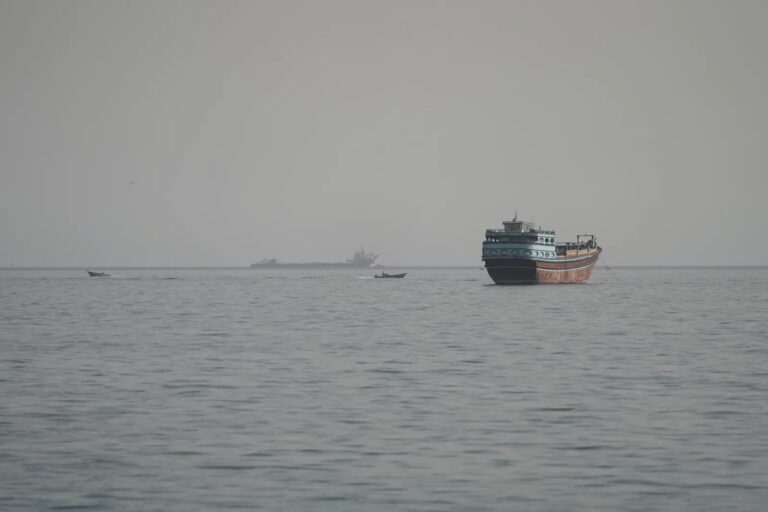
But diplomacy is at an impasse. Attempts to hold a second round of high-level talks have failed twice in the past week, leaving no active direct negotiating channel. The Strait of Hormuz remains almost entirely shut. The Trump administration is betting that its naval blockade of Iranian ports will drive Iran’s oil revenues near zero and as its storage tanks fill up, force it to cut output so its fields don’t, as President Trump says, “Explode from within.” The US Treasury is also threatening to cut two Chinese banks from access to the US financial system if they don’t stop processing Iranian oil sales. It is far from clear that this type of economic coercion will produce results as quickly as the administration expects. And each day Hormuz is shut, the world burns through more inventories of crude oil and oil products. The oil market appears to be giving up hope that the strait will reopen soon.
Brent crude is over $118 a barrel near its wartime highs and the backend of the crude curve has shifted materially higher. December Brent futures, which were $76 a barrel two weeks ago, are now at 88. Jet fuel costs in Asia have more than doubled since the war began and AAA retail gasoline prices in the US are now at $4.22 a gallon. The highest in history outside a spike at the outset of the Russia-Ukraine war. While the world desperately needs energy flows through the Strait of Hormuz to normalize, it’s no longer clear what normal even means. Yesterday, the United Arab Emirates withdrew from OPEC, marking a strategic break with its Saudi neighbor in the middle of a war. The UAE wants to be unconstrained by any production quotas when the strait reopens, but the oil market’s new normal may be a dysfunctional OPEC without one of its most important shock absorbers.
I am joined today by Yasser Elguindi, partner and co-portfolio manager at the Westbeck Energy Opportunity Fund. For over 25 years, Yasser has been an oil market investor, advisor and strategist, either directly trading oil futures or advising institutional commodity market players in senior roles with energy aspects, Susquehanna International Group and Medley Global Advisors. Yasser is a sharp observer of the interrelationship between geopolitics, macroeconomics, supply demand fundamentals, and financial markets. Unlike market observers like myself, he puts his money where his mouth is as an active oil market investor and has participated in every market shock from the Chinese demand supercycle to the Iraq war to the great financial crisis. He has logged an ungodly number of hours at OPEC headquarters in Vienna, so I can think of no one better to discuss how oil markets are currently behaving and where they might be heading. Good afternoon, Yasser.
Yasser Elguindi (03:44):
Hi, Daniel. Thanks so much for having me. It’s a pleasure to be with you today.
Daniel Sternoff (03:48):
Pleasure to have you. So Yasser, let’s start with the news of the day. You’ve been an OPEC watcher since the 1990s. The UAE just decided apparently without any advanced notice to Saudi Arabia that it is withdrawing from OPEC. Market management is hard. And if Saudi Arabia has been able to count on any partner to actually cut real barrels to maintain OPEC cohesion in recent years, it’s been the UAE. So before we discuss the current market situation, why did the Emirates do this and what does it mean for OPEC and for the oil market going forward?
Yasser Elguindi (04:24):
Sure. The question of why did they do this? It’s not so much about why they did this. I think most OPEC watchers have known for some time now the dissatisfaction the UAE has had with its quota and given how much it has invested in its capacity over the past few years. So it’s almost akin to the prom king and the prom queen who have been dating for years on end. Everyone knew that they were going to break up, but didn’t actually think they would do it. And then when they finally do it, it creates all kinds of drama and shock and awe. But I understand the significance here, obviously. I’m quipping a little bit. Abu Dhabi joined OPEC in 1967, which predates UAE independence, which came in 1971.
(05:21):
The UAE’s OPEC’s third largest producer and one of the few with reliable spare capacity. So I do get why everyone is enamored with this development, but in my opinion, this is really last year’s story, not even last year’s story, it’s more like five years ago. And if I’m being honest, it’s probably the least interesting thing that’s happening in the oil market at the moment. But to answer your question about why now, I think it’s because they figured out that given what’s happening in the oil market at the moment, this would be the least disruptive time to allow this to happen. The UAE’s probably been the most destabilizing force within OPEC for the past five years. Every year it feels like we come to a meeting and there’s some sort of tension or drama with the UAE threatening to leave and the Saudis have to sort of mobilize to heal wounded egos.
(06:25):
So I can’t say it’s really a surprise that it’s happened. I think the timing is actually ideal as it’ll have the least disruption to the oil market possible.
Daniel Sternoff (06:38):
Okay. Before turning onto the current oil market, let me just press the OPEC question a little bit further, which is, what does this mean for Saudi? So yes, the UAE has been a difficult partner to negotiate with over recent years, but nonetheless, they have been there and they have cut. Does this mean that if we return to more normal oil markets, Saudi is also just going to maximize production or act like it did in the 80s or to a lesser extent in the mid 2010s, just push for market share, maintain high production to punish cheaters or squeeze higher cost producers. What does this mean for how Saudi thinks about and uses OPEC as a market management tool?
Yasser Elguindi (07:26):
Yeah. I mean, if the Saudis were to go to max capacity today, that’s maybe eight million barrels a day. So I don’t think it’s part of the thinking or the calculation right now. And if you want to look at the UAE, to me, this is much more of a political story than it is an economic or oil market story. I mean, the UAE has definitely been frustrated and unhappy with how regional players have reacted to what’s happening with Iran and what’s happening with the UAE. It’s been the country most targeted during the strikes with Iran. And these are issues that’ll matter in three to five years time when there’s actually capacity to be had. I think this is the problem in trying to analyze what this means for OPEC. OPEC doesn’t even know yet what its actual capacity is going to be post Hormuz. And what I do know is the post Hormuz crisis world is going to be radically different from the one we knew before, but this market continues to try to trade a world that doesn’t exist.
(08:41):
I think the Saudis will be pragmatic as they always have, and it will require a bit of adjustment in terms of how they think about market management. I think what we can expect is that when there’s trouble to the downside, as we’ve seen on a number of occasions in the past decade, when you have an event like the COVID crisis, even the US was willing to come to the table to cut production. So those things, I would expect the UAE to continue to be supportive. And again, the fact that they chose this moment to come out and say that they were withdrawing from OPEC, something they’ve quite frankly wanted to do for five or six years now, to me is indicative that they have been thoughtful. They’ve thought through the implications of what they’re doing, and I don’t expect them to be necessarily a thorn in the side of OPEC.
(09:45):
It’s not like we have to worry about … Again, these are issues that will matter more well down the road than they will now, but I still expect the UAE to have a functioning relationship with the Saudis and with OPEC. And again, this might be a warning shot to the rest of the GCC about what could happen in the event of continued lack of involvement, engagement, and so forth. But again, that’s more of a political question than an economic one.
Daniel Sternoff (10:21):
Okay, thanks. So obviously OPEC policy is not relevant when Hormuz is shut and so much production is shut in. So let’s turn to the current market. If I had told you on January 1st of this year that my 2026 outlook involved the Strait of Hormuz being shut for months, the US Navy is unable to open it and Iran will be attacking energy infrastructure in every one of its Gulf neighbors. Where would you have forecast oil prices to be?
Yasser Elguindi (10:54):
Well, obviously significantly higher than where we are right now. And I don’t even think you have to … The question that I think is worth asking is on March 9th, the intraday high for crude over that time period was on March 9th when WTI touched $119.48 a barrel. Now, back then, there was not a single person on the planet except maybe Donald Trump who understood that this was going to last more than a week or two. And yet since then, prices have come off in the futures market and the managed money positioning is less than what it was pre-crisis. So something is off. And I think what we’ve seen is a really big split or dichotomy between what we see in the physical markets relative to what we see in the futures. And the reality is the futures is a fiction that has been created for their own reasons, but certainly it is not reflective of the stress that we see.
(12:07):
And what we see in the physical is a market that is pricing in for a much longer duration outage, crisis, et cetera.
Daniel Sternoff (12:15):
Okay. So putting futures price aside, or even putting price aside, if Hormuz disruptions continue at this level through the end of May or even into mid-June, what will happen fundamentally?
Yasser Elguindi (12:32):
Well, what we’ve seen so far is akin to a global shifting of piles, right? The ground zero for the first few weeks of this outage was Asia, as most of the crude that would have come out of Hormuz would have gone there. So we saw a lot of the crude dislocations that occurred were focused primarily on Asia. We saw Dubai spike to $150, Human and other grades spiked to higher levels, but there is a mismatch in terms of the buying cycles for the different regions. Asia does their buying cycle two months in advance, Europe about a month, and the US is just in time in terms of their buying cycles. So the last tanker to really exit, officially exit Hormuz, I think we’ve seen a trickle here and there, but the reality is we haven’t really seen the full effect of this outage until this week where we have seen in the United States a really large and some would say a surprise draw on inventories in the United States.
(13:39):
We’ve seen Saudi volumes that would average four or 500,000 barrels a day to the US came in at 150,000 barrels a day. And I think that probably goes down to zero over the next week or so. So this has been sort of a regional issue that is going to morph into a broader global issue. And the reality is, you and I, we don’t consume crude, we consume products. And so if there is going to be shortages, which we think can happen, that has to be reflected through product prices first. We’ve seen that in jet fuel, which is probably the one product that is hardest to store and keep in storage. And so now we’ve seen, Europe has come out and said we’ve got about another month or so of jet fuel inventories in storage and we have a significant amount of refining capacity that’s offline as a result of this outage as well.
(14:41):
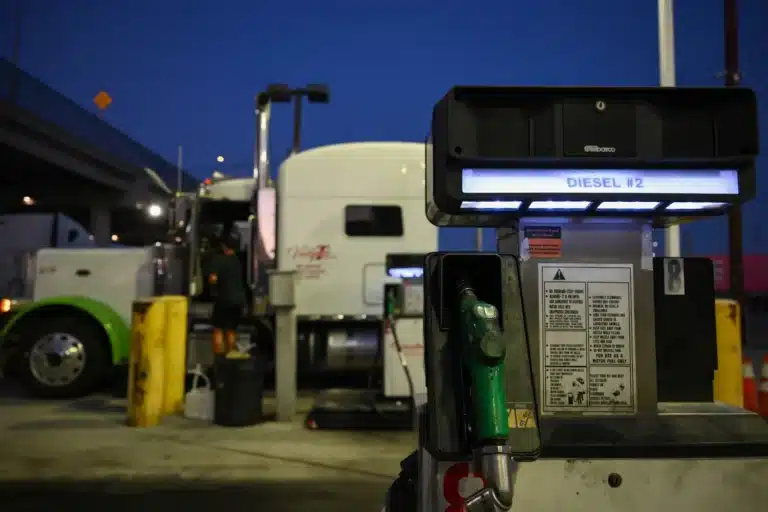
It’s not just crude, it’s also refining. So we probably will have to see similar dynamics in other products. Diesel might be a little bit easier to cobble together. You have a little bit of fudge factor that you can in terms of the cocktail that’s required to make that product versus something like gasoline. But yeah, our expectation is that one more month of this, inventories will drop to levels that we would consider to be critical and it will force product prices to go to levels to constrain demand, just like what we’ve seen with jet. And jet is just now pricing out the marginal barrel. It’s not yet pricing out broader barrels. So that’s a much higher price level than what we’ve seen to date.
Daniel Sternoff (15:34):
Right. And so in terms of prices and when we hit demand destruction levels is what I hear you saying is we will need to get to that place. So right now we have higher prices on scarcer supply and supply that’s being met by inventory and it’s a little bit more expensive for some people, but it is still available and it’s not yet at prices that says you can’t buy this at all. Now, I’m sure you remember 2008 at the end of the China super cycle, we had crude that got up to $147 a barrel when markets were very tight and then six months later we were at $40 by the end of the year. So where is the tipping point between if we’re going to see shortages that are driving prices higher to demand destroying prices and recession?
Yasser Elguindi (16:27):
Yeah. It’s a great question. We’ve never experienced that in the oil market. Even the episode that you mentioned when oil got to 147.50 in 2008 and then we saw demand begin to roll over. Demand didn’t fall because of the price of oil. Demand fell because of the credit crisis, right? Once credit collapsed and exporters couldn’t get letters of credit to move their products, demand fell off a cliff and we had all those great charts at the time. And in fact, I would argue that had the credit market not imploded, we would have needed prices to go significantly higher because stopping demand in real time, you have to think in terms of the behaviors of the consumer and you have to ask the question then, okay, what is the price of gasoline whereby I would choose maybe not to drive my kids to school or drive to work or I would start carpooling or any of those types of questions.
(17:42):
And we’ve never experienced that in the oil market. We’ve had periods of higher prices where on the margin you begin to erode some of the growth, but nothing where we’ve had to stop demand in real time. Europe experienced something similar on the gas side in 2022 when we had to destroy manufacturing demand in real time because of the shutoff of Russian gas to Europe. And that was a major shock. It was a massive shock. TTF market went up to over 300 euros per MBTU.
(18:17):
And for the oil market, we know that jet fuel has gone to $200 a barrel in some instances. We’ve seen diesel at $180 per barrel, both in 2022 and more recently. Gasoline, because of the seasonality, is only around $120 or $130 a barrel. And so I would argue that we probably need to see something significantly higher to force demand to stop. And I think when people talking … I see people on TV talking about demand destruction and they talk of it as some sort of abstract that doesn’t really affect our everyday lives. It’s like NVIDIA stock. Who cares if NVIDIA goes to $10,000 per share or whatever. It doesn’t affect what you and I do, but when we’re trying to have an effect on demand, that price level is going to create a chain reaction of events that ultimately end with the consumer. And so yeah, I think that number is significantly higher than what most people understand.
(19:20):
And I think there’s a real complacency that we may have to test this summer if we’re still shut for another, let’s say, four to six weeks. We’re just at the start of this supply shortage. We sort of had a price effect in physical markets and we’re seeing this calibration between crude draws and product draws because the reality is we do not have enough supply today to meet global consumption. We don’t. And it’s like this fact is sort of lost on many people. And so we have to erode inventories over time. So we’re calibrating between crude and liquids, adjusting buying cycles. It’s hugely disruptive. And even if the straits, even if let’s say miraculously there is some sort of accommodation that’s made today or tomorrow, we’re still looking at a multi-month process of quote unquote normalization, even though the new normal is going to look significantly different than the old normal, but let’s put that aside for now.
(20:27):
We’re still looking at a very long recovery for when this happens, which is why we do think prices need to go higher in order to begin that process of constraining demand.
Daniel Sternoff (20:39):
Right. Obviously you’re trading futures down the curve and this is a big difference between what we expect will happen this summer versus the end of the year versus the end of next year. I mean, if we are still without a solution for another four to six weeks, and if I’m hearing you correctly, you think we’ll be eroding inventory at an efficient degree by mid-summer that will be driving significantly higher prices. What does that mean for the backend of the crude curve for thinking about the end of 2027?
Yasser Elguindi (21:16):
Yeah. So it gets a little messy now because, whereas before, maybe what I’ll say is we had a bullish view on the backend of the curve pre-crisis. So coming into 2026, we believe that we were on the cusp of a multi-year bull run in oil due to the confluence of continued demand growth, but really just a lack of investment in upstream capacity. Most of the investment that’s taken place has been short cycle, shale, and what we really need to see is investment in conventional crude. And so we believe that the backend was mispriced. We needed an 80, $85 oil price to justify this new investment. But now, we’re sort of in a scenario where we have … Maybe that’s the trade after the trade, after the trade, so maybe three standard deviations there from where we are today, because right now we have to price accordingly to constrained demand, which I … So I still think there’s one more big spike up in oil to come and the associated products, but we also think that equity markets have not really discounted this possibility yet of a real material shock to growth.
(22:49):
I think this becomes a growth shock before it’s an inflation shock. And if that’s the case, then we have to consider recession, which case maybe it’s not ideal to be owning the backend. So at some point, the backend becomes a massive buy because I think that the post crisis world is going to look so vastly different than what many are used to, but the first order effects right now are the immediate need to constrain consumption in the short term, followed by what does that mean for growth and how will markets price that? And then we can start thinking about what is the price level that we need to incentivize UAE’s upstream expansion.
Daniel Sternoff (23:39):
So, okay, let me wrap this up with a question thinking a little bit about what a new normal might look like. And obviously we don’t know whether we’re going to go back to kinetic fighting and everybody gets destroyed or whether we have a blockage for months before everybody comes to do a deal or if Trump declares victory and we’re done by Friday. But let’s take the scenario whereby we get some kind of an agreement in the near-ish future within a few weeks. And we have a reality where the IRGC is in control in Iran, obviously with a uncertain domestic situation, but with implicit or explicit capacity to be controlling flows through Hormuz, but everything is open and we start to see energy flows normalizing, but this really uneasy geopolitical situation in the Gulf. What would the normal of energy flows look like in that scenario?
Yasser Elguindi (24:54):
So the first thing that has to happen is we need to have a real postmortem on exactly what damage has been caused and what are the long-lasting effects of that. I understand the need for security and national security and everything else for policymakers and officials in the Gulf to keep a tight lid on what’s happening. But just about every person I’ve talked to who has come out of the region with operations there has said there’s been a lot of damage. And I think people take for granted the complexity around what it means to do an assessment for an oil field, a gas field, refinery, any of the associated infrastructure that goes into that. There are a handful of select crews that have the knowledge and skill to do those kinds of things, and we can’t do those assessments in every country at the same time.
(25:56):
So there’s going to be a pecking order, and I would imagine Saudi’s at the top of that list, but there is a pecking order. We know that some of the damaged wells in the region, I won’t say which countries, but in many parts of the region, number in the thousands. So I think it’s going to take a long time for us to really understand how much capacity has been lost, what is the investment required in order to bring back that capacity, and maybe there’s some capacity that we won’t be able to bring back. So I’ve seen estimates, and really we say estimates, but these are people’s best guesstimates of anywhere from two to three million barrels a day of lost capacity. It’s a plausible number. I can’t say with certainty that that’s the number, but I think we’re going to see a very changed system.
(26:55):
We’re going to see massive investment, I think, in redundancy. I think all of our constructs of energy security and global shock absorbers have been obliterated. So for a refiner, for example, just like every other manufacturing industry, they operate on a just- in-time inventory system, but what constitutes a minimum level of operational crude at a refinery has probably gone up. Refineries are going to want more crude close to home than maybe what we did before. And countries that don’t have strategic reserves are going to give it a really good, long, hard think about it. And what you described as sort of a best case scenario, right? Where we return to where the straits are fully functioning and normal and open, there are a lot of ugly scenarios that we could come up with. And if anyone thinks for one second that the Gulf States or the GCC are going to pay Iran a toll for access through the strait, I don’t think that’s credible.
(28:04):
There’s no way they will agree to that. And so, well, where does that leave you? If you’re Saudi, does that mean you’re only using Yanbu as an export terminal? Does that mean you’re producing at a much lower level of production than you were pre-crisis? I think these are all questions we need to be asking, not today, right? Right now, most people are wondering where they’re going to get barrel next week or next month. Nobody’s wondering where they’re going to get a barrel from next year. And once we start asking those questions, that’s when you’ll start to see the back end of the curve materially go up.
Daniel Sternoff (28:39):
Excellent. Well, on that note, Yasser, you’ve given us about four trades after the trade, and I can’t imagine what it’s like trading in this environment when we’re kind of dependent on tweets for the next $4 up or down. But thank you for joining us today and thank you for your insights.
Yasser Elguindi (29:05):
It’s my pleasure. I was happy to join.
Daniel Sternoff (29:07):
That’s it for this episode of Iran Conflict Brief, a limited series from the Columbia Energy Exchange Podcast. Thank you again, Yasser Elguindi, and thank you for listening. The show is brought to you by the Center on Global Energy Policy at the Columbia University School of International and Public Affairs. I’m Daniel Sternoff. This podcast was produced by Mary Catherine O’Connor, Caroline Pitman, and Kyu Lee. Gregg Vilfranc engineered it. For more information about the show or the Center on Global Energy Policy, visit us online at energypolicy.columbia.edu or follow us on social media at ColumbiaUenergy. If you like this episode, leave us a rating on Apple, Spotify, or wherever you get your podcasts. You can also share it with a friend or colleague to help us reach more listeners. If you have any questions, comments or feedback, we’d love to hear from you. Email us at [email protected].
(30:09):
Thanks for listening.