Prix des carburants : pourquoi les raffineries sont au cœur de la tempête
Plus que d'un problème pétrolier, la flambée des prix du carburant résulte de tensions sur les capacités mondiales de raffinage.
Get the latest as our experts share their insights on global energy policy.
Last week's summit between US President Trump and Chinese President Xi was the second meeting between the two leaders since the US and Israel attacked Iran.
Hear in-depth conversations with the world’s top energy and climate leaders from government, business, academia, and civil society.
Carbon credit markets have become one of the most hotly debated tools in the fight against climate change. Supporters call them essential to closing the gap between corporate...

Find out more about our upcoming and past events.
Apply to Register The Center on Global Energy Policy at Columbia University SIPA’s Women in Energy initiative invites Columbia University students to a roundtable discussion with Pam Brown,...

Insights from the Center on Global Energy Policy
This Energy Explained post represents the research and views of the author(s). It does not necessarily represent the views of the Center on Global Energy Policy. The piece may be subject to further revision.
Contributions to SIPA for the benefit of CGEP are general use gifts, which gives the Center discretion in how it allocates these funds. More information is available here. Rare cases of sponsored projects are clearly indicated.
To support AI leadership, economic growth, and security goals, the Trump administration is pursuing regulatory reforms to help the US Nuclear Regulatory Commission (NRC) move faster in its oversight of nuclear energy deployment. Efficiency matters, but credibility and predictability are equally essential to sustain investment and public trust. Reforms that last must deliver all three.
The experience of the past year shows that efficiency and safety need not be competing objectives at the NRC—when reforms are well-designed, they reinforce one another by focusing regulatory effort where it matters most. This blog post reviews recent progress, highlights where reform could undermine predictability or credibility, identifies opportunities for additional reform—including streamlined hearings, risk-aligned environmental reviews, and high-volume licensing—and acknowledges the centrality of commission leadership in ensuring regulatory durability.
The NRC has achieved real progress in the past year, including:
While these steps mark meaningful efforts and progress toward greater efficiency, even well-intentioned reforms can introduce uncertainty for developers and investors without predictable and credible regulatory frameworks.
Reforms can make nuclear projects more affordable and investable, but unpredictable regulation can do the opposite. In the past, midstream regulatory changes have led to delays. If minimizing disruption to active applications is a policy priority, reforms should be structured to preserve continuity for projects already underway.
Predictability also requires durability. Nuclear projects span decades, not election cycles, and regulatory whiplash across administrations will deter investment and slow deployment. Uncertainty in nuclear regulation can ripple through power markets, supply chains, and capital decisions, especially as nuclear is increasingly integrated with data centers, AI infrastructure, and broader industrial strategies.
While no reform can be guaranteed to last, a transparent, technically grounded, and stakeholder-engaged process is far more likely to endure than a partisan one.
Regulatory credibility is essential to public confidence at home and US competitiveness abroad. Trust in the regulator supports the expansion of the nuclear industry, and history shows how fragile that trust can be. After the Fukushima nuclear accident in 2011, public confidence in Japan’s regulator and nuclear industry collapsed, and recovery has taken decades and remains incomplete. Research consistently finds that acceptance of nuclear power depends on trust in government and regulator goodwill and competence, and that trust is far easier to lose than to rebuild. Achieving ambitious US nuclear growth will require protecting NRC credibility through all reform efforts.
The NRC’s influence extends well beyond US borders. Its credibility and effectiveness make US reactor designs and licensing approaches more exportable when other countries model their frameworks on NRC practices. If the NRC is seen as unstable or politicized, its influence will decline and markets may tilt toward other suppliers. NRC credibility is thus not just a regulatory issue but a core element of US industrial and energy export strategy.
Some recent reform evolutions and proposals have raised concerns among stakeholders about the risk of undermining credibility and trust.
The Office of Information and Regulatory Affairs (OIRA) review of NRC regulations has reduced transparency and introduced new procedural delay, raising concerns among stakeholders about both efficiency and independence. At the same time, there are reports of apparent political pressure on NRC decision-making and staff that has affected morale and raised concerns about retention and institutional capacity. An effective, engaged, and respected workforce is essential to safe and timely licensing.
As noted, the NRC has begun reconsidering its use of the LNT model for radiation health impacts. Reexamining LNT and the regulatory framework built on it is important; for decades, evidence has suggested that LNT is a poor fit to the available scientific data, and an improved understanding would have applications in nuclear energy and in medical diagnostics and treatments. To ensure credibility and durability, the review should be grounded in technical analysis and meaningful stakeholder input. If key uncertainties remain in the data around radiation and particular health outcomes, targeted research should be launched to address them.[1]
There is still room for improved efficiency while preserving predictability and credibility, and the NRC may advance such improvements in proposed rulemakings expected this winter and spring in response to EO 14300.
NEPA reviews, for example, can be optimized to match project risk and impact. The NRC has historically required lengthy, agency-authored environmental impact statements (EISs) for nuclear projects, even though most industrial projects can begin with applicant-authored environmental assessments (EAs). DOE and NRC pilots using EAs for nuclear projects have shown success, and making this the default would reduce unnecessary burden while still triggering an EIS when warranted. Further gains can come from tighter scoping of what the analysis will cover, better use of existing analyses, use of categorical exclusions for actions that typically have no significant impact, and approval of a generic EIS for new nuclear reactors.
Another impactful reform would be eliminating the mandatory hearing for uncontested licenses. Uncontested mandatory hearings add delay and uncertainty without providing commensurate safety or public-interest benefits, while contested, issue-driven hearings preserve meaningful participation. This change requires legislative action and can’t be undertaken by the NRC alone.
One final example of potential reform would be the NRC establishing a process for high-volume licensing of microreactors and modular reactors. Deployment of small reactors at scale will require a more repeatable approach to licensing.
The NRC commissioners play a uniquely powerful role in determining whether reform succeeds or falters. Commissioners set policy direction, establish expectations for staff, vote on new regulations and guidance, and impact whether reforms are applied consistently and transparently.
Commission leadership can ensure that:
In this sense, the commission is the primary steward of regulatory durability. The choices commissioners make today will determine whether current reforms build a foundation for decades of nuclear energy deployment, or whether they trigger cycles of reversal and recalibration that undermine confidence at a moment when nuclear power is increasingly tied to US leadership in AI and critical national infrastructure.
The current commissioners have made strong commitments to uphold the NRC’s mission and to make judgments that are independent, transparent, and grounded in a sound technical basis.[2] The commission’s adherence to those commitments while implementing ambitious reforms will be an important contributor to success.
If pursued deliberately, reform could leave the NRC stronger and more credible, better equipped to steward nuclear energy’s expanding role in the US economy and critical infrastructure. The result would be a regulatory system that supports deployment at scale and reinforces US leadership at home and abroad.
[1] See, for example: K. Canavan et al., “Peer Review of the State-of-the-Art Reactor Consequence Analysis (SOARCA) Project,” January 2012, https://www.nrc.gov/docs/ML1206/ML120610005.pdf. (See especially pages 60–80). And also: National Academies of Sciences, Engineering, and Medicine, Leveraging Advances in Modern Science to Revitalize Low-Dose Radiation Research in the United States, 2022.
[2] See, for example, statements by NRC Chairman Ho Nieh in the October 8, 2025, proceedings of the US Senate Committee on Environment and Public Works, “Hearing on the Nominations of Ho Nieh to be a Member of the Nuclear Regulatory Commission and Douglas Troutman to be Assistant Administrator for Toxic Substances of the Environmental Protection Agency,” https://www.epw.senate.gov/public/index.cfm/2025/10/hearing-on-the-nominations-of-ho-nieh-to-be-a-member-of-the-nuclear-regulatory-commission-and-douglas-troutman-to-be-assistant-administrator-for-toxic-substances-of-the-environmental-protection-agency.
The Trump administration and Saudi leadership have reportedly agreed to a nuclear agreement that could enable US nuclear technology transfers to Saudi Arabia.

The White House has just announced over $2 billion in new critical minerals, magnets, and battery investments.

Critical minerals were once again near the top of the agenda for G7 leaders as they met in Évian, France, this week, a year after the G7 launched the Critical Minerals Action Plan.

In March 2026, the Office of the US Trade Representative (USTR) announced it was investigating "structural excess capacity and production in manufacturing sectors" in 16 economies.

The United States has struggled for decades to make progress on managing spent nuclear fuel (SNF) from its commercial power reactors.
The Trump administration has submitted to Congress a new nuclear energy cooperation agreement with Saudi Arabia.
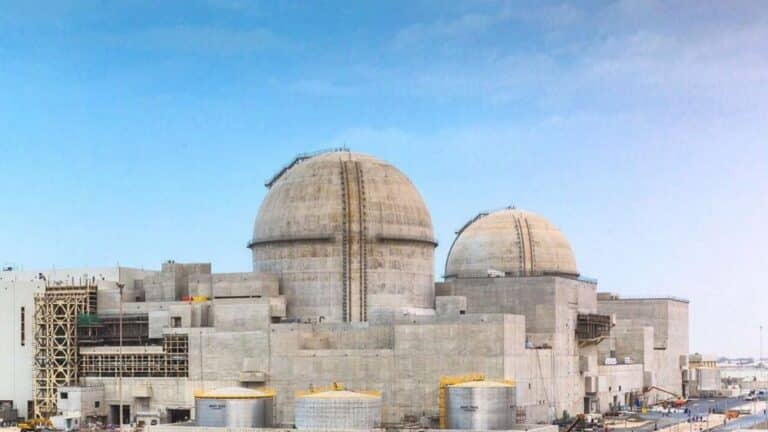
On Aug. 24, 2026, the Trump administration transmitted the text of the U.S.-Saudi nuclear cooperation agreement to Congress. By doing so, the