Kurt Campbell:
I think the most important steps that the United States could take is to secure our vital strategic position in the Indo-Pacific, but it is the dominant, innovative economies in Asia that frankly, I think beckon, and it would be there where I would like to see the focus diplomatically and strategically.
Jason Bordoff:
The conflict involving Iran has rapidly expanded drawing in actors across the Middle East and raising concerns about broader regional escalation. The implications extend well beyond the region itself. Energy markets are one clear channel. Roughly 80% of the oil and gas that flows through the Gulf is destined for Asia and disruptions. There are already being felt across the Indo-Pacific, particularly in major importing economies, including Japan and South Korea, which remain heavily dependent on Middle Eastern supplies and the consequences go beyond energy. The crisis is adding a new layer of complexity to the US-China relationship, in particular reshaping how Beijing thinks about risk security and its role in a more unstable global system. So how’s China interpreting these developments? What do they mean for the Indo-Pacific, both in the near term and over a longer horizon? And how might China’s approach to energy security supply chains and statecraft position it in a more volatile world?
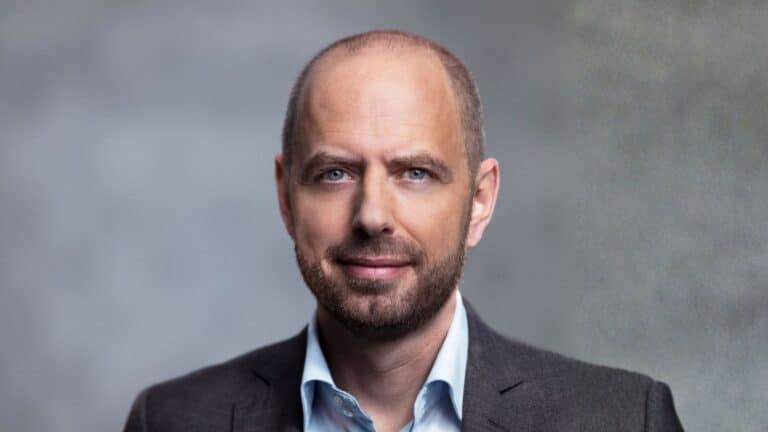
This is Columbia Energy Exchange, a weekly podcast from the Center on Global Energy Policy at Columbia University. I’m Jason Bordoff today on the show, Kurt Campbell. Kurt is the chairman of the Asia Group, which he co-founded in 2013. During the Biden administration, he served as the 22nd deputy secretary of the United States Department of State. Before assuming his role at the State Department, Kurt served as the inaugural Indo-Pacific coordinator at the National Security Council and Deputy Assistant to the president at the White House.
Kurt joined me to discuss how China views American power in this moment and what the current instability in the Gulf could mean for the Indo-Pacific. We also talked about his recent Foreign Affairs essay with Rush Doshi on why it’s a mistake to underestimate China and their argument for what they call capacity centric statecraft. And we explored how both the United States and China are approaching competition over energy security and supply chains.
I hope you enjoy the conversation.
Kurt Campbell, an honor to have you on Columbia Energy Exchange for the first time. Very good to see you again. Thanks for making the time. I think I invited you to come on when you and Rush Doshi wrote this really interesting Foreign Affairs piece on how we might need to think a little differently about the threat posed by China, but it takes a while to schedule and now the timing turned out to be pretty good because we have lots of other crises and challenges talk about that have huge implications including for the Indo-Pacific and China. So I’ll just start with the news of the day. This will come out a few days after we’re talking, so things might change a little bit, but we obviously are deep into this crisis in the Middle East, the attacks on Iran, huge energy implications and it’s starting to change as we see the infrastructure attack on Qatar and on Iran’s South Pars field. But energy markets have been reasonably restrained, I think largely because people thought this would be over soon and there is an off ramp and I’d just love to hear you’ve been so close to these issues for so long. How do you see what’s happening right now and what are the scenarios you see for how this might come to some sort of resolution? What do those even look like at this point?
Kurt Campbell [03:48]:
Well, thank you Jason. And I do agree that this is a deeply consequential time. I was in New York yesterday and had a chance to interact with a variety of folks about the circumstances in the Gulf, and I was surprised at how much this team that prizes themselves on being objective want badly to be reassured that this is a conflict that will wind down quickly. I’m afraid that the recent developments suggest otherwise. I think last week the president received two kinds of military briefings. One was essentially about what might be necessary to secure oil flows through the Persian Gulf and through the straits. And remember the attacks against oil capabilities from Iran have not just been at the lip there at the straits, but throughout the Gulf. And it is a harrowing security challenge for any country that has assigned the task of protecting oil flow. And so when the president asked what was necessary to do that, I think he was told it would take substantially more naval capabilities on the part of the United States. We’d be best able to do it with allies and partners and that even then the challenges of dealing with waters that are potentially filled with mines, it is not lost on anyone that the US Navy doesn’t have very mine, very many mine sweeping ships. And on top of that is the potential of being attacked by relatively low cost drones. That’s —
Jason Bordoff [05:33]:
So when he says, goes on social media and asks allies and adversaries alike send warships, come, let’s clear the strait together even if they were willing to, which doesn’t seem like they are. It’s really in your view, not possible to reopen the strait to traffic as long as the threat of Iran remains until there’s some resolution, whatever that looks like.
Kurt Campbell [05:50]:
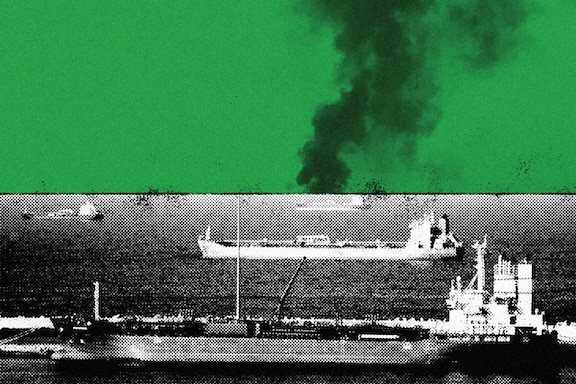
Yeah, I would be there. And I think one of the things that we’ve seen is that a few smaller ships have attempted to run the gauntlet and get out of the strait, but I’ll note that none of the big super tankers have decided to risk that trip, particularly without permission from Iranian authorities. And what we’re seeing is a complex mixture. The security picture is difficult and the insurance, the underlying insurance necessary for making such a trip is absent. The only experience that we’ve had closure in the strait that was sustained was during the Iran-Iraq War, and even then the disruptions were real. I think the most recent Jason example of what this might look like, it resembles the circumstances that both the Biden, the Trump administration have faced in the Red Sea in which a ragtag group of Houthis used improvised military capabilities, both missiles and longer range drones to hold at risk international shipping and in fact the US Navy. And they did enough damage to basically encourage most of that shipping to seek alternative routes. And so I don’t think we can understate how challenging this would be to accomplish through just unilateral steps.
Jason Bordoff [07:22]:
Can I just ask, and now the Red Sea is the alternative route
Kurt Campbell [07:24]:
Exactly.
Jason Bordoff [07:25]:
For a lot of tankers, and is that secure or you see the Houthis and militias and proxies for Iran?
Kurt Campbell [07:33]:
Potentially. We just frankly don’t know. The Houthis have kind of been on the sidelines more recently and I think we are left to wonder what’s next. But the second kind of briefing that the president got was around how to deal with the potentially nearly a thousand pounds of enriched uranium that I think there is worry what Iran might do if they got their hands on that. And so that would require putting substantial forces on the ground probably for a considerable period as he tried to excavate that to get out. And so both the mission to potentially secure the waterway and the oil supplies or the mission to go after enriched uranium, those require putting more forces into the region, possibly more boots on the ground. We’ve seen in the last day or two, the president has decided to send the marine expeditionary unit from Japan to the Gulf.
[08:44]:
And so I think what we’re seeing is not a winding down, but a potential escalation up. And unfortunately this mission, whatever you want to call it, excursion — what it really is is a war — is escalating in ways that were perhaps foreseen by some but probably unforeseen by the key players in the administration. I think what you’re also starting to see subtly are signals from it within the administration of those folks that were wary and offered contrary advice about why not to do this and why the president may have decided through consultations with MBS or Prime Minister Netanyahu to take these risks upon himself. But I think this is likely to be more consuming in terms of the president’s time. Just today, the prime minister of Japan was in Washington, the topic of the war, what it means for Japan’s energy security, whether Japan would provide capability to support the US effort, those were the top tier items being discussed and other issues basically fell by the wayside.
Jason Bordoff [10:04]:
Again, I think that market reaction initially was tempered by an expectation that as the market likes to use the acronym TACO, there would be some effort by the administration to realize we’re going to pull back. We’ve seen that with Greenland, we’ve seen it with liberation day tariffs in some cases and declare mission accomplished. Is that even possible? Now of course Israel and Iran have a say in whether that happens as well. Do you see any off-ramp there?
Kurt Campbell [10:30]:
The other cases that you have cited have the characteristic of the United States taking a step and then pulling back on their own. And there are a few other actors involved. As you rightly point out, both Iran and Israel have a vote here. We’re already seeing that some of the war aims may be diverging between the United States and Israel, but right now Iran is frankly gaining leverage and I don’t think is signaling that it’s prepared to sit down for negotiations. I think if the president ends up negotiating some sort of outcome with a new hard line Iranian regime, it’s hard for me to see how he and his team can depict that as the greatest military victory of all time, which is how it’s been described to date.
Jason Bordoff [11:31]:
Say another word about where you understand the Iranian nuclear program to be the possibility of some negotiated settlement to that even in your confirmation hearing you said was sort of in a different place, much harder to move forward than when the JCPOA was initially put in place. Is there a path forward other than whatever a military action looks like, as difficult as that might be?
Kurt Campbell [11:55]:
So look, I would be the first to say that some of the diplomacy that has been undertaken with Iran over the last 15 or 20 years has been suboptimal, but the fact remains that for a variety of reasons, Iran chose not to take that final step to move towards a nuclear weapon. I think we probably can all agree now that in the aftermath of these attacks against Iran, I think one of the first things that a new government in Iran will seek to do is to build that nuclear weapon if at all possible. And so if there are remaining enriched uranium, I think there will likely be a crash effort at either a primitive nuclear capability or something more substantial. And so I think it is incumbent on us to do everything possible to limit that capability wherever possible. You can imagine negotiating some no-go areas where Iran personnel would not be allowed to set foot, but that would have to be patrolled and we’d have to have capabilities in the region along with the Israelis.
[13:19]:
It’s hard for me to imagine, Jason, that we don’t find ourselves in some kind of containment strategy with respect to Iran. And the interesting thing, I’ve been one of those people that has argued that we as a nation have been overinvested strategically, militarily, politically, diplomatically in the Middle East and over the last 20 years grudgingly, I think often with internal resistance we have built up our capabilities and our focus more on the Indo-Pacific and now overnight much of that capacity and certainly the time and attention of the senior most administration officials has been redirected right back to the Middle East. And so we will likely, I think, go through another period of substantial preoccupation and that will hurt us in the most dominant region of the 21st century, which is the Indo-Pacific.
Jason Bordoff [14:15]:
And you were a key architect of that sort of pivot to Asia and thinking about the importance of the Indo-Pacific. And I want to come to it in just a second, but just to ask, it’s so early days, I know it’s hard to know, but when you look at what this kind of conflict will mean in the long run for the Gulf region, for the countries there that have positioned themselves since the 1970s as quite reliable suppliers of energy and people may look differently at that again in the future, have been trying to diversify their economies put in place, vision 2030, attract tourism, attract all sorts of Western firms to invest in Dubai, Abu Dhabi, Riyadh, how big a setback is this and what does geopolitical stability look like in the region moving forward?
Kurt Campbell [14:56]:
So look, it is not lost on anyone that Iran’s efforts at creating attacks against surrounding neighbors in the Gulf have had substantial consequences. It has raised concerns in Asia, for instance, about investments in other Gulf nations. I think it has raised questions about whether the United States has thought through all the various secondary and subsequent sort of realities associated with this military option and military operation. And I think in all likelihood there will be a feeling of insecurity that will pervade many of these capitals for not just months but likely years ahead. And so I think it is undeniable that the perception of a region more on edge and more unpredictable will likely be one of the results of this conflict. And I know there were hopes in some parts of the United States and in the Middle East that regime change was in the offing. Everything that I’ve seen and all the reporting that I understand coming out of the intelligence community suggests that there will undoubtedly be a weakened Iranian regime, but likely more hard line and more closely associated with the military. I’m not sure that’s in the best interests of anyone In terms of medium term stability in the Gulf.
Jason Bordoff [16:37]:
What in your view is the view right now of this conflict from the Indo-Pacific region? We’ll come to China in a minute, but do you see Asian allies, Japan, Korea, et cetera, working with the United States laying low to accommodate Trump partnering with the United States?
Kurt Campbell [16:55]:
Yeah, so look, when the president put up the beacon a couple of days ago asking for support to send ships or other kinds of support for the United States in the Persian Gulf, I mean I think we all noted there was a resounding silence and frankly negative responses in many of the countries in Asia. The views about these hostilities are incredibly negative. I think Jason polling in Japan — Japan’s one of the most effectively polled countries in the world. Our best judgment is between six and eight person. Six and eight percent support the efforts that the president has undertaken. It puts Prime Minister Takaichi in a very challenging position. She wants to support the United States, but it is deeply politically unpopular at home. Each of these countries, beginning with Japan, but South Korea, Southeast Asia and China, all face varying degrees of substantial vulnerability with respect to what would happen if there were substantial shortages over a couple of month period.
[18:10]:
Each of the countries has some reserves, but those are finite. And I think we’re seeing market responses that underscore the anxiety in each of these capitals. And I think there is the hope, but maybe not the expectation that the conflict will be concluded relatively soon. But at the same time, there is substantial worry about what that does to growth and political and economic outlooks for the future. Prime Minister Takaichi believed that she was on the verge of economic conditions and macroeconomic policy that would support at least modest growth with a new LDP government. Now I think we have to recognize that the potential for a slowdown in Asia as a result of energy insecurity is a much higher likelihood.
Jason Bordoff [19:07]:
And how do you think Beijing is viewing what is happening right now, both risk and opportunity and in a reaction to the immediate conflict but also longer term?
Kurt Campbell [19:16]:
Jason, you’re so right to ask it in that way because China looks at almost all circumstances in terms of both opportunities and challenges. I think over the medium term, they recognize that the United States is likely to be preoccupied, that this has been enormously challenging and taxing for our military. I will just note that much of the capability that has come to reinforce our efforts in the Persian Gulf have come from Asia. These are places that it took us years, decades to rebuild and in a flash overnight, they are gone. And one of the things that we’ve learned from experiences once they disappear from theater, they’re hard to return. Also, critical ballistic missile defense capabilities have been moved out of Korea and Japan. These are big steps that raise concerns about the United States role to sustain deterrence into the future and also just to find the time and focus to deal with the major issues that are playing out in Asia.
[20:29]:
So I think China is probably not unhappy with those developments in the short term. However, it’s not lost on Beijing that China has lost two of its stalwarts in the international community just in the last couple of weeks in Venezuela and now Iran. And in each of those circumstances, China largely sat on the fence and watched, and that I think for many in the world suggests that China is not as powerful as they might be. Now obviously China views these conflicts differently and believes that outright overt intervention is not in their strategic interests, but they also have to recognize that by standing sort of apart from what’s taking place there, they have less control over outcomes. When President Trump basically invited President Xi to potentially send troops or naval assets to open up the straits. I mean that’s just a complete non-starter on China’s part. But at the same time, I think China understands that in the near term, the potential disruption in petroleum and natural gas is a real thing and something they have to worry about and they do not have the naval capabilities really in place to make a big difference here.
Jason Bordoff [22:03]:
And this might be a dumb question, but just when you say it’s a non-starter, they do, as you said, depend heavily on oil and gas that flows through the strait. They’re a pretty big importer, although they have a more electrified economy. Is it a lack of capability or just a sense that this is not our problem, we’re not going to get involved?
Kurt Campbell [22:22]:
Well, China has built one of the largest navies in the world, substantial capability. But Jason, to date, most of their engagements globally outside of the Indo-Pacific have been modest. They have sent occasional platoons or a small groups of ships for show-the-flag purposes into the Middle East, and they have had a squadron that operates around Djibouti, but to date, they have not had substantial naval assets there. And I think that is largely by design and I think they would be very wary about getting involved in this conflict right now. I think they see the potential for enormous instability and to hurt both their brand and their interests. I think the key here is that there will be behind the scenes conversations between Chinese leaders and Iran. I think Iran is indicating, look, we have no issue with you. You can get your shipping out when you want, but still I think China is reluctant to test that given the unpredictability of the circumstances along the straits. And so to date, even Chinese large super tankers have been reluctant to take that risk and trying to leave.
Jason Bordoff [23:55]:
And how would you describe for listeners the more immediate impacts and reactions in China to the conflict, soaring energy prices, commodity prices of all sorts, metals, petrochemicals, fertilizer, and obviously in the US we’re talking a lot about the impact of that on the economy, concerns about inflation, about recession. How’s China dealing with the energy impact shortfalls right now?
Kurt Campbell [24:18]:
Jason, some of the same factors play in China. We don’t talk about it very much, but President Xi was also hoping that 2026 would be a year where some of the weaknesses in the Chinese economy could be worked through. They are using Europe largely to absorb some of the overcapacity and electric vehicles and the like, but at the same time, there are clear weaknesses in the Chinese economy. Those will be exacerbated by some of the global shortages and increasing in cost of some of the products that are flowing from the Persian Gulf, including fertilizer and the like. And so I think they cannot underestimate the potential commercial and economic consequences on their own economy.
Jason Bordoff [25:12]:
How do you think they will think differently about their policy toward the Middle East or maybe their foreign policy more broadly after a conflict like this or they won’t?
Kurt Campbell [25:22]:
Well, look, the key here is that China’s entrance or its engagement in the region remains relatively modest. A few years ago, the Chinese foreign minister presided over an agreement between Iran and Saudi Arabia. It was seen as a pretty big deal in terms of Chinese peacemaking. And China has stepped up its arm sales and its energy engagement with Iran. But I do not think we’ve seen the intimacy and the depth of the Chinese engagement in the Persian Gulf that one might’ve expected. There are engagements in the UAE continuing some signs of engagements with the Saudis and obviously substantial engagement with Iran, but still China’s engagement is generally perceived to be shallow. And when things get tough and difficult, China is often absent, and that’s the case today.
Jason Bordoff [26:25]:
And how is Beijing feeling about Trump’s postponement of the summit with Xi?
Kurt Campbell [26:29]:
Jason, it’s an incredible thing if you think about it. I can’t imagine a previous president being prepared to leave the country in the middle of a hot war like the one that we’re experiencing now. But at the same time, I am surprised frankly that China was prepared to host him under these circumstances as well. And I think that suggests that it was in the interest and it continues to be in the interest of both countries or both leaders to try to stabilize the relationship or find the best possible course at a time of tremendous wariness in both capitals. So I think after China signaled that it was prepared to have Trump come, to have Trump ask for a postponement frankly was probably difficult for Chinese friends. Now they’ll have more time to prepare. Obviously President Trump would like more deliverables and agricultural products purchase from China, possibly Boeing jets, many other things, perhaps even something on Taiwan, Chinese investment in the United States.
[27:40]:
Those things are yet to be finalized. And so one of the other factors that has occurred as a result of this conflict, one of the issues that is in shortest supply in Washington is the time and attention of senior-most officials, and most recently that has been claimed by what’s going on in the Middle East. And so critical issues in Asia and elsewhere do not get the attention they deserve. And so preparations for the president’s potential upcoming visit to Beijing are still just midway. That much more work needs to be done by Secretary Bessant and the Chinese Vice Premier before we can say that the summit effort has been undertaken in a way that will yield a result that is beneficial to both sides.
Jason Bordoff [28:33]:
Many of the conversations about Asia sort of follow the approach I’ve just taken, which is to talk about China, but a conflict like this, a commodity price crisis affects so many other parts of the region. Southeast Asia, we’ve seen work from home orders and fuel price caps and schools closing. And can you just talk a little bit about what you see not just from Japan and South Korea, but Pakistan, Bangladesh, how are in the near term and the longer term, what will be the impact?
Kurt Campbell [29:00]:
Well, I must confess Jason, I’m not really an expert on those countries in terms of their energy profile, but I will say this, the big schism that basically animates politics in the Middle East is obviously the one between Shia and Sunni adherence. I will say one of the things that has been accomplished by the attack against the Iranian leadership is that obviously it has been closely followed and common upon by Shia communities, but it has also occurred among Sunni communities as well. There is a uniting factor of martyrdom that has basically spread through much of the Middle East. I think that’s something that has been less commented upon, that requires more fundamental understanding. But what we’ve seen largely in Southeast Asia is major immediate consequences You’ve seen, particularly in a country like Indonesia, immediate steps to try to bolster food and energy subsidies in the face of these potential shortfalls. That’s going to create some vulnerabilities in the Indonesian economy. All the countries of Southeast Asia are basically battening down the hatches anticipating higher energy costs going forward. And so you are right to say that the energy consequences are not just affecting the big countries of Northeast Asia, but all of Southeast Asia and South Asia as well.
Jason Bordoff [30:43]:
China is often framed as kind of a big loser. It’s so dependent on oil and gas imports. Half of its oil comes through the Strait of Hormuz, a third of its LNG. I wrote a piece, I’m curious what you think of what I said. Tell me if it makes no sense. And of course there is real economic pain from China’s import dependence, but there’s potentially a way in which first this validates China’s approach to energy security. More of its economy is electrified than in other parts of the world. That’s been primarily I think for energy security reasons as much as if not more than environmental reasons, they have a massive strategic stockpile of one and a half billion barrels of oil while we’ve been selling ours off. Congress has for use as a piggy bank to pay for other things. And if there’s a kind of trauma that results from this the way frankly did after the 1970s, there was a greater reduction in fossil fuels as a share of the economy after the Arab oil embargo than after the Paris agreement.
[31:39]:
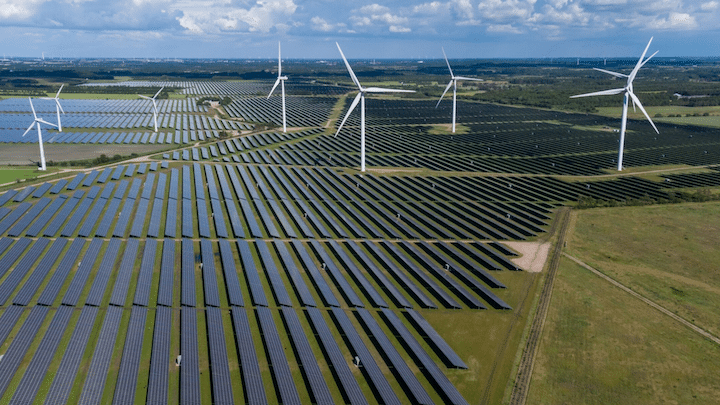
Sometimes energy security can be a real shock to the system if other countries import dependent ones like Europe want to move in a similar direction to China. It necessarily means being more dependent on China because you want to electrify, you want to use more solar panels, you want to use more electric vehicles, more critical minerals, more batteries and import less oil and gas. So the idea that in the longer run China could sort of be a winner, not to mention just positioning itself as a stable commercial partner for all the middle powers, Mark Carney talks so eloquently about and try to position the US as the source of geopolitical instability in the world. Is there a way in which this kind of works to China’s advantage in the long run? What’s happening now?
Kurt Campbell [32:17]:
Yeah, look, I thought that logic made an enormous amount of sense. I agree with it, and it is also the case through the combination of predatory practices that China’s undertaken against our fledgling photovoltaic and other kinds of clean energies in the United States and President Trump’s hostility to clean energy. China has unique advantages and I believe that one of the takeaways from this conflict will be the instability of the Gulf, which I think will likely be a continuing perception. Now the United States will try to step in and say, look, we can be the purveyor of natural gas and other capabilities that we can be a larger exporter. But my guess is the larger message will be one of the need for greater focus on renewables. And in that realm, the most likely partner is indeed China, given that the United States has remarkably little to offer in most of these arenas.
Jason Bordoff [33:32]:
So that kind of ties nicely to why I at the outset said I had originally reached out because I thought the essay that you wrote with Rush in Foreign Affairs was very interesting and you talked in it I think about how the context for the next century is China’s to lose and we should not underestimate China’s strategic advantages. Can you just talk a little bit for people who may not have read it, why you think China’s in a stronger position than a lot of people DC and in the US might realize?
Kurt Campbell [34:00]:
Look, Jason, first of all, I very much appreciate the question and the nice comment about the piece that Rush and I did. I would first just begin by saying the United States is one of those countries that spends a lot of time thinking about its own status, about the decline and rise of other nations on the international scene. And I would just simply say we don’t do a very good job at hegemonic prophecy. We often get it wrong. I think more recently there has been a tendency in elite councils to underestimate certain elements of China’s power and the argument that Rush and I make in the peace that in ways that really matter to us, it’s military, it’s technological prowess, its capabilities in manufacturing and robotics and its dominant position with respect to critical minerals and the like means that China will have an advantageous position with respect to the United States in a number of arenas for a significant period ahead.
[35:13]:
And that is a fact that the United States diplomacy has to contend with, I would simply say, and Russia and I argued that every time in the past where the United States has faced a challenge in the 20th century, whether it was the first world war or the second world war, in particular the Cold War, we were confronted by countries that had an industrial capacity. In each of those cases, our capacity was superior, but for the first time, we’re facing off against a challenge in which alone the United States is outmuscled in many of these areas. And so our proposition is that there needs to be a much more intimate connection between the United States and its allies and partners. And that means going far beyond what we did in the Biden administration, but certainly very different than what we’re doing in the Trump administration, which really looks like going it alone and building deeply consequential, not paternalistic, but real partners in technology and military and other arenas with key players on the international scene, Japan, South Korea, Australia, increasingly India and key countries in Europe as well. That was the proposition and that if you collect these countries together, a kind of operating system, the capacities easily have an advantage with respect to China. And that was something that we thought would be stabilizing and would support American interests over time.
Jason Bordoff [36:52]:
That latter part is I think what you referred to as being capacity-centered statecraft.
Kurt Campbell [36:58]:
Right, exactly. Capacity-centered statecraft is the proposition that we tried to present in that essay.
Jason Bordoff [37:04]:
And in the energy space, which is obviously where I spent all my time have long struggled to understand how to think about the spectrum of risk posed by China’s dominant position in different parts of all of these supply chains, clean energy technologies. And I’m curious how you think about that. There’s clearly a way in which it is potentially inflationary. Tell me if you agree, if it is a risk to be dependent on China for X, Y, and Z and you want to make that somewhere else, there may be a cost to that, but there’s a security premium to pay for that. But that might look pretty different for a solar panel than it does for heavy rare earths. And I don’t know if I’ve struggled myself to figure out how to think about the spectrum of risk posed by dependence on China in today’s collapsing world order, whatever you want to call it. Do you have a good way to do that?
Kurt Campbell [37:58]:
Well, Jason, if you would allow me, I’d paint a larger picture that may help some of your listeners think about this. And so basically over the last 40 years since China basically joined the global economy, and particularly after the WTO admittance in early two thousands, what has happened between the United States and China in almost every arena is the substantial creation of interdependence. We purchased a lot of stuff from China, a lot of stuff that is produced for the American economy is intertwined in Chinese production capabilities. China has invested dramatically in the dollar over decades. And so the dominant characteristic that describes the relationship between the United States and China is really one of interdependence. And in fact, there are few countries that are more interdependent than the United States and China. I will also say there are few countries that are more uncomfortable with that interdependence than the United States and China and what we are seeing in both Beijing and Washington are almost desperate efforts to try to relieve that interdependence to create more sovereign capacity to be able to withstand external shocks.
[39:33]:
And what we have found in both countries is that it is easier said than done. And I think the thing that policymakers are going to have to grapple with is that for the foreseeable future, we are going to be part of what I might describe as a reluctantly interdependent world in that although we are trying to create alternative supply chains, new capacities, China is trying to do the same, trying to diversify away from the dollar other financial tools, the essential features of interdependence remain. And so I think what we find as both countries maneuver and jockey is that there are limits to how far and how fast this process can go. And now we may be in a situation ironically where that very interdependence that has been built up over decades serves a kind of stabilizing process, limits the course of action of both capitals. However, I think there is almost a desperate push in both Beijing and Washington to do whatever necessary to create more sovereign capacity in the years ahead. But both governments have found it more difficult than perhaps initially thought.
Jason Bordoff [41:03]:
So this is true in China as well. Yes. I mean, I guess that’s talking maybe more about the financial system, economic sanctions and not just manufacturing and importing.
Kurt Campbell [41:12]:
The truth is that we have certain weaknesses, but so do China. And China generally, those weaknesses are disguised by Trump’s blunderbuss, like tariff measures we’re going to raise to 300% or whatever. And then the Chinese response is a scalpel like counter that China will simply take steps on, for instance, rare earth magnets. But the point is made of course, that there are substantial vulnerabilities on both sides if certain steps are taken.
Jason Bordoff [41:52]:
So I can imagine potentially some people particularly thinking first and foremost about an issue like climate change listening to this podcast as I think many do who see the need to move much more urgently toward low carbon energy like solar and the batteries that store toward electric vehicles. We have course need, we have growing power demand in the US now. That’s something we haven’t seen in a while. So when we talk about Chinese over capacity, they’re producing too much of something like electrolyzers for green hydrogen or solar panels. Someone says, thank you, that’s really good for us. We have more of it and it’s cheaper than it would otherwise be. And you think that’s wrong? I assume.
Kurt Campbell [42:31]:
I will simply say that that reality creates, and I saw it myself, very complex decision-making in any administration, you’ve got one group that is thinking primarily about strategic competition with China and another saying, look, the existential challenge that we face fundamentally is climate change, and this is the right way to address these issues, is accepting China’s dominance in many of these areas. I would simply say that I think there were steps taken in the previous administration to strengthen our hand in a number of areas associated with climate related technologies and like I think some of those things were insufficient, but at the same time, what we’ve seen is almost all of them have been curtailed, Jason, as we’ve seen in this new administration going forward. I do think it is yet to be seen what the takeaways will be from these occurrences in the Gulf. I think it is most likely to point in the direction of renewables and alternative sourcing, and I think as a result that may reduce American power, but there will be other countries that will decide, look, we’ll double down more on natural gas and petroleum. I think the result of this may be both a setback in our progress on climate and also a reduction perhaps in American power and influence in energy councils. So in that respect, that’s two strikes.
Jason Bordoff [44:17]:
I like the way you put it in minute ago, and I can’t remember what it was, but it was something about reluctant but continued dependence. We’re going to try to change that reality, but that reality is going to persist for a while. It’s kind of what I think happened after China famously restricted rare earth exports to critical mineral exports to Japan.
Kurt Campbell [44:34]:
Exactly
Jason Bordoff [44:35]:
[Unclear] and tried to — and they reduced their dependence, but they’re still pretty dependent, right?
Kurt Campbell [44:39]:
Yes.
Jason Bordoff [44:39]:
They didn’t get off of that entirely. What are the other policy tools in the toolkit to de-risk continued dependence rather than eliminate dependence? So this administration just announced a strategic stockpile program for critical minerals. What do we need to do to acknowledge we’re going to be dependent for a while, but try to reduce the vulnerability of that?
Kurt Campbell [44:59]:
Well, look, Jason, I think the most important thing is to be honest about how long that’s going to take. I think the administration has basically said, look, this is a mission that we’ll seek to accomplish in 12 to 18 months. It’s more likely to say, even with the crash course we’re looking at 12 to 18 years. I mean, the issue is not just the mining and the finding of these rare commodities scattered around the globe, but as you have pointed out very well in your work, these are dangerous dirty industries. The refining process is there’s a reason that no state in the union is signing up for, “Hey, make one of those refineries in my state.” And in fact, it’s going to take a long time to try to relieve some of those vulnerabilities. I think the only way forward is an increasing reliance on allies and partners and to work with countries like Australia, Mongolia, India and others, and in Southeast Asia on efforts to relieve what really fundamentally is a Chinese stranglehold in these arenas. And the truth is China has long understood that they had this dominance. It is only something that has dawned on American strategic elite in recent years.
Jason Bordoff [46:29]:
So it sounds like you see a world shifting from one of globalization for the last few decades, if not longer — back to Bretton Woods — to, is it regional economic blocks and geostrategic blocks? Is that kind of what we’re moving toward?
Kurt Campbell [46:41]:
Look, I think the jury is still out. There are some suggestions that the way the president and his team has conceived the world is that the United States and Latin America will form one block and perhaps China more in Asia, and then I think less interest ironically in Europe. I do not believe that is an American strategic interest. I think the most important steps that the United States could take is to secure our vital strategic position in the Indo-Pacific. I think our stance in Latin America is relatively strong and will continue, but it is the dominant innovative economies in Asia that frankly I think beckon and it would be there where I would like to see the focus diplomatically and strategically. I will say that President Trump has not made this easy with tariffs and 301s, even countries that desperately want to work with us strategically, find themselves often having to deal with these kinds of very difficult economic and commercial steps against them.
Jason Bordoff [47:57]:
You mentioned a bit earlier in the conversation, China’s weaknesses. Can you say another word about what they are?
Kurt Campbell [48:02]:
It is well known that there are problems in the Chinese economy. The property sector is showing real strains. There are huge issues with respect to unemployment. I think its business model, you’ve rightly pointed this out, Jason, sees large over capacity in autos in a variety of other areas flooding Europe now in the way that it flooded the United States after the WTO. My instincts, my gut tells me that while Europe has wanted very much to work closely with China, in some respects, what happens when your market gets overrun is that key industries start to get deeply anxious. And just as some American industries were hollowed out, we’re going to see enormous challenges even on highly innovative industries in Germany and the auto sector and the like. And so I think the Chinese model by nature is destabilizing and alienating to even countries that would ideally like to partner them. But under Xi Jinping, there has been a reluctance to take the necessary steps to lead to consumer led growth strategies.
Jason Bordoff [49:28]:
I guess finally, you talked in your piece about capacity-centric statecraft, the need to work with partners. And you just mentioned a moment ago, section 301, for example. So between what’s happening in the Gulf to tariffs and a range of other things, do you think Asian allies will want to partner with the United States again the way they used to?
Kurt Campbell [49:48]:
So Jason, for me, it’s the largest and most important question. And I’ll tell you, in a world of challenging and sometimes difficult realities, one of the things that I think I’ve witnessed is that there is more resilience to US relations with allies and partners, particularly in the Indo-Pacific than we sometimes imagine. And so I think most of these countries are prepared to do more than we expect to sustain those partnerships because the relationship with the United States has been so important. And so even though some of the things that the Trump administration has done creates discomfort in Asian capitals, I think there is enough momentum to sustain those partnerships even through very tough times. Now, I do not envy the government that comes after this government because I think almost invariably it will be difficult to convince any Asian or indeed European government that look, we’re back to being a reliable, normal partner on the global stage. They’re not going to forget either the first or second Trump administrations. And even though there was an effort to try to portray the Biden administration as a return to normalcy, it now looks much more like an outlier than it does a return to a form of stability. All that being said, I think there is likely to be more resilience to the US Allied and partner framework in the Indo-Pacific than many of the analysts believe.
Jason Bordoff [51:40]:
It is a busy time for people thinking about foreign policy as you are and have for a long time. So thanks for being so generous with your time. I’ve always learned a lot by reading your writings and talking with you, and really appreciate your making time to be with us today and your many tours of service in government. Thank you, Kurt Campbell.
Kurt Campbell [51:58]:
Jason, back at you. Appreciate your work helping us understand the most important variable today in global politics, and I just will say that your efforts are going to be more necessary and listened to in the weeks and months ahead. So thank you for having me on.
Jason Bordoff [52:16]:
Really appreciate your time. Thank you.
Kurt Campbell [52:17]:
Thank you.
Jason Bordoff [52:22]:
Thank you again, Kurt Campbell, and thanks to all of you for listening to this week’s episode of Columbia Energy Exchange. The show is brought to you by the Center on Global Energy Policy at Columbia University. The show is hosted by me, Jason Bordoff and by Bill Loveless. Mary Catherine O’Connor, Caroline Pitman and Kyu Lee produced the show. Gregory Vilfranc engineered the show. For more information about the podcast or the Center on Global Energy policy, please visit us [email protected] or follow us on social media at Columbia U Energy. And please, if you feel inclined, give us a rating on Apple, Spotify, or wherever you get your podcasts. It really helps us out. Thanks again for listening. We’ll see you next week.