This website uses cookies as well as similar tools and technologies to understand visitors’ experiences. By continuing to use this website, you consent to Columbia University’s usage of cookies and similar technologies, in accordance with the Columbia University Website Cookie Notice.
Energy Explained
Get the latest as our experts share their insights on global energy policy.
Live Updates: Iran and the Conflict in the Middle East
The Center on Global Energy Policy is providing live updates on key developments related to the Iran crisis. Check back here for the latest.
Blog
by Anne-Sophie Corbeau, Erica Downs, Ira Joseph, Richard Nephew, Daniel Sternoff, Karen E. Young, Robin Mills & Neelesh Nerurkar • September 23, 2026
Podcasts
Hear in-depth conversations with the world’s top energy and climate leaders from government, business, academia, and civil society.
Iran Conflict Brief: Jan Stuart on What a US Diesel Export Ban Would Mean
Seven months into the largest oil supply disruption in history, there's still no resolution in sight. This week, on the sidelines of the UN General Assembly, US and Iranian officials held their first indirect talks since the Memorandum of Understanding collapsed in July—but neither side appears ready for concessions.
Events
Find out more about our upcoming and past events.
September 21, 2026 - September 25, 2026
CGEP @ Climate Week 2026
The Center on Global Energy Policy at Columbia University SIPA will host a series of energy and climate focused events this September during Climate Week NYC.
Event
Podcast
The Iran Oil Shock: Will it Force the World to Re-think the Future of Energy?
April 28, 2026
Guest
Jason Bordoff
Founding Director, Center on Global Energy Policy; Professor, Columbia SIPA; Professor and Co-Founding Dean Emeritus, Columbia Climate School
Host
Robin Pomeroy
Host, Radio Davos
-
Transcript
-
Jason Bordoff:
As soon as the conflict in Iran erupted in late February, it became clear that the world was facing an energy crisis. In the weeks that followed, while much of the analysis focused on the immediate shock, I wanted to think through some of the longer term implications. Over the last five years, I’ve been very lucky to do so much of that thinking and writing with my friend and collaborator, Meghan O’Sullivan, who is among the most brilliant people I know on energy and foreign policy. Meghan directs the Belfer Center for Science and International Affairs at the Harvard Kennedy School, where she is also a professor of the practice in international affairs. She served in the Bush administration as a deputy national security advisor. Our article titled “The Iran Shock and the Dangerous Allure of Energy Autarky,” was published in the current issue of Foreign Affairs.
Welcome to Columbia Energy Exchange, a podcast from the Center on Global Energy Policy at Columbia University. I’m Jason Bordoff. Today, we are pleased to present an episode of Radio Davos from the World Economic Forum. Host Robin Pomeroy invited Megan and me to discuss our article and the longer term implications of today’s energy shock. Unfortunately, Meghan fell ill and was unable to join us, but I did my best to channel her brilliance in my conversation with Robin. I hope you enjoy it. Our special thanks to Robin and the World Economic Forum for collaborating on this episode, we’ll be back next week with the next episode of Columbia Energy Exchange.
This is the largest oil supply disruption the world has ever seen, and it has the potential to get much worse from here.
Robin Pomeroy:
Welcome to Radio Davos, the podcast from the World Economic Forum that looks at the biggest challenges in how we might solve them. This week, what will be the lasting impacts of the current oil shock?
Jason Bordoff:
It is unlikely in my view that there will be any announcement forthcoming from the Trump administration of the Iranian regime that suddenly gives people 100% confidence to put the value of tankers and the value of human life and the cruise of those tankers at risk.
Robin Pomeroy:
An oil shock in 1973 changed the way countries approach energy security. This oil shock will probably do the same, this expert says, but the impacts this time will be very different.
Jason Bordoff:
Particularly in a new world of fragmentation, geopolitical conflict, the eroding world order. In a world like that, countries don’t view interconnection as security. They view it as a risk.
Robin Pomeroy:
Jason Bordoff of the Center on Global Energy Policy at Columbia University gives us his assessment of how the world of energy will look after the 2026 oil shock.
Jason Bordoff:
Most of the things you would want to do to deal with an oil shock don’t help with this oil shock, they help with the next oil shock. And when the immediate crisis fades, the political urgency to do something for the next one tends to fade as well. An oil shock is less harmful if oil is less a share of your economy. So the most durable thing you can do for energy security is just to use less in the first place.
Robin Pomeroy:
Follow Radio Davos wherever you get podcasts or visit weft.ch/podcast. I’m Robin Pomeroy at the World Economic Forum. And with this assessment of the impact of the Iran oil shock,
Jason Bordoff:
It’s going to really change how we think about the future of energy.
Robin Pomeroy:
This is Radio Davos. No one knows how the war between the United States and Israel and Iran will play out. One of the few things we can be sure of though is that it’s having a huge impact on the global economy, largely because of the closure of the strait of Hormuz, the narrow sea lane that is the entry and exit point into and out of the Persian Gulf. The last time the world faced an oil shock as significant as this was arguably in 1973 when Arab oil exporting nations stopped shipping energy to countries supporting Israel in a war back then. The fact that we still talk about that event more than half a century ago reflects what an impact that had on the way the whole world’s energy systems function. For this episode of Radio Davos produced in collaboration with the Columbia Energy Exchange Podcast, I spoke to Jason Bordoff, who’s one of the main experts on that podcast.
He’s also director of the Center on Global Energy Policy and a professor at Columbia University in New York. Jason sets out the scale of the crisis right now and what we might expect the long-term consequences to be, consequences that will affect all of us around the world. Here’s my chat with Jason recorded a few days ago. Jason Bordoff, thanks for joining us on Radio Davos.
Jason Bordoff:
Thanks for the invitation. Great to be with you.
Robin Pomeroy (04:41):
It was great to talk to you. It could not be more timely to be talking to you right now. Who knows where things might have moved with the state of global energy in the next few days? I think people are still going to be talking about this probably though for weeks and months, if not longer, because there’s an oil shock going on at the moment.
Jason Bordoff (05:03):
There is, and it has the potential to get much worse from here. I mean, this is the largest oil supply disruption the world has ever seen. Somewhere on the order of 13 to 15 million barrels a day of supply that otherwise would transit the strait of Hormuz as offline. There are some measures to compensate for that like strategic stocks, but there’s no policy tool in the policy toolkit large enough to deal with a shock that large. You’re talking about 10 to 15% of global energy demand, oil supply. The Arab oil embargo was 7% by comparison. The Gulf War around 6%, so this is very, very large.
Robin Pomeroy (05:44):
Those are kind of historical, some of those in the dim and distant past, the Arab oil embargo, you’re talking about the early 70s there, right?
Jason Bordoff (05:52):
Yeah, a half century ago, 1973 and really a collective sort of trauma that shaped energy policy, certainly in the United States for decades to come. And I think the question is whether this shock will manifest itself in a similar way. It’s not being felt equally everywhere, and we can talk about that, but it is causing real fuel shortages, severe price spikes, schools closing, work from home, airlines canceling flights. In Asia, to some extent in Europe, it’s actually quite different here in the United States. Eventually, it will be felt that way everywhere, but in the early months of this conflict, it’s hitting emerging markets, Southeast Asia, places like that, much harder.
Robin Pomeroy (06:35):
Imagine tomorrow something happens in this war between the United States and Israel and Iran. Imagine it settled one way or another and that straight of hormus, which probably so many people around the world hadn’t heard of until a few weeks ago, but those of us who were interested in this part of the world obviously were aware of, we always knew it was a potential choke point. Imagine it was opened tomorrow. Does everything get back to normal the next day?
Jason Bordoff (07:06):
I think there’s a few parts to the answer to that. One is if it were open and everyone had full confidence in that and traffic was back tomorrow where it was the day before this conflict started, you’re talking about weeks to months to bring oil supply back. There are countries that have shut in oil production and it could take a few weeks or a month or two to bring that supply back. You need the ships to go in and pick up the oil and come out. There has not yet been significant physical damage to the oil infrastructure. There’s been a bit more to some of the Qatari natural gas infrastructure. So I think a big part of the answer to your question is between now and whenever that resolution comes, is there further escalation that could lead to the risk of tit for tat retaliation where you start to see strikes that damage physical infrastructure that could take two or three years to repair?
(07:56):
That would obviously lengthen the timeframe. And then I think the other part of the answer to your question is it is unlikely in my view that there will be any announcement forthcoming from the Trump administration of the Iranian regime that suddenly gives people 100% confidence to put the value of tankers and the value of human life and the cruise of those tankers at risk. It’s going to take time to really understand what a ceasefire looks like. And if a ship goes into the strait now to make a pickup, if the ceasefire falls apart a week from now, they can’t get back out. So I think people are going to be in a holding pattern for a bit before people really feel confidence. And what are the terms of reopening? Do they have to pay the Iranian regime for example? So do they have insurance? Will cruise be willing to go back in?
(08:41):
So all of that is going to take time to really get back to normal.
Robin Pomeroy (08:44):
I was reading this article that you co-wrote for Foreign Affairs magazine co-authored with Megan O. Sullivan. It’s called “The Iran Shock and the Dangerous Allure of Energy Autarky.” Talking about that historical context again, 1973, anyone who knows anything about energy policy will have studied it or certainly will be aware of it. Could you just remind us what happened very briefly there? And then we’re going to talk about why today is similar and different. Yeah,
Jason Bordoff (09:14):
Of course. And I appreciate your saying, I co-authored this as I do a significant amount of my writing with Meghan O’Sullivan, also a good friend of the World Economic Forum. She’s a significant intellectual partner in all of this. And we’ve written together for years. In this piece, we tried to reflect on what some of the longer term implications of this energy shock might be. And again, we don’t quite yet know how much of a shock it will be. If you contrast, for example, as significant as the 2022 energy crisis was in Europe in particular, that was mostly a natural gas crisis, not as much an oil crisis. And it caused a lot of talk of, we’re going to get off of imports and shift to electrification and renewables. Some of that happened, but a lot of LNG terminals were built when Russia cut off the gas supply and things haven’t fundamentally changed.
(10:03):
The oil shock of the 1970s was different. I mean, it really did traumatize certainly the United States, but several other countries as well in ways that caused lasting changes to energy policy. Part of that was diversification of supplies. Part of that was trying to increase domestic production, like getting a controversial pipeline, the Trans-Alaska pipeline permitted. Finding ways to use less oil. We used to get 20% of our electricity from oil, and today it’s almost zero. But one of the things we highlighted in the article was it led to a significant effort to try to increase energy security through increased cooperation and interconnection. We created the International Energy Agency to work together, OECD countries, oil importers, to deal with disruptions through diplomacy. The international energy agency countries created strategic stockpiles of oil in concert that they would collectively come together to release in emergencies. And in the 1970s, an embargo was more possible because oil was sold in long-term contracts between buyer and seller, so you could cut off the buyer.
(11:07):
Today, if a country were to threaten an embargo, you would lose supply to the global market. Prices would go up for everyone. Flows would shift around because there’s an interconnected, integrated, well-functioning oil market. Oil’s the most globally traded commodity on the planet. That was made possible by interconnection. So if a tsunami hits Japan and they lose nuclear power, they are more secure, not less, because they can go into a global market and pull supplies of something else in response to higher prices. Europe did the same when it lost Russian gas. I think the point we were making in the article was a shock like this, particularly in a new world of fragmentation, geopolitical conflict, the eroding world order that Mark Carney spoke so eloquently about at this year’s meeting in Davos. In a world like that, countries don’t view interconnection as security, they view it as a risk.
(12:01):
And it’s going to lead to an impulse, an allure, of autarky. Let’s make everything at home. Let’s try to disconnect from the risk of geopolitical turmoil in the Middle East. Let’s produce our energy at home. That can have some benefits. I think for many countries, China’s been doing more of that. They’ve electrified more of their economy. Half of their new cars sold are electric. They want that electricity to then come from domestic sources, like in their case, renewables and coal, but there’s also significant risks to isolation, disconnection, and a go- it-alone strategy, including the cost of doing that. That’s why trade tends to be good in most goods. It lowers costs. It’s quite expensive to try to do everything within your own borders. So we sort of warn against an impulse to try to just go a fortress approach and disconnect because we think in the end that actually could be harmful for countries.
Robin Pomeroy (12:51):
To quote your article, you say integration begins to look like a strategic liability rather than a source of resilience. So where do you get that resilience then? So there is a temptation to head towards self-sufficiency. We’ll make sure we can meet our energy demands domestically. That’s the initial impulse that everyone has.
Jason Bordoff (13:19):
I think so. I mean, it certainly has the potential to create new dependencies. And so look, I do think it would be a good idea. Let’s take Europe as an example where I believe you are. If you wanted to reduce exposure to the volatility of global oil and gas markets exposed to increasing geopolitical risk, and you’re heavily oil and gas import dependent, and you don’t have a huge ability to produce more of that domestically, you might want to say, let’s get more domestic sources of energy. For a place like an import dependent region like Europe, that would mean electrifying more of your economy, your heat, your cars, your trucks, and then producing that electricity from domestic sources, renewables, nuclear, things like that. And many of those might actually point you in a cleaner direction as well. We can come back to what this might mean for the challenge of decarbonization and climate change.
(14:08):
But as I said, that A, creates new dependencies because we know that 70, 80, 90% of the global supply chains for clean energy and electrification strategies, solar panels, batteries, all the critical minerals that go into batteries, electric vehicles are made in China. And the question is, are you swapping one dependency for another? And given that it is very hard for countries to really disconnect and do everything at home, you want to pursue other strategies as well. Strategic stockpiles like for oil, but maybe think about those for natural gas or for critical minerals and diversification. Since Winston Churchill famously said, security in oil lies in variety and variety alone, diversification has always been job one of energy security. So you really want to make sure you have a diverse set of sources as well. You want to harden your infrastructure, particularly a more electrified system, the transmission lines that could be vulnerable to extreme weather or cyber attacks, so you need to invest in infrastructure and resilience.
(15:09):
All of this is costly, redundant infrastructure, resilient infrastructure. Right now in the Middle East, the most important piece of oil infrastructure in the world today is the East-West pipeline. It’s a pipeline that goes from the Persian Gulf to the Red Sea that bypass the Strait of Hormuz. Usually that pipeline is not used. It was built for an emergency like this, and Saudi Arabia was willing to pay that premium for insurance. Energy security, it’s a question of how much society’s willing to pay for insurance through that kind of resilience redundancy in infrastructure. And I think that premium is going to go up right now and countries are going to be willing to pay a bit more to buy an insurance policy for energy security, but there are other steps you can take so you don’t have to try to do everything yourself.
Robin Pomeroy (15:55):
And presumably in a perfectly functioning global energy market, market forces when everything’s running well and there’s not a war in the Middle East, we’re getting relatively cheap oil and gas. In the scenario, you’re saying where countries are looking up more self-sufficiency, it’s never really going to be as cheap in a situation where you’re having to spend so much more on building in this insurance, as you put it.
Jason Bordoff (16:24):
Yeah. And again, I don’t want to say energy is cheap. Obviously, Europe is just digging out of an energy crisis triggered by Russia’s invasion of Ukraine four years ago. But I do think generally speaking, over the last two or three decades, for the most part, with some exceptions, energy was pretty affordable, pretty abundant, pretty reliable. And I do think there’s an extent to which energy policymakers, particularly in advanced economies, focused very heavily on the challenge of climate change, which is good. They should focus on that. But maybe lost sight that energy security is always a risk and it has to be tended and paid attention to, otherwise it could fall short. And we’ve seen several examples of that now and made worse by this new world of competition and fragmentation and conflict that we are in. Before this conflict started, everyone was worried that the oil market was oversupplied this year and next year.
(17:17):
We were producing. The International Energy Agency projected that the world was going to produce four million more barrels of oil a day this year than it needed. That was probably too high, but everyone was projecting some oversupply. So prices were pretty low. And now, if you take 15 million barrels a day off the market for an extended period of time, there’s, again, some workarounds for a period of time, some oil and inventory or strategic stockpiles, but at some point, oil prices need to rise high enough to destroy 10 to 15% of world demand, and that’s a pretty high price. So traders don’t really know which direction to go in because that’s a really high price, but if this conflict ends tomorrow, the price could collapse again within the next couple of weeks or a month or two. And we’re already seeing where the physical price of oil, the price you pay for a barrel if you want it tomorrow versus the price that’s traded in a futures contract, they tend to be pretty much the same thing.
(18:11):
And now they’re really, really different, particularly in Asia and Europe. That reality is less true in the United States because we are such a large oil and gas supplier now. And so I wrote a piece in the Financial Times a week ago pointing out that while it’s still a global oil market and we’re still seeing gasoline prices at the pump go up in the US, it has been a bit surprising to see just how much more insulated, both in oil and especially in natural gas the United States is in a shock like this.
Robin Pomeroy (18:39):
You mentioned climate change policies, some governments concentrating on that perhaps at the detriment of energy security, but isn’t it one and the same thing? I mean, if a country can produce from its own sunshine, its own wind, that is much more secure, isn’t it, than an oil traveling halfway around the world on a boat? I noticed though, in your article, you say it’s not in itself a solution to the threat of security, energy security.
Jason Bordoff (19:19):
I think one of the things Meghan and I have explored in a few pieces in Foreign Affairs is the potential for the discussion of energy security and national security to be a driver, a powerful driver of a faster transition. As much as I would like this not to be the case, I think if the national security advisor calls a meeting in the situation room about a national security issue, it frankly motivates government action a bit more than if down the hall, the climate advisor calls a climate change meeting. That’s just kind of the reality. And the question is, is there a lot … Where’s the overlap where the power of the kind of conversations you have in Davos or the Munich Security Conference about national security can be harnessed to point in the same direction? And it’s different for different countries. We talked before about how an import dependent region like Europe would want to produce more of its energy at home, would want to electrify more and want to get that electricity from domestic sources.
(20:16):
In Europe’s case, that’s probably a lot of renewables. And again, rethinking some countries posture toward nuclear power.
(20:23):
For some parts of the world, that might be coal, where there’s abundant coal resources in a place like Indonesia or South Africa. Some parts of the world might be concerned about the dependence on China for those clean energy supply chains I spoke about a moment ago. And then if you’re say the United States, this Trump administration certainly believes, and I’m not sure I entirely agree, but there’s some truth to it, they’re the largest oil and gas producer in the world and you’re still exposed to a global market, but some resilience comes from that level of production. So if you’re a major producer, like a Saudi Arabia or United States, you might think there’s security that comes from doubling down on an oil and gas economy. I think in the long run, that’s probably not right. And again, you’re still part of a global market, so we’re still seeing gasoline prices go up in the US, even though we are a net oil exporter.
(21:14):
There’s a lot of reasons why a concern about energy security could take you toward a more electrification, less dependence on globally traded energy, most of which is oil and gas, fossil fuels, but that could look different in different places. And I think the biggest asterisks and caveat to all of that is the role coal would play in some emerging markets.
Robin Pomeroy (21:33):
Have you done any kind of back of an envelope calculation to estimate will this oil shock speed up or slow down the energy transition, particularly the transition to non-carbon dioxide emitting energy?
Jason Bordoff (21:54):
I think at this point it’s A, a little hard to know because again, we don’t quite yet know how traumatic this shock is going to be. It’s frankly quite a bit more traumatic now in lower income and emerging markets around the world. On the one hand, there’s a little bit less lower hanging fruit, like getting oil out of the power sector in terms of how high the price of oil needs to rise to destroy some of that demand. On the other hand, most of that demand destruction now is taking place in lower income countries that are being hit particularly hard, Bangladesh and Pakistan and places like that. Anecdotally, if you look at BYD dealerships, the Chinese electric car maker, BYD dealerships in Brazil or Manila in the Philippines or pick your emerging market, business is booming right now. And the rhetoric of many countries is certainly saying we want to be more independent and we want to try to double down on policies that would drive us toward a more electrified approach.
(22:49):
I think the question is, there’s a cost to that as we talked about before. And the question is once the immediate crisis fades, I think history would suggest that our memories are short when it comes to energy crises. Fiscal budgets are strained, even in advanced economies. The fiscal situation of many countries is at debt levels we haven’t seen since World War II. Europe is trying to pay more for defense. In the face of competing demands, while the rhetoric may be there, are government’s really going to put the resources and the money into place that’s needed to make this happen, or do we sort of forget about this crisis once it passes?
Robin Pomeroy (23:27):
That’s a rhetorical question. I think you’re ironing very much on the side of governments tend to act relatively short term compared to longer term investments that are needed for things like the energy sector.
Jason Bordoff (23:41):
It’s certainly the case with oil crises in the past. I think in the United States when there’s an oil shock and prices, oil gasoline pump prices, which are very acute political issue, when they go through the roof, politicians run around like a chicken with their head cut off saying, “What can we do? What can we do? ” They release the strategic petroleum reserve. They waive laws like the Jones Act or environmental things or call for eliminating gasoline taxes. It’s like short-term solutions. And the truth is there’s not a lot you can do when your cars run on petroleum and I guess now you have EVs, but again, that’s a new car. That’s not much you can do in the near term. Most of the things you would want to do to deal with an oil shock don’t help with this oil shock, they help with the next oil shock. And as I said, when the immediate crisis fades, the political urgency to do something for the next one tends to fade as well.
Robin Pomeroy (24:29):
But oil shocks do have long-term consequences, as you’ve already said, and that one in 1973 led to the creation of the International Energy Agency, led to this kind of more interconnectedness of energy markets. Are there things that you’re looking out to see? Yeah, that’s changed the game this time.
Jason Bordoff (24:52):
Yeah, I’ll mention a couple and try to be brief, but I do think a big part, as I said before, to the answer to your question is how long this goes on and how bad it gets and how traumatic that experience is. But in my lifetime, I think this has the potential to be by far the worst energy shock, certainly since the 1970s in a way that would prompt real significant change. The physical shortages we’re starting to see in the price index of those I think are going to get much more acute in the next month if this crisis is not resolved. So what would that mean? I think that would really lead to a change potentially in how many countries approach their energy policy. And as we wrote about in that Foreign Affairs article, a real desire to disconnect, produce more at home, be willing to pay some security premium for that, and probably push many countries toward more clean energy alternatives that are about electricity production, renewables, nuclear, geothermal, batteries, and as I said, people will use coal in some parts of the world as well.
(25:57):
I wrote this piece in the Financial Times that I mentioned a moment ago because I was commenting on how while it’s still a global market and the US is still seeing higher gasoline prices, it’s not seeing the same oil price pain the rest of the world is, and natural gas were really disconnected. I mean, the price of natural gas in Europe and Asia went to $15 or $20 per million BTU. In the US, it’s below three and it’s falling. So I was interested in that because we’ve been reading these stories about how Israeli Prime Minister Benjamin Netanyahu went to Washington to try to encourage the Trump administration to take this military action. He did the same thing when I served in the Obama White House. We weren’t going to take military action. The question was economic action like sanctions. And the big question we had was how do you impose economic pressure on Iran by taking two and a half million barrels a day back then of Iranian oil off the market without hurting ourselves in the process because oil prices would go through the roof.
(26:52):
And I think we’re in a world now where the US has a bit more free hand to undertake international endeavors like that, military, economic, otherwise, because the constraint of economic pain from energy shocks in the US is lower than it used to be. That might free up our hand to put pressure on Russia or Iran in positive ways. It might lead other countries to be a little worried about how that could be used in more careless or reckless ways. And then the third thing I would say is I think to the extent this drives countries to a more electrified economy and to look more toward electric vehicles to reduce oil demand or solar panels, again, China dominates those sectors. And I think in the long run, this has an ability to be a win for China, not to mention that China’s trying to position itself as a reliable commercial partner while the US is the source of geopolitical instability in the world. And I don’t think this conflict is harming China’s ability to make that case around the world.
Robin Pomeroy (27:56):
In your piece, you talk about the risk of that being another choke point though, the Chinese dominance of the market when it comes to solar panels and wind turbines. How much of a risk is that though, really? Yeah, sure, it’s an economic win if a country like Pakistan goes and buys countless solar panels as they have done, but then that’s their solar panels, isn’t it? Right. Unless I guess there’s a cyber attack of some sort, what is the real risk, do you think, of China’s dominance in that?
Jason Bordoff (28:32):
I think it’s exactly right, the way you’re framing the question and it’s important because you often hear the rhetoric among politicians in the US, why would we buy electric vehicles when we’re the largest oil producer or even when we’re importing oil from the Middle East, you don’t want to swap dependence on the Middle East for dependence on China. But the daily flow of energy, if you don’t have it, the economy shuts down, you can’t turn the lights on or fill up your car. It’s obviously different when you’re talking about a supply chain. If China were to cut off the exports of solar panels, that would not affect the ability to turn the lights on today at all. It might affect your ability to deploy new technologies and install new solar panels, but that’s a much different impact. We’re not importing electricity from China. We’re importing a manufactured product that makes electricity.
(29:16):
I think we don’t often have a nuanced enough conversation about the spectrum of risk, and this is true not just in energy, but lots of things in this new era of economic security and state capitalism that we are all talking about, industrial policy. I think it might be different in critical minerals where there are heavy rare earths used in not just energy, but military applications and drones, batteries, electric vehicles, in my view, is probably somewhere in between. So I think the answer to your question is it’s probably quite different for different parts of the clean energy supply chain, and frankly, I would be less worried about something like a solar panel than some of those quite heavier rare earths or critical minerals that we really depend on for technological military and energy applications.
Robin Pomeroy (30:03):
So what should countries be doing now then to increase their resilience when it comes to energy security?
Jason Bordoff (30:16):
Yeah, I think there’s three broad pieces to the puzzle. There’s no silver bullet. It is a good idea to produce more domestic energy if you can. And again, for import dependent regions, and China again has been doing this. That’s why half of the new cars sold in China are electric. More than 30% of their energy system is electricity, whereas the rest of the global average is about 20% because they wanted to reduce their dependence on oil imports. They wanted to be more energy secure. They did it more for energy security than for climate change. So trying to electrify more of your economy, produce more of that electricity from domestic sources or develop other domestic sources if you have them, I think that’s step one. We often forget that the US is also in a better position today because our economy is less oil intensive. The economy GDP has grown roughly fourfold since the Arab oil embargo and oil demand has grown just a little bit.
(31:10):
So an oil shock is less harmful if oil is less a share of your economy. And so the most durable thing you can do for energy security is just to use less in the first place. And there’s a lot of low hanging fruit that we often forget to pick up off the ground when it comes to energy efficiency. And then once you’ve done those two things, you want to take a number of other steps to build resilience and buffers against shocks. Strategic reserves are one example of that, diversification is an example of that. Again, China has a policy generally not to source more than 20% of its energy from any one supplier. And I think as a general principle, I’m not sure 20% is the right number, but as general principle, that certainly makes sense. And then making your infrastructure as resilient as possible against cyber attacks or extreme weather, a redundant infrastructure in case you need it, like that pipeline that Saudi Arabia built.
(32:07):
The question is what security premium you are willing to pay and how much society is willing to pay as a sort of insurance policy to deal with the threat of disruption. But again, in a world where choke points are more of a concern and the world seems a bit more geopolitically contentious, I think the willingness and need to pay that security premium is going to go up.
Robin Pomeroy (32:28):
AI data centers. We’ve seen this sudden and kind of unexpected increase in demand for energy and for electricity through AI just in the last handful of years. Do you think this oil shock will have any impact on that? We’ve seen a lot of big companies plowing enormous sums of money into building these things which have an enormous energy requirement. If energy is subject to shocks like this, is that going to give them pause for thought?
Jason Bordoff (33:03):
It could potentially. I think there’s a global answer to your question, which is on a global basis, we are entering an age of electrification. Electricity demand is growing much faster than overall energy demand and AI is not the big story here. The big story are things like air conditioning and billions of lower income people moving to higher standards of living. AI and data centers is a real strain and source of concern in certain places, the United States, China, Europe, and even in the US it’s localized. It’s more true in Virginia than somewhere else. And in those places, I think this energy shock is creating more and more concern with energy affordability. That’s a big issue, of course, in Europe as well. Energy prices are a major issue now in political elections, not just gasoline prices, but electricity prices, which people tend to not to think too much about not too long ago.
(33:57):
So I think that’s going to put more pressure on the tech industry, the data center industry to figure out approaches where they’re bearing the cost of bringing this new electricity supply online. And the last question I think would be that if you’re going to build data centers, you want a place that’s open to investment and that has a lot of cheap energy, the Gulf countries like the United Arab Emirates and Saudi Arabia were doing a lot to position themselves as places these tech companies and data centers and hyperscalers would want to come invest in. And I think a question is whether the risk profile of the region is going to look different after this and how people will feel about putting physical infrastructure like data centers in the Gulf. I think in the long run, those are still going to be great places to invest and they’re going to do a lot of work to try to build confidence in international firms to come there. But I think it’s something they’ll have to be thinking about after this conflict.
Robin Pomeroy (34:49):
For people who aren’t following energy policy day in, day out like you are, Jason, what are the things you wish people would understand that time and again, you see they don’t understand about global energy?
Jason Bordoff (35:04):
Well, first, they should be paying attention to energy day in and day out by following our work at the Center on Global Energy policy, as well as the WEF. The point I made a moment ago about electricity versus energy is important. You often see data points about how dramatically the cost of solar is falling or renewables are falling, how quickly renewable energy is growing, which it absolutely is. And that’s great, but electricity is only around 20% of global energy demand and you need molecules for a lot of things that you can’t use electricity for yet. So you can’t put solar energy as cheap as it is into a car. You have to get an electric car first. And that’s true for certain things that are harder to electrify, like ships and making steel and cement. And those are bigger shares, right? Steel and cement globally are more than twice the emissions that all the cars in the world combined are.
(35:49):
So I think some people don’t understand always the scale and magnitude of what energy is actually used for globally. And that takes you to another misperception or misunderstanding. I think sometimes with an audience, if I were to show one graph to them, if you talk about an energy transition, which is a phrase we throw around quite casually and look at it, visualize what that means in your head, you will see these great shifts over time from 1850 until today through the industrial revolution from wood to coal and then coal to oil and then oil increasingly to gas and now renewables, although they’re still small. And you see these great shifts over time if you picture that in your head, going from zero to 100% as a share of the total. But if you picture the same data, not from zero to 100%, but just total amount of energy, which is what the world cares about and what the planet cares about from a carbon emission standpoint.
(36:45):
We’ve never used less of anything. The shares are changing, but we’re using more wood today for energy than we did in 1850. And when you take a population of billions of people and you grow that population and you grow GDP, what we have seen to date is an energy addition where clean energy, and you see these headlines all the time about it’s breaking every record you can imagine, which it is. The costs are falling more staggeringly than many had anticipated a decade ago. Clean energy can grow at an incredibly rapid rate and break all these expectations and oil use and coal use and gas use go up at the same time, just because that’s what it means to make the world more populous and wealthier. And so what we need to do for our clean energy to deal with climate change is move from this addition phase to this transition phase.
(37:36):
And that means growing clean energy fast enough, not just to meet the growth in global energy demand, which we mostly are now, but to start to displace the 80% of the energy mix that comes from fossil fuels and that 80% figure hasn’t changed in decades.
Robin Pomeroy (37:50):
Do you think this energy shock might be the push that we need to start that change?
Jason Bordoff (37:56):
I think it has the greatest potential to be that shock, that catalyst for change that I’ve seen in a long time. So I can’t tell you with certainty that it will be. Again, our memories are short, but if this goes, certainly if this goes on even another month or two, the scale of the shock, being physically unable to get jet fuel, to open restaurants and have cooking fuel, the scale of the shock is going to be traumatic at an extent that it’s going to really change how we think about the future of energy. And many of those energy security imperatives, again, not all of them, coal is probably the biggest exception, but many of those energy securities also point you in a cleaner direction.
Robin Pomeroy (38:36):
Jason, you’ve said everyone should be following energy on a day-by-day basis. I think probably people are right now. Where should they go to find out your work? Tell us about the podcast.
Jason Bordoff (38:49):
The podcast is called Columbia Energy Exchange. It’s a weekly deep dive like this, one hour conversation I have with an energy leader. The Center on Global Energy Policy is the largest energy think tank in the United States. We have about 120 people, researchers on everything, oil and gas, renewables, climate policy, geopolitical risk that I built 13 years ago when I left the White House. And of course, there are a lot of great other sources of information, including the World Economic Forum and the International Energy Agency and many others.
Robin Pomeroy (39:20):
Jason Bordoff, find his podcast, the Columbia Energy Exchange, wherever you get podcasts. And look out for the World Economic Forum’s Energy Transition Index Report coming on the 17th of June, an important piece of research that looks at energy security, resilience, and competitiveness around the world, and analyzes how the pace and geography of the energy transition is going. You can bookmark the landing page for that now, wf.ch/eti26 for the Energy Transition Index 2026. And if you follow Radio Davos, there’ll be an episode on the Energy Transition Index landing on your podcast app. The World Economic Forum has three weekly podcasts, this one, Radio Davos, as well as Meet the Leader and Agenda Dialogues. Get them all wherever you get podcasts or at wef.ch/podcasts. This episode of Radio Davos produced in collaboration with the Columbia Energy Exchange was written, presented and edited by me, Robin Pomeroy, with studio production by Taz Kelleher. We’ll be back next week, but for now, thanks to you for listening and goodbye.
In this special episode, Jason Bordoff, founding director of the Center on Global Energy Policy, sits down with Robin Pomeroy, host of the World Economic Forum podcast Radio Davos, to talk about the global and likely lasting impacts of the current energy shock.
This episode is a crosspost originally published by Radio Davos.
During the first weeks of the war in Iran, most analysis focused on the immediate energy shock it triggered. To explore the longer-term implications of the conflict, Jason and Meghan O’Sullivan, director of the Belfer Center for Science and International Affairs at Harvard’s Kennedy School, recently co-authored a piece for Foreign Affairs titled, “The Iran Shock, And the Dangerous Allure of Energy Autarky”.
Jason joined Robin Pomeroy to discuss the article and how the largest oil supply disruption the world has ever seen is impacting near-term energy security while fundamentally reshaping the future of the industry. (Unfortunately, Meghan was unable to join the recording due to illness.)
Our thanks to Robin and the World Economic Forum for collaborating with us to share this conversation.
More Episodes
Iran Conflict Brief: Jan Stuart on What a US Diesel Export Ban Would Mean
Seven months into the largest oil supply disruption in history, there's still no resolution in sight. This week, on the sidelines of the UN General Assembly, US and Iranian officials held their first indirect talks since the Memorandum of Understanding collapsed in July—but neither side appears ready for concessions.
Erica Downs and Michal Meidan on China’s Oil Shock That Wasn’t
This week, Chinese President Xi Jinping travels to Washington for a state visit with President Trump, their second face-to-face meeting this year. Energy is likely to be high...
Columbia Energy Exchange Podcast
• September 22, 2026

Six Months In: Iran War Widens as Energy Markets Feel the Shock
More than six months into the war with Iran, the Strait of Hormuz crisis continues to cause turmoil in the Gulf region and global energy markets with no...
Columbia Energy Exchange Podcast
with Richard Nephew
, Daniel Sternoff
and Karen E. Young
• September 15, 2026

Luisa Palacios and Bob McNally on Why the US-Venezuela Oil Deal Matters
It's been a tumultuous year for Venezuela, marked by political upheaval and deadly earthquakes. Then, in late August, the Trump administration announced a deal for over 65 billion...

Relevant
Publications
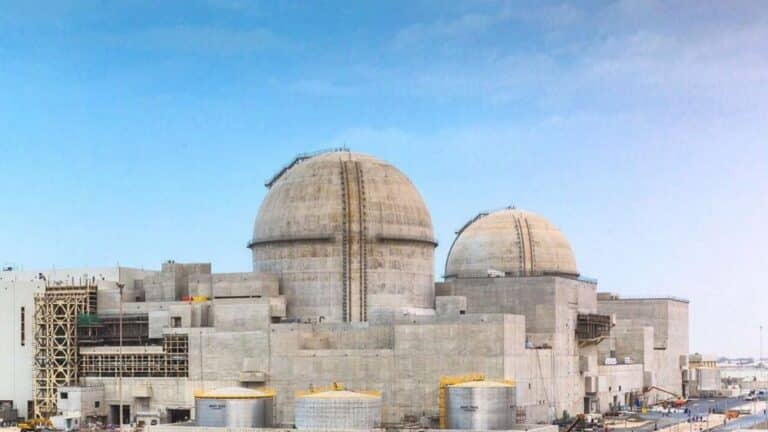
The US-Saudi Nuclear Cooperation Agreement Would Serve US Interests
The Trump administration has submitted to Congress a new nuclear energy cooperation agreement with Saudi Arabia.
Live Updates: Iran and the Conflict in the Middle East
The Center on Global Energy Policy is providing live updates on key developments related to the Iran crisis. Check back here for the latest.
Blog
by Anne-Sophie Corbeau, Erica Downs, Ira Joseph, Richard Nephew, Daniel Sternoff, Karen E. Young, Robin Mills & Neelesh Nerurkar • September 23, 2026
The US-Venezuela Oil Deal Might De-Risk Oil Company NABEP But Not Venezuela
The White House announced last week an oil deal for more than 65 billion barrels of oil reserves in Venezuela and a 35% equity stake in North American Blue Energy Partners (NABEP).
What a US-Saudi Arabia Nuclear Agreement Could Mean
The Trump administration and Saudi leadership have reportedly agreed to a nuclear agreement that could enable US nuclear technology transfers to Saudi Arabia.