View / Hormuz limbo is now global oil’s top risk
Lost supply and a projected demand rebound have placed the oil market in a fragile equilibrium.
Get the latest as our experts share their insights on global energy policy.
President Trump issued a proclamation on August 6 imposing tariffs on polysilicon and solar products.

Hear in-depth conversations with the world’s top energy and climate leaders from government, business, academia, and civil society.
Abundance and affordability have become buzzwords among policymakers, who often have sharply different interpretations of how to attain them. To some, an energy abundance agenda means fewer regulatory...

Find out more about our upcoming and past events.
Join industry leaders, innovators, employers, and emerging talent for an evening exploring the technologies, trends, and career opportunities shaping the future of climate tech.

Former US National Security Advisor; Kissinger Professor of the Practice of Statecraft and World Order, Harvard Kennedy School

Former Deputy National Security Advisor
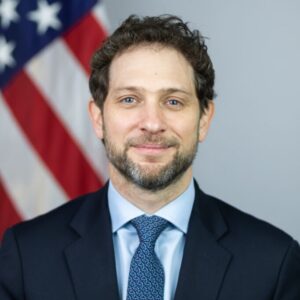
Jake Sullivan:
For me, the most likely case scenario is that the strait does reopen. The blockade does end. Iran gets access to this economic windfall. They start a nuclear negotiation and that nuclear negotiation just kind of goes on indefinitely.
Jon Finer:
It’s part of the theory for why we wanted to be an energy independent, at least for some people was so we could stop intervening in conflicts in the Middle East.
Jason Bordoff:
Right now, the US-Iran war is suspended under a fragile 60-day clock. A memorandum of understanding between the US and Iran is meant to halt attacks, begin lifting the US naval blockade and restoring commercial traffic through the Strait of Hormuz. But deep uncertainty remains over how energy will actually flow through the waterway and over the ultimate fate of Iran’s nuclear program. Despite all this, the situation remains highly volatile. Israel has stated it does not consider itself bound by the MOU and political pressure within the US could quickly shift Washington’s calculations if the reopening of the strait yields minimal strategic concessions on Iran’s ballistic missiles, nuclear enrichment, and regional proxy networks. So where are we? What happens next? How will global energy markets and regional security adjust if this temporary truce collapses? Who ultimately holds the leverage in this next phase of the crisis?
This is Columbia Energy Exchange, a weekly podcast from the Center on Global Energy Policy at Columbia University. I’m Jason Bordoff.
Today on this special edition of the show, I speak with two people who recently sat at the very center of US foreign policy, Jake Sullivan and Jon Finer. Jake served as national security advisor during the Biden administration where he was the chief architect of the 2022 National Security Strategy, coordinated the global response to Russia’s invasion of Ukraine and designed the “small yard high fence” framework for US-China technology competition. Last year, he joined the Harvard Kennedy School as the Kissinger professor of the practice of statecraft and world order. Jon served alongside him as deputy national security advisor, bringing decades of experience in high stakes diplomacy and crisis management and international law to the highest levels of government. Jon held a number of roles in the Obama administration, including chief of staff to Secretary of State, Jon Kerry. And he was a distinguished visiting fellow right here at the Center on Global Energy Policy.
Jon and Jake are also the hosts of The Long Game, an essential podcast for anyone trying to make sense of foreign policy and national security in our world today.
We talked about the immediate stakes of the Iran ceasefire and the realities of nuclear deterrence. We considered the ways that the global order is shifting and we looked at what the energy sector is learning from tectonic shifts in oil and gas supply. And we kicked off by chatting about some of the discussions they’ve been having on the long game, including the geopolitics of the World Cup. I hope you enjoy the conversation.
Jake Sullivan and Jon Finer, welcome to Columbia Energy Exchange. So great to have you both with us. Thanks for making the time.
Jake Sullivan (00:03:19):
Thanks for having us.
Jon Finer:
Good to be here, man.
Jason Bordoff (00:03:21):
I think the first time you have both been on Columbia Energy Exchange, maybe even … Well, you’ve been on individually. Jake is a speaker at our big summit and Jon, when you became a distinguished visiting fellow here, first time together. A podcast I should say we’ve been doing every week for more than 10 years and it seems like now they’ll just give anyone a podcast, even the two of you. How’s being a podcast host? Give me tips on how I should talk with both of you. What have you learned?
Jake Sullivan (00:03:50):
Well, we’re starting to learn again how to talk like normal human beings rather than government officials. That’s taken a little bit of an adjustment because of course we spent four years trying to color between the lines. Now we get to kind of say whatever’s on our mind. So it’s nice. It’s nice to have that kind of liberation.
Jon Finer (00:04:06):
And maybe least surprising, Jason, is that it takes two of us to do the work that you do all by yourself here. Go figure. Well,
Jason Bordoff (00:04:14):
We have two also because we trade off every other week. Bill Loveless and I just don’t do it together. Are you still super guarded and careful in what you say or are you loosening up a little bit now?
Jon Finer (00:04:25):
The stakes are low mercifully so. So yeah.
Jake Sullivan (00:04:29):
But it is a wiring thing. You got to do a little bit of rewiring. So it’s been a learning curve, but I would say now 30 odd episodes in. Yeah, we’re a lot looser.
Jason Bordoff (00:04:39):
And we should tell everyone listening. It’s called The Long Game and it’s about what’s happening in foreign policy and foreign affairs. The two of you given your take on things and then fantastic guests you bring on. So I’m just trying to put a plug in to make sure that people know what we are talking about. Anything else everyone listening should know to go check it out?
Jake Sullivan (00:04:57):
Yeah, wherever you get your podcasts, I think that’s what we’re supposed to say. The long game.
Jason Bordoff (00:05:02):
It does seem like you’re letting loose. I have to say your podcast made me a little concerned also about maybe the decision-making capability in the Biden administration because we just had 10 minutes explaining how Jake doesn’t know how to turn the shower on when you are traveling for work. That was like, it’s complicated. Do you want to explain why this is so hard?
Jake Sullivan (00:05:22):
Well, first, Jason, I’d be interested if in fact you can walk into any shower anywhere in the world and automatically master it. I feel like the silent majority is with me. Most of them might not be prepared to say so, but what I find going to hotels the world over is that whoever is in charge of the shower is diabolical and tries to design it in a way where it’s really difficult to understand how to operate it and no two showers are alike and you’re jet lagged and you’re tired and you’re stressed and you walk in, you’re like, “How am I going to make this work?” Now, I believe I am speaking for the masses when I make this comment, but you may be just one of the special humans who it instantly clicks right from the start. But it is true that I gave an extended
Jason Bordoff (00:06:13):
Syllabus. That’s my point. I’m just saying you talk about lots of stuff. We like
Jake Sullivan (00:06:17):
To cover things thoroughly on the long game, not skim the surface.
Jon Finer (00:06:20):
We didn’t debate it at least. We do a debate segment called Red Team Blue Team. We did not debate the shower issue maybe for a future episode.
Jason Bordoff (00:06:27):
I would like to hear that. And you also just had an episode on the World Cup. So your take so far on how this World Cup is going other than the US, do you have favorites?
Jon Finer (00:06:36):
So I think while we are recording this very podcast, England is preparing to start its first match of the World Cup. I am an undercover England fan. Jake ridicules me a bit for this. I’m also obviously a fan of the United States, but I’ll be watching England with great interest.
Jake Sullivan (00:06:53):
Been really interesting to see the underdogs. Cabo Verde against Spain, Egypt against Belgium. There’s been a number of matches.
Jon Finer (00:07:04):
GRC just now against Portugal.
Jake Sullivan (00:07:06):
Oh, I miss that. I miss that. Did they draw? Did they beat them?
Jon Finer (00:07:10):
They drew.
Jake Sullivan (00:07:10):
Wow.
Jon Finer (00:07:11):
Won one.
Jason Bordoff (00:07:11):
In the very last waning minutes, right?
Jake Sullivan (00:07:14):
There’ve been some great games so far. And honestly, for a lot of … I feel like there was a lot of drama coming into the World Cup, a lot of talk about whether there’d be the energy or the excitement. And once the game’s kicked off, you really see these fan bases, the crowds, the colors, the sounds. It’s really cool.
Jason Bordoff (00:07:34):
You just did a little discussion about what it tells us about global affairs and world politics. Any insights on that as former and national security officials?
Jon Finer (00:07:44):
I think the most interesting thing that I learned during the course of that conversation is that it turns out that you would think when countries play against their former colonial overlords having kind of thrown off the shackles of colonialism, they would be extra motivated to go out and beat them. And it turns out more often than not, the former colonial powers tend to beat their former colonies, which I found kind of disappointing but also a bit surprising.
Jake Sullivan (00:08:10):
Happened yesterday with France beating Senegal. Exactly. And of course, England is playing Ghana today, a former colony. So we’ll have to see how the Imperial Masters do there as well or the former Imperial Masters. It’s interesting. We had Franklin Foron who wrote a book called How Soccer Explains the World and he wrote it back in 2004, but he just did an update in time for this World Cup and he identified a couple things that he hadn’t recognized as trends back then. One of them is nation states buying soccer clubs, particularly the Gulf. And he painted a very funny picture of these hard scrabble Newcastle fans dressing up like they were Saudi princes to welcome the new Saudi Arabian ownership of that team. And so I thought really that was quite interesting. And the other thing he talked about was how just the nature of finance in football, these super complicated schemes to buy and sell players, treating players now like they’re on depreciation and amortization schedules and that has become a part of the modern game to the point where fans now are all like junior Goldman Sachs analysts in addition to talking about the actual players and the tactics.
(00:09:27):
But the most interesting thing I heard on that podcast was that Brazil under the military Junta in the 1970s actually designated Pelé a strategic national asset and export controlled him. It was basically like he cannot be exported. He must stay here and play in Brazil. And it took Henry Kissinger calling the Brazilian Junta to get him to transfer to the cosmos in New York so that he could come play in the United States. Anyway, all that was quite interesting.
Jason Bordoff (00:10:03):
It was. I thought I loved the episode. It was great. Okay. So we’re bantering rather than talking about the news of the day, which I’m sure everyone listening to the two of you is curious to know your take on, which is we have a deal to reopen the Strait of Hormuz. So let me just start with the high-level question of what you think of it relative to what you were expecting given where we were with the Strait being closed for several months and the attacks on Iran. Is this the outcome you thought most likely and what should people understand about it recognizing that the details are still trickling forth and it seems like a deal to try to figure out if there can be a deal, not some sort of final resolution. But let’s sort of start with a high level take and then get into a couple of the details.
(00:10:48):
I know, Jake, if you want to go first.
Jake Sullivan (00:10:49):
Sure. So on our podcast, we do a segment called Options Memo where we actually try to walk our listeners through how options actually get presented to the president. And we’ve been saying for weeks now that the president, having gotten into this misbegotten war, which we thought was a bad idea from the start because we did not think you could bomb or blockade Iran into submission or capitulation. And we thought that Iran had cards to play like it did with closing the Strait of Hormuz with all of the harms that have befallen the global economy and the American consumer as a result.
Jason Bordoff (00:11:25):
Sorry, I don’t want to interrupt. I want you to keep, but did you think when you say they had cards to play, it would be as easy to close the Strait of Hormuz as it seemed to be for the last three months?
Jake Sullivan (00:11:34):
It’s interesting. Historically, the war games on the Strait of Hormuz have really focused on the mines, but more recently as we have watched the evolution of drone technology and the capacity of states like Iran to build cheap, attributable, short-range missiles. And as we watched what happened with the Red Sea and the Houthis, I think Jon and my experience was with a relatively limited amount of military capacity, you can hold a tight waterway like that at risk and shippers are not going to take huge risks on their backs to go through less maybe they get hit by an explosive drone or a missile or something. And it’s not easy for the United States to wipe that out. We found that with the Houthis, the Trump administration found that with the Houthis, and now the Trump administration has learned that in spades with respect to Iran.
(00:12:27):
So we laid out for our listeners, look, the president’s basically being presented with three options. Escalate militarily, which probably would mean boots on the ground, terrible option. Just walk away, just say, “I’m done. Wash your hands, call it. ” Terrible option because no certainty that Iran would actually open the strait in that scenario or do a deal and frankly in the end, do a bad deal because that was the only deal available to the president once he had steered the United States into this corner by launching this war in the first place. So he did a bad deal. Now from my perspective, it’s better the war is over than continuing, but that should not take away from the fact that Iran has come out a big winner in this, and I think the United States has come out on the losing end.
Jason Bordoff (00:13:17):
I assume you share a good amount of that view, Jon.
Jon Finer (00:13:22):
I do. And you asked about expectations and kind of the war gaming that precedes the possibility of a conflict like this. The other thing I think that was not fully anticipated in large part because of what Jake mentioned in terms of how Iran closed the strait with drones fired from hundreds of miles away that the US couldn’t defend very well or effectively Iran for a period of time was actually able to continue exporting its own product through the Strait, even though the Strait was ostensibly closed to everybody else. I don’t think that is a scenario that was envisioned prior to this conflict and that is what required President Trump to actually have to blockade the blockade. So Iran closed the strait, nobody could get their product out. Iran was collecting a massive amount of revenue by exporting its product because it was being closed not by mine, so they didn’t have to navigate around extensive mining, but by drones and they’re not going to fire drones at their own ships.
(00:14:16):
And so that meant Trump had to then double down on the blockade, which put a tremendous strain on US military assets, put a sort of a time limit on how long this conflict could go on our naval presence in the Gulf and made those assets more vulnerable because they’re sitting out there targeted by Iran’s of various military capabilities. So look, the bottom line for me is you launch a bad war, meaning an unnecessary war, it’s more likely to go badly, which it did. And the ultimate resolution is also likely to be bad, which it was. And that’s kind of where we are now.
Jason Bordoff (00:14:49):
Well, talk about where we are now in terms of where we head. This is obviously an energy podcast. We talk a lot about foreign policy and national security issues. From an energy standpoint, the question is how much energy flows can restart through the strait. There’s a technical answer to that question with shut in production and damage to some facilities. I think the answer on that score alone, the answer is not overnight, but it can be done in weeks to a month or two going on a couple of months maybe beyond that. But the big question is the uncertainty. This is a deal for 60 days. How does Israel feel about this deal and how does Netanyahu respond whether it can hold and people see progress? And as long as you have no sense of whether this is going to hold, it’s hard for tankers to shipping companies and energy companies to send tankers into the strait to put people at risk to spend a lot of money to bring production online if things might just close again.
(00:15:52):
How should people think about the uncertainty with where things are right now?
Jon Finer (00:15:56):
So I think there are a number of ways this could still go sideways. And by go sideways, I don’t mean a return to full scale conflict. It’s pretty clear at this point, President Trump does not have much appetite for that. And I don’t think the Iranians are likely to initiate a conflict unless they are attacked again in the way they were. But you could imagine the talks unraveling and that basically the status quo as of today being kind of the high watermark of any sort of agreement, no further developments, no further constraints on Iran’s nuclear program. And part of the reason why that could happen is what you mentioned Israel, which does not like this deal has indicated on background they do not feel that they are bound by this deal, even though the text of the deal says this ends the conflict in all of its capacities, all of its geographies, including Lebanon, where Israel’s been fighting Hezbollah.
(00:16:43):
But to sort of underscore exactly this point that they are not bound by the deal, Israel in the last 24, 48 hours has continued to attack Hezbollah and then Trump calls Prime Minister Netanyahu and says, knock it off. Iran threatens to attack Israel. And for now, this has all been kept at a low boil instead of boiling over. But if Israel keeps doing this, the odds that things unravel are high. The other way this could unravel or another way this could unravel is President Trump is very sensitive to criticism and this deal is going to be torn apart by the commentary at, including by a number of people who are natural political allies of the president, Republicans in the Congress who are going to look at what we got essentially reopening the strait that had not been closed before the war and with a lot of uncertainty about whether Iran will still be monetizing traffic through the Strait In exchange for very little that Iran has given up.
(00:17:35):
No meaningful constraints on the nuclear program yet. We can negotiate about those over 60 days or however long it takes, but they’ve given up nothing yet. All they’ve said, and President Trump keeps touting this, is that they are not going to pursue a nuclear weapon, which as you well know, has been their public position for almost 20 years and which our intelligence community and Israels believe they have not been pursuing since the early 2000s. So the puts and the takes here are not great. And so there is some risk that when the president sees how much criticism he’s actually getting for this deal, he sort of veers in the direction of trying to adjust or ask for more and the Iranians are not going to do that. And so that’s another way that this could come apart. And then you just worry when there are all these military assets in kind of close proximity to each other in the Gulf, US military is still heavily deployed there, has not withdrawn, that something small, some little skirmish could happen that escalates and kind of flares up out of control and things could unravel that way.
(00:18:35):
But for now, I think this is probably going to remain on track, but very unlikely to reach the bigger, broader deal that President Trump is hoping is the result of this and puts real constraints on Iran’s nuclear program.
Jason Bordoff (00:18:48):
Jake, what do you think is the best case scenario going forward? And to Jon’s point, if things go quite badly, maybe even to a larger conflict than we had before, how does this unravel?
Jake Sullivan (00:18:57):
It’s interesting. I would’ve described this as a very fragile situation because of all of the potential ways it could unravel as Jon just laid out. But one thing that really has struck me reading the text today, which the Trump administration has finally put out is Iran now has huge incentives to have this deal stick and to actually get the strait open because they’re being given, as I read the deal, access to all of their frozen reserves, which is tens of billions of dollars, waiver to sell I think essentially an uncapped amount of oil, basically however much they can produce and put out immediately. And they’re being given those things without having to make any further concessions other than open the strait and go sit at the table. They don’t actually have to make any nuclear concessions. So I think the Iranians will want this to work.
(00:19:49):
And I think from President Trump’s perspective, he walked up to the line and backed off a few times because of that potential pressure coming from his hawkish right basically. But now he’s decided to jump in. And so I think it is more likely than not that he will just say this is the greatest deal ever and kind of try to make it stick. And so for me, the most likely case scenario is that the Strait does reopen the blockade does end Iran gets access to this economic windfall. They start a nuclear negotiation and that nuclear negotiation just kind of goes on indefinitely. They’re talking about 60 days, Jason, to do a nuclear deal from the time we had an interim framework to the time of the actual JCPOA was a year and a half and that was after years of a lot of groundwork. I just find it implausible that they’re going to get to any kind of deal within 60 days.
(00:20:50):
Now what the terms of the MOU say is that that period is renewable, they can extend it by mutual consent. So best case scenario for me is maybe they come to some understanding on some aspect, the stockpile or something here over the course of the next few months. But more likely, as Jon said, you’re not going to get real further agreement on the nuclear file and we’re going to basically just be in a worse status quo than we were before the war where Iran has greater control over the strait, greater access to resources and few, if any, real limitations on its nuclear program. And I think that’s quite challenging. But I do subscribe to all of the potential risk factors Jon lays out, especially the Israel risk factor. That being said, when I think about the incentives of the two main protagonists, Donald Trump and Iran, it seems to me that it’s more likely than not that the deal will stick.
Jason Bordoff (00:21:45):
But I presume implicit in what you were just saying, and for people who were sympathetic to the JCPOA, which you both played a very active role in bringing about the idea for the last three months that people said, the way this is going to end is a worse version of the JCPOA. It sounds like you’re describing a situation where Iran is better off now than it was before this all started, but speak to that, but also like how much damage has been done physically from a military assault and what impact that has on their nuclear capability, if any.
Jake Sullivan (00:22:18):
So the real damage to their nuclear program happened in the 12-day war last year, not this year. So if you go back to February 27th, the day before President Trump and Prime Minister Netanyahu launched this war, you had essentially the three major nuclear facilities in Iran, Natanz, Fordow and Isfahan, pretty well destroyed, meaning there was not active enrichment capability, meaning that the stockpile was essentially underground and hard for Iran to be able to access where their conversion capability had been destroyed or at least severely disrupted. So there was a big setback to Iran’s nuclear program last year. They didn’t really add to that this year. The stockpile’s still there Iran still has access to centrifuges. They still have access to scientific know- how. So they have all the pieces to reconstitute their program and not about this war that’s unfolded over these last hundred plus days has really set them back in a big way.
(00:23:29):
Now they’ve taken military hits. They’ve had aspects of their military infrastructure battered over the course of this war, but they’ve built their military to be resilient to exactly that kind of attack and they have sustained sufficient capacity to continue to close the Strait of Hormuz and they’ll be able to rebuild just as they rebuilt after the 12-day war last year. So I think when you net this out, Iran having a tighter grip on the strait, Iran having access to money it didn’t have access to before, Iran having access to the international oil market for its exports. And if you then just take the context of the nuclear negotiation, the way the MOU describes it is that moves Iran makes in terms of limits on its nuclear program will be met not with just sanctions relief for nuclear related sanctions, it’s everything. It’s all sanctions. Things go way beyond what the JCPOA offered and that’s the opening ante of the United States going into these negotiations.
(00:24:35):
So I think it sets up quite favorably for Iran. Now, I think the best argument you can make is there is an incentive now for Iran because of what’s on the table in terms of sanctions, relief, a carrot for them actually to make some compromises or concessions on the nuclear program. But my guess is that that’ll be a hotly contested debate inside the Iranian system and they’ll probably think, “Hey, between the reserves and the oil sales, do we really need to do any of the rest of this and do we need to make any nuclear concessions or can we just kind of string this out indefinitely because we know for a fact this will be the Iranian mindset. President Trump, as Jon said, doesn’t want to go back to war.”
Jason Bordoff (00:25:16):
Jon, can you talk a little bit about one of the things you said, I want to come to a couple of them in terms of the backlash from Republicans, from members of Congress, how will Congress respond to this? And also are all those sanction waivers Jake just said would benefit Iran possible or doesn’t Congress have to say okay to that?
Jon Finer (00:25:34):
I think the administration can give quite a bit of sanctions relief without having to go back to Congress. I don’t think that’s going to be a meaningful barrier, by the way, unless Congress is so appalled by this deal that it steps in and legislates additional sanctions on Iran, which I don’t think is likely in the near term, just given in particular Republicans in Congress’s unwillingness to stand up to President Trump. But over time, I can’t rule that out because I don’t think anybody looking at this deal believes that on the merits it’s a good thing for the United States. The other thing, by the way, that I think is really important to note because there continues to be this comparison to the JCPOA, this is not really a nuclear deal really at all at this point. This is a payment to Iran to undo the stranglehold that it has put on the global economy and the Strait of Hormuz as a result of President Trump’s war, any significant payment at that.
(00:26:26):
The nuclear stuff has all essentially been punted
Jason Bordoff (00:26:29):
To some- Can you just put some perspective on that because the-
Jon Finer (00:26:32):
Sure. So there are tens of billions of dollars. There are tens of billions of dollars in frozen assets, assets that US sanctions have frozen that are Iranian assets that exist in bank accounts in various countries around the world. And what the agreement says is that those assets will be some, I think the word is fully available to Iran in the near term. So that is tens of billions of dollars in all likelihood. Then there is the creation of a fund that appears to likely to be capitalized by the Gulf countries that is valued at $300 billion for Iran to draw on for the reconstruction of its country. You’ll remember, Jason, because you were at least part of the early days of this period that the Obama administration was raked over the coals over a $400 million payment that Iran got, another alleged $1.7 billion in benefit.
(00:27:23):
We’re talking about now tens of billions of dollars in one case frozen assets, $300 billion in reconstruction funds and they have not yet made a single nuclear concession to get access to that money. So the reason this is relevant to your Congress question is if this were a nuclear deal, if Iran agreed to significant steps to reduce its nuclear program other than just saying, “We’re going to pause on our nuclear program,” which by the way, is not giving up anything because they don’t really have the ability to do more, but if they agreed to more, the Trump administration would have to go to Congress and have a vote on this deal. There is actually legislation that requires Congress to be able to weigh in on nuclear deals, but this deal is so weak in its nuclear capacity I believe the administration will probably just say this does not need to be submitted to Congress for formal review, and they may well be right about that.
Jason Bordoff (00:28:13):
And your point that a lot of the criticism of the deal you guys were so instrumental in originally were that it didn’t address all of these other non-nuclear issues like ballistic missiles and proxy- Of
Jon Finer (00:28:23):
Course. No missiles, no terrorist proxies, none of that.
Jason Bordoff (00:28:27):
None of that is going on here.
Jake Sullivan (00:28:30):
By the way, if I read the deal correctly, there is an interesting clause towards the end that basically says the only things that will be discussed at the table for those 60 days and then however much longer are the things contained on the piece of paper, the MOU. And that is essentially explicitly saying not proxies, not missiles, not some of these other concerns. And Jason, you’re absolutely right. This was a core part of the critique of the JCPOA that it didn’t cover those things. Those are being completely excluded in a quite explicit way in the context of this agreement.
Jon Finer (00:29:08):
The president actually got asked about the missile question, which I thought was quite interesting because the missiles have been kind of the core of the critique, maybe even more than terrorist proxies and especially more recently as Iran has attacked Israel multiple times and then the US military during the course of this war with its missile program, President Trump was asked, “Why didn’t you get them to put constraints on their missile program?” And he said something like, “The people that ask this question, and there’s some of them inside my government, they’re not very smart because obviously Iran’s not going to give up its missiles. And how could I ask them to give up their missiles? I’m not going to ask Saudi Arabia to give up its missiles. I’m not going to ask other countries to give up their missiles.” So he just sort of batted this entire concern away, which I found a bit ironic just given how central it was to this view that somehow the JCPOA should have been much better than it was.
Jason Bordoff (00:29:56):
Yeah, I was struck by that too. What he said was they have to have some because other people got to have some, what am I going to do? I’m going to let Saudi Arabia have missiles, but they can’t have them too, which I think was
(00:30:08):
Not consistent with some of the early criticism. And also in nuclear, they have to have the ability to develop peaceful nuclear energy capability as others in the region are doing. I think he made a comment similar to that as well. Jon, can you comment for a minute on what Jake said about Iran being in maybe a better position, revenue finances as part of that, but the other is like control of the strait. Do you have any sense? I know this is all highly uncertain at this point. Are we going back to the Strait of Hormuz the way it was before? I presume we’re not talking about a tolling structure, partly because there’s all this other money that’s coming from elsewhere. That’s kind of the compensation maybe Iran was looking for. We’ve also heard talk of administrative fees and environmental damage fees and all sorts of fees that they’re going to put on things.
(00:30:53):
Do you have any sense of where we’re headed?
Jon Finer (00:30:55):
So I think there’s at least three ways in which Iran is better off now than they were before this war. One is while their economy has been very badly damaged by this conflict, was not in good shape beforehand, they now have the potential to really start to revitalize their economic activity. Yes, because some of the sanctions relief, but also by now treating the strait as essentially an economic asset from which they can derive returns. And again, they may not call them tolls, they may call them something else, this fee or that fee, this deal or that deal with shipping companies and with countries, but they are going to make arrangements to treat that waterway essentially as something from which they can generate additional revenues for the foreseeable future. I think we can all expect that. Second, Iran went into this conflict quite isolated globally. Their diplomatic relations were very strained other than with a few other countries that are aligned against the West and against the United States.
(00:31:55):
Russia and Iran have had this partnership during the course of the Ukraine war where Iran actually was supplying Russia with significant amounts of weaponry. Russia was supplying Iran with more advanced technology. That partnership will probably continue. But I think you can expect in the aftermath of this conflict that Iran and the countries in its own region, Iran and other countries that depend on the Strait of Hormuz for their energy products are going to start to have real meaningful diplomatic conversations that are going to bring Iran in from the cold. And I think that is also not a good thing from the perspective of trying to control Iran’s behavior. So that’s two meaningful ways in which Iran is going to benefit from this conflict. And the third is they have acquired the ability to do this again. They suspected they might be able to close the Strait of Hormuz and put pressure on the United States.
(00:32:48):
They didn’t exactly know how they might do it. They now have done a real-world test case of this, know exactly how to do it. And anytime they feel hard done by the Trump administration, some future American administration, some other country, they now know they have this card that they can play going forward. So those are just three massive strategic benefits for Iran coming out of this.
Jason Bordoff (00:33:09):
I want to like with a key takeaway wrapping this back to energy, because that’s what we have to do on this podcast at least. Because I think what I’m hearing you all both say is there’s an interest on both sides to keep this going and not have it unravel. It’s actually not a bad deal for Iran, quite the opposite. They may get sanctions relief for oil relative to where they were before. And unless Netanyahu messes this whole thing up and you can tell me if that is going to happen, that is kind of bearish for price, bullish for oil supply. Supply can come back without … To the point I made before, like how much certainty do you have? Nothing’s 100% certain, but listening to both of you would make me think supplies are going to restart reasonably quickly subject to technical limits and all of that sort of stuff.
(00:33:54):
Is that right? Or from an energy flow standpoint, is that over optimistic?
Jake Sullivan (00:33:59):
So Jon and I might be in slightly different places on this, so I’ll go first and then Jon should go. I think that the likelihood that Israel can fully disrupt this, it’s not zero, but it’s not high in part because I think Iran will tolerate some strikes at the margins because of all the benefits they’re getting because they don’t want to collapse the deal. So for me, the biggest risk factor is the other one that Jon identified before, which is President Trump decides he’s soured on the deal for some reason, but I don’t think that’s particularly likely either unless Iran really overplays its hand. And the way in which I would se Iran really overplaying its hand is either being completely a recalcitrant at the table on the nuclear stuff as opposed to being kind of smart about dragging things along. And we both know Abas Iraqi, the Iranian foreign minister, and he’s pretty sophisticated about how to manage a dragged out nuclear negotiation.
(00:34:53):
Or the other way it overplays its hand is if it goes too frontally with something that just may not be called a toll, but looks like a toll. I think they’re going to have to be somewhat subtle on these fees so as not to stick it in Trump’s face and we’ll see what happens there. But where I net out at the end of the day is yes, Iran will collect revenue off of ships going through the strait, Iran will sell more barrels of oil on the international market and the US and Iran together will hold this thing in place so that shipping does resume through the Strait of Hormuz over the coming weeks. And I’ll leave to you, Jason, more of the practical operational issues associated with just how quickly more oil comes back online or ships go through. But I think that the overall zeitgeist will be, this is working, it’s happening with this big tail risk that it all falls apart, but really that’s more of a tail risk than a substantial likelihood.
(00:35:52):
That’s where I am. Jon, you may be a little bit more bearish than me, but I feel like that’s the state of play.
Jon Finer (00:36:02):
I actually think that’s probably right. What I think about also though is what I guess you could call some sort of risk premium on supply through the Strait. So some combination of the actual premium that Iran is going to charge, which is a function of price and an added input into price charged through these negotiations for additional fees, plus whatever caution is now built into the system by shippers because they’re not totally 100% sure that things have gone back to normal, plus whatever technical constraints exist on production, Jason, that you and your team will be better placed to assess in terms of how the magnitude of that. You add all that together and I think what that amounts to is probably slightly reduced volumes, maybe not massive reduction in volumes, but slight reduction in volumes and a slight if not modest increase in price compared to the status quo anti before the war for the foreseeable future.
(00:37:00):
That is, I guess, how I’m thinking about it.
Jason Bordoff (00:37:02):
Yeah, there’s definitely some risk premium, but a lot of supply in a world that was already oversupplied before this all started. And of course we saw the UAE pull out of OPEC during this and indicate a desire to ramp our production on its end too. The Gulf States for years have complained that we don’t listen to them. We do things that affect them without really considering their interests. My sense is this conflict is forcing some structural shift toward a more defensive posture in the Gulf and we’re seeing all, from an energy standpoint, hardening infrastructure, investing billions of dollars in bypass routes around the strait eroding, as I said, OPEC cohesion. I’m just kind of curious, maybe Jake, you want to start how this step back, how this affects the relationship between the United States and the Gulf. How is it different going forward the relationship between Gulf countries?
(00:37:51):
How is it different going forward?
Jake Sullivan (00:37:53):
Well, first in terms of the relationship between the Gulf and the United States, I think you will see Gulf countries kind of asking about the basic bargain of American presence in their countries American basing in their countries and the extent to which that is actually delivering them the security that they want or it’s creating more exposure for them. I don’t think that leads to some near-term radical shift, but I do think it will raise a question about the future of American posture in the Gulf and in the region. I also believe, by the way, Jason, that that will be an increasingly relevant conversation here in the United States. On the back end of this, you will hear more voices saying, “What are we doing with all of these bases and assets in the Middle East? Why are we doing this? Isn’t this just dragging us into more and more wars?” That’s a conversation that’s taken place in some quarters.
(00:38:42):
I think it is going to go more mainstream in the coming months. Then among the Gulf countries, Jon and I talked on our podcast a few times about this dynamic particularly between the UAE and Saudi Arabia and the tension between them on multiple different dimensions. I think that’s going to reemerge as a major dynamic in the months and years ahead. And I think we should read the UAE pulling out of OPEC on its face as being about the UAE wanting to sell as much oil as it can while it makes a transition to what it seizes as a clean energy future, but it’s also a statement about not wanting to be subject to Saudi leadership in key international institutions. And for its part, Saudi is putting a lot of pressure on a lot of different players to prioritize their relationship with Riyadh over their relationship with Abu Dhabi.
(00:39:32):
So I think we are going to start seeing come back into focus that particular relationship as a fulcrum around which a lot of dynamics, including dynamics that are relevant to the private sector that is investing in these countries will have to pay attention to.
Jon Finer (00:39:49):
No, I think that’s right. You are already seeing relatively mainstream voices in the United States saying that we need to think very hard about what we are getting from this physical presence, physical military presence in the Gulf, especially because it’s being increasingly revealed. Our bases suffered significant damage that was downplayed by the administration during the course of this conflict. So not only were we not able to very effectively defend our allies in the region, we did an okay job but not perfect and a lot of infrastructure was badly damaged and some people were killed. We also were not able to perfectly defend our own facilities. And so in some ways, maybe their presence is actually more of a vulnerability or at least as much of a vulnerability as it is a benefit similarly for these countries. The deal was you get military presence here, so if we ever get into a sticky situation with Iran, you’ve got our back.
(00:40:44):
Well, we now know how that plays out in practice, just looks a lot less appealing, I think, to these countries than they might’ve thought it would in theory.
Jake Sullivan (00:40:53):
One thing, Jason, that I’d be interested in your take on is something you mentioned in your question, which is building alternative infrastructure basically to bypass the Strait of Hormuz. When you have an ongoing conflict, the incentive for that is massive. And we saw immediate moves to try to do that in certain places. Once the conflict’s over, maybe the pressure comes off a bit. I’m curious whether you think that there will be enough momentum behind actually doing that infrastructure build out, that things will look different two, three years from now, or whether people will just kind of settle back into their old patterns.
Jason Bordoff (00:41:32):
Yeah. I think, and it’s not just pipelines in the Gulf, but it’s just energy security, something I’ve thought about for a long time talking with both of you as well is back center stage, front of mind, even before this conflict, but especially after this conflict in a way we haven’t seen for a long time in an era of fragmenting geopolitics, Russia’s invasion of Ukraine and the energy crisis in 2022 and now this one. And it is going to make people and governments think about energy security in a way maybe they didn’t before. The question, energy security comes from, in many cases, insurance policies. Winston Churchill famously said security and oil lies and variety and variety alone. The fact that the most important piece of energy infrastructure on the planet in the last three months has been the Saudi East-West pipeline. That was a pipeline that set mostly unused for a long time and it was an insurance policy that they were willing to pay for to be a reliable supplier.
(00:42:30):
I think the Saudis will do that. I think the Emiratis will do that. Some countries have more resources financially than others. For some, it’s physically easier. It’s harder for Iraq to build a pipeline to the Mediterranean than it is for some of those countries to bypass the strait. And I think your question goes beyond just physical infrastructure to this idea that countries are going to want to shift away from oil, electrify their economies, comes to some of the stuff you wrote about in foreign affairs recently with, “Do you want to be dependent on clean energy supply chains that China dominates?” There’s a lot of things you can do. Do we want to rebuild our strategic petroleum reserve? There’s a lot of things you can do for energy security, but it’s just how much of an insurance premium society is willing to pay. And I think lower income, Southeast Asian countries that were hit the worst by this can’t necessarily afford those kind of premia.
(00:43:18):
Other countries will talk about it. And we saw some of it after 2022 where Europe really did move faster on renewables and efficiency, but also LNG. And there’s a limit when fiscal positions are strained and we see even advanced economies with levels of debt we haven’t seen since World War I. Is society really going to be willing to pay for that? I’m less certain in other parts of the world. I think our memories are short with energy crises and we tend to move on and forget about them too quickly. Europe, maybe not. Obviously they’ve had two significant shocks, this one not as bad as the last, but pretty significant. I think again, I’ve interviewed both of you separately before and I think one of the questions at various points I’ve asked about has been how you think about the dramatic change in the US energy position from a huge importer to the largest producer of oil and gas in the world and a huge exporter.
(00:44:12):
And does it change the way foreign policy officials think and national security officials think? And one answer to that is, well, it’s still an connected oil market. If you do something in the Strait of Homuz, prices go up in the US just the same. But I think we’re learning that there really is resilience and not immunity, but greater resilience that comes from the change position. The price of natural gas in the US hasn’t moved at all and it’s gone to $20 per million BTU while it’s three here in Asia during this conflict. There’s a broader question about how it is possible and we’ll be doing writing and work, as will many others after this. If I’d asked both of you or asked energy experts maybe more importantly in January, what happens if we close the trait of Hormuz for three months? I don’t think people would have predicted oil prices, frankly, as low as they’ve been for the last three months.
(00:45:05):
Does that change position of the US? Is it a bigger deal than maybe some appreciated that it frees up the hand of US foreign policy to undertake economic statecraft interventions around the world without worrying so much about energy implications the way we did in the first Obama term when I was there and for decades before that?
Jon Finer (00:45:27):
To me, the best evidence that what you’re saying is true is that unlike almost every other war in which the United States has entered, this one has harmed much of the rest of the world more economically speaking than it’s harmed us. We have suffered economic harm from this conflict. I mean, there have been gas price increases, there have been significant diesel price increases, there have been other commodities. This is a contributing factor to the Trump administration’s failure to get its arms around the affordability agenda. But when you compare what the United States has endured to the severe shocks that are taking place in parts of Asia, food shortages and fertilizer shortages in parts of Africa, the price spikes that the Europeans are facing that’s causing some voices in Europe to say, “Geez, do we need to go back and look at Russian gas again?” Which obviously we strongly hope they don’t.
(00:46:21):
We are to some extent insulated from this and it’s part of the theory for why we wanted to be an energy independent, at least for some people was so we could stop intervening in conflicts in the Middle East That obviously was not the case for the Trump administration’s decision making during this conflict. And one of the things I worry about a bit is because that sort of harm was not felt as much by the United States, even though we took the decision to launch this extremely reckless war, this administration, future administrations may be less chastened about doing this sort of thing again. That’s just on the military side. Your question, I guess, was more about economic statecraft. I do think this gives us additional optionality and maybe additional resiliency in a time of competing economic coercive tools. China using its tools against us, us using our tools against them.
(00:47:19):
But I worry a bit more on the military side that if we can wage conflicts in the Middle East without doing much harm to our own economy, and you have an administration that doesn’t really care that much about the rest of the world, which we currently do have in office, it won’t be the restraining factor that I think some people who wanted energy independence believed it might be.
Jason Bordoff (00:47:37):
Jake, do you think the shale revolution changes US foreign policy in a significant way?
Jake Sullivan (00:47:41):
Well, first, I think it has radically changed the strategic picture when it comes to gas, both because of the advantage it gives us in terms of our manufacturing base and the resilience it builds in in the face of global shocks. And we’ve seen that play out here, but also because we were a major LNG supplier to Europe at the height of the energy crisis that was brought on by Putin’s invasion of Ukraine and that was important for us to do for our allies, but it was also a form of statecraft that strengthened America’s hand. It gave us greater capacity to shape the coalition that was supporting Ukraine as we went forward. So on gas, I think 100%. Oil for me is interesting because if I think back not even as far as the Obama administration, just back to 2022 in the opening weeks following Russia’s invasion of Ukraine, oil prices really spiked and the price at the pump in the United States went over $5 a gallon by that summer, by the summer of 22 and we were really feeling it.
(00:48:47):
That did not feel like we were insulated in a major way from that disruption. But you asked a great question, which I would love to hear your answer to. Why is it that on the math, an even more significant disruption of barrels of oil going onto the market day by day didn’t cause a similar type of shock. Some part of that has to be answered in resilience and not just what we’re producing but in general that the entire system is a bit more resilient than it was even just four years ago, but some part of it to me is a little inexplicable and I can’t entirely put my arms around it. So for me, the jury’s out a bit on the oil piece and the extent to which we have the same advantage there despite being such a significant producer that we have on the gas piece and that’s because of the different nature of the two markets.
(00:49:44):
So that’s how I’m looking at the picture. But do you have an explanation, Jason, for why so many energy market experts predicted such a different outcome than the one we actually saw unfold over the course of the last few months?
Jason Bordoff (00:49:57):
I mean, I think everyone now is looking at the factors. Some were maybe more anticipated than others. So you can go through loss of 20 million barrels a day and then you move five million roughly. And the numbers are very ballpark here by other pipeline routes. We saw some demand loss, demand destruction either from high price or just the physical inability to secure supplies. We saw a sharp increase in US exports. We obviously drew inventories heavily around the world and we were going into this situation with a two to three million barrel a day over supply situation. So we should remember that was part of it as well, collective release of two to three million barrels of strategic stocks. The Trump administration’s been releasing SPR supplies at a per day flow rate, frankly, faster than I thought the US could these days. And we saw some modest increases in production from a few other countries like Oman, Brazil, a little bit elsewhere, maybe half a million altogether.
(00:50:55):
And one of the biggest, at least for me, I’ll say I’ll admit surprises was the sharp reduction in Chinese crude oil imports and China probably … I think it’s yet to be understood exactly how that happened. There was some reduction in demand. We know refinery runs went down. Part of that was to reduce exports, which still wouldn’t help the global balances then presumably drawing down their own stocks, commercial or strategic, maybe below ground so you’re not seeing it as much and not filling. They had been buying a lot of oil before to fill their strategic stocks, which presumably they weren’t doing. You got to be amazed at how, not amazed, but impressed or reminded markets work. And when market signals are there and we saw this sharp blowout in the physical price of products like jet fuel and things, refineries adjusted. Refineries move quickly to maximize profits and to shift the product slate that they were producing.
(00:51:56):
So it is like a pretty resilient global system. And if there are these new flexibility levers, do we think about a swing source of demand in China the way we think about swing sources of supply in spare capacity and OPEC? Is that a thing that maybe was not fully appreciated? There might be more resilience in the ability of the global system to sustain shocks than people understood before. But I think that’s the kind of thing we’re definitely going to be doing analysis on moving forward.
Jake Sullivan (00:52:26):
Well, it raises a real question for me about taking three, four, five million barrels of Russian oil off the market and really landing a punch on Putin, an economic punch on Putin, whether actually that wouldn’t have the kind of impact that we anticipated it would, which created a degree of reticence to really go hard at oil. We did the price cap instead to keep supply online, but is a lesson from this that actually for an economy that’s powered by oil exports like Russia is that they are now more vulnerable to having their supply cutoff because it can be made up for through give or resilience in the system in other ways. I think that’s something worth taking a look at.
Jason Bordoff (00:53:13):
Yeah. And how that message is received on the consumer and importer side too, because of course, as soon as this happened, as there was in 2022, there were a lot of people saying, “This is a reminder of why it’s so important to electrify your economy and get off of oil and gas if you were particularly a large importer like Europe.” I think there’s a lot of truth to that, but it’s also easy to see people saying, “Wait a minute, we just had the largest supply disruption in history and it wasn’t nearly as bad as people thought. Maybe the system is not as risky as people think. You can kind of take multiple lessons from this. Can you say a word I should note for the listener that I, because we’re almost out of time, I’m not going to ask you, but I’m going to note some people listening to you talk about the role US LNG played will wonder why the administration also stopped approvals of new permits.
(00:54:05):
And I’m not going to ask you to answer that now because you’ve answered it before so people can refer you to your prior comment.
Jake Sullivan (00:54:10):
Yes.
Jon Finer (00:54:11):
We’ll submit a statement later for the record you can include in the show notes.
Jake Sullivan (00:54:15):
Yeah. Well, yeah, statement for the record.
Jason Bordoff (00:54:18):
I suspect the answer was something about flows today versus years in the future, but I think what we had you at our summit, I asked you that so people can, if they’re curious about a potential inconsistency there, go back and listen to that. This idea that what we were just talking about, it is still a risky global oil and gas market, geopolitical risk in a world of fragmentation and conflict and collapsing world order, people may be on the rise. I wrote just in the days after this started, China could in fact win from this in part because it validates an energy security strategy that they have taken to electrify more of their economy, get that electricity from domestic sources. And for other countries who want to emulate that, that means buying a lot of stuff from China, solar panels and batteries and critical minerals and EVs.
(00:55:04):
And I just wanted you in our remaining minutes, Jake, and then Jon, you should comment on the broad point, because it’s when you’ve thought about a lot too, to tell people about the piece you wrote in foreign affairs and help people understand is that race just unwinnable now? Is that ground that is one should seed to China? If China’s going to make clean energy cheap for all of us, why shouldn’t we just say thank you?
Jake Sullivan (00:55:26):
Well, first, we have to look at this with clear eyes and right now China has a massive lead and it has a massive lead because of scale. And what it’s done very effectively is scaled the manufacturing of these technologies to the point where it’s not just producing efficiently, but it’s actually now innovating because it’s getting returns and process engineering and know- how and learning by doing that we’re not getting. So it’s ahead of us in not just the production, but the actual innovation of some of these key clean energy technologies and we need to recognize that. But I actually, in my foreign affairs piece, which is about how the United States can still prevail in this technology competition with China, directly take on this question, why not just be a taker of Chinese technology, let them essentially be the foundry for the world for clean energy and decarbonization?
(00:56:18):
And I have three answers to that. The first is I don’t want to look the American people in the eye and say, you have no place in this. You’re just going to be a consumer. You’re not going to be part of the solution. There’s not going to be this industry here that will continue to innovate, continue to deliver good paying jobs and so forth. No, we have to be a part of it. Second point that I make is we’re only partway through the clean energy revolution. It’s not, yes, China has a lead, but we have to look out over the course of years and decades. It’s not like the game is just over and we should throw up our hands and walk away. We got to play all the innings and we got to be committed to a strategy to do that. And then the third point I make is we do not want to trade one form of energy dependence for another.
(00:57:02):
To go from being dependent on authoritarian regimes and Middle Eastern regimes for oil to being dependent on China for electricity or clean energy inputs, that’s not tolerable either. So we need resilience and diversification. Or I had not heard this before, what Winston Churchill says, we need variety. We need variety, and that variety should come from the West. By the way, one thing I didn’t say in the piece, but what I believe deeply is a fourth reason, which is this electric tech stack is not just relevant to producing clean energy in the future or to producing industrial capabilities like cars or drones or robots. It’s also going to be essential to the future of warfare. And we cannot have, I think, a resilient and strong defense industrial base if essentially the entire electric tech stack is a wholly owned enterprise of China and the People’s Liberation Army.
(00:57:58):
So for that reason too, I think we need to get very much in the game on this. We’re
Jason Bordoff (00:58:02):
Going to need a whole separate hour at least. I’m regretting talking about showers and soccer now jumping into the substance. But Jon, if you could react to that and in particular, I mean, there is a difference, I think, between a solar panel and heavy rare earths for magnets and maybe with sensitive military applications, like we don’t want to lump them all together. We’re not buying electricity from China, we’re buying products. How do you think about the energy security risks?
Jon Finer (00:58:25):
Well, and there’s also, there’s a big difference between that and buying on an ongoing basis, liquid fuels that have to be continually replenished in a way that the hardware of solar panels doesn’t. All that is true, but first of all, I agree with everything Jake said. One thing I will say though is I just came back from Germany last week. If there is any population that is facing this issue kind of squarely in a terrifying way, it’s less the United States, which does have some optionality, does have some abundance in terms of energy resources at our disposal, it’s Europe, which has more or less nothing going for it when it comes to natural resources for energy. There’s some gas and oil in the North Sea has shifted among a series of just highly unreliable and unhealthy dependencies when it comes to energy from Russian gas, which Jake talked about earlier to obviously the Middle East, which has been shown to be highly volatile and not 100% reliable to the United States, which they consider now to be an unhealthy and unreliable partner given President Trump’s continual tariff threats, trade war, and even physical threats to invade sovereign European territory.
(00:59:41):
And so they look around the world and say, “We don’t want this sort of dependency on autocratic China that Jake just described, but tell us where we are supposed to go.” And unlike the Trump administration, which is not particularly from a policy perspective, interested in certainly not wedded to renewables or clean energy as an objective of The nuclear, which they have a lot of interest in, Europeans are committed to that and do want that. And so it is going to be very difficult, I think, for them to draw down their dependency, de-risk this dependency that they have built on China, even though they are suffering a different harm, which the United States suffered much more acutely 20 years ago, which is this second China shock, this second de- industrialization by China of major economies is really landing right now much more firmly on Europe and on Germany than it did the first time around.
(01:00:34):
Part of why we learned this lesson earlier is the initial China shock in the early 2000s hit us harder. This one is hitting Europe extremely hard. So they are really between a rock and a hard place and it is in all of our interests that they succeed. Harder to say that at a time when our relationship with Europe, largely because of the Trump administration is the worst it’s been in decades.
Jason Bordoff (01:00:55):
I want to talk a lot more about that. I wanted to talk about work you’re both doing on AI and national security. I want to talk about a bunch of things, but we have reached time and I think late night talk show hosts end things by … The podcast is the long game, so I am promoting it here. People should listen to it. It’s great. I learn a lot by listening to it. So people should check it out. They should read Jake’s Foreign Affairs article, The Tech High Ground. And it was very timely, obviously, with the news of the week and the Iran MOU to have you both on and focus mostly on that. Thanks for helping us understand it. And thanks for making so much time to be with us today. Really appreciate it.
Jake Sullivan (01:01:33):
Thank you, Jason.
Jon Finer (01:01:34):
Great to be with you, Jason.
Jason Bordoff (01:01:41):
Thank you again, Jake Sullivan and Jon Feiner, and thanks to all of you for listening to this week’s episode of Columbia Energy Exchange. The show’s brought to you by the Center on Global Energy Policy at Columbia University. The show’s hosted by me, Jason Bordoff, and by Bill Loveless. Mary Catherine O’Connor, Caroline Pitman, and Kyu Lee produced the show. Gregory Vilfranc engineered the show. For more information about the podcast or the Center on Global Energy Policy, please visit us online at energypolicy.columbia.edu or follow us on social media @ColumbiaUenergy. And please, if you feel inclined, give us a rating on Apple or Spotify or wherever you get your podcasts. It really helps us out. Thanks again for listening. We’ll see you next week.
Yesterday, the US and Iran signed a memorandum of understanding starting the clock on a 60-day truce. The agreement intends to halt attacks, begin lifting the US naval blockade, and restore commercial traffic through the Strait of Hormuz. But deep uncertainty remains over how energy will actually flow through the waterway—and over the ultimate fate of Iran’s nuclear program.
Add to this, an increasingly tense relationship between the US and Israel, which has said it does not consider itself bound by the MOU. And here in the US, political pressure could quickly shift Washington’s calculations if the reopening of the Strait yields minimal strategic concessions on Iran’s ballistic missiles, nuclear enrichment, and regional proxy networks.
So what happens next? How will global energy markets and regional security adjust if this temporary truce collapses? Who ultimately holds the leverage in this next phase of the crisis?
To address those and other questions about the ceasefire and the intersection of national and energy security, two people who recently sat at the very center of US foreign policy—Jake Sullivan and Jon Finer—joined Jason Bordoff for a special episode of Columbia Energy Exchange.
Jake served as National Security Advisor during the Biden Administration, where he was the chief architect of the 2022 National Security Strategy, coordinated the global response to Russia’s invasion of Ukraine, and designed the “small yard, high fence” framework for US-China technology competition. Last year he joined the Harvard Kennedy School as the Kissinger professor of the practice of statecraft and world order.
Jon served alongside him as Deputy National Security Advisor, bringing decades of experience in high-stakes diplomacy, crisis management, and international law to the highest levels of government. Jon held a number of roles in the Obama administration, including chief of staff to Secretary of State John Kerry. And he’s a former distinguished visiting fellow here at the Center.
They are also the hosts of “The Long Game,” an essential podcast for anyone trying to make sense of foreign policy and national security in our world today.
Abundance and affordability have become buzzwords among policymakers, who often have sharply different interpretations of how to attain them. To some, an energy abundance agenda means fewer regulatory...
It started last year as a pressure campaign at sea, with the United States seizing tankers as part of what President Trump called a “total and complete blockade”...

Over the past five months, the Strait of Hormuz has been closed for extended stretches of time, disrupting roughly 10 to 15 million barrels of oil supply each...
As the demand for power surges across the US, the debate over how to build energy infrastructure has reached a fever pitch. And while both sides of the...
By almost any measure, the world should be suffering a far more severe energy crisis.
The ongoing disruption of oil exports through the Strait of Hormuz has caused a substantial decline in China's crude oil imports.
The economic and humanitarian consequences of the June 24 twin earthquakes in Venezuela continue to emerge.
The Trump administration and Saudi leadership have reportedly agreed to a nuclear agreement that could enable US nuclear technology transfers to Saudi Arabia.