This website uses cookies as well as similar tools and technologies to understand visitors’ experiences. By continuing to use this website, you consent to Columbia University’s usage of cookies and similar technologies, in accordance with the Columbia University Website Cookie Notice.
Energy abundance means different things in today’s global context than it did even a decade ago. It is about expanding electricity access while meeting rising energy demand. It...
PCCMs facilitate the generation, trading, and retirement of carbon credits from projects that remove, reduce, or avoid greenhouse gas emissions. By creating a revenue stream from verified climate...
Event
About Us
We are the premier hub and policy institution for global energy thought leadership. Energy impacts every element of our lives, and our trusted fact-based research informs the decisions that affect all of us.
Rapid Response: Unpacking Recent Sanctions on Russian Oil
Past Event
October 27, 2025
3:00 pm - 4:00 pm edt
Share
On October 22, the United States Department of the Treasury announced the imposition of sanctions on Russia’s two largest oil companies, Rosneft and Lukoil, as a penalty for what it characterized as a lack of Russian commitment to ending the war in Ukraine. The European Union complemented these actions through its 19th sanctions package on October 23, targeting Russian energy and, in particular, the shadow fleet of oil vessels.
Global oil prices spiked 5 percent on October 23 and China’s state oil companies and a major Indian refiner quickly halted imports of Russian oil. The sanctions could have an impact on Russia’s ability to finance the war in Ukraine, but questions remain as to long-term international compliance with these sanctions and the possibilities of Russian sanctions evasion.
Join the Center on Global Energy Policy at Columbia University SIPA for a rapid response webinar to discuss the extent of US sanctions and their possible impacts on global oil markets, geopolitical tensions, and efforts to bring the war in Ukraine to an end.
Panelists include:
Tatiana Mitrova,Global Fellow, Center on Global Energy Policy at Columbia University SIPA
Richard Nephew, Senior Research Scholar, Center on Global Energy Policy at Columbia University SIPA
Daniel Sternoff, Senior Fellow and Head of Corporate Partnership Strategy, Center on Global Energy Policy at Columbia University SIPA
Moderation by Jason Bordoff, Founding Director, Center on Global Energy Policy; Professor, Columbia SIPA
This public event will be hosted via Zoom. Upon registration, a confirmation email will be sent to you with the Zoom access link for the briefing. For more information about the briefing, please contact [email protected].
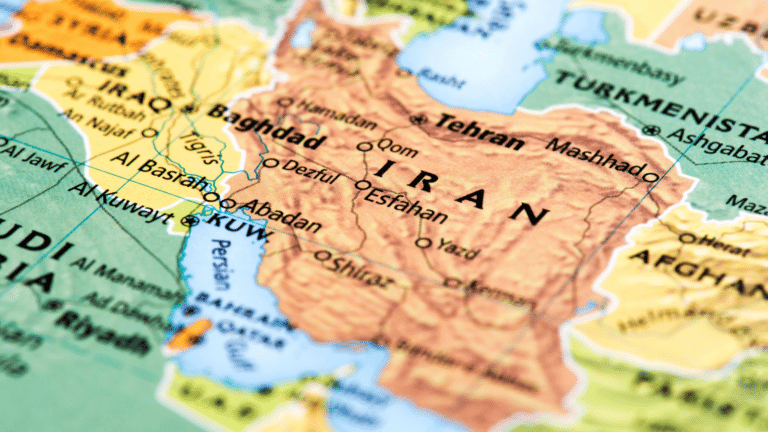
On February 28, the United States and Israel launched an attack on Iran, resulting in the deaths of Iranian Supreme Leader Ali Hosseini Khamenei and senior Iranian leaders...
Rapid Response
Rapid Response Event
February 16, 2026 - February 18, 2026
• 1:00 pm - 2:00 pm
est
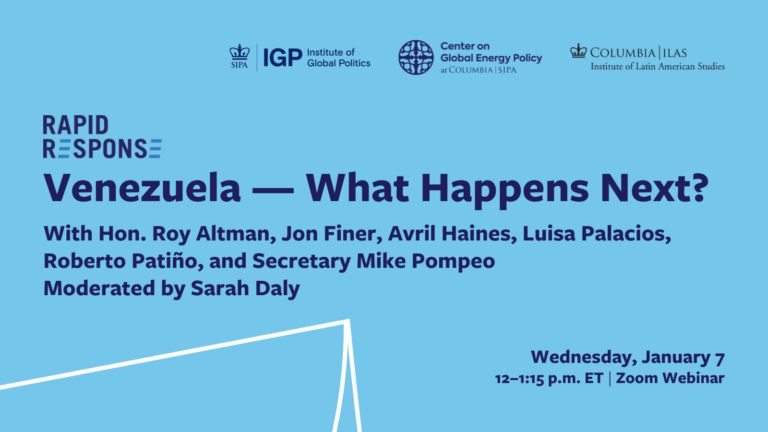
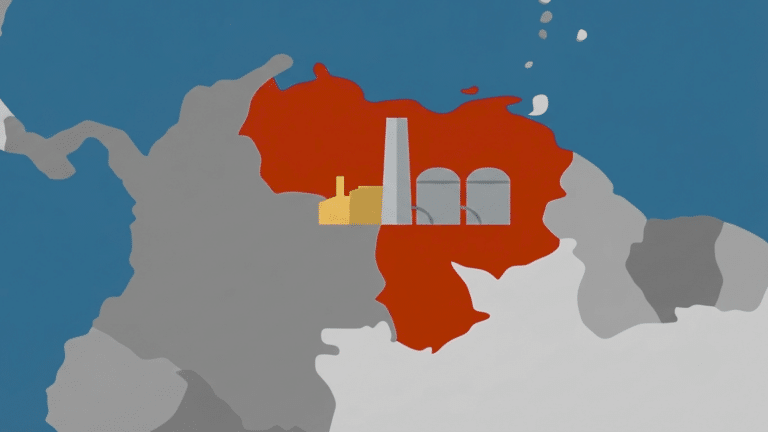
The recent military operation to remove Venezuelan President Nicolás Maduro and First Lady Cilia Flores raises several implications for the future of Venezuela and Latin America, geopolitics, and energy markets. Cosponsored by SIPA’s Institute of Global Politics (IGP) and Center for Global Energy Policy (CGEP), along with Columbia’s Institute of Latin American Studies (ILAS), this webinar will analyze the circumstances and impact of their capture and extradition to New York to face narcoterrorism and drug trafficking charges.