This website uses cookies as well as similar tools and technologies to understand visitors’ experiences. By continuing to use this website, you consent to Columbia University’s usage of cookies and similar technologies, in accordance with the Columbia University Website Cookie Notice.
Energy Explained
Get the latest as our experts share their insights on global energy policy.
The US-Venezuela Oil Deal Might De-Risk Oil Company NABEP But Not Venezuela
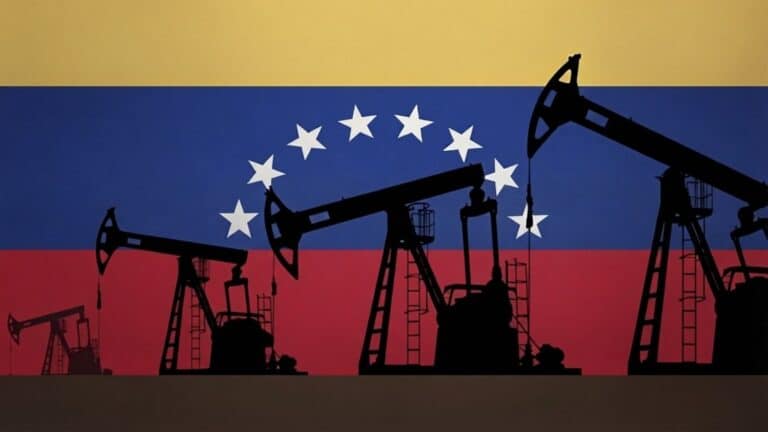
The White House announced last week an oil deal for more than 65 billion barrels of oil reserves in Venezuela and a 35% equity stake in North American Blue Energy Partners (NABEP).
Podcasts
Hear in-depth conversations with the world’s top energy and climate leaders from government, business, academia, and civil society.
Six Months In: Iran War Widens as Energy Markets Feel the Shock
More than six months into the war with Iran, the Strait of Hormuz crisis continues to cause turmoil in the Gulf region and global energy markets with no...
Columbia Energy Exchange Podcast
with Richard Nephew
, Daniel Sternoff
and Karen E. Young
• September 15, 2026

Events
Find out more about our upcoming and past events.
September 21, 2026 - September 25, 2026
CGEP @ Climate Week 2026
The Center on Global Energy Policy at Columbia University SIPA will host a series of energy and climate focused events this September during Climate Week NYC.
Event
Podcast
Luisa Palacios on Rebuilding Venezuela’s Oil Industry After the Quakes
August 11, 2026
-
Transcript
-
Luisa Palacios (00:04):
I think that from an investor perspective, you have to go beyond what is written in the regulations and understand the whole of the rule of law and governance framework. Rules are necessary, but not a sufficient condition, particularly given the history and because you cannot make the same mistake twice.
Jason Bordoff (00:26):
It started last year as a pressure campaign at sea with the United States seizing tankers as part of what President Trump called a total and complete blockade of vessels carrying Venezuelan crude subject to US sanctions. It crescendoed in the wee hours of January 3rd when US forces captured Venezuelan President Nicolas Maduro, bringing him and his wife to New York, our narcoterrorism charges. Since Maduro’s removal, confusion remains over whether and to what extent the US is controlling the country’s oil sector. But one thing is clear, despite holding the world’s largest oil reserves, Venezuela is producing at a fraction of its former levels and its path to recovery is anything but certain. A national tragedy has only added to the instability. In June, twin earthquakes claimed more than 5,000 lives. While the country’s energy infrastructure did not sustain significant damage, the quakes exposed deep fault lines in the country’s political leadership and served as a stark reminder of an already longstanding humanitarian crisis in the region.
(01:30):
So what’s the state of the energy sector and energy investments in Venezuela? How has the global energy crisis changed the calculus for prospective energy developers? What role is the Trump administration playing in the sale of Venezuelan oil? And where’s the oil production headed?
(01:49):
This is Columbia Energy Exchange, a weekly podcast from the Center on Global Energy Policy at Columbia University. I’m Jason Bordoff. Today on the show, Dr. Luisa Palacios. Luisa is an adjunct senior research scholar here at the center where she also previously served as our head of research. Before joining the Center on Global Energy Policy, Luisa was chairwoman of Citgo Petroleum Corporation, the US refining arm of Venezuela’s state oil company, PDVSA. Luisa joined me to discuss the state of the Venezuelan energy sector and the impact of last month’s earthquakes. We talked about the human tragedy in the wake of the earthquakes and what needs to happen to stabilize the country’s infrastructure and its economy. We also discussed hydrocarbon law reform, the country’s leadership dynamics, a lack of transparency into essential data on oil production, and what all of this means about the risk of US investments in Venezuela’s oil sector.
(02:49):
I hope you enjoy our conversation. Luisa Plasios, welcome to Columbia Energy Exchange. Good to have you back with us. It’s been too long.
Luisa Palacios (02:57):
Thank you, Jason. Really happy to be here.
Jason Bordoff (03:00):
I say it’s been too long, and I mean the reason I wanted to talk to you. I always want to talk to you as you know, but in particular, we use this podcast every week to try to talk about the most timely, interesting topical issues in the energy world. And I realized recently we just haven’t talked about Venezuela much lately. And it was all people wanted to talk about at the beginning of this calendar year. And then I think the world got distracted by other things like the largest energy supply disruption in history and the Strait of Hormuz. But the importance of Venezuela to the energy system and the importance, of course, of the political regime change, the consequences of what the Trump administration did by removing Maduro, matter enormously to the country and the people of Venezuela, who you know very well. So I really just wanted to have a check-in to help me and help our listeners understand what some people may have missed if they haven’t been paying as close attention as you have over the last six months or so to the situation in Venezuela.
(04:01):
So just sort of help everyone remember where we are. Earlier this year, the Trump administration used energy restrictions to apply pressure to Venezuela, a physical blockade. We’ve obviously had sanctions on the sector for a long time. Then the US military physically removed Maduro from power. Delcy Rodriguez, vice president, took over. And there is a sense now that the US has a much larger role in the energy sector there, but help people understand the latest state of play in terms of where things stand in Venezuela with this transition to a new government. Is it a new government or just a continuation of Chavismo? And then we could talk a little bit about what’s happening in the energy sector as well.
Luisa Palacios (04:50):
Yes. Fantastic, Jason. Indeed, the fact that there were other geopolitical risks, even more important than the Venezuela says a lot about the state of global oil markets. So I do think that a catch-up about Venezuela makes a lot of sense in this context because Venezuela is part of, I think, the way global oil markets have adjusted to the supply disruptions of the straight oil rules. So yes, Venezuela’s oil production right now is about 1.2 million barrels per day. That is about 150,000 barrels per day more than when indeed the US government ceased Maduro. So there has been a recovery of oil production.
Jason Bordoff (05:35):
150,000, you said?
Luisa Palacios (05:37):
150,000 barrels per day more
Jason Bordoff (05:38):
More.
Luisa Palacios (05:39):
And so –
Jason Bordoff (05:40):
And just to give the. Sorry to interrupt, just to give the listener context, people will remember at its height, it was sort of like three million barrels a day. I don’t mean decades ago in the ’70s, but more. Is that the right benchmark?
Luisa Palacios (05:52):
I think that’s the right benchmark. And the peak production of three million barrels per day is what people use in order to understand whether Venezuela can go back to pre-Chavismo era, because that’s where the oil industry was before the Chavez and Maduro era, which completely changed the old regulatory framework of Venezuela. And so the question that you’re asking is, okay, where are we with oil production? What is happening to the oil regulatory framework? What is happening with oil investments? Is this framework that has done a reset of US-Venezuela relations working? And so let’s just use some metrics from the point of view of oil production. I think there was a lot of concern about what an intervention of the US and Venezuela will do to oil production, and it has been quite stable, that transition process of the reset of US-Venezuela relations even under the interim government of –
Jason Bordoff (06:55):
Meaning there was. Sorry to interrupt again. Meaning there’s thinking that this could lead to potentially a return toward three million, but in the immediate effect, you’re saying people were worried that this would cause a disruption in Venezuelan supply. That has not happened.
Luisa Palacios (07:09):
Correct. And I think that probably led to a sense of comfort that these kinds of US policy actions could represent the different blueprint. The fact of the matter is that, yes, that process of stabilization of oil production, which is the first framework, the first phase of the US framework towards Venezuela. Remember the way at least it was presented that US policy framework towards Venezuela was going to be one of stabilization, recovery and transition. So it does feel that we are completely over the face of stabilization. We have not only stabilized production, but we have begun to see a recovery of oil production to 1.2 million barrels per day in June, according to OPEC numbers. But I think really the most relevant consequence of these actions is the fact that then the re-exports or the reorientation of Venezuelan exports that used to flow through illegal markets towards probably China steeper refineries.
(08:14):
Now what you have seen is really a reorientation of those exports to the US Gulf Coast.
Jason Bordoff (08:21):
Which is, again, for the listener, those refineries are optimized for Venezuelan kind of crude. That’s where Venezuelan crude would normally go, but for the sanctions that were imposed, that’s why they were flowing to China instead.
Luisa Palacios (08:33):
Absolutely, Jason. Thank you for that clarification indeed. And that is the reason why the National Company of Venezuela PDVSA acquired a refinery asset in the US to begin with so that it can process because of the investments that had been done in US Gulf Coast in particular. It was a decision in the 1980s of Venezuela PDVSA to acquire one of those assets where investments had been done so that it could process the kind of Venezuelan crude, that very heavy high sulfur Venezuelan crude.
Jason Bordoff (09:07):
An asset you know something about, we should remind our listeners.
Luisa Palacios (09:10):
I know something about indeed.
Jason Bordoff (09:13):
From chairing the board.
Luisa Palacios (09:14):
It became very clear to me after being the chairwoman of the Citgo board why that acquisition was made. It was really strategic. And so that redirection of exports, I think it’s very telling. And I think it’s very important to understand part of how, as I mentioned in the beginning, how the world hustle has adjusted because it has meant 800,000 barrels per day that were just going somewhere and nobody knew really where they were going, but probably not part of the global markets. Now they’re flowing to the US and to India. So right now you have that the 600,000 barrels per day of oil exports, Venezuelan oil exports flowing to the Gulf Coast are higher even than the pre-oil sanctions that took place in 2019. In other words, the exports that are currently flowing, at least the averages that I’m seeing, but for the last four weeks, what they show is that we are already at a higher level than we were in 2018.
(10:12):
And so that means that to me that figures like the most dramatic change of what we saw in terms of US policy, that redirection of oil exports.
Jason Bordoff (10:23):
And the change in policy, meaning sanctions waivers to allow Chevron to invest and produce to allow those exports to come to the Gulf Coast.
Luisa Palacios (10:32):
Well, it was more than that. It was under US policy now. All the oil exports of Venezuela now have to flow to compliant markets. They have to flow to the US or to other markets that are sanctioned by the US. Sanctioned meaning approved by the US.
Jason Bordoff (10:51):
Approved, yeah.
Luisa Palacios (10:53):
And so that means India, for example. So Venezuela is now the second most important supplier of all exports to the US after Canada. And it also means India. Venezuela has now become part of the top five suppliers to India and oilflows are also flowing to Europe. And so that is a change. That is one million barrels per day that were not in the market, at least not in the free-flowing global markets that we know of. They were going to teapot refineries in China or maybe part of the storage accumulation that had taken place in China, in which case they were not part of the globally traded system. And so that to me feels like an important change.
Jason Bordoff (11:33):
Yeah. Can you explain to the listener who may be less familiar with refined product markets or why that is important? There’s a big global bathtub of oil. Some of it’s in the black market, some of it’s not, some of it goes to teapot. Why does it matter where Venezuelan crude oil is going? If Venezuela is producing a lot more, we understand why that might matter. But if it’s going to the US instead of China, why does that matter for the US, for gasoline prices, for the global oil market?
Luisa Palacios (11:59):
So it matters, I would say, for two different reasons. First one is that an oil that is just put in a storage facility in China that is not part of the global trading markets for current oil demand means that if oil demand, 100 million barrels per day of oil demand, and one of them is going to storage, it’s for future demand, not for current demand. And so it does matter that now there was an oil that was really not part of the accounting process of the hundred million barrels per day that you needed or the one million barrels per day of additional oil demand that you need every year, because that’s tend to be what annual growth in oil demand was at least three past years. So now Venezuela can be part of the accounting of that when you redirect from informal markets or illegal markets into compliance markets.
(12:59):
And so that just makes it even more part of the accounting that you do, I think, from the point of view of how you meet oil demand. That’s one. The second thing and important for US, particularly US refineries, when you say that US refineries are particularly made or configured for Venezuela and crude is that it improves the capacity utilization and also the profitability of the refinery system in the US and can help increasing the yield for the refining products that matter more during this market disruption. Meaning that the type of crude that Venezuela produces can, because it’s very heavy oil, tends to improve the yield towards jet fuel and diesel and maybe less so gasoline, which there’s not that much of a disruption for. There’s more disruption with diesel and jet fuel. So in this case, it actually matters that Venezuelan oil is flowing to the Gulf Coast.
Jason Bordoff (13:56):
So talk about where you think things are headed from here, the potential. There was a meeting with President Trump after this happened and oil executives sitting around and the president talking about how he wanted to dramatically grow, unleash Venezuelan oil production. CEO of ExxonMobil called it unvestable at the time. Maybe that’s changed. You said it’s grown 150,000 barrels. Is that the steady state or do you expect much, much more Venezuelan oil to come to market in the near term, not a decade from now?
Luisa Palacios (14:27):
That’s a really good question. First, so a country being investable or not might not necessarily be a binary steady state. You can make a country increasingly more investible. And to me, that’s what it feels that at least some of US policies have been geared towards making the country more investible. And so what you have seen in the last months is a flurry of regulatory actions or just changes in law, particularly the oil law, the electricity law, and the mining law trying to make Venezuela a little bit more investible. So that’s on the one hand. The question is whether the changes that we have seen are enough to be able to jumpstart a cycle of investment like the one that we saw in the 1990s with the Venezuela Apertura, the first oil opening of the Venezuelan oil sector, this is almost being portrayed as the second oil opening.
(15:28):
And I do think that we don’t know yet whether this new opening is going to jumpstart such an investment cycle because changes in the law are unnecessary, but not a sufficient condition. And so I remain of the view that you might get Venezuela soil production, which is now at 1.2 million barrels per day, maybe increasing towards 1.5. I no longer see this in the near term because I do think that the earthquake situation, which has been a tragedy for Venezuela, might actually be impacting the investment climate. And so I do think that –
Jason Bordoff (16:09):
So this is not about Delcy Rodriguez or the Trump administration or hydrocarbon reform. The biggest headwind was the tragedy of the earthquake. Is that right? And maybe you could talk a little bit about what impact that earthquake has had on the country.
Luisa Palacios (16:23):
I think that in the near term, the biggest headwind towards a more substantial recovery of oil production to at least 1.5 million barrels per day to me are the earthquakes, but exactly because of the response or lack thereof in a substantial way of the interim government. And so it is not just the event, the natural disaster. It is what the event reveals about the institutional capabilities of the Venezuelan government.
Jason Bordoff (17:00):
And we’re talking about energy production recovery, which is important, but we should remember that of course that disaster caused vast humanitarian catastrophic impacts. Talk about what impact the earthquakes had on the country, what the response was like, what it’s done to the economy and to basic services there.
Luisa Palacios (17:24):
Yeah, this has been, I would say, the worst natural disaster that Venezuela probably has seen in a century. So it has been really damaging and revealed a humanitarian situation that is devastating. And so I do think that is something that is relevant for the social, the economic, and the political outlook going forward. That said, Venezuela was lucky in the sense that the earthquakes did not affect the oil infrastructure or the energy infrastructure in general. I mean, it did have some impact on one refinery, the smallest refinery in the country. It had some impact on petrochemical production, but by and large, nothing major and nothing that will be material. That to me brings hope that Venezuela will be able to continue recovering its external revenue situation, and there’s a way forward. But at the same time, while the earthquake did not impact the energy situation, I do think that the economic and humanitarian consequences are revealing an economic cost that is going to be problematic for the government, problematic for the US administration, because it opens up probably at least in direct economic cost.
(18:48):
The earthquakes are going to cost 6.7 billion, which is about 7% of Venezuela’s GDP. And those are direct economic costs with reconstruction costs being estimated at the 10 to $15 billion, which is about the 10 to 12% of Venezuela’s GDP. That is a very big number. That stresses the fiscal capabilities of the Venezuelan government at a time where they are in really, really bad shape. And so I do think that that is something that while the energy sector has not been directly impacted, the energy sector is not going to be completely isolated from the overall economic situation. And so I do think that the lack of technical capacity of the Venezuelan government, which there has been a lot of backlash already reported everywhere about what this earthquake reveals, about not only the technical capacity of the government, corruption, governance, all kinds of things. I think to me, what it has revealed is the hallowing of state capabilities.
(19:55):
And so no energy sector recovery or energy industry recovery is going to occur. I think if US foreign policy towards Venezuela continues to focus too much on the oil sector recovery because the oil sector recovery by itself is probably not going to be enough and you have to bring the rest of the economy along. And the same capacity building type of efforts that you need for Venezuela to be able to recover from this earthquake are the same capacity building capabilities that you need for the old sector and the management of a new era of all investments. And I do think that that’s something that it has been very tending. And I do think that as well, the human tragedy caused by the earthquake is a reminder that this is a country with a humanitarian crisis. This is the reason why 25% of the population left.
(20:48):
One of the main issues, and it’s also coming, has been revealed, is the Venezuela or the Venezuelan [unclear], Venezuelan private sector. There’s a lot of technical capacity already there. There’s a lot of human talent already there. And being able to tap into that talent will also require the kind of capacity building, governance, rule of law type of improvements that go beyond just changes in laws. And so I do think that the earthquake is just serving as a reminder that those are also part of making Venezuelan investable.
Jason Bordoff (21:26):
Help listeners understand the political state of play. And then I want to understand what President Rodriguez is doing with regard to hydrocarbon law reform and the energy sector. But for people listening to this, they may begin to recollect the history of this, which was an active opposition movement. The leader of the opposition movement, Maria Corina Machado won the Nobel Peace Prize. And then the leader was removed from power. And there was questions about what would happen after that, that the vice president would be a temporary figure stabilization followed by elections. Is there any expectation that that’s where things are? Or she is firmly in place now and a partner working with the Trump administration, so we should be looking to Delcy Rodriguez as the leader for an extended time and trying to understand what policies she will put in place?
Luisa Palacios (22:18):
I actually think that question is not only important in and of itself to understand the outlook in Venezuela, but it is also relevant to making the country more investible for energy investors and investors overall, the economic recovery. The reason is, so the framework that has been put in place from the beginning, as I mentioned in the beginning, was stabilization, recovery, and transition. Transition being the last one, but there was always that understanding that that’s where the country was heading. I think one of the things that became very relevant to me was that these were not sequential steps. These were almost steps that had to be taken in tandem. And because they’re path dependent, you actually have to be very intentional from stabilization to recovery, to recovery, to transition. These are things every decision that you make either gets you towards that path or gets you away that path.
(23:21):
And so your question about, does that mean that Delcy Rodriguez is going to stay? Is there no chance for. So that’s part of the issue that the decisions that you make today do matter in terms of how you move into that sequencing. The second thing is that I think it matters when the regulatory changes that have taken place in a country are perceived as led by US foreign policy pressures. Because what investors need, particularly as we know, Jason, in the energy sector that has high capital investments, that need not the one year, but years to recover your investments, you need visibility that you are going to be able to recover those investments, that there’s going to be property rights assured or guarantees of payments on those investments. And so you have to care about the risks associated with those investments, and those risks include policy reversals.
(24:21):
So changes in the regulatory framework that are not perceived to be improving the investment climate that are self-sustaining and self-reinforcing, that is you are working towards significant improvement of the economic outlook for investors, both local and foreign in the country, does create its own source of risk of reversals. And so with Venezuela, you’re taking both political risks of Venezuelan political risk and probably US foreign policy risks. Because if this is not self-sustained on its own, then it completely depends on US foreign policy. Then that is a part of how you have to assess the risk going forward. And so why then the transition matters is because you have to lock in the changes and create that self-sustaining improvement in the investment conditions. It also now, with the earthquake, makes it even more relevant because of how the earthquakes have revealed problems with governance, problems with legitimacy that are actually going to make it very difficult, I think.
(25:37):
Not impossible, but difficult for Venezuela to be able to increase its oil production, increase its economic growth and repatriate, be able for the eight million Venezuelans that are abroad to come back to the country and bring their capital. So there’s a lot of virtuous cycle that the Venezuelan recovery story can be part of, which is not visible right
Jason Bordoff (26:05):
Now. Talk a little bit about what Delcy Rodriguez and the government have done to try to facilitate investment in the country’s energy sector. And again, Darren Wood saying it was uninvestible back when he met with the president. But recently, I think Venezuela has published long awaited oil regulations that tried to end PDVSA’s monopoly, tried to make it a more attractive place to invest. What have they done and is it working?
Luisa Palacios (26:32):
This has been a very welcome step in the right direction. There are a few things, many things that the changes in the old law and then the regulations that were published in July, what they do for the oil industry. The first thing is that, as you just mentioned, they eliminate the monopoly position of PDVSA at all parts of the value chain. That is huge, Jason. It really is. This has never occurred since the nationalization of PDVSA of the oil industry in the 1970s. So that this is a big change in the right direction and should not be underestimated. So that’s why. The second thing that it does is that it finally clarifies what the oil royalty fiscal situation is. And that while it is not the most competitive in the planet, it at least gives you an idea about what the fiscal take is going to be.
(27:33):
And what it does as well is that it provides a differentiation between greenfield investments, brownfield investments, producing fields, non-producing fields, offshore and onshore, which reveal at the same time that diversity and the richness of Venezuela’s resource base, but also the urgent need to differentiate the capital investments for each of these sections. It’s not the same thing to develop offshore exploration fields than what it is to develop a brownfield that you are just inheriting from PDVSA and you’re trying to kickstart. So that is a really a welcome thing. The third thing that it does, and you know that I do care about this a lot, is that it finally is requesting the companies, the investors in operators in these fields to recover the associated gas from oil production. Remember that Venezuela wastes about 40% of its natural gas production. Most of the natural gas is associated production.
(28:38):
And so therefore when you are producing oil, you need to have the capabilities to recover that gas, either to re-inject the gas or to redirect it towards natural gas pipelines for power generation. The law also requires that from a future oil investors. And that is really a big step in the right direction from the point of view of addressing methane emissions in the country. The regulations also will require that investors invest in the power generation needed for coal production.
Jason Bordoff (29:12):
And we should remind people the electricity sector in Venezuela has long been a catastrophe and is a massive problem for the people and the economy.
Luisa Palacios (29:21):
It’s a massive problem. This is a country that used to have one of the best electricity sectors and it has been decimated because of years of malfunctioning or lack of maintenance, expropriations and whatnot. And so Venezuela has already been experiencing blackouts and rolling blackouts and shortages of bulk ice for a while. And so there’s a sense, and I think that’s something that recognized also by the US government, that you need to fix the electricity sector, but actually fixing the electricity sector is very complex. The risk associated with oil, very different than the risk of. Associated with electricity, which is a low margin business that significantly depends on respect of contracts and tariffs. And electricity, remember, this is a domestic revenue generating activity. So pricing policy matters. For oil, it doesn’t matter. Use global oil prices. For electricity, it matters a lot in a country that has one of the lowest electricity and gasoline prices in the planet.
(30:25):
And so these things matter. So again, the regulatory framework, rule of law, corporate governance, all of these issues matter for electricity. And without electricity, you’re not going to fix the oil. And so one of the things that the regulation does is now, because we cannot have more demand into the grid without the parallel supply being added. And so now all the oil producers, new oil investors will need to have a solution for their own electricity needs. That will help increase the generation supply in Venezuela. It will also avoid the risk of further pressures on the grid. However, the law actually does a few things that are problematic. US sanctions require that the contracts that private investors sign, they need to be governed by US laws and they need to have international arbitration. The regulation, while it doesn’t prohibit those conditions, they don’t clearly allow it either.
(31:32):
It doesn’t seem to me. And so you are left with, okay, if the regulations do not really clearly embed those investor rights, so we’re going to have to go to the negotiation of contracts to embed those investor rights in contracts. And we are not there yet. The other thing that it does is that in my view, it centralizes too much of oversight, regulations, contract management in the Ministry of Energy. And I think it’s creating regulatory risk in my view about possible sanctions or possible reasons for termination of contracts that might lead to some risk. And so there are good things and other things that are not as great. What it means to me is that now Venezuela has to go into contract phase for investors to really have all the guarantees they need in order to be able to invest.
Jason Bordoff (32:32):
Really helpful overview. But it sounds like on the whole, there’s pros and cons, but on the whole, positive and you’re supportive of many of the changes that have been put in place. And you mentioned what’s known as the opening in the 1990s when reforms were put in place to try to attract much needed foreign capital and technology into Venezuela’s oil sector, that this has a feel like that, that is what the Rodriguez government is trying to achieve. Is that right?
Luisa Palacios (33:01):
I would say so. I think it’s a huge step in the right direction, but because of where you were, even if this is a huge step in the right direction, you’re not there yet. And so that’s why I think – Meaning
Jason Bordoff (33:15):
That’s why you think these are positive changes, but you’re still not optimistic that in the next near term, the next couple of years, you’re going to see huge amounts of additional oil coming to market.
Luisa Palacios (33:26):
I think because the obstacles. I think you are making Venezuela more investible, but it’s not there yet. And so this is a really important step. It’s not fully there because the regulations themselves have provisions that make it even more important. Who is the one making decisions about whether your contract is in good standing, whether your business plan makes sense, whether I am going to penalize you for. There’s a lot of discretion that now is in the hands of the Ministry of Energy, which means that it matters who is in the Ministry of Energy. It matters that you have a regulatory framework that applies the rule in a fair way. And so when the people that expropriated the oil industry, many of the contracts are the ones doing the opening. I think that from an investor perspective, you have to go beyond what is written in the regulations and understand the whole of the rule of law and governance framework.
(34:34):
Rules are necessary, but not a sufficient condition, particularly given the history and because you cannot make the same mistake twice.
Jason Bordoff (34:42):
Obviously it’s highly uncertain, but if you had to roughly guess, given what is being done today and what you see, where oil production would be a year from now, five years from now, 10 years from now, what trajectory do you think the country’s headed on?
Luisa Palacios (35:00):
So Venezuela has seen the interest from really a remarkable group of companies that I think set the stage for a future oil investment cycle in a really important way. And that is international companies such as Chevron and Repsol and Shell, BP and E&I. There have all been signing either contracts or memorandum of understanding about their interests. So to me, what it feels is that at least Venezuela now has the sufficient framework in order to be able to attract that level of interest, to engage in strategic or letters of intents. And there are also interest from other US investors. And so you have enough interest and there is, I think, capital that could line up. What I see is that from there to actually commit the capital, I think you are going to need much more assurances. You’re going to have to have more visibility about probably the political framework and improvements in corporate governance before you actually FID the amounts of capital that Venezuela will need.
Jason Bordoff (36:15):
Talk about the role of the Trump administration in all of this. Early on, there were agreement, if that’s the right word, maybe it’s not, that, what was it, 30 million, 50 million barrels of oil would be turned over to the United States to be marketed and sold. There were a fund created by the United States for oil revenue to go into with some measure of control over how the government would spend it. What’s our best understanding today about the day-to-day marketing and sale of oil? What role is the United States playing in that and in the discretion control that the Venezuelan government has over the revenue?
Luisa Palacios (36:59):
Yeah, that is really a difficult question to answer because there’s not a lot of clarity. So you do have executive order 14373 that establishes that Venezuelan oil flows should be a part of a foreign government designated funds to be held in a US treasury designated account. And therefore we know that oil explore revenues from Venezuela are flowing. At least that’s what the legal framework establishes, that those oil funds are flowing to the US, to that US escrow account on behalf of the Venezuelan government and for the future of Venezuelan people, if I remember the statements correctly. I think there are questions about not only how much revenues are on those accounts and so the level of flows, but how they’re being spent and in what way? And so those are, I think, all very legitimate questions. In particular, because Venezuela has been a place where almost for the last decade, all statistics have been embargoed.
(38:16):
And so there has been really very, very limited information about basic economic statistics such as oil exports revenues and balance of payments and current account balances and foreign and fiscal accounts and international reserves. So it is just a complete obscurity of statistics. And Jason, we work in evidence-based energy policy think tank. So how can you make good energy policy if you don’t even have evidence? And so there’s really a fundamental problem with the fact that in my view, and probably in the view of many others, it is possible that Venezuela lost the ability to produce statistics. And so how is it that for any type of policy has been conducted in the last years, if you don’t even know what’s going on? And you cannot manage what you cannot measure. And I say this because the lack of information in relation to this account is that in and of itself is important from US policy perspective, but it is even more important from the point of view of the story of Venezuela’s normalizations.
(39:36):
It is like that lack of transparency. That feels like the one thing where you need to make improvements is on shedding light on numbers, on where has this country been? What has happened to this country? Where are all exports? Where are all export revenues? Where are all export revenues flowing? We know this because we look at the statistics of the US, we look at India, we look at tanker data, not because we look at the Venezuelan government. And that’s part of why I think one of the first things that you do in capacity building, establishing technical capacity in a country is ability to understand its surroundings, ability to record information, to provide statistics about what the reality looks like and the framework in which policy decisions need to be made. And so I say this again because I do think that transparency pressure coming in relation to these accounts has to do with this background of lack of transparency.
(40:41):
And I think that it has been in the case of Venezuela. So I think if we could see the flows in the Venezuelan accounts, if we could see the numbers of oil exports and the oil export revenues and how they’ve been flowing, I think from the Venezuelan standpoint, I think the issues will not be that problematic, but there’s nothing from either side.
Jason Bordoff (41:03):
And growth in Venezuelan oil production has been an important priority for the Trump administration. And he spoke much more about oil than maybe even some expected in the press conference he gave, as I recall, after Maduro was removed from power. And you talked about the largely positive changes that you see the Rodriguez government taking to try to create a more investible playing field there. I assume the Trump administration’s been closely involved in that. Secretary Wright, Jarrod Eagan and the White House, others. Is that right? What role is the Trump administration playing in the reforms you talked about a moment ago? And is that a source of uncertainty for the investment climate? The new administration comes in, a Democrat administration comes in that is focused on climate change more than oil and gas production. How much would change in US political situation do you think affect the trajectory for Venezuela?
(42:00):
And is that having a material impact, do you think, on the certainty people need to make longer term investments?
Luisa Palacios (42:06):
So I do believe that it matters if the Venezuelan government is convinced about the role of private sector investment in the oil industry. It matters whether they believe that property rights are important. It matters whether they understand that to jumpstart a cycle of all investments, improvements in governance, improvements in institutions, improvements in the rule of law are important and they care enough to actually move in that direction. And so the reason I say this is because there is uncertainty about whether the changes that we’re seeing are being pressured by the US government or whether they are part of a belief system within the current interim government. Those things matter for the sustainability and the risk of reversals because as you just asked, what happens if there’s a change in government? And so up till now, most of these changes have been possible because of the myriad of licenses that the US Treasury has given to Venezuela, licenses that are also part of the regulatory framework.
(43:31):
So it’s not just the Venezuela changes in law, which again, have been positive even if they’re insufficient. It most importantly has been changes in US sanctions and the significant easing of US sanctions that has allowed also, I think, the significant interest that we have seen by the companies that I just mentioned, but also by US companies that have been visiting the country, signing memoranda of understanding with the current government. And so there’s a lot of interest about what this story could be, but it is completely predicated on a US sanctions policy. So if there’s any change in that sanctions policy, this story ends. And so that is why this story has to be self-sustaining and self-reinforcing in the sense that it has to lead to politically legitimate transition because otherwise the sanctions policy will continue, will remain in the country because the conditions that led to the imposition of sanctions to begin with would’ve not disappeared.
(44:45):
And so that is why this has to end in a political transition with the legitimate government, with elections, with the release of all political prisoners, with a complete change in the human rights conditions that all of which, and again, the governance issues that were all part of why there were sanctions in the first place. So in other words, you have to arrive at a political situation that not only locks in the changes that we’re seeing, but also actually improves on them and extends it to the rest of the economy because what we are seeing is still very tailored to the old sector and the extractive industries. And it’s not enough broad base to lead to a much more market oriented type of economy. So that’s one. But the second one is it is the trajectory of the Venezuelan political situation that is going to allow for the clarity about sanctions policy, because otherwise you are not going to see significant investments because of the risk to the possibility of a reversal of sanctions, even if it’s not totally reversed.
(46:00):
It is just too much of a risk. And so that’s why I’m saying you’re taking both Venezuela and US policy risk. And so you need to be sure that the Venezuelan story is also eliminating the sanctions risk.
Jason Bordoff (46:16):
I just wanted to clarify one thing because early on there was speculation that because of these changes, large companies that had valid judgments from international tribunals for expropriated funds would be repaid. And then the Trump administration said, no, actually, the funds from Venezuelan oil are not available to those companies. They’re going to be used for rebuilding and for the Venezuelan government, the Venezuelan people. Is that still the case?
Luisa Palacios (46:46):
So the reality is that Venezuela has to solve its non-payment issue. That is one of the things in addition to what I just said, the non-payment situation of the country is also part of the obstacles forward. So it is not only the non-payment situation to Conoco, which is the largest private creditor in the country. And so you do have to solve that non-payment situation to Conoco. But what I can tell you is that the reason why the oil companies currently operating in Venezuela have a reason to increase production is because that’s the way they pay themselves for the accumulated arrears in a long time. So in other words, that is already a payment structure. Once that finishes, in order to actually be headquarters of these companies to invest substantial amount of capital, I think it will take the kinds of improvements that I just mentioned and the kind of things of why Conoco and Exxon do not yet think that these investments are acceptable.
(47:50):
I do think that the Trump administration understanding that the payment system or non-payment or the outstanding debt of Venezuela is an issue has tried to jumpstart a debt restructuring process or the Venezuelan government has tried to jumpstart a debt restructuring process. I would say this is going to be a very, very complex debt restructuring process and one of the most complex in the world. Solving the non-payment situation of the country will also require involvement on multilateral organization. I am concerned that in this process of capacity building, this element of involving the multilaterals has not been a priority. In the US, a foreign policy towards Venezuela is something that I think is about most importance. For example, I think you need the involvement of multilateral development banks to be able to really solve the electricity situation in the country. But you cannot do that because there’s also non-payment to the multilateral development banks.
(49:02):
The Venezuelan government and helped by US government has been trying to get electricity suppliers to the country to help with the electricity situation. And this is Siemens and GE Vernova, but they too have a non-payment issue. And so the non-payment issue of Venezuela is, again, one significant obstacle to solve, but it’s not just a debt restructuring that solves it. It’s the fact that you have to have visibility that this is a government that understands sanctity of contracts, that wants to clear the conditions that arrive to the nonpayment to begin with. Otherwise, it would be serial defaulters because you never really fix the structural issues. And so I think that’s why solving structural issues is a precondition to Venezuela being able to really access international financing.
Jason Bordoff (50:02):
Just to clarify for people listening who might hear Trump rhetoric, increasing oil production is the goal and it is a good thing for the world. I know you care deeply about issues of environment and climate change. And your view is it is necessary for Venezuela to increase oil production. It is a policy objective, not just because more oil and gas may be good for global markets and prices, but it is a necessary condition for this country to have the revenue to rebuild itself. Is that how you understand why the energy sector is important to the country?
Luisa Palacios (50:40):
I understand the concerns of the environmental community, and they are legitimate. I do think that Venezuela also offers one of the most consequential ways in which to address methane emissions that I can think of. And so that’s why I’m actually encouraged by the new laws. And I’m also encouraged by the fact that in Shell’s memorandum of understanding, letter of engagement with the Venezuelan government, they’re not only developing natural gas resources, offshore natural gas resources linked to Trinidad or near Trinidad. They are also, at least that’s what I read, are willing to engage with the Venezuelan government to help fix the venting situation. And so to me that the Venezuela story needs oil in order to be able to develop and to solve this humanitarian crisis that is not in contradiction with actually having an environmental policy that significantly addresses the emissions situation of the country. And I think it’s one way in which, particularly on the associated gas linked to oil production, this is also a country that has a humanitarian crisis that has a severe electricity situation issue.
(52:06):
And being able to capture that natural gas that is now being invented and redirected to electricity is one of the best ways that I can think of to improve the lives of millions of Venezuelans.
Jason Bordoff (52:19):
Luisa, thanks so much for all your work. Thanks for being such a fantastic colleague here at the center, and thanks for taking the time to help all of us get back up to speed on such an important geopolitical, humanitarian and energy story, what’s happening in Venezuela. I really appreciate your time today. Thank
Luisa Palacios (52:39):
You, Jason, for having me. Always a pleasure.
Jason Bordoff (52:45):
Thank you again, Luisa Palacios. Thanks to all of you for listening to this episode of Columbia Energy Exchange. The show is brought to you by the Center on Global Energy Policy at Columbia University. The show is hosted by me, Jason Bordoff, and by Bill Loveless. Mary Catherine O’Connor, Caroline Pitman, and Kyu Lee produced the show. Gregory Vilfranc engineered the show. For more information about the podcast or the Center on Global Energy Policy, visit us online at energypolicy.columbia.edu or follow us on social media at ColumbiaUenergy. And please, if you feel inclined, give us a rating on Apple, Spotify, or wherever you get your podcasts. It really helps us out. Thanks again for listening. We’ll see you next week.
It started last year as a pressure campaign at sea, with the United States seizing tankers as part of what President Trump called a “total and complete blockade” of vessels carrying Venezuelan crude subject to US sanctions. It crescendoed on January 3, when US forces captured Venezuelan President Nicolás Maduro, bringing him and his wife to New York on narcoterrorism charges.
Since Maduro’s removal, confusion remains over whether—and to what extent—the US is controlling the country’s oil sector. But one thing is clear: despite holding the world’s largest oil reserves, Venezuela is producing at a fraction of its former levels, and its path to recovery is anything but certain.
A national tragedy has only added to the instability. In June, twin earthquakes claimed more than 5,000 lives. While the country’s energy infrastructure did not sustain significant damage, the quakes exposed deep fault lines in the country’s political leadership and served as a stark reminder of an already long-standing humanitarian crisis in the region.
So what’s the state of the energy sector and energy investments in Venezuela? How has the global energy crisis changed the calculus for prospective energy developers? What role is the Trump administration playing in the sale of Venezuelan oil? And where is oil production headed?
Today on the show, Jason Bordoff speaks with Luisa Palacios about the state of the Venezuelan energy sector, efforts around creating new policies to boost oil production, and the impact of the June earthquakes.
Luisa is an adjunct senior research scholar at the Center on Global Energy Policy (CGEP) at Columbia University, where she previously served as head of research. Before joining CGEP, Luisa was chairwoman of Citgo Petroleum Corporation, the US refining arm of Venezuela’s state oil company, PDVSA.
More Episodes
Six Months In: Iran War Widens as Energy Markets Feel the Shock
More than six months into the war with Iran, the Strait of Hormuz crisis continues to cause turmoil in the Gulf region and global energy markets with no...
Columbia Energy Exchange Podcast
with Richard Nephew
, Daniel Sternoff
and Karen E. Young
• September 15, 2026
Luisa Palacios and Bob McNally on Why the US-Venezuela Oil Deal Matters
It's been a tumultuous year for Venezuela, marked by political upheaval and deadly earthquakes. Then, in late August, the Trump administration announced a deal for over 65 billion...
DOE’s Audrey Robertson on Growing US Critical Mineral Supply
Advanced technologies, a return to domestic manufacturing, and the race to control energy production while also confronting surging demand for electricity—all of these factors mean that for the...
Columbia Energy Exchange Podcast
• September 1, 2026
Editor’s Pick: Rajiv Shah on Delivering Universal Abundant Energy Access
Energy abundance means different things in today’s global context than it did even a decade ago. It is about expanding electricity access while meeting rising energy demand. It...
Columbia Energy Exchange Podcast
• August 25, 2026
Relevant
Publications
The US-Venezuela Oil Deal Might De-Risk Oil Company NABEP But Not Venezuela
The White House announced last week an oil deal for more than 65 billion barrels of oil reserves in Venezuela and a 35% equity stake in North American Blue Energy Partners (NABEP).
What a US-Saudi Arabia Nuclear Agreement Could Mean
The Trump administration and Saudi leadership have reportedly agreed to a nuclear agreement that could enable US nuclear technology transfers to Saudi Arabia.
The Long Shadow of the Iran Shock
By almost any measure, the world should be suffering a far more severe energy crisis.