This website uses cookies as well as similar tools and technologies to understand visitors’ experiences. By continuing to use this website, you consent to Columbia University’s usage of cookies and similar technologies, in accordance with the Columbia University Website Cookie Notice.
The work of scientists and researchers deserves celebration, but solid climate, energy, and technology breakthroughs need costly infrastructure and sustained funding to scale. Relying on private philanthropy like the Bezos Fund for climate research says a lot about this country’s expressed values while laying a fragile foundation for our industry’s future.
Permitting reform—to allow for faster approvals on new projects—is one thing that both climate advocates and energy developers have wanted for a long time. With demand for power...
The Center on Global Energy Policy at Columbia University SIPA invites students to join us for an engaging roundtable discussion on sustainable finance with Jacqueline Ricciani, Managing Director,...
Event
• Columbia SIPA
About Us
We are the premier hub and policy institution for global energy thought leadership. Energy impacts every element of our lives, and our trusted fact-based research informs the decisions that affect all of us.
This Energy Explained post represents the research and views of the author(s). It does not necessarily represent the views of the Center on Global Energy Policy. The piece may be subject to further revision.Contributions to SIPA for the benefit of CGEP are general use gifts, which gives the Center discretion in how it allocates these funds. More information is available here. Rare cases of sponsored projects are clearly indicated.
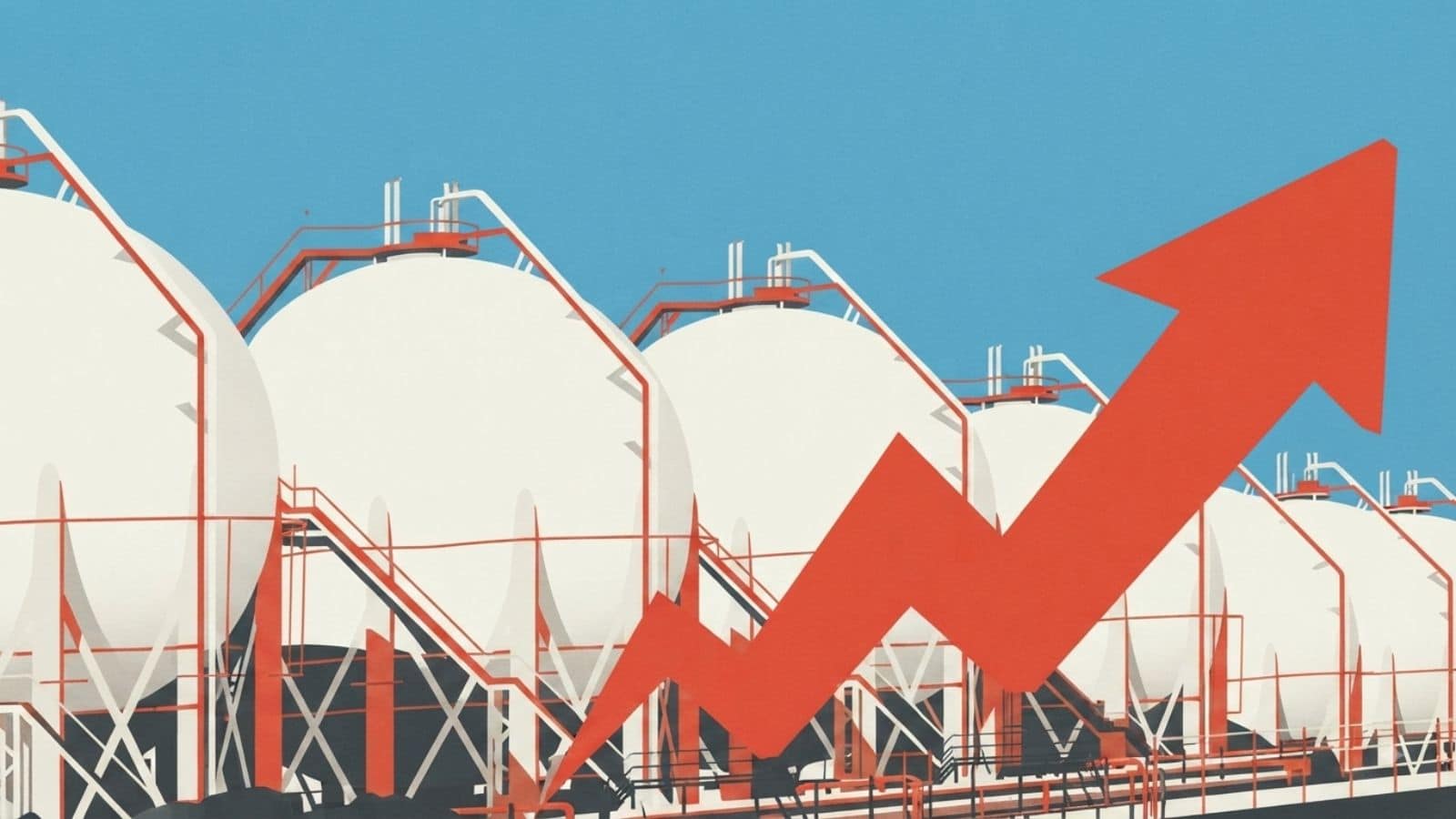
US gas demand is growing due to higher exports and, in the years to come, more data center use. These use cases require different buffers of working gas storage to maintain reliability compared to the more volatile residential/commercial use, which is not growing.
Peak days for power sector gas use are now greater in summer than winter, and if summer peaks continue to climb, they could begin to impede injection season, when gas storage is refilled—typically from April through the end of October. The rise of battery storage, however, is challenging gas use for meeting peak demand alongside renewables.
Now that the US is a significant net exporter of gas, it is also not as vulnerable to domestic price volatility or global events as during the net import era. A reduction in exports, for example, cushions the price implications in the domestic market in a way often provided by additional storage capacity.
Amid the surge in US gas demand coming from liquified natural gas (LNG) exporters this decade and the expectation of greater data center use in the decade to come, there is a lack of equivalent new working gas storage capacity in the United States. Natural gas companies in the US operate 4.2 trillion cubic feet (TCF) of working gas storage capacity (storage that can be used commercially). The size of this capacity has not risen in a meaningful way for many years, even as US dry gas production has climbed from 42 billion cubic feet per day (Bcf/d) in 2005 to nearly 110 Bcf/d last month.
This blog post considers whether the stagnation in storage capacity indicates an emerging infrastructure or supply chain problem for the US gas market, and the role of working gas storage in the broader context of energy security. The author estimates that, though the market is set to grow by another 25–30 Bcf/d in the decades to come and some additional storage will be needed, it will not be as much as might be expected from demand growth, given the nature of how the gas will be exported or consumed.
Storage capacity needs for LNG exporters center on two characteristics: deliverability and reliability. Unlike seasonal storage capacity relied on by the residential/commercial (R/C) sector, LNG exporters are baseload buyers of gas; their needs do not fluctuate much. At its most extreme, planned or unplanned closures of LNG production facilities could require the use of storage capacity for a month, although LNG producers could also either stop buying the gas or resell it back into the US domestic market. Either way, the ability to ramp down US LNG exports makes the need for seasonal gas storage somewhat less compelling. If storage is tight enough, gas prices relative to Europe and Asia will dictate if exports happen; if the US needs the gas, Henry Hub will be priced at a level to disincentivize sales abroad. While over 80% of US LNG is under long-term contract, not loading the cargo is an option, although would involve sacrificing a sunk cost tolling fee embedded in the long-term contract that must be paid either way.
Storage capacity for use in the R/C sector has a much more significant application. A high volume of storage capacity is needed relative to demand because of the vast swing in seasonal gas use when the peak-to-trough demand varies greatly. Whereas the previously mentioned demand for gas by LNG producers may change due to planned maintenance each year, R/C demand can shift an average of 38 Bcf/d between the overall summer nadir and the winter peak. Depending on the weather, this swing has ranged from 31–43 Bcf/d over the past decade.
Looking forward, demand growth prospects in the R/C sector are fairly limited—over the past decade it has only been 0.5% per year. In addition, competition has risen considerably from heat pumps and other forms of electric-based heating, although in some cases, this is merely shifting the seasonal swing from the office and home to the power generator.
The need for more storage will depend on the risk associated with areas where the supply and demand will grow. New working gas storage under construction (see Table 2) targets higher LNG exports. As noted, most of the facilities dot the Gulf Coast and mirror the dispersion of new LNG export projects that have emerged since 2016. The two major outliers are the Waha facility in Texas, which will help address the chronic shortage of pipeline capacity in West Texas. The other is Wyoming, where Spire Storage acts as a balancing point for serving the Kern River Gas Transmission, Ruby Pipeline, and MountainWest Pipeline systems.
Table 2: Working gas storage capacity under construction
While no fool-proof formula exists for adding storage capacity relative to demand growth, for every additional 1 Bcf/d of sustained growth, developers generally have targeted an additional 5–15 Bcf of storage capacity if that demand is of the more volatile variety such as winter heating. So, for example, if the market grows by another 30 bcf/d in the next decade, another 300 Bcf would theoretically need to be built; however, with almost no growth in R/C demand, which accounts for 20% of annual gas demand, as little as one-quarter of this addition to storage capacity levels should suffice. Indeed, the infrastructure under construction is roughly one-quarter of this total demand level.
Gas demand from data centers is a different story and could significantly affect the summer peak. Driven by data center investment as well as increased electrification and cooling needs, peak summer loads now rival winter heating loads for gas consumption (see Figure 1). Battery storage for summer peak is also on the rise due to the large-scale inclusion of renewables to support meeting peak demand. Battery storage is competing directly with gas use for peaking demand in power as a harmonization tool to work alongside renewable energy, which is not a 24/7 solution. The more rapidly batteries are deployed, the less likely gas will be needed for peaking use and will therefore be available to inject into storage. In essence, gas is competing with batteries, not renewables—a common misconception in the energy transition discourse.
The transmission system’s need for intra-day and intra-season flexibility is being rewritten to accommodate greater weather extremes. Record highs during July and August have become a fixture of the last two summers, which not only raise demand but put the injection season, when gas storage is refilled for peak winter use, typically between April and October, into a tighter window. The expansion of US storage going forward would certainly help provide additional flexibility to a US gas market that is evolving from higher LNG exports now to higher data center use and rising summer cooling needs in the years to come.
Iran has among the world's largest natural gas resource bases, but its ability to supply regional and global markets is constrained by sanctions, underinvestment, and limited export infrastructure.
For almost seven months, energy markets have looked at LNG flows through the Strait of Hormuz in binary terms: either LNG cargoes go through, or they do not.
CHRONIQUE. Les réserves de gaz européennes affichent des taux de remplissage dangereusement faibles en ce début d’automne; que se passera-t-il si l’hiver est très froid, se demande la spécialiste de l’énergie de l’Université Columbia Anne-Sophie Corbeau