This website uses cookies as well as similar tools and technologies to understand visitors’ experiences. By continuing to use this website, you consent to Columbia University’s usage of cookies and similar technologies, in accordance with the Columbia University Website Cookie Notice.
Energy Explained
Get the latest as our experts share their insights on global energy policy.
New US Tariffs on Solar Products Establish Price Floors, but Onshoring Will Require Capacity Build-out
President Trump issued a proclamation on August 6 imposing tariffs on polysilicon and solar products.

Podcasts
Hear in-depth conversations with the world’s top energy and climate leaders from government, business, academia, and civil society.
Editor’s Pick: Rajiv Shah on Delivering Universal Abundant Energy Access
Energy abundance means different things in today’s global context than it did even a decade ago. It is about expanding electricity access while meeting rising energy demand. It...
Columbia Energy Exchange Podcast
• August 25, 2026
Events
Find out more about our upcoming and past events.
September 10, 2026
• 10:00 am - 11:00 am
edt
Carbon Markets Webinar: The Path Forward for Carbon Credit Markets
PCCMs facilitate the generation, trading, and retirement of carbon credits from projects that remove, reduce, or avoid greenhouse gas emissions. By creating a revenue stream from verified climate...
Event

Podcast
Jessica Uhl on the Fractured Energy Transition: Why Speed Matters Now
June 9, 2026
-
Transcript
-
Jessica Uhl:
I worked for Shell for around 18 years. I was CFO at a time when climate was red hot as a topic. I think I was during peak climate, if you will. I think we’ve eased off of peak climate for good and bad reasons, probably mostly not great reasons. You’ve got to have enough leadership and enough vision to imagine a world that doesn’t exist today and you’ve got to go through the troughs of that experience to get to the other side. Those kinds of things need to happen in the energy system.
Bill Loveless:
The clean energy transition had real momentum at the end of 2024. It was buoyed by federal support, billions of dollars in investment in new technologies and broad acknowledgement of the costs of climate change caused by greenhouse gas emissions. But major roadblocks have emerged over the past 18 months. US support for some forms of clean energy was revoked and rising energy costs due in part to the urgent call for data center build out has made affordability a priority for many stakeholders.
The challenge is truly daunting. Despite significant energy investments, some 80% of the world’s energy is still derived from fossil fuels. Tariffs and supply disruptions have made clean energy infrastructure harder to build.
So what does all of this mean for the speed and scale of the energy transition? How are businesses navigating so much instability when billions of dollars and decades-long infrastructure commitments are at stake? And what does this all say about whether the global energy system can ever be clean, accessible and affordable?
This is Columbia Energy Exchange, a weekly podcast from the Center on Global Energy Policy at Columbia University. I’m Bill Loveless. Today on the show, Jessica Uhl. Few executives have worked across as many parts of the energy system as Jessica Uhl. She has held senior leadership roles in upstream oil and gas, renewables and power technology, including serving as CFO of Shell and later as president of GE Vernova. Jessica is now a senior advisor with the Three Cans Group, an investment and philanthropic firm focused on the climate crisis. She also serves on a number of boards, including the executive and advisory boards here at the Columbia Center on Global Energy Policy. Jessica and I talked about the imperative to speed the world’s transition to cleaner energy. She described how technical challenges, policy swings, and cost barriers have stymied progress toward making energy abundant, accessible and clean.
We talked about the ways that climate action has cooled in recent years, but also strategies that conventional energy companies could use to lower emissions quickly, including by investing in emissions reduction technologies for natural gas. Here’s our conversation. Jessica Uhl, welcome to Columbia Energy Exchange.
Jessica Uhl (03:10):
It’s great to be here, Bill. Thanks for inviting me.
Bill Loveless (03:13):
Well, we’re happy to have you here, especially with so much going on in energy markets around the world and conflict that we see every day in the news and the headlines and all. It’s important to have conversations with someone like you who’s had such a long and distinguished career in various roles in the energy sector. And I think that’s important here. You’ve had this important career. You’ve achieved a lot at Shell at GE Vernova in executive positions and now involved in a number of other endeavors with other organizations working on a variety — a very interesting variety of topics. I’m just interested as we start where that experience you’ve had over the years in the different energy industries brings you today in terms of what your outlook is in the energy world.
Jessica Uhl (04:09):
Thank you, Bill, for that introduction. And I have been in energy for some almost three decades now and what drew me to the sector and what’s kept me in the sector is its huge relevance to society and the delicate balance that you need to seek to support growth and prosperity while ensuring that the energy we use and produce has a minimal if kind of ideally no impact on the environment. And trying to make all of that be true at once is very challenging and has been a compelling opportunity, if you will, for me throughout my career and trying to make that be true. How do you make sure people have access to energy, that that energy is as clean and sustainable as possible for a thriving planet and is abundant and affordable for the masses and that’s what allows society to thrive. And so those central questions is what brought me to the sector and what has kept me in the sector.
(05:16):
And those are, if anything, even more relevant today and there’s even more pressure on the system today. The climate issues are more and more in front of us. The kind of time is getting shorter and shorter for us to have an impact. And at the same time, we’ve entered a period of increasing energy relation to GDP growth. For a period of time, we were becoming more efficient and there was kind of a disentangling, if you will, to some degree of GDP growth and prosperity and the need for electricity, certainly in the more developed economies. And that’s all being challenged now with AI. So where I am today is that those central challenges and dilemmas that we have of making all that be true at the same time is even more compelling now than it was one or two decades ago and even more pressing and urgent now.
(06:08):
And so what I’m trying to do and what the work I’m trying to do is bring all of the relevant stakeholders together so that we can work in tandem and collectively to go after these challenges with the urgency that they require. And I think it’s going to require different kinds of partnerships, different kinds of coalitions and I’m trying to get in the middle of that between the nonprofit, the academic, the government sectors, and the corporate sectors.
Bill Loveless (06:36):
You described your work as being guided by these goals of creating an energy system that is abundant, resilient, and sustainable. When you look at the world today, which of those goals seems most at risk or are all three of them?
Jessica Uhl (06:53):
I think the most at risk is the impact on the environment, on the planet, on the atmosphere. And the climate gets a lot of attention, but of course there’s other implications in terms of water use and land use and other dilemmas that have environmental relevance, but I think it’s that piece of the equation that’s the most challenging. Our capacity to create the energy the world needs, we tend to figure out and we figure that out quite quickly. The next piece in that is making that more affordable. I think we’ve done a huge amount of progress on that. Certainly China with its development innovation around solar and wind and driving down the cost, certainly of that technology and battery technology, all of that has done fantastically well over the last one to two decades. And so my confidence in making energy abundant and affordable for the world, I have reasonable confidence around.
(07:56):
It’s certainly not a technical issue. It’s more kind of a human issue of making that happen in places like Africa and other emerging markets where there isn’t as much energy. I think the piece that’s most at risk is the environmental impact.
Bill Loveless (08:10):
Yeah. And yet some would say that the energy conversation has shifted from primarily climate toward affordability and reliability. I mean, do you see that as occurring?
Jessica Uhl (08:23):
Well, I think there’s a larger challenge right now. Certainly, we’re here in the US and so we have a version of the world and a paradigm that we’re living within and that paradigm over the last several years has had a huge kind of mind space allocated towards affordability. There was an issue post-pandemic. We thought we’re coming out of it and then there’s some new dynamics at play, certainly in the energy system and the implications when oil and gas prices go up, they flow through the whole economy. And so there’s that piece, there’s been the tariff implications, there’s labor implications. So there’s a lot happening in affordability. We’ve always been quite sensitive to gas prices and at the pump, that’s something that you visually see every day and you drive by. And so I think that makes it front of mind for people and appropriately. And then at the same time, you’ve got this incredible growth at the data centers, which is putting pressure on the power system and our power system wasn’t really designed for the pace of growth that it’s seen.
(09:23):
And so do we have all the incentives aligned correctly? Do we have all the regulations designed correctly such that that incremental demand actually translates into lower prices, which I think it can with intelligent system design, it can be a great thing in terms of power prices, but that’s not necessarily what’s been happening because the system wasn’t designed for the growth that it’s seen. So all of that has made affordability, certainly in the US, hugely important. And outside of the US and Europe, they’ve had challenges around energy prices post the Ukraine war that Russia started has had a huge impact on energy prices. And so they’ve kind of gone from one energy crisis, if you will, to the next. And they’re feeling that certainly with LNG prices and other dynamics in the energy system. But there’s some green lights in all of this as well, which is the solar and wind technology coming out of China and battery technology has become incredibly more affordable.
(10:24):
And you have stories like Pakistan, which after an energy crisis did a huge amount of solar deployment, which is making energy more available and more affordable to more people in places like Pakistan. That’s not happening everywhere, but that is happening in the world where you’re also seeing some of these challenges being met because of the relatively low price and easy deployability, if you will, certainly of solar systems.
Bill Loveless (10:49):
I take it, too, your perspective draws significantly from experience you’ve had as an executive at Shell as well as GE Vernova. Shell has undergone one of the most consequential transformations of any major energy company taking into consideration the various opportunities and challenges of various forms of energy. Can you tell me a little bit about your experience there? And for those who might not be so familiar with Shell, what were some of the challenges and opportunities that that major oil company faced, say, over the past 10 years?
Jessica Uhl (11:23):
So I worked for Shell for around 18 years. I left the company in 2022 and considered an incredible privilege to have worked and been part of the leadership team with Ben Van Beurden between 2017, 2022. I was CFO and I was CFO at a time when climate was red hot, if you will, as a topic and rightly so with a huge amount of pressure on certainly the European oil and gas companies from shareholders, from stakeholders, from society in terms of what role are you going to play in addressing the challenges associated with fossil fuel use in the economy overall, it’s 80% of the energy comes at some level from fossil fuels in various forms. And so that was a period of time of kind of white hot, red, hot interest in driving the energy transition. And Ben and the executive team took that challenge on and genuinely sought to figure out what role can we responsibly play, appropriately play, in helping the energy system transition away from fossil fuels to a different energy future with low to no carbon emissions or carbon equivalent emissions.
(12:48):
And it was an exciting time to be part of the company and to really think deeply around what that looks like because companies need to be adding value to the world and so you need to enter sectors and businesses where you have a core competency where you’ve got some advantage so that you can create value. You create products that the world wants to buy and that you can make money from those products so that your shareholders will stay with you and that you have the capital needed to make the investments to do this huge energy transition. And so trying to figure that all out in a world that wasn’t and still isn’t quite sure at the demand level the energy system that it wants. And so the retail — most emissions from an oil and gas company come from the combustion of the product. So shells, if you will, scope one and two was relatively light compared to the scope three.
(13:42):
It’s what happens when the person takes it from the retail station, puts it into their tank and drives away, that’s really where the emissions happens. And so for us to have a material impact, you’ve got to be thinking about scope three, but if we electrified all of our retail stations and got rid of all of the oil and gas, that doesn’t mean people are actually going to buy it and that the company would survive that kind of transition. And so it is a relationship, it’s a systems issue. It’s a relationship with your customer and the market. What products are you willing to buy? How do we make this whole value chain transition from one thing to another? And that’s continues to be a challenge. I mean, that’s why we’re still mostly oil and gas. Getting that whole system to change is not easy. And anyway, but being part of thinking through that, I think we made genuine commitments to figuring out how do we responsibly move and help the system move to a different outcome and it’s not easy.
(14:41):
It’s not easy. And Wael and the team at Shell are continuing to try and figure out that balance between what can we responsibly provide versus what is the world willing to actually buy. And there’s forays into things where you think, “Okay, we’re going to place a bet here and the world doesn’t meet you. ” And you end up writing off hundreds of millions of dollars. You were trying to do the right thing. Biofuels has been a hard nut to crack and to make that affordable and make that supply chain move from one place to another. And many companies have lost hundreds of millions of dollars trying to make that happen. But then you have other things like the power sector, which has been quite effective at transitioning from one source of energy to another. So it was an exciting time, a genuine commitment, but trying to make that work and work within the context of the whole economy changing, there’s still a lot of work that needs to be done and a lot of coordination and collaboration that needs to happen.
Bill Loveless (15:40):
Yeah, that certainly was. I think what the experience of Shell in recent years probably is a good reflection of some of these challenges of adapting to a changing energy perspective. I mean, the company went through an aggressive expansion back after the acquisition of the BG Group, the gas producer and deep restructuring. Then there was a major push toward the energy transition and then a partial, I guess, strategic recalibration back toward oil and gas profitability. The company was sort of learning along the way and I imagine someone like you was as well and puts those lessons to work today.
Jessica Uhl (16:19):
No, indeed first of all, switching from coal and diesel to natural gas, assuming you manage your methane emissions appropriately through that value chain has a huge positive planetary or atmospheric impact, much lower CO2, CO2 equivalent emissions, in that transition. And so Shell has, I think, the largest, most compelling LNG business out there and that is a good thing for the world. And so that in and of itself I think is a positive impact in terms of energy availability and relative to alternatives in terms of firm power in many markets that may not have access to solar or wind or can’t make the system work without some firm power piece to it. And so that in and of itself I think has a positive impact. It’s part of the US story moving from coal to natural gas is what contributed to material reductions in CO2 here in the US.
(17:24):
I would stand behind that as an important part of the contribution to helping the planet manage the energy system more responsibly. It’s not the only answer and we have to eventually get away completely from oil and gas or have CCS or CO2 removal so that we’re net zero at some point in the future. But as I said, it’s a system change. And so Shell looks at power, looks at biofuels, looks at CCS and says, “Okay, how do we responsibly play and offer genuine alternatives?” And Shell built a lot of offshore wind projects, invested in green hydrogen and a number of its facilities, has invested in biofuels materially, not all your bets are going to make it and you have to kind of, that’s just the nature of transitions and innovation. And so some of that you’ve got to be up for and you have to recognize some of this isn’t going to work.
(18:21):
At the same time, the whole mood music around energy has profoundly shifted in the last three or four years and it’s a completely different paradigm that oil and gas companies are in now than they were when I was CFO. And so the pressure on the energy transition couldn’t have been, I think I was during peak climate, if you will. I think we’ve eased off of peak climate for good and bad reasons, probably mostly not great reasons, I think, but for some good reasons as well, because I think not all of that money was being invested wisely and there were certain things I will say that came across my desk that I was like, “No, we really can’t do that. ” And it may seem like a good idea from a headline perspective, but from a fundamental economics perspective, this isn’t a wise thing to do.
(19:07):
And so some of that needed to be sorted out anyway. And so I think there’s a piece of that that can be overplayed. I think that’s a natural as you’re going through these transitions, there’s things you step in, step out of. One of my favorite stories is the story about ASML, the Dutch company that designs the equipment that makes semiconductor chips and they stand alone in the universe in terms of the technology and their latest technology took over 10 years to develop and they almost went bankrupt.
(19:41):
I’m sure there was a lot of times where people thought you were completely doing the wrong thing here. And I think that is really an interesting dilemma with these transitions is that you’ve got to have enough leadership and enough vision to imagine a world that doesn’t exist today and you’ve got to go through the troughs of that experience to get to the other side, but it’s the extraordinary companies that make that happen. ASML made that happen over a 10 year period and probably there were a lot of naysayers who said, “What are you doing? How are you going to make this happen?” But now they have something that no one else can replicate. Those kinds of things need to happen in the energy system and I think those are transitions that are really hard to manage. The other thing I’ll say is the energy system’s big and complex and you’ve got to take entire value chains with you.
(20:26):
And so when people try and lay it at the feet of oil and gas companies, it’s one piece of a system and I think that is not as well understood as people need to understand for the change to happen.
Bill Loveless (20:38):
Yeah. And Shell as well as BP in the past couple of years has taken a lot of heat from the climate community, seeing it backing off what was seen as commitments on emissions and all. I think Shell still has a net zero by 2050 goal, right? But nevertheless, yeah, I think that a lot of people do look at those actions by those two companies, other oil companies and wonder, is there really still the commitment to reducing emissions that had been set as a strategy at some point? But what you’re saying is that these are complicated systems, adjustments have to be made, things have to be recalibrated as you go along and you need to wait and see how that all plays out.
Jessica Uhl (21:32):
Indeed, and it’s managing the various tensions when LNG is an important piece of the puzzle right now and that’s Shell’s core competency. It knows how to run the assets, it knows how to build the assets, it knows how to put it in ships, it knows how to get it to the right place, knows how to re-gas it, get it to the end user and those are not easy systems and the world needs that right now. Leaning into that solution I think makes from my perspective, a lot of sense. But this piece around the system change is real and so carbon capture and storage is expensive to put that into a pipe and reinject it into a reservoir is not an easy thing to do. Capturing the CO2 from a power station or from an industrial site and the technology that’s required to do that and the cost to do that and the power to do that these are not easy solutions.
(22:31):
And so you’ve got to get major players aligned on different solution sets so that the whole system can start shifting. And I think frankly, in all of the major oil and gas companies, I think there is genuine leadership commitment to a better future for our society for the next generations and for our planet. That was my personal experience. I think there can be, for outsiders looking in, a lot of negative assumptions being made about people’s intent or their commitment to the planet, that wasn’t my lived experience, if you will. My lived experience was intelligent, committed, hardworking individuals trying to figure out how do we contribute to the change the world requires responsibly, effectively, et cetera. And it’s not easy. I don’t want to take any pressure off or to make any excuses, but I don’t think it’s necessarily in most instances a question of intent.
(23:36):
Exxon is doing important work in CCS. I think they’re looking at lithium, which is an important part of the supply chain for batteries. It’s gotten involved in carbon measures. How do we do the accounting appropriately? This is hard work to make any of these things happen and you see a lot happening in the energy sector, literally billions of dollars that have gone into trying to figure out the energy transition. I think Shell was building and may still be building the largest green hydrogen facility in the world or one of. And so the commitment is in one of the largest CCS operations in the North Sea. These are materially large infrastructure projects that these companies are investing in. And so I think people say she’s not objective, she’s not being very maybe a little defensive and maybe that’s true and I’ll own that, but I don’t think that the work that has been done and continues to be done is necessarily fully recognized or appreciated.
(24:35):
And I’ll say everyone needs to be doing more and we need more leadership and more vision coming from the energy sector, I would say, than we currently have. And that’s just a generic statement because we’re clearly not moving as fast as we need to be.
Bill Loveless (24:48):
What was it like to go from Shell, a major oil company to GE Vernova?
Jessica Uhl (24:57):
That’s a great question on multiple fronts. So first of all, I lived almost 20 years in Europe. So part of it for me was coming back and living in the US and reacclimating to my own country and people often say that’s the hardest move, that’s not going to a new place, it’s coming back home and getting kind of myself reoriented to kind of US business, if you will. And I think particularly living in the Netherlands and in Europe, there is a more natural stakeholder orientation and I think we could probably have more of that in the US and that’s not a GE statement. I’m just saying generically as I engaged across kind of US business again, I think stepping into business as a responsible party to play a role to play in society and that stakeholder vision could be I think helpful to capitalism and the long term success of society is understanding the role business can play and willing to play it in the right way.
(25:57):
GE Vernova and GE specifically, I came in at a very interesting time right before the spin out from GE. Larry Culp, who was chair and brought me into the board I think will be recognized as one of the most extraordinary business leaders of our era in terms of what he did with a company that was essentially failing and creating three very vibrant, successful companies that came out of GE. So that was a really fascinating, super cool experience to have somewhat of an inside view of how that unfolded in the last couple of years. I was at the tail end of that. And then going into a manufacturing company, which is GE Vernova versus an oil and gas producing company, kind of that burns the gas, if you will, or takes the electrons through transmission systems, GE Vernova is wind, gas, turbines and electrification equipment.
(26:54):
It was fascinating to see a manufacturing organization and particularly the electrification side and seeing just the massive growth that’s happening in that part of the business and understanding I loved learning about the technical aspects of these things. So a huge learning for me on the electrification side, which I’m continuing to leverage now and then a company coming out of almost a pre-bankrupt situation and just taking off was fantastic to see and be a part of and just the day and night shift from 2023, 2024 where people were questioning the future of gas to they can’t get enough gas turbines. An extraordinary about face and 180, if you will, as I said, I was kind of peak climate and probably we’re now peak power in terms of what I’ve seen happen over a five year period and that’s really important because there’ll be another peak and another U-turn at some point in the coming years.
(27:53):
We just don’t know what it’s going to be. And I think that’s as I look back over the last 10 years, everyone needs to be humble. There have been so many dramatic shifts between COVID, Ukraine war, the shift in administrations, IRA go as fast as you can, IRA throw on the brakes and the growth of power globally, most of that was not anticipated to the scale that we’re seeing and there’ll be other things that unfold in that way and this is where I’d like business in particular to be thinking about that and helping shape that whatever that U-turn’s going to be or whatever that next movement’s going to be to be one that’s pro- society, pro- people and pro- planet and how do we make sure that these coming changes were ahead of and shaping in the right way versus kind of responding desperately, which is a little bit of the way I feel like we have been handling things to a large extent over the last 10 years.
Bill Loveless (28:55):
How do executives plan when the policy environment can change so quickly?
Jessica Uhl (29:00):
It’s brutal. It is really hard because for the material companies that play a role in the energy system, you’re talking about deploying generally billions of dollars. So certainly for the international oil companies, the Shells, the Exxons, Chevrons, you’re building … I was involved in the LNG Canada decision, which was bringing LNG liquefaction capacity to Canada into the west coast of North America, which were firsts. And at the time that’s a 20, 30, 40 year decision you’re making and what’s the energy system going to look like 20, 30, 40 years out and what’s the regulatory environment going to be 20, 30, 40 years out? And you’ve got to kind of to some extent place intelligent bets on those things. It’s hard. It’s really hard if you don’t really know what will be incentivized or penalized in the energy system going forward and regulation has a huge role to play.
(30:05):
And you see that here in the US with the IRA that was looking to incentivize actions that were lower carbon for our energy system or no carbon for energy system, which is exactly the direction we need to go. And because we’ve been working this for decades and without regulation, we’ve not moved at the pace that we need to. Regulation can help move things at a pace that the markets tend to not be able to move as quickly when it comes to something like decarbonization. And then you see a complete U-turn, or offshore wind and billions of dollars being written off because licenses are revoked and permits are revoked, whatever the mechanism is, that is a very hard world to navigate. And we just from a planetary perspective, we just don’t have time for this anymore. We just don’t have time to go back and forth.
(30:55):
We didn’t really have time 10 years ago, but we’re still generally speaking, emitting as much CO2 every year as we had in prior years, if not increasing incrementally each year. And we’re supposed to be having it and going to zero quite quickly and we’re just not on that path. In the absence of regulation, it’s really hard to move at the pace that we need to and the underlying investments need certainty, otherwise companies go bankrupt. It’s a hard triangle, if you will, to manage.
Bill Loveless (31:25):
Well, does it put executives in the position of simply having to put off investment? I mean, when policy and regulation changes from one administration to another and we’re seeing currently with the current US administration, if they had their way, they would like to cancel the offshore projects that represent billions of dollars of investment and it raises the question of who would invest, what company would invest in the US energy system under the current circumstances and with uncertainty over what another administration might do. It’s got to be tough.
Jessica Uhl (32:00):
It is tough, Bill. And uncertainty, just think of your own lives, your own personal decisions. When you face something uncertain, you tend to revert back to what you know. And it doesn’t encourage innovation or risk taking because it’s just the stakes become too high and too uncertain. And so I think it stalls progress because people, the human reaction to uncertainty is generally to stick with what you know. And so that’s one piece of the equation. I’d say the other piece of the equation, which I find concerning about the US environment right now is that again, regardless of whether you’re talking about energy or just doing business in the US more generally, we were kind of the poster child for legal stability and tax stability. There’s caveats to all of these things and nuance to all of these things. But generally we were the one in the world or one of the key countries in the world saying, “Hey, with known regulatory and legal environments, you can do business quickly and you can trust us and you can trust the environment.
(33:11):
And with that trust, you can move quickly.” Trust is what underpins healthy, good, vibrant capitalism. And this undermines trust, whether it’s energy or otherwise, if you’ve got people revoking legal agreements, that is very hard for any business or any industry to operate within. And so that principle I think is really particularly concerning.
Bill Loveless (33:39):
So if you were the CFO of a company like Shell or a company like GE Vernova today, what would you be telling your CEO and your shareholders regarding the question of should we be investing significantly substantially in the US energy system?
Jessica Uhl (33:57):
I think part of the answer lies in finding the pathways that are not regulatorily dependent. I think there is still a lot of running room in this space. And for instance, one of the things I’m working on right now is methane abatement or reducing emissions of methane in relation to the oil and gas sector. So methane is a super pollutant, which means it is a particularly bad greenhouse gas anywhere from 20 to 80 times more warming potential than CO2. I’m in the 80 times camp. There’s some people in the 20 camp and I just want to be respectful to other views, but I think it’s 80 times more potent than CO2. It certainly is in the near term. And so we emit too much in the oil and gas sector globally. It has a huge impact on the overall CO2 equivalent emissions each year. We can change the technology to change that exists.
(34:58):
The regulations are mixed at best and not particularly well followed through. And so this is something we can actually make happen relatively quickly and have a huge impact on. My own view is let’s not wait for regulation because regulation takes years to put in place and then you need to have the details around those regulations and before you have something changed, you’re five, six years down the road. We could, for instance, and this is something we’re working on, is drive as a norm. The procurement in anybody procuring natural gas in the US and globally requires that natural gas to have a particular methane emissions profile. It can be differentiated gas, low methane gas. We haven’t really landed on a term because it’s just not that known or accepted in the world. And by doing that, we could have a material impact on emissions and on the atmosphere in a relatively short period of time and a lot of that is not very expensive.
(35:58):
And so you could do that from probably five, 10, $15 a ton of CO2 equivalent, which is one of the cheaper ways of doing any kind of atmospheric climate impact in the near term. I believe we can do this with the right corporate leadership and with the right engagement with the nonprofit, civic society, academia, the key stakeholders in the system get everyone to believe this is the right thing to do, support the companies that take these actions, find a way that nobody believes that this is greenwashing so that the civil society and society more broadly think this is the right thing to do. And between the producers, the midstream, the deliverers of the gas and the buyers of the gas, the utilities, the hyperscalers, we can align those value chains. We can make a difference and we don’t need regulation to do that. I don’t think it has to be very expensive, at least a significant portion of it.
(36:58):
There’s many things like that in the climate space that if we’ve got the alignment of the value chains together, we could do more and we could do it faster than we’re currently doing and not wait for regulation.
Bill Loveless (37:09):
Yeah. I mean, you’re talking about being able to sell that gas at a premium, right, because of its determination that it is low in methane emissions. That would be consistent with regulations the European Union has established California, I believe, and Australia maybe. Nevertheless, it’s not something that’s on the books, regulatory books in the United States right now. In fact, most recently we’ve seen the current administration backing away from methane regulations. There’s also a lot of uncertainty over how to determine where emissions are occurring just given the widespread nature of gas production, but you see some opportunity there to establish a system of some sort globally that could certify this gas is clean.
Jessica Uhl (37:58):
There’s lots of details that need to be worked, but there’s analogs and other … We figured out how to procure green electrons. We can figure out how to procure greener molecules. The leaders of our energy system, which is both the suppliers and the demand side, need to work more effectively together at these solutions to make them happen faster and just recognize that this is in the interest of society, our planet, the next generation. And if you get ahead of it and you figure it out, then you can make the most margin as well, because if that’s the direction of travel, you can also find ways to ultimately capture more margin in this space because you figured this out and you figured it out in a way that enables kind of the most profitable outcomes as we change the system.
Bill Loveless (38:50):
What do you make of the sudden surge in projected electricity demand that’s tied to AI and data centers, manufacturing, electrification? Do you think policymakers and utilities were caught off guard by how quickly load growth returned?
Jessica Uhl (39:04):
Absolutely. I think everyone was. Again, that’s one of these kind of radical shifts that happened relatively quickly in the last couple of years. I think it was kind of humming along, but I think it’s fair to say that AI, it’s the first time we’ve actually said it on this call, which is probably unusual for most conversations in this world today and the way that that has literally exploded in terms of mind space and demand and growth and the capital being thrown at the capacity to process and enable AI activity to happen throughout the economy, whether it be in robots or on our desktops, that was unforeseen and it feels insatiable, it feels a bit frenzied and frothy. So we’ll see kind of how all of that pans out, but it will be material I think no matter in most, I say no matter what, and there’ll be some breakthrough in three years and I’ll look back and I’ll say how naive I was, but I think it would be good.
(40:11):
I mean, I think there will be efficiencies and there’ll be … I think this is at the kind of the foothills of this whole sector and there’ll be a lot more intelligence in how inference is managed and how processing is managed. There’s just not a lot of intelligence. And right now, I kind of feel like this is not a great analogy, but like a drug dealer, like every time I get on the computer, it’s like, “Hey, you want a little AI? You want some AI? Here’s some AI.” And I’m like, “No, I don’t want your AI right now. I just want to write a note to my sister, I don’t need you right now.” So I think all of that will become more sophisticated, but as it becomes more sophisticated, I think it will also increase more use. So it’s one of these, is it the Jivan’s principle, like the more efficient, the more use happens with these things.
(41:01):
So I don’t know where all that lands, but I think it’s fair to say it’s going to be an extraordinary amount of growth. It’s the largest growth we’ve seen in generations and power in the US and certainly that will transcend globally as well. So we’ve got to figure it out and I think we’re slowly figuring it out. I think there’ll be a lot of really exciting things around system efficiency and system design rather than just like brute force, let’s just throw more capacity into the system. The Google transaction in Minnesota with Excel and SparkFund and Form Energy I think is a great innovation that looks at how do we make this a system problem, not a single data center issue, but that data center sits within a system and how do we think about that system differently and imagine a way of getting here with genuinely zero carbon energy for a material new data center and they figured that out and one, it shows the appetite of a Google to be innovative and to take on the hard problem and to say, “This is not an easy thing to do.”
(42:13):
And then a willing partner in Xcel. Form [Energy] who’s been working on this technology for years for long duration storage and then a Sparkfund who thinks about how do we strategically place storage around the system and by doing that you’re making the system have more capability. That’s really cool and we haven’t had enough of that thinking. These have been kind of individual swim lanes where people have not though across these different pieces of the distribution system, the transmission system, the city, the region, the state, getting all of those players in the room and thinking about how do we solve this differently and use capacity that we already have in the system by placing storage in different places. And I think there’ll be a lot more of that. And in that sense, I don’t think we’ll necessarily need all of the growth, gross growth and capacity.
(43:07):
I think there can be net growth through more elegant system design solutions that we’re just starting to work through right now.
Bill Loveless (43:17):
Before we go, I wanted to sort of get your reflection on something that’s maybe, well, it is looking to the future and I’m thinking, if we were sitting down 10 years from now, what would tell you that the global energy system is moving in the right direction?
Jessica Uhl (43:40):
The most macro or kind of the biggest picture start with that would be what’s actually happening with emissions and are they declining? That’s what all of this needs to add up to and our capacity to understand what’s actually happening with our atmosphere is increasing and not just, of course, what’s happening with therefore our oceans and weather and all of those inner relationships. So I think I really genuinely, sincerely, desperately hope that in 10 years we’re looking at a CO2 equivalent emissions profile that’s materially or meaningfully different than what we’re seeing today. Massive electrification, it’d be great if we had some breakthroughs on costs and effectiveness of CO2 removal. I would love for some really cool breakthroughs to happen on that side because I think it’s going to be hard for us. We’re going to keep pumping a lot of CO2 equivalent into the atmosphere for the next five plus years.
(44:54):
That’s the path we’re on and this all accumulates. So I would love to see breakthroughs on the removal side. I’d like more to be done on the protecting what we have of nature, of mangroves, of rainforests. These things are huge sinks and holders of carbon and of ecosystems. And so lower emissions noticeably emission removal technology in a completely different place and the world really being aligned on protecting what we have. Those for me would be three really important markers 10 years out.
Bill Loveless (45:41):
I have to say, Jessica, I find it interesting that your emphasis is so much right now on the emissions, the need to sustain the natural environment that we have today, but you come out of an oil industry where many people see it as the opponents, the people on the green side see it as the opponents. You speak of the importance of that sector and the contributions it makes, but you talk a lot today about the environment. Why is that so?
Jessica Uhl (46:19):
That has always been my perspective and I found in my experience in the energy sector working first for Enron, then for Shell and then GE Vernova, the sector is full of people who are 100 plus percent committed to trying to find an energy system that is genuinely sustainable. And so there’s never been any, I’ve never been at odds with that orientation and I emphasize it because capitalism will take care of itself. The financial piece of this, the market figures out. So the market’s really well designed at generally speaking, how do I get the most of something at the cheapest price? Like that’s what everyone kind of capitalism drives towards that in one way or another.
(47:12):
Energy is now a national security issue so we will get the energy because we need the energy, but the piece that doesn’t really have a strong enough stakeholder is the planet and because it’s more longer term in duration or more sporadic in terms of who sees it and feels it the most I was on a camping trip in Alaska a couple years ago. The temperatures in Alaska are already materially higher than they were. We talk about a 2%, one and a half percent, that’s a global average, but there’s places in the world that will see much higher increases in temperature. And you go to a place like Alaska where the permafrost is melting, people are feeling that today, but the challenge is not everybody sees it. And so I think you need a stronger stakeholder voice for the planet and to bring that into the equation and how do we make people feel or see or understand at a consumer level, probably even more importantly at some level, at the leadership level that we have to make this true.
(48:18):
Let’s have the same ambition we have at the greatest, coolest, new AI use case to be the greatest, coolest way of doing this and helping the planet. We’ve got the intellectual capability to do this. We have to have the will and so I’m trying to represent that will because I think it’s underrepresented often in these conversations and perhaps because I come from oil and gas and from the energy sector, it gives it a different positioning and a different weight and somebody who has been on all, I’m trying to be on all sides of this equation and objectively say, “This must be done and it can be done. So let’s work together across all the sectors, government, academia, civil society, nonprofits and the corporate world, build the trust, hold hands, and run as fast as we can because the planet needs it, future generations need it and we must make it happen.”
Bill Loveless (49:21):
Lastly, what gives you optimism right now?
Jessica Uhl (49:30):
These things are always shaped by what you’ve lived in the last two weeks, right? So what I’ve lived in the last two weeks, I was at Berkeley. I’m a Berkeley grad, very … Pride I find is a funny word, but I have a huge amount of affection and affiliation with Cal where I went and I was there a week ago and I had the opportunity to engage with students and graduates, totally impressive. And I’ve got some great people in their 20s on my team at Three Cairns and the intelligence, the thoughtfulness, the maturity, I look at them and I’m like, “My God, you were so far ahead of where I was at your age.” And it gives me a huge amount of hope in terms of their ability to really help us and push us to do the right things in the right way. The thoughtfulness, the care, the intelligence.
(50:27):
We should all be investing in the next generation, giving them the voice and the opportunity to help shape the solutions, bring them in, help allow them to drive the change that needs to happen. So that’s one. The other one I would say is there’s still a lot of low hanging fruit. Methane emissions is something we can go after. Met coal emissions in the steel sector, totally doable in terms of reducing that activity. It’s barely on the agenda. Methane emissions is growing on the agenda, but again, a huge amount of opportunity for us to have an impact in the next 10 years if we all hold hands and run fast together.
Bill Loveless (51:10):
Amen. Jessica Uhl, thanks for joining us today on Columbia Energy Exchange.
Jessica Uhl (51:15):
Thank you, Bill. My pleasure.
Bill Loveless (51:16):
That’s it for this week’s episode of Columbia Energy Exchange. Thank you again, Jessica Uhl, and thank you for listening. The show is brought to you by the Center on Global Energy Policy at the Columbia University School of International and Public Affairs. This show is hosted by Jason Bordoff and me, Bill Loveless, Mary Catherine O’Connor, Caroline Pitman, and Kyu Lee produced the show. Greg Vilfranc engineered it. For more information about the show or the Center on Global Energy Policy, visit us online at energypolicy.columbia.edu or follow us on social media at ColumbiaUenergy. If you like this episode, leave us a rating on Apple, Spotify, or wherever you get your podcasts. You can also share it with a friend or a colleague to help us reach more listeners. Either way, we appreciate your support. Thanks again for listening. See you next week.
The clean energy transition had real momentum at the end of 2024. It was buoyed by federal support, billions of dollars of investment in new technologies, and broad acknowledgment of the costs of climate change caused by greenhouse gas emissions. But major roadblocks have emerged over the past 18 months. US support for some forms of clean energy was revoked. And rising energy costs, due in part to an urgent call for data center build-out, have made affordability a priority for many stakeholders.
The challenge is truly daunting. Despite significant clean energy investments, some 80 percent of the world’s energy is still derived from fossil fuels. Tariffs and supply disruptions have made clean energy infrastructure harder to build.
So what does all of this mean for the speed and scale of the energy transition? How are businesses navigating so much instability when billions of dollars and decades-long infrastructure commitments are at stake? And what does this all say about whether the global energy system can ever be clean, accessible, and affordable?
Today on the show, Bill Loveless speaks with Jessica Uhl about the challenges of and opportunities for making energy abundant, accessible, and clean.
Jessica has held senior leadership roles in upstream oil and gas, renewables, and power technology, including serving as CFO of Shell and later as president of GE Vernova. Jessica is now a senior advisor with the Three Cairns Group, an investment and philanthropic firm focused on the climate crisis. She also serves on a number of boards, including the executive and advisory boards at the Center on Global Energy Policy.
More Episodes
Editor’s Pick: Rajiv Shah on Delivering Universal Abundant Energy Access
Energy abundance means different things in today’s global context than it did even a decade ago. It is about expanding electricity access while meeting rising energy demand. It...
Columbia Energy Exchange Podcast
• August 25, 2026
Matthew Yglesias on Abundance and the Politics of Energy
Abundance and affordability have become buzzwords among policymakers, who often have sharply different interpretations of how to attain them. To some, an energy abundance agenda means fewer regulatory...
Luisa Palacios on Rebuilding Venezuela’s Oil Industry After the Quakes
It started last year as a pressure campaign at sea, with the United States seizing tankers as part of what President Trump called a “total and complete blockade”...
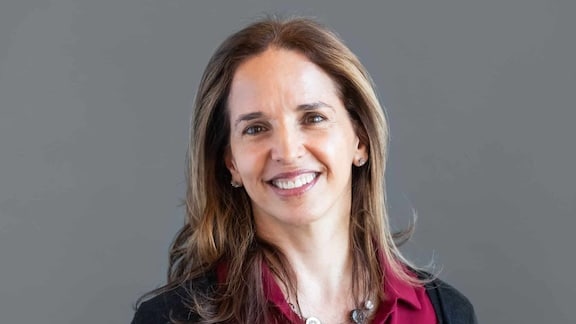
Javier Blas on Lessons from Closing Hormuz (So Far)
Over the past five months, the Strait of Hormuz has been closed for extended stretches of time, disrupting roughly 10 to 15 million barrels of oil supply each...
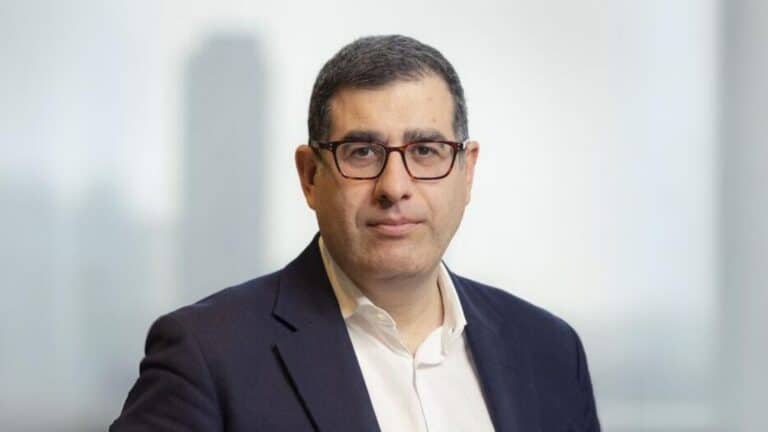
Relevant
Publications
Taking Stock of the Regulatory Landscape for Project-Based Carbon Credit Markets
Project-based carbon credit markets (PCCMs) facilitate the generation, trading, and retirement of carbon credits from projects that remove, reduce, or avoid greenhouse gas emissions.

How the World Bank’s Rethink on Industrial Policy Could Affect Energy Sector Support for Developing Countries
The World Bank is revisiting one of its most entrenched positions, publicly questioning its long-standing emphasis on market-led approaches in economic policy.