Bipartisan Senate group urges Trump to abandon plan to buy Russian diesel amid Ukraine war
A bipartisan group of six senators is urging President Donald Trump’s administration to abandon a plan to purchase diesel from Russia.
Get the latest as our experts share their insights on global energy policy.
Mandatory application review by the Advisory Committee on Reactor Safeguards (ACRS) reflects an earlier era, when the nuclear regulator lacked today’s permanent technical staff and nuclear promotion was...

Hear in-depth conversations with the world’s top energy and climate leaders from government, business, academia, and civil society.
Carbon credit markets have become one of the most hotly debated tools in the fight against climate change. Supporters call them essential to closing the gap between corporate...
Find out more about our upcoming and past events.
The Center on Global Energy Policy at Columbia University SIPA’s Women in Energy initiative invites Columbia University students to a roundtable discussion with Pam Brown, Managing Director at...

Vice President and Director, Foreign Policy Program, Brookings Institution
Suzanne Maloney:
I think that this kind of no peace, no war, occasional flare-ups of friction is likely going to be a sustained reality even if we were able to come to a new set of terms with the Iranians or if we were able to go back to the MOU. I think whatever happens, we should just price in the fact that it’s going to be unstable and volatile.
Jason Bordoff:
Nearly a month after a ceasefire, the US-Iran deal seems to have all but collapsed as both nations have slipped back into active conflict. On Sunday, Tehran announced that the Strait of Hormuz is once again closed and President Trump immediately countered, stating the waterway will remain open, “with or without Iran.” Today, as I’m taping this on Monday afternoon, the President has just announced that the US will reinstate its blockade to become “the guardian” of the strait, even floating a controversial plan to charge commercial ships to ensure safe passage.
We are in a critical window where both sides are aggressively trying to redefine their leverage in the region, yet neither has fully abandoned the negotiating table. The US can’t maintain its high stakes engagement indefinitely.
So are we right back to square one? Is this perpetual state of uncertainty the new normal for the Strait of Hormuz? What realistic leverage does Washington still possess on the nuclear front? And with the senior Houthi leaders announcing their involvement, how does the collapse of this deal reverberate throughout the Gulf region?
This is Columbia Energy Exchange, a weekly podcast from the Center on Global Energy Policy at Columbia University. I’m Jason Bordoff. Today on the show, Suzanne Maloney.
Suzanne’s the vice president and director of the foreign policy program at the Brookings Institution where her research focuses on Iran and Persian Gulf energy. Suzanne has advised Democratic and Republican administrations on Iran policy, including as an external advisor to senior state department officials during the Obama administration and as a member of Secretary of State Condoleezza Rice’s policy planning staff. Earlier in her career, she served as a Middle East advisor and geopolitical analyst for the ExxonMobil Corporation.
Suzanne joined me to discuss the current and unpredictable state of affairs in the strait and how the conflict might play out from here. We discussed Israel’s role and how the conflict is shaping geopolitics in Yemen, in Lebanon, and other parts of the Gulf. We talked about the state of Iran’s nuclear capabilities and we considered the broader context, how Iran has responded to economic pressures and what its leaders are willing to do to maintain power. I hope you enjoy our conversation.
Suzanne Maloney, welcome to Columbia Energy Exchange for the very first time. So good to see you. I really appreciate you making time for this.
Suzanne Maloney (02:55):
Well, thanks to you, Jason, for inviting me. And I think you were prescient when you reached out a few weeks ago that this would be an interesting day to talk.
Jason Bordoff (03:02):
Well, I didn’t know today, we were joking just before we started recording that I think I emailed you right around the time every headline was “Deal to end the war finalized, strait to reopen.” So we’re talking a day before this comes out that things are changing minute by minute, but tell me how it’s going with the war over and the strait open. How’s that working out so far?
Suzanne Maloney (03:24):
Well, the strait was open for about 26 days. And I think from what we could see, the traffic was somewhat erratic, but we were back to what I understand was approximately 20% of pre-war traffic, and that was an important indicator. But obviously the memorandum of understanding that was concluded between the United States and Iran had a lot of space for misinterpretation and contestation. And what we really saw over those 26 days were both sides attempting to impose their own definition of how they saw those terms, particularly around the Strait of Hormuz. And the Iranians efforts to try to drive traffic through the route that is closest to their own shoreline over which they have very significant control. And the United States efforts to try to encourage and in fact guide ships through a route that hugged closer to the Omani coastline produced an Iranian response, kinetic, and then a series of escalatory steps on both sides that appear now to have scuppered the Memorandum of Understanding brought us back to a much more intense phase of conflict, although still not at the height of the war that we saw.
Jason Bordoff (04:45):
Yeah. So again, things could change within 24 hours, but as of 24 hours before when people could listen to this, we’re talking on Monday, give people your best sense of where the MOU stands. Is the ceasefire really over? Are we back at war?
Suzanne Maloney (05:01):
Well, look, as you say, it could change by the time this podcast is released, but I think that we are in a period of time in which they’re both trying to define the terms. Both sides are trying to use escalation to achieve what they believe to be their ends, but neither has fully walked away from diplomacy. And so I think that we’re going to see efforts to try to sustain some version of an agreement between the two sides, whether it’s revisions to the MOU, whether it’s a new ceasefire entirely. I think that there is no great alternative, particularly for the United States, to some kind of an arrangement that enables normal transit or something close to normal transit through the Strait of Hormuz. And there is no way to achieve that militarily and so we’re going to have to achieve it through diplomacy.
Jason Bordoff (05:51):
And just again, I’m going to come to some of the bigger picture, longer term things. And a few people have the expertise and have been studying the Middle East and Iran as long as you have. But also news of the day, there’d been pushback to the idea that Iran might want to charge a toll or a fee for services, whatever one wants to call it as not an appropriate way to return to normal. President Trump today said that there will be some military intervention to open the strait and in exchange for that a fee, a toll, quite a hefty one, 20%. We’re doing this in real time, but what’s your understanding of, is that a real possibility? How would that even work? What impact would it have?
Suzanne Maloney (06:36):
I think the President tends to say things via social media that don’t bear a close resemblance to the reality of the options that are before him. First of all, I don’t see an easy, quick, or inexpensive way for the United States to reopen the strait by force. That’s precisely why we’ve come to where we are that yes, it is in theory possible, but it would take an enormous amount of time to move assets into place and a commitment of US ground troops to occupy portions of the Iranian coastline. That is a risky and expensive operation and it would leave this interval in which the Iranians still have control. And so you would still suffer the economic consequences of the closure as well as potentially even more drastic fallout from a larger and wider war. So it’s just not realistic that we’re going to reopen the strait militarily.
(07:28):
And the 20% toll I think is absurd and would not in fact be a bearable price. I think it undermines the very principle that the United States has been seeking to uphold by insisting that Iran reopen the straits, which is that a freedom of navigation. That has been core to the post-war international order for 80 years. And if we are now ourselves appearing to suggest that it is no longer sacrosanct, then we’ve not only lost the war, we’ve lost our principles. This isn’t the first time that the President has suggested that he might actually take a financial interest in the resolution to this war. And it of course would be consistent with the way his administration has approached a number of foreign policy, national security decisions, many of which have had a private sector component involving the President or members of his family.
Jason Bordoff (08:25):
I don’t mean this as a partisan comment, I think it’s just a factual observation or acting in ways that are inconsistent with what we have demanded of others in terms of how they conduct international economic policy or foreign policy. So if someone who is thinking about, and this is an energy podcast, thinking about oil markets, oil prices, LNG trade listens to you, the takeaway might be don’t worry about this 20% thing. It’s not real. But I take it you are concerned that it signals something potentially more worrisome about how this unfolds, how this falls apart, what happens to the strait. The other thing the president said, for example, is he was going to reimpose the blockade on Iran’s ability to transit the strait and export its oil and products. I presume Iran would not stand for that without some form of retaliation and shippers would know that and they might grind to a halt in fear of that. Is that sort of where this seems to be potentially headed?
Suzanne Maloney (09:20):
I think that’s the more immediate concern. The questions of the US trying to monetize the strait are, I think, real and we should contemplate them and what that will mean to others. But the near term question is a reimposition of the blockade by the United States and/or a continuation of the fairly extensive strikes that have been going on since the middle of last week when Iran struck several tankers in the strait. Is just an intensification of the war a return to a more active phase of conflict and the possibility, and I would say even the likelihood that the Iranians will seek to escalate themselves. They I think could clearly read the success or the efficacy of the approach that they took starting in late February when this war began, which was not to try to contest US ability to strike Iranian targets, but to impose such significant pain and disruption on their neighbors, on their economies and energy infrastructure, that it would effectively create a deterrent effect on the United States.
(10:34):
And I think that’s exactly what they will go back to if they’re going to suffer. And this has always been, I think, a principle of Iranian foreign policy. If they can’t export through the strait, nobody can export through the strait. If they’re going to pay the price of an American war that’s being fought from their neighbor’s territories, they will impose conflict on those neighbors. And so I would imagine we will see a new round of drone or mile strikes against the United Arab Emirates, Qatar, Kuwait, even possibly Oman again. And the real interesting one will be the Saudi infrastructure. Do the Iranians seek to disrupt the Saudi ability to export through the East-West Pipeline and the Port of Yanbu? Do they activate, as we may have seen some evidence today, the Houthis to get into the action? The Houthis have been sitting out this round of conflict since the war began for the most part, but that is not necessarily going to last forever.
(11:38):
And so we could see a new and even more dangerous round of escalation in response to both the president’s statements and the kinetic strikes over the course of the past week.
Jason Bordoff (11:48):
Well, that’s a worrisome outlook. And I guess we had seen transit through the strait picking up, as you said, and a lot of the stranded oil that was there trying to get out as fast as it could. Some tankers going in, although a little hesitant just because people don’t want to get stuck, which it sounds like might in fact be what’s about to happen. Things are starting to fall back over the last few days as tensions have escalated, but still haven’t completely halted along the Omani route. What’s your sense of what Iran was thinking before this re-escalation and going forward? The idea that they had signed an MOU, 60 days, they agreed to allow transit through the strait, but they, I think, wanted to send a signal that this is on their terms and they still retain a right to determine whether and how this is done.
(12:36):
Is that the new normal for the Strait of Hormuz, however this resolves itself?
Suzanne Maloney (12:42):
I think it is the new normal and it is the condition that the Iranians thought that they were signing onto when they agreed to the memorandum of understanding. The language there is vague enough that from an Iranian perspective, and they’re exceptionally good negotiators, it could be interpreted to suggest that Iran still had oversight over the strait and that by virtue of that, it essentially would control that traffic. Iranian leadership has said in multiple ways on multiple occasions throughout both the negotiations and in the post – MOU period that they intend to establish a new strategic equation across the region. And I think the Strait of Hormuz is key to that. It is a new kind of weapon of mass disruption for them. They hope to see other forms of economic relief, but it is one that they believe they can control. They also see a security justification for it, that in fact, this was a war fought by the United States from close proximity and that they have a reason and a justification for wanting to police the traffic that goes through the strait for the survival of the Iranian state.
(14:01):
And so I would say this is just part of a larger effort to impose that new strategic equation on the region.
Jason Bordoff (14:11):
So I’m curious what you think, how this unfolds, your best sense in a moment of great uncertainty. I had Jake Sullivan and Jon FIner on this podcast a couple of weeks ago just when it looked like a deal had been announced. And Jake made a point that there are reasons to be skeptical, this could fall apart. Netanyahu’s response is one example of that. But the reason to be optimistic it might hold, if optimism’s the right word, is President Trump said he didn’t want to be Herbert Hoover and crater the economy and send energy prices and other parts of the economy through the roof. And it’s a pretty good deal for Iran to get sanctions lifted on product, crude products and crude oil to get so much frozen funds unfrozen. Everyone had an interest in figuring out how to keep this going. That obviously is not what has transpired since we had that conversation.
(15:01):
Do you still think that makes sense? Is there a desire on both sides to somehow bring this back to a ceasefire? What would be your best guess about how things unfold now? And are we just headed toward a perpetual state of uncertainty, occasional conflict in the strait?
Suzanne Maloney (15:19):
Well, I’ll take that last question first because I think that is the new reality for the foreseeable future. I don’t think we’re going to get to a durable set of arrangements in 60 days or even in 160 days. I think that this kind of no peace, no war, occasional flare-ups of friction is likely going to be a sustained reality even if we were able to come to a new set of terms with the Iranians or if we were able to go back to the MOU. It is just too volatile, too unstable. And Iran has seen that a relatively low deployment of violence, a few drones can actually have a large impact on both the energy markets and on the politics and diplomacy and on their own position in the region. So I think whatever happens, we should just price in the fact that it’s going to be unstable and volatile.
(16:12):
I do think that there, as I said, there’s no really military way out of this problem for the United States. There is also no outlasting a blockade for the Iranians. They have an economy that it was in ruins before this war began and has been severely set back by the damage to civilian infrastructure by the loss of at least a million and probably many more jobs for ordinary Iranians. The country was on the precipice of sustained internal turmoil back in January when millions came to the streets to protest as a result largely precipitated by economic concerns and in a sense that the value the currency had just cratered. So they can’t simply wait this out forever. And I do think that there will be an effort to try to get back to something, but they want to lock in their gains in part because they don’t believe and have good reason not to trust in the durability of American sanctions relief.
(17:18):
So you mentioned the amazing, stunning terms that actually enabled Iran to sell its oil in US dollars to US companies for the first time in decades. But it was a 60-day opening and there are no American refineries that are set up to process Iranian oil. There was very little likelihood they were actually going to see much benefit from that other than the potential of a few cargoes here and there. And they’ve seen how quickly it can be reversed. The same is true with the access to frozen assets. They had in fact been promised access to a smaller component of their frozen assets in September of 2023 when there was an agreement made to release a number of Americans who’d been held unjustly in some cases for many years in Iranian prisons. They released the prisoners. The frozen assets were never made available to them because of the regional context changed radically a few weeks later with the October 7th attacks in Israel.
(18:20):
And so the United States imposed conditions upon the Qataris who are controlling the funds not to release them to the Iranians. So they don’t trust our sanctions relief. They don’t trust the commitments that American diplomats make on paper.
Jason Bordoff (18:33):
And I take it that the kind of tweets or Truth Socials, whatever they’re called, and we’re going to put 20% and we’re going to reimpose the blockade, does that kind of feed an emerging consensus in Iran that maybe no lasting deal with the United States is possible and things are going to perpetually change if not every four years with an election, maybe even day-to-day? How is it possible to try to figure out how to reach an agreement? Is that the perception in Iran, do you think? And then how does one think about the way that affects the ability to actually have some sort of deal?
Suzanne Maloney (19:07):
Well, they don’t trust any American policymakers and they saw that the investment of years of negotiations and the detailed dense text, 159 pages of the joint comprehensive plan of action could simply be disrupted overnight by the presidential announcement and that in fact the United States —
Jason Bordoff (19:29):
That was the original Iran deal done with the Obama administration, the JCPOA.
Suzanne Maloney (19:35):
Yeah. The 2015 Iran nuclear deal, which President Trump essentially walked the United States away from compliance in 2018. It had only been in compliance for slightly over two years. And from the Iranian point of view, they saw very quickly that the US sanctions actually had significant extraterritorial impact, that they had some capacity to evade some of the provisions, but ultimately they weren’t able to conduct licit purchases of their crude to most of the industrialized world. And so they understand just how massive American economic statecraft can be and they don’t trust any commitments that are made because they’ve seen how quickly they can be undone.
Jason Bordoff (20:26):
And I’m just curious on that because every time Obama era officials or others defend the original Iran nuclear deal, it was imperfect, it was time limited, wasn’t perfect by any means. And there were concessions made to Iran and in exchange, Iran was pulled back from its nuclear weapon program. And one response is always, you can never trust them. They were doing all the nuclear stuff anyway. What’s your best understanding of what was actually happening and why should we believe those who say actually they were complying, we know that.
Suzanne Maloney (20:56):
Well, I agree with those who suggest the Iranians were complying with the nuclear deal. And there were certainly issues that were contentious, including inspections of particular military bases. But most of the problems that the critics had with the nuclear deal was not in how the deal was implemented. It was in the terms of the deal. It was in the sense that it left Iran with the capacity to race toward a bomb sometime in the future. It created time and space for the world to wait and hopefully help induce some kind of more responsible government in Iran, but it didn’t fundamentally eliminate Iran’s capacity to construct or devise a nuclear weapon. And that for those who said, “We only got into these negotiations because Iran was violating the obligations its government had made as a signatory to the nuclear non-proliferation treaty. It shouldn’t have been a bargain.
(21:52):
They should have been forced to comply with the standards of no enrichment that are imposed effectively that are adhered to by all other non-nuclear weapons states. And ultimately that was not an agreement that the Iranians were willing to concede. And we wound up with a compromise set of arrangements. Had it been played out over time, the deal might have been effective in at least creating some different relationship between Iran and the international community potentially opening its markets a little bit and enabling more engagement with the world. That was the theory of the case that could have made change over time. It also could have been the case that had the deal been left intact, the Iranians would have been doing things in secret. They would’ve been looking for every way to evade the inspections and the verification regime that was put in place as part of the deal.
(22:46):
We’ll never know because the deal barely had time to work. And what we do know is as soon as the deal was sabotaged by the American withdrawal from the agreement, the Iranians waited a year or so to see how that would play out. And then they began walking back their own commitments under the deal. They began enriching to higher levels, installing much more advanced centrifuges and effectively getting closer to a breakout capacity than was ever intended under the deal. And that is where they were last June when the United States and the Israelis struck and did significant damage to the entire span of Iran’s nuclear infrastructure. That was a very successful military operation. If President Trump had walked away at that point in time, he could have in fact pointed to a significant accomplishment, which was for the first time in about two decades, the Iranians weren’t enriching uranium.
(23:46):
And that was because of US and Israeli military action. The difficulty is that his ambitions appeared to be whetted by that experience and he went in for a much more grandiose scheme of trying to eliminate the regime entirely. And as we know, that brought us to the closure of the strait.
Jason Bordoff (24:07):
And you said earlier — that was a great overview — you said earlier there’s only so long Iran can withstand this kind of economic pain, economic devastation, millions of people without jobs. And the point you just made, President Trump I think appeared to have maybe two potential theories of change. One is that either economic or military pressure would spark that popular uprising that would topple the regime. You talked about what we started to see earlier this year, or maybe a decapitation of the leadership would empower a more pragmatic faction willing to work with Washington. Neither has happened. I’m wondering what you think was wrong about those theories of change. And your point about whenever I hear people say Iran can’t withstand this economic pain for that long, I think about how in the first Trump administration, they actually did enforce sanctions to a level we hadn’t seen under Obama or Biden just a few hundred thousand barrels a day I think of exports.
(25:02):
And that went on for two years. Iran seemed to be able to withstand that pain. So you know Iran really well. What do you think is happening on the ground there and what theory of change makes any sense, if any?
Suzanne Maloney (25:16):
Well, the adaptability and resilience of the Iranian economy has been persistently underestimated over the course of the past 47 years. We thought during the Obama administration when the Iran Central Bank was sanctioned, that would be a catalytic moment for the regime. It contributed certainly to the decision to engage in more serious and more substantive negotiations over the nuclear program. And that was acknowledged even by Ayatollah Ali-Khamenei, the supreme leader who was killed on the opening day of this current war. So we know that sanctions can have some pressure, that economic issues actually are quite important to this regime, even if it has consistently mismanaged the economy and engaged in enormous corruption. They recognize that they have to have some kind of legitimacy with their people and some of that legitimacy comes from the development that the regime has engaged in internally since 1979.
(26:16):
What the waiting time is very hard to tell at this point in time simply because we don’t have access to as reliable information as we did even before the war. And we know that every estimate of how long the Iranians can hold out has typically proven untrue. You pointed to the experience during the first Trump administration when the United States imposed maximum pressure on Iran and Iran in fact held out. I would go back as far as the oil nationalization crisis in 1951 when the embargo that the British put on Iranian exports resulted in a complete cessation of Iran’s oil industry during that period. And that was anticipated that that would bring the Iranians to a more compliant posture at the negotiating table. It didn’t work even then. Even then there were other means undertaken in order to try to resolve that crisis, including the coup that brought about the end of Iran’s democratically elected Prime Minister Muhammad Mossadek.
(27:22):
So I think we have to be really judicious in presuming that even drastic economic pressure is going to produce a different result, especially with this current set of leaders who are, as you noted, not a kinder and gentler crew. They are in fact more hardened and in some respects much more radical and with a much greater history of violence than even their predecessors had. They’re prepared to see the country eat grass so to speak so that they can withstand this pressure and remain in power and it won’t impact their lives. And they have demonstrated through the horrific response to the uprising back in January when thousands of Iranians were gunned down in the streets by security forces, that they’re willing to kill their own people to stay in power. So they certainly will, I think, try to stick this out. And this is, I guess maybe I’ll put the question back to you, which is it’s a relative timeframe.
(28:30):
And so we know Iran has endured significant economic pressure. We know that the United States and the international economy was nearing a point in which stockpiles had been significantly drawn down. And the question I guess is we know some oil got out of the Gulf. We don’t know how much new tankers got in and I don’t think any of those actually were able to turn around and get out. And so what is the timeline in terms of new upward pressure in a significant way on oil prices and in particular for a president facing the midterms elections in November? Does that become a political liability?
Jason Bordoff (29:14):
Yeah. And before that MOU to reopen temporarily the strait everyone was counting those barrels and doing that math and many I think surprised that the market had responded as long as it had, as well as it had. But you can’t block if not 20 million barrels a day because there were workarounds through the Saudi pipeline and the Emirati pipeline and other things. But at some point shortages that large, a meaningful amount of which probably five or six million barrels a day were being coped with through inventories, commercial and government. Obviously you can only do that for so long and you can do the math and people were kind of looking to the point in July or the point in August at which oil prices started to increase in a parabolic way and… Out a gradual way because people realized this was not going to be over anytime soon.
(30:05):
And I think that’s the reality. We do have a bunch of oil that got out in the last few weeks and helped to provide a meaningful amount of additional supply to the market. There are other factors that I think the continuation of which is uncertain. A big factor, maybe surprising to many had been how much China reduced oil imports through this crisis and do those numbers stay where they are or does some of that demand start to come back for refineries there and for consumption there? But in the long run, I think tell me if you agree, and we’re already seeing some announcements day to day of pipelines being announced by the UAE and others around the strait. The strait will become less important as an oil waterway, but that obviously doesn’t happen quickly. That takes a little bit of time to build that infrastructure.
(30:56):
So if things grind to a halt for the reasons we talked about earlier, I think prices will reflect that pretty quickly. The challenge has always been that you’re looking at a shortage that may be one, two, three months off, but we see from President Trump and others that every 24 hours the deal, the peace around the corner and the peace has fallen apart. And so the trading community has trouble handling that because nobody wants to get caught on the wrong side of that trade given that the technical Brent WTI price is really a one month forward futures price. And so that’s the disconnect I think we’ve been seeing.
Suzanne Maloney (31:37):
Well, there’s another clock as well. There will be some discussion in the Congress about the president’s authority to continue waging war beyond a 30-day period. And it’s hard to know how sensitive the president is to that, but especially with a lot of focus on Congress in the run up to the midterms, that is going to be a constraining factor as well, I would imagine.
Jason Bordoff (32:03):
Speaking of Congress, do you think the death of Senator Lindsey Graham has any impact on how Congress thinks about what’s happening in the Middle East?
Suzanne Maloney (32:13):
It’s a good question. Senator Graham was very vocal and very supportive of both the war and efforts to apply pressure to Iran. He was typically joined in good company on those points, particularly from the Republican side. So I don’t know that that will really change the balance on the Hill, but it is a pretty significant loss of someone who has played a very important role in US policy and in engaging at a leadership level for many decades in the region.
Jason Bordoff (32:49):
Yeah. On energy markets, I’d seen some commentary today that it might give a extra boost in Congress to sort of honor him by moving forward some legislation he had sponsored for a long time to get much tougher on Russian energy sanctions. So we’ll see if Congress moves forward with that or not.
Suzanne Maloney (33:07):
Well, and that’s part of the challenge. It’s hard to apply more pressure on Russia while you’re trying to deal with a disruption to oil flows through the Strait of Hormuz. And so there is a little bit of an opportunity cost to this war in terms of our ability to actually make progress with Russia.
Jason Bordoff (33:28):
To your point before, about Iran’s nuclear capability or the economy there, you can see a lot of commentary on the costs of this war, literally the $150 billion or whatever it is and the impact on global trade and how the US tries to extricate itself. But I’m curious what you think the work accomplished. Is there an argument that, or is it the case that Iran’s nuclear weapon program is in a worse place and has been set back in a meaningful way or other things that it accomplished?
Suzanne Maloney (34:01):
Well, the Iranian nuclear program was set back in a very meaningful way, but not by this war, by the war last June. And I think that that is a key distinction. There’s certainly been some degradation of Iran’s ballistic missile capabilities and the production systems that it needs to sustain those capabilities. But I think this is all on net, a huge strategic loss for the United States and I think for the global economy. The Iranians have demonstrated that they are able to do significant damage to our bases in the region. That is going to, I think, force a reconsideration of how we preposition both assets and troops in the region in order to ensure that they’re protected. It has created, I think, real doubts in the minds of our partners in the region about the utility of the American security umbrella, which is not to suggest that anyone on the Arabian side of the Persian Gulf is contemplating realigning or partnering with Russia or China.
(35:07):
That’s simply not a viable option. These leaderships and their economies are very well integrated with the United States, but they are looking to hedge their bets and they’re going to have to develop their own capabilities and they’re going to, I think, develop more autonomous independent policies from the United States, including looking for ways to try to reintegrate Iran into the regional economy because they believe that there is really no alternative. Having an impoverished recalcitrant Iran on the periphery of the successful states of the Persian Gulf, like the United Arab Emirates, Qatar, and increasingly Saudi Arabia is just too great a risk to absorb and they’re prepared to find ways to essentially make sure it is in the Iranian interest not to repeat the sort of disruption that it has engaged in over the course of this conflict.
Jason Bordoff (36:00):
So I think the regime retains its highly enriched uranium and some amount of or a lot of its technical know – how. I’ve seen experts commenting that if the current talks collapse, its reconstitution timeline to rebuild from scratch is maybe one or two years. So for the nuclear file, what realistic diplomatic leverage do you think the US actually possesses to prevent a rapid breakout there?
Suzanne Maloney (36:25):
Well, look, the diplomatic leverage is that the world is united and wanting to ensure that Iran does not in fact proceed to nuclear weapons capability. And that is why even during the very difficult days of the Bush administration’s campaign in Iraq, they were still able to garner significant international consensus to put pressure on Iran to try to get to a negotiated agreement. And that pressure ultimately led to the 2015 deal that the Obama administration negotiated. So I think that matters that this is going to be a priority not just for Washington, but it will be a priority that is shared in Beijing and in Moscow and elsewhere. I think ultimately the other opportunity that one might point to as having been created by this war is that we have effectively established air superiority or even dominance over Iran for the long term. US and Israeli jets and potentially even those from neighboring countries in recent weeks have been able to strike Iran without immediate reprisal, without threat to those crews in any significant way.
(37:36):
And so what I understand that the backup approach to the Iranian nuclear threat is for those who feel strongly about this is that we simply keep eyes on those sites and we bomb anything that gets near them. Anytime we see the Iranians digging around the sites where we know highly enriched uranium may be buried, that we make it an impossible endeavor for them, that we do the same around the larger stockpiles of low enriched uranium, which if the Iranians are able to reconstitute some of their advanced centrifuges could be reprocessed in a way that actually gives them a larger stockpile of hot HEU. So you’ve got this a long-term degradation challenge, but it is doable in part because we now have clear skies over Iran.
Jason Bordoff (38:28):
Can you say a little bit about what impact this has had on the Gulf Arab neighbors you just mentioned a moment ago, UAE, Saudi, Qatar, others? My sense is it’s worsened fractures and tensions between them. We’ve already seen some of these states trying to diversify their defense procurement away from Washington in some ways toward Beijing. What’s your sense of the impact this has on the Gulf countries and the relationship between them?
Suzanne Maloney (38:57):
I think it cuts in multiple directions. There was a lot of tension between Saudi Arabia and the United Arab Emirates in the months leading up to this war that had nothing to do with Iran. It was over the horn of Africa and essentially a competition for dominance within the Gulf in the larger region and differing visions of how to achieve that. And the war in some respects forced the GCC states to pull together a little bit more coherently than we had seen. It didn’t really resolve any of the deep divisions that I think we now see between the Saudis and the Emiratis at a leadership level, but it created an opportunity for some common cause. And I think that that has been probably good and healthy.
(39:47):
There is no alternative to the United States as a partner of first resort for the states of the region. Their economies, their educational systems, everything has been heavily integrated with the United States. And I don’t think they want to see that end. They don’t want to become essentially switch sides in the strategic competition between the United States and Beijing, but they want optionality. And I think that was true before the war, but it’s even more true now that there is a desire to ensure that the region can sustain the epic transformation that they were engaged in and will have to continue to be engaged in because despite all of our focus these past few months on the petroleum resources of the larger, broader Middle East, they are planning for and they have to plan for a world post oil and gas. And so investments in tourism and technology and financial services, those are what they’re really focused on.
(40:53):
And that is what they’re trying to protect by trying to develop a new strategy of securing their own survival. It is a strategy that, as I said, can’t afford to have this really dangerous actor on their periphery. And so they’re going to, as you say, diversify their defense procurement even as they double down on Washington. There are some additional points. The defense relationship between the Emirates and the Israelis I think was really shined during this moment, the fact that the Israelis were willing to deploy patriot batteries to the Emirates, that we saw an enormous amount of success in the unified integrated defenses the US Central Command has put together since Israel was added to CETCOM. All of those I think are reasons for the region to retain a continuing and essential relationship with the US Pentagon. But as you say, they’re not going to rely on that alone.
Jason Bordoff (42:06):
Yeah. And several of those efforts you talk about had been making pretty impressive progress. Tell me if you disagree, but I mean obviously what’s happened in Abu Dhabi, Dubai for a while, the economic and social reform and modernization that we’ve seen in the kingdom in Saudi Arabia, people sometimes point to the things that don’t work out exactly as some had hyped like Neom or something. But when you look at the pace of reform in many places, a lot was happening. And I think a question is whether this sets it back meaningfully or if so, how long?
Suzanne Maloney (42:39):
I agree. I mean, I think it’s really been transformational to watch what’s happened, especially in Saudi Arabia. The Emirates is a smaller state and had a head start in many ways as a result of the success of Dubai over many decades. But in a relatively short period of time, the Saudis have just engaged in a dramatic change of strategy that yes, not every investment has paid off for sure, but there has been massive social change, some political change. And it seems to be a strategy that has been largely very successful. And it puts them in a very good position because it’s a big country and it has quite a future ahead of it that isn’t simply grounded in oil, but it took a lot to get there.
Jason Bordoff (43:29):
And I think a country that may be in a more difficult spot, tell me if you agree, is Qatar, which takes more time to get the LNG back up and running. There were fewer alternative routes beyond maritime transit through the strait, more physical damage to the infrastructure there. Is the outlook for Qatar a lot harder?
Suzanne Maloney (43:50):
I think it is absolutely. The fact that the Qataris invested so heavily in the relationship with Washington hosting Al Udeid airbase and really enabling the US to manage its Middle East conflicts out of their territory did not in fact protect them at a time of conflict and in some respects exposed them to the most painful strikes I think that the Iranians were able to undertake against the LNG facility there that was precipitated, of course, by Israeli strikes on Iran’s gas infrastructure. And in many respects, I think that was the day that this war transformed itself into something that had short-term and dramatic consequences, but to a conflict that really is going to probably reshape the region’s politics and economics for the very long term.
Jason Bordoff (44:42):
Remarkably, for a conversation that has been this fascinating for this long, we haven’t really said the word Israel yet and we focus a lot on US objectives, but Israel’s strategic calculus may not necessarily be the same. What’s your best sense of Israel’s perspective right now, what their aims are at this moment, what might happen in the upcoming election and how Prime Minister Netanyahu might act to make it more or less likely that conflict gets resolved?
Suzanne Maloney (45:14):
Well, Israel is obviously an important actor here. This was a joint operation between the United States and Israel and it was in many ways the fulfillment of the decades of dreams and hopes and plans for Prime Minister Netanyahu. And presumably also a commitment, a commitment that reflected a new determination across the political spectrum. I think in Israel in the wake of the horrific October 7th attacks, it never again would Israel permit an enemy to empower itself on its periphery in a way that could threaten the viability of the state of Israel. And so he made good on that promise with an attempt to go bigger. Unfortunately, this war, unlike the 12-day war in June of 2025, I think has had much more questionable long-term implications for Israel. I think it has only contributed to a growing concern that’s shared across the political spectrum here in the United States, especially among younger people about the US-Israeli relationship, about the maximalism of the current prime minister and his approach to trying to secure Israel.
(46:32):
And that will also have long-term consequences. The really remarkable part of this for me as someone who’s kind of watched the relationship is just the incredible degree of exquisite intelligence that the Israelis have amassed by necessity on an adversary as dangerous as Iran. Some of the reports of the success of that initial opening round of strikes in which the Iran’s Supreme Leader and a number of other senior leaders were killed suggested that the Israelis had had for several years control of the traffic cameras in Tehran and they were able to understand who was where at any given moment in time by tracking the bodyguards of VIPs. And yet they didn’t plan for the potential resilience of this regime, which in fact, if anyone who knew anything about the post-revolutionary history of Iran, the fact that this was a regime that was attacked by its neighbor in September of 1980 at a point at time at which he barely had a functioning military, its government was in disarray after the revolution and still managed to fight back and push the Iraqis off Iranian soil and then engage in a failed war to try to unseat Saddam Hussein.
(47:57):
Resilience part of this regime’s success story. Its ability to withstand crises time and time again and still hang onto power was an obvious truth as was the likelihood that they would try to threaten the Strait of Hormuz. And so this incredible intelligence that the Israelis have and assets on the ground even in Iran, but the inability to think strategically about the consequences of a regime change war, it’s stunning.
Jason Bordoff (48:35):
What was your reaction to the Rahm Emanuel speech in Tel Aviv that is getting so much attention in the last couple of days?
Suzanne Maloney (48:41):
Well, I think it’s always interesting when a mainstream American political figure picks up on a thread that has been largely contained in less mainstream components of the political debate and tries to use it as a way of establishing himself as he presumably is looking toward a campaign for the presidency. I didn’t think the speech was new or striking, but again, as someone who’s been doing this a long time, there was a point in time at which we couldn’t even say the word occupied territories. Palestinian state was a verboten concept. And so to have an American politician who will go to Israel and say uncomfortable truths about where the political sentiment is in this country at this time and concerns, it’s an interesting dynamic. I think it’s a necessary and healthy one for the relationship. And a lot of what he had to say was probably not remotely shocking by Israeli standards because it does have such an open and fierce debate within the country.
Jason Bordoff (49:57):
I wanted to ask you about one other country we haven’t mentioned yet and in panels and podcasts, far fewer people do. You said in April, I think it might’ve been on Ezra Klein, “I think what’s happening in Lebanon deserves much, much more attention. It is really worrisome. What should everyone understand about what’s happening there?
Suzanne Maloney (50:13):
Well, look, there’s a lot to be concerned about in Lebanon and there’s also a lot of potential opportunity. And that is really the conclusion that you draw when you look at both the memorandum of understanding and the framework agreement that was signed by the United States, Israel and Lebanon shortly after the MOU. The MOU effectively gave Iran some kind of sovereignty over Iran. It tied the end of the conflict and the performance of Iran and the United States to the United States imposing some new pressure on Israel. And that was shocking and had to be read as a huge concession in the region. At the same time, the framework agreement that was signed between Lebanon, Israel and the United States creates the pathway that was necessary to end the conflict there. The Israelis have been engaged in a scorched earth approach to trying to prevent Hezbollah from reconstituting the threat that it once posed to them.
(51:15):
They have occupied a swath of territory as effectively a buffer zone and destroyed everything that stands there. And that created a huge vulnerability I think for the survival of the Lebanese state. We have at this point a government, a prime minister, and a president in Lebanon that are doing brave things, that are committed to trying to demobilize Hezbollah permanently. And it will be a much more sustained success if they can do that than if the Israelis try to impose it by force. The Israelis have done enormous damage to Hezbollah. But as we’ve seen both in Lebanon and frankly in Gaza, that there’s no way to completely exterminate a terrorist group without some kind of functioning government in place that can be a competitor and can impose order on society. And so in Lebanon, there’s a pathway to do that right now. I hope that it can succeed.
Jason Bordoff (52:13):
And just to bring this all back to this being an energy podcast, just to make sure I understand the takeaway for people thinking about energy first and foremost, in this conversation for an hour, it’s kind of a worrisome or bullish outlook. You’re describing a perpetual soft burn, maybe flaring up occasionally conflict, a lot of uncertainty that flares up and down about transiting the strait. I presume that means it’s hard to get transit flows back to normal. And then just an ongoing kind of less stable or more risky outlook for the region overall. Is that energy takeaway from what I’m hearing?
Suzanne Maloney (52:51):
That’s very much my takeaway. I do think that there will be some reopening of the strait, but I don’t think it will ever be, at least not in the foreseeable future, we will ever resume the unimpeded traffic and the lack of any kind of economic price for transit. The conflict will be normalized and until and unless we see some kind of a change in government in Iran or the establishment of durable alternatives that make this effectively irrelevant to markets, the world economy will still be to some extent hostage to a dangerous government in Tehran.
Jason Bordoff (53:32):
And just stepping back more broadly just as we wrap up, I’m sort of curious how as someone who leads the foreign policy program and has thought for so long about foreign policy and national security issues, how you interact with energy and climate issues, as an energy person who thinks a lot about national security, I’m describing myself, but the inverse of that as a national security and foreign policy person, why does energy and climate sort of matter to your work on an ongoing basis and has it changed? Is it sort of much more front and center today than it was in the past or vice versa?
Suzanne Maloney (54:02):
Well, certainly this war has put me right back in the territory that I used to occupy, having spent a little bit of time on the industry side thinking about risk and opportunity in the Middle East. But I think just the reality is that we live in a very dangerous and unpredictable world and we have here in the United States become a greater source of that danger and unpredictability. It impacts markets, it impacts daily lives of every American and everyone around the world. And I think that if this war teaches us anything, it should humble us in terms of our ability to impose outcomes. President Trump actually campaigned consistently against the forever wars of the Middle East. His first term helped to begin to make real the commitment of presidents both before and after him who talked about a pivot to Asia. This was I think a real attempt to impose discipline on the US strategic priorities.
(55:03):
Unfortunately, he fell victim to the same temptation for a quick, easy win that some of his predecessors had in the Middle East. And I hope that whatever we learn from this experience, it will be that there are no quick, easy wins even for a country as powerful as this one.
Jason Bordoff (55:22):
Just quick last question. We’ve talked mostly about traditional energy issues, oil and gas, and in general, there’s a little less conversation about climate change today than was true a few years ago. As a national security threat, how do you think about climate change? Is that we got a lot of problems in the world and yes, that’s an accelerator, but that’s not at the forefront of a national security issue that we need to be thinking about or much more serious than that?
Suzanne Maloney (55:49):
It has not been at the forefront of our national security decision-making. I think we see increasing evidence that it has to become at the forefront. And frankly, all of these issues, whether it’s access to critical minerals, whether it’s transit through choke points, really reinforce that our economy runs on energy. And if we don’t have secure supplies of both energy and the components that we need to turn that electricity, turn that energy into power, then we are very much hostage to the forces of the world.
Jason Bordoff (56:23):
Suzanne Maloney, you’ve been so generous with your time. You have a big organization to help lead where I was pleased to spend five years as you recall. I think we overlapped briefly when I was helping Peter stand up the Hamilton Project way back when, late 2000s, but I’ll let you go back to it. So thank you for sharing your expertise with us.
Suzanne Maloney (56:42):
Well, thanks for having me, Jason. It’s been great to talk with you.
Jason Bordoff (56:50):
Thank you again, Suzanne Maloney, and thanks to all of you for listening to this week’s episode of Columbia Energy Exchange. The show’s brought to you by the Center on Global Energy Policy at Columbia University. The show’s hosted by me, Jason Bordoff, and by Bill Loveless. Mary Catherine O’Connor, Caroline Pitman, and Kyu Lee produced the show. Gregory Vilfranc engineered the show. For more information about the podcast or the Center on Global Energy Policy, please visit us online at energypolicy.columbia.edu or follow us on social media @columbiauenergy. And please, if you feel inclined, give us a rating on Apple or Spotify or wherever you get your podcasts. It really helps us out. Thanks again for listening. We’ll see you next week.
Nearly a month after a ceasefire, the US-Iran deal seems to have all but collapsed as both nations have slipped back into active conflict. On Sunday, Tehran announced that the Strait of Hormuz is once again closed—a move President Trump immediately countered, stating the waterway will remain open “with or without Iran.” Since then, both the US and Iran have resumed attacks, and the President said the US will reinstate its blockade to become the “guardian” of the strait, even floating a controversial plan to charge commercial ships to ensure their safe passage.
We are in a critical window where both sides are aggressively trying to redefine their leverage in the Persian Gulf region, yet neither has fully abandoned the negotiating table. The US can’t maintain its high-stakes engagement indefinitely.
So are we right back to square one? Is this perpetual state of uncertainty the new normal for the Strait of Hormuz? What realistic leverage does Washington still possess on the nuclear front? And with senior Houthi leaders announcing their involvement, how does the collapse of this deal reverberate throughout the Persian Gulf region?
Today on the show, Jason Bordoff discusses the current and unpredictable state of affairs in the strait, and how it could play out in the coming weeks and months, with Suzanne Maloney, the vice president and director of the foreign policy program at the Brookings Institution.
Suzanne’s research focuses on Iran and Persian Gulf energy. She has advised Democratic and Republican administrations on Iran policy, including as an external advisor to senior State Department officials during the Obama administration and as a member of Secretary of State Condoleezza Rice’s Policy Planning staff during the administration of George W. Bush. Earlier in her career, she served as Middle East advisor for ExxonMobil Corporation.
Carbon credit markets have become one of the most hotly debated tools in the fight against climate change. Supporters call them essential to closing the gap between corporate...
Global gas markets, especially in Europe, are approaching winter under serious pressure. With storage inventories lagging behind historical averages and shipping disruptions from the Middle East threatening key...
Seven months into the largest oil supply disruption in history, there's still no resolution in sight. This week, on the sidelines of the UN General Assembly, US and Iranian officials held their first indirect talks since the Memorandum of Understanding collapsed in July—but neither side appears ready for concessions.
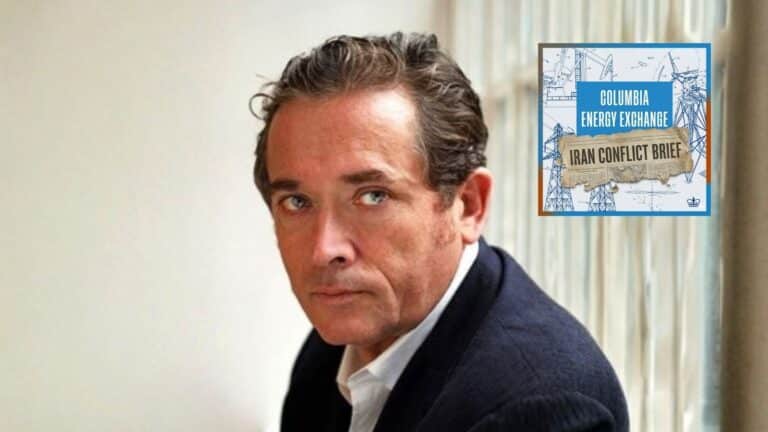
This week, Chinese President Xi Jinping travels to Washington for a state visit with President Trump, their second face-to-face meeting this year. Energy is likely to be high...

Last week's summit between US President Trump and Chinese President Xi was the second meeting between the two leaders since the US and Israel attacked Iran.
In this edition of Global Institute Dialogues Jason Bordoff discusses how the Iran crisis, China’s electrification strategy, and the US shale revolution have changed energy geopolitics.
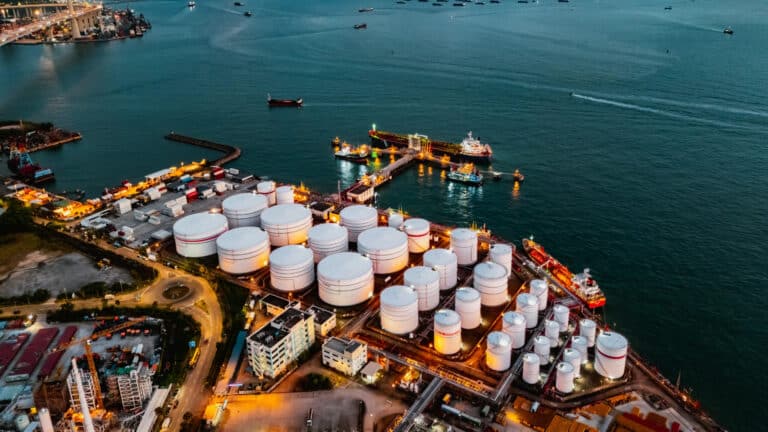
As inventories run dry and the Iran war continues to disrupt transit routes, oil has surged back to more than $100 per barrel. Diesel fuel—the workhorse of the agricultural and trucking sectors—has now soared to historic highs, pushing U.S. exports to record levels.
The Trump administration has submitted to Congress a new nuclear energy cooperation agreement with Saudi Arabia.