This website uses cookies as well as similar tools and technologies to understand visitors’ experiences. By continuing to use this website, you consent to Columbia University’s usage of cookies and similar technologies, in accordance with the Columbia University Website Cookie Notice.
Energy Explained
Get the latest as our experts share their insights on global energy policy.
Postwar LNG: The New Guiding Principles Borrow from the Past
The Iran crisis, whenever it ends, will materially change how the LNG market operates.

Podcasts
Hear in-depth conversations with the world’s top energy and climate leaders from government, business, academia, and civil society.
Iran Conflict Brief: How Renewed Strikes Impact Global Energy
In the 23 days since the US and Iran agreed to a ceasefire, strikes have returned, following a familiar pattern: Iran attacks vessels using an internationally backed sea...

Guest
Jim Farley and Mary Nichols
America is doubling down on support of electric vehicles. This summer’s historic climate bill extends key tax credits for buyers of EVs, putting them in reach for more drivers.
Those credits also require a high percentage of American-sourced materials – which could be a long-term boon to domestic production, but a potential short-term problem for manufacturers with foreign supply chains.
Electric models make up 5% of EV sales in the U.S. and IHS Markit predicts EVs will represent 30% of sales by the end of the decade. With federal support of electric cars ramping up, what is the pathway for making EVs a mainstream choice?
We’re on a late summer break. So for the next couple of weeks, we’re bringing back some of our most popular interviews. This week features a conversation recorded in front of a live audience earlier this year between our co-host, Jason Bordoff, and two top figures in transportation: Jim Farley and Mary Nichols.
Jim Farley is president and chief executive officer of Ford. Mary Nichols is a long-time environmental champion and chair of the California Air Resources Board. She’s now a distinguished visiting fellow at the Center on Global Energy Policy.
Jim and Mary discuss the significant changes taking place in the auto industry given new federal policies promoting electric cars and buses.
More Episodes
Iran Conflict Brief: How Renewed Strikes Impact Global Energy
In the 23 days since the US and Iran agreed to a ceasefire, strikes have returned, following a familiar pattern: Iran attacks vessels using an internationally backed sea...
Alice Yake on Planning for a Reliable, Cleaner Grid
Grid operators sit at the center of many of the biggest forces reshaping the global energy system. They’re navigating rising electricity demand, a lack of transmission infrastructure, shifting...

Doug Arent and Robin Millican on What’s Really Driving Electricity Prices
Concerns about the affordability of electricity in the US have been rising along with prices. And while the headlines have pointed to AI and data centers as the...

Michael Cembalest Does the Math on the Energy Transition
The energy transition is in the midst of its own transition. Spiking electricity demand and geopolitical events are driving up energy prices, while debates over the best sources...

Relevant
Publications

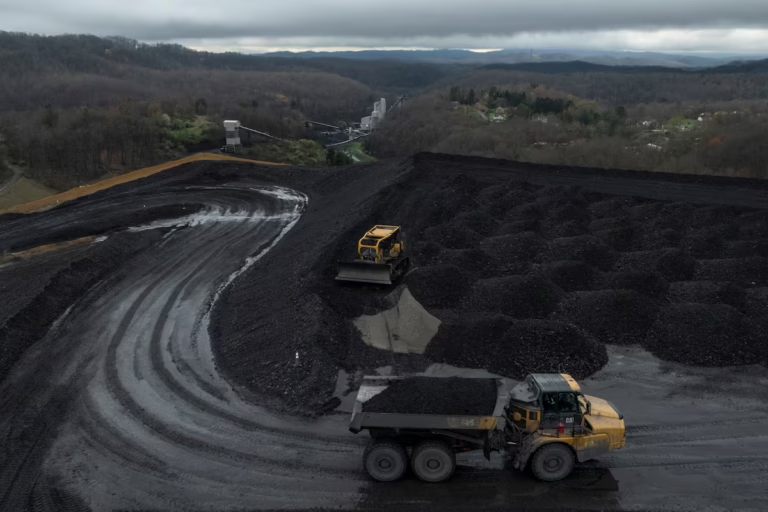
Gulf Energy Disruption and the Fragility of Global Markets
The US-Israeli war against Iran highlights the Gulf’s dual role as the backbone of global energy supply and a major source of systemic risk.
The Iran Shock
Within days of the initial U.S. and Israeli attack on Iran on February 28, 2026, the world was plunged into an energy crisis.