Net Power Surrendered Its Clean Dreams to Data Center Demand
The zero-emission pioneer is doing the dirty work for the AI boom.
Get the latest as our experts share their insights on global energy policy.
This Energy Explained post represents the research and views of the author(s). It does not necessarily represent the views of the Center on Global Energy Policy. The piece...

Hear in-depth conversations with the world’s top energy and climate leaders from government, business, academia, and civil society.
After years of trying, the US may be on the cusp of a nuclear renaissance. Commercial nuclear generation began in this country in 1958. Today, the US has...

Find out more about our upcoming and past events.
Dr. Claudia Castro will share insights into her professional journey and the role of financial markets in shaping energy investments.

Report by Matt Bowen • July 28, 2020
This report represents the research and views of the author. It does not necessarily represent the views of the Center on Global Energy Policy. The piece may be subject to further revision. Contributions to SIPA for the benefit of CGEP are general use gifts, which gives the Center discretion in how it allocates these funds. More information is available at Our Partners. Rare cases of sponsored projects are clearly indicated. For a full list of financial supporters of the Center on Global Energy Policy at Columbia University SIPA, please visit our website at Our Partners. See below a list of members that are currently in CGEP’s Visionary Annual Circle.
(This list is updated periodically)
Jay Bernstein
Breakthrough Energy LLC
Occidental Petroleum Corporation
Nuclear energy cooperation between the United States and its allies has been important for over a half century. Bilateral cooperation agreements with key countries date back to the 1950s, and the United States played a principal role in the development of several allied nuclear energy programs. Today, the international nuclear energy marketplace has changed, and the supply chain is globalized—the US program, for example, depends on working with allies for major safety-related components. However, limitations imposed by legacy US statutes and other obstacles are hampering greater collaboration in areas that would enhance the country’s nuclear program today. Developing advanced reactors to produce dispatchable zero-carbon electricity and heat as part of global efforts to address climate change would be aided by greater cooperation and utilization of resources and financing across countries.
Deeper cooperation with like-minded allies would also allow the United States to better compete against other supplier countries that have different commercial and geopolitical objectives. If the challenges facing the US nuclear program are not overcome, the country risks further ceding its role as a leading nuclear technology exporter to China and Russia. Already China and Russia are growing their domestic nuclear energy programs and offering attractive financing to prospective customers of this technology around the world. These nuclear competitors may place differing priorities on areas such as nonproliferation, and therefore maintaining a US role in the nuclear supplier regime is connected with national security considerations.
This paper, part of the Center on Global Energy Policy at Columbia University’s nuclear power program, examines part of what may be required for the United States to regain momentum in the nuclear power industry after an erosion of domestic capabilities stemming from a long hiatus in new reactor orders. The paper discusses the historical importance of nuclear cooperation between the United States and allies, some of the challenges that the US and some allied nuclear energy programs are facing, and how cooperation could be reinvigorated to the benefit of the United States and its allies.
In short, the paper finds:
A House committee voted to allow the Advisory Committee on Reactor Safeguards (ACRS) to decline certain application reviews.
The United States has struggled for decades to make progress on managing spent nuclear fuel (SNF) from its commercial power reactors.
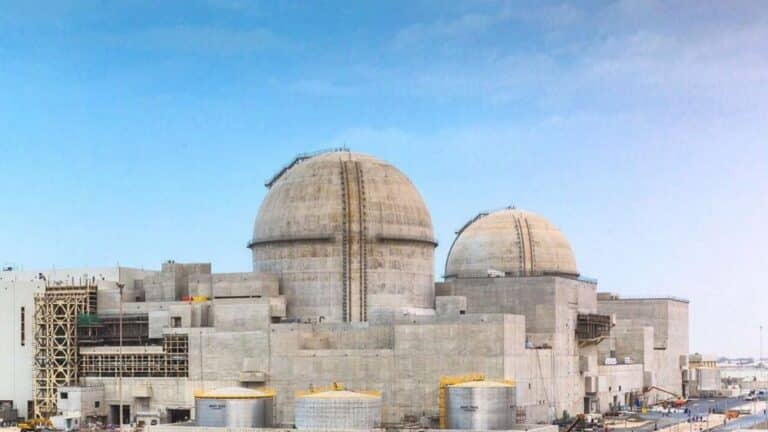
The Trump administration has submitted to Congress a new nuclear energy cooperation agreement with Saudi Arabia.
Full report
Report by Matt Bowen • July 28, 2020