Why Everyone Loves BAAJA’s Transmission Section
Power line permitting was overdue for an overhaul. Hereâs what the bill would unlock.
Get the latest as our experts share their insights on global energy policy.
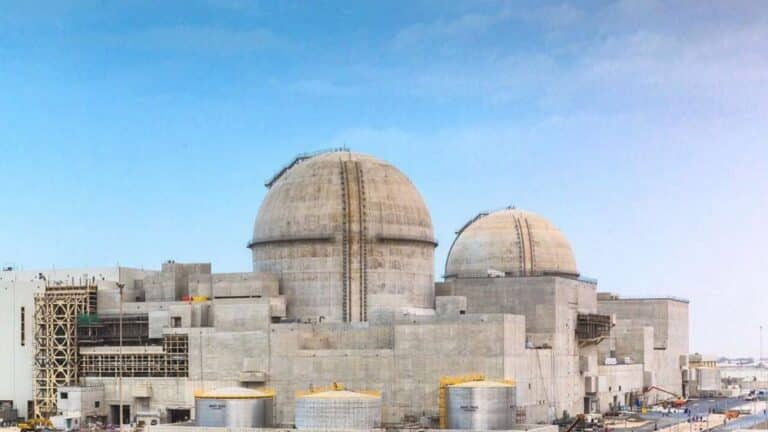
The BAAJA bill could facilitate nuclear development by streamlining federal environmental reviews and providing greater certainty for permitted projects.

Hear in-depth conversations with the world’s top energy and climate leaders from government, business, academia, and civil society.
Every permitting bill promises the same thing: build faster. The harder question is what the trade-offs are, and who bears them. That question is at the heart of...

Find out more about our upcoming and past events.
Energy storage is quickly becoming core infrastructure for the clean energy transition.

Insights from the Center on Global Energy Policy
This Energy Explained post represents the research and views of the author(s). It does not necessarily represent the views of the Center on Global Energy Policy. The piece may be subject to further revision. Contributions to SIPA for the benefit of CGEP are general use gifts, which gives the Center discretion in how it allocates these funds. More information is available here. Rare cases of sponsored projects are clearly indicated.
The Bipartisan American Affordability and Jobs Act of 2026 (BAAJA) could facilitate nuclear development by streamlining federal environmental reviews and providing greater certainty for permitted projects. But broad permitting reform alone may leave important nuclear-specific regulatory issues unresolved, including procedural requirements for Nuclear Regulatory Commission (NRC) licensing, the agency’s capacity to conduct timely reviews, the predictability of licensing requirements for developers, and the durability of safety oversight and public accountability across administrations.
Six nuclear bills advanced unanimously by the House Energy and Commerce Committee on September 2, 2026, offer a window into additional reforms under consideration. Developed on a separate legislative track and advanced before BAAJA’s introduction, the bills address fuel-cycle licensing, the sequencing of construction and licensing, mandatory hearings, independent technical advice, senior NRC compensation, and transparency around Department of Energy (DOE) authorizations. Together, they illustrate the potential for nuclear-specific legislation to complement broader permitting reform by reducing regulatory delays and uncertainty while maintaining effective oversight, but also the importance of getting the details right to realize these benefits.
This Act would amend the Atomic Energy Act’s definition of a “production facility” to exclude spent-fuel reprocessing equipment that does not isolate plutonium. This change would allow qualifying facilities to avoid associated statutory mandates that can cause delay, including a licensing hearing even when no party requests one, formal technical specifications, and the prescribed inspections, tests, analyses, and acceptance criteria associated with a combined license. It would also afford the NRC greater discretion to determine appropriate requirements through its regulations and license conditions.
The NRC’s June 2026 proposed rule states that reprocessing facilities could already be licensed under 10 CFR Part 50 or 10 CFR Part 70, but that neither framework fully addresses regulatory gaps related to the safety, security, and environmental considerations specific to these facilities. The rule would establish explicit Part 70 provisions to address some of these gaps and provide a more defined licensing pathway. The proposal illustrates the distinction between removing a statutory mandate and eliminating regulatory requirements altogether. If H.R. 3978 were to become law, the NRC proposed rule would retain existing requirements for operator licensing, restrictions on foreign ownership and control, and approval before construction even for reprocessing facilities that would fall outside the production facility classification. The NRC could also retain requirements it finds appropriate within its statutory authority and consider exemptions where available and justified.
The bill and the proposed rule thus address different aspects of reprocessing licensing: the bill would remove certain statutory requirements for qualifying facilities, while the NRC’s rulemaking would establish a regulatory framework for licensing reprocessing facilities more broadly. The NRC would still need to address technology-specific hazards, and policy questions surrounding reprocessing economics, proliferation concerns, and disposal of the resulting waste would remain.
This Act would permit uranium enrichment facilities to begin construction before receiving an NRC license, under the same terms applicable to other fuel-cycle facilities and at the applicant’s own financial risk. Under current law, enrichment facilities must obtain a license before construction can begin.
The bill would allow limited construction and licensing review to proceed in parallel, though applicants would have to weigh the risks of starting construction before knowing whether a license would be granted and decide which construction activities to prioritize. The amendment expressly preserves environmental-review requirements, hearing rights, inspection authority, and the NRC’s authority to deny a license. The NRC would need to define which construction activities are permissible before issuing a license, as it has for other technologies.
This Act builds on earlier efforts to streamline the hearings process, including the NRC’s approval of simplified mandatory-hearing procedures in 2024. A recent CGEP report examining the history and purpose of mandatory hearings concluded that their costs and time demands were no longer justified by their contribution to regulatory oversight and public transparency. In line with this finding, the bill would eliminate mandatory uncontested hearings for covered reactor and enrichment licensing actions, while preserving affected parties’ right to request a hearing. For hearings held under the amended provision, it would also mandate the use of informal adjudicatory procedures.
Continued support may depend on demonstrating increased efficiency while maintaining a record of transparency in licensing decisions and meaningful opportunities for affected parties to raise concerns.
This Act would allow the Advisory Committee on Reactor Safeguards (ACRS) to decline to review an application if it determines the application contains no unique, novel, or noteworthy issues and raises no other issues warranting review. Where practicable, it would direct the committee to focus on safety-significant facility-design issues that are unique, novel, or noteworthy and that ACRS has not previously acted on.
The proposal revisits the question of when outside technical review adds value beyond what NRC staff can provide. It also requires diverse technical expertise and timely staff coordination, generally limits members appointed after enactment to two four-year terms, and gives the Commission responsibility for selecting the chair.
As initially introduced, the bill would have required ACRS advisory activities to begin at NRC request. The substitute amendment that was passed out of committee instead preserved existing automatic advisory reviews. Representative Frank Pallone (D) identified that change as important to his support.
The bill retains automatic review as the statutory default, allowing ACRS to decline reviews only when it determines that an application contains no unique, novel, noteworthy, or otherwise review-worthy issues. As discussed in an earlier CGEP blog, making that determination and documenting it could require substantial technical work, limiting potential efficiency gains. An alternative would be to allow ACRS to select applications for review using its own publicly explained screening approach, while preserving its authority to initiate reviews and the Commission’s ability to request advice.
This Act builds on workforce and compensation authorities established by the bipartisan ADVANCE Act of 2024. The bill would authorize the NRC chair to set basic pay for career senior executives at up to 110 percent of the maximum Senior Executive Service rate within the Commission. This expanded compensation flexibility could help the NRC recruit and retain experienced senior personnel without requiring an across-the-board increase, sustaining technical expertise and consistent implementation across administrations.
This Act would require DOE to publish announcements within 72 hours of specified actions involving covered nuclear facilities, including authorizations, issuance of safety analyses, and changes to directives or safety standards. It would also require annual congressional reporting, with protections for commercially sensitive, classified, and other controlled information. By making DOE oversight more visible to the public, the bill may help build public confidence in DOE’s authorization of nuclear energy technology demonstrations and strengthen the durability of those authorizations across administrations.
The committee’s proposals suggest that nuclear-specific reforms can complement broad permitting legislation by bringing procedural efficiency, regulatory capacity, and accountability together. Significant negotiation and adjustments went into the bipartisan agreement on these six bills. For example, Representative Pallone identified adoption of amendments to the enrichment and ACRS amendments as a condition of his support for the set of six bills. He also identified transparency as a condition of his support for nuclear legislation. But bipartisan agreement is only a starting point: each reform’s practical value will depend on its design and implementation, while its durability may depend on whether agencies exercise new authorities consistently and stakeholders begin making long-term commitments on that basis. Preserving the safeguards that helped secure agreement may also help sustain that support.
This Energy Explained post represents the research and views of the author(s). It does not necessarily represent the views of the Center on Global Energy Policy. The piece...

A House committee voted to allow the Advisory Committee on Reactor Safeguards (ACRS) to decline certain application reviews.
The Trump administration and Saudi leadership have reportedly agreed to a nuclear agreement that could enable US nuclear technology transfers to Saudi Arabia.

The White House has just announced over $2 billion in new critical minerals, magnets, and battery investments.


The United States has struggled for decades to make progress on managing spent nuclear fuel (SNF) from its commercial power reactors.
The Trump administration has submitted to Congress a new nuclear energy cooperation agreement with Saudi Arabia.