This website uses cookies as well as similar tools and technologies to understand visitors’ experiences. By continuing to use this website, you consent to Columbia University’s usage of cookies and similar technologies, in accordance with the Columbia University Website Cookie Notice.
Energy Explained
Get the latest as our experts share their insights on global energy policy.
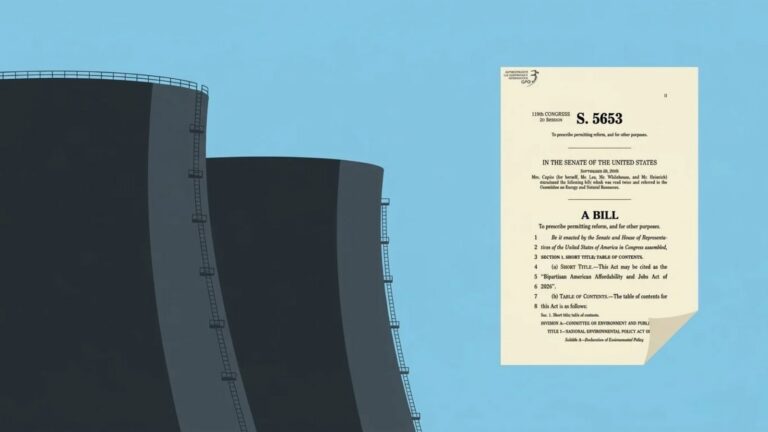
Nuclear Regulatory Reform Beyond the Permitting Bill
The BAAJA bill could facilitate nuclear development by streamlining federal environmental reviews and providing greater certainty for permitted projects.
Events
Find out more about our upcoming and past events.
November 10, 2026
• 6:00 pm - 9:00 pm
edt
Storage Is the New Grid: Jobs, Investment, and Community
Energy storage is quickly becoming core infrastructure for the clean energy transition.
Event

Podcast
Aliya Haq and Rich Powell on Energy Affordability and the New Congress
November 10, 2026
Guests
Aliya Haq
President, Clean Economy Project

Rich Powell
CEO, Corporate Energy Buyers Association

-
Transcript
-
Aliya Haq:
For just kitchen table folks, for businesses who need to make decisions, for all kinds of things, we need to be moving away from let’s just undo what the last guy did. That can’t be it. I do think a lot of these grid investments are places where you can find really, really important bipartisan support that will really help everyday people.
Rich Powell:
Our next Congress could make significant forward strides on, let’s call them the clean firm technologies. And so they can do that through the appropriations process by giving the Energy Dominance Financing Program at the Department of Energy a larger budget to go out and do even more. A very important part of this is just making sure that the projects that are nearly about to come out and start to add new generating resources into our system across the finish line.
Bill Loveless:
The affordability crisis drove US voters to the polls last week, and the resulting message for the newly elected Congress is clear. Driving down costs is job number one. As part of that, energy affordability has become the most politically consequential issue in US energy policy, but energy affordability is wrapped up in many other issues from the war in Iran to surging energy demand and an aging electric grid. So what can lawmakers do to address today’s energy affordability crisis while also making durable improvements to the resilience and security of the US power supply?
This is Columbia Energy Exchange, a weekly podcast from the Center on Global Energy Policy at Columbia University. I’m Bill Loveless. Today on the show, Aliya Haq and Rich Powell. Aliya Haq is president of the Clean Economy Project, a nonprofit focused on accelerating clean energy. She previously led US policy and advocacy at Breakthrough Energy and served as federal climate policy director at the Natural Resources Defense Council. Rich Powell is CEO of the Corporate Energy Buyers Association. Previously, he led ClearPath, a conservative organization advocating clean energy policies. We talked about how lawmakers might approach energy policy decisions in the coming months and years. We looked at areas of near term opportunity, but we also considered some possible road bumps to progress. Here’s our conversation. Aliya Haq, Rich Powell, welcome back to Columbia Energy Exchange.
Aliya Haq:
Thanks for having us.
Rich Powell:
Thanks so much for having us. Great to be back.
Bill Loveless:
Yeah, I agree. It’s great to have you both back. And before we start, let me congratulate you on your new podcast, Energy Frenemies. Welcome to the world of podcasting.
Aliya Haq:
It’s quite a time.
Bill Loveless:
It is quite a time and so much to talk about.
Aliya Haq:
It’s hard to walk down the street and have to sign all the autographs. It’s been a real adjustment, but we’re making due.
Rich Powell:
We’re going to try to make fun of each other less here on The Exchange than we do on Energy Frenemies. It’s a little bit different tone over here.
Bill Loveless:
Okay.
Aliya Haq:
Rich is going to try to make less fun of me. I’m not committing to that.
Bill Loveless:
Okay. Don’t hold back.
Rich Powell:
Unilateral disarmament here. Unilateral disarmament.
Bill Loveless:
Well, we last spoke in November 2022. I don’t know if you recall that, but that’s when Republicans had taken control of the House and Democrats had retained the Senate. Today we’re looking at sweeping wins by Democrats in the Senate and the House in an election in which prices, especially for gasoline, diesel fuel, and electricity figured prominently in voters’ decisions. Aliya, what do the results tell us about the political environment for energy policy over the next two years?
Aliya Haq:
Affordability was absolutely at the center of this election. Energy affordability was a big piece of that as well as other kinds of affordability. What’s so funny about what it means moving forward is I think it’s extremely unclear what the next Congress will actually do about energy specifically because it’s really wrapped up in so many other pieces, whether that’s the Iran war, whether that’s data centers, whether that’s the fear of AI. And so how the next Congress figures out how to deal with energy, energy affordability is not separate from several other issues that need to be dealt with. And I don’t know that there is a clear agenda in this moment on what they do in the next two years to fix prices for people or to bring down the costs, I should say.
Bill Loveless:
Right. Rich?
Rich Powell:
Well, I’ll say one of the very few things we know that they could do, and the Corporate Energy Buyers Association has published multiple studies on this topic as have many others. The thing we know they could do is reform the federal permitting and transmission system. And indeed there’s an opportunity in the weeks ahead during the lame duck to do that, to pass the BAAJA as it’s called in DC, the Bipartisan American Affordability and Jobs Act. This is a moment in time podcast, but I think we’re actually going to have a vote on that maybe on Monday before this podcast airs on Tuesday. But I think a big part of the congressional agenda next year will be determined by whether the BAAJA was passed right now. So if it does pass, that sort of clears the decks and will allow people to move on and start thinking more expansively about other policy measures that you could take on.
If it’s not cleared, that will remain the top priority in the next Congress, getting more generation built, more transmission built, more grid upgrades built, faster interconnect, faster projects.
Bill Loveless:
Right. And that certainly is the issue of the moment here in Washington and one we’ll look at, and we can talk a little bit more about it in our discussion today. But I wonder, I get your point, Aliya, and it’s difficult to say how they would address an issue like affordability on Capitol Hill given the extent to which it’s tied to so many other issues. It’s so complex. It raises the question of how much influence can the election have on energy policy given that the president retains considerable authority over federal agencies and can veto any bill passed by the Democratic Congress.
Aliya Haq:
Well, one thing I’m trying to adjust still, it’s now been several days since the election results came in. I know a lot of folks in energy policy have been thinking about if we really want to advance clean energy, let’s get our plans together for 2029. Let’s figure out what we do in that timeframe. And then given the margins that we’re seeing in the House and the Senate that Democrats have 54 senators, maybe 56, I don’t know, depending on when this podcast airs, what results will be in by then. But there’s a universe where you could imagine getting to 60 votes, getting a few Republican senators to vote with Democrats on things over the next couple years. And the majorities in the house, the margins are so wide that I’m sure we will unfortunately see some level of more progressive Democrats and more moderate Democrats having a lot of in-party fights.
But you could see still getting to the vote count that you could get something done, which is super interesting and then changes the entire frame of what can we actually do in two years? What can the country collectively do in the next two years that would help energy policy? I think there’s this assumption that well Trump will veto anything that happens. I don’t know that we should have that assumption. I actually think that there’s a universe where we could do something significant. I’m hopeful to see something on, to Rich’s point, we need to build transmissions so much faster in this country. It will absolutely lower the costs of the entire system. We need to be able to see AI companies, data centers paying. A lot of people say their fair share. I would say potentially investing more than their fair share to bring down the cost for everybody.
I think there’s a lot of really interesting things that could happen in the next year or two that need to happen. And I’m a little nervous there’s not a clear plan for what those things need to be and that we all need to get our act together and think about 2027 rather than 2029 for a major shift in policy. So I’m hopeful that hopefully within the next couple of weeks we start seeing some really strong agenda emerging around what do you do around transmission and data centers. To Rich’s point, I think I would love to see the bipartisan permitting reform bill pass before the end of this year because if you are a Democrat right now, if you were Speaker-elect Jeffries or if you were Leader Schumer, you might be thinking, I really want to unify this very diverse Democratic caucus that’s about to be inaugurated.
If you want to unify your caucus, I don’t know that permitting reform is actually the easiest way to do that. And clearing the decks, as Rich said now, would be a much easier way to get started, make that down payment on transmission that we need to move forward, be able to enable the clean energy rush that would happen with that. So that would be step one. And then step two is what can we do around AI data centers and electricity that would be going even further than that?
Bill Loveless:
Well, Rich, I mean, do you think that’s what we’re likely to face when this new Congress comes in or even before as they prepare their agendas on the Democratic side that are they looking for things they can act on rather quickly or are they acting to establish an agenda for the long term, perhaps with an eye to the presidential election in a couple of years?
Rich Powell:
Well, I definitely agree with Aliya that the right thing to do is to not wait two years. I don’t think the country can wait two years for significant relief on a lot of these issues and whether they pass the BAAJA now or not. I think there will still be significant opportunity to improve policy and many potential windows and vehicles. I mean, I think a lot of folks are counting out federal action right now in the federal legislative action in the next two years because of how far apart the perception is that the administration will be and congressional leadership will be in both houses. And yet there’s a bunch of things on the agenda that typically, even in really partisan situations, folks have found ways to come forward on some kind of bipartisan approach. We’re due up for a highway bill, National Defense Authorization Acts, just our standard appropriations process.
There should be at least several significant moving vehicles through which significant policy could be done in the next Congress, and I sure hope that people will find a way to come forward and find some path to get to some kind of bipartisan approach and all that. I won’t lie, I might be a little less sanguine on it than Aliya is. There’s also been a lot of signaling that a significant priority for Democrats coming in will be very significant oversight of the administration. And obviously the more oversight you do, typically the more capital you burn with your counterparties in the administration and their willingness to work with you on legislation might be lower. And so I hope that folks try to strike a balance on that and find ways to actually move things forward on a faster pathway than holding all their ammunition for a perceived window in 29.
The one thing we know about the American pendulum right now is it seems to be swinging back and forth faster and harder than ever. And so I hope that folks don’t lose the opportunity they have right now to potentially get some things done.
Bill Loveless:
Yeah, that’s interesting Aliya, because I’m thinking, as Rich mentions, congressional oversight, there will be congressional oversight. It’s an obligation of Congress typically, and you can certainly expect it with a large Democratic majority coming into the House and to the Senate next year. On the other hand, you have executive branch policymaking. The president has been very willing to use his executive authority to implement policies as well. And with each, I guess, there’s the potential for overreach, right?
Aliya Haq:
Executive overreach? Absolutely. I think one of the reasons that achieving permitting reform in this Congress has been so difficult has been the fighting over whether or not the permits that are issued will have the stability and certainty that they can actually move forward. And the shenanigans of the Trump administration to pull back several clean energy projects that were already underway has really made it more difficult to find that deal space, to find the place where we can move forward together. I think the lessons that are being learned from this election are, it was all about affordability and corruption. And so I do think the Democrats are getting ready for a very serious amount of oversight.You’re seeing members saying lawyer up and get ready for the hearings that are coming. I’m of two minds of this, which is one, really we can’t let any public official from any party cannot look at what’s been happening over the last few years and think, oh, we are allowed to do that now.
This is fine. So there needs to be some kind of accountability and some kind of drawing a line in the sand of what is appropriate behavior for an elected official to do and administrations to do. And also, I don’t think that as punitive oversight is what the American public was voting for. I think to the extent that the corruption is all about everyone’s getting rich except for you, to the extent that the corruption was about potentially increasing costs on other people while the people at the top are getting rich, that is something people are looking. They’re probably looking for that, but I don’t think that’s not an agenda and that’s not the vision that I think the American people are looking for. And I really hope the Democrats don’t over-index to oversight hearings when they could be passing really, really important policy and legislation that can actually make people’s lives better.
So finding that balance is really important and it remains to be seen how it’ll play out.
Bill Loveless:
I just wonder, Rich, balance is important, finding it is important. We’ve seen a sharp reversal in energy policy from the Biden administration to the Trump administration from when we last spoke four years ago to now. I mean, just given the political dynamics in Washington right now, do you think it’s unlikely where we’ll see any sharp reversal in energy policy beginning next year?
Rich Powell:
So I think to go back to where we started, to go back to where Aliya started us, the message from the last two election cycles has been abundantly crystal clear that affordability is a top of mind priority for Americans. And so I strongly suspect, and all of my conversations with legislators from both parties and the run up to this election has been that they have heard that loud and clear, hence the word affordability being worked into the title of this permitting bill before us right now. So I strongly suspect that the H.R.1, which is typically the bill in the House, which sort of sets the House legislative agenda, will say something like the American Affordability Act, and it will be a laundry list of ideas that attempt to control prices across a range of things, probably including energy prices. To Aliya’s earlier point, it is a little difficult to know what Congress can do on some of those measures.
So things that are linked to global commodities like oil or even national commodities where we just have fundamental constraints now, like the number of refineries we have. Diesel prices are really hard to get back under control, for example, despite the best efforts of the current administration. There are things though that could be done above and beyond even what’s currently being contemplated on electricity prices, for example. We know that there’s low-hanging fruit before us, for example, in reconductoring the electricity grids that we have today that could happen relatively quickly, but because we haven’t set up an incentive structure for utilities around the country to make those particular kinds of investments, we see relatively little of that kind of thing. We could do a massive push on that that might actually start delivering benefits very, very quickly in the next couple of years. And so I think that folks are going to be looking at opportunities like that, and I actually think that that’s a place.
I mean, the current administration’s been very excited about advanced conductoring technologies and things of that nature as a potential near-term solution. I think those might be places where Congress and the administration could see eye to eye and move quickly.
Bill Loveless:
But is there much that Congress can do on those issues? I just had a conversation on the energy exchange with Katie Dykes, a longtime energy policymaker and regulator in Connecticut who reminded us that many of the decisions on the cost and availability of energy are made at the state and local level, not the federal level, and there’s no silver bullet.
Aliya Haq:
Yeah, Rich and I are both big fans of Katie Dykes, so plus one of what Katie said. I was actually just at a dinner with a bunch of energy people and affordability came up and the question posed to the group was, “Is affordability a trap or is affordability an opportunity for Congress?” And the group was very split. And I think in part, the folks who think it’s a trap are the ones who fully understand what Katie’s point is, which is the federal government, it’s not like they can just flip a switch and then everybody’s electricity bills are cut in half. It’s not easy for… Federal government levers are not going to create the immediate relief that I think people might want. That said, I think the folks who felt like it is an opportunity are also correct in that most people never think about energy.
And so you only think about energy when either it’s shut off and you don’t have it or you’re paying more for it and it’s annoying. And so that does create a political opportunity to do some of these more systemic reforms that are the responsibility of the federal government to do. And so there’s part where we have to be clear about what do those federal levers, if we start building more transmission, if we start doing some of the reconducting Rich just mentioned, if we start doing the things that would make a much more efficient high-tech system that makes it easier to deliver cheap and clean electricity to all the parts of the country that need it, that is something the federal government can and should do. And the reality is that relief isn’t felt for quite some time. But I will say the other thing, when I think about affordability, I think that there’s a little bit, it’s like a canary in the coal mine to me where the issue is not going to be if people see lower bills that they will suddenly feel trust in their government and happy with what’s going on.
I think actually the affordability focus is more a sense of the rules are written in a way that people feel like they cannot get ahead. So there’s this concept of fairness or a sense, like I said, everyone’s getting rich except for you. There’s something about there’s a lack of shared prosperity that as the economy grows, there’s just a cabal of a few people who see the benefit of that and most people don’t. I think the federal government has a lot of things they can do to address that, and energy is one of those pieces and figuring out how to tap into the incredible wealth that is going to be created from AI that is coming from new technologies and otherwise, and figuring out how to reinvest that into things that make people’s lives better, I think is a huge piece of what we need to see moving forward.
Rich, you may have said this to me earlier, that the Republicans were big losers in the midterm elections this cycle, and data centers were the bigger losers. If anything, I’m quoting someone else to say, “All candidates are tripping over their pitchforks. They hate data centers more.” And it’s very clear to me that you can’t really separate the energy questions that we’re talking about from the data center questions and the AI questions because so much of the load growth that we’re seeing, so much of the needs for changes on the system are coming from that new technology that’s coming on board. It’s not all of it. There’s much more, there’s also advanced manufacturing, there’s also electric vehicles, there’s many other reasons that we need to invest in the electric grid. That said, it is now completely intertwined in people’s minds that more electricity might be helping AI, and we really need to figure out this entire morass, AI safety, what does it mean for these job transitions to be happening quickly?
What does it mean to have these loud, noisy, ugly boxes in your neighborhood? Are those benefiting the community or not? There’s all these larger questions. When we talk about energy affordability, it’s very reductive to just think that it’s about people’s monthly electricity bill. It is much broader than that one question, and I do think the federal government has so much to do to fix that.
Rich Powell:
I’ll just add on the data center front. I think if you look at, for example, all of the referenda that were up across the country, either specifically on local moratoria or local restrictions or recalls of policymakers who’d supported data centers, they did do worse than Republicans overall, which was pretty bad. I think the industry understands deeply, deeply that they’ve got an issue on social license around this with communities around the country, and they’re working like crazy to regain that license. And so all of the CEBA members, for example, that are either hyperscalers causing a lot of this demand for compute or actually building the compute out have signed onto the ratepayer protection pledge with the White House and this administration and pledged to pay more than their fair share of the grid upgrades required to serve them, pay for all the costs of the power required to serve them, and go above and beyond actually and help communities and help affordability.
How that actually gets translated, to Katie Dykes’ really good point, into the very, very specific state by state or regional transmission organization or independent system operator by ISO process around the country, that’s now the big question ahead. So how are you actually going to memorialize those kinds of commitments into policy, whether those are large load tariffs or incentives for flexibility in the order in which we allow these new large loads to come into systems around the country. Now the devil’s going to be in the details of crafting all those in a way that actually maximizes the benefits for rate payers around the country. We know that there’s a lot of resources potentially at the table here and a lot of willingness to use those resources to help aid everybody’s affordability situation. So now how do we get that right and how do we maximize the benefits of large loads?
I mean, we know that in many parts of the country where we’ve got huge clusters of data centers like Northern Virginia, for example, they also have been able to maintain some of the best affordability in the whole country. So we know that done well done right, this can be a terrific thing for local community benefit and local electricity price increases, but how do we export the best of those policies out to the rest of the country and capture the upsides of this without, to use the example, without killing the golden goose, because there aren’t a lot of other big pools of resources rapidly coming into communities around the country on the horizon other than these large data center developments. So if we calibrate the policy wrong such that those folks don’t have an opportunity to come into those grids, I don’t see many other groups of cavalry on the horizon, and then the rate payers are going to be left to cover the costs of upgrades due to all the other things, extreme weather, wildfire prevention in the West, simply the reality of aging grids around the country.
Right now, we got a long list of expensive bills just to maintain the energy affordability and reliability we have today, and so we do need to figure out a system that gets that balance right.
Bill Loveless:
I mean, just given the preponderance of concern among voters in this election, across the country, there were votes against data centers. I think the only vote in favor of them was in North Dakota. Aliya, will the next Congress seek to impose greater federal oversight on data center electricity consumption? Will they simply feel under some inordinate pressure to do something? And if so, I mean, what could they possibly do?
Aliya Haq:
Yeah. Well, I think it will be a failure of the next Congress to not address AI safety, a new social contract for what AI means more broadly. And then also as part of that, what does it mean to have a secure and safe electricity grid to enable AI growth that isn’t put on the backs of household rate payers? So that is absolutely something the next Congress should be addressing, working on, advancing. We’ve talked enough about the current bipartisan permitting reform bill, which should be a really important step in that direction. And then there’s also a need for –
Rich Powell:
And does include, sorry, I should just add, does include provisions that make data centers pay their own way. That is in the BAAJA. So if you’re concerned about this issue, you should pass the BAAJA. I’m obligated, contractually obligated to mention it 10 or 20 times on this podcast.
Aliya Haq:
Yeah, you’re well below your quota, Rich, so you’ve got at least 12 more BAAJA mentions before we have to cut it off. But I will say a comprehensive plan would be how does… So much of what’s wrong with the electricity grid is a total lack of accountability or who is supposed to be in charge of what. So because there’s the state PUCs, there’s the RTOs, there’s the federal government, there’s FERC, there’s all these pieces where it’s like, well, who’s in charge of the inter-regional transmission actually? Or who’s in charge of this piece actually? It’s not really clear who’s supposed to be making sure these things are happening. So number one, the federal government needs to figure out who is in charge of the planning for what the grid needs to look like and how do you actually then pay for that and how do you make sure the supply chains and the ability to build that grid out is there?
That is something that the Congress can absolutely do and should do potentially in the next two years advancing that. Whether or not Trump signs it is another question, but work needs to be done actively right now on that. I mean, the grid that we have currently is a hundred years old and that technology is not impressing anybody. We need to get to a place where we have a grid that’s ready for the next 100 years of economic growth, that is ready for the next 100 years of technology innovation. We don’t have that grid. Congress needs to figure that out. And BAAJA is an important first step at that. It is not the complete process. We can go further. And at the same time, if you’re advancing a grid that will enable that AI growth, you also have a responsibility to make sure that your kids are safe, that people who will be in transitions of jobs won’t be left out on the street, and that there’s some level of security that our P doom level can be very low, that we’re not literally going to destroy humanity.
Those are all super valid concerns that all need to get addressed kind of at the same time. We’re behind.
Bill Loveless:
Aliya, it almost seems like you’re suggesting there needs to be a lesson presented. I mean, we don’t have a grid in the United States. We have a grid that has multiple parts across the country run by different operators as well as utilities and independent power operators. It’s regulated by 50 states. The Federal Energy Regulatory Commission has some say in this, but not complete say in where things are built. And so it’s very complicated, right? There’s no easy answer for it that say a Congress could come in and offer a piece of legislation that would offer a sweeping change. It could affect the entire country in some way.
And Congress in the past has tried to deal with this right back in 20 years ago with Energy Policy Acts, trying to give the Federal Energy Regulatory Commission more authority to do some things. Anyway, we’re probably getting more into the permitting reform discussion there and how all of this is regulated, but it seems as though it’s going to be a tough one for this affordability issue with electricity is going to be a tough one. And I might add to that too. I mean, there’s a lot of confusion over what the impact of data centers is Is on electricity rates, right? I mean, I read in the Washington Post today a new study by Harvard and the University of Pennsylvania saying data centers are probably having only a small effect on residential electricity prices. Here at the Center on Global Energy Policy, we had a research that said concerns about affordability of electricity in the US have been rising with prices.
And while the headlines have pointed to AI and data centers as the underlying factors, the exact causes are much more complex. They get into things, Aliya, that you mentioned, aging infrastructure and all of that sort of thing. So it’s not an easy… Affordability when it comes to electricity is not going to be an easy one for this next Congress or any Congress to deal with.
Aliya Haq:
Well said. Yeah. Again, it goes back to the, is affordability a trap for Congress or is affordability an opportunity? And the answer’s both probably, but if anything, the answer is don’t sit around for two years planning for what you’ll do in 2029. The answer is do something right now and get moving.
Bill Loveless:
I take it you don’t anticipate any sharp reversals on this overall energy policy. I mentioned it before, but in the Trump administration, fossil fuels have been the prerogative. It’s been what the administration has focused on so heavily. During the Biden administration, it was the clean energy issues, the Inflation Reduction Act that was the commanding feature of energy policy in the United States. Despite the big wins by Democrats in Congress, Rich, I mean, do you necessarily see any sort of shop reversal in this approach to energy policy in this country?
Rich Powell:
It’s interesting, many of us, this is actually one of the themes of Energy Frenemies. Many of us talk about energy as a sort of a trifecta challenge where you obviously need a system that is highly reliable and secure and just runs all the time, ideally insulated against geopolitical shocks and whatnot. You need that system to be highly affordable so that you can have robust economic growth because energy is just a means to an end. And ideally that system is increasingly low emissions, environmentally friendly, carbon emissions free over time. That’s the trifecta. And I think it’s fair to say that the Biden administration was heavily indexed toward the carbon emissions free clean energy portion of that. And the Trump administration was heavily indexed toward the reliability portion of that, with a big part of that being a focus on national security and trying to rebalance resources toward domestically produced resources they felt they were better under control on.
And on the reliability front, they were very alarmed by the decline of firm power capacity production around the country. And so they’ve done things like keep aging fossil assets online that are firm capacity because they’re really worried about wide scale blackouts as we saw in events that some folks attributed at least partially to the over reliance on intermittent resources. My strong bet is that in the next two years, and maybe for a while going ahead, we’re actually going to see a pivot yet again to the third stool of that, which is that the affordability part of this, which probably was ignored to the detriment of both the Biden and the Trump administrations who were over indexed on the other two. And I think we’ve seen that the public is just as concerned about affordability as they are about the reliability and security of the system and as they are about the carbon emissions in the system.
I think that’s the lesson. So my guess is you’re going to see, I would hope, a better balance amongst those three, but certainly if there’s a hard pivot in any direction, it’s going to be toward that affordability measure as we go into policymaking. And I bet that’s going to be just as much from the administration as it’s going to be from Congress.
Aliya Haq:
Just to add to that, I think a number of Democrats that I’ve heard from who are interested in reinstating the tax credits that were repealed in the Big Beautiful Bill Act. Yeah, it’s definitely possible that the Democrats try to put something like that back in place. And I could imagine if they’re tying it to this affordability piece that Rich is saying, that these kinds of wind and solar accelerants mean that we will get cheaper electricity on the system for you and rate payers will pay less. There may be ways that they could do that. The only thing I would caution is people, if you are trying to dress up an old agenda with a new message, it is really disingenuous and people will see through that. And so if there’s a return to the old policies, that needs to be done with a real eye toward this question that Rich mentioned, which is are we actually making a system that is cheaper?
I do think that there’s a way that that happens, but it has to be done thoughtfully.
Bill Loveless:
Yeah. Aliya, do you think there are clean energy technologies that both parties could agree deserve continued federal support?
Aliya Haq:
I mean, I think there’s a lot. Yeah. Well, I mean, I think you saw that in the Big Beautiful Bill Act where they did not repeal a bunch of the tax credits for innovative new early stage technologies. So a lot of really good tech can move forward. I think geothermal’s having a real moment, Fervo Energy that many of us are fans of, had a really successful IPO recently. I think that there’s an interesting moment for advanced nuclear that folks on all sides are starting to be like, oh yeah, we could move this forward. There’s a lot of pieces on some of these clean firm technologies that I think people understand we do need them and we need to invest more in them. So I can imagine both parties getting behind a number of different technologies that are important to do.
Rich Powell:
I’ll say from our perspective in the energy buyers space, we’re increasingly looking at the firm carbon emissions-free technologies as a bigger and bigger part of the mix. It’s everything that Aliya just mentioned. I’ll just kind of add to that list. It’s expansions of the existing nuclear reactors. And so a number of our members have done these big up rates for existing nuclear plants. We’re bringing plants that were shut down back online, like Palisades in Michigan and Duayne Arnold in Iowa and now the Crane Clean Energy Center, the old Three Mile Island plant in Pennsylvania back online. I think people are looking more and more too about how do you offer those same capacity benefits from large scale renewables installations? That does mean you have to think a little bit differently about those installations. So you’ve got to put more energy storage on site for them or you’ve got to strategically pair wind and solar that generate at different times of the day and different times of the year together to get higher and higher capacity factor resources.
We’re being asked whenever we’re connecting new large loads around the country to bring our own capacity with us in the system. And when those grid operators say capacity, they mean twenty four seven, 365 capacity or at least very high capacity factor. So everyone is thinking a lot more about capacity as part of that system, but that’s appropriate as we’re back into a growth mode in the overall system when we have shut down a lot of the high capacity generators before. And so we need to add more capacity into the system, more of that dispatchable capacity in the background. So I think increasingly that’s going to be part of the narrative conversation. Couldn’t agree with Lee more that I think that there is actually broad bipartisan consensus on the importance of capacity. And so that ended up showing up in a lot of those OB3 tax credits.
I also think it’s a place that our next Congress could make significant forward strides on, let’s call them the clean firm technologies. And so they can do that through the appropriations process by giving the energy dominance financing program at the Department of Energy a larger budget to go out and do even more on those technologies that it’s already done. That’s a part of the Trump administration that’s been really active in trying to put out large scale low cost financing to get grids upgraded and to get a lot of these generating units going on grids around the country. The last thing I’ll say, because this is my last part of the quota, a very important part of this is just making sure that the projects that are nearly done, nearly about to come out and start to add new generating resources into our system across the finish line and the vast majority of the projects that are in the interconnect queues around the country but are often held up by some kind of permanent constraint, whether that’s just the natural sort of sand in the gears of the system or more recent actions that slowed down a particular project, the BAAJA addresses a lot of those issues and should help get as many of those projects that are just nearly in the queue onto grids around the country as quickly as they can.
And that’s going to be essential if we’re going to preserve the affordability of the generating side of our energy grid. That’s before we have to pay for all the upgrades on transmission and distribution and all that. But if we don’t keep pace with all the new demand with new generating assets coming in, we are going to see significant affordability problems from that side of the power bills as well. And so we need to pass that legislation and get all the things out of those queues.
Bill Loveless:
Again, I’m getting the impression you don’t think there’s going to be, I mean, given the wide differences between the Biden and the Trump administrations on energy policy, you don’t necessarily see any actions that would directly focus on reversing things. Rather, it seems to be more a matter of finding where there’s an opportunity to find some agreement and address these very specific issues that voters have brought up in these recent elections.
Aliya Haq:
I mean, I would say my hope, I don’t know that this is how it turns out, my hope is that this is an election where the Democrats feel like they’ve got a large enough margin. A lot of folks have already said this in the last week, the Democrats don’t have a mandate, they have an opportunity. I think the electorate has just been in a throw the bums out strategy for the last every two years. We’re just seeing a throw the bums out situation. So my hope is that where we are going in this Congress is less about partisan reversals, fighting back and forth, back and forth. And it’s more about a moving forward agenda where we can actually see real results for people and that there’s some sense of progress moving forward that is my desire of my hope for this entire country and the way we move forward.
We can’t just keep going back and forth for just kitchen table folks, for businesses who need to make decisions, for all kinds of things, we need to be moving away from let’s just undo what the last guy did. That can’t be it. I do think a lot of these great investments are places where you can find really, really important bipartisan support that will really help everyday people. It is very clear no matter where the electron comes from, we need to be able to move it faster and move it further and get more of them. I think that there’s a really huge opportunity to move that forward in the next couple of years. And I think there’s a lot of agreement on different types of technologies that we should be increasing and bringing down the costs for.
Bill Loveless:
Right. And Rich, Aliya, I was going to ask, looking ahead to the 2028 presidential elections, what would you most like to see the next Congress accomplish to put US energy policy on a more durable footing? Aliya, I think you more or less just addressed that. Rich, what do you think about that?
Rich Powell:
Well, I would love to see folks just more broadly embrace the three-legged stool approach to this and just say for better or for worse, I mean you might personally care more or less about one of these issues, but it is obvious that all three of them need to be solved for the reliability of our grids and energy system, the affordability and the increasingly clean carbon emissions production, all that. So these are co-equal challenges and that as we pursue an energy policy going forward, we should really embrace those three things and we shouldn’t do things that are heavily overweighted in one of those directions because then we end up with electorates and interest groups and folks pulling us just radically in other directions. If we could just get into a more steady pathway, certainly for the benefit of my buyers and the many energy providers that are also part of our association, having more steady certainty so we could do some better clearer long-term planning would be greatly appreciated.
And frankly, that would be a heck of a lot cheaper and more straightforward going forward over the next decade than the really intense swings we’ve seen over the last couple of years.
Bill Loveless:
Well, finding that steady path forward is always a challenging one for lawmakers and members of an administration. It will certainly continue to be so, but with a new Congress and two more years of the Trump administration, it certainly is going to be an interesting time to see what the effects will be on energy policy going forward. So Aliya, Rich Powell, thanks for joining us today on Columbia Energy Exchange to talk about this.
Aliya Haq:
Bill, did we agree too much? Should we have been fighting more on the podcast? I mean, we could have brought more of that in, so I apologize if we let you down.
Rich Powell:
I disagree with everything Lia said there toward the end.
Bill Loveless:
That was good guys. I enjoyed it. I hope you guys did as well.
Rich Powell:
Huge, huge. Thanks for having us, Bill.
Aliya Haq:
Thank you so much for having us.
Bill Loveless:
That’s it for this week’s episode of Columbia Energy Exchange. Thank you again, Aliya Haq and Rich Powell. And thank you for listening. The show is brought to you by the Center on Global Energy Policy at Columbia University School of International and Public Affairs. The show is hosted by Jason Bordoff and me, Bill Loveless. Mary Catherine O’Connor, Dara Diamond, and Kyu Lee produced the show. Gregory Vilfranc engineered it. You’ll find more information about the show or the Center on Global Energy Policy online at energypolicy.columbia.edu or follow us on social media at Columbia U Energy. If you like this episode, leave us a rating on Apple, Spotify, or wherever you get your podcasts. You can also share it with a friend or a colleague to help us reach more listeners. Either way, we appreciate your support. Thanks again for listening. We’ll see you next week.
Affordability was one of the key issues that drove US voters to the polls last week, and the resulting message for the newly elected Congress is clear: driving down costs is job number one. As part of that, energy affordability has become the most politically consequential issue in US energy policy.
But energy affordability is wrapped up in many other issues, from the Iran war to surging energy demand and an aging electric grid. So what can lawmakers do to address today’s energy affordability crisis while also making durable improvements to the resilience and security of the US power supply?
Today on the show, Bill Loveless speaks with two keen observers of US energy policy, Aliya Haq and Rich Powell, about Democrats’ sweeping wins in the Senate and the House and what the results tell us about the political environment for energy policy over the next two years.
They discuss the push to pass The Bipartisan American Affordability and Jobs Act in the lame-duck session of Congress, the tension between oversight and legislating, and the voter backlash against data centers. They also cover quick grid fixes like reconductoring and the clean firm technologies both parties could support.
Aliya Haq is president of the Clean Economy Project, a nonprofit focused on accelerating clean energy. She previously led US policy and advocacy at Breakthrough Energy and served as federal climate policy director at the Natural Resources Defense Council. Rich Powell is CEO of the Corporate Energy Buyers Association. Previously, he led ClearPath, a conservative organization advocating clean energy policies.
More Episodes
Katie Dykes Shares Lessons on Building and Regulating a Modern Grid
Energy costs are a big consideration for voters in much of the US today as they head to the polls. But the decisions that shape those costs will...
Senate Permitting Reform Bill: If It Passes, Will It Work?
Every permitting bill promises the same thing: build faster. The harder question is what the trade-offs are, and who bears them. That question is at the heart of...
Columbia Energy Exchange Podcast
with Robin Millican
, Noah Kaufman
and Jack Andreasen Cavanaugh
• October 27, 2026

DOE’s Julie Kozeracki on the Federal Role in US Nuclear Financing
After years of trying, the US may be on the cusp of a nuclear renaissance. Commercial nuclear generation began in this country in 1958. Today, the US has...
Daniel Palken on the Bipartisan Senate Bill to Reform Energy Permitting
Permitting reform—to allow for faster approvals on new projects—is one thing that both climate advocates and energy developers have wanted for a long time. With demand for power...
Columbia Energy Exchange Podcast
• October 13, 2026

Relevant
Publications
Nuclear Regulatory Reform Beyond the Permitting Bill
The BAAJA bill could facilitate nuclear development by streamlining federal environmental reviews and providing greater certainty for permitted projects.
The Costs of Delaying Implementation of the EU Methane Regulation
This Energy Explained post represents the research and views of the author(s). It does not necessarily represent the views of the Center on Global Energy Policy. The piece...

How the Senate Permitting Reform Bill Could Impact Energy Project Timelines
The interactive tool estimates how the Bipartisan American Affordability and Jobs Act could impact the permitting and construction timelines of different types of energy projects.
Dataset
with Jack Andreasen Cavanaugh • October 21, 2026