Defining and balancing energy sovereignty with national needs in an era of change
Discover how nations balance energy sovereignty with domestic economic needs, international trade, and technology partnerships on Energy Connects.
Get the latest as our experts share their insights on global energy policy.
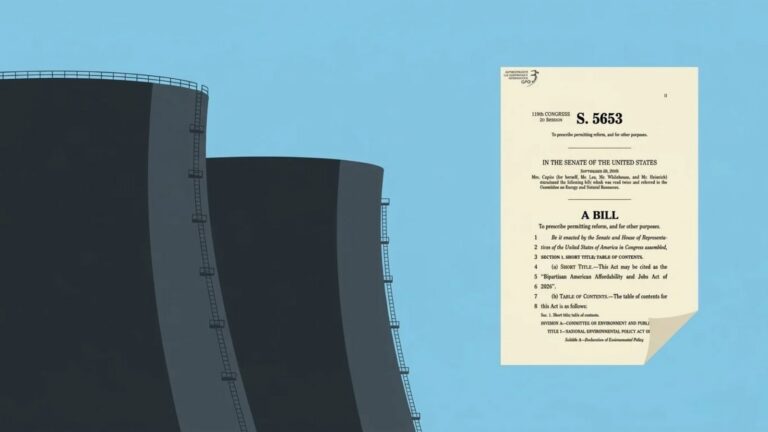
The BAAJA bill could facilitate nuclear development by streamlining federal environmental reviews and providing greater certainty for permitted projects.
Hear in-depth conversations with the world’s top energy and climate leaders from government, business, academia, and civil society.
Energy costs are a big consideration for voters in much of the US today as they head to the polls. But the decisions that shape those costs will...
Find out more about our upcoming and past events.
Energy storage is quickly becoming core infrastructure for the clean energy transition.

Former Commissioner, Connecticut Department of Energy and Environmental Protection
Katie Dykes:
You can find solutions to improve the affordability of your electric costs, but it’s not going to be just by implementing one policy. Some are legislative, some are happening at the utility commission, some are FERC. They all add up to being able to reduce costs on the bill.
Bill Loveless:
Energy costs are a big consideration for voters in much of the US today as they head to the polls for elections. But implementing decisions regarding those costs will ultimately fall on state regulators and policymakers and will vary across different regions. Today, we’ll look at New England, which sits at the center of a shifting energy landscape. States there spent years focused on how fast they could decarbonize the region’s power supply. Now, the conversation is dominated by cost.
The challenges reflect deep-seated structural issues, aging infrastructure spending, transmission costs, and a regulatory system built for a different era. And they’re colliding with a new wave of pressures, rising electrification, growing demand from EVs and heat pumps, and a resurgence in manufacturing. Connecticut has spent more than a decade at the center of this shift, working to balance reliability, affordability, and decarbonization within a shared regional grid it doesn’t fully control.
So are rising electricity prices a reflection not just of load growth, but also structural problems in how the system is planned and regulated. Is New England’s current electricity market structure capable of delivering this combination of affordability, reliability, and decarbonization the region needs?
This is Columbia Energy Exchange, a weekly podcast from the Center on Global Energy Policy at Columbia University. I’m Bill Loveless.
Today on the show, Katie Dykes. Until this summer, Katie was the commissioner of the Connecticut Department of Energy and Environmental Protection. She spent 14 years with the agency. Before that, she chaired Connecticut’s public utilities regulatory authority. Earlier in her career, she worked at the US Department of Energy and the White House Council on Environmental Quality during the Obama administration. We discussed what Connecticut and the rest of New England have learned about balancing affordability with the push to decarbonize the grid and how the region states and its grid operator, ISO New England, have moved toward more collaborative transmission and market reforms. We get into the real course drivers behind rising bills and the tension between funding new grid investment and delivering relief customers can feel today.
And we looked at what other states can learn from Connecticut’s experience with permitting reform, regional coordination, and the challenge of maintaining public trust as the pace of change accelerates. Here’s our conversation. Katie Dykes, welcome to Columbia Energy Exchange.
Katie Dykes (03:10):
It’s great to be with you, Bill.
Bill Loveless (03:12):
We’re glad to have you here today to talk about a lot of stuff that’s going on in the electricity markets and energy markets and the regulatory and policy aspects of that. But you’re well known within the regulatory and policy community in the United States and among the states. But for those who may not be as familiar with you, tell us a little bit about yourself, where you’re from and what took you along the career path that you’ve had.
Katie Dykes (03:38):
Sure. Well, I’ve been really fortunate to get to serve in a lot of different roles in the energy space. I started off at the Department of Energy in the Obama administration and the council’s office there, and then I did a stint at the Council on Environmental Quality and then had the opportunity to work at the state level here in Connecticut starting in 2012. Connecticut did a really interesting thing, which is the legislature merged the energy and environment and natural resources functions into one agency called Connecticut DEEP. And I’ve served in various roles over the last 14 years here in the state, first leading effectively the state’s energy office for several years as the deputy commissioner within that merged agency. Then I was fortunate to have two and a half years serving as the chair of the Public Utility Commission, or PERA as it’s called here in Connecticut, which was fascinating working directly on regulated utility matters.
(04:39):
And then for the last seven and a half years, I’ve been privileged to serve under Governor Ned Lamont as the head of Connecticut DEEP, so covering the whole broad sweep of environmental permitting for land, air, water and waste, natural resource management, state parks. If you have issues with wildlife and bears in Connecticut, I’m your girl, but also still having a key role on energy issues as well. So I’ve been fortunate to have that vantage point. I think my interest in energy probably stems a bit from growing up in the state of West Virginia, a little bit different than Connecticut. My mom was an environmental science teacher. Energy issues are obviously very present across the economy in that state. And so I think it was probably not much of a surprise that this is a sector that has really drawn my fascination and interest over the years.
Bill Loveless (05:37):
Yeah, you certainly have drawn from your roots in the work that you have done throughout your career. Well, when you became Connecticut’s energy commissioner, what back in 2019, the dominant question was how quickly and effectively we could move toward a cleaner energy system. Today, electricity affordability and reliability have moved much closer to the center of the political debate while at the same time we’re anticipating significant new demand from data centers, manufacturing, electrification and other sources. Looking back at your experience, what do you think we’ve learned about the challenge of building a cleaner energy system that people can actually afford?
Katie Dykes (06:16):
Well, that is a great question. I think that’s a good way to characterize the debates back in 2019. A lot of the discussion was what types of generation we should be building in order to speed this transition. Connecticut at that time, like many of the states in the Northeast, were leaning hard into a huge opportunity for domestic energy production with offshore wind. And it’s been exciting to see the deployment of offshore wind move forward. The Northeast and particularly New England is a region that has not historically had a lot of sources of energy that were economically recoverable in our backyards. And we had to import coal and oil and gas from other parts of the country or even other countries. And so that’s been a perennial challenge for the Northeast in terms of maintaining competitive energy costs. And suddenly as a result of technology advances and so on, all of this wind potential right off our shores became realizable.
(07:32):
And I think that really gave policymakers a lot more confidence that rapidly decarbonizing our power generation would be realizable in a shorter period of time. Of course, a lot of things, we learned a lot of things along the way, but some of these things were really things that we couldn’t have anticipated. And the biggest one I think that we don’t talk about nearly enough is the effects of a global pandemic on the cost of energy generation, not just renewables, but all types of generation as we’ve seen commodity cost increases, interest rate increases, supply chain breakdowns, those really contributed to seeing the cost of offshore wind and other types of generation increase over time. And of course, along the way, consumers were feeling that pinch, not just in our region, but nationally. We’ve seen some of those macroeconomic factors really influence the cost of energy inputs across the bill.
(08:39):
And so I would say during our response to the pandemic, we were also seeing the real groundswell and concern around affordability growing. At the same time that we’re experiencing more and more frequent and intense extreme weather events, which also have an impact on cost and are a driver of the need for reliability investment. So I think that as we stand here today, the conversation has really transitioned from just a debate about what is the best source of generation to meet our public policy needs and how much we should pay for it and so on and so forth, but really about what investments we need to make and what are the best regulatory frameworks to drive those investments in the grid itself to be able to access the generation that we need and provide electricity in a way that’s reliable given changing demand and changing weather conditions and concerns about ability to pay.
Bill Loveless (09:39):
Yeah. And as you note, some of these concerns over affordability are not new ones. I mean, they go back several years. You recall the pandemic and the difficulties with sourcing materials for various pieces of infrastructure. But now of course we’re seeing the projections of increased energy demand coming as well. The US Energy Information Administration just put out a report saying or projecting that US electricity consumption will hit record levels in both 2026 and 2027 with growth driven by AI data centers as well as broader electrification. So we’re entering a period in which electricity demand is growing after decades of relatively flat demand. And you’re making the point too that it does fundamentally change how regulators should think about electricity markets and utility investment.
Katie Dykes (10:34):
That’s right. New England, I think, well, first off, I’ll say something that over the last several years, of course, I would say many people didn’t know what an RTO or an ISO was. PJM was not like a household acronym, household word, and that now suddenly these issues are front and center. I would characterize ISO New England as sort of similar to PJM. We’re a multi-state RTO. We have states with lots of different public policies, but we don’t have the data center load growth. But we are expecting and seeing low growth occurring as a result of electrification, more people shifting to heat pumps for home heating, electric vehicles, as well as good old-fashioned economic growth in our manufacturing sector is driving demand increases and we’re expecting more of that to materialize. So there’s been a lot of ink spilled about ways that you can harness load growth to improve grid utilization, which could have a positive impact on affordability for all customers.
(11:47):
It can also be a driver of cost increases for customers. I think one of the tricky issues for regulators, and particularly as we think about consumer driven electrification, load growth is what is the pace of that load growth actually going to turn out to be? Because matching the speed of deployment and of grid infrastructure and generation to when that load is going to materialize is critical to doing it affordably. Not to mention that the kind of load growth that we’re dealing with and working to accommodate in New England, if it’s associated with more EVs on the road, more heat pumps in homes, that kind of demand can be different in different seasons or even different parts of the day. And so it points to the importance of being able to deploy distributed energy resources and better visibility and control on the distribution system, on the grid itself to find that sweet spot where you can integrate those loads reliably in a way that’s going to be affordable for customers.
Bill Loveless (13:04):
Yeah. And as is apparent for Connecticut or for that matter any state, but in the case of Connecticut, it doesn’t control its electricity destiny. It depends on ISO New England and as well as regional transmission and generation and decisions made by these five other states. But at the same time, Connecticut rate payers are asked to pay for regional infrastructure. So is New England’s current electricity market structure capable of delivering this combination of affordability, reliability and decarbonization that the region needs?
Katie Dykes (13:37):
Well, I’m more confident about that today, Bill, than I was when I first started working in the state. And I have to say I’m really proud of and encouraged by the level of collaboration that’s emerged between the New England states and also with the ICE New England leadership itself. It’s been fascinating to see more discussion around governance as an issue in PJM. The New England states actually came together in 2020 and issued a vision statement calling on the ICE New England to advance key reforms in its governance structure, making it more transparent and more collaborative with the states, transmission planning and market reforms. And we’ve made a significant amount of progress in those three areas. I’ll never say mission accomplished. There’s much more to be done, but having the states come together, it was a significant effort to try to come up with a joint statement that each one of the six different states in New England could sign onto.
(14:50):
We all have different public policies, different drivers, but when we were able to do so and speak with that singular voice, it led to some important changes. And so just to give you a few of them, first off, the ICE New England in response undertook a more active role in regional planning exercises that allowed the states to understand where investments on the grid could be helpful to access cheaper forms of generation or to better integrate our public policy needs in a more cost-effective way. And the result just a few weeks ago was the New England states announcing the selection of a 1200 megawatt transmission project in Northern Maine to access onshore wind resources that are fairly low cost up there in Northern Maine. I mean, there’s so much of work that went into both the states coming together and agreeing to share the costs of a project, agreeing on how to allocate those costs.
(15:53):
States are notoriously bad at finding ways to agree to split the bill for things, but we did it. And of course that all started with ICE New England coming together and agreeing to do these planning exercises to help the states make these types of decisions. So there are some positive examples of how the states and our market administrator have been able to find ways to work together, respecting that we have these different jurisdictional roles and our success collectively depends on finding ways to collaborate.
Bill Loveless (16:30):
Is there anything you would change about the way New England plans and pays for transmission and generation? Because the region does face some challenges, right? I mean it’s heavily dependent on gas and yet there’s limitations on the pipeline capacity for the region. Its reliance on nuclear power has diminished significantly over the years. Offshore wind has been a big deal for the states and some of these offshore farms have come online now, but others have been set back because of opposition from the Trump administration. Is there anything more that the region needs to do to assure affordable, reliable electricity and energy generally in the years ahead?
Katie Dykes (17:13):
Well, I think it’s two things. First, the New England states have to continue to build on their progress of coordinating for energy and transmission investment in a grid that’s shared where the costs are shared and the benefits shared across multiple states. That kind of coordination is really important to ensure that one state doesn’t end up paying more than its share of a project that benefits the whole region and vice versa. And one of the things I’m most proud of in my tenure working at Connecticut DEEP was just the progress that we made starting with strong relationships between governors who wanted to work together, which trickled down to commissioners and staff really collaborating so effectively on coordinated procurements. And this recent selection of the transmission project in Northern Maine I think is just one more data point, but certainly a lot of coordination has occurred around offshore wind investment and around securing federal grants under the Inflation Reduction Act that have catalyzed investment in the region as well.
(18:31):
The other example that I’ll point to that’s really important is multi-state and stakeholder coordination around finding ways to reign in costs and having greater oversight and assurance that the investments that we’re making are prudent and are going to deliver value for customers. At the same time, we know we need to build more infrastructure, build out our grid to access more sources of power. We also in New England have seen a rapid growth in spending, utility spending on replacing aging infrastructure. Transmission is still the smallest portion of the electric bill, but for Connecticut rate pairs, it’s nearly double since 2015. And this spending on aging infrastructure turns out to be one of this part of the transmission cost profile that has grown really substantially. I’ll be the first person to say that we need our utilities to be fixing aging poles and wires, but we know that this category of spending around so-called asset replacement projects is one that has very little oversight from FERC and our utilities are on a double digit ROE for building these types of projects.
(19:48):
So as a result, our states came together with consumer advocates calling for greater oversight of these projects. And just a few weeks ago, the ICE New England filed with FERC a proposal to strengthen review of these asset condition projects, a really timely step. So just as we’re advocating for building more new transmission, we have to be working very hard to make sure that there’s adequate oversight of other types of costs coming onto the bill. And that sort of twin focus happening across the whole region, multiple states is an example of really good state coordination that’s necessary at this period of low growth and affordability pressures.
Bill Loveless (20:35):
I’m glad you brought up the whole question about asset management. Doug Arant and Robin Milkan here at the Center on Global Energy Research, as well as some of the other scholars here have argued recently that we’re too quick to blame rising electricity prices on demand growth in data centers. They point instead to structural problems like inefficient infrastructure planning, utility incentives, transmission constraints, permitting, and the way costs are allocated. So from your experience as a regulator and state energy official, how much of Connecticut’s electricity affordability problem is really a problem of how we plan and regulate the system?
Katie Dykes (21:14):
I’ll say, Bill, that if you look across the electric bill, we know that there’s not one single lever that will solve your affordability challenge. There’s lots of different systems that we’re paying for in different categories, different parts of our electric bill, generation, transmission, distribution, and public policies. And so you can find solutions to improve the affordability of your electric costs, but it’s not going to be just by implementing one policy. It’s going to require a concerted effort and really diligent effort to look for those for 25 different levers that you can pull. Some are legislative, some are happening at the utility commission, some are FERC, some across different jurisdictional homes, but they all add up to being able to reduce costs on the bill. And I am really proud of some of the accomplishments that we’ve had over the last couple of years in Connecticut, in New England, in pulling those different levers.
(22:22):
We worked really hard on things to reduce those transmission costs. I just mentioned that piece. Working effectively with our attorney general and others to oppose the stop work orders from the Trump administration that we’re seeking to halt offshore wind projects that were nearly completed was critical to preventing a significant increase in generation costs for our customers because we knew if those projects were halted, there were no ready alternative power plants ready to turn on in New England. It’s critical to maintain that predictability. We also have worked really closely with the legislature in Connecticut to find common sense improvements to some of our public policy programs. Our renewable portfolio standard, for example, we recognized was actually providing incentives to sources of generation that are emitting air pollution and carbon emissions, so out of step with our greenhouse gas reduction goals, sources like biomass or landfill methane gas.
(23:35):
And so we embraced some reforms to the renewable portfolio standard to better align it to our carbon goals and actually found a way to achieve millions of dollars in savings for customers as a result. And continuing to invest in energy efficiency and other programs to help bring bills down has been really, really critical. But across every part of the bill, you can find solutions and improvements to make, whether it’s turning a dial on changing the regulatory structure and just strengthening oversight of utilities to taking a hard look at public policy programs to figure out how can we get more clean energy and pay less for it. For example, we have great examples of that happening across all parts of the bill in our state that I’m really proud of.
Bill Loveless (24:29):
But are utility regulatory incentives still better aligned with building things than with getting more out of the things that we already have?
Katie Dykes (24:38):
Of course. And that’s one of the huge challenges. We know that since World War II, the old cost plus model of providing a predictable ROE for utility and shareholders to deploy capital to get more poles and wires built to serve our customers has been the engine of our economy, frankly, and how our grid got built. But today as we have more distributed batteries and virtual power plants on the distribution system that could enhance grid utilization, for example, on the distribution system, they can become in direct competition with traditional utility investment in expanding a substation and building out more poles and wires to meet a resource adequacy need on the distribution system. This is where it’s going to require more innovative models. Performance-based regulation is one that we’ve attempted here in Connecticut to better incent and remunerate utilities for operating the grid more efficiently. There’s lots of different models being debated all across the country, but clearly with the technologies that are now available to us, especially on the distribution system that are activating demand management, that can be a huge unlock for customer value and affordability and reliability and speed to power, but it’s going to require a very different conversation with utility investors about how they are compensated.
Bill Loveless (26:21):
And that’s a long process, right? I mean, it’s one I suppose, or I know that is beginning in some places, it appears as though it’s beginning in Connecticut, but it’s a slow process to implement, to persuade others to buy into at a time when the concerns over reliability and affordability just continue to build.
Katie Dykes (26:40):
I will agree. And so I think it’s going to remain to be seen which jurisdictions are going to be the most successful at providing that clear or that better incentive to their utilities to get the grid that we need. I think these affordability pressures are a big driver of that, but ultimately utilities, they thrive on predictability and you have to have some… Finding that marrying of our rate payers’ needs for affordability and reliability, our needs for public policy goals to be achieved with utility leadership that recognizes and embraces the need to reform these models is going to be more critical than ever. But I am optimistic that we will accomplish this because I’ve never seen this level of attentiveness to public utility commissions, to regulatory processes that used to be incredibly obscure. And now you see an outpouring of interest and focus from a broad range of stakeholders and also the technology innovations that are available and the economic growth that is possible if we can solve for this gives me a lot of optimism that these models are going to emerge. It’s a really exciting time.
Bill Loveless (28:12):
We’re in an election season and I’m not going to delve very deeply or deeply at all into the politics of things, but nevertheless, electricity prices have become a significant political issue in Connecticut as they have in other states, and a lot of it is over data centers. We hear the calls from some governors and other politicians and all to put a halt or slow down the advance in them. Of course, you’ve mentioned that data centers are really not a big issue for Connecticut and New England, but nevertheless, there is a lot of increased expectations of increased power demand there as it is everywhere. How much do you think the politics of energy have changed and does the focus on affordability represent a legitimate correction in policy priorities? Or is there a risk that political pressure for immediate bill relief could undermine investments that are necessary to keep the system reliable and affordable in the long term?
Katie Dykes (29:06):
I think in the long term, the focus on affordability I think is a good one. I think it has created more political support and momentum for stronger oversight, just good regulatory practice than we’ve ever experienced before. Just harkening back to the example of greater oversight over those asset condition projects, as well as strengthening even the timeframe for a rate case. That was the big deal in Connecticut. We had one of the shortest timeframes in the country. The legislature chose to provide for more time for regulators to conduct those rate cases, and that came from just recognizing there was a lot of rate payer concern over storm response and utility costs. So it has created a space to have better… Regulation, which I think helps both utilities and repairs and public policy over time. At the same time, I think that there’s also one of the challenges is that, look, sometimes the most impactful step you can take is to spend now to avoid having to spend even more in the future.
(30:26):
Or some of the biggest wins that we’ve achieved for affordability are preventing costs from being higher for a program than they otherwise would be. Take, for example, the reforms to our renewable portfolio standard. But those kinds of wins don’t translate really readily to customers who are experiencing real pain for refilling a prescription or being late on their rent because they couldn’t afford their utility bill. And so I think that has been a critical recognition, I think, coming from political leaders is that delivering relief to customers. These solutions have to be sound, they have to work well, but they also have to provide something that’s meaningful and real to customers today. And some of the steps that we’ve taken here in Connecticut involved securitizing certain costs related to repairing storm damage on our distribution system. Those would’ve been a big lumpy costs that would’ve come onto customers’ bills, spreading those payments out over time and using public finance for that was a solution that we reached for.
(31:48):
Also, using state bonding to help cover some of the costs of things like arrearage and hardship programs that were really important to have available during COVID for folks who were falling behind on the bill, but those costs became really significant. And so finding ways to help alleviate some of those near term big expenses to provide some relief for customers’ bills that they could feel today has to be, it’s a necessary part of the solution set at a time that rate payers are experiencing a lot of affordability challenges.
Bill Loveless (32:24):
And with this pressure comes the risk of cutting back on some programs that were adopted previously with good intentions, whether it was energy efficiency or emissions. I’m thinking RGGI, the Regional Greenhouse Gas Initiative to reduce carbon emissions or energy efficiency programs. There is some cost attached to that. There’s a term, public interest –
Katie Dykes (32:46):
Public policy.
Bill Loveless (32:48):
Attached to those types of programs. There’s some risk to those programs as well that decisions may be made to cut the cost of those programs or to even eliminate them as has been considered with RGGI and some states in the past.
Katie Dykes (33:04):
Yeah. Not speaking to RGGI, but I’ll just say in general, a lot of the debate that’s been framed particularly in Washington around energy costs has been, again, back to a focus on which types of generation are the best, fossil resources versus clean and so on. And I think it’s been really important, and I think our experience in New England has shown that we really need to stop thinking about clean energy investment as just a climate policy. Clean energy investment is also an important price risk management tool for states like in New England. New England is a grid that’s heavily supplied by natural gas, powered by natural gas, and during the war in Ukraine, we saw significant spikes in gas commodity prices, which directly translated into more volatility on the energy bill.
(34:03):
The investments in solar and wind, which have no fuel costs, are helping to drive down emissions, improve air quality, but they also provide a hedge against the price volatility of delivered fuels. And so it’s really teasing apart those different benefits that these resources provide to the grid. It’s really important to have in the conversation. But I will be someone who will say all day long, the key that we need to focus on is how to get those clean energy resources and those benefits from our clean energy resources at the lowest cost possible. And that’s where I think some of these tools that are so important, regulatory tools like improving, streamlining permitting, making permitting go faster can have a direct impact, although hard to quantify, on making energy sources more affordable. Same with appliance regulations. The story about LED lighting, of course, is one of a massive energy affordability tool, but it’s a regulatory tool. And so those can be a little harder sell in today’s environment sometimes because the savings are harder to quantify, but they very much need to be part of every governor’s toolkit for helping to address these challenges.
Bill Loveless (35:27):
Well, given that and given the times that we live in these days, what does New England’s optimal generation mix look like now? Or has that debate become too ideological about particular technologies and options?
Katie Dykes (35:42):
Well, I think you see many governors, including Governor Lamont, talking about the importance of openness to an all the above approach. I think that something that I’m really encouraged by is the ISO New England is working on some reforms to the capacity market in New England. Again, gets a little less attention than PJM, which is fine, but there’s been a move by the ISO New England to provide for more granular way of crediting different types of resources based on when they can actually perform and supply customers. And why that matters is that a decade ago we were fighting over this thing called the MOPR and whether states investing in clean energy resources to meet public policy was somehow interfering with the capacity market and crossing jurisdictional lines. Today, again, I think because of this more collaborative approach that states and the ISO are embracing, we’ve moved away from or moved towards just a more transparent way of valuing these different types of resources that better reflects their contribution to reliability.
(37:07):
Offshore wind is an important resource for meeting long-term decarbonization goals, but it also happens to perform really well during the wintertime, during those multiple day cold snaps that are the Achilles heel of a reliable grid for New England. And I think that that move by the ISO to really provide for this more transparent accounting of the capacity contribution of these different types of resources offers policymakers a way to transcend this old sort of clean versus fossil, green versus brown debate and focus on the most cost-effective ways to provide for a reliable, affordable grid.
Bill Loveless (37:54):
Connecticut, as you note, hasn’t experienced the scale of data center development we’re seeing in Virginia, Texas, or parts of the Midwest. But the national debate over large electricity uses raises a fundamental question of when a new industrial customer or data center wants hundreds of megawatts of power, who should pay for the infrastructure needed to serve it?
Katie Dykes (38:17):
Yeah, these are the classic issues that regulators have tackled in utility commissions. Of course, we have not had a lot of data center development in New England, but I think that there are opportunities to get this right. Not speaking to the data center, some of the tariff designs and so on that have been developed in other parts of the country. But if you look at the New England grid, and in Connecticut, for example, we experienced a wave of deindustrialization in the 70s and 80s and 90s as manufacturers fled to lower cost places to produce. And that’s created in some pockets of our grid some opportunity where adding manufacturing load could actually increase utilization of the grid and lead to a more efficient use of the system of being able to spread the costs of our distribution system across more kilowatt hour sales, more customer base.
(39:13):
Connecticut, two years ago, our legislature enacted a goal, I think maybe one of the first in the country to improve the efficiency of our overall system and increase grid utilization. And it’s great to see other parts of the country, other jurisdictions are tackling and pursuing that opportunity as well. This is something that I think could present a really positive model as it emerges in our state and also in other parts of the country.
Bill Loveless (39:47):
And yet the needs just seem so enormous. I was just looking at a piece that appeared in Latitude Media recently. It was a new research from the nonprofit group, Power Lines, and they found that utilities are gearing up to spend $1.4 trillion over the next five years across 51 investor owned utilities. And the executive director of Power Lines, Charles Wa, said to Latitude, “This is a tremendous amount of spending. It’s like three interstate highway systems worth of spending. It’s thousands of Hoover dams worth of spending.” Wow.
Katie Dykes (40:27):
It’s really, really remarkable. And so as those grid resources are getting built out, it’s more important than ever that we have the right regulatory framework to ensure that those dollars are spent to borrow the term that every regulator uses, and maybe it gets overused, but prudently. And so I’ve been someone who’s been a fan of even incenting our utilities to right size projects, build them bigger the first time. It produces some of the costs of permitting and the challenges of siting over the long term and helps us to better interconnect more generation more readily. But you can only afford and be willing to allow for that right sizing if you have that trust and that confidence that comes from strong oversight that the utilities are not overspending in other categories of grid infrastructure such as those asset condition projects. So I think we’re moving in a good direction.
(41:31):
New England is moving in a good direction. It was great to be able to be part of some of those reforms when I was with Connecticut DEEP, and it’s going to be exciting to see what the region will accomplish going forward.
Bill Loveless (41:44):
Well, as you described, Connecticut has been something of a laboratory futility regulation on affordability, grid modernization, distributed energy resources, demand response, and it seems the way regulators think about costs and benefits of energy transition. What can regulators in other states learn from Connecticut’s experience, both what has worked and what you would do differently?
Katie Dykes (42:08):
Well, I think I would put it the other way. I think we were constantly trying to copy off the homework of our neighboring states if we saw something that was working well. And I’m constantly inspired by the creativity of other states who are tackling issues maybe a little ahead or a little differently than we were in Connecticut. I do think that one of the structural advantages that we’ve had in Connecticut is having this merged agency that includes energy and environment and natural resources under one roof. I think it gave us a lot of ability to be more comprehensive in the policy work that we were doing. We designed a climate resilience incentive program that leveraged all the best knowledge of our water resources team that knew what to do to mitigate flooding and also incorporated microgrids and protecting substations and critical energy infrastructure as part of that climate resilience program.
(43:16):
So there’s a lot of synergies there. Our energy facility siting process is able to take in account not just environmental impacts, but how to accelerate environmental permitting, for example, on landfills and brownfields and previously disturbed sites that has been critical to helping get more projects built before tax credits were expiring. When we are working really hard at the outset of our offshore wind journey, being able to engage marine fisheries experts to help review mitigation plans. And now as we tackle the possibility of new nuclear in New England, at Connecticut DEEP, we were able to leverage the expertise of radiation safety experts as well as folks working on energy procurement. So I found that to be really valuable to achieve more comprehensive policy where we were able to leverage different staff expertise within one agency. It’s not a must have. You can accomplish the same thing if energy and environment are in separate agencies, if you have strong governor’s office coordination or collaborative relationships among the agency heads.
(44:25):
But I did find that it was pretty helpful and it also kept us really busy.
Bill Loveless (44:32):
Anything you would do differently?
Katie Dykes (44:36):
I think there is just, it’s not doing differently, but doing more. One of the things I’m most proud of is the work that we tackled in terms of improving permitting and siting processes. When Governor Lamont asked me to take on the role of DEEP commissioner, he said he was hearing a lot that our permitting processes were too unpredictable. It was like a black box. Folks didn’t know how to navigate it. And so we launched an initiative called 20 by 20 and the 20 by 26 to set performance goals to improve permitting. This was back in 2019 before permitting became the big buzzword. We set expected timeframes for all of our permitting processes. We reduced permitting backlogs by 78%. We now have launched a process just before I left to explore the use of more AI and IT tools to speed up permitting and improve the quality and consistency of environmental reviews.
(45:32):
There’s so much great work happening at the state level across the country in this space. I think that the thing that, if you ask what would I do differently, I think that the next challenge that we face in terms of permitting is not just the technocratic ways to speed things up and make process go faster, but how do you maintain public trust and consensus around the permitting process in the first place? And a time where I experienced during my tenure again, largely I think a result of COVID, the trust in government is at a low and it’s really hard to speed up a process if the public is skeptical about the whole enterprise in the first place. A permitting process is designed to ask, is it appropriate to put this technology in this particular place and have this particular person build it? But it may not be the best place to get into those existential questions of would a better technology be better or how does my community even benefit from this technology being built?
(46:41):
And we have to do more to think about how to improve processes. We want them to be predictable and fast, but we also need to bring the public along with these decisions at the outset to understand what stake they have in projects getting built.
Bill Loveless (46:59):
Big challenge, a big need as we see across the landscape these days when it comes to electric power, energy needs and public support and as well as affordability, reliability, emissions, all of those things. A lot out there, but a lot has been done in Connecticut as well. Katie Dykes, thanks for joining us on Columbia Energy Exchange.
Katie Dykes (47:20):
Oh, it’s been a pleasure. Thanks so much for having me on.
Bill Loveless (47:27):
That’s it for this week’s episode of Columbia Energy Exchange. Thank you again, Katie Dykes, and thank you for listening. The show is brought to you by the Center on Global Energy Policy at Columbia University School of International and Public Affairs. The show is hosted by Jason Bordoff and me, Bill Loveless. Mary Catherine O’Connor, Dara Diamond, and Kyu Lee produced the show. Gregg Vilfranc engineered it. You’ll find more information about the show or the Center on Global Energy Policy online at energypolicy.columbia.edu or follow us on social media at Columbia U Energy. If you like this episode, leave us a rating on Apple, Spotify, or wherever you get your podcasts. You can also share it with a friend or colleague to help us reach more listeners. Either way, we appreciate your support. Thanks again for listening. We’ll see you next week.
Energy costs are a big consideration for voters in much of the US today as they head to the polls. But the decisions that shape those costs will ultimately fall on state regulators and policymakers, and will vary across different regions.
Today’s episode turns to New England, which sits at the center of a shifting energy landscape. States there spent years focused on how fast they could decarbonize the region’s power supply. Now the conversation is dominated by cost.
The challenges reflect deep-seated structural issues—the cost of aging infrastructure, transmission costs, and a regulatory system built for a different era. And they’re colliding with a new wave of pressures: rising electrification, growing demand from EVs and heat pumps, and a resurgence in manufacturing.
Connecticut has spent more than a decade at the center of this shift, working to balance reliability, affordability, and decarbonization within a shared regional grid it doesn’t fully control.
So are rising electricity prices a reflection not just of load growth but also of structural problems in how the system is planned and regulated? Is New England’s current electricity market structure capable of delivering this combination of affordability, reliability, and decarbonization the region needs? And what are the big energy policy lessons that other parts of the country can learn from New England’s clean energy transition in recent years?
In this episode, Bill Loveless digs into these questions with Katie Dykes, who was the commissioner of the Connecticut Department of Energy and Environmental Protection from 2019 until this past summer. Before that, she chaired Connecticut’s Public Utilities Regulatory Authority. Earlier in her career, she worked at the US Department of Energy and the White House Council on Environmental Quality during the Obama administration.
Every permitting bill promises the same thing: build faster. The harder question is what the trade-offs are, and who bears them. That question is at the heart of...

After years of trying, the US may be on the cusp of a nuclear renaissance. Commercial nuclear generation began in this country in 1958. Today, the US has...
Permitting reform—to allow for faster approvals on new projects—is one thing that both climate advocates and energy developers have wanted for a long time. With demand for power...

Carbon credit markets have become one of the most hotly debated tools in the fight against climate change. Supporters call them essential to closing the gap between corporate...

America needs to build more to achieve its energy goals of lower costs, greater security, and more clean energy.
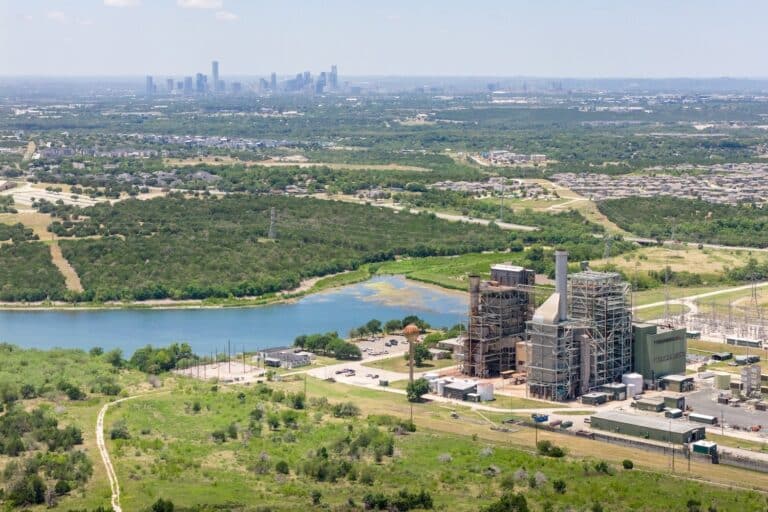
After decades without growth, electricity demand is surging, driven by energy-hungry data centers, new energy-intensive manufacturing facilities, and the increasing electrification of transportation and heating.
Data centers face growing local opposition as states impose moratoriums on hyperscale projects and grid connections. Communities can negotiate deals for tax revenue and jobs.