LIVE: Daily Energy Markets Podcast 2026
Enjoy the videos and music you love, upload original content, and share it all with friends, family, and the world on YouTube.
Get the latest as our experts share their insights on global energy policy.
A House committee voted to allow the Advisory Committee on Reactor Safeguards (ACRS) to decline certain application reviews.
Hear in-depth conversations with the world’s top energy and climate leaders from government, business, academia, and civil society.
The US may finally, after years of trying, be on the cusp of a nuclear renaissance. Commercial nuclear generation began in this country in 1958. Today, the US...
Find out more about our upcoming and past events.
Putting data centers in space once seemed fanciful. Today, a growing number of companies have started doing so.

Acting Chief Investment Officer, US Department of Energy’s Office of Energy Dominance Financing
Julie Kozeracki:
You have a lot of utilities who’ve been sort of repeating this line that, “Well, we just need the government to step in and help. This costs more than we expect.” Great news. The federal government is committing to pay 30 to 50 cents of every overrun dollar. I think that it’s also valuable to have the government formally involved as a partner in these projects for the long term because we shut down 13 perfectly good nukes not so many years ago. And so I think we all are very excited about the level of demand growth, renewed interest in nuclear, but I certainly feel more comfortable knowing that the federal government is involved in a partner with these projects to ensure that they are successful in operating for the longest term possible.
Jason Bordoff:
There is much talk today that the United States may finally, after years of trying, be on the cusp of a nuclear renaissance. Commercial nuclear generation began in this country in 1958. Today, the US has nearly 100 operating reactors supplying about a fifth of the nation’s electricity, but in the last 30 years, only three new reactors have come online. Now the picture seems to be changing fast. In May 2025, President Trump signed four executive orders to speed up nuclear deployment, including a goal of 10 new large reactors under construction by 2030. Nuclear startups have raised nearly $5 billion this year alone. And with AI and data centers driving electricity demand growth, tech companies are signing long-term power agreements and backing the restart of plants that had been shut down. Caution is warranted, of course. The delays in cost overruns at Georgia’s Vogtle reactors remain a concern for some would-be investors.
Advanced designs offer promise, but their ability to deliver power at competitive costs through repeated commercial deployment remains yet to be demonstrated. At the center of this challenge is the Department of Energy’s Office of Energy Dominance Financing, formerly the loan program’s office. In June, it issued a $17.5 billion conditional commitment to rebuild the nuclear supply chain and help launch 10 large reactors. It is also financing three restarts, most recently with a nearly $2 billion loan to NextEra for Iowa’s Duane Arnold plant, the largest yet for reviving a nuclear plant. And just two weeks ago, it announced more than $4 billion to increase power generation from existing plants— so-called uprates — across Pennsylvania and Ohio. So what will it really take to turn this momentum into new reactors delivered on time, on budget? Why does nuclear need federal financing at all? And what role does nuclear play in the nation’s economic security and decarbonization goals?
This is Columbia Energy Exchange, a weekly podcast from the Center on Global Energy Policy at Columbia University. I’m Jason Bordoff.
Today on the show, Julie Kozeracki. Julie is the acting chief investment officer for the US Department of Energy’s Office of Energy Dominance Financing, and she serves as the office’s nuclear sector lead. Julie joined me to discuss the department’s efforts to bolster US nuclear power capabilities, both through restarts and greenfield developments. We looked at how her office goes about allocating resources toward commercializing new and more scalable nuclear systems. And we also considered the role that the government and the private sector are each playing in this moment and what role policymakers can play in supporting nuclear’s build out. I hope you enjoy our conversation.
Julie Kozeracki, welcome to Columbia Energy Exchange for the first time. Great to have you on the program. Thanks for making time.
Julie Kozeracki (03:39):
Of course. I’m delighted to be here.
Jason Bordoff (03:41):
So let’s just start with the high level setting the landscape for everyone listening, what the Energy Dominance Finance Office is. Some people may know it by the loan program office as it had been previously called, but help people understand what that office does and then what your role in it is and we’ll go deep on nuclear energy after that.
Julie Kozeracki (04:01):
Indeed. So our office was actually created all the way back in 2005 with the Energy Policy Act of 2005 during the Bush administration, really with nuclear specifically in mind, but as a way to catalyze projects that would not otherwise have access to the capital markets. Then in 2022, the office received an expansion of its authorities in terms of both projects that are eligible as well as how much lending authority we have. So we now have over $200 billion of lending authority and it really crosses the whole spectrum of energy infrastructure. So we are here to catalyze high impact energy projects and we maintain that original core mission around catalyzing innovative technologies and projects that wouldn’t otherwise happen. We also have a mandate around rate payer affordability. So those are cases where we are helping deploy proven technologies faster and in a way that help provide benefits to rate payers.
(05:02):
And so we are just very excited to be covering a full spectrum, both in terms of types of projects, types of loans that we provide, and making use of that authority because a lot of it actually at this point expires in less than 24 months. So we are working quickly.
Jason Bordoff (05:19):
And you have a role and maybe on an acting basis as running a big part of the office as co – CIO, but particularly you’re focused on the nuclear portfolio there, right?
Julie Kozeracki (05:29):
Yes, that’s right. So I currently both serve as the nuclear sector lead as well as co-chief investment officer with Hernan Cortez. So there are six priority technology verticals that the office reorganized into last year. So there’s nuclear, critical minerals, utilities, other generation and transmission, hydrocarbons, and then manufacturing transportation. So I both lead our nuclear team as well as co-lead all six of those teams with Hernan.
Jason Bordoff (05:56):
So let’s talk about nuclear energy. Tell me the theory of change, the approach you are taking. You talked at the start, for example, about why does the government have an office like this? And you talked about advancing innovative technology. I think a significant priority are things like AP 1000s. I’m not sure people would call those an innovative technology. You talked about affordability, and I could imagine some people saying there’s a lot of reasons to like nuclear. It’s zero carbon attributes, it’s twenty four seven. It’s not known for being cheap. So tell us how you think about nuclear as a priority for what this office does and what its mission and purpose is.
Julie Kozeracki (06:29):
Yes. And so part of the reason that it makes a lot of sense for the government to have a strong role in nuclear, especially right now, is because this is at minimum 80-year infrastructure. We have people talking about potentially extending the licenses to a hundred years. And so it is in the government’s interest and in policymaker’s interest to make sure that not just that we have affordable, reliable electricity, but that our children and grandchildren continue to have affordable, reliable electricity. And it is often really difficult to get private companies to care about cash flow 70 years in the future, but we certainly care a lot about making sure that people have reliable electricity 70, 80 years from now. So the way that we think about it, and a lot of this has been crystallized by the executive order last year that directs our office to prioritize having 10 new large reactors with complete designs under construction by 2030, along with five gigawatts of power upgrades to existing reactors, along with prioritizing activities –
Jason Bordoff (07:31):
Uprates, just for people listening, it’s existing projects that you can get more out of with investment.
Julie Kozeracki (07:37):
Exactly. Yes. So of our 94 operating reactors in the US, helping get net new megawatts out of those reactors in many cases by swapping out big pieces of equipment. The other buckets that we’re also prioritizing are restarting reactors that had started the decommissioning process, resuming construction of projects that had previously paused, the nuclear component and fuel supply chain. And then finally, the big one, the reason we’re here, new build construction. That is certainly our top priority, the highest and best use of our office is greenfield construction for new nuclear, but we’ve got a whole slate of activities that we are making a lot of progress on as well.
Jason Bordoff (08:21):
And tell me how it is going. You had some big announcements recently, but I think these are focused on uprates and maybe bringing existing retired plants back online. We’re not making maybe as much progress as the Trump administration, and actually this is pretty bipartisan, the support for nuclear people would like to see on bringing new nuclear online. Do you disagree with that? How is it going trying to bring new nuclear projects online?
Julie Kozeracki (08:48):
I think I would respectfully disagree with that and I’ll maybe focus on… So a couple things. Let me maybe step back to say that in terms of restarting reactors, so we have closed loans to all three possible restarts in the US. So that’s Palisades in Michigan, three Mile Island, now Crane, in Pennsylvania, and Dwayne Arnold in Iowa. So we are actively working to bring back online all three possible restarts. Unfortunately, the other reactors that closed, and sadly between 2010 and 2022, we shut down 13 perfectly good nuclear reactors. A lot of the other ones are too far gone, but we are making great progress with all three that are possible. On the uprates, we are covering those both with regulated utilities. So we are making loans to regulated utilities where they directly pass on the interest rate savings to rate payers. So our $26.5 billion loan to Southern Company, for example, included 300 megawatts of nuclear uprates and they’ve now sold that capacity to Google.
(09:48):
But again, those are grid connected assets. The whole rate base benefits from that. And then Secretary Wright announced a few weeks ago our conditional commitment for over $4 billion to Vistra to uprate and extend the life of their assets. But if I have to step back and think about both the most complicated, but also the most catalytic transaction that we’ve done, it is the $17.5 billion dollar, it’s actually a series of five loans to buy the long lead time items for 10 AP 1000s. So we announced that in June. We are working on closing those loans and actually have more utilities and IPPs interested than we have slots for. It is organized as being for five two packs of AP 1000s, and these are to buy items like containment vessels, steam generators, structural modules, really big complicated equipment that you want to get started now so that you have it ready to go.
(10:47):
And by doing that now and by hopefully placing some of those purchase orders before the end of this year, I think we are taking about three years off of the commercial operation states for those reactors. So that has been an enormous step forward and I think has been a helpful baby step, if you will, for utilities to start engaging in a more approachable way because I think the sort of jumping right in to the full greenfield construction can feel a little overwhelming. And so scoping down to the long lead item procurement has been very helpful for getting utilities off the sidelines and into much more serious planning for their reactor projects.
Jason Bordoff (11:31):
And talk about for new build, talk about AP 1000s versus advanced technologies, SMR or otherwise, and how you think about where the priority should be for taxpayer support of those things for what your office does to de-risk financing.
Julie Kozeracki (11:44):
So I think it’s helpful to remember our role as EDF in the larger Department of Energy here in the lovely Forrestal building. So we at EDF are a senior lender, so we are on the sort of right end of the commercialization spectrum. There are a lot of other offices here at DOE who are focused on the earlier left-end research and development and are providing grants to support those items. But we at EDF are a senior lender, and so are generally, we are in the business of making loans that we intend to get paid back with interest. And so when we look at where reactors are in the commercialization process, the AP 1000 is right now the only advanced reactor that is complete, constructed, and operating. And the AP 1000 design has some meaningful improvements over the other reactors that are operating in the US.
(12:34):
So over 94 operating reactors, we’ve got 92 sort of call them Gen-2 reactors, and then the AP 1000 are gen three plus where there’s passive safety, a smaller footprint, less concrete, and so some meaningful improvement. And then of course, separate from that, and you have DOE grant programs funding a lot of what are often called Gen-4, but I really prefer the term non-light water reactors because in the cases of let’s say sodium reactors or high temperature gas reactors, molten salt reactors, we have built and operated these technologies before, but just don’t yet have the same level of commercial and operating experience that we have with light water reactors. So we are very excited about the level of grant funding. And then in the case of microreactors, I think quite a lot of private sector funding that they have been able to attract and are really focused ourselves as a senior lender, so our specific role in the capital stack around deploying technologies that are proven operating, but being able to push it forward in a way that would not happen without our involvement.
Jason Bordoff (13:44):
And can you talk a little bit about what will make the outlook for that different than what we’ve seen in the past? I think when people think of AP 1000s, and of course Vogtle will come to some people’s mind. And in the last 30 years, I think we’ve only had three new reactors, Vogtle three and four. There was one other a decade ago, I think. And of course the experience getting these going, getting them on the grid, making them cost effective has not been great. What makes you optimistic that the future will look different than recent experience?
Julie Kozeracki (14:17):
Certainly. So we actually, before Vogtle, the last reactor to start construction that was completed in the US was Shearon Harris in 1978. So it had been like 35 years. We did have Watts Bar one and two sort of complete construction –
(14:37):
Yeah, that’s what I was thinking of.
(14:38):
That connected the grid in 96 and 2016, but they had started construction in 1973, I want to say. It was just there was a long period of pause. And so I think a couple things. One is that as the lender to Vogtle, we certainly had a front row seat and have learned a lot. And so a lot of that centers around how much of Vogtle was structural first of a kind challenge. In nuclear, a complete and constructable design is not, “Hey, it’s a pressurized water reactor and it’s 1100 megawatts.” A complete and constructible design is the pipe goes here and not three quarters of an inch over here.
(15:18):
And even though we have all these decades of building and operating pressurized water reactors, the individual design and the constructability of each of those components and the work packages that goes behind them just takes an enormous amount of time and effort. I think a statistic that I think about a lot is, and this is from Westinghouse, that when they got their design certification from the NRC in 2006, which a lot of folks see as sort of a big licensing milestone, they thought at the time they were at about 50% design complete. And in hindsight, they will tell you they think they were closer to 5% design complete because the NRC, very much as we’d all want, focuses on safety related components, but there’s like 17,000 cables in an AP 1000. So there are just all these things that you have to get to a degree of finality that is just very difficult to get to until you are actually building the thing.
(16:12):
And so there is a huge amount of value in having a design that is actually complete and has been constructed. And the other great news was last week, the NRC completed their review, and so what they call DCD 20 has gone through, which means that future AP 1000s can match mobile unit four as built, which is fantastic. And when we look at a lot of nuclear construction challenges over the past few decades, a lot of it comes from this repeated building more than 50 first of a kind reactors that in the US in the process of building our 94 operating reactors, we built over 50 different designs. And so we really took away from ourselves the ability to standardize a design and push it through to enable cost reduction through learning by doing. And so that takes us back to the value, one of the many values of the long lead item program is all of the components covered by that program are completely standardized to the point of being interchangeable between projects.
(17:16):
And so that consolidation and building of critical mass, you’re building at least 10 of the AP 1000, should be how you expect to see a lot of cost reduction in that sort of learning by doing pathway.
Jason Bordoff (17:28):
So how should we think about what you just said in terms of the problem we’re trying to solve or the role of an office like yours? Is the main barrier learning by doing repeatability? You just got to get the supply chain going so that everything’s not a first of a kind, but when you’re doing the fifth or 10th of a kind, it’s going to be cheaper. Or is it, you mentioned the NRC, is it about the permitting and licensing regime that whether it’s first of a kind or 10th of a kind, that’s where we need to focus making things streamlined and working more smoothly? The Trump administration’s executive orders speak to all of these things. But how do you think about what the big issues are right now, particularly with some of the efforts that have been undertaken in the last two years and before that to address some of those, including NRC reform?
Julie Kozeracki (18:13):
Yes. So let me start by saying that I have so much respect and admiration for the NRC and their staff and the amount of incredible work that they’ve done over the past few years. I will, as a specific example, focus on Palisades where back in 2023, people though the idea of restarting a reactor that had entered decommissioning was completely impossible and the NRC regulations had never contemplated this. And the NRC staff, to their credit, in the matter of a few months, developed a guide for inspecting restarting reactors and has been just absolutely terrific in sort of leaning in and very creatively solving problems to make sure that they are, of course, fully meeting their mission as a safety regulator, but also being very creative problem solvers in solving a novel challenge that their regulations had not contemplated when they were written. So I’ve always given the NRC a lot of credit, and I think a data point that points to the fact that it is much more sort of people’s emotionally driven anxieties about cost overruns versus actual licensing progress is the fact that we have active combined operating licenses right now.
(19:24):
There are six active combined operating licenses for large light water reactors in the US right now, in South Carolina, Florida, Virginia, and Michigan. And it’s just that from our perspective, we think that the federal government has put such powerful flexible tools on the table between our loans, between the investment tax credits, and now frankly, between hyperscaler PPAs, that there are not only sufficient financial tools to move forward, but also that the first of a kind risk has been retired for the AP 1000 in a way that just makes it a categorically less risky endeavor than it was as a first of kind reactor or that any first of kind reactor faces. So we spend a lot of our days educating folks on how those tools work, on how a 30 to 50 investment tax credit is from our perspective already over an insurance. You have a lot of utilities who’ve been sort of repeating this line that, “Well, we just need the government to step in and help with the costs more than we expect.” Great news.
(20:31):
The federal government is committing to pay 30 to 50 cents of every overrun dollar. And then in addition to that, we can structure our loans with meaningful contingency such that that loan contingency is there if you need it. And then the other thing is that we can do bullet maturities so that the mobile loans, for example, are already amortizing, but our recent loans that were optimized for rate payer affordability for Southern Company are long-dated bullet maturities. You’re talking 25, 27, 30 years interest only, no principal repayment. And so it’s like if you are worried about an overrun dollar, it’s like, first of all, federal government’s already taken 30 to 50 cents off the table, and then what’s the net present value of the remainder that you don’t have to pay back for 30 years? So I think we have a lot of confidence in the flexibility and magnitude of those tools and are working with utilities, their regulators, their equity analysts to make sure that they understand the flexibility of those tools and how much resiliency they provide a project through execution.
Jason Bordoff (21:35):
Really, really helpful. Thank you. I think you answered this already, but you don’t see other retired US plants that could be credible restart candidates?
Julie Kozeracki (21:44):
Sadly, no. From our understanding, unfortunately, a lot of these reactor internals or other components were already cut into or sort of too far gone. We’re very, very fortunate that just the way that Palisades, Three Mile Island, and Duane Arnold were laid up, that it’s really just sort of executing on a lot of deferred maintenance because for all of these plants, basically, when you were planning to shut them down early, you can do sort of the shorter term fixes if you’re not planning to keep it operating for many more decades. And so what all those restarts are in the process right now is making sure that you are investing in the longer term maintenance that makes sure that we are going to get at least the 80 years of life out of these assets into the 2050s and beyond.
Jason Bordoff (22:32):
And just help me understand again, and our listeners, more importantly, the rationale for the federal role here. We have rapidly growing power demand. We have huge hyperscalers with seemingly limitless resources and very robust balance sheets, and they’re willing to spend money for new power generation. Why does that need to be subsidized? Why do these need loan guarantees, and why is federal financing important to bring that new power online? I
Julie Kozeracki (23:00):
Think there are probably two main reasons. One is that interest expense is so disproportionate for nuclear because it’s all CapEx upfront, and the duration of construction means that just the interest accruing during construction can be quite a lot. And so if you look at, for example, Vogtle, when we talk about… We provided our office about 11 and a half billion dollars of loans for Vogtle units three and four, and we calculate there being about $3 billion of interest rate savings that were passed on to Georgia rate payers. And that’s basically comparing to what Georgia Power, an investment grade company, could have gotten by going to the bond market. So it’s even a relatively small delta, but just because there is so much CapEx and it’s over so many years, it has sort of an outsize impact on the total project cost. So having very low interest patient debt just has an outsize impact on the final economics of the nuclear project.
(24:02):
And then the reason that’s important, so similar to the way that our interest rate savings were passed on directly to Georgia rate payers, hyperscalers are certainly driving a lot of this new demand and absolutely have a role in power purchase agreements and in making sure that there is long-term continuity for these projects, but these are all going to be grid connected assets. And I think in many cases you can imagine that if you’re building two AP 1000s at a site, let’s call that 2,200 megawatts, could very easily imagine a model where let’s say 700 megawatts of that is going to a data center customer, hopefully at a price higher than the rate base and with a flexibility that can help absorb some additional construction cost. But at the end of the day, we still have rate payers who are going to need investment in new generation assets and are going to benefit from these assets coming online.
(24:57):
And so making sure that our resources are going towards pushing these projects to getting constructed faster and that most of those benefits are flowing to rate payers is certainly a policy priority.
Jason Bordoff (25:10):
So you mentioned some things that are just structural in nature. It’s the nature of nuclear, that it’s an enormous amount of CapEx and it might run for 80 years. But in terms of things that might change, can you talk a little bit about what the biggest challenges to financing new nuclear projects are today and what sort of work is needed to make these projects more financeable?
Julie Kozeracki (25:32):
So I’ll just focus on how we are thinking about some of the AP 1000 construction financing where there are utilities right now who are working with EPCs on, call them class three cost estimates that help give you a sense for at a specific site, what would you expect in terms of both P50 and P80 cost? And it’s very helpful to have the Vogtle to inform that. And I think that what holds a lot of people up, and I think frankly what is holding us up right now is this sort of fear of the equity market reaction that you have people who have this sort of gut instinct to say, “Well, whatever the cost estimate is, double it.” And I think that we are confused by that in the case of the AP 1000 where you just have such incredible data around how much it actually costs to build and the sort of specific challenges that would be very difficult to happen again.
(26:34):
If we just look at the Vogtle project, it’s like you started with a wholly incomplete design. You’re going back to the NRC every time you find something different in the field versus in person. Westinghouse goes bankrupt, the EPC changes hands multiple times, COVID happens. It’s like, okay, it’s like all that happened and it was about a $15,000 kilowatt overnight cost inflated into today’s dollars. So for us as underwriters, we are very comfortable treating that as a cap where it’s like you can run it at this sort of worst case where it’s like imagine all of these sort of project and macro things happen, and it’s really difficult to imagine the project pushing beyond that past 15,000 a kilowatt. But the thing is this time, if you have a 30 to 50 investment tax credit, our loans for much more of that hyperscaler PPA, the economics work, everyone’s okay.
(27:25):
It’s not a bankruptcy proposition anymore. So I think that that gives us a lot of comfort that there are multiple paths for these projects being successful. Obviously, 50,000 kilowatt is not the goal. And the goal also by building multiple of these is to consistently drive cost out, but that should assuage a lot of that fear that there’s this sort of uncapped overrun risk because just in the case of the AP 1000, we have enough data to really put parameters around that. I think that for other reactors where they have not yet built their reactor, it is not yet operating, it is more challenging to put those types of cost and schedule parameters around it. And so that’s why for many of those projects, grant funding is more appropriate versus senior debt. But we obviously provided loans for Volvo Unit three and four as first of kind reactors, but they were investment grade corporate loans to the utilities.
(28:24):
And so it’s like if folks are willing, whether those be utilities, hyperscalers, others, willing to provide a level of credit support to help provide the resiliency through that sort of cost and schedule uncertainty, then we are happy to pair our senior debt with that. I think that we are seeing a continued sort of preference where people want to get closer to this sort of non-recourse project financing, and it’s just very challenging to get there unless you have some of that data that helps you cap the cost and schedule boundaries.
Jason Bordoff (28:58):
And so what does it take to get there? I take your point, your pushback, gentle pushback that we are making progress, loan guarantees, for example, to build out pieces of the supply chain and procure equipment. But there are people showing up at your door, it seems, saying, “I want to work with you. I want the loan support because I’m ready to bring new power onto the grid for an upgrade or for a restart.” Not yet for new build in the same way. So what does it take to really get over that hump and make new build financeable so we see it take off in a different kind of way than we’ve seen so far?
Julie Kozeracki (29:33):
Yeah. So I will say that there are utilities we have been engaging with as part of the long lead item program who have run the numbers themselves. They’ve gotten their executive teams comfortable. They’ve gotten their boards comfortable. They’ve gotten their public utility commissions comfortable. They are working on the equity research community. I genuinely think that that level of education and comfort sort of the main thing that we all have to prioritize here. I’m not saying it’s everybody, but I’m saying that for the handful of utilities who are experienced in this way, are large enough to take on a project of this magnitude, they have made more progress quietly than a lot of folks in the outside world would expect. And so we are very heartened by that and are excited to partner with them there. But we also do not want anything other than it to be a moment of celebration when the folks who are working on this very seriously are announced.
(30:39):
And so we take our role in that very seriously and want to make sure that we are helping provide the education and resources to the equity research and other folks who are investing these utilities because it is sort of a funny space where people invest in utilities because they want really low risk returns on CapEx, and there are so many different companies that provide basically the same service. So what you don’t want is for a couple of utilities to step out front and say, “Hey, we’ve worked through this, this makes sense for us and our rate payers and our board and our PUC is there.” And for their investors to say, “Okay, well we are going to move out of this utility and move into three other utilities who haven’t gotten to that decision.” We want everyone to be as excited as we are about what a positive and low risk proposition this is for those utilities because of where we are now on the AP 1000 and because of the magnitude of federal support behind them.
(31:42):
So I would say stay tuned for the next few weeks and months, but I will tell you that utilities have, I think, very appropriately been making a lot of this progress more quietly just because of the level of skepticism and I think sometimes lack of understanding around just how all the tools play together.
Jason Bordoff (32:06):
And I guess one concern, hesitation, maybe the dramatic policy pendulum swings we see on our energy policy every four or eight years in this country. You’ve worked across administrations. It seems like there’s a lot more bipartisan agreement on nuclear. Do you have less concern there that things will change, but the broad structure architecture of policy support that is being put into place is something that you see the investor and utility community having confidence is going to mostly be more durable than at least other energy policy is?
Julie Kozeracki (32:37):
I feel very confident that support for nuclear, I mean, first of all, is almost singularly bipartisan and should continue. And you can just look at some of the evidence. For example, that the investment tax credit was created by the Inflation Reduction Act and extended by the One Big Beautiful Bill Act. That you had reactor restarts across different administrations. There is nuclear checks so many boxes and regardless of what people are optimizing for with grid mix, this administration obviously very focused on reliability, affordability, energy security, but if you have an administration who is really focused on reducing emissions, that nuclear is still your top choice. So I think we feel very confident that there should be durable long-term support and that our office similarly across administrations, even the Vogtle loans were the first set of loans issued in the Obama administration, second set of loans issued during the first Trump administration.
(33:48):
I mean that is a really remarkable level of bipartisan support and we see our office’s role as sort of a long-term partner as essential for nuclear having that level of long-term stability. So would hope to assuage any years there.
Jason Bordoff (34:06):
And I imagine, I mean this is a factual comment, not a partisan comment, that an administration that put a very strong emphasis on climate and had policies back that up like a carbon price or regulations on emissions through the Clean Air Act, that would all be even more supportive for the growth of nuclear going forward. Is that fair to say?
Julie Kozeracki (34:25):
I will say that this administration has put a level of front and center prioritization on nuclear that has been very helpful. I think we might be the only country in the world that really tries to do private sector nuclear. And because of a lot of these factors we’ve discussed where it really is very long-term multi-generational infrastructure in the public’s interest, it just takes a level of top-down focus and prioritization. And so I think that there has been movement in the last 18 months that has been, I think in many ways, attributable to the level of top-down focus. But for folks who are focusing on reducing emissions, having nuclear as the, first of all, lowest source of emissions per gigawatt hour generated as well as providing a level of reliability that other sources don’t is really, really essential. So there’s something for everyone with nuclear power.
Jason Bordoff (35:28):
The comment you just made a second ago that we’re the only major country that sort of relies on the private sector for this, I just want to come back to for a second because that’s been consistent with the kinds of questions I’ve been asking you. Why won’t the private sector do this? And there’s a lot of hyperscalers out there with enormous balance sheets to put money into the power sector. What’s the role for government? Is that just the wrong question? I guess what I’m asking is, do you think it is actually not the right approach to say the private sector is going to develop this or not, and then you want to figure out how the government can move the needle or support it or do some tax credits or loan guarantees? When you look at experience internationally, does this actually require a much more robust role for government to make this happen at scale?
Julie Kozeracki (36:13):
I mean, there’s certainly a lot to learn from the way that, for instance, the Chinese are doing it, where they have built many different kinds of reactors, but most of their new capacity is coming from repeat building AP 1000s. I think they’re building like 30 AP 1000s, and that level of focus and standardization is essential for nuclear to have a shot of coming down the cost curve. I think that the American approach of enabling the private sector is one that is going to, first of all, lets us draw on this level of entrepreneurship and innovation. And that when you look at where nuclear power was developed, incredible innovation, that those come from the United States. And so we think that there is a good balance between making sure that we are providing tools that enable the private sector to make this work while still allowing the best of the American approach to push us forward.
(37:20):
And the government certainly between the tax credits, the loans, the level of executive focus, there is that sort of very clear prioritization, but we do want to make sure that we are still making the best out of our American businesses and culture and getting it done.
Jason Bordoff (37:37):
And speaking of bipartisanship, we have a bipartisan Senate permitting reform deal, at least proposed. We’ll see if it’s enacted. How meaningful is that if it were to pass for the outlook for nuclear?
Julie Kozeracki (37:49):
A lot of the nuclear permitting challenges that folks focus on are more NRC jurisdiction, and I think that they have now demonstrated really clearly the amount of progress that they’ve made and how much they’ve gotten done. So I am certainly not an expert on other permitting areas, but I think for nuclear, it just has not been a bottleneck in the way that a lot of people have imagined when they feel like the NRC can be sort of a black box or unpredictable process. The executive order that gave the NRC review windows and certain timing, the fact that they’re now meeting and exceeding those on multiple projects, I think is the evidence that we need that that is not going to be the thing that holds nuclear power back.
Jason Bordoff (38:35):
I guess what I was trying to get at is the things, coming back to my question about what’ll move the needle on financing the most, and then when you widen that out, just what the Trump administration is doing to accelerate nuclear across the board, licensing, regulatory capacity. Talk a little bit about the broader context, including but not limited to financing, and then also what else needs to be done that’s not being done? Maybe some of that’s Congress, maybe we need more legislation passed. What would you tell people to focus on in the policy world right now?
Julie Kozeracki (39:05):
So the really nice thing about nuclear is that, so we currently have 94 operating reactors at 54 sites, and most of those sites were actually designed to hold more reactors than were finally completed. And so in many cases, there were plans or even licensing activity where you can put more reactors at existing nuclear sites. And that has a number of benefits, first of all, from just picking up some of the work that’s already been done with the NRC, but you also have communities who already know and love nuclear. Nuclear poles highest with those who live right near the plants. And so a lot of the NIMBY or other fears are really minimized when you have these sites that are already great from a, you’ve already got reactors there, you’ve already got the workforce, you’ve already got the community. So that’s part of why of all the things that I lose sleep about, the sort of siting licensing for nuclear is not one of them.
(39:58):
And there should be a lot that we can pick up there. The thing that industry is saying that they need, and so we are hearing this increasingly from utilities, is around changes to the investment tax credit that could require congressional action. So the ITCs were largely designed for wind and solar, but nuclear has very different considerations. And so one of those is direct pay, for example. Because right now, if you’re talking about a 50% investment tax credit, you have a $10 billion AP 1000, there, first of all, isn’t really a market to absorb $5 billion of ITC proceeds. And if you are doing that, you’re going to lose a huge proportion of those proceeds in the process of monetizing them. And so if you are able to have direct pay of the qualified progress expenditures, so you’re basically getting a check each year during construction, that provides a lot of certainty and also just reducing the amount of capital you have to put into the projects.
(40:54):
We as a lender would have to lend a lot less to these projects and could reduce the amount of interest expense if you had certainty around direct pay of the ITCs during construction. So that I think we keep hearing pretty consistently from industry would make a pretty big difference in terms of their certainty for moving forward with projects. There are a couple other items that’s certainly most important. The other one is the expansion of energy communities to include nuclear sites as well as coal sites, which the one with Beautiful Bill Act did for the production tax credit, but not the investment tax credit. And then the last one is an opt-out of normalization. Utility accounting is something I have barely picked up pieces of against my will, but suffice it to say that they are expected to recognize the benefits over many, many years and being able to directly pass on all benefits of the ITCs to rate payers right up front would certainly meet the goal of affordability.
(41:53):
So those we often hear are sort of the, if you wanted to know what it would take, that is what the utilities are saying would help them get there.
Jason Bordoff (42:01):
And what lessons do you take or should we take from the projects that have already with your office gotten over the finish line? When you look at a nearly $2 billion loan for the Duane Arnold restart, what makes that project financeable? How important are things like long-term agreements with, I think in that case, Google and Central Iowa Power? What lessons can we take from where we’ve seen these announcements coming out of your office?
Julie Kozeracki (42:26):
So if you think about one of the roles of our office as sort of helping catalyze or demonstrate that certain technologies or types of projects are viable, I’m very confident that had the Palisades project not moved forward first, that there would’ve been no through my Island and no Duane Arnold restart. I can tell you that back in 2023, a lot of, I think most people thought that restarting a reactor was not possible. And so our ability to lean in on that project and get over the finish line, I think enabled Constellation, Nextera to take a look at their projects and feel much more confident that there was a path. So we are so delighted and so grateful and so excited that Constellation and Nextera are now doing that. But I do see part of the role of our office in getting everyone comfortable with that type of project and there being a path for the federal government was going to be supportive in partnering and getting that over the line.
(43:27):
Because I think that there have been some questions about, well, Constellation could have financed them themselves. Why are they getting a government loan for this? First of all, if you want to restart nuclear power plant, federal government is more than happy to help you with that. That is something that is very difficult, very important, and benefits so many people. Again, these are all grid connected assets. And I think that it’s also valuable to have the government formally involved as a partner in these projects for the long term because yes, even though right now all three of those restarts seem obvious, we shut down 13 perfectly good nukes not so many years ago. And so I think we all are very excited about the level of demand growth, renewed interest in nuclear, but 30 years is a long time. And I know that I certainly feel more comfortable knowing that the federal government is involved in a partner with these projects to ensure that they are successful in operating for the longest term possible.
Jason Bordoff (44:26):
And just say again how you see the role of nuclear in the broader energy mix power mix when you look out a decade plus in terms of the role it not just can play, but should play. Let’s just again, assume the policy goal is not more nuclear equal. More nuclear is not the only goal. The goal is affordable and cheap power, secure and reliable power, sustainable, low emission power. And we have cheap solar and batteries and we have a lot of cheap natural gas in this country. And so when you look at all the different potential places we could get energy from, why is it so important to make nuclear work in this country?
Julie Kozeracki (45:05):
I’m hearing a little bit less of this now, but I will say that three years ago there were a lot of serious people saying seriously that we didn’t need nuclear to fully decarbonize the power sector because we had solar and batteries. And that just doesn’t really make sense. You can run simulations where you quadruple the amount of transmission in the continental US, and even then it’s kind of marginal. And so in cases a couple years ago where people are very focused or for folks now who are focused on fully decarbonizing, intermittent sources right now are firmed by gas, not by batteries. So I don’t think that they’re sort of providing the around the clock carbon-free resource. I think that solar in places where it is most prolific, so in Texas and in California, what turns on at night is gas largely, or in California, they’re also importing hydro and nuclear.
(46:01):
And so I think a level of intellectual honesty around the role that those resources are playing is important. And having that level, I love looking when you look at ERCOT or CAISO or PJM, that completely steady layer at the bottom that nuclear provides allows you to have more flexibility with other resources, and it’s something that’s very easy to take for granted. I think that in many cases, the counterfactual is the most compelling argument for nuclear, that when people were talking about shutting down Diablo Canyon, for example, and trying to replace it, it was like, ooh. Turns out it’s actually very difficult to replace a twenty four seven resource and much, much more difficult if you are trying to solve for emissions reduction in that equation. So there is just an incredibly valuable role as part of the overall grid that I think nuclear has never been fairly compensated for on an asset basis because having a percentage of your grid that is always on, always reliable, allows you to have more breathing room across the whole system and allows the whole system to operate better.
(47:12):
And nuclear doesn’t really get compensated for providing that benefit to every other asset that’s part of the grid mix.
Jason Bordoff (47:17):
Yeah, I think some of that’s starting to change. You’re seeing the ability for solar and batteries to carry the weight growing, but you’re certainly right that gas still plays a pretty important role in meeting demand with systems that have a lot of intermittent sources of energy on the grid. And it’s also true that if you look at almost any modeling I’m aware of that shows what a deeply decarbonized power system would look like, you do a lot with renewables, but you definitely need a significant amount of firm twenty four seven power as well, which nuclear provides. So just to wrap up then, tell me what message would you want all the stakeholders in this space to take away? What would be the role for the utilities, for investors? What are the actors outside the energy dominance finance office, the vendors, the technology companies, state regulators, project developers?
(48:12):
What do they need to do over the next two, three, five years to bring credible energy projects forward and make what you’re doing even more effective?
Julie Kozeracki (48:22):
They need to take advantage of these fantastic tools that we have put on the table for them, and we are so excited to partner with them to bring these projects into higher fidelity. We have utilities who have identified sites, which is terrific. I think that firming up what the agreement with hyperscalers look like. So for example, if you’re an investor-owned utility, figuring out a tariff structure that allows the hyperscaler to pay a higher rate while ensuring that your rate base still gets the benefits is very important. For regulators to make sure that they are taking a long-term and system-focused view that fully accounts for all the benefits that nuclear provides, and for investors to start asking their utilities, why aren’t you doing this? When you have all these tools, we know we have load growth, when you have paying customers, why aren’t you doing this?
(49:17):
We are very confident in the answers to all those questions, and I think we are looking forward to people realizing just how huge these tools between the investment tax credits and our loans are. We are ready to execute and we are looking forward to building out each of those specific projects in some more detail.
Jason Bordoff (49:39):
Well, I didn’t mention in that constellation of actors, the role of research analysis, policy engagement, but we’re certainly trying to do our part here at the center to focus on issues like regulatory licensing, NRC reform, what it’s going to take to make projects more financeable so that, as I said a moment ago, we can get to the shared goals hopefully we all have of an energy system that is clean, cheap, and secure and reliable and really critically important to have extraordinary people like you moving from the private sector into public service, doing that across administrations, which is harder and harder sometimes as the world in DC becomes more polarized. But Julie, thanks for what you’re doing. Thanks for your service, and thanks for joining us today to explain it all.
Julie Kozeracki (50:27):
Of course. I feel very lucky. I think I have the coolest job in the world, and I will take any excuse to talk about nuclear power. So thank you so much.
Jason Bordoff (50:38):
Thank you again, Julie Kozeracki, and thanks to all of you for listening to this episode of Columbia Energy Exchange. The show is brought to you by the Center on Global Energy Policy at Columbia University. The show is hosted by me, Jason Bordoff, and by Bill Loveless. Mary Catherine O’Connor, Dara Diamond, and Kyu Lee produced the show. Gregory Vilfranc engineered the show. For more information about the podcast or the Center on Global Energy Policy, visit us online at energypolicy.columbia.edu or follow us on social media at ColumbiaUenergy. And please, if you feel inclined, give us a rating on Apple or Spotify or wherever you get your podcasts. It really helps us out. Thanks again for listening. We’ll see you next week.
The US may finally, after years of trying, be on the cusp of a nuclear renaissance.
Commercial nuclear generation began in this country in 1958. Today, the US has 94 operating reactors, supplying roughly a fifth of the nation’s electricity. But since 1996 only three new reactors have come online.
Now the picture is changing fast. In May 2025, President Trump signed four executive orders to speed up nuclear deployment; they include a goal to have ten new large reactors under construction by 2030. Nuclear startups have raised $4.6 billion this year alone. And with AI and data centers driving electricity demand growth, tech companies are signing long-term power agreements and backing the restart of shuttered reactors.
Still, caution is warranted. The delays and cost overruns at Georgia’s Vogtle reactors remain a concern for some would-be investors. Advanced designs offer promise, but their ability to deliver power at competitive costs through repeated commercial deployment remains to be demonstrated.
At the center of this challenge is the Department of Energy’s Office of Energy Dominance Financing, formerly the Loan Programs Office. In June, it issued a $17.5 billion conditional commitment to rebuild the nuclear supply chain and help launch ten large reactors. It is also financing three restarts, most recently with a $1.9 billion loan to NextEra for Iowa’s Duane Arnold plant, the largest yet for reviving a nuclear plant. And just two weeks ago, it announced up to $4.2 billion to increase power generation from existing plants—so-called uprates—across Pennsylvania and Ohio.
So what will it really take to turn this momentum into new reactors, delivered on time and on budget? Why does nuclear need federal financing at all? And what role does nuclear play in the nation’s economic, security, and decarbonization goals?
On today’s episode, Jason Bordoff speaks with Julie Kozeracki, acting chief investment officer for the US Department of Energy’s Office of Energy Dominance Financing and the office’s nuclear sector lead.
Julie discusses the department’s efforts to bolster US nuclear power capabilities, through both restarts and new builds. She explains how her office allocates resources toward commercializing new, more scalable nuclear systems. And she considers the roles that government and the private sector are each playing in this moment, and what policymakers can do to support a nuclear buildout.
Permitting reform—to allow for faster approvals on new projects—is one thing that both climate advocates and energy developers have wanted for a long time. With demand for power...

Carbon credit markets have become one of the most hotly debated tools in the fight against climate change. Supporters call them essential to closing the gap between corporate...

Global gas markets, especially in Europe, are approaching winter under serious pressure. With storage inventories lagging behind historical averages and shipping disruptions from the Middle East threatening key...
Seven months into the largest oil supply disruption in history, there's still no resolution in sight. This week, on the sidelines of the UN General Assembly, US and Iranian officials held their first indirect talks since the Memorandum of Understanding collapsed in July—but neither side appears ready for concessions.
A House committee voted to allow the Advisory Committee on Reactor Safeguards (ACRS) to decline certain application reviews.
The United States has struggled for decades to make progress on managing spent nuclear fuel (SNF) from its commercial power reactors.
The Trump administration has submitted to Congress a new nuclear energy cooperation agreement with Saudi Arabia.
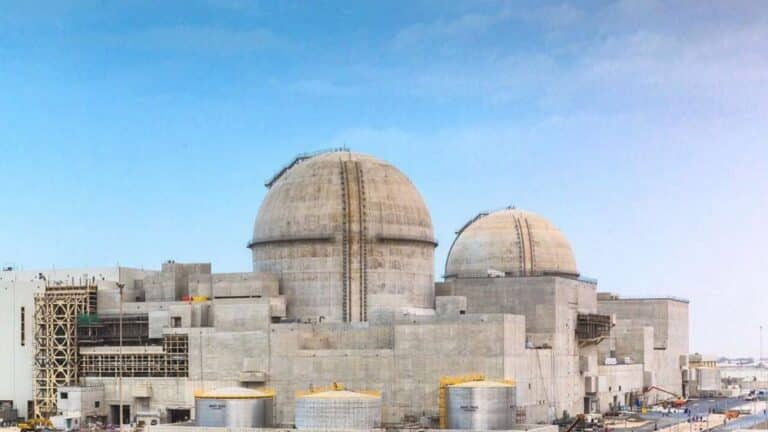
On Aug. 24, 2026, the Trump administration transmitted the text of the U.S.-Saudi nuclear cooperation agreement to Congress. By doing so, the