Bipartisan Senate group urges Trump to abandon plan to buy Russian diesel amid Ukraine war
A bipartisan group of six senators is urging President Donald Trump’s administration to abandon a plan to purchase diesel from Russia.
Get the latest as our experts share their insights on global energy policy.
Mandatory application review by the Advisory Committee on Reactor Safeguards (ACRS) reflects an earlier era, when the nuclear regulator lacked today’s permanent technical staff and nuclear promotion was...

Hear in-depth conversations with the world’s top energy and climate leaders from government, business, academia, and civil society.
Carbon credit markets have become one of the most hotly debated tools in the fight against climate change. Supporters call them essential to closing the gap between corporate...

Find out more about our upcoming and past events.
The Center on Global Energy Policy at Columbia University SIPA’s Women in Energy initiative invites Columbia University students to a roundtable discussion with Pam Brown, Managing Director at...

Insights from the Center on Global Energy Policy
This Energy Explained post represents the research and views of the author(s). It does not necessarily represent the views of the Center on Global Energy Policy. The piece may be subject to further revision. Contributions to SIPA for the benefit of CGEP are general use gifts, which gives the Center discretion in how it allocates these funds. More information is available here. Rare cases of sponsored projects are clearly indicated.
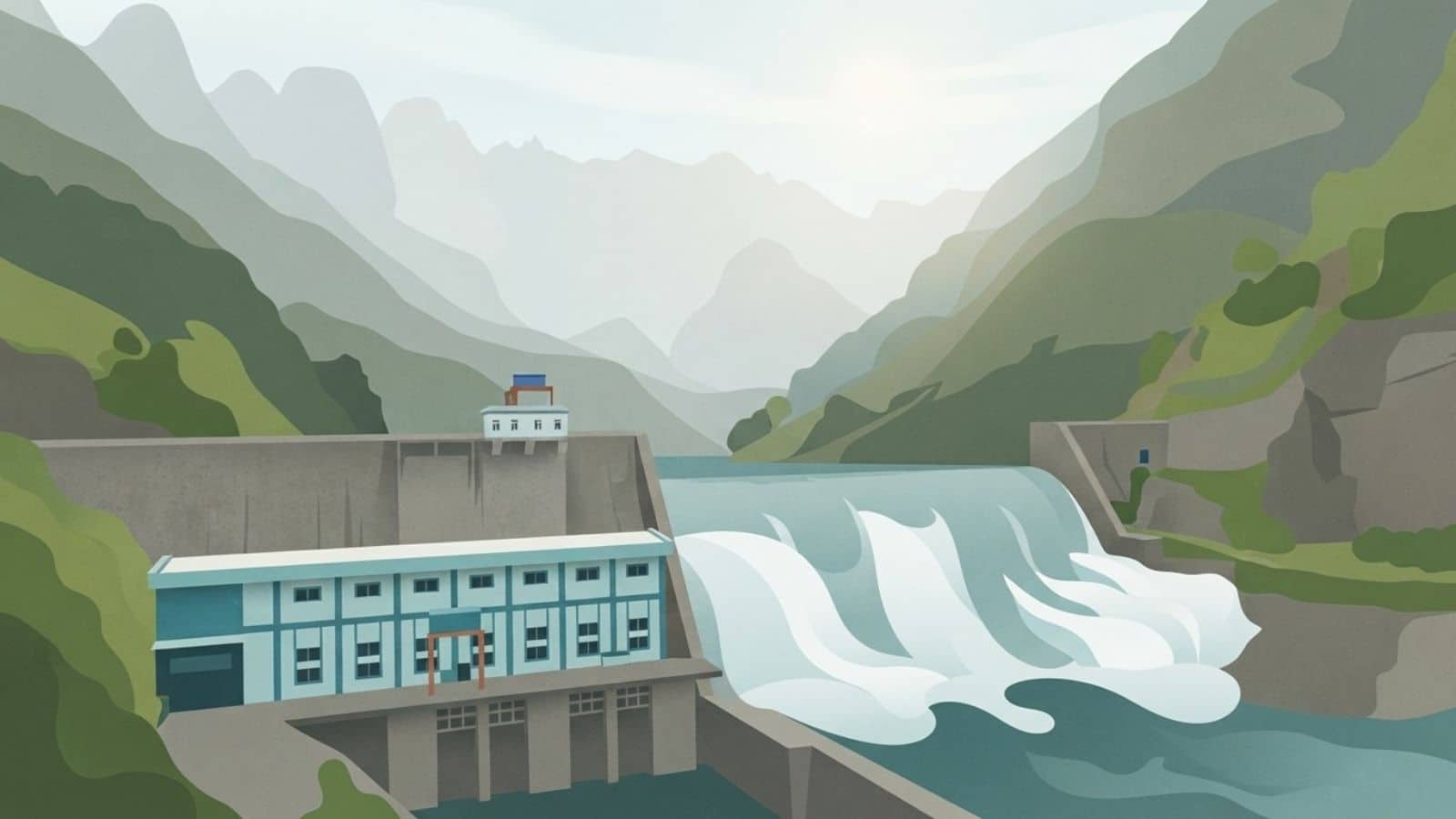
The Nepal flood on August 26 that has left 1,000 people dead and close to 4,000 people missing, as of September 1, has also damaged hydropower plants that the country relies on. The intricate river systems that originate from the Himalayan glaciers are responsible for generating over 95 percent of Nepal’s electricity.
Nepal is not alone in this position: from Bhutan’s glacier-fed export economy to Central Asia’s dam-building push in Tajikistan and Kyrgyzstan, much of the world’s water-rich, mountainous periphery is scaling up hydropower on the very rivers that climate change is making less predictable.
None of these countries can walk away from that resource, but this flood is a reminder that adjustments to how these plants are financed, built, and operated will be necessary to keep them viable.
Not long ago, Nepal was dependent on electricity imports to meet its domestic demand. Between 2020 and 2024, however, Nepal nearly doubled its hydroelectric power generation from 6.1 terawatt-hours (TWh) to 11 TWh. By 2024, Nepal started exporting surplus electricity to India, particularly during the rainy season. By May 2026, Nepal’s total installed electricity capacity was around 4,200 megawatts (MW).
The recent flood severely damaged 12 power generation sites totaling 431 MW, of which 406 MW are from hydropower plants. In addition, 15 other hydropower projects under construction totaling 470 MW sustained damage. Some of these projects were just coming back online post repairs from previous floods. Importantly, more than 900 workers who were working in these power plants when the flooding began remain trapped, with tunnel openings covered by mud and debris.
Beyond power plants, several pieces of critical transmission and distribution infrastructure have been severely damaged or submerged.
In the short term, Nepal has proposed to meet its electricity deficit through imports from India. As noted, Nepal has increased its exports to India in the summer and monsoon months, but it does import electricity from India in the winter months when water flow declines, typically starting in October. This year, Nepali authorities have requested Indian approval to start importing early to meet their shortfall, which has been met with a favorable response. And having passed the summertime peak demand, Indian authorities have expressed confidence in absorbing the import reduction from Nepal.
Though this event may not trigger a sovereign debt crisis, Nepal faces a widening fiscal deficit owing to increased electricity imports and has to contend with how to finance the reconstruction costs. Some of the bigger hydropower projects are public-private partnerships, such as the under-construction Upper Trishuli-1 (216 MW) project that was financed with a $453 million debt package from the International Finance Corporation and other international partners. Other projects relied on domestic funding, such as the severely damaged Rasuwagadhi project (111 MW), for which around half of its financing came from Nepal’s own Employees Provident Fund.
While the damage assessments are ongoing and estimates diverge, initial assessments suggest the total reconstruction costs might range from $4–$5 billion, about a tenth of Nepal’s GDP. How the government ends up funding this reconstruction—using concessional loans, grants, insurance payouts, or fresh sovereign borrowing—will have implications for its future fiscal balance and borrowing capacity for the planned infrastructure expansion.
The longer-term implications are more complex. Nepal aspires to expand its generation capacity up to 30,000 MW by 2035, much of it hydropower, to increase domestic consumption as well as generate revenue through exports to India and Bangladesh. But a report from the Stimson Center released just a few days before the onset of this flood warned of the cascading risks from a glacial lake outburst flood (GLOF), which the recent one was. Continued ice loss and expansion of glacial lakes due to climate change threaten millions of people globally, with the Hindu Kush Himalayan region that includes India, Bhutan, and Pakistan being one of the hotspots. For example, on October 4, 2023, a GLOF from South Lhonak Lake completely destroyed the northeast Indian state of Sikkim’s largest hydropower asset, the 1,200 MW Teesta III dam, killing an estimated 100 people and rendering the plant a total loss for two years. Whether Nepal can build six to eight times more hydropower capacity in these river basins without multiplying its exposure to catastrophic flooding is an open question.
Though it is early, some lessons are emerging from the loss and wreckage of the recent Nepal flood and others. Older power plants with ground-level powerhouses and exposed desanders bore extensive damage in Nepal. While newer designs with underground powerhouses fared markedly better, blockage of tunnel entrances, as noted, have resulted in hundreds of workers still being trapped underground.
Flood design calculations for the Sikkim Teesta III dam never modeled GLOF risk, only historical rainfall. Mandating GLOF-specific scenarios in environmental and safety reviews could help in avoiding or reducing the damage from future events. More importantly, worker evacuation protocols and real-time monitoring inside active tunnels deserve the same regulatory attention as the concrete and turbines above ground.
Building greater cross-border transmission capacity beyond what’s needed for seasonal trade could let India absorb larger surges of demand from Nepal during emergencies like this one, and vice versa. However, that additional capacity requires upfront costs that must be weighed against the resilience it enables.
This event will also be a test of how loss and damage funds—which are designed to finance recovery efforts from climate-related losses like this one—can deliver those resources in the time and scale countries need for rebuilding. For context, the initial call for proposals from the Fund for Responding to Loss and Damage (FRLD) in November 2025 received applications from 119 countries with requests totaling $2.8 billion, against an allocation of $250 million.
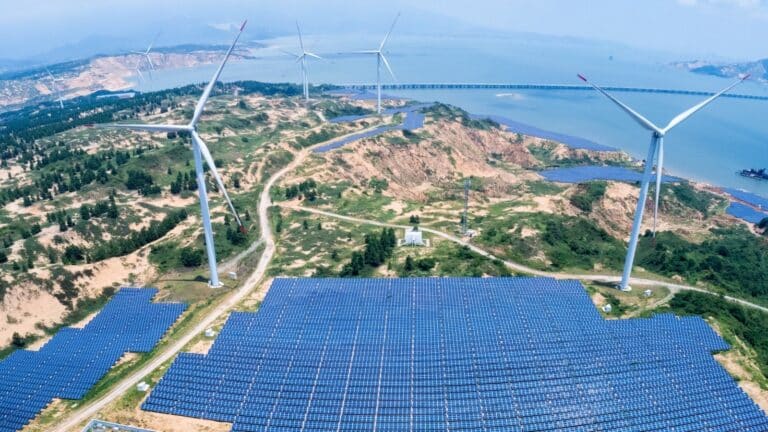
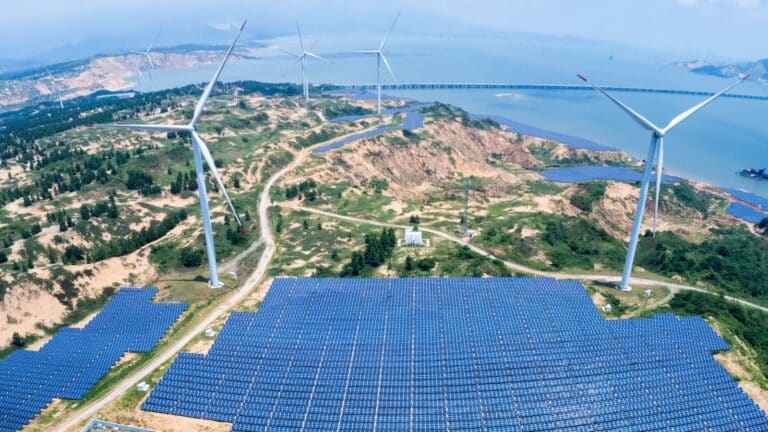
Nepal’s near-total reliance on glacier-fed rivers concentrates risk in a way few other electricity systems do. This flood is a reminder that diversification of power supply—such as meaningful additions of wind and solar generation—is a resilience strategy that can limit single-point or interconnected electricity system failures in the future.
President Trump issued a proclamation on August 6 imposing tariffs on polysilicon and solar products.

The UNFCCC process is marred by gridlock in the COP multilateral framework, threatening joint efforts by countries to mitigate the climate crisis.

On March 20, Governor Kathy Hochul proposed significant changes to New York’s Climate Leadership and Community Protection Act (CLCPA), the landmark climate law passed in 2019.

In January 2026, the UK government publicly released an intelligence report analyzing the security implications of global environmental destruction.
Governments in developed economies have expanded the use of public financing tools to support clean energy and critical materials technology development over the past decade.
Over the past decade, governments in developed economies have expanded the use of public financing tools to support the development of clean energy and critical materials technologies.
How to track the Global Effort to cut transport energy demand 25% and shift one-third to sustainable biofuels and renewables by 2035