Daniel Sternoff:
Events in the Middle East are changing quickly and the complexities of understanding the global energy landscape grow deeper by the hour. Join me as we talk to leading experts on the latest developments in the region and what it means for the rest of the world. Welcome to the Iran Conflict Brief, a limited edition of the Columbia Energy Exchange podcast at the Center on Global Energy Policy at Columbia University, devoted to the current crisis in the Gulf. I’m Daniel Sternoff, a senior fellow at the Center on Global Energy Policy.
We are recording this podcast on September 25th at 10:00 in Washington DC, 5:30 PM in Tehran and 6:00 and 5:00 PM in Abu Dhabi and Riyadh. We are now seven months into the greatest disruption in oil supply in history with no resolution in sight. This week on the sidelines of the UN General Assembly in New York, US and Iranian officials held their first indirect talk since the memorandum of understanding collapsed in July, but there are no signs either side is ready for concessions to return to something like the MOU, let alone a more durable deal to end the war.
Energy flows through the strait of Hormuz are contested and confusing. The US blockade of Iranian ports has driven Iranian crude oil exports close to zero, while US naval escorts and dark transits through shipping lanes close to the Omani coast have facilitated a partial recovery in crude oil flows from the Arab Gulf States. These flows have been volatile and difficult to track, sometimes around six to eight million barrels per day, sometimes as high as 10 million barrels per day or more, but still well below pre-war transits of 20 million barrels per day of combined crude and products.
Whatever the exact number, it’s unacceptable for Iran to see its exports near zero while its neighbors are getting more oil out. So attacks on ships continue and the Houthis, Iran’s allied proxies who sat out the war’s first phase are now in open warfare with Saudi Arabia. The Houthis have choked off flows through Bab al Mandeb and attacks on critical Saudi infrastructure such as the East-West Pipeline have disrupted Saudi Arabia’s principal bypass around Hormuz.
As the crisis drags on, oil markets feel like the proverbial frog in slowly boiling water. Brent crude is at $105 a barrel, below a peak price of 126 seen in April, but oil markets are far, far tighter than the spot price suggests with extreme pricing and refined product markets, tanker rates and the structure of the crude futures curve. US diesel cracks are at unprecedented levels near $100 a barrel and national average retail diesel prices are over $6.50 a gallon, up 85% from pre-war levels. Many Republican senators and diesel thirsty farm states are demanding a ban on diesel exports and President Trump over the strong objections of many of his cabinet secretaries is considering it. Booking a crude tanker from the Middle East to Asia is 20 times more expensive than pre-war levels and in the futures market, a spot barrel of crude oil is nearly $7 more expensive than a barrel a month from now, among the most extreme levels of backwardation in history and a sign that this market is scrambling for crude.
The oil market has been surprisingly resilient throughout this crisis, but when so many things are bending, it’s a matter of time before something breaks. I’m joined today by Jan Stuart, the global energy strategist at Piper Sandler. Jan is one of the most astute energy economists in the field with the ability to dive deep into micro data and to zoom out to see the big picture. He has built leading energy franchises at Credit Suisse, Macquarie and UBS. He was a journalist in the 1990s and began his career at the International Energy Agency in Paris. Jan, as a good Dutchman, rides his bike everywhere throughout New York City in rain, sleet, and snow. You might think it’s a miracle he knows what a gallon of gasoline costs, but as a self-described oil geek, he knows the price of every grade of crude and every type of oil product in every region of the world.
(04:07):
So there’s no one better to talk about what is happening right now in oil markets than Jan. Jan, good morning.
Jan Stuart (04:14):
Hey, good morning, Danny. Thank you for that intro. I loved it.
Daniel Sternoff (04:18):
Excellent. So Jan, I have about a thousand questions for you, but I want to talk about crude oil, products, shipping and demand so we can really go deep into the oil market. But let me start first with crude oil. So what’s your assessment of how much crude is flowing through Hormuz and why is the crude market tightening up so much right now, even though we’ve seen a reasonable recovery in those flows?
Jan Stuart (04:46):
Yeah, no, it’s fascinating. The flows through Hormuz and the flows to the Bab al Mandeb, I buy three data sets and they all three conflict. I hate it. I think the only ones that know how many tankers come through and what’s on those tankers is the US Navy. And therefore what we do, Daniel, perhaps a little bit different for most is we look at loadings. We get readouts every day of how much oil is put onto how many tankers where around the Persian Gulf and around the broader Middle East. We get those loading reports daily by port. And so if you tell me that there’s 11 million barrels a day going through the strait of Hormuz, I kind of want to see the loadings backing that up. So I look at seven day moving averages of loadings to get a real feel for what is being sustained as flow through there.
(05:37):
And what is being sustained as flow through there last seven days is still five million barrels a day below the baseline of 2025. It was, to be fair, 12 million barrels a day below that baseline at the height of the conflict before the workarounds began to really work. What has shifted is that we have seen a terrific uptick in inside Hormuz loadings from places like Iraq, less so from Kuwait, a lot more so lately, very lately from Saudi Arabia. And then of course we have the outside of Hormuz loadings in Fujairah and we used to have them from Yanbu, and that’s where things began to pinch in September is that the Yanbu flows stopped. The last 10 days, zero loadings out of Yanbu, not surprising, the East West Pipeline was partially destroyed, but even before then there were disruptions at Yanbu. That’s one of the bigger difference makers.
(06:39):
So what we have now is, as you say, a very unstable situation where you have these convoy-like transits shielded by the American Navy, occasionally shot at by the Iranians who are either going to get better at this or worse at this. And so what we observe is a net net deficit of about five million barrels a day of crude oil loadings. We have not a whole lot of visibility on product flows, but on crude oil, five million short.
Daniel Sternoff (07:13):
Okay. Which is meaningful. And of course, during Q2 and through the summer, we still had filling that deficit, we were drawing down inventories and SPR releases. What’s happening right now? What’s your assessment of what’s happening with the global inventories and how does that match up to the demand side for crude oil from refineries?
Jan Stuart (07:37):
Yeah, so for that, we build out a crude oil balance, something I’ve wanted to have for 20 years and finally last year we managed to build one that actually balances, which is kind of neat. And what we observe is two different worlds. One world where you look at everything, including China and another world in which you look at everything excluding China. I think that was particularly important in 2025. Long story short, where we are now, the months September, October, November, December, we reckon we’re going to be on the average three million barrels a day short with a bigger deficit in December, projected of course, and a relatively large deficit in September, which narrows a little bit when the final demand typically is less in October and November. But deficits of, like I said, averaging about three million barrels a day, that would put a hole in inventories that are already pretty skinny.
(08:41):
We see inventories declining. We see big buckets of inventories put into uses places like simple math, let’s lengthen the voyage from Yanbu, from 10 days to Asia, the direct route, to 29 days around Africa. That would be 19 days times whatever you’re putting on those tankers in what I would call uses inventory, oil in transit at sea. So we are moving inventory away from places where we actually need it and that’s what’s tightening up the market. Plus we are mutzing around with the prospects of getting your next cargo so you have refiners anxious and bidding up the spot market for that same crude.
Daniel Sternoff (09:30):
Right, which is reflected in this extreme backwardation at the front of the market. I think the shipping point is really salient. I mean, the tanker rates that I can see on a screen for VLCC from the Middle East Gulf to Asia are just stratospheric. So something like $200 a ton or more compared with normal pre-war rates, more like 10 to $15 a ton. So it’s something like a million dollars a day just for the ship, maybe adding 25 to $30 a barrel on top of already expensive crude. So who’s absorbing these costs and why do you think these tanker rates are going stratospheric and is there any way for this situation to be resolved?
Jan Stuart (10:23):
That’s a really, really good point and the tanker rates and the. I’ll give you one quick preamble there. I love oil markets. They are opaque, they’re messy. You can spend your life trying to figure them out. I don’t even try to figure out tanker markets, right? I mean, tanker markets are special and what we know is that, or at least what we’ve been told is that a certain Korean outfit back in January bought a enormous number of tankers and you get this concentration of VLCCs in the hands of, of course, the producers themselves. The Saudis through Villa own a enormous number of tankers. The UAE has a few domestic shipping lines, but we also have tankers in the hands of the Norwegians and now the Koreans. I think that that concentration of ownership has allowed for these rates to go stratospheric, as you say. There is no reason for tanker rates from the US Gulf to Asia to carry war premiums.
(11:34):
That’s just not necessary, right? A tanker that sails all the way into Basra through the strait of Hormuz, yes, that tanker would need to have some pretty serious insurance. But for the rest of the tanker fleet to be carrying rates, this stupid high, I think begs a little bit of investigation by people more qualified than I am. But I would argue that those rates are off the charts, unnecessarily high. There has to be some way to bring more tankers into the market or to prime more tankers away from the hands of just a few guys having a laugh. Where are these costs being born? Quite shorthands will be everywhere. Everywhere you consume anything is going to be affected by high oil prices that are in part this high because of tankers. Sory, go ahead.
Daniel Sternoff (12:32):
No, I was just saying it certainly doesn’t help for refiners who are buying and processing this crude in Asia in particular, maybe we’ve got landed crude costs, I don’t know, close to $150 a barrel. So I was just going to.
Jan Stuart (12:52):
But it affects everything, right? I mean, if you have, let’s say our friends at Valero on the US Gulf Coast, they take a barrel off a pipeline and they put it on a boat. They put diesel on a boat. Their margin is about $110 a barrel, which is a pretty sweet bar. And then you listen and you look at the transcript and you say, “Well, to understand the diesel market, you’re going to need to look at the marginal producer. The marginal producer typically is let’s say a hydro skimming refinery in Europe who will not take a barrel off a pipeline. That person or that refinery will take a barrel off the ocean at a pretty steep price. Embedded in that is at $25 of just tanker rates, right? So then you have expensive gas, then you have expensive labor, then you have an inefficient refinery.
(13:38):
Next thing you know, that marginal diesel margin is set in a place called Europe where you have embedded this stupid tanker rate. So 25% of the silliness in diesel prices can be laid at the feet of the tanker owners. Yes.
Daniel Sternoff (13:55):
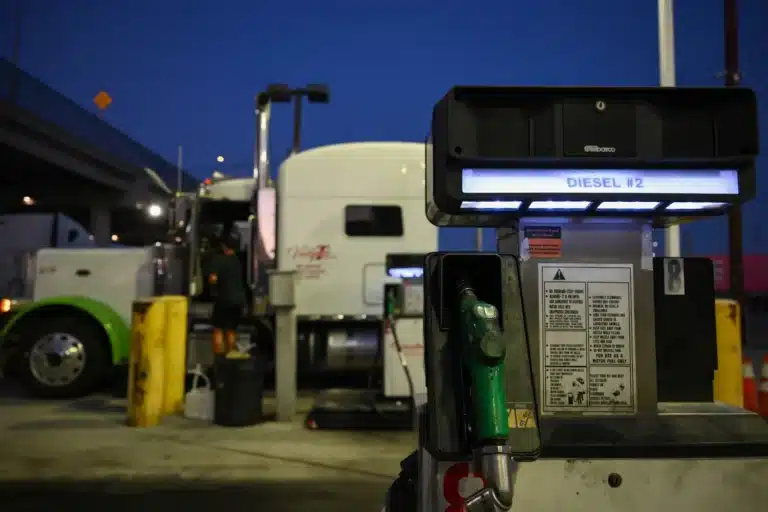
Yeah. Let’s dig a little deeper into diesel. Obviously diesel is front page news now. Normally we think about the political salience of gasoline prices going into an election in the US and now it is diesel. In the US, heating oil cracks are $97 a barrel, something like that. You add that to a barrel of WTI. We’ve got bulk diesel costs around close to 200, which as you said is wonderful if you’re a refiner, but it’s hugely problematic if you are a trucker or you’re farming. Now it might help determine the midterms whether Republicans can lose the Senate. So what do you think can help fix the diesel market is question one and question two is obviously you’ve seen the news, the administration seems to be deeply considering whether or not to restrict exports of diesel even temporarily. If that happens, what do you think the impacts of that will be?
Jan Stuart (15:00):
I tried to explain this to my kids the other day, Daniel. So the first way to fix this is not to get into a stupid war, would be number one. I don’t know if I told you, but I became an American citizen, so now I can be very rude about American politicians because they are now at my surface, which is wonderful. And you keep compounding mistakes with mistakes to get into a fine mess like this. And as you say, it may sway the midterm elections, which would be a gorgeous example of what goes around, comes around. And so I’m kind of looking forward to the midterm elections for a whole host of reasons, of course. And I think that at this stage, this is the prime moment in which any political consultant would tell you if you want to affect the midterm elections with something like gasoline prices, the best time to do it is six to four weeks out of those elections.
(15:55):
And that’s what we smack in the middle of for maximum effect. Also, to shorten the time during which adverse secondary effects can really come to roost. So this is the sweet part. What I’m saying is if we are going to do something as wonderfully silly as banned diesel exports, we should do it really fast before the end of next week and then hope that our truckers don’t remember everything else that went down or our farmers don’t remember anything else that went down and that we are just known for getting a stupid high diesel price down to something slightly less stupid high, which is what would be the effect, right? If you have a diesel ban, then maybe you can “flood” the domestic diesel markets in key places and get that wholesale and then the retail price down by probably a dollar or two from 650 to maybe 450 or some such.
(16:49):
And you would then be seen as perhaps a bit of a savior in that regard, right? Awesome. A few little hiccups. One reason that Midwest diesel prices are on the high side was explained by the weeklies this week, which is that two big refineries in pad two in the northern Midwest are down. That’s where we draw down, drew down a ton of diesel inventory and we made regional prices even higher. Those two refineries have to do maintenance. I assume that that was not willfully timed. I’m being rude. Of course, it wasn’t willfully timed. These things are planned months, quarters ahead of time. But what I’m saying is these diesel bans can be a short term fix for an urgent problem here in America, in most regions of the country, if indeed we sustain the suspension of the Jones Act so that we can keep supplying the East and the West Coast as well. That answer your question?
Daniel Sternoff (17:53):
Yes. I mean, I guess some of the arguments, obviously the refining industry, many manufacturers, we’ve heard Chris Wright, Doug Burgum, they’re arguing strongly against doing this. And one of the arguments is, yeah, you might temporarily lower diesel prices in the Gulf Coast or the Midwest, but it could be a problem for the Northeast and you might affect refinery economics to the point that they will ultimately cut runs given that they’re making so much profit right now off of exporting diesel. And then if they lower runs, then we end up with a tighter situation. Do you agree with that analysis or is that
Jan Stuart (18:33):
Worry about it after the midterms? Yeah, I agree that that’s one strand of possible secondary effects. I think that there are a few others. I think that in general, it’s a really bad idea to set up a system for free market operations and finding customers wherever you can and then suddenly saying, “Oh, you cannot go this or that way.” An export ban, by our math, takes about 1.5 million barrels of diesel and says it now has to stay here. So 1.5 million barrels of diesel urgently has to find customers and storage. Once that storage fills up, then you have to urgently switch over your yields and make less diesel and more of something else, or you have to cut runs. If you were to cut runs, you would begin to exacerbate the import requirement of gasoline because you short gasoline, less short in the winter maybe, but you would very quickly suppress diesel and then raise gasoline prices.
(19:40):
So you end up just ticking off a different part of your electorate in subsequent months, I would argue. It is not an ideal solution. And that is just looking at things domestically, narrowly, right? Narrowly in time and narrowly in space. But let’s see what that does globally. I mean, you have a stunning under supply of diesel globally. We think that there is four plus million barrels a day of refining capacity offline. The traded diesel market that is normally you trade about seven million barrels a day on all these different boats through all these different regions, six million barrels a day today. Now let’s take 1.5 million away from those six. I mean, Europe will go crazy. Latin American importers are stuffed because they don’t have strategic diesel reserves like the Europeans do. Asian importers will have to look at things like Japan and Korea to export more.
(20:42):
It would be mayhem for those at the short end of the stick. So that, of course, it’s debatable whether the Trump White House cares much about that. I would argue that we should.
Daniel Sternoff (20:57):
Do you think that China’s a potential solution here given that it’s one of
Jan Stuart (21:00):
The
Daniel Sternoff (21:00):
Few places that has some spare refining capacity?
Jan Stuart (21:03):
No. No. China is very busy. There was a wonderful, wonderful economist cover back in April. Then I bring that cover up all the time. It’s a cover in which picture this in the lower half. There is out of focus, a picture of President Trump in a state of profound agitation. We don’t know if that’s from pleasure or from anger. In the background is the beautific face of President Xi Jinping and the caption reads, “Don’t interrupt your enemies when they’re making mistakes.” This is a crisis of President Trump and Benjamin Netanyahu’s making. This is a crisis that has something to do with the ongoing war in Russia as well. This is a crisis in which if things shake out the way I think they will shake out, President Xi Jinping stands to benefit greatly. This is a crisis where I don’t believe the Chinese powers that be are willing in any way to help out President Trump.
(22:13):
I’m not sure that we need to make things a whole lot worse. So what would happen if there is more of a shortage in diesel and if the Chinese could help is the same as back in April, you’re going to get some judicious, smallish, targeted cargoes coming from Chinese refineries to someone in dire straits like the Hunta in.
(22:36):
Well, like Vietnam, like a few other places, but not on any large scale, no. Right.
Daniel Sternoff (22:43):
Okay. So we focused a lot on supply and logistics. Maybe let’s switch to the demand side. I mean, obviously we saw big demand dislocations in the second quarter when there just wasn’t supply available before inventories were released and at the peak of the shock and many governments were implementing demand rationing measures, some of which are unwinding. How much of the demand effects that we saw earlier in the year do you think were temporary and how much do you see more structural changes to demand going forward?
Jan Stuart (23:23):
I see very, very little structurally changing because of the war. I see an awful lot of what you say, demand suppression, no demand because there is no supply, price changes behavior to some degree, but then needs to translate into choices in terms of what kind of car you buy, what kind of truck you buy, and that it hasn’t happened yet. I think that there is an awful lot of strange data floating out there. What I mean with that is, for instance, we had, as you said, inventory releases. We were meant to get a hundred million barrels of diesel inventory released from strategic European inventories. The data from the International Energy Agencies show that March. Sorry, April, May, June, July, a grand total of two million barrels were released. And I’m like, “Really? That sounds weird.” And then you look at the data on demand and I’m meant to believe that, let’s say, German diesel demand was down 10%.
(24:35):
I know a little bit from the German economy and I know a lot from trucking in Europe. There’s no way know how on God’s green earth that that 10% decline in demand in Germany was real without a recession, and there was no recession in Germany. So there’s something fishy going on with data, and I hate bringing up data fishiness because it always sounds like you’re cooking up some freaking excuse for something, but there is too much strangeness in the data as yet for us to know really what went down with some parts of demand. Where things are structural is if you find that, let’s say I’m a NAFTA cracker in a place called Korea and now I’m really just stuffed because A, I cannot get an awful lot of NAFTA that I used to get to the Middle East, something’s not available, and my competition is cleaning my clock, right?
(25:26):
Anybody with another chemical cracker is just taking my market share. Some of those crackers will go down. That structural demand loss of NAFTA in places like Korea or in Japan or Singapore or Taiwan where much of the chemicals industry has at its core NAFTA crackers. Some of that can be replaced by ethane, propane crackers in places like China or Russia, sorry, America, and that’s happening. But you can also speed up sales of EVs, of course. I would call that a trend that accelerates, then we can debate the semantics of destruction, whatever, but it’s undeniable that EV sales picked up huge in the second quarter in July and August in just about everywhere, especially Europe, but really also all those markets that are not China, America or Europe, things like Brazil, Mexico, Australia, all these places, your EV sales are picking up and picked up huge already. That’s an acceleration of a happy trend of demand substitution, I would argue, some different word if you want.
(26:35):
There was a slowing down of that sales trend back in 24 and 25. Now happily that’s picking up again and the war has helped. We think that there was a lot of demand suppression in China as well and a lot of playing with inventories in China. Again, so I don’t believe that Chinese oil demand in the second quarter was down 15%. We believe it was down seven or 8% and that the rest is playing around with inventories, which is a famously difficult thing to get at. So long story short, on the face of it, second quarter oil demand was down supposedly reportedly. Data says five million barrels a day. We think the deepest part of that, the biggest part of the trough was April. We think that by June and July already, the data when you deseasonalize them show that we were beginning to get out of that trough.
(27:26):
We’re still down 1.7 million barrels a day in July, we think, but it is less of a. The first part of the shock was beginning to get wetted. When everything is said and done, we reckon we’re going to lose about a million five or so of demand for the year on the whole, which is huge. That normally takes a global recession.
(27:52):
So demand, different outcomes, different regions, products that are most affected, chemicals feed, massive exports in the Middle East that are simply not there, which includes NAFTA, propane, those kind of things, and then diesel.
Daniel Sternoff (28:08):
Right. And then on the gasoline or road transportation demand, that’s the slow bending of the curve of future demand as fleets electrify over time. So Jan, let me wrap this and ask you, if we were to see a ceasefire by the end of this year, what do you think oil markets and prices look like in 2027? And also the opposite. If things stay like they are with a, say, call it five million barrel per day molecule deficit right now, will something break and what will that be?
Jan Stuart (28:51):
Yeah. So let’s say that I’m wrong and I get to do a happy dance with many other people in December and magically there is a settlement and peace in the Middle East and we have unfettered transport of molecules through the straits of Hormuz and the and so on. We would have, if everything does get to flow, a surplus, right? If the Saudis, the Iranians, the Iraqis, and everybody in the Kip Brother can flow their wellhead production of crude oil, we would have a surplus of, we think, about four million barrels a day. We have terrific production growth across the Americas, north to south from Canada all the way down to Argentina that amounts to about a million three, million four on the average for this year that contributes to a surplus. And then you simply add all the spare capacity in the Middle East and so on, so on and so on.
(29:50):
That’s a four million barrel a day surplus. Even if we are right, that demand rebounds from our chat about demand, you will have guessed it. I think that demand rebounds Reflates, whatever you want to call it. We would have next year. So this year, negative 1.5 million barrels a day of demand globally, all things considered annual average. Next year, that will be plus two and a half by our math. Even then, you would have that big of a surplus. That would not obviously be great for crude oil prices. We think that you need to just give backs from SPRs and so on programs. You lose about 800,000 barrels a day or so to mandated returns to storage. You would probably have some voluntary storage building that big, but that’s not going to begin to absorb that kind of a surplus. So if all of that flows, there is no regulating of any of those flows, then you would probably have oil prices go down pretty good.
(30:51):
And you would have perhaps as little as a six in front of the average price by the time all is said and done for 2027. Yeah.
Daniel Sternoff (30:59):
And the opposite, if we stay with this kind of a deficit
Jan Stuart (31:03):
Moving forward in the coming months? So just to find that a little bit, something would have to break, right? You don’t have a five million barrel a day molecule deficit for another 400 days. So something breaks. What breaks? I think who cracks is the question for me. Does the regime in Iran crack or do we, the United States and its allies crack? I think we would crack. I think the regime is in a more solid position. It’s fully backed by Beijing to a lesser degree by Moscow. It’s playing for the long game. It’s playing for regional hegemony. De facto, you don’t need to own Riyadh, but you do have sway over traffic and commerce in the Persian Gulf. And in Iran that has now the opportunity to quote unquote regulate traffic through not the per se, but for sure the strait of Hormuz would not just levy at all.
(32:00):
It would also say maybe four million barrels a day of surplus shouldn’t flow from, I don’t know, Kuwait or Iraq or somebody else. But Iran, it would be a supercharged OPEC if you want to go that route. I would see prices with an eight or a nine in front of it, Daniel. I don’t think it’s anything crazy, but I think that you would need to finance a lot of rebuilding of stuff elsewhere away from the Middle East. And so I’d have a mid-cycle of 75 plus WTI and a spot in 2027 with an eight in front of it.
Daniel Sternoff (32:36):
Yeah. And presumably if that scenario you think the US would crack before Iran, that cracking would probably come through a big spike in prices first before we get to that.
Jan Stuart (32:48):
Yeah, there’d be some friction before that happens, right? Right. It would not be all that pretty and the consequences would be historic.
Daniel Sternoff (32:57):
Right. So on that happy note, Jan, thank you. It looks like we’re still going to be in for some really serious volatility in the months ahead and into next year. And so I imagine that’s going to keep you busy and I hope we will continue this conversation.
Jan Stuart (33:19):
Anytime you’d like, my friend. Thank you very much for having me.
Daniel Sternoff:
That’s it for this episode of Iran Conflict Brief, a limited series from the Columbia Energy Exchange Podcast. Thank you again, Jan Stuart, and thank you for listening. The show is brought to you by the Center on Global Energy Policy at the Columbia University School of International and Public Affairs. I’m Daniel Sternoff. This podcast was produced by Mary Catherine O’Connor, Dara Diamond, Doug Halsey, and Kyu Lee. Greg Vilfranc engineered it. For more information about the show or the Center on Global Energy Policy, visit us online at energypolicy.columbia.edu or follow us on social media at ColumbiaUenergy. If you like this episode, leave us a rating on Apple, Spotify, or wherever you get your podcasts. You can also share it with a friend or colleague to help us reach more listeners. If you have any questions, comments, or feedback, we’d love to hear from you. Email us at [email protected].
Thanks for listening.