Bipartisan Senate group urges Trump to abandon plan to buy Russian diesel amid Ukraine war
A bipartisan group of six senators is urging President Donald Trump’s administration to abandon a plan to purchase diesel from Russia.
Get the latest as our experts share their insights on global energy policy.
Mandatory application review by the Advisory Committee on Reactor Safeguards (ACRS) reflects an earlier era, when the nuclear regulator lacked today’s permanent technical staff and nuclear promotion was...

Hear in-depth conversations with the world’s top energy and climate leaders from government, business, academia, and civil society.
Carbon credit markets have become one of the most hotly debated tools in the fight against climate change. Supporters call them essential to closing the gap between corporate...

Find out more about our upcoming and past events.
The Center on Global Energy Policy at Columbia University SIPA’s Women in Energy initiative invites Columbia University students to a roundtable discussion with Pam Brown, Managing Director at...

Insights from the Center on Global Energy Policy
In an overall effort to make the licensing of nuclear power plants more efficient and risk-informed, a House committee voted 41–0 last month to allow the Advisory Committee on Reactor Safeguards (ACRS) to decline certain application reviews.[i] But because the Nuclear Advisory Committee Reform Act retains automatic review as the statutory default, any decision to forego the process could require lengthy deliberation and documentation to justify. If Congress seeks to make the most of ACRS’s independent expertise, it could instead remove the mandate for review and give the committee the authority to select which applications it reviews.[ii]
The institutional conditions that supported automatic review have changed. The regulator now has a permanent technical staff, and nuclear promotion and regulation reside in separate agencies. Independent technical advice remains valuable, particularly for unfamiliar technologies and unresolved safety questions. But that value supports giving ACRS discretion to identify where its contribution matters most, rather than requiring it to determine why certain applications can be declined.
This blog post discusses the potential for ACRS to develop its own relevant screening criteria, adopt a review posture suited to emerging needs, and revise that approach as it gains experience. Granting the committee such discretion would apply members’ expertise to deciding which questions deserve examination as well as to answering them—which could become especially important if smaller, standardized reactors produce a substantially greater number of applications.
ACRS’s history reveals three overlapping roles: independent technical adviser, a source of expertise while the Atomic Energy Commission (AEC) built its safety staff, and an independent reviewer within an agency responsible for both promoting and regulating nuclear energy. The technical advisory role remains valuable. The other two roles arose out of institutional conditions that no longer exist.
A study by the Joint Committee on Atomic Energy in 1957 explained that the AEC established a full-time reactor hazards evaluation staff in early 1955 to “reduce its reliance on part-time advisers” (the ACRS).[iii] Concerns about the AEC’s conflicting responsibilities of promotion and regulation intensified in 1956, when it issued a construction permit to the Power Reactor Development Company (PRDC), both an AEC-supported demonstration participant and a licensee. The permit was issued without public hearings, and ACRS concerns about the safety case later became public.[iv] The controversy prompted the 1957 study, which contemplated separating promotion from regulation but generally considered that step premature. The study group considered alternative measures to mitigate concerns of conflict, including mandatory ACRS application reviews and publication of ACRS reports. Both the AEC and ACRS worried that mandatory review and reporting by ACRS could burden the committee with less important work and detract from its advisory role.[v]
While postponing separation of promotion from regulation, Congress gave ACRS statutory status in 1957, indeed requiring review and public reporting on covered applications, as well as mandating licensing hearings.[vi] In 1974, Congress addressed the underlying institutional conflict directly by abolishing the AEC, assigning licensing and related regulation to an independent Nuclear Regulatory Commission (NRC), and transferring promotional functions to the Energy Research and Development Administration.[vii]
Automatic ACRS review persisted beyond the institutional arrangement that had helped justify it. Today, the NRC has engineers and scientists responsible for technical safety assessment.[viii] ACRS contributes outside judgment to that work, which is a valuable supplement when challenging questions arise, but it no longer supplies the regulator’s primary technical capacity.
Encouraging the ACRS to select which applications to review was contemplated before mandatory case-by-case review became law. The 1957 study envisioned a broader advisory role focused on safety standards and guidance, with application review reserved for special cases.[ix] But, in 1957 Congress required that ACRS review all qualifying applications. The AEC’s 1965 Regulatory Review Panel recommended removing mandatory case-by-case review while preserving ACRS’s ability to examine projects it selected.[x]
In the NRC’s first year, 1975, it proposed legislation that would let ACRS review applications at its own discretion or the commission’s request. The proposal was not enacted.[xi] Selective review thus has a long history grounded in the regulator’s own assessment of how best to use independent advice.
A study earlier this year by CGEP’s Matt Bowen, Rama T. Ponangi, and Richard A. Meserve favors allowing ACRS to decline unnecessary reviews while preserving its authority to decide which matters warrant examination. It cautions against leaving those decisions solely to commissioners who may face political pressure.[xii] That concern supports retaining ACRS’s independent choice, including its ability to initiate a review.
The September committee bill retains automatic review as the statutory default but conditionally allows ACRS to decline a review. Its conditions, however, contain four substantive judgments: whether an application presents something unique, novel, or noteworthy, or any other issues that warrant ACRS review. To decline, ACRS must determine that none of these is present.[xiii] These are open-ended tests. The bill supplies no definition of “noteworthy,” and the inclusion of “any other issue warranting review” is expansive. The committee would have to establish that each qualifying application it declines lacks these broadly described issues.
The bill does not expressly require a written justification for each declined review, but NRC and ACRS practice suggests decisions would be documented. If determining whether an application contains any unique, novel, noteworthy, or otherwise review-worthy issue requires substantial technical examination, the committee might have to undertake much of the work associated with a review simply to establish that a review is unnecessary. If Congress seeks to avoid that burden, letting ACRS decide how best to spend its time—including how to screen applications—would address it directly.
Executive Order 14300 already directs ACRS to focus licensing work on novel or noteworthy issues within its statutory obligations.[xiv] Congress can change those obligations so that selection, rather than automatic review with exceptions, governs the committee’s work.
ACRS is limited to 15 members who serve part-time.[xv] Their outside professional roles bring experience and perspectives—and a connection to work beyond the regulator—that complement those of the NRC’s permanent staff.[xvi] Limited membership and competing professional demands make efficient use of ACRS time important. Efficiency matters even more if smaller, standardized reactors produce a substantially greater number of applications. Repeated applications may share a safety question whose resolution is best addressed once, across the design or fleet.
Letting ACRS select reviews would allow for screening around important issues while preserving independent scrutiny as well as the NRC’s ability to request advice. The committee could define the circumstances that trigger closer examination and pair them with a graded approach. These would be expert-developed considerations, adaptable as technologies and evidence change. ACRS could explain its general screening approach publicly, which would make its priorities understandable without requiring a separate justification for every application it does not select.
Permanent regulatory expertise and the separation of nuclear promotion from regulation have removed the institutional reasons for automatic review.Therecord supports preserving ACRS’s independence and giving it authority to direct its expertise where it can contribute most to reactor safety.
[i] Price-Anderson Act, Pub. L. 85-256, §§ 5–7, 71 Stat. 576, 579 (September 2, 1957), https://www.govinfo.gov/content/pkg/STATUTE-71/pdf/STATUTE-71-Pg576.pdf; section 5 establishes ACRS on page 579. House Committee on Energy and Commerce, Full Committee Vote Summary (September 2, 2026), https://docs.house.gov/meetings/IF/IF00/20260902/119518/HMKP-119-IF00-20260902-SD004.pdf; page 3 records adoption of Castor’s substitute by voice vote and final committee approval of H.R. 9613 by 41–0.
[ii] H.R. 9613, adopted substitute ANS_HR9613_01, § 2(a)–(c), p. 1–5, https://docs.house.gov/meetings/IF/IF00/20260902/119518/BILLS-119-ANS_HR9613_01XML-C001066-Amdt-2.pdf. Atomic Energy Act, §§ 29 and 182b, 42 U.S.C. §§ 2039 and 2232(b), https://www.law.cornell.edu/uscode/text/42/2039 and https://www.law.cornell.edu/uscode/text/42/2232#b; establishes ACRS’s advisory duties, the covered application review requirement, and public reporting.
[iii] Joint Committee on Atomic Energy (JCAE), A Study of AEC Procedures and Organization in the Licensing of Reactor Facilities (April 1957), https://babel.hathitrust.org/cgi/pt?id=mdp.39015001307449&seq=9. Page 28 documents the early-1955 full-time hazards staff, the intended shift toward standards and guides except in special cases, and continuing selected application review during the transition.
[iv] Power Reactor Development Co. v. International Union of Electrical, Radio and Machine Workers, 367 U.S. 396 (1961), https://www.law.cornell.edu/supremecourt/text/367/396; this documents issuance of permit without prior public hearings, as was permitted at the time. JCAE, A Study of AEC Procedures and Organization in the Licensing of Reactor Facilities (1957), p. 8–9, https://babel.hathitrust.org/cgi/pt?id=mdp.39015001307449&seq=26.
[v] JCAE, ibid.
[vi] Price-Anderson Act, Pub. L. 85-256, §§ 5–7, 71 Stat. 576, 579 (September 2, 1957), https://www.govinfo.gov/content/pkg/STATUTE-71/pdf/STATUTE-71-Pg576.pdf. Section 5 establishes ACRS on page 579.
[vii] Energy Reorganization Act of 1974, https://www.govinfo.gov/content/pkg/STATUTE-88/pdf/STATUTE-88-Pg1233.pdf.
[viii] The modern NRC’s FY 2026 fee rule uses 1,236.6 full-time equivalents for mission-direct Nuclear Reactor Safety Program work. Its technical disciplines include nuclear, mechanical, electrical, and materials engineering, health physics, hydrology, and seismology. The staffing figure is a budget measure, not a count of specialists, but suggests a robust internal staff capability. See: NRC, Fee Schedules; Fee Recovery for Fiscal Year 2026, 91 Fed. Reg. 36470 (June 16, 2026), Table IV, p. 36474–36475, https://www.federalregister.gov/documents/2026/06/16/2026-12067/fee-schedules-fee-recovery-for-fiscal-year-2026. And: NRC, “Career Paths,” https://www.nrc.gov/about-nrc/employment/careerpaths. The Engineers & Scientists section lists engineering and scientific disciplines the agency hires.
[ix] JCAE, A Study of AEC Procedures and Organization in the Licensing of Reactor Facilities (1957), p. 28, https://babel.hathitrust.org/cgi/pt?id=mdp.39015001307449&seq=9. This page documents the early-1955 full-time hazards staff, the intended shift toward standards and guides except in special cases, and continuing selected application review during the transition.
[x] JCAE, “Hearings, Vol. 2: Licensing and Regulation of Nuclear Reactors” (1967), p. 11, https://babel.hathitrust.org/cgi/pt?id=uc1.b3557167&seq=23&q1=ACRS. Passage headed “Role of the Advisory Committee on Reactor Safeguards” concerns the panel’s recommendation to remove automatic review while preserving committee-selected review, and the AEC’s reason for delaying implementation.
[xi] Matt Bowen, Rama T. Ponangi, and Richard A. Meserve, “Improving the Efficiency of NRC Power Reactor Licensing: ACRS Reviews” Center on Global Energy Policy, Columbia University (April 2026), https://www.energypolicy.columbia.edu/wp-content/uploads/2026/05/ACRS-reviews-CGEP_Report_041926.pdf.
[xii] Ibid.
[xiii] H.R. 9613, adopted substitute ANS_HR9613_01, § 2(a)–(c), p. 1–5, https://docs.house.gov/meetings/IF/IF00/20260902/119518/BILLS-119-ANS_HR9613_01XML-C001066-Amdt-2.pdf.
[xiv] Executive Order 14300, Ordering the Reform of the Nuclear Regulatory Commission (May 23, 2025), § 4(b), https://www.whitehouse.gov/presidential-actions/2025/05/ordering-the-reform-of-the-nuclear-regulatory-commission/. Directs ACRS to focus permitting and licensing work on novel or noteworthy issues and fulfill its statutory obligations.
[xv] Atomic Energy Act, §§ 29 and 182b, 42 U.S.C. §§ 2039 and 2232(b), https://www.law.cornell.edu/uscode/text/42/2039 and https://www.law.cornell.edu/uscode/text/42/2232#b; establishes ACRS’s advisory duties, the covered application review requirement, and public reporting. Matt Bowen, Rama T. Ponangi, and Richard A. Meserve, “Improving the Efficiency of NRC Power Reactor Licensing: ACRS Reviews,” Center on Global Energy Policy, Columbia University (April 2026), https://www.energypolicy.columbia.edu/wp-content/uploads/2026/05/ACRS-reviews-CGEP_Report_041926.pdf.
[xvi] NRC, “2026 Current Fiscal Year Report: Advisory Committee on Reactor Safeguards,” https://www.facadatabase.gov/FACA/apex/FACACommitteeLevelReportAsPDF?id=a10t0000001gzx0AAA. Section 20d describes part-time membership and the value of outside expertise.
The Trump administration and Saudi leadership have reportedly agreed to a nuclear agreement that could enable US nuclear technology transfers to Saudi Arabia.

The United States is at a rare inflection point for nuclear energy, with unprecedented momentum behind deployment and regulatory reform as nuclear becomes central to energy security, AI competitiveness, and state and corporate climate goals.

CGEP scholars reflect on some of the standout issues of the day during this year's Climate Week

This special CGEP blog series, featuring six contributions from CGEP scholars, analyzes the potential impacts of the OBBBA across a range of sectors.

The United States has struggled for decades to make progress on managing spent nuclear fuel (SNF) from its commercial power reactors.
The Trump administration has submitted to Congress a new nuclear energy cooperation agreement with Saudi Arabia.
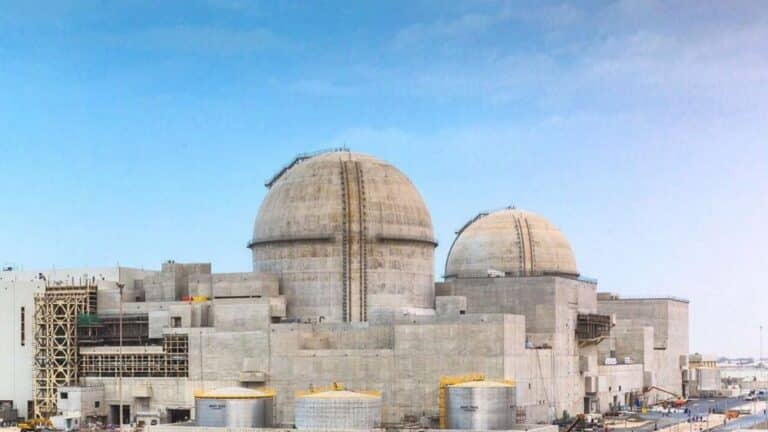
On Aug. 24, 2026, the Trump administration transmitted the text of the U.S.-Saudi nuclear cooperation agreement to Congress. By doing so, the