LIVE: Daily Energy Markets Podcast 2026
Enjoy the videos and music you love, upload original content, and share it all with friends, family, and the world on YouTube.
Get the latest as our experts share their insights on global energy policy.
A House committee voted to allow the Advisory Committee on Reactor Safeguards (ACRS) to decline certain application reviews.
Hear in-depth conversations with the world’s top energy and climate leaders from government, business, academia, and civil society.
Permitting reform—to allow for faster approvals on new projects—is one thing that both climate advocates and energy developers have wanted for a long time. With demand for power...

Find out more about our upcoming and past events.
Putting data centers in space once seemed fanciful. Today, a growing number of companies have started doing so.




Anne-Sophie Corbeau:
There is still a lot of demand in the residential sector, so people are not going to stop heating. There are still a lot of issues because gas is basically the fuel of last resort in the power generation sector. And on top of that, we no longer have Russian pipeline gas.
Ira Joseph:
There’s a huge potential swing here in terms of what could potentially be drawn from storage this winter. But going above 74 BCM, which was the record established in 2018, on your way to 80 BCM is a really kind of slim margin for error here. If it does get cold in Europe and, heaven forbid, it also gets cold in Asia at the same time.
Tatiana Mitrova:
I think the most important thing to keep in mind is how do we make decisions in this situation of extreme uncertainty and unpredictability?
Jason Bordoff :
Global gas markets, especially in Europe, are approaching winter under serious pressure. With storage inventories lagging behind historical averages and shipping disruptions from the Middle East threatening key liquified natural gas flows, many nations are finding themselves deeply exposed. The supply shocks from both the Russia-Ukraine war and now the Strait of Hormuz closure have revealed vulnerabilities in a market that is more interconnected than ever, but also more geopolitically complex. With less supply flexibility and growing sensitivity to weather, the case for new security frameworks is getting stronger, built on closer international cooperation, new reserve mechanisms, and greater market flexibility.
So where does the global gas market stand right now? How much LNG is actually moving through the Strait of Hormuz? What are European countries doing to prepare for the winter? Is Russian gas coming back to the table? Will the renewed concerns about energy security spur a faster transition away from gas and toward clean energy? And how do China and the rest of Asia factor into this high stakes calculus for global supplies?
This is Columbia Energy Exchange, a weekly podcast from the Center on Global Energy Policy at Columbia University. I’m Jason Bordoff. Today on the show, we have our own phenomenal scholars, Anne-Sophie Corbeau, Ira Joseph, and Tatiana Mitrova. Ann’So, Ira, and Tatiana are all research scholars here at the Center on Global Energy Policy. They’re based in Paris, New York, and Cyprus respectively. They all have deep expertise in geopolitics and in energy markets.
They joined me to discuss the global gas market, what’s behind the looming European supply crisis this winter, and how the markets and European leaders are responding. We played out some scenarios regarding supply and demand going forward and the role that Asian markets, global geopolitics, coal, renewables, and electrification could all play. I hope you enjoy the conversation.
Anne Sophie Corbeau, Tatiana Mitrova, Ira Joseph, my phenomenal colleagues, all of you, thanks so much for joining us. This is quite the group to talk about where we are, particularly in global gas markets and energy security. I’m excited for this conversation. Thanks for being here.
Ira Joseph:
Thanks for having us.
Tatiana Mitrova:
Thank you.
Jason Bordoff:
So there’s a lot of conversation about oil prices, oil markets, diesel prices. Bob McNally and I have a piece out this morning about why banning diesel exports is not a good idea. Not always as much conversation depending on where you’re sitting in what’s happening globally in natural gas markets, but incredibly important, including for energy security. And you see in Europe, for example, inventories at a lower level than historically would suggest they should be as they head into the winter. So we wanted to take this opportunity on this podcast to help people understand what is happening because of today’s energy crisis, Hormuz, energy transition policies and more that is affecting both supply and demand for the global gas market. So let me start with you Anne-Sophie. I know you were in Bangkok for GasTech, this major gas conference, and you just wrote a piece with the title Short-Term Gain, Long-Term Pain.
Maybe you could start and tell everyone what you heard when you were out in Asia and what you’re seeing right now and what you meant by that title.
Anne-Sophie Corbeau (04:18):
Well, what I meant by that title was that, I mean, I think on the producing side, everybody’s very excited and of course many companies are making a lot of money, not the people who are of course having LNG exports coming from the Gulf, but otherwise I think it’s pretty good given where prices are. I think we are looking at the mid 70 euro per megawatt hour in Europe and $25, $26 per MBT in Asia. So this is pretty high. And long-term pain is because I got a little bit worried that the LNG demand in the future would not be as high as people have been expecting. And I was basically looking at different countries. China, because I think China has options. They can either reduce their gas demand, they can have a higher growth of gas production because people forget that China this year is going to be the third largest gas producer.
(05:14):
They can also potentially import gas from Russia by pipeline, from Central Asia. So they have options, especially in a country where they are growing renewables so fast. So that’s one. But most of the growth is expected to come from Southeast Asian countries. And there I was in Bangkok and it was very interesting to see that the prime minister in his opening speech was talking about gas and energy, but he was also talking about renewables. He was talking about solar panels, he was talking about biomass, and also he was announcing the opening of a new licensing round. So you are trying to put everything together and you realize that actually the gas demand in this country may not be as big as expected. And on top of that, they may be looking for their own resources in order to have less dependency on imported gas. And I heard pretty much the same story coming from Pakistan and also coming from Bangladesh.
(06:09):
So here we have three different countries in Southeast Asia, which is expected to be the driving factor behind LNG demand growth in the next two decades. And these countries are hesitating. And I am not blaming them because honestly, this is a second crisis in five years and for them these prices, they are simply too high. So that’s why I have concerns about the long-term demand growth of LNG. I’m not saying that this is not going to grow, but maybe that this is going to end up a little bit lower compared to what we are expecting now.
Jason Bordoff (06:44):
Ira, what’s your take on where we are now in this moment, both in terms of the energy needs for say Europe going into this winter and some of the longer term issues of demand? There’s a lot of LNG supply obviously coming online and it seems like this energy crisis is sparking additional investment, including news just today about Canada, for example, in supply. Is the demand going to be there?
Ira Joseph (07:10):
Well, yeah. I mean, I think longer term, there’s a euphoria, a sort of borderline mania of creating new supply for the LNG market because of what’s happened in Qatar. And as long as Qatar is down and the future is hazy, every LNG project out there is scrambling to go FID or to go some form of FID. I mean, this is the second phase of LNG Canada. It wouldn’t surprise me if they announced additional phases into the future right now because right now they’re striking while the iron is hot. But as Anne-Sophie said, I mean more and more LNG supply is growing, but the demand growth outlook is really taking a hit going forward. Southeast Asia has always been an area where when you read a lot of LNG demand forecasts, it’s like you hear noun verb LNG demand growth in Asia. It used to be China and India, now it’s Southeast Asia.
(08:07):
It was always sort of the fill-in for where the growth would come from. Now China this year I think is going to be down, if trends hold, are going to be down year on year for the second straight year in a row. And while certainly companies are going to sign more contracts inside of China, I think we’re kind of at a saturation point for how much additional LNG they’re going to buy. And I think they’re going to actually end up being a larger and larger seller going forward. They’ll definitely have a lot of LNG under contract, but they’re going to be selling LNG short term.
(08:41):
Europe is going to probably enter winter around with 80 BCM or so of gas and storage versus a capacity of 110 BCM. So storage is down versus certainly capacity and versus is down year on year. But on the other side of it, European gas demand is down a lot over the last few years. And certainly since peaking in 2004 and then having a slightly lower peak in 2010, it’s still coming off. So you have this European storage situation which is clearly a concern because it is low and because Europe is storing gas not just for Europe, now it’s storing gas for the whole world. It’s sort of the marginal place where gas is being stored other than inside the United States. So it’s definitely a concern, particularly in Germany and to a lesser extent, but still to some extent in the Netherlands is where the real gaps are inside the European market.
(09:35):
But then again, European gas demand isn’t growing. It’s going to be down probably again this year and the peaks are getting lower even during the peak periods of time due to climate change and other factors during the winter. So there’s less storage, but there’s less need for gas, but you do have the lingering issues with Qatari volumes potentially coming out in trickles right now coming out. But just today they’ve declared force majeure for several more countries for I think it was November. And so I don’t think we’re out of the tunnel anytime soon here where we have high prices now, but the outlook is potentially incredibly weak when you look farther down the line.
Jason Bordoff (10:21):
I want to come to Tatiana, but Anne-Sophie, you had a quick reaction first.
Anne-Sophie Corbeau (10:25):
Yeah, because I think this question on whether Europe needs as much gas in storage as before because gas demand has dropped, I think this is a bit misleading. And when I am looking at how much we have actually withdrawn the past few years, so yes, just after the big energy crisis in 2022, it was lower also because we had extremely mild weather. So same thing the following winter 23, 24. But then if I am looking at the past two winters, I mean we have actually withdrawn about between 60 and 55 percentage points of storage. So that’s actually quite significant. And I have this picture of all the problems which are adding up and okay, you may have lower gas demand, but what if you have very cold weather in Europe and this is still happening? What if you are very low hydro levels? And this is happening right now, hydro levels are very low everywhere in Europe.
(11:25):
What if you have a lot of dunkelflaute and what if on top of that there is a problem somewhere in terms of supply? And I think we need to be very careful about saying, “Oh, we are just fine with 75% feeding rate.” While actually there is still a lot of demand in the residential sector, so people are not going to stop heating. There are still a lot of issues because gas is basically the fuel of last resort in the power generation sector. And on top of that, we no longer have Russian pipeline gas. And the big difference in terms of supply is that now we are in competition with the rest of the world, in particular Asia, to get LNG. And I think Europeans have started to understand what flexible LNG means. I mean, flexible energy is not, oh yes, you can redirect it wherever you want.
(12:13):
It’s actually when there is not enough energy, well, you have to pay more than what the other guys on the other side of the planet are ready to pay because they also need the energy. I mean, let’s not forget that for example, a country like Pakistan, from one day to the other, they had zero LNG because all their energy was coming from Qatar. So they have been there and it has been quite surprising to basically get this LNG even at $25 per member. This is starting to hurt, but I think there is a little bit of misconception here and we need to be very careful by not saying, oh yes, this is just okay. And by the way, the energy commissioner Dan Jørgensen has finally told countries, well, maybe it’s time to look at demand and maybe it’s time to reduce a little bit your gas and your power demand.
(13:05):
And well, it’s about time, my friend, because honestly, I have been saying that for the past six months. I mean, on energy security, you have supply and demand. All our politicians, they only care about supply because saying that you need to reduce demand, this is extremely unpopular. Well, it’s unpopular, but when you are in a crisis, I mean sometimes you need to anticipate. And our politicians in Europe, they never know how to anticipate. It was the same story in 2022.
Ira Joseph (13:35):
Let me put some quick numbers on that, Jason, quickly. So what Anne-Sophie was saying, the most Europe has ever drawn from storage in a single winter, excuse me, is 74 BCM. And we’re going to go into this winter with 80 BCM. That is a really tight difference between those two numbers right now. But on the other side, the least we’ve ever drawn from in the winter is only 37 BCM. So there’s a huge potential swing here in terms of what could potentially be drawn from storage this winter. But going above 74 BCM, which was the record established in 2018 on your way to 80 BCM is a really kind of slim margin for Ari here if it does get cold in Europe and heaven forbid it also gets cold in Asia at the same time.
Anne-Sophie Corbeau (14:17):
And this year, sorry, precisely this year 2018 is the perfect example because it was cold at the last moment. We had the so-called beast from the east at the end of February when storage is low. So if that happens again and storage is low, then the withdrawal rate is actually lower and therefore you have more difficulties meeting demand from the heating sector. So that’s a potential dangerous case if a lot of different factors are adding up.
Jason Bordoff (14:51):
There’s too much expertise on this Zoom to have all three of you on at the same time. And so Tatiana has been waiting patiently. And the problem is Anne-Sophie doesn’t have strong opinions and she sort of holds back and she doesn’t articulate what she thinks clearly and directly enough. No, I’m kidding. We try to avoid jargon too. So just to clarify for listeners, I think use of the term dunkelflaute is by now well known in energy circles, but you’re talking about extended periods of low wind, low sunlight that can go on for days or sometimes even a week or two. I have several questions about everything you guys just put on the table, but just stepping back for a moment, as we said, sort of setting the scene for where we are, what issues are top of mind. Obviously we talked about some of them in terms of Europe’s gas situation, but Tatiana, how do you see where we sit right now in the global gas situation?
Tatiana Mitrova (15:46):
Jason, I think today we cannot actually talk about the gas situation, not mentioning the overall energy situation. And we have simultaneously global oil crisis. We have all these crisises with the petroleum products and diesel in particular, which will hit Europe specifically. So all these rethinking of the national energy strategies and energy security concerns, they are absolutely legitimate after seven months of Hormuz being closed. And I think it will have much broader implications. People in the gas world tend to think that they are at the heart of all the changes, but actually the changes are much more profound. We are in a massive poly crisis, so it’s logistical crisis, it’s oil and gas crisis, but we are also entering into the food crisis because of unavailability of fertilizers, of diesel, and plus super El Nino changing the weather during the harvesting season.
Jason Bordoff (16:59):
And I guess you would agree that gas is even more affected by all of those myriad crises because it is such a multi-use fuel unlike oil, which is mostly transportation. It’s heating, it’s industry, it’s power, it’s fertilizer and food. So it gets affected by even more dynamics.
Tatiana Mitrova (17:14):
It gets affected by all the changes in all the parts of the world. And I think the most important thing to keep in mind is how do we make decisions in this situation of extreme uncertainty and unpredictability? We don’t know whether this winter is going to be mild or cold. We don’t know whether Hormuz will be finally reopened or not or semi-reopened or whatever happens with it. We don’t know what will happen with the global geopolitics and companies and gas consumers that have to make decisions. And the very methodology of these decision making should be completely different because as I mentioned, the gap between 30 something BCM and 87 BCM storage withdrawals in Europe, it’s massive and you don’t know what is your bet. So the only approach that can really work, it’s like probabilities and creating options, creating these buffers, building upon optionality. And this is something that I completely agree with Anne-Sophie.
(18:31):
European policymakers completely failed to make because these relaxed feeling that, okay, we survived 2022, it means that we might survive any other crisis. I think that was a mistake. And right now as the time, the beginning of the heating season is approaching, we have a very urgent task to understand which options we can really build very, very quickly in the few weeks actually left before the new year, before January 1st, just to survive these coming months. And the most cynical part of this story is that at the end of the day, Europe and other OECD countries will manage to go through the crisis by just paying a higher price. They have this money. Yeah, it will be painful for the taxpayers. It will result into much higher inflationary pressure and so on, but they have money. What it will mean for the rest of the world, what it will mean for the global south, we will see it only later in 2027 on top of the food crisis, which will also hit the poorest countries, not the richest.
(19:51):
So here responsible decision making, not just patching the holes, but really finding the solutions. It requires much more strategic thinking than unfortunately we can see today. And I see also that in many discussions surrounding these upcoming gas shortage, people are very frequently mixing up different time horizons. So for example, in Germany, there is a very popular discussion like let’s restart Nord Stream and get more Russian gas and it will help us. Come on, it’s not helping this winter anyway. It’s not possible to fix the destroyed pipeline in the next couple of weeks. It’s not possible to solve all the legal issues which actually prohibit its utilization and all the contractual issues which are massive. And I assume they will take just decades to solve them in the course. So Russian gas cannot start flowing on demand quickly, even if there is a political will in Europe and political will in Russia to do so.
(21:13):
Or for example, all these FIDs on the new LNG projects. Yeah, that’s great for the longer term, beyond 2030, 2035 in certain cases, but it doesn’t help at all for this winter. So a lot of this noise and suggested solutions, they’re just not relevant for the current crisis.
Jason Bordoff (21:42):
That’s a great overview. A lot to talk about and react to your point about that’s how integrated energy markets, LNG markets work, that as you said, 2022 was not maybe as bad as some people feared, although prices went pretty high and higher than they have this year. But as Anne-Sophie said, that came at the expense of places like Pakistan and Bangladesh and lots of other countries that got priced out of the market because places like Europe and Singapore and others can afford to pull those supplies in even at very high prices. I would just want to get a couple of facts on the ground and make sure people listening understand where we are today. Several of you referenced that despite the challenges of filling inventories and getting ready for the winter, EU LNG imports have dropped, gas demand is lower. And so can you explain why gas demand is down? Is that a structural change for the long term?
Anne-Sophie Corbeau (22:41):
The gas demand is down compared to 2021. So what we have seen has been industrial gas demand destruction, a little bit more efficiency in the residential sector and also gas fire generation dropping in the power sector. However, I would like to highlight again that when you have a problem with a nuclear power plant with lower wind generation or with lower hydro, then gas is coming back. And actually, I mean gas demand in Europe has been creeping up from 2023 to 2025. And I’m not sure, I mean, depending on how mild or cold this winter is, I mean we still have three months ahead of us. I’m not sure that 2026 is going to be lower than 2025, especially because this summer, because of lower hydro and higher demand for air conditioning, we had actually in many countries, including in France where we have a lot of nuclear power plants, we had higher coal on gas power generation.
(23:34):
So that’s one thing. And the fact that we have lower storage, and that’s particularly the case in Germany and also in the Netherlands is because we had lower LNG imports in Europe because indeed, I mean there has been a contraction of the LNG available. We have been in competition directly with Asia, and even though we were not very dependent on Qatari LNG, well, actually we had to attract more LNG, but we have not managed to do so. And this is also something that we could criticize our politicians in Europe because they were very much like, wait and see. We are not going to intervene. And in particular in Germany, we’re not going to intervene. And only now they’re starting to think, okay, maybe we need to do something and to have some long-term options for the first quarter. But they didn’t want to intervene also because they didn’t want the taxpayer to pay. They didn’t want to increase gas prices. But here we are, the prices have increased nonetheless.
Jason Bordoff (24:31):
So part of the effect on demand, just to be clear, is, and we just come out of New York Climate Week, and there’s a lot of discussion about how energy security can be a motivator to spark a faster transition to green technology. You’re saying there was some amount of increased renewables, increased efficiency after 2022 shock, but some of this is also destroyed industrial demand that is a negative hit to the European economy and is going to be there for a while.
Anne-Sophie Corbeau (25:00):
No, that’s correct. And we wrote a report about that with Akosh a couple of years ago. I mean, basically the decline in industrial gas demand, this is structural, this is not going to come back. And given that now we are going to have higher gas prices for longer, this is definitely not going to come back.
Jason Bordoff (25:17):
Ira, can you just remind everyone listening where we are in the global gas market, Henry Hub, TTF, JKM, and what we know about Qatari LNG exports and flows through the strait at this point? How much, if any, is moving? How much is the market short relative to January, say?
Ira Joseph (25:34):
So total LNG supply of the world peaked in January of 2026, and since then it’s considerably lower. Year on year though, it’s kind of down to where it was in 2025 year-on-year, maybe it’s a little bit lower, but basically we’ve lost, I don’t know, I’m going to make a stab at it, but probably 80% of Qatari LNG exports, but we’ve had additional US supply, Canadian supply, and definitely higher Nigerian and Australian volumes as well this year. So it hasn’t come made back for all of the LNG that we’ve lost from Qatar, but it’s certainly made a big chunk of it coming back. Now that being said, gas prices in the US are still $3. They’re $3 because the US is LNG export constrained. It’s not pipeline export constrained, but it’s LNG export constrained at the numbers that it’s at right now. We do have ramp-ups going on for Corpus Christi Train three, Golden Pass, which is the Qatari Exxon project, and Venture Global is also ramping up as well.
(26:40):
So the US year-on-year is definitely the biggest increase in supply. But that being said, the reason prices are $3 in the US is because A, the US is LNG export constrained, and B, oil prices have been so high that you’ve seen an immense surge in associated gas production in the United States. And so that gas is somewhat, for lack of a better word, trapped within the US itself, and therefore keeping prices at a very, very low level compared to plus $20 prices in Japan, I’m sorry, in Asia and in Europe. So the margins just on that alone, a $17 margin on a. You’re talking about profitability of 40 to $50 million per cargo on every LNG tanker that you’re exporting. So the numbers, companies are making money hand over fist who are able to export LNG here at levels that they had hoped to make over decades, they’re going to be making in months or even years.
(27:39):
So right now it looks really good, which is why so many new LNG suppliers are out there aspirationally trying to build new projects. But the day is going to come when everything is back from Qatar and maybe other places as well. And Total just yesterday put out their supply demand forecast where they showed LNG supply increasing by 50% between 2026 and 2029 and 75% by 2031. That’s an immense lift in LNG supply in just a five-year period. And that’s a lot of LNG for the world to absorb in a very short period of time. And in situations like this in the past, at least that I’ve experienced that we’ve all experienced, that tends to work itself out through both price and through potentially export capacity cuts by the marginal producer in the world, which would be the US in this case.
Jason Bordoff (28:32):
One other quick explaining question for listeners and myself, because several of you have expressed question marks about whether the demand will be there to absorb this enormous investment in new LNG supply, but is it not the case that that LNG supply most often is able to get over the financing hurdle with long-term contracts for it? So just explain to people the dynamics of how that works, the uncertainty about demand, but also the fact that these projects require some certainty and demand in order to get the financing to move forward. Ira.
Ira Joseph (29:05):
That’s changed a little bit as well. I mean, we have projects going forward now that are not just the Qataris, but like Woodside LNG is going together, is gone FID without really having a lot of major off-takers. And even the off-takers of contracts have really evolved over the past few years from end users more to what we call portfolio players or major energy companies. So the buyers and the risk is being basically assumed in what I call the middle of the market, and that has shifted a lot where it used to be the buyers were buying for security of supply reasons. Now you have Shell, Total, BP, VITAL, Glencore, all basically warehousing an immense amount of LNG in the middle of the market. So while a lot of contracts were signed in 2025, and this year it’s doing okay in terms of contracts, it’s really important for listeners to understand that that volume is being contracted to companies that over 50% of that volume is going to have to be resold to someone else.
(30:04):
So it isn’t necessarily a reflection of where demand is going, it’s just a reflection of the risk being taken by certain off-takers that they feel that they can upsell the LNG at a higher price.
Jason Bordoff (30:17):
Ann’So I want to come to Tatiana, you had a quick comment.
Anne-Sophie Corbeau (30:21):
Yeah, I think you can also add the Chinese companies to the aggregators because increasingly we are seeing them as not only importing for China, but also as global resellers. And that was already obvious in 2022, but this is even more obvious in the current situation. The Chinese companies, they have long-term contracts for US LNG, and this US LNG is not going to China. I mean, only a couple of cargoes went to China. They are going somewhere else. So we have to be careful because before we were making that mistake, what is contracted by the Chinese companies is going to China. This is no longer true, and this is a big change.
Jason Bordoff (31:03):
Tatiana, we were talking about European energy security heading into the winter and where Europe’s going to get its natural gas from if things turn out to be colder than expected or demand is higher than maybe hoped. That intersects with some policy choices like in January, Europe is supposed to bring Russian LNG imports to zero. Is that likely to happen? Do you see that being delayed? And if it does remain in place, what are the impacts for Europe? How does it cope with the loss of those supplies?
Tatiana Mitrova (31:34):
Yeah, this decision was made before Hormuz crisis and the expectation by that time was that in 2026 there will be all these new US LNG coming to the market. Europe will be oversupplied, so it’s absolutely not risky to get rid of Russian gas. The situation has changed. The decision is still there, though there are some calls inside the European Union to review it. But as time is running, no decision is made. Russia began already to look for the other off-takers of this LNG just to redirect because they don’t want to lose money. And making it in the last week of December might actually not help already. We are talking about rather tiny volumes. So January, February, March, it’s like four million tons of five billion cubic meters of gas approximately. So it’s not replacing the missing Hormuz volumes, but at the margin when all the other buffers are exhausted, it could be helpful.
(32:53):
The other question is that even if Europe decides to lift the ban temporarily, actually it has the right legally to make it just for one month, but okay, I think they can find another regulatory solution to make it for three months. But even if Europe accepts and it will be a sort of geopolitical humiliation, it’s not guaranteed that Putin will allow these gas to go to Europe because as you remember back in 2022, it was actually Russian side which changed the contractual conditions and demanded payments and rubbles which resulted into the massive loss of the key buyers in Europe. So he might well make the same thing saying, “Okay, dear European friends, we’ve proposed our gas, you’ve refused, and now in the middle of the winter you come to us asking to provide gas. No, it’s too late. Now you solve your problems yourself.” Or he might demand any concessions on supporting Ukraine now.
(34:05):
So whatever it would be, it’s not going to be easy. These negotiations, even if Europe will decide to kneel in front of Putin praying for five BCM, it’s not guaranteed that it will help.
Jason Bordoff (34:21):
So four years after the invasion of Ukraine, Russia still has energy leverage to use.
Tatiana Mitrova (34:26):
Yes, it has. At the margin, very tiny, but it still has.
Jason Bordoff (34:31):
Ann’So?
Anne-Sophie Corbeau (34:32):
I mean, as a European, I don’t think Europe will and I don’t think Europe should continue to import Russian energy because let’s face it, I mean we are at war. I mean people call it a hybrid war, but this is war. I was in Germany on vacation when there was the attack on Leipzig. There was also a draw on charge with explosives, which was threatening the Neptune deep gas feed, which is expected to replace some Russian gas pipeline in Romania. I mean, we have so many cyber attacks, we have so many sort of interventions in elections, et cetera. I mean, I think European politicians have started to realize now that this is really serious. So what I am more concerned about for this winter is cyber attacks or maybe sabotage or something like that. So I don’t think we should make any concession. However, we should ask the companies which have long-term contracts, what have you planned to replace that Russian energy?
(35:33):
Because they should have actually planned. So I would talk to Cefu, I would talk to Total Energy, I would talk to Naturgy, what have you guys planned?
Jason Bordoff (35:42):
I have a quick follow up, but Tatiana.
Tatiana Mitrova (35:43):
Yeah, very quickly. So first of all, completely agree with Anne-Sophie regarding the physical security threats to the European energy infrastructure. They are just mounting, and this is another component which can make this winter far worse than European politicians were planning. And I completely agree that it would be a big strategic mistake to go back to Russia asking for extended gas supplies. At the same time, there is a very strong movement inside the European following right-wing parties, specifically in Germany and France, to get this gas back. And I think it’s also, it plays into the hands of Putin because it is actually shifting the real debate on what should be done urgently with the European gas market into these phantom discussions, let’s get back Russian gas. First of all, it’s not possible. Second, even if it’s possible, these are tiny volumes. Third, it’s not solving the issue, but we are spending time discussing it instead of really looking for the fast solutions which are available.
(37:07):
First of all, on the demand side. Second, on the contractual side, as Anne-Sophie mentioned, there is still some time left to negotiate additional supplies to reframe, restructure the contracts and to make addendums, to find the reserve options. If these decisions will be made ad hoc during the winter, they will cost more. And in certain cases, there will be simply no gas physically available for that.
Jason Bordoff (37:42):
Yeah, that sort of gets to, Ann’So, the follow-up question I was going to ask you, which is you say don’t keep buying Russian gas, but then you have to ask European policymakers, what have you planned? What are your other plans? And there’s a timeframe issue there. There’s the immediate crisis and there’s longer term. So I’m wondering if you could speak to what you see happening in Europe, what actions people are taking or should be taking. Is it affecting longer term issues on the supply side, like maybe Andy Burnham reopening the North Sea to production or other sources of supply? Do you see it affecting contractual signing, how the Europeans are thinking about the United States now, which may be mixed actually as a source of energy security and supply or what some people would hope, which is let’s just stop dealing with this gas problem at all and let’s electrify and build more renewables and rethink nuclear.
Anne-Sophie Corbeau (38:36):
I see a combination of the three, but in different proportions and it depends where you are. I think countries in East, and especially in the Southeast, they are looking at domestic production. If you are in Greece, if you are in Romania, in Bulgaria, in Cyprus, they’re looking at domestic gas production. There is also an increasing tendency to look at Norway, and especially since I think Norway has become a little bit more bullish about their own production forecast. Norway is definitely a very reliable supplier, so that’s option number two for the UK as well. Maybe they’re going to look at their own domestic gas production. That would be actually a good idea. There is also a lot of discussion about electrification. I mean, pretty much everywhere in my home country, they’re talking about electrification, electrification, and in particular electrification of heating. So residential gas heating being replaced by heat pump, which by the way, can also provide you with air conditioning because people have been really impacted psychologically by the heat waves that we have had during this summer.
(39:43):
So having a heat pump, reversible heat pump can actually allow you to have both air conditioning and heating at the same time. I have one, it’s absolutely fantastic. And then in terms of contracts, well, yes, looking at contracts, but maybe not from the US, because I have to say that there is a little bit of mistrust after what has happened earlier this year and all the threats which have been done by President Trump against European countries. And I mean, even I hear some people still talking about what if this administration is actually restricting US energy exports? So this is still something which is in the minds of many people.
Jason Bordoff (40:25):
Yeah. And some European countries like the Netherlands, the UK, and others would be in a pretty bad spot if the US restricted diesel exports also, which maybe adds to some of those concerns. Ira, you talked about these dramatic growth estimates, 50% by the end of the decade, 75% shortly after that. Can you help people listening and myself understand what would need to be true for those to come about? If you look at a high growth forecast and a lower, more conservative growth forecast, what are the key differences between those? Is it the overall rate of economic growth? Is it the growth in renewables? Is it climate policy? What needs to be true for either of those scenarios to come about?
Ira Joseph (41:08):
Well, I think one is how quickly Qatar can bring its existing capacity back and its new capacity. That by far and away is a huge chunk of the capacity that we’re talking about here. And that’s no slam dunk. We don’t know where that’s going to end up and we don’t know once peace comes whether the Qataris are going to prioritize the new capacity or whether they’re going to prioritize bringing back the old capacity. And of course we know two of the trains are down by the Qatari estimates three to five years. So everything for me always settles on price. The prices will come down and the market will balance at much, much lower prices until the point where it’s not profitable for US LNG exporters to export LNG, and then you’ll get shut in of US LNG export capacity at some point. Will it happen on a sustained basis or just on a one-off basis?
(42:02):
We have to see the market can balance one of two ways. It can lose supply or Henry Hub can get low enough down to prices that will keep the export and arbitrage window open. But if Henry Hub prices get low enough, you get US gas production shut in. So everything has a chain reaction to everything else in terms of how the supply demand balance will work. But will we see the Qatari volumes coming back? That’s really sort of the critical aspect of this. And as between what Tatiana and Anne-Sophie and the three of us all have slightly different opinions on this, whether we’re ever going to see Russian pipeline gas again is also definitely another issue that we definitely have different views on, but it’s still hanging out there as a potential issue. But to get back originally to something really critical that Anne-Sophie said, this is really taking a big bite out of LNG demand growth.
(43:01):
LNG demand will grow, but this really nips at the margins of where it can be going forward, particularly in the power sector because there are alternatives out there and the combination of coal now and renewables being deployed at a more rapid rate with batteries is a really, really bad story for LNG demand growth on the power side. Now there are areas where LNG will be used and it can’t be easily replaced like in the industrial sector in many places in the world, but in the power sector, there’s a real vulnerability and which could cause a lot of chronic problems for deploying LNG supply around the world in a profitable way, particularly from US LNG exporters.
Jason Bordoff (43:39):
And just to be clear, because we’ve talked a lot about Europe and we’ve talked especially about LNG, but the gas globally, I presume the key drivers of that story, whether it’s bullish or bearish on the growth side, it’s probably not mostly Europe. Talk to the regions of the world that are going to determine what that looks like and what factors affect their decision making.
Ira Joseph (44:03):
Well, by far and away, it’s going to be Asia for sure, where everyone is assuming the LNG demand growth is going to be, but that’s going from a no-brainer assumption that’s going to happen to one that you have to really question now. Again, we said we’ve evolved from China and India are going to buy everything to, well, maybe they won’t buy everything and India is still only using about 15% of its gas-fired power generation because it can’t afford the gas. And then it was going to be Southeast Asia and some random other category of countries that were going to buy a bunch of LNG. And now that’s being called into question too. And so we just keep chipping away at these markets that were supposed to be the big LNG demand growth markets that aren’t going to be there. Now, countries in the Middle East who are using gas for industrial uses, I still think you will have some there.
(44:52):
But even there, some of the biggest adopters of solar capacity in the world are obviously the sunny countries of the Middle East. And again, also, it’s not a big thing. It’s not like LNG demand growth is going to go away, but it keeps getting chipped at little bit by little bit every year at the same time that so many new projects are going forward because I mean even today, I was looking in the news just before we came here, there’s a huge article, I think it’s in the FT, about how private equity is getting involved and they’re in the next phase of LNG supply growth. And there’s a lot of money out there to push a lot of projects that aren’t necessarily going to be certainly on a long run marginal cost basis, but even a short run marginal cost base potentially profitable going forward.
Jason Bordoff (45:41):
And I imagine, Tatiana, part of that is, and you’re sitting kind of right at the crossroads of Asia, Europe, even Africa, being in Cyprus where you spend a lot of time. I don’t know if that’s where you’re sitting today, that this is not just about climate policy, but just market forces. Everybody points to Pakistan, for example, as a country that had ambitious plans for gas and then switched to ambitious plans for coal. And some of the contractual arrangements the government of Pakistan undertook with China have maybe not played out the way they thought just because solar is so cheap and so many consumers and businesses are snapping up distributed solar. How big a dent in this outlook do you see clean energy making right now? Or how dependent is that on policy moving forward or is it just sort of happening?
Tatiana Mitrova (46:28):
I have a feeling, Jason, that it’s no longer about clean energy or fossil fuels. It’s about options, just having maximum optionality possible because in these unstable, fragmented and crazy world, you don’t know what the next crisis will be. Will it be regarding coal freight and transportation? Will it be related to the supplies of the solar panels and inverters or will it be related to the nuclear fuel? So therefore, at least all the discussion that I hear in the Middle East, in North Africa, in Southeast Asia, in Northeast Asia, it’s about creating both domestic localized supplies and maximum diversity possible. So therefore nuclear is obviously becoming much more attractive. Renewables which are local are very attractive, having in mind that most of these renewable spare parts and components are coming from China, so there might be energy security component and exposure. So again, being careful about overdependency on any single source of supply, not only of the fuel, but also along the whole supply chain.
(47:49):
So this system thinking is becoming much more sophisticated. The technologies, the solutions which were never regarded seriously before, now they are also getting on the table because in case if all the other options fail, that might work. And even today when we are thinking about these potential gas crisis in Europe, even restarting some coal generation might be a temporary solution in the middle of the winter if people start freezing. It has nothing to do with net zero and green deal, but when it comes to the survival, when it is existential, then people start to focus on just physical availability of the energy.
Jason Bordoff (48:42):
And so particularly when we think about Asia, South Asia, Southeast Asia, other emerging markets, I sort of share the view of our friend Javier Blas that the world doesn’t talk about coal enough, not because we should be pro-coal or something, but because it’s really important and it affects the outlook for emissions, it affects the outlook for renewables, for gas. When the conversation we’re having now about the outlook for natural gas demand, I think is meaningfully impacted by how one sees the outlook for coal in those regions. What do you see happening there?
Anne-Sophie Corbeau (49:17):
Well, I mean the elephant in the room is of course China because half of the world’s coal is China, so that’s very simple. And in China we have seen that following the previous crisis in 2022, coal fire generation has increased. They have massively increased also the use of coal-fired capacity. So it is used because it’s domestic essentially as a security of supply tool. When you have a problem with overfuels, then you are going to use more coal. And China doesn’t have any problem doing the electrification with a mix of nuclear renewables, hydro and coal. It’s a Chinese way. Then you are looking at other countries, and in particular, let’s look at a country like Vietnam. So Vietnam had a very ambitious energy to power plant. Sorry, they had very ambitious power development plan in which there was going to be a lot of energy to power.
(50:17):
Now they’re coming back on that. They say, okay, we are still going to grow the energy, but we are going to potentially add some coal fire plants. So what I am concerned about in terms of future emissions is that we are going not to have renewables and gas, but we’re going to keep coal and we are going to also have renewables. And this is leaving much less home to natural gas and energy.
Jason Bordoff (50:47):
An hour is not enough time to talk with the three of you. So I don’t often end conversations this way, but I do want to just sort of put an open-ended question out there and ask you each to just comment briefly if there is something that is top of mind for you that we haven’t had the chance to get to that you just want to leave listeners with in terms of this moment we are in energy security, Hormuz, and particularly as it affects the outlook for the global gas market. And so let me start with you.
Anne-Sophie Corbeau (51:18):
Well, I’ve just published on Energy Connect a new op-ed, which is called the Cyclical Unhappiness of the Energy World. And this is about a scenario which would be an absolute nightmare for the energy industry. This is a scenario where basically we oscillate between war and peace and the Strait of Hormuz is either closed or open, but for variable periods of time. And this is completely unmanageable for the global energy industry. Sometimes the consumers are going to be happy because prices are low and sometimes they’re going to be unhappy because prices are high and vice versa for the producers. This would be an absolute disaster because we no longer have the flexibility in the global gas system to manage variations, especially when we’re looking at Qatar at 142 million ton. Eventually, this is completely unmanageable. And this is a scenario which unfortunately is plausible, but will be an absolute nightmare.
Jason Bordoff (52:13):
Thank you. Tatiana.
Tatiana Mitrova (52:15):
Well, I will actually build up on Anne-Sophie’s scenario because unfortunately I’m very pessimistic. I regard it as extremely realistic. And in this case, the key question for all the decision makers is how do we behave? How do we make decisions? How do we plan? So on the supply side, if you are an energy company developing LNG, upstream, midstream project, how do you make these decisions? You have to be very cautious, maybe adding small capacity one after another in small steps with smaller models just to reduce your risks. How do you contract? You don’t want to have a single buyer as well. You want to diversify, you want to build sophisticated portfolio. How do you finance this project? Again, more complex tools are needed just to survive in this very risky world. On the other hand, if you are a consumer, either a household or a factory, a plant, industrial enterprise or a power plant, what are the ways to mitigate, to reduce or to transfer those risks and these extremely high price volatility?
(53:39):
So that suggests to me that actually it’s no longer a bug. It’s a feature of making decisions in the modern world and all the players have to change their approaches, their mentality. It’s possible to survive even in this turbulent environment, but it requires much smarter thinking.
Jason Bordoff (54:05):
Thank you. Ira, you got the last word.
Ira Joseph (54:07):
Thanks. I’m going to pick up on something that Anne-Sophie was talking about was that I think the primacy of energy security has driven a wedge between the sort of previous relationship between electrification and decarbonization going forward. And I think that wedge is going to continue to get wider and wider. And I think all of us are trying to think about what role natural gas and LNG can play in that and what role it is going to play in that going forward because there’s a clear path here if you add more coal into the mix of a much, much more rapid electrification of the world’s energy use, but not necessarily the decarbonization of that use going forward. And then sort of tied to that is sort of what’s going to happen to, of course, all of this LNG if it can’t be used for the original purposes that it was intended and that I can’t believe we’ve gone an entire hour without using the two words data center, but there we go, we finally have done it.
(55:07):
But that sort of is like with countries, with data centers, will potentially LNG, because premium prices can be paid potentially by data centers because they have a high bearable price, will that potentially be a market for LNG going forward where data centers were originally a way to monetize the use of stranded gas that was heavily discounted? On the flip side of that, on the other side, whether premium priced LNG or high priced LNG even could be the solution if data centers are an issue to such an extent in terms of security that every country will feel that it needs to warehouse its own data.
Jason Bordoff (55:53):
I could talk to all of you for hours. And fortunately, I get to do that every day because we work together, which is fantastic for me. So it is just wonderful to have you all as part of the center on global energy policy and really appreciate your taking time to talk through these issues and explain where we are today in energy markets, the outlook for global gas, how energy security is affecting choices by governments to increase resilience and potentially to move toward a more electrified, cleaner direction, but a lot of uncertainty about that as well. Anne Sophie Corbeau, Tatiana Mitrova, Ira Joseph, great to spend time with you. Thanks so much.
Ira Joseph (56:31):
You too, Jason. Thanks so much.
Tatiana Mitrova (56:32):
Thank you, Jason.
Jason Bordoff (56:34):
Thank you again, Anne Sophie Corbo, Ira Joseph, and Tatiana Mitrova, and thanks to all of you for listening to this week’s episode of Columbia Energy Exchange. The show is brought to you by the Center on Global Energy Policy at Columbia University. The show is hosted by me, Jason Bordoff, and by Bill Loveless. Mary Catherine O’Connor, Dara Diamond, and Kyu Lee produced the show. Gregory Vilfranc engineered the show. For more information about the podcast or the Center on Global Energy Policy, visit us online at energypolicy.columbia.edu or follow us on social media at ColumbiaUenergy. And please, if you feel inclined, give us a rating on Apple or Spotify or wherever you get your podcasts. It helps us out and helps bring more attention to this podcast so we can keep doing it for all of you. Thanks again for listening. We’ll see you next week.
Global gas markets, especially in Europe, are approaching winter under serious pressure. With storage inventories lagging behind historical averages and shipping disruptions from the Middle East threatening key liquefied natural gas flows, many nations find themselves deeply exposed.
The supply shocks from both the Russia-Ukraine war and now the Strait of Hormuz closure have revealed vulnerabilities in a market that is more interconnected than ever, but also more geopolitically complex.
With less global LNG supply and growing sensitivity to weather, the case for new security frameworks is getting stronger, built on closer international cooperation, new reserve mechanisms and greater market flexibility.
Where does the global gas market stand right now? How much LNG is actually moving through the Strait of Hormuz? What are European countries doing to prepare for the winter? Is Russian gas coming back on the table? Will renewed concerns about energy security spur a faster transition away from gas and toward clean energy? And how do China and the rest of Asia factor into this high-stakes calculus for global supplies?
On today’s show—Anne-Sophie Corbeau, Ira Joseph, and Tatiana Mitrova. All three are research scholars at the Center on Global Energy Policy and have deep expertise in geopolitics and energy markets.
They joined host Jason Bordoff to discuss the global gas market, what’s behind the looming European supply crisis this coming winter, and how the markets—and European leaders—are responding. They played out some scenarios regarding supply and demand going forward and the role that Asian markets, global geopolitics, coal, renewables, and electrification could play.
Permitting reform—to allow for faster approvals on new projects—is one thing that both climate advocates and energy developers have wanted for a long time. With demand for power...
Carbon credit markets have become one of the most hotly debated tools in the fight against climate change. Supporters call them essential to closing the gap between corporate...

Seven months into the largest oil supply disruption in history, there's still no resolution in sight. This week, on the sidelines of the UN General Assembly, US and Iranian officials held their first indirect talks since the Memorandum of Understanding collapsed in July—but neither side appears ready for concessions.

This week, Chinese President Xi Jinping travels to Washington for a state visit with President Trump, their second face-to-face meeting this year. Energy is likely to be high...

The Middle East crisis has increased demand for China's clean technologies.
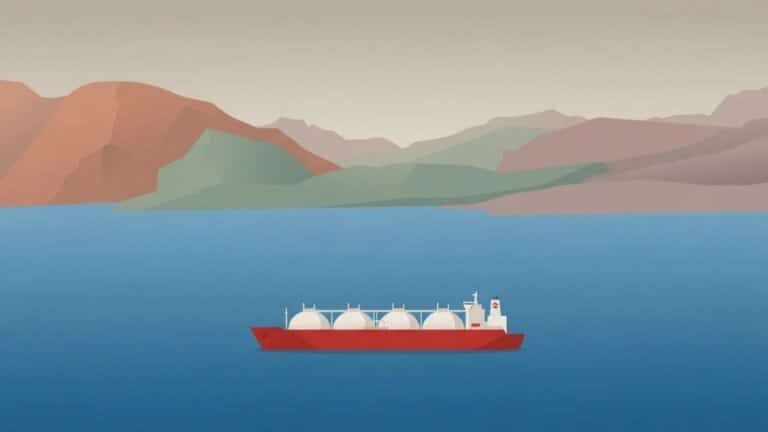
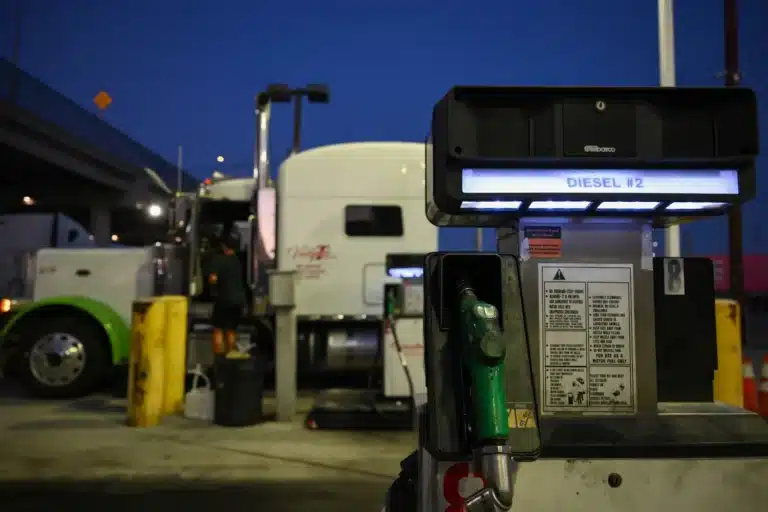
As inventories run dry and the Iran war continues to disrupt transit routes, oil has surged back to more than $100 per barrel. Diesel fuel—the workhorse of the agricultural and trucking sectors—has now soared to historic highs, pushing U.S. exports to record levels.
By almost any measure, the world should be suffering a far more severe energy crisis.