Bipartisan Senate group urges Trump to abandon plan to buy Russian diesel amid Ukraine war
A bipartisan group of six senators is urging President Donald Trump’s administration to abandon a plan to purchase diesel from Russia.
Get the latest as our experts share their insights on global energy policy.
Mandatory application review by the Advisory Committee on Reactor Safeguards (ACRS) reflects an earlier era, when the nuclear regulator lacked today’s permanent technical staff and nuclear promotion was...

Hear in-depth conversations with the world’s top energy and climate leaders from government, business, academia, and civil society.
Carbon credit markets have become one of the most hotly debated tools in the fight against climate change. Supporters call them essential to closing the gap between corporate...

Find out more about our upcoming and past events.
The Center on Global Energy Policy at Columbia University SIPA’s Women in Energy initiative invites Columbia University students to a roundtable discussion with Pam Brown, Managing Director at...

Opinion Columnist, Bloomberg
Javier Blas:
The price of gasoline has gone up. The cost of living has increased a bit, but nothing similar to what we though. To me, that is the most remarkable aspect of this crisis. I mean, has it been a crisis? Yes. We are still losing more than 10 million barrels a day of production. And at the same time, looking at the market today, will I say that we are in a crisis mode? Probably not. Three years ago, prices were similar to today, and it was just a normal day in the market.
Jason Bordoff:
Five months into a major Middle East crisis that has shut down the Strait of Hormuz for extended stretches and disrupted anywhere between 10 and 15 million barrels a day of oil supply, global energy markets are still defying historical expectations. Despite all the lost production and the heightened geopolitical instability, as of late July, crude oil prices are hovering in the mid – 80s, far below the $150 or $200 per barrel catastrophic scenarios many analysts had predicted early on.
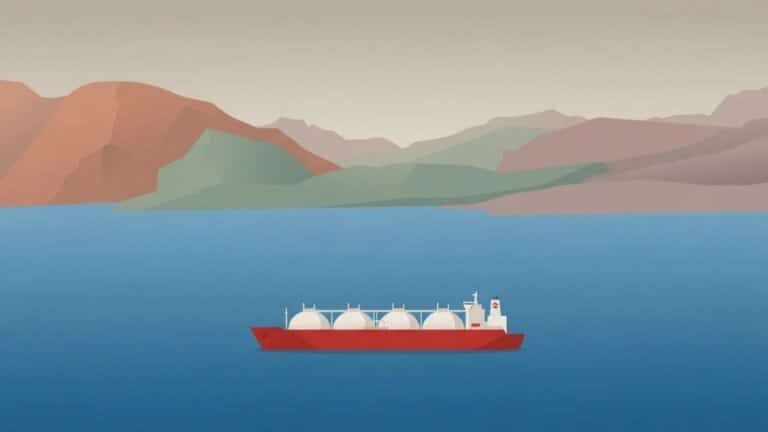
But beneath that headline number, the broader energy system tells a more complicated story. Refining margins have spiked to unprecedented levels. Global coal consumption is headed toward a new record high, and the ways energy moves around the world are changing in real time as the crisis continues to unfold. So why hasn’t this massive disruption triggered a full-blown global economic crisis? What role are China’s massive strategic stockpile shifting demand patterns and the ongoing energy transition played in dampening the shock? And what are the long-term security implications for global oil refining, shipping choke points, or the future of LNG infrastructure?
This is Columbia Energy Exchange, a weekly podcast from the Center on Global Energy Policy at Columbia University. I’m Jason Bordoff. Today on the show, Javier Blass. Javier is an opinion columnist for Bloomberg covering energy and commodities. Previously, he was at the Financial Times where he served in several key roles, including as Africa editor and commodities editor. He’s also the co-author of The World For Sale: Money, Power, and the Traders Who Barter the Earth’s Resources. Javier joined me to explore why the economic fallout from this energy crisis has been surprisingly muted so far. We discussed the rise in global cold use, particularly in China, while also looking at how the crisis might accelerate the clean energy transition. Finally, we examined how the strait closure is forcing the oil and gas industry to permanently build resilience into its supply chains. I hope you enjoy our conversation. Javier Blas, very good to see you again, my friend.
Thanks for joining us once again on Columbia Energy Exchange.
Javier Blas (02:55):
Thank you so much for having me again.
Jason Bordoff (02:57):
I think I reached out to you a few weeks ago about coming on the podcast again before we knew who the World Cup winner would be. So congratulations to you and all your fellow Spaniards.
Javier Blas (03:10):
I’m going to be very diplomatic and say that football won, which is also a way to insult every friend that I have in Argentina. But I think that for the next six months, they’re going to have to deal with it.
Jason Bordoff (03:25):
Were you in Spain for the final or are
Javier Blas (03:27):
You watching – No, certainly I watch it remotely. I watch it here in London where I live, but it was great. We have friends over, we have Spanish food, we have a Spanish wine, and then we could celebrate. So I cannot ask for more.
Jason Bordoff (03:42):
Wow. It was a pretty remarkable performance by the team being so dominant all the way throughout. So congratulations. And I think I also reached out to you to have you on the podcast to talk about lessons learned from the crisis that was over. And you would be bored and you would have nothing to do because the strait would be open shortly after signing an MOU. So what are you doing with all your free time now that the crisis is over?
Javier Blas (04:09):
The crisis is over. If we were so lucky, the day that we are recording this is 150 days since the war has started. Then we have ceasefire, then we have more fighting, then we have ceasefire, then we have MOU. We have more fighting. And now it seems that another ceasefire and perhaps another MOU. The market is struggling to adapt to all of this. But I think, however, that what I will say is that you have had me on day three of the conflict 147 days ago and told me all what was going to happen over this conflict, all the fighting, all the closure of the Strait of Hormuz, then the Houthis of German joining, et cetera, et cetera. Problems in the Black Sea. We were fighting between Russia and Ukraine. And you have told me to guess where the oil price will be by now.
(05:13):
I will have never said $79 per barrel for West Texas Intermediate. And I think that to me is the biggest surprise of the crisis is something that I think that we don’t really get understand how has happened. But this is perhaps the first time that we have the biggest ever oil shock that doesn’t really trigger a full-blown energy crisis. And by that I mean something that my dad is on the phone telling me why everything is so expensive, that the central banks everywhere are increasing interest rates, that we see unemployment going up, that people on the street feel it. And this time, of course we have felt it. Of course, the price of gasoline has gone up. Of course the cost of living has increased a bit, but nothing similar to what we thought. And to me, that is the most remarkable aspect of this crisis, which I almost struggled to label as a crisis.
(06:17):
I mean, has it been a crisis? Yes. I mean, we are still losing more than $10 million a day of production. That’s more than 10% of global supply. And at the same time, looking at the market today, will I say that we are in a crisis mode? Probably not. Three years ago, prices were similar to today and it was just a normal day in the market.
Jason Bordoff (06:40):
Yeah, it’s remarkably striking that we’re talking when Brent is mid – 80s. We’ll see where it is day-to-day given, as you said, this is by no means over. I assume in certain scenarios you could describe, you can imagine oil running up to the kind of catastrophic levels, $150, $200 that people talked about back in April.
Javier Blas (07:00):
For sure.
Jason Bordoff (07:01):
But five months into this with the strait largely closed for most of it, except for a brief period after the MOU when a bunch of barrels got out, oil has averaged just under $100 a barrel from $70 before. When I worked for President Obama, I remember to the extent I was involved in Iran policy, it was being in the room when people were talking about tightening economic sanctions on Iran. And the question was, how do you do that? How do you take two and a half million barrels of Iranian oil exports off the market without collapsing the US and global economy in the process? Well, we just closed a strait with 20 million and obviously there were some workarounds, so that wasn’t the full extent of the disruption. But 10 to 15 million barrels a day of supply disruption for this long is pretty remarkable.
(07:48):
So we can count up at this point, a lot of people listening will be familiar with the main instruments that allowed that to happen. The bypass pipelines, the inventory draws, commercial and government, China’s reduction in imports. But is there some bigger lesson here that you step back and you say, how do we think about why this happened? Are energy crises necessarily a thing of the past or did we just get lucky this time?
Javier Blas (08:17):
I think that there is a combination of luck. I do think that there are one-offs, and I think that there are some structural elements. The one-offs are in some ways that we went into this crisis with a market that it was significantly oversupply, I will say, have been on the very side going into the world that we were massively oversupply and prices will have been very low. In 2026, half this not happened. I think that now we can see that. That may not happen ever again. We don’t really understand how China did what they did. I mean, they reduced seaborne imports by about 50% from pre-war levels. They are increasing a bit purchases for July, but we are still down more than 40% from pre-war levels. But we don’t know exactly how China achieved that, whether there has been a reduction in actual demand, whether their economy is more flexible of how they use fossil fuels or whether they have been running largely in secret a lot of inventories for strategic petroleum reserve that they have, and probably is the largest in the planet, much larger than the United States.
(09:30):
But I do think that –
Jason Bordoff (09:32):
And they probably stopped buying to fill there and increase their inventory as much.
Javier Blas (09:36):
And they were buying quite a lot of oil. So the demand for China was a lot weaker than we thought they were buying a lot of oil that it was not consumed, but it was ended on storage. And I think that that has been a huge part of it. I think that it has been a bit of luck because I don’t know why. I think that the oil market has, if I may get into politics, I think it has a Republican bias, and I think that the oil market didn’t want to go against President Trump. I just wonder if some of the jawboning that the White House deploy will have worked if a Democrat had been on the White House.
Jason Bordoff (10:14):
And just to be clear, when you use the term jawboning, you don’t mean I need you all to increase production. You mean just before markets open on a Sunday night, he says a deal is imminent.
Javier Blas (10:24):
Yeah that’s what I mean.
Jason Bordoff (10:26):
And that affects trading behavior because people don’t want to get on the wrong side of that.
Javier Blas (10:30):
President Trump has sold to the market that the deal was imminent about 40 times in the last 150 days. And we are still at the time that we are recording, we’re still waiting for that final deal. There were moments where the market look at a bit too credulous selling off every time that he announced that. And I don’t know, Jason, you have been with a different administration on the White House. I don’t know. When you look at it, it was like, let me put it this way. I was telling an advisor for President Biden. You guys were not so lucky that the market believed it every time that you tried to talk it down. And the market will go up because they didn’t trust it. And so I don’t know. But I think that in some ways President Trump has been lucky with that. I think that there’s also the White House, like it or not like it, have run a very effective communication campaign around the oil market.
(11:22):
I think that that has been one of the most effective sides
Jason Bordoff (11:26):
Do you think that that presidential rhetoric on a Friday night they were going to escalate and threaten infrastructure in a serious way? And then there’s a deal just before markets open. Was that sort of a marginal impact?
Javier Blas (11:41):
No, I think it was very, very important because we have a moment very early on the conflict where I think an honest mistake happened and Secretary of Energy, Chris Wright sent a tweet basically implying that the Strait of Hormuz was reopening under the US Navy. And the market fell about 10% in seconds. And that gave every trader who is taking a long position basically that he’s betting that oil prices are going to go up. It gave a sense of how much they could lose if the market moved opposite to the direction that they were betting. And I think that that created a lot of race that prevented the deployment of capital and risk appetite was reduced because people were worried about getting on the one side of the president, that the president could cut a deal or engineer an exit and you weren’t just —
Jason Bordoff (12:47):
It wasn’t that they wanted to be nice to Trump or help him out. It was just there’s something about this president that’s so unpredictable that the possibility that he could wake up Monday morning and decide we’re done, we’re walking away, seemed more real to people.
Javier Blas (12:59):
Yeah, I think that there’s an element, but I still kind of think that if to name some President Obama or President Clinton, let alone President Biden have tried to toll the market that way, I don’t think it will have worked the same way.
Jason Bordoff (13:14):
I remember, as you will recall, we used the SBR in 2011 after the Libyan Civil War. And in 2012 when oil went up to what, $120, $125 at one point? And there was a lot of speculation that the White House was trigger happy with the SPR. There was some price trigger as soon as you get to $120, people release it. I will say I don’t think we intentionally tried to tamp down that speculation. If people wanted to speculate to that effect, we were fine with it.
Javier Blas (13:44):
But then there is perhaps a structural element and perhaps with all the moving parts and the fact that the data on the oil market is imperfect, we have been missing, or I have been missing. But when one looks at the impact in places like the UK or Germany or let alone China, it is clear that the energy transition is starting to change the game. There are more EVs on the roads. It means that the impact on driving is different. Also, the global economy has changed. I am the first one at fault. I still see every oil crisis through the lens and the lessons of the ’70s and ’90s and 2000s. But the economy has changed very much. I mean, you talk about the shops that are on High Street. And I do a bit of reporting on my Saturdays morning when I’m just going to get this old croissants and coffee for breakfast and so on.
(14:48):
Maybe I have a haircut and I talk to the different people that are on the High Street of the small portion of London where I live. And none of those businesses care about the price of oil. They care a lot more about the price of electricity.
Jason Bordoff (15:05):
I just want to ask, because there’s two factors here, and I think it’s important, tell me if you agree, to think about them a bit differently. One is the extent to which any given amount of supply disruption causes the oil price to change. And the second is how much a change in the oil price, a shock affects the economy. And you’re making the point, and you may have seen our friend and one of our non-resident fellows, Christof Rühl, had a piece in the Financial Times about this recently, and I wrote my weekly email, which I’m sure you read religiously. Of course I do. Referencing a new paper by some Lutz Kilian and some colleagues at the Dallas Federal Reserve that I thought was really interesting in which they modeled that a supply disruption of 15%, roughly what we have seen, would have been a hit to global GDP of 6% on an annualized real basis in 1980. And now it’s 1.7%. And for the US, the difference is even more striking because of course we’ve become a net exporter instead of importer.
(16:08):
So there’s two dynamics at play. Just tell me a first one to separate them because the increase in electric vehicles I think speaks to the second, why it might matter less. But the idea that you have less of an oil shock because people in China and elsewhere have more substitution capability. Do you see evidence that that is true? Are there lots of people own two cars and they use one more than the other, or there’s a bunch of EVs sitting around that no one’s using and they jump into them and the oil price gets high?
(16:36):
I could understand why it means the GDP impact is smaller. I’m not sure why it would mean that losing 15% of supply has less of an effect on the global oil price, whatever that was before the crisis started.
Javier Blas (16:49):
Some people have tried to convince me that there is a lot of substitution available, that in China households have two cars and they switch from the gasoline to the EV and vice versa. I’m not convinced there are not that many outside the United States, there are not that many households with two cars. Certainly you then move out of the United States, Canada and Western Europe. Very few households actually do have two cars. So I don’t see that. Oil is not used widely in electricity anymore as it was in the ’70s. There are a potential substitution effect from oil use in petrochemical industry to more natural gas in petrochemical industry and more coal in the petrochemical industry via coal to chemicals. I think that there we have seen when naptha got so expensive that petrochemical plants that they were working on naptha, which is one of the refined products of the oil refining, they switch off from naptha in to try to use as much natural gas as they could.
(17:55):
And I think that is a corner of the oil market where we have potentially the worst of the data and we are only beginning to understand how much of that was happening. So there I see a substitution effect, but not as much as in other places. And to be honest, in the big chunk of the barrel of oil, which is the diesel market, which is the stuff that goes into tractors and combines and trucks and excavators and so on, there is not much substitutional. The only thing that you could do is slow down infrastructure and construction and so on or planting and harvesting, but that cannot happen. So I don’t see the substitution there. But I do think that perhaps every barrel, every disruption is priced at the margin. It’s the last barrel consumed that sets the price. And perhaps all those barrels that we are saving just because electric vehicles are starting to make a difference.
(18:56):
This is a market that price at the margin. So those margin and barrels perhaps has a larger impact than we thought. I have this as a theory. I think that the jury is out. I’m not taking a bill because it’s too early. We don’t have really good demand data. The good demand data is still from April. So we need to get a bit of more time and see the information that this tax that they come. But I think that is potentially true. We don’t know.
Jason Bordoff (19:29):
So it sounds like there are several factors that led this to be less severe than it was feared to be, which I just want to make sure I’m hearing you right. May or may not exist in the future. The oversupply situation, we had very historically high levels of inventory. Governments could have high levels of inventory, but they have to take action, especially after this crisis, to refill and rebuild those inventories. Congress has to appropriate funding to refill the SPR, for example. You have an unpredictable president, which might affect trading behavior. What about the China dimension? Do you think this is like the new swing consumer the way Saudi is a swing producer? Or is this a unique moment in time because they were buying a million barrels to fill their inventories? They won’t be doing that forever?
Javier Blas (20:14):
The honest answer is I don’t know because as I said, we know what China has done, which is reduce its imports of oil significantly. Roughly China was buying between 10 and 12 million barrels a day of oil on the seaborne market by tanker before the water started. And in June imported around five and a half in July, it’s going to import around six million barrels a day. It’s a significant reduction, but we don’t really understand how China achieved that. I don’t think that is the biggest factor that explained why the price is what it is without China stopped buying those barrels and allowing other countries to buy as much crude oil as they were buying before the war as nothing was happening. India was in June buying as much, actually more oil in June of 2026 than they bought in June 2025. Japan, the data is coming at the end of the month for June, but I will not be surprised if Japanese oil imports in June 2026 were higher than in June 2025.
(21:23):
That was only possible because another country decided not to buy a lot of oil, and that was China. Is this a one-off? I kind of think that it’s not. China is sitting on more than a billion barrels of S&T petroleum reserves, has a lot of flexibility, has the ability to switch a lot of its petrochemical industry from oil to chemicals into coal to chemicals, which is very important. And is a leader on the energy transition at the same time that is also the world’s largest polluter and the biggest consumer of coal. China perhaps today is the country that really truly is embracing the all of the above. Some of the energy sources that we don’t particularly like coal, but also some of the energy sources that we really like, like solar or nuclear. And that all of the above, I’m putting a huge emphasis on security of supply and a lot of resilience into the system explained through a huge SPR, for example.
(22:24):
I think that they have come to the help of China. They have helped the global economy. They have helped the United States and the White House. And I do think that that’s a factor that from now on, we need to consider that it can be potentially replicated in a future crisis. At the very least, it introduce an element of doubt to the market as to whether to take a very aggressive bet on higher oil prices if there is another supply disruption. Because you know that perhaps China does it again and it stops buying a significant amount of oil, therefore reducing the pressure. And that changed the behavior of the market. But I do think that the first elements that we know kind of point that this is not a one-off, but it’s potentially replicable in the future. But again, I’m saying this with a lot of hesitation because it’s very recent.
(23:26):
And one of the problems that we have is that Chinese oil data is, for lack of a better word, terrible. We don’t –
Jason Bordoff (23:36):
A little opaque.
Javier Blas (23:38):
Opaque. Thank you. Yes, that’s a little more diplomatic. It’s a reason that you were at the White House and I wasn’t. No, I mean seriously, we have a problem with Chinese oil data. We don’t have a source and a physical source of oil demand, for example, in China. We don’t have any public available information about storage levels in China coming from the government. I complain that the Europeans only publish once a month storage levels. The US does it every week. China doesn’t ever, and that’s a significant problem. And also the Chinese authorities themselves have stayed absolutely in silence about what they were doing. So we don’t know. I mean, it will be great at some point. And they’re no members of the International Energy Agency. So that also reduced the transparency of the system. And I don’t think that they have communicated, perhaps they have communicated with the White House, but I don’t think that they have communicated with anyone else how they were doing what they were doing and what the future intentions
Jason Bordoff (24:40):
Are. I just want to double check one thing you said because you mentioned China and coal, and you’ve written a lot about coal to chemicals, both in China and what other countries are looking to do. So just remind people listening how important the chemical sector is to oil demand and then what trends you see. And is that a source of near-term substitute ability to the thing we were talking about before? As China grows its coal to chemical sector, is that a flexibility source that affects the ability to respond to an oil shock?
Javier Blas (25:08):
So the chemical industry accounts for roughly one in 10 barrels that we consume worldwide. To put that into context is larger than aviation. Aviation is about 7% of global oil demand. The chemical industry is somewhere between 10 and 12% of global demand. So perhaps it doesn’t have the visibility certainly of aviation, but it’s a huge consumer of oil in different ways, different products, on stuff that comes from the refinery that we call naptha. So the stuff that comes straight from shale, oil wells, on shale gas wells called ethane. Big consumer. And our lives, our modern lives is built really around plastic, so the demand is going to continue growing. China is the only country in this world that has a significant industry for chemical production that is built around coal as the raw material rather than oil. It’s a complex process. It’s quite polluting. And it’s infamous because Nazi Germany, you said in the late ’30s and early ’40s through the Second World War to produce chemical components and also gasoline using German coal when they got effectively embargoed by the allies from access to foreign oil.
(26:33):
But it’s a relatively simple chemical process. As I said, it’s inefficient and it’s polluting, but China has lots of coal. A piece of a statistic that I find fascinating. A country like the United States produced nearly 100% of his nitrogen fertilizer, either from oil or natural gas. A country like India produced probably 96% of his nitrogen fertilizer also from oil and gas. China produced 78%, 78% of his nitrogen fertilizer from coal. And that is a huge difference. And when the crisis hit, China was able to shut down parts of his petrochemical industry that rely on oil and run as hot as they could the coal to chemicals industry. How big is their coal to chemicals industry? Well, if that portion of the Chinese industry was a country, it would be the third largest consumer of coal only behind China itself, India, and ahead of the United States as how big.
(27:45):
It consumes around 400 million metric tons of coal every year, which is a lot. It’s a bit more than what the United States consumes now. And it’s just one reason that, and you know that I like to write a lot about coal because I think that is a blind spot in a lot of the debate about the energy transition these days. But unfortunately –
Jason Bordoff (28:06):
Not because you love coal and you want there to be more coal. No. Because you want us to all be paying attention to how much coal there really is and
Javier Blas (28:14):
What’s actually happening. I think it’s just one thing that not for writing about it means that I love coal. I do not love coal. I would like to see the world moving out of coal, but I think that we need to write more about it because consumption keeps going up. It is 2026 and global coal demand, everything points at this precise moment more than halfway into the year that we will see again a new fresh record high for global coal consumption. In 2026 –
Jason Bordoff (28:47):
Tell me if I’m right, not just for total coal demand, but for power generation coal demand.
Javier Blas (28:53):
Also for power generation. The latest numbers from the International Energy Agency, and this is a forecast, we know how the first five or six months of the year went, probably only the first five months, the numbers for June are still tentative provisional. But we more or less know already the first half of the year, the use of coal for power generation was at an all time high. And everything suggests how we are going into the summer and the rest of the year that 2026 we’ll see.
(29:23):
And that also simultaneously we have huge numbers of particularly solar generation, the best ever. Wind generation, a bit more patchy because wind speeds have been a bit lower in certain areas of the world, China being one. But generally good wind numbers. Hydropower has been decent. It will not be as good in the second half of the year because of El Nino, means droughts are arriving in some areas, Europe being one. Nuclear has done okay. Gas has done what typically does every year, although with some pressure this year because prices have Been high outside the United States and Canada, but coal to me is remarkable. I mean, we are in 2026. We have been talking about getting rid of coal for the last quarter of a century and demand only keeps increasing. And it’s not as much because people will say, “Well, Javier guess demand coal, but it’s a small increase.
(30:23):
We’re going to go up maybe 1%. It’s not like two or 3% of 10 years ago.” And I would say, yeah, absolutely. I mean, the direction is not as bad as it could be, granted. But the question is that coal demand is going up when we were expecting already to see coal demand going down and going down quite a lot. We don’t have the luxury of coal staying flat or going down just a bit, let alone continue growing. We need coal demand to go down 5% every year, not up 1%.
Jason Bordoff (31:02):
Yeah, I saw in response to your tweet about power generation coal demand reaching a record, somebody saying yes, but as a share of the total, it’s going down. And you’re like, the planet doesn’t care about percentages. It cares about tons.
Javier Blas (31:13):
Yeah. I mean, all what matters is how many exactly. I mean, tons are important because equal emissions, so all what matters to the planet and to the atmosphere is how many tons of coal we are burning every year. What percentage of that is on global electricity generation? It’s a very little utility for the fight against climate change.
Jason Bordoff (31:34):
So I want to come back to some of the uncertainty about the Middle East, but just to stay on the topic you were focused on, I congratulated you at the outset over the good news in Spain, but your native country has also seen dramatic heat waves that are breaking records, horrible wildfires that are spreading droughts, not just in Spain, but other parts of Europe that are actually affecting energy flows. We can come back to how we think about choke points, which are not just the Strait of Hormuz. So the growth in coal, you see a lot in emerging markets, United States actually in the last year. But sitting where you are in Europe in this moment where energy security is top of mind and affordability is top of mind and the general sense is there’s a moment of rethink or pragmatism in how one thinks about energy policy and the climate agenda.
(32:26):
How do you see that playing out in Europe right now?
Javier Blas (32:30):
I think that the good news is that the ambition remains. I think that a lot of governments, both on the left and on the right, more on the left, but also some conservative governments in Europe remain ambitious on keeping some of the climate change targets. The bad news sometimes of climate change is that there is a bit of backpedaling that a lot of the old targets have been revised or have been weakened. New loopholes have been created. Market reform has been done, for example, to effectively reduce the long-term price of CO2 emissions in Europe, which is going to reduce the incentive to reduce emissions effectively because it’s going to be cheaper to pollute. But I think that there is also a bit of a reckoning in Europe that the direction of travel of the last few years where the continent was a champion of climate change action and it was leading even if others were not following or not following at the same pace.
(33:38):
I think that there is a recognition that that is not going to really going to work, that economic growth is important, that the employment is important. And if the cost of very ambitious climate policy is the loss of huge chunk of the productive fabric of countries, particularly the heavy industry, well there is a recognition that that’s a price too high to pay and that that’s not possible anymore. So I give you a bit of the bad news and the good news. I do think that across society, particularly younger boaters, particularly seeing the heat waves of 2026 in part accentuated by El Nino, which is more of a on and off weather phenomenon rather than climate change related. I think that there is an acknowledgement that every summer is getting hotter and that something needs to be done. The main problem remains, as with many other places, that there is an agreement that something needs to be done.
(34:43):
There is not a lot of appetite to pay for what is need to be done, particularly when individuals need to be taxed. But I mean, is the momentum stop? No. Is it slower than it was say five years ago? Yeah, certainly.
Jason Bordoff (35:01):
I want to make sure people take away the right insight in your view from this Hormuz crisis, where we are, where we’re headed, the lessons learned. So we talked about some of the buffers and why it wasn’t as bad as we though. The other one is bypass pipelines where there was diversification, there was an insurance policy. The assumption seems to be, and we’ve seen several announcements already from the UAE and others, there’s going to be a lot more investment in that. The desire to buy insurance in the form of pipelines around the strait. It’s a little harder for places like Iraq and Kuwait, but even they’re talking about trying to do that. And then you want to make sure you have insurance for your insurance. So if you go to the Red Sea instead of the Strait of Hormuz, you need to make sure you can get out of there, which you wrote about recently.
(35:47):
Do you expect to see a lot more? And look, I just got back from Calgary and they’re trying to build a pipeline of the West Coast to be a little less dependent on the US as a market. Is that a trend that you see where we’re going to see a lot of investment to try to diversify, give ourselves more optionality with how energy is transported in this world of geopolitical conflict we are entering?
Javier Blas (36:07):
Yes, I think that we are going to see new pipelines built. In some ways we are witnessing peak Hormuz where the Strait of Hormuz is the most relevant to the global economy. I wouldn’t mind that five to 10 years from now, a lot of the oil that needs today to cross the Strait of Hormuz could be rerouted if needed through pipelines. Certainly the UAE potentially will have very little export through the Strait of Hormuz. And a lot of their oil will come from the Gulf of Oman and Arabian Sea pipe from the oil fields near Abu Dhabi, through the Emirates, into a town called Fujairah outside the Strait of Hormuz. I will expect that Saudi Arabia will increase the capacity of his East West pipeline and that Iraq and Kuwait will try to find ways to reach ports that they are outside the Strait of Hormuz.
(37:05):
Although for those countries, it’s a lot more difficult because necessarily they need to cross an international border and therefore they rely on good relations with one or two other neighbors to cross those pipelines and keep those pipelines operational when they’re needed. And that’s going to also require that consumers finance some of those pipelines that they guarantee offtake for those pipelines. It’s very difficult to build a pipeline like the East-West Pipeline across Saudi Arabia, which is hardly used 95% of the time and is only used during a crisis. I mean, how did you really afford the big expense that is building that pipeline if it’s barely used and no one is paying for the use? So we need commitment from consumers. There was a paper that came this week from the Japanese government precisely making that point. I mean how to finance and how to commit to the use of those pipelines.
(38:05):
The difficulty in the Middle East is that a lot of those pipelines with the exception of the UAE and on the wrong side of the map, either on the Red Sea or was in the Mediterranean, which is all very handy if this was 1970 and the European oil market was the game in town, but the European oil market is not the game in town, it’s Asia. And if the oil tank can emerge in the Eastern Mediterranean, they need to go all around Africa back into the Indian ocean. And you are adding 25 days of extra sailing each way. But I do expect that we will see more pipelines. One thing that, and I was thinking about this, thinking about one of the pipelines that is coming into use now to bypass the bypass to avoid the Red Sea. We built a lot of these pipelines that they are saving the day today.
(39:01):
Other than the United Arab Emirates pipelines that have been built over the last five years, every other conduit that we are using was built at least 40 years ago. In the case of the East West, in the case of the Sumed pipeline that avoids the Suez Canal in Egypt, that was built 50 years ago. And if we talk about the Eilat-Ashkelon pipeline through Israel, also another bypass option to avoid the Red Sea that was built more than 60 years ago. And then we stopped building pipelines in that area of the world. We developed big oil tankers. It was all very cheap. So in so many ways we are –
Jason Bordoff (39:46):
And I think that’s probably consistent with supply chains generally where people became comfortable with just-in-time delivery and integrated globalization was taking hold and people were comfortable with that.
Javier Blas (39:56):
And then we developed massive super tankers. I mean, a big tanker 40 years ago was half a million barrels. Today, the big tankers do more than two million barrels, economies of scale, et cetera, et cetera. So we decided that transportation by sea was cheaper. And yes, there was some risk, but I mean the Strait of Hormuz is not going to get close. So that was the thinking. A lot of those thoughts are going to be now revised and probably we’re going to put a lot more emphasis on building resilience into the supply chains. But someone is going to have to pay for that resilience, and certainly it’s not going to be the producing countries. The producing countries are going to be coming to the consumers and say, “Yes, absolutely. We need to build more pipelines how we are going to finance that?” So that means money.
(40:42):
That is money that we are going to be taking away from other sectors. And it’s also money that invests in a pipeline that perhaps is only used six months every 10 years during a crisis and it costs $10 billion where we could be building a nuclear power plant or more solar panels or perhaps just invested in region and development to develop the next solution to the energy system 30 years from today. So it’s also part of the energy transition that we are going to have to be comfortable if we want to guarantee security or supply to make significant investments into the legacy sources of energy, and in this case, fossil fuels, because they are still needed and we can hardly afford any other disruption like what we are experiencing today.
Jason Bordoff (41:34):
Yeah. I mean, if we’re entering an era of increased energy insecurity, or as Meghan and I wrote about the return of the energy weapon, a big part of insuring against that is it’s insurance. You got to be willing to pay an insurance premium, including for infrastructure. Maybe you only need some of the time, and it’s probably not the commercial private sector incentive to do that. So that’s a role for government. Help give people a sense of where you think we are today. How much is moving through the Strait of Hormuz? And given everything we just said, which is there’s all these workarounds and we got lucky. And how much longer can we cope with this level of disruption? Not just in crude, but maybe you could speak for people who are less paying attention to what’s happening in refined product markets. So
Javier Blas (42:20):
Let’s start with the situation, the refined market. I mean, myself, we are obsessed with the price of crude oil and particularly two benchmarks that we track, which is the cost of WTI, West Texas intermediate. That’s the benchmark for the US and the price of Brent crude oil from the North Sea, which is effectively the price for elsewhere in the world, particularly Europe. But no one really buys West Texas intermediate on brand other than the oldest of an oil refinery. So the only people in the global economy that really care about the price of a barrel of crude are the producing countries. So you are the minister of Saudi Arabia, the minister of oil of Saudi Arabia, or you are an executive of an oil refinery. So say the CEO of Marathon or Valero to name two big American refiners. The rest of the economy, we care about the price of refined products.
(43:13):
That’s what we buy. I mean, that’s what I go to the services station or the petrol station, as we call it here in England. I care about the price of gasoline. I care about the price of diesel. And typically —
Jason Bordoff (43:26):
And you care about Spanish olive oil.
Javier Blas (43:28):
Of course. That is very important, but thankfully prices are down. So that’s another story that probably we need a couple of hours of podcasting. Anyway, back to the gasoline and diesel. Typically, you name the price of oil and you are naming the price of gasoline and diesel because the correlation is one to one or thereabout. But we are in a very special situation where the price of gasoline, it’s much higher than it would suggest the price of oil. And the reason is that the cost of refining has gone through the roof. We have reduced a lot of the inventory that we have in tanks of refined products. The demand is at the peak seasonally for gasoline because everyone is on holiday and driving around. It’s a lot of demand for jet fuel for the same reasons. And we have lost a significant amount of refining capacity in part because China is not exporting refined products, in part because Ukraine has been relentlessly attacking the Russian refining industry, which is one of the world’s largest.
(44:31):
And also because some of the refineries in the Middle East are still shut down because of the Strait of Hormuz is also closed. All in all, probably about 10% of global refining capacity is down. And that means that the cost of refining a barrel of oil which ultimately gets added to the ultimate price of gasoline and diesel at the gas station.
(44:55):
That has gone up. Let me put it this way. An oil refiner, if you have asked them a few months ago at the beginning of the year, they will be happy with say $35 a barrel as a refining margin. I almost guarantee you that 99 out of a hundred refining executives will have said, yes, thank you very much. Just write it down on a piece of paper. $35 a barrel, that’s a great price. Thank you. I signed their contract done. Well, the refining margin is almost $70, double the price that I’m suggesting. It is off the charts. It’s the highest ever by a significant margin. Not even in 2022 during the early days of the invasion of Ukraine, we got so out of hand. And that’s one reason that the price of oil may come down and the price of gasoline at the pump may not come down as much.
(45:50):
So that is one portion of the study.
Jason Bordoff (45:54):
My understanding is even if things resolve tomorrow and there’s a peace deal, the peace breaks out, the strait reopens, the physical damage that has been done to the refining infrastructure in the Gulf and of course in Russia from Ukraine is much worse than has been done to crude production and storage. So it’s going to take longer to normalize.
Javier Blas (46:15):
The damage to refining capacity, particularly in Russia, is serious and that takes time. Well, the damage to what we call the upstream or the oil production facilities, the oil wells, the oil fields has been relatively minor. So we are not going to recover very quickly. The only positive side is that the seasons are now turning in our favor. A couple of months ago, I was very worried because we were heading into peak demand season. Typically the end of July, the last week of July, first week of August is the seasonal peak for gasoline and jet fuel. Everyone is traveling around, everyone is going on holiday.
(46:58):
But come Labor Day in the United States, demand for gasoline and diesel and demand for gasoline and jet fuel start to come down significantly. And that’s going to give us a bit of a relief. And that is unfortunately only about five, six weeks away. I mean, the summer suddenly is coming to an end quicker than we think, and that will help the market. Not much is moving through the Strait of Hormuz. I mean, we are recording this on July the 28th, Tuesday. And I will say that perhaps three million barrels a day of crude have moved today through the Strait of Hormuz. And it takes us several days to figure out exactly how much because every oil tanker that is crossing does it with all their beacons off. And in the past they were restarting their beacons say when they were about a couple of days out of the Strait of Hormuz.
(47:54):
Now they don’t restart their beacons past until they reach Singapore 20 days later. So then we have to triangulate, okay, we lost this vessel track about 20 days ago. Where we think that this vessel has been moving around? And then we can, using our sources, figure out that actually they crossed the Strait of Hormuz and about what time. But three million barrels a day compared to 20 million barrels a day before the war is a big difference. And it cannot last forever. At some point with all the bypasses, with all the effort from China, with all the release of SPR petroleum results, we are losing a significant amount of supply.
Jason Bordoff (48:34):
There are fewer buffers for refined product markets. So maybe you could, where are we with product inventories? And given limited refining capacity, the record high, the cracks, the margins you just talked about are really not able to incentivize more output. So does that just mean the price for gasoline and diesel and jet fuel needs to rise high enough to destroy demand if this continues?
Javier Blas (48:58):
I think that the prices have risen already to the point of destroying some demand. I don’t think that we need higher prices. And also even if the refining margin stays high, if the price of oil comes down, that’s going to mean that the ultimate price of gasoline also comes down a bit. But there is not a lot of room of maneuver. There’s not a lot of margin. And at times when President Trump says, “Oh, I’m very happy to wait as long as it takes with Iran.” Well, time is not on his favor. Neither is on the favor of Iran, which is not able to export his oil because of his blockade and his economy is in tatters. So both sides of the war have a bit of a clock against. And I will remind that a deal at the end is what interests both sides, but we’ll see what happened.
(49:47):
But perhaps if I was to summarize is we are going to see if a deal happens, we are going to see a rapid drop in oil prices and we are not going to see a rapid drop in refined products. And that means that consumers are going to have to pay a bit higher prices for gasoline and diesel than otherwise for the next few months.
Jason Bordoff (50:10):
Going to let you have dinner and go to bed soon, but I just want to quickly ask you about natural gas. I think you had lunch recently with our friend, my colleague, Anne Sophie earlier in July. Do you agree with her when she says we’ll have more renewables, more coal than anticipated coming out of this crisis, notably in Asia, and therefore weaker gas and LNG demand than people thought before this crisis?
Javier Blas (50:34):
Yeah, absolutely. I think that she is a spot on there. I think that one of the consequences of this crisis, and let’s also not forget that this is the second crisis in four years. We have 2022 in Europe earlier, which had also significantly spillover into Asia. I think that response of many countries is going to be, and I think that you mentioned this also in your article for Foreign Affairs, is what I call, perhaps you use similar language, is the rise of, there is the rise of the use of the energy weapon again. And one of the best defenses against an energy weapon is domestic energy. That could be solar production with solar panels, but solar panels perhaps imported from China. But once they’re installed, they’re good for the next 20 years to produce electricity. It’s not like a barrel of oil or a cubic meter of gas that needs to be bought every time.
(51:26):
Solar panels get installed. They produce electricity for 15, 20 years if everything goes as it should be. So I think that it’s going to be a big push for solar and wind. And I think that simultaneously is going to be a reluctance to abandon coal. Some countries going to build more coal fire stations. And I think that in general, what I see the biggest problem is not as much as that we are going to be building more power stations for coal is that we are not going to be retiring in Asia a lot of the coal-fired power stations that we though that perhaps we could convince Asian countries to retire early. So long-term demand for coal may stop growing, but it’s going to remain at very high levels for the foreseeable future. And an additional point on gas, and I’m just looking at my pricing on the Bloomberg terminal, and Henry Hab gas, which is the benchmark for the US, is at $260 per MBTU per million British thermal units.
(52:28):
And that is simply incredible.
Jason Bordoff (52:32):
And remind people what TTF and what Europe and Asia are.
Javier Blas (52:35):
So TTF is trading at the moment at, I need to check the price. So we are trading before I say something completely –
Jason Bordoff (52:47):
I mean, they’re both approaching $20, right?
Javier Blas (52:49):
Yeah I think we are a bit higher than $20 actually. So TTF is trading at 56 euros per megawatt hour with equals to. I need to use my convertor because I don’t know how to do this top of my head anymore at this time on the evening in London.
Jason Bordoff (53:15):
Prices have had to rise because Europe needs to get its inventories full heading into the winter.
Javier Blas (53:23):
The US is paying less than $3 and Europe is paying $19. That’s the gap. And that is also unique because in 2022 when Russia invaded Ukraine for the second time, the price of natural gas in Europe went much higher, but also the price of natural gas in the US went to nine, $10 per MBTU. The fact that it’s less than $3, that is absolutely incredible. And that’s another reason that I struggled with the concept of an energy crisis when the US has one of the lowest prices for natural gas, that economy, certainly on inflation adjusted terms, gas is as cheap as it ever has been for the American industry.
Jason Bordoff (54:10):
What was the difference in your view between ’26 and 2022 for Henry Hub? Why such a different reaction?
Javier Blas (54:17):
I think that 2022, the American oil industry was trying to recover from the impact on oil demand from COVID. Oil demand or oil supply was down in the US. A lot of the gas in the US comes as associated gas. So you drill a well for oil and part of the oil well flows as oil, but a lot of gas comes at the same time. So we were not having that extra gas and that really surprised the market and also was the beginning of the second boom in LNG exports from the United States. And I think that the market got not enough supply and a lot of demand all of a sudden, and there was a squeeze. And for a few months, the price went to $10, perhaps a bit of extra speculation. But this time the market is just dealing with this spectacularly well.
(55:08):
I mean, to see at the thick of the summer with heat in the US requiring a lot of power with a lot of new electricity demand coming from data centers and artificial intelligence, et cetera, on top of the industrialization of the American economy and to see these very low prices is surprising. But also that is part also the story of the energy transition. We are seeing that solar power in certain areas of the United States and Texas in particular are making a huge dent into the generation of electricity that in the past will have been done with gas. And that means that the US doesn’t need even during a heat wave nearly as much as gas and it will have needed in the past just because solar and now batteries are making a significant dent. And again, these are markets that they are priced at the margin.
(55:58):
So having that extra megawatt hour that is relied when the sun sets, but the battery is kicking into the market and they’re providing some few extra megawatt hours, that means that we don’t need to run gas as hot as in the past. That really has a big impact on prices and we are beginning to see it. And we are seeing it in places that you will have thought that they were all pro-fossil fuels like Texas.
Jason Bordoff (56:24):
So you think the loss of Russian pipeline gas, Qatari LNG has changed the role of gas at LNG in some multi-decade transition and possibly you see an investment bubble coming with all the LNG FIDs, all the investments that are being made?
Javier Blas (56:41):
Anne and I, when we’re having lunch, I think that we agree that every project outside the Middle East gets built now for LNG. Even the projects that we, or at least I never thought they were going to make economic sense because importing countries will like to support them so to diversify the energy sources. It is not the fault of Qatar that they have to declare force majeure and stop supplying gas. It is not the fault. It’s a war that it was imposed on Qatar. But still, you are the energy minister or the energy executive or an importing country. You will never ever forget that in a moment of need, that country was not supplying your LNG, whatever the reason it was. Unfair as it may be the comment, but you will not trust that that supply is going to be reliably there. And therefore you will support projects elsewhere, whether that is in Canada, in the United States, in Argentina, in Eastern Africa, in Mozambique and Tanzania.
(57:44):
In the Eastern Mediterranean, we are going to see a lot of LNG build up outside the Middle East. But then when the war ends, we will see also Qatar going ahead with the expansion and we will end with too much gas. Probably the demand growth will not be nearly as much as we expected because coal and solar. And I think that one of the biggest results of this crisis is that we may enjoy in a few years time, very low LNG prices for the foreseeable future.
Jason Bordoff (58:17):
Javier, you know I spend a lot of time talking to journalists to try to help them understand the energy sector and there’s no journalists for whom it flows in the other direction more than talking to you. So just always learn an enormous amount when we have a chance to talk to each other. And I hope that is true for everyone listening as well. Thanks so much for your insights.
Javier Blas (58:35):
Thank you so much for having me.
Jason Bordoff (58:40):
Thank you again, Javier Blass. Thanks to all of you for listening to this week’s episode of Columbia Energy Exchange. The show is brought to you by the Center on Global Energy Policy at Columbia University. The show is hosted by me, Jason Bordoff, and by Bill Loveless. Mary Catherine O’Connor, Caroline Pittman, and Kyu Lee produced the show. Gregory Vilfranc engineered the show. For more information about the podcast or the Center on Global Energy Policy, please visit us online at energypolicy.columbia.edu or follow us on social media at ColumbiaUenergy. And please, if you feel inclined, give us a rating on Apple or Spotify or wherever you get your podcasts. It really helps us out. Thanks again for listening. We’ll see you next week. Thank
Over the past five months, the Strait of Hormuz has been closed for extended stretches of time, disrupting roughly 10 to 15 million barrels of oil supply each day. It is the biggest energy supply shock in history, but global energy markets are defying historical expectations.
Despite lost production and heightened geopolitical instability, crude oil prices are far below the catastrophic levels many analysts predicted early on. But beneath the headline numbers, the broader energy system tells a far more complicated story. Refining margins have spiked to unprecedented levels, global coal consumption is pacing toward a new record high, and the ways energy moves around the world are changing in real time as the crisis continues to unfold.
So, why hasn’t this massive disruption triggered a full-blown global economic crisis? What role are China’s massive strategic stockpiles, shifting demand patterns, and the ongoing energy transition playing in dampening the shock? And what are the long-term security implications for global oil refining, shipping chokepoints, and future LNG infrastructure?
Today on the show, Jason Bordoff talks to Bloomberg opinion columnist Javier Blas about how the strait closure and Iran war have impacted global energy markets so far.
Prior to joining Bloomberg in 2015, Javier held a number of roles at the Financial Times, including Africa editor and commodities editor. He is also the co-author of The World for Sale: Money, Power and the Traders Who Barter the Earth’s Resources.
Carbon credit markets have become one of the most hotly debated tools in the fight against climate change. Supporters call them essential to closing the gap between corporate...
Global gas markets, especially in Europe, are approaching winter under serious pressure. With storage inventories lagging behind historical averages and shipping disruptions from the Middle East threatening key...

Seven months into the largest oil supply disruption in history, there's still no resolution in sight. This week, on the sidelines of the UN General Assembly, US and Iranian officials held their first indirect talks since the Memorandum of Understanding collapsed in July—but neither side appears ready for concessions.

This week, Chinese President Xi Jinping travels to Washington for a state visit with President Trump, their second face-to-face meeting this year. Energy is likely to be high...

The Middle East crisis has increased demand for China's clean technologies.
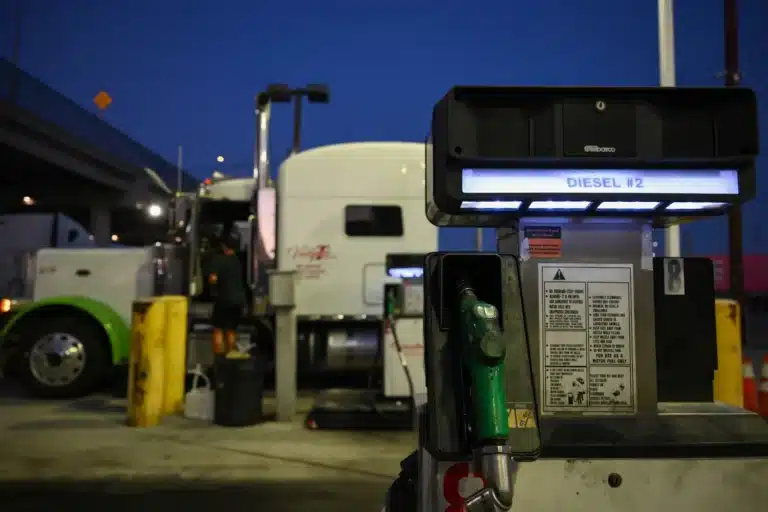
As inventories run dry and the Iran war continues to disrupt transit routes, oil has surged back to more than $100 per barrel. Diesel fuel—the workhorse of the agricultural and trucking sectors—has now soared to historic highs, pushing U.S. exports to record levels.
By almost any measure, the world should be suffering a far more severe energy crisis.