Net Power Surrendered Its Clean Dreams to Data Center Demand
The zero-emission pioneer is doing the dirty work for the AI boom.
Get the latest as our experts share their insights on global energy policy.
This Energy Explained post represents the research and views of the author(s). It does not necessarily represent the views of the Center on Global Energy Policy. The piece...
Hear in-depth conversations with the world’s top energy and climate leaders from government, business, academia, and civil society.
After years of trying, the US may be on the cusp of a nuclear renaissance. Commercial nuclear generation began in this country in 1958. Today, the US has...

Find out more about our upcoming and past events.
The Center on Global Energy Policy (CGEP) at Columbia University’s School of International and Public Affairs and ReNew invite you to Columbia India Energy Dialogue 2026, taking place...


Senior Fellow and Head of Corporate Partnership Strategy

Senior Advisor for Scholarly Affairs and Senior Research...

Daniel Sternoff:
Oil markets are kind of entering a new phase of this crisis, or you could say maybe we’re now getting into the phase that we all expected we would see when the crisis began. It just has taken six months to really start to see oil markets tightening up.
Karen Young:
I think there’s an obvious missing party when we talk about Iran and the US and potential return to an MOU or new negotiations. I mean, the Gulf States are sitting right smack in the middle of that and have not really had a say rather than just being attacked. It
Richard Nephew:
Ends really, I think in one of two ways. We’re either able to get to a new accommodation, which is likely to involve concessions to the Iranian position on this, or it’s going to require an escalation that is going to require a lot larger commitment and a higher risk being faced by the United States.
Jason Bordoff:
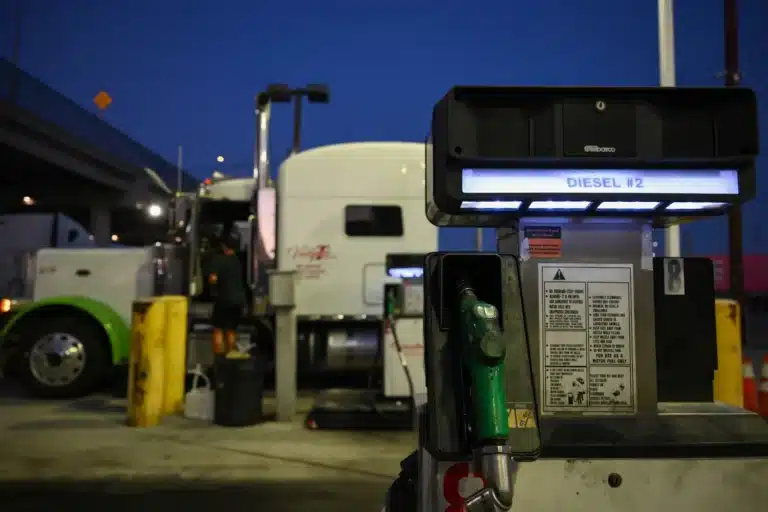
More than six months into the war with Iran, the Strait of Hormuz crisis continues to cause turmoil in the Gulf region and in global energy markets with no apparent end in sight. Tanker traffic through the strait has collapsed to a fraction of its pre-war baseline and the fallout is spreading. Brent Crude broke $100 a barrel for the first time since July and US diesel prices have climbed above $6 a gallon for the first time in history. The US Navy blockade has all but shut down Iranian oil exports, but the conflict is no longer confined to Iran and the strait. Last week, Saudi Arabia’s East-West pipeline was struck. It could stay offline for weeks. Iran aligned Houthi forces seized Yemen’s Red Sea coastline and a Panama flag tanker carrying Iraqi fuel oil caught fire in the crossfire, a sign that oil flows well beyond Iran’s borders are now at risk.
(01:46):
Meanwhile, President Trump continues to predict the war will end shortly after the US midterms, even as his own administration reportedly warns privately that Iran can hold out a lot longer than that. So with the conflict spreading, has this become a multi-front regional war? How much further could oil and diesel prices climb? And how does this conflict unwind and how does it actually end? This is Columbia Energy Exchange, a weekly podcast from the Center on Global Energy Policy at Columbia University. I’m Jason Bordoff. Today on the show, Richard Nephew, Daniel Sternoff and Karen Young. Richard Daniel and Karen are all scholars here at the Center on Global Energy Policy. They are familiar voices on this podcast with deep expertise in energy markets and Middle East geopolitics. They joined me to discuss the ongoing impacts of the war in Iran. We talked about the latest escalation on the ground and what’s driving it, the state of play in the Strait of Hormuz, and why oil and refined product prices keep climbing, including why the crack spread — the gap between crude and refined products — keeps widening and what all of that means for prices at the pump. I hope you enjoy our conversation.
(02:59):
Karen Young, Richard Nephew, Daniel Sternoff, welcome back to Columbia Energy Exchange. We have been talking a lot to all of you guys over the course of this year. So thanks for coming back on and explaining to everyone where things stand. Daniel, let me start with you. I think the last time we talked, there was a sense among many that this was the energy crisis that wasn’t the largest oil supply disruption in history, but oil prices didn’t go up that much and then they seem to be falling.
(03:33):
Six weeks ago we were in the mid $70s. Something has changed. Talk to me about where we are right now in oil markets and then let’s come to Richard and Karen to understand what’s happening in the Gulf, what’s happening in Iran, and where this may go from here.
Daniel Sternoff (03:50):
Yep, absolutely. So oil markets are kind of entering a new phase of this crisis, or you could say maybe we’re now getting into the phase that we all expected we would see when the crisis began. It just has taken six months to really start to see oil markets tightening up. So we’re up about $30 over the last. Since the memorandum of understanding collapsed in July, we’ve rallied about $30. Brent is currently trading around $107. That’s still below the peaks above $120 that we saw in April, May, but there’s no doubt that we’re starting to tighten and it’s manifesting not just through crude oil prices, but through refined products, through cracks, through inventories, through spreads, kind of every metric you can look across the oil market. There is a supply deficit. It’s probably around five million barrels per day on a global basis divided between crude oil and oil products, and there’s really nowhere to hide.
(04:52):
And so to your question about why we didn’t trade this previously, it’s because we entered this crisis with a lot of buffers and a lot of cushion that was the surplus in the market because OPEC was unwinding last year. We had oil on water, we had all the SPR releases, and of course we got through the second quarter with emergency demand management in a lot of places, including China where refiners just cut runs.
(05:20):
And so we kind of had a whole lot of buffers, but now those buffers are essentially gone. So all of the surplus and crude oil inventories that was built up last year, we’ve basically now completely eroded. The SPR releases here in September, the US releases, which were 1.2 million barrels per day at peak in Q2. Those are basically done. So we’re kind of at the end of this largest ever emergency release from the IEA and we’re starting to see refinery runs are picking up on a global basis because the truth is this crisis saw some emergency demand management, but didn’t really cut into oil demand on a global basis, certainly not in most of the OECD on a meaningful way.
(06:05):
And now here we are seasonally, refinery runs are picking up. The problem is there’s just not enough material around, and so this tightening is now starting to feed through and I think optimism that is going to end soon has also kind of faded off into the long grass.
Jason Bordoff (06:26):
Let me go through just each of those buffers for a minute and then again, we’ll come to the broader Middle East dynamics with Karen and with Richard and want their take on some of these buffers also. But just so people listening understand when you said we’ve run through these buffers and the SPR release is coming to an end, there’s still something like 300 million barrels of the US SPR, nevertheless strategic stocks elsewhere. There’s a lot of oil in inventory even if, as you said, the surplus may be gone. Why does the market react given that there is a lot of oil in strategic government and private inventories around the world?
Daniel Sternoff (07:03):
So there is, although when we’re sitting here trading, looking sub 300 on the US SPR, if we start to do another big tranche, then we’re not cutting into muscle, we’re cutting into bone. I think it’s really looking at the pace of inventory draws that are starting to materialize among commercial draws. So yes, there are still buffers that are around, but we had a lot of…. Coming into this crisis, there was a lot of oil floating on water, in tankers, in onshore tanks, and those have now come down. So we’re looking at commercial inventories across the OECD are now trading at lower levels. But the point is that they’re drawing further and we can’t look forward to the same pace of SPR barrels to replenish them. And so it means that to balance from here, the only thing we have left is continuing now to eat into all of these inventories.
(08:07):
So the market is seeing that and anticipating it, and there’s really nowhere to hide because there’s no cavalry coming to the rescue. I think the asterisk in this is China, which is now starting to draw its crude inventories, and they are very large, close to a billion barrels estimated across Chinese government and commercial stocks. China will be fine, but when we start to look elsewhere, it’s really the pace of those draws that says those buffers will start to be exhausted. And I think the point is not just that it’s in crude oil, the point is that the crisis is manifesting itself heavily in refined oil products and specifically diesel right now where there’s a related but a different problem, which is we just don’t have the refining capacity right now to meet demand given that we have lost a refinery capacity in the Middle East.
(09:05):
We’ve seen Ukrainian drone strikes have taken out Russian refining capacity, led to a Russian diesel export ban, and there’s no surplus refining capacity. I mean, the US is running at 97, 98% capacity utilization. And so we just don’t have any way to make more refining capacity in order to make more diesel. And so even if refiners are running hard globally to try to produce diesel, we just have a pure deficit and that is now pushing prices up. And really the only way we’re going to balance here is not from drawing down inventory, it’s going to have to start eating into demand and prices are going to have to do that.
Jason Bordoff (09:46):
Can you just say another word about China, which there was a lot of news attention to how Chinese imports fell four to five million barrels a day over the summer. How much are they down now, if at all? How much have they come back and what has caused that change? And is China a source of. Is it going to be helpful or cut in the other direction in terms of where things might go from here?
Daniel Sternoff (10:09):
I mean, yeah, so Chinese imports peak to trough fell about four and a half million barrels per day, but that came from an elevated level because they had been putting a lot of oil into inventory before the crisis and they slashed refinery runs kind of to the bone. I would say from the lows in really the May, June period, we’ve seen Chinese imports and refinery runs are up between a million and a million and a half barrels per day. So there’s still a couple million barrels to stay below where we were on pre-war levels. Chinese demand has also weaker as far as road transportation fuel demand, not by that much, but China is now drawing down some inventory. So to the degree that China’s sharp reductions in crude oil imports were one of the big factors that helped crude markets balance through the teeth of the crisis, that is less.
(11:09):
They’re not going back up to where they were, but China needs to increase runs to meet their fuel demands right now going into winter. That is happening and it is a factor that is contributing to some of the tightening that we’re seeing coming through in the markets right now. And
Jason Bordoff (11:23):
Then one of the buffers was the ability to bypass the straight of Hormuz with pipeline routes for the UAE and for the Kingdom of Saudi Arabia. Tell us where that East-West Pipeline’s capacity was, how much at its peak was additionally going through it? Where is it today? And then Karen, I want to come to you for what is going on that’s causing them to. What we’re seeing in terms of relations and attacks from the Houthis that are causing the Saudis to cut back that pipeline.
Daniel Sternoff (11:57):
Yep. So maybe it’s worth just talking both about what’s happening through Strait of Hormuz and what’s happening through the East-West pipeline and transits through the Red Sea. I mean, we have been seeing over the course of late summer, call it July through August, increasing success by the US in helping to get transits moving through Hormuz. They even rose maybe as high as eight million barrels per day in August, and that is now starting to come down because we’ve got an increase in attacks. There’s a number of factors that are happening there. What we’ve been seeing, Saudi Arabia, which I mean the capacity on that pipeline. At peak, we were seeing a little more than three and a half million barrels per day worth of crude was bypassing Hormuz from Saudi going west and out, most of it going then south through the Bab-el-Mandeb and to Asia.
(12:56):
We’re probably now below two million barrels per day right now, and most of that is having to flow through to the north through Suez and either to go to Mediterranean or Atlantic Basin markets or the long way around the Cape of Good Hope to get to Asia. You’ve been seeing Saudi trying to shift some of those volumes back as the Red Sea has become more problematic to shift them back through Ras Tanura and the Strait of Hormuz, and that’s putting more pressure on that choke point where there’s a very ongoing battle between the US Navy and the Iranians. And so there are still transits moving at a higher level than a couple months ago, but they’re lower now in September than they were in August.
Jason Bordoff (13:39):
Just talk a little bit, Karen, put that in the broader context of what we are seeing in the Red Sea, how this conflict seems to be widening and is or is at risk of escalating that would be affecting Saudi concerns with their energy infrastructure.
Karen Young (13:56):
Well, thanks, Jason. Saudi Arabia is absolutely now being squeezed from both sides, from the Babamanda and from the Strait of Hormuz. These are really two different kinds of threats. So the traffic that’s going through Strait of Hormuz is threatened by the Iranians and limited kind of transit availability. And what had been going through the Red Sea, either through south through the Bab-el-Mandeb or north to Suez, really had already been under threat by the Houthis. So traffic in the Red Sea corridor really fell off in August at the same time that traffic through the Strait of Hormuz fell off in August. So the collapse of the MOU and the August period was really detrimental for Saudi Arabia. They had some workarounds, this kind of shuttle trafficking, which also as Daniel described, if you’re doing it in the Red Sea corridor, that’s because of the limitations of Suez, which can’t really hold these large containers, but also because of the ramp up in threats from the Houthis.
(15:00):
And the reason why the timing sort of coincides with the stress points in Hormuz, which was the collapse of the MOU, is because we had an incident in the summer in which Saudi Arabia sort of broke the truce or escalated its 10-year conflict with the Houthis over 10 years because there was a plane, an Iranian plane that landed in the Sanaa airport, which was suspected of having either personnel or materiel from Iran, which was aiding the Houthis. And so the Saudis bombed the Sanaa airport and that strip. That set off basically a new series of reprisals and sort of invigorated the Houthis with understandably support from the Iranians, which has now led to really an all-out escalation. Now, the attack on the East-West Pipeline did not come from Yemen, it came from Iraq, but opportunistically, this gives the Houthis more and more leverage, and what they’ve been able to do since the end of last week is essentially take advantage of a lack of cohesion in the Saudi-led Yemeni government and its different military operatives, militia that operate in Yemen under the Yemeni government control ostensibly.
(16:25):
And the Houthis have made some real progress in going down the western coast of Yemen along the Red Sea corridor, taking over MoCA and taking over islands within the Red Sea corridor. And this is why things are really bad now, because there is not a deescalation kind of process, there’s not really negotiations, and the Saudi-supported Yemeni government is showing itself not really capable militarily of pushing back. To add to that problem, reportedly Mohammed bin Salman, Crown Prince of Saudi Arabia, asked the Trump administration if the US would help them push back the Houthis, and President Trump said no. So the US has not proven very interested in engaging militarily with Saudi Arabia to aid them in this fight. And of course, what happened last December, December 2025, is that the Saudis told the UAE to get out of the fight and to exit Yemen. So there is no one else, talk about calvary to the rescue, no one else is coming, and the Saudis themselves are sort of not really ready to make a decision for certainly a ground invasion into Yemen or even a series of really aggressive airstrikes.
(17:40):
So this has led to very much a Houthi advance. I would say in sort of general terms, we also have the problem of a lack of GCC cohesion in diplomatically and certainly militarily confronting these threats, the threat of the Houthis in Yemen, but more importantly, of course, the threat of Iran in the Persian Gulf. And so also what happened in the last few days, so September 10th to now, is that we saw renewed attacks on shipping in the street of Hormuz, one off the coast of Iraq and one just off of Port Rashid in Dubai. We weren’t in that kind of cycle. We really had seen quiet, and particularly Gulf states like the UAE had, I think, in many ways come to some understanding with the Iranians that would protect them from the kind of strikes that they saw earlier on in the conflict. And now that door seems to have reopened.
Jason Bordoff (18:38):
So you agree with Daniel, your take on what this means for Saudi’s energy sector, the ability to use Red Sea routes, the Sumed Pipeline, the Suez Canal, the Bab-el-Mandeb Strait, should we be thinking very differently about those in the months to come than we have seen in the last several months?
Karen Young (18:59):
So the pipeline can carry seven million barrels a day. The Saudis were never exporting that much through the Red Sea corridor. So it is certainly below three million, less than two million now. It was that way in August. It’s going to get worse. The question is when can Aramco make repairs to the pipeline? Maybe that will be several weeks. If you’re looking at outages after they run through storage at Yambu, that’s potentially three, 4% of global export or supply, that’s going to be a big problem. That’s going to be a price mover. But as Daniel also rightly said, it’s not just refineries all over the world, but refineries in the Gulf which have been under pressure, and the refineries that depend on product that comes out of Yambu along the West Saudi coast can’t operate if they don’t have product, if they don’t have crude.
(19:52):
So again, this intensifies the already really tough pressure we see on refined products like diesel.
Jason Bordoff (20:00):
Richard, help all of us understand how to think about the latest developments in the broader context of this conflict with Iran and the MOU and the idea that some resolution was coming very soon with the potential for ceasefire, somehow some resolution of this with some agreement. What we’re seeing with the Houthis now, is this a signal that in fact we are very far away from such a resolution, and does this actually risk becoming a much wider Middle East war with pretty significant consequences?
Richard Nephew (20:35):
Well I certainly think it runs that risk, and I think it’s worth stepping back a little bit and placing this all in a little bit of strategic context and how the Iranians particularly are thinking about this. Their perspective over the course of many years was that they were building up relationships and they were building up capabilities so they could threaten adversaries far away from Iran. And their whole theory about having proxies was both that it allowed them to engage in both military and proxy conflicts throughout the region, but also that they could then fight their enemies far away from their familiar territory and experience that the Iranians basically learned from the Iran-Iraq war and never wanted to repeat. That strategy failed, and it failed from 2023 all the way till 2025 when Iran was attacked in significant ways by the Israelis attempted to take out significant parts of the nuclear program and missile program.
(21:27):
Regardless of why that happened and when it happened, from an Iranian strategic thinking perspective, all of their various different systems collapsed, and so they had to do a little bit of a strategic rethink. And their rethink has come back, I think, with the conclusion that they built up capabilities for years, but were always too anxious to use them, and they were always too cautious, and they were always too reserved. And so the Iranian thinking, and here I’m sketching fairly broadly, but Iranian strategic thinking has centered on this idea of if you are ever pushed, push back really hard in really big ways all over the place, right? You want to try and make as much difficulty and pain as you possibly can for your adversaries in many places as you can, and you don’t want to wait because if you wait, you are likely to have assets that are going to be wasted.
(22:13):
And from an Iranian perspective, that includes Hezbollah, includes the Houthis, includes missile program, includes the Strait of Hormuz and similar. So that informs where we are today, which is an Iranian system that. One of two things happened around the MOU. Either the Iranian system wasn’t aligned around the idea of a negotiated settlement, so you saw fractures, and the New York Times reported on some of this over the weekend, that resulted in infighting that led to attacks on shipping in the straits, or the Iranian system thought that it was being snuckered, that it was being taken advantage of by the United States, that the MOU was being reinterpreted in the press by the president, by the vice president who were saying things that the Iranians had agreed to that they hadn’t actually agreed to. And so their response was basically to say, “Well, no, the MOU isn’t being followed.
(23:02):
We are not being able to control shipping going through the strait. They, the Americans, are saying that we agreed to things that we didn’t, so we’re going to respond accordingly, and we’re going to make sure that everyone understands we’re not just going along.” And I think from that frame, you can see now the way that the Iranians are perceiving a willingness to attack ships in the strait, whether they’re willing to accept the possibility that conflict is going to continue, not just simply because the Iranians like conflict, but rather because they have learned from their own strategic viewpoint that it’s the only sensible outcome and the only sensible approach if you think that any kind of negotiated constraint is not going to be followed by the other side.
(23:38):
So where does that leave us? Well, not anywhere good, at least if you are a fan of negotiated settlements to conflicts, because if the Iranians have in fact learned that they can get more through violence and through denial of access and by empowering proxies and then encouraging those proxies to conduct attacks, and that the act of doing so is eventually going to lead to strategic atrophy from their adversaries, and you can see this from the US openly talking about whether or not we’re going to rebuild bases and whether or not we’re going to be able to maintain forces in the region and whether or not we’re going to continue to prioritize the strait, all that stuff adds up to a conclusion that actually the best strategy in any circumstances is to escalate and escalate dramatically.
(24:21):
And that does not lend itself to a process of compromise and negotiation over something like the MOU again, and it makes me quite skeptical that we’re going to have something serious start again on negotiating in front of any time soon.
Jason Bordoff (24:35):
How effective is the US blockade? How much oil is Iran selling? How much economic pain are they feeling? Is your sense Iran feels like it has the upper hand right now or the opposite? And given what you just said about their incentives maybe to escalate, what does that mean for the months to come and what an end here might look like? S
Richard Nephew (24:56):
So I think two things are true and they somewhat push in opposite directions. They are feeling significant economic pain. I think there is enough reliable reporting at this point that there has not been a lot of traffic, Iranian traffic anyway, that’s making its way through the blockade, and that means that the oil they have to sell is the oil that was already past the line when the blockade was reimposed back in July. Now, they still have oil to sell, but I’ve seen reliable enough estimates that basically they’ll have run through their externally held supplies by say October, which means at some point they’re going to start to see a dry up in the money that’s available to them to conduct imports and to be able to buy things. So that is going to add both to direct economic pain, not having physical commodities coming from the outside, but of course to pressure on the real as well, the Iranian currency, which has been losing value, frankly, it’s been losing value for years, but has been losing value recently as well.
(25:53):
And then when you add to that, the fact that the Iranians aren’t in a position to engage in reconstruction activities the way they would want to, they can’t build the infrastructure they’d want to, they can’t do some of the investment they want to, all that adds up to a pretty fractious economic situation for the Iranians. And it’s worth reminding everybody that it was January of this year that the Iranians had widespread protests that were not just about politics, but frankly, were even probably more centrally about economics and the lack of opportunities that the Iranians had. So I think those are all real, and the economic pressure that the Iranian system is under is very real. But the second thing that’s true is that the people who are in charge are less interested in that as a problem. If you are looking at the hardcore IRGC guys who are now functionally in charge, even if there are some voices along the margins, these are folks whose mentality has long been, “Why are we making concessions over economics?
(26:49):
Tell everybody to toughen up.” A lot of these folks are veterans of the Iran-Iraq war. They think that basically an equivalent of this generation’s soft and we shouldn’t be so soft, and if we were tougher, we wouldn’t get pushed around by these other guys. I think when you add to that their conviction that the United States is in fact the party that is likely to surrender first and back out first, I think they’re making the calculation and the argument, “Listen, yes, we agree, the economy has to improve, but we’ve actually got more reserve than anyone else really thinks. It’s the Americans who are going to fold first. So all we have to do is stay tough, and if we stay resolute, and if we don’t say yes and acquiesce to all the things the Americans are asking for, then that gives us the pressure we need to eventually overcome whatever they’re going to have.
(27:35):
And so all that adds up to eventually this economic pain may translate into action in Iran, but I think they are convinced that they don’t have to make those concessions now and their position will be stronger in the future.
Jason Bordoff (27:45):
Karen, can you react to what Richard just said in terms of where things may go from here, what resolution or escalation looks like? Tell me if I’m seeing it right, it does seem like countries in the region are maybe trying to take matters into their own hands and find some off ramps. There were supposed to be talks with Oman, and then Aman’s foreign minister said things were delayed. The BRICS countries are coming together and saying,” Maybe we can find a way out of this.
Karen Young (28:12):
I mean, I think there’s an obvious missing party when we talk about Iran and the US and potential return to an MOU or new negotiations. I mean, the Gulf States are sitting right smack in the middle of that and have not really had a say rather than just being attacked. And so there has been a groundswell of need for GCC cohesion, for GCC shared diplomacy, and that’s a tall order because historically that is not how the GCC has functioned as a unit. There’s been acrimony and a lot of bad blood between the GCC states, so this is hard for them. And then a layer on top of that is, of course, more of a group of emerging market economies, the BRICS hosted by India over the weekend. And you saw what’s now, I think, sort of regular from the Gulf States, particularly from the UAE, this sort of two-level game or two levels of communication strategy, and they call it diplomacy and deterrence at the same time, which is hard to do.
(29:20):
So last week, I was in Abu Dhabi at the Hili Forum and Anwar Gargash spoke, and he spoke very vehemently about how the UAE would not forget what they have gone through, that these attacks are really unforgivable in many ways. And then over the weekend, we had Sheikh Khaled bin Mohamed who’s the crown prince of Abu Dhabi and the son of Mohamed bin Zayed, go to the New Delhi meeting and really have a different tone, that the door was open to discussion with Iran on, that we could move past the aggressions, really different language. And so what the UAE and other GCC states are trying to do is find a mechanism of dialogue. And I would say the truth is somewhere in the middle. They will not forget what they have lived through. This is going to change Emirati and Gulf security strategy going forward. And this reflects also the relationship with the United States, particularly for Saudi Arabia feeling very, very exposed.
(30:33):
I would say that’s also true for Bahrain and Kuwait who have been on the receiving end of multiple attacks because of their very strong US bases and the sense that maybe the US is leaving and not coming back. This just creates tremendous anxieties for these states. I think a level in some ways of acrimony distrust of the Omanis, of going behind the other GCC states’ backs to potentially create this mechanism of a shared management of the Strait of Hormuz. And so the meeting that was called in Oman, lots of rumors about if it was ever meant to be or not, but it has been postponed indefinitely. It was meant to happen on Monday, September 14th, where Iran and Oman were going to put forward not necessarily a final agreement, but a proposal for shared management of the strait. And essentially because of the attack on the East-West Pipeline, Saudi Arabia said, “This is not the moment.
(31:31):
We’re not ready to have this conversation.” The Bahrainis before that said, “Thanks, but no thanks. We have no interest in sitting down with you.” And the Emiranis were sort of in the middle like, “Maybe we’ll come, but we’re not sure what level of delegation we would send.” But that discussion, that potential dialogue diplomacy has now basically fallen apart. So what that means is that there’s a return to the bilateral conversation with Iran, which is in most cases still open. And that’s essentially a policy of accommodation of dealing with Iran on a bilateral way to preserve as much safety and protection as possible.
(32:15):
And that probably means some sort of guarantees. So that’s where things are and it is truly unsustainable. But the Gulf states are good at finding ways of agreeing with states they don’t agree with and even seeing it as a temporary modus operandi with a full understanding that had they different means or different allies to protect them, their choices would be different, but they’re going to work with what they have. And right now, I think that means very much a politics of accommodation. And because they’re going to find different bilateral deals, it unfortunately puts pressure and diminishes the cohesion of a GCC wide agreement.
Jason Bordoff (33:10):
So Dan, I want to come to you in return to helping us understand what all of this means for the energy sector. Again, the primary topic of the podcast. And none of what we’ve heard, I think, is reason to be enormously optimistic about the potential for this conflict to deescalate and be resolved anytime soon. But we hear from the administration, that’s okay. Iran’s under enormous pressure. We’re doing enormous damage and we figured out how to get most of the strait reopened. Trump took to Truth Social a week or two ago to talk about something like 18 million barrels a day. Chris Wright has said nine million transiting plus five to seven in bypass pipelines. That was a month ago. I think tell us if that was ever your understanding of where things were. And I think today that situation looks quite a bit different.
Daniel Sternoff (34:01):
Yeah. I mean, they have been talking a much more optimistic game than what has been the reality. It is absolutely the case that the US Navy, which has been very focused on getting oil moving through Hormuz has had some success in doing that over the course of the late summer. And so we clearly have been seeing the number of weekly transits that you can track, and obviously it’s hard to. What you have right now is all the Gulfies are running dark transits using the same toolkit that we used to see from sanctioned players in ship-to-ship transfers and turning off your transponders and so forth. And doing this under US Navy protection through specific corridors at specific times has been able to get some oil flowing. That has been a positive story, but it has never been as high as they have stated. So at peak, maybe a month ago, there were seven-ish million barrels per day of waterborne going through.
(35:08):
Some of that came at the expense of bypass pipeline. So what I think some people don’t know is Saudi Arabia, as Karen was flagging, even before the East-West Pipeline was attacked and the Houthis consolidating their control of the Red Sea coastline, we had been seeing the Houthis a little bit more active and Saudi had been switching volumes away from the Red Sea and back to Hormuz. And so even though we’ve been seeing some volumes rising through Hormuz, the volumes coming from the Saudi West coast through Yanbu were falling. So it was not correct for Chris Wright to say we’ve got nine coming through the strait plus four to five through bypass pipelines. By all accounts, I mean, attacks have been very persistent. So there’s more oil going out and Iranian daily or weekly attacks are probably higher than they were in Q2, and they’re actually increasingly lethal.
(35:58):
And there have been now, I think the IMO put the death toll of mariners who are just crewing ships that are going through Hormuz. We’ve now, I believe at 21 deaths. That’s more than US combat deaths throughout the crisis. This is dangerous work and it’s happening only through specific companies that are basically running relay shuttle services of picking up crude at various points and running a two-day midnight run under US Navy cover and then transferring it and then running back all while getting shot at.
(36:36):
So those numbers are dropping again in September. They’re higher than they were two months ago, but they are moving in the other direction.
Jason Bordoff (36:43):
What’s the range of estimates now for what’s transiting the strait?
Daniel Sternoff (36:48):
We’re kind of seeing maybe four to four-ish vessels loading daily. So if a VLCC holds two million barrels per day and they’re not full, that’s kind of the range, at least with satellite loading traffic is showing. So it’s probably more like five to six million barrels per day. But I think what we’re probably likely to see in this period is fluctuating from a floor of four to six. And maybe if conditions are calmer, then we could go back up and see periods of seven-ish. The UAE is still exporting through Fujairah, and then we have Yambu, which is volatile. I think an important point about all of this is what is this doing to the oil markets? Number one, the volumes, they’re needed, but they’re nowhere close to being sufficient. I think a second thing that we’re seeing is this is wreaking havoc across the availability and the economics of tankers on a global basis.
(37:49):
So we’re seeing tanker rates this week. We’re seeing about $185 per metric ton for a crude carrier to go from the Middle East Gulf to Asia. That’s normally 20 to 40. We’re basically talking about just the cost of tankers is adding about $25 a barrel to the price of oil to a refiner in Asia who’s trying to take it. The reason for this is not just that tankers don’t want to go into the Middle East Gulf, but we’ve got huge inefficiencies across the system. So if Saudi exports through Yambu and to get to Asia, it has to go through Suez and then around the Cape of Good Hope to go to Asia, or now that Chinese teapots are not getting the same availability of Iran because as Richard correctly said, the available inventory of Iranian oil is rapidly depleting. They’re buying crude from Canada and Brazil.
(38:44):
So you’ve got oil tied up on tankers for longer and longer voyages and it’s really unsafe. So this is a real pinch point and I don’t see how that’s going to calm down until we get some normalization in the security situation.
Jason Bordoff (39:02):
So just doing the sort of back of the envelope math where everyone was trying to understand how to make up for the loss of say 20 million barrels a day over the last several months, transit has picked up, as you said, four or five, six, that’s larger than it was when the strait was largely closed. But these other buffers you’ve talked about with bypass pipelines that could take say five million barrels a day and that’s down something like two now Chinese imports at their max fell five million barrels a day, maybe two of that has come back. And then you had five or six million barrels a day of inventory draws, strategic and private, and we’re kind of reaching the limits on those buffers. Is that basically how to understand what the strain is?
Daniel Sternoff (39:46):
That’s right. I think if we’re talking on a total molecule basis globally, meaning there’s a shortfall of about roughly five million barrels per day worth of liquid supply, whether it’s refined products or crude relative to global demand. And so that has to come from somewhere. Up until now, it came through existing surplus and inventories and artificial constraints on refinery runs and we just don’t have the same. We are drawing on inventory, but as those buffers go down, the market needs to recognize, okay, we’re really running out of buffers, so we need to price up.
Jason Bordoff (40:30):
And so people are feeling this at the pump, and according to President Trump, the problem is as much Ukraine as it is the Middle East because you guys have referred a few times to diesel and to refined petroleum products. So everything we’ve talked about so far has been why the price of crude oil is going up, but the price of the stuff we actually use every day like gasoline and diesel is going up even more than would be suggested by the price of crude oil. So Daniel, remind everyone listening what a crack spread is and why everyone is learning that phrase if they didn’t know it in the last week or two.
Daniel Sternoff (41:07):
Yes, exactly. I mean, basically the crack is the price of a specific product on top of the underlying barrel of crude oil. So for example, in the US, a heating crack to WTI, we’re now over $100 a barrel and WTI itself is over $100 per barrel. So effectively we’re looking at the cost of bulk diesel in the United States is over $200 a barrel. So this is just for a refiner to produce that barrel. It’s a little less when we look on a Brent basis, but nonetheless, these are extremes. And normally a crack spread will blow out when it’s sending a signal to a refiner that says there’s a shortage of jet fuel or diesel, and so you should shift your production or your yield in order to produce more of that product. But we’re kind of in a world where we just don’t have the refining capacity to take advantage of that.
(42:15):
And President Trump is a hundred percent right that Ukraine is a part of that. Certainly, he would like to say the diesel problem is because of Ukraine.
Jason Bordoff (42:24):
It’s because of their attacks on Russia’s refinery.
Daniel Sternoff (42:27):
Correct. So we have seen significant and escalating and successful attacks by Ukraine on the Russian refining system that have persisted continually through the summer, and that has forced. Large amounts of Russian refining capacity has been forced offline. And Russia is ordinarily one of the most important exporters of diesel in the world and to Europe in particular, and they have put in place a ban on diesel exports. And so Russian exports of diesel have fallen. They’re de minimis right now and they’re on their way to zero. We’ve lost probably 900,000 barrels per day worth of diesel exports at the same time that we don’t have access to refinery capacity in the Middle East Gulf. Before the war, about a fifth of global seaborne trade in diesel and jet fuel came through Hormuz. That is also gone. And US refiners, I mean, when you have a hundred dollar crack, you should be making diesel hand over fist, but when you’re running your refineries at 98% capacity, you just can’t take advantage of it.
(43:40):
There’s nowhere left to increase that throughput. And that’s the case across Europe, Japan, US, because we’ve been seeing over the last decade or so, we’ve been seeing losses in refining capacity in a world in which everyone though oil is peaking or stagnant demand across advanced economies and big more efficient vehicle fleets and so forth. So we’ve seen a loss of refining capacity and there’s nothing we can do about that in the short term.
Jason Bordoff (44:07):
So there are not the same kind of buffers, workarounds there. And does that mean this is not just a political issue headed into the midterm of $6 diesel? As difficult as that is, this is really going to get much worse and you sort of see the system break with much more serious consequences?
Daniel Sternoff (44:24):
I think at the end of the day, what is price? Price is something that sends signals to producers and consumers so that everybody knows what to do. Either a higher price is going to draw out higher supply or it has to affect demand. And so crude oil prices, even though we’ve seen some increase in say shale oil production with speeding up of completions and workovers that have seen a faster pace of US supply growth in crude oil than before the crisis, that’s super limited. It’s a few hundred thousand barrels per day. There is nothing price can do to create refining capacity. It could send a signal to refiners to say, make more diesel and less gasoline and maximize that in terms of how you optimize the kinds of products you produce. That’s already happening, but we’re basically at a place where price has to cause demand to start to constrain supply.
(45:23):
We also don’t have the inventories of products the same way we did for crude oil. So in the IEA release, two thirds of the largest ever release of strategic reserves in history was crude oil because that’s the way the system was built after the 1970s is to manage a crisis in crude oil and it’s done that. But what we haven’t had are reserves of refined products, which are many different products and different specifications and harder to store and more difficult transport logistics and so forth. So we’re just dealing with the reality that we don’t have the same storage buffers for refined products and we don’t have the refined capacity. So basically price needs to ration demand. And so here we are at six and a quarter is the national average diesel price in the United States. That probably is just inflationary in the US rather than telling people if you’re a farmer, you’re probably just going to pay that price and then pass it on through food costs rather than say, “Okay, I’m not going to go and harvest my crop.” But we’re getting into prices where places like Thailand or East Africa where we will start to see demand getting hit at these prices, and now this has to happen on a global basis.
Jason Bordoff (46:39):
We’ve talked obviously about crude oil and refined petroleum products. Karen, did you see the headline in the last couple of days that Qatar was considering signing contracts to buy US liquified natural gas exports? Sort of striking given Qatar’s history. What does that tell us about the strain being placed on that country right now?
Karen Young (47:01):
Qatar is under enormous stress because they’re not getting really any LNG out. I think they’re trying to sell whatever they can, that includes they’ve been trying to export a little more crude. They don’t produce that much, but any kind of revenue right now is helpful. They’re looking at the largest hit to the GDP forecast of growth among the six GCC states, more than 14% downward projection for this year, and they’ve cut their budget by 30%. No, Qatar is not cash poor. They have enormous sovereign buffers. They will be okay, but there’s also the issue of their contractual obligations. So they need to meet the demands of their customers. So if they can buy US LNG and ship it to someone else that they’re supposed to be supplying, then that’s fine. They’ll take the loss if the price is higher. Their investment in the US has proven very smart because they do have the capacity to export gas that they actually own from the US as well, but nothing replaces a closed Strait of Hormuz.
(48:13):
So they really are in, I think, the most vulnerable position of the six GCC states in terms of the impact of lost export revenues. And it’s not a very diversified economy and what had been coming in and the growth of tourism, et cetera, is now been really adversely affected. And it’s interesting when we look at the different buffers that the six GCC states have and the impact, of course, Oman is the only state where their growth forecast remains positive and has been largely unaffected by this crisis. But in every other country, we’ve seen a downgrade in terms of the growth outlook and it continues to deteriorate. You look at bank analysis from March to June to August, and it is continually going in the red direction.
Jason Bordoff (49:04):
We need to do a separate podcast about natural gas outlook for the winter, but what Karen just said, Daniel, I assume plays an important role in why gas prices in Europe are rising rapidly again. Inventories are low as they head into the winter causing a lot of concern, right?
Daniel Sternoff (49:21):
Absolutely. I mean, we’re going into the gas withdrawal season that tip starts as we move into winter with total European inventories are in the high 70s percent full. But if you project what even within normal winter would be, they will exit the season more like in the teens of normal storage levels. That’s very tight and they’re very weather dependent. And Asia is competing for the same LNG cargoes. And even though there has been some demand switching in Asia to other fuels, there’s still a lot of government subsidized buying and so forth. So we just have a shortage and that’s putting upward pressure on price. European prices need to price above Asian prices to try to send cargoes there. And if it’s a cold winter, then there are people putting out $100 to $150 type TTF gas price forecasts. And I think none of us know how to predict, let alone control the weather.
(50:32):
So we’re in the hands of the weather gods at this point.
Jason Bordoff (50:35):
Richard, President Trump has said, yes, prices are high, but this will be short-lived because the war will end soon after the midterms. Given everything we’ve just talked about, the risk of escalation, new parties getting into this war, Iraqi crude exports getting hit, attacks on Saudi infrastructure from Iraq, what is your current thinking on how this ends, on what resolution might look like? What does it look like for this conflict to unwind?
Richard Nephew (51:11):
Well, I mean, seeing as the war was won back in March, I’m not actually sure why we even have much of an issue. Look, I think that the real problem fundamentally here is that for lots of different reasons, we didn’t appreciate the extent of the Iranian strategic posture and shift. And so now they’re convinced that they need to reset the table in terms of how people look and act and respond to them. Now, that doesn’t mean that they would like to have permanent war either, and I don’t think that that is in their interest to run their calculation, which is why I think that they could come around to some kind of additional negotiated solution at some point in the past. But I do think it’s going to require us making concessions and us being the United States and being countries of the GCC, and potentially those who are trading in and around the Strait of Hormuz to Iranian decision making.
(52:00):
And that basically means that accepting some degree of administrative control and that might come with financial benefits for the Iranian system, or we’re going to have to be convinced that that situation is unacceptable and intolerable, and that is going to require an escalation on our part as well. I think it’s worth just sitting back a little bit. I think there is a situation and a circumstance in which one can imagine resolving this problem and not having to deal with the Iranian system as it is, but that’s probably going to require a lot larger commitment from the United States than we’ve been other too willing to make. I think this is the real fundamental question that’s facing the United States government, both in advance of the midterms, but certainly afterwards, how far are you prepared to go to not have a resolution of this problem results in greater Iranian control over the strait and the ability to influence or project power across the region?
(52:52):
Because all the things we’ve talked about today are replicable. I mean, the idea that we’re going to repair Yambu, well, Yambu can be attacked again, that we’re going to reopen the strait. Well, the strait can be closed again. The Islamic Republic of Iran is a very large political and military entity that has no intention of going anywhere, and so you’re either going to deal with it or you are going to have to take steps to try and no longer have it be in a position to make those threats. We’ve not been willing to do that. We’ve not been able to do it thus far with the limited amount of force that’s been applied. So you ask and I think it’s the right question. How does this end? It ends really, I think, in one of two ways. We’re either able to get to a new accommodation, which is likely to involve concessions to the Iranian position on this, or it’s going to require an escalation that is going to require a lot larger commitment and a higher risk being faced by the United States, as well as global economics and the political situation around the Gulf.
(53:47):
And if you’re not willing to do the one, then you’re going to be forced into the other.
Jason Bordoff (53:51):
The Center on Global Energy Policy, as you guys know, it was over six months ago that we sort of came together, I think it was a weekend, to figure out how we would put in place some rapid response products from blog posts to papers to podcasts to help the world understand a crisis that was extreme, but presumably would be somewhat short-lived, and that was over six months ago, and it doesn’t sound like talking to you, this is going to come to a resolution anytime soon. I think we will need to turn to you for some expertise for a while to come. I was eager to have this conversation. All of us took maybe a little bit of time off at the end of August and things are changing really rapidly. So if nobody listens to this, it’s been a fantastic hour for me. Thank you, Daniel and Karen and Richard for helping me understand what is happening much better, and hopefully that’s been true for everyone listening as well.
Daniel Sternoff:
Thanks so much.
Karen Young:
Thanks.
Richard Nephew:
Thank you.
Jason Bordoff:
Thank you again, Richard Nephew, Daniel Sternoff, Karen Young, and thanks to all of you for listening to this episode of Columbia Energy Exchange. The show is brought to you by the Center on Global Energy Policy at Columbia University. The show is hosted by me, Jason Bordoff, and by Bill Loveless. Mary Catherine O’Connor, Dara Diamond, and Kyu Lee produced the show. Gregory Vilfranc engineered the show. For more information about the podcast or the Center on Global Energy Policy, please visit us online at energypolicy.columbia.edu or follow us on social media at ColumbiaUenergy. And please, if you feel inclined, give us a rating on Apple or Spotify or wherever you get your podcasts. It really helps us out. Thanks again for listening. We’ll see you next week.
More than six months into the war with Iran, the Strait of Hormuz crisis continues to cause turmoil in the Gulf region and global energy markets with no apparent end in sight.
Tanker traffic through the strait has collapsed to a fraction of its pre-war baseline, and the fallout is spreading. Brent crude broke $100 a barrel for the first time since July, and US diesel prices have climbed above $6 a gallon for the first time in history.
The US Navy blockade has all but shut down Iranian oil exports, but the conflict is no longer confined to Iran and the strait. Last week, Saudi Arabia’s East-West pipeline was struck and could stay offline for weeks. Iran-aligned Houthi forces seized Yemen’s Red Sea coastline. And a Panama-flagged tanker carrying Iraqi fuel oil caught fire in the crossfire—a sign that oil flows well beyond Iran’s borders are now at risk.
Meanwhile, President Trump continues to predict the war will end shortly after the US midterms—even as his own administration reportedly warns privately that Iran can hold out longer than that.
So, with the conflict spreading, has this become a multi-front regional war? How much further could oil and diesel prices climb? And how does this conflict unwind and actually end?
On today’s show, Jason Bordoff speaks with three scholars at the Center on Global Energy Policy: Richard Nephew, Daniel Sternoff, and Karen Young. Together, they discuss the widening war, its impacts on global energy markets, and Middle East geopolitics.
After years of trying, the US may be on the cusp of a nuclear renaissance. Commercial nuclear generation began in this country in 1958. Today, the US has...
Permitting reform—to allow for faster approvals on new projects—is one thing that both climate advocates and energy developers have wanted for a long time. With demand for power...

Carbon credit markets have become one of the most hotly debated tools in the fight against climate change. Supporters call them essential to closing the gap between corporate...

Global gas markets, especially in Europe, are approaching winter under serious pressure. With storage inventories lagging behind historical averages and shipping disruptions from the Middle East threatening key...

Reporting in the New York Times suggests a key element in the Trump administration's Russia-Ukraine peace plan involves Europe resuming Russian gas imports.
Last week's summit between US President Trump and Chinese President Xi was the second meeting between the two leaders since the US and Israel attacked Iran.
In this edition of Global Institute Dialogues Jason Bordoff discusses how the Iran crisis, China’s electrification strategy, and the US shale revolution have changed energy geopolitics.
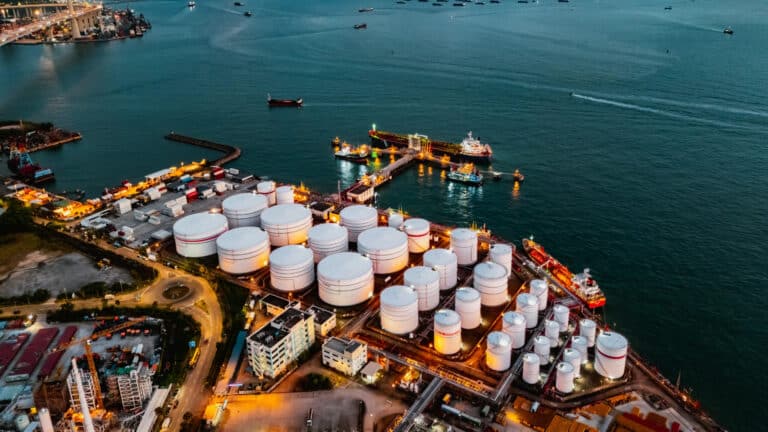
As inventories run dry and the Iran war continues to disrupt transit routes, oil has surged back to more than $100 per barrel. Diesel fuel—the workhorse of the agricultural and trucking sectors—has now soared to historic highs, pushing U.S. exports to record levels.