How Ukraine’s drone strikes on Russia crippled the world’s second-largest diesel supplier
President Donald Trump has blamed Ukraine for surging diesel prices that are hurting Republicans' election chances with the midterms just two weeks away.
Get the latest as our experts share their insights on global energy policy.
Reporting in the New York Times suggests a key element in the Trump administration's Russia-Ukraine peace plan involves Europe resuming Russian gas imports.
Hear in-depth conversations with the world’s top energy and climate leaders from government, business, academia, and civil society.
After years of trying, the US may be on the cusp of a nuclear renaissance. Commercial nuclear generation began in this country in 1958. Today, the US has...

Find out more about our upcoming and past events.
Registration is closed. Join Women in Energy and Pillsbury in Washington, D.C., for a conversation examining the key trends and developments shaping the energy industry, where opportunities are...
Insights from the Center on Global Energy Policy
This Energy Explained post represents the research and views of the author(s). It does not necessarily represent the views of the Center on Global Energy Policy. The piece may be subject to further revision. Contributions to SIPA for the benefit of CGEP are general use gifts, which gives the Center discretion in how it allocates these funds. More information is available here. Rare cases of sponsored projects are clearly indicated.
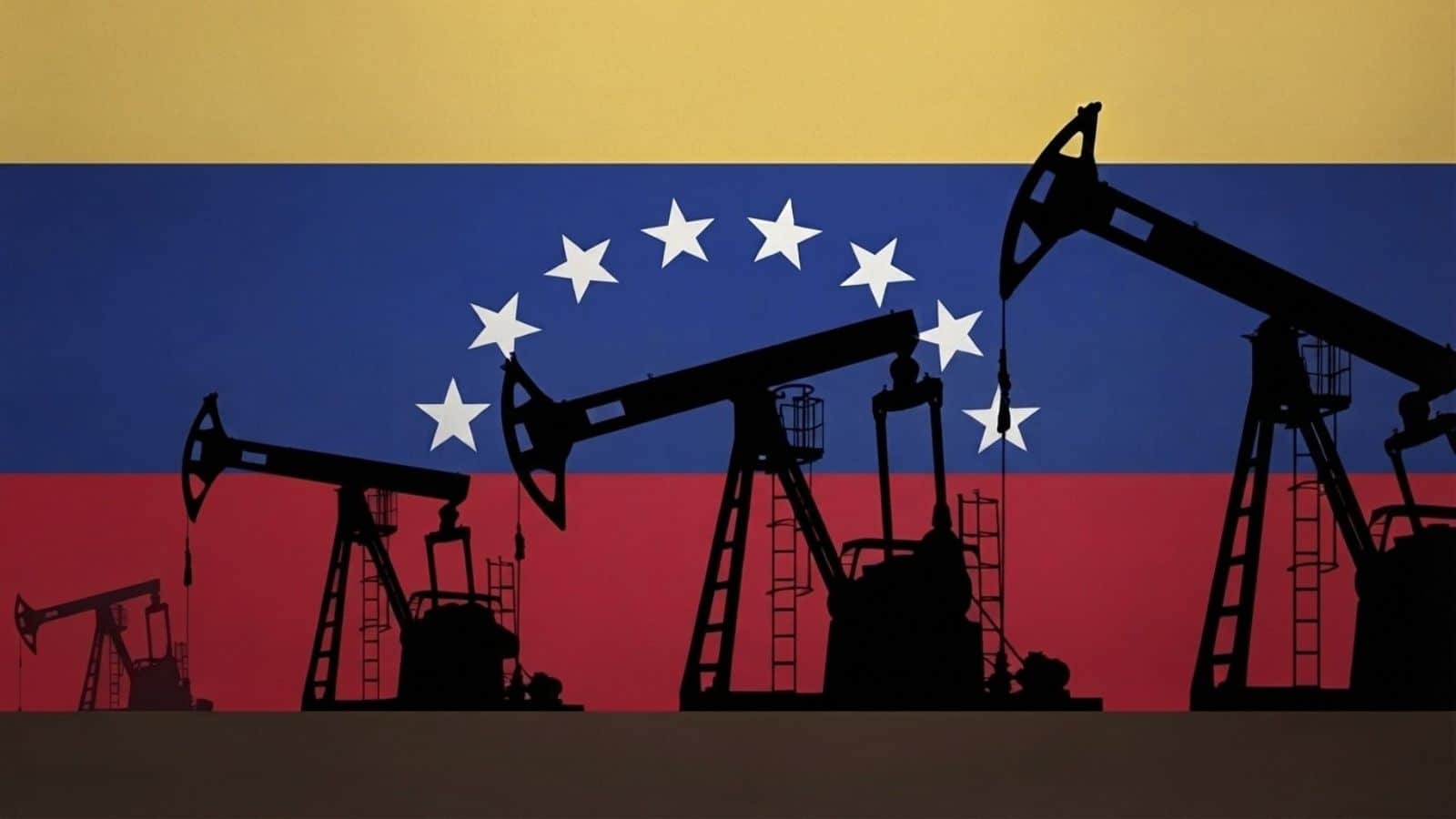
The White House announced last week an oil deal for more than 65 billion barrels of oil reserves in Venezuela and a 35% equity stake in North American Blue Energy Partners (NABEP), an obscure and controversial Venezuelan oil company that is also the second-largest private producer in the country. While NABEP has dominated the headlines, Venezuela also signed oil contracts with Chevron, ENI, and Geopark during Energy Secretary Chris Wright’s visit to Caracas, which together amount to more than 80 billion in oil reserves.
In this Q&A, Adjunct Senior Research Scholar Luisa Palacios focuses on the US government oil deal with NABEP, as it has the potential to turbocharge this problematic Venezuelan company to the center of the country’s oil industry, possibly eclipsing Venezuela’s own national oil company. The US government’s ownership stake in NABEP also means it will own the company’s operational, governance, and environmental record, but without yet clearly providing the long-term institutional anchor that could effectively de-risk Venezuela’s oil industry and its economy. Dr. Palacios also discusses the other deals made last week, finding that these oil contracts represent a more solid foundation for improving the country’s medium-term oil production outlook.
While there are some discrepancies between what the White House and Venezuela’s interim government have announced so far, both sides confirm the deal includes 65 billion barrels of proven reserves and 17 fields. Both statements discuss $100 billion in investments and up to $209 billion in fiscal revenues. Venezuela’s press release states that the oil deal has the potential to add more than 1.5 million (barrels per day) b/d of new production under an estimated average oil price of $65 per barrel. It also confirms that eight greenfields are among the 17 assigned and that those fields will have a 16% royalty and 34% income tax.
Regarding NABEP, the White House notes that the US Department of War’s Office of Strategic Capital will hold a 35% equity stake and the US government will have the right to purchase, at production cost, 20% of the offtake from all current and future fields that NABEP operates. It will also hold the right of first refusal to purchase the remaining 80% of its production. The US fact sheet mentions a 100-year lease granted to NABEP. However, the Venezuelan government press release only discusses a 25-year agreement.
Oil experts have voiced at least five areas of concern about the deal: its lack of transparency, questions about legality, unfavorable fiscal terms, lack of legitimacy of the interim government to be involved in such a deal, and the choice of partner.
Lack of transparency is particularly problematic, given the implications of a deal this size. The absence of a competitive process, the deal’s secretive nature, and the fact that many questions about the deal remain unanswered are noteworthy.
There are many concerns about potential legal issues surrounding the deal. First is the stated duration of the deal for 100 years, and the statement about an oil lease, which is not a legal concept under Venezuela’s constitution—nor are concessions allowed. The law allows joint ventures or product-sharing contracts with Venezuela’s state-owned oil and gas company PDVSA or a Venezuelan government entity for up to 25 years, which may be renewed. The head of PDVSA clarified on September 7 that PDVSA signed a contract with NABEP for 25 years that can be renewed, not a 100-year lease.
Legitimacy questions have been raised regarding the political standing of the Rodriguez interim government to make a deal of this size, and whether the agreement needed the approval of the National Assembly. The Rodriguez administration sought to resolve the latter by having the National Assembly vote on it on September 1; however, the vote did not reveal any further details about the agreement.
There has been discussion about unfavorable fiscal terms. Analysts have noted two issues. The $209 billion in fiscal revenues cited in both the US and Venezuelan press releases seem low given the stated production of 1.5 million b/d at an average of $65 per barrel for the duration of the 25-year contract. The other point of contention is the statement that 20% of the oil produced from this venture will be sold “at cost.” It is unclear what exactly “at cost” means. But on this point, Venezuelan law requires full compliance with oil-related fiscal requirements, which means that such an agreement will come at a cost to NABEP’s revenues rather than the Venezuelan government. Still, the narrative that the US would secure oil on preferential terms from a country that has faced a humanitarian crisis has not been well received.
Last but not least has been the choice of the Barbados-based NABEP, with press reports of legal and compliance issues involving its current CEO, Alejandro Betancourt. There are also questions about the operational bandwidth of an operator with a limited history of oil production being responsible for developing 17 complex and difficult fields, even if it has managed to raise production from its current ventures.
One possible rationale for the US taking such an unconventional approach to Venezuela’s oil sector is to change the perceived slow pace of US oil companies’ investments in Venezuela. The US government might have been trying to expand its current toolkit to de-risk oil investments in the country by circumventing PDVSA, which poses significant counterparty risks for investors. In the context of the war with Iran, the administration might also have wanted to see faster increases in oil production in Venezuela.
Nonetheless, caution by US companies seems appropriate, given the current Venezuelan government’s track record of expropriations, violations of property rights, corruption, and human rights abuses as well as the dire state of the infrastructure. Also, while frustration with PDVSA’s financial weakness, governance failures, and lack of operational capacity is warranted, creating a sort of parallel PDVSA with one small company is likely not the best way to reconstruct the country and it is not clear it will yield faster results. There are no shortcuts to de-risking Venezuela’s oil industry; it must be anchored to a stable institutional framework with a democratically elected government.
The deal seems to de-risk NABEP more than it does Venezuela, since direct backing from the US government could allow NABEP access to US financing and suppliers, including access to the US government’s loans and guarantees.
By becoming NABEP’s minority partner, the US is also taking on NABEP’s operational, governance, and environmental record. Cognizant of some of the reputational issues associated with NABEP, the US government explained in a subsequent press release some guardrails it has put in place, including: i) the agreement with NABEP is governed by US law and subject to US jurisdictions, ii) the majority of NABEP’s board must be US citizens and the US government retains veto power over the appointment of any board member, and iii) the company should have reputable US auditors, lawyers, and advisors.
To follow through with this list of guardrails, the US government should make public information about the board of directors, financial statements, and the company’s compliance program. NABEP is not a publicly listed company, but given the scope of the deal and its potential impact, it would be in the US interest for NABEP to emulate the best practices of publicly listed oil companies that are investing in Venezuela today. This would include future information about production, investments, revenues, and profits. In the absence of information, controversies and scrutiny surrounding the company will only mount.
On its website, NABEP cites its sustainability commitments, vowing to minimize its environmental impact and support the local ecosystem. The company explains that its “approach includes rigorous environmental assessments, waste management practices, and community engagement initiatives.” Responsible oil and gas production would be welcome in a country where the national oil company has exhibited a dismal health, safety, and environmental (HSE) record that has caused significant harm to the economic livelihood of millions of Venezuelans.
But the deal is particularly relevant for NABEP, which will operate nine fields in the Lake Maracaibo area, which includes one of the worst environmental liabilities caused by the politics of expropriation under the Chavez and Maduro regimes. This could become an opportunity to provide direct relief to these communities and to apply US standards of operational excellence in Lake Maracaibo, both of which are urgently needed in a spill-prone area, given the state of the current oil infrastructure.
The US-Venezuela oil deal potentially links the two countries for decades to come. It is crucial to get it right.
During Energy Secretary Chris Wright’s visit to Caracas last week, Chevron announced $7 billion in investments in Venezuela and a doubling of its current oil production to 600,000 b/d over the next five years, and added two fields to its Petroindependencia joint venture. Additionally, the Italian oil company ENI announced the migration of its heavy Orinoco field Junín 5 joint venture, with 35 billion barrels of oil in place, into a product-sharing agreement (called CPPH in the hydrocarbon law), with a target to increase oil production to 400,000 b/d by the end of the decade. The Colombian oil company Geopark signed a new deal for the Venezuelan heavy-oil field Bare, with 15.7 billion barrels of reserves, expecting peak production at almost 100,000 b/d.
Equally important was the agreement with GE Vernova, which seeks to restore 1 gigawatt of electricity generation capacity within 24 months and 5 gigawatts over the following four years. Reliable power has become the central infrastructure bottleneck for Venezuela’s oil production growth in the near term.
The aggregate oil reserves from these deals represent more than 80 billion barrels of oil in place, surpassing those of NABEP’s 65 billion, with the companies estimating 800,000 b/d of new production by 2030. These agreements provide a more solid foundation for Venezuela’s medium-term oil production outlook, with commitments that could potentially elevate Venezuela’s oil production to 2 million b/d by 2030 from about 1.2 million b/d currently.
Reporting in the New York Times suggests a key element in the Trump administration's Russia-Ukraine peace plan involves Europe resuming Russian gas imports.
Last week's summit between US President Trump and Chinese President Xi was the second meeting between the two leaders since the US and Israel attacked Iran.
The Center on Global Energy Policy is providing live updates on key developments related to the Iran crisis. Check back here for the latest.

The Trump administration and Saudi leadership have reportedly agreed to a nuclear agreement that could enable US nuclear technology transfers to Saudi Arabia.