This website uses cookies as well as similar tools and technologies to understand visitors’ experiences. By continuing to use this website, you consent to Columbia University’s usage of cookies and similar technologies, in accordance with the Columbia University Website Cookie Notice.
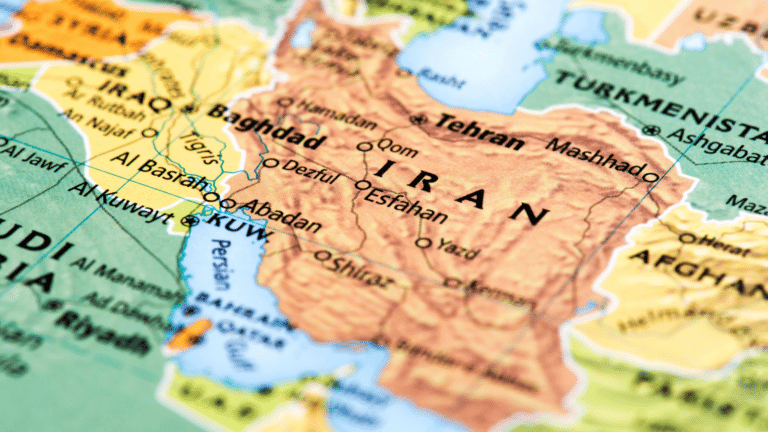
The conflict in Iran is a reminder of how quickly global energy markets can be disrupted. It also underscores why advances in things like battery technology — from...
This roundtable is open only to currently enrolled Columbia University students. To register, you must sign in with your UNI. Join the Center on Global Energy Policy’s Women...
Event
• Center on Global Energy Policy
1255 Amsterdam Ave, New York, NY 10027
About Us
We are the premier hub and policy institution for global energy thought leadership. Energy impacts every element of our lives, and our trusted fact-based research informs the decisions that affect all of us.
Please join the Center on Global Energy Policy (CGEP) for the release of a new report: The New Geopolitics of Energy. In an era of relative energy abundance for the US, the reportauthored by Ambassador Carlos Pascual, CGEP Fellow and former Special Envoy and Coordinator for International Energy Affairs, US Department of Stateprovides a framework to understand the relationships between energy geopolitics and energy markets as well as a new analytic foundation for governments and the private sector to assess how investment decisions and government policy will influence national security, economic growth and environmental sustainability. Ambassador Pascual will provide an overview of the report and its key findings. After his remarks, Ed Crooks, US Industry and Energy Editor at the Financial Times, will moderate a panel discussion featuring:
Jason Bordoff, Founding Director, Center on Global Energy Policy;
Iain Conn, Chief Executive Officer, Centrica;
Michael Levi, David M. Rubenstein Senior Fellow for Energy and the Environment, Council on Foreign Relations;
Ambassador Carlos Pascual; and
Mona Sutphen, Partner, Macro Advisory Partners and former White House Deputy Chief of Staff for Policy.
Registration is required. This event is open to press. It will also be livestreamed at: energypolicy.columbia.edu/watch A podcast of this event (in addition to other past Center events) will be available ~3 to 5 days after the date of the event through iTunes or via our website. For more information contact: [email protected]
This roundtable is open only to currently enrolled Columbia University students. To register, you must sign in with your UNI. The Center on Global Energy Policy (CGEP) at...
Event
• Center on Global Energy Policy
1255 Amsterdam Ave, New York, NY 10027
On February 28, the United States and Israel launched an attack on Iran, resulting in the deaths of Iranian Supreme Leader Ali Hosseini Khamenei and senior Iranian leaders...
The Center on Global Energy Policy (CGEP) at Columbia SIPA and the Fashion, Energy, and Climate Network invite you to join the first session of our new talk...
Event
• Center on Global Energy Policy
1255 Amsterdam Ave, New York, NY 10027
On March 20, Governor Kathy Hochul proposed significant changes to New York’s Climate Leadership and Community Protection Act (CLCPA), the landmark climate law passed in 2019.