This website uses cookies as well as similar tools and technologies to understand visitors’ experiences. By continuing to use this website, you consent to Columbia University’s usage of cookies and similar technologies, in accordance with the Columbia University Website Cookie Notice.
The conflict in Iran is a reminder of how quickly global energy markets can be disrupted. It also underscores why advances in things like battery technology — from...
More than a month into the Iran conflict, the United States and Iran are at a critical inflection point.
Event
About Us
We are the premier hub and policy institution for global energy thought leadership. Energy impacts every element of our lives, and our trusted fact-based research informs the decisions that affect all of us.
UPDATE: Registration at the Columbia Global Energy Summit is by invitation only. In-person tickets are no-longer available for CU affiliates to apply to purchase.
If you have applied for a CU affiliate ticket, you will receive notification via email by Friday, April 10, 2026 as to the final status of your application.
Please contact [email protected] with any questions related to pending applications.
Details for the Summit’s livestream will be made available in early April for those who would like to participate virtually.
Overview
The Columbia Global Energy Summit 2026, hosted by the Center on Global Energy Policy at Columbia University SIPA, will take place on April 21, 2026 at Columbia University’s Alfred J. Lerner Hall in New York City, NY.
The Summit is an annual event dedicated to bringing together industry leaders, scholars, minister- and cabinet-level officials, researchers, and decision makers for timely, relevant, and action-centered discourse on critical issues at the nexus of energy, security, and geopolitics, and how they are impacting the ever-changing new world order of today.
The theme of this year’s Summit is “Energy, Security, and Geopolitics in the New World Order”. Over the course of the day, speakers will provide thought-provoking commentary and analysis on key issues, such as the collapse of the rules-based international order, the impact of geopolitical shifts on the global economy, and how both of these dynamics shape the global energy industry. Program topics include demand flexibility and the rapid expansion of the AI industry, how conflict in today’s world is reshaping geopolitical dynamics, the energy security risks and energy market impacts of the ongoing conflict in Iran and the Middle East, increasing competition throughout critical mineral supply chains, energy affordability and permitting reform, and energy development and accessibility in the Global South.
At the conclusion of Summit programming, there will be an on-site networking reception presented by CGEP’s Women in Energy Program for all speakers and in-person attendees participating in this year’s event.
Panel Featured Conversation: The Future of Climate Action: Lessons from the Rise and Retreat
2:35 p.m.
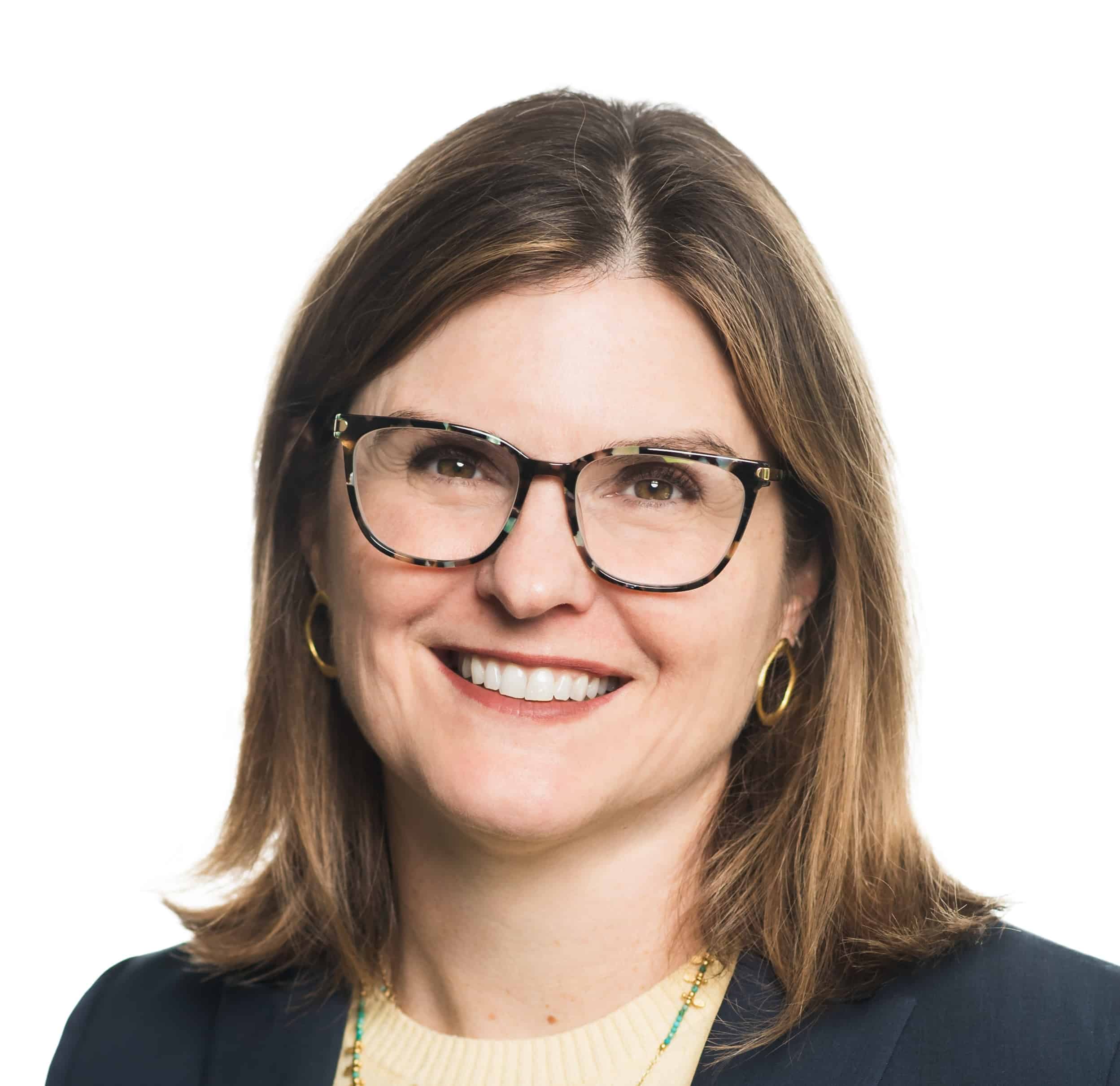
Alexis Abramson is the dean of the Columbia Climate School and a Professor of Climate. She is a climate thought leader and an expert in sustainable energy technology, with extensive experience in academic administration. Professor Abramson’s research has focused broadly on thermal transport, from designing nanostructured materials to addressing building energy efficiency. Before coming to her role at Columbia in January 2025, Professor Abramson served as the dean of the Thayer School of Engineering at Dartmouth.
Prior to her tenure at Dartmouth, she was the Milton and Tamar Maltz Professor of Energy Innovation at Case Western Reserve University and served as a director of that university’s Great Lakes Energy Institute where she focused on creating sustainable energy technology solutions. Abramson also co-founded Edifice Analytics, a start-up that conducts virtual energy audits and manages building efficiency optimization.
During the Obama administration, Abramson held the role of chief scientist and manager of the Emerging Technologies Division at the U.S. Department of Energy’s Building Technologies Office. She has previously served as a technical advisor to Breakthrough Energy Ventures, established by Bill Gates to invest in startup companies with significant potential to mitigate climate change.
Professor Abramson’s research has included novel techniques for thermal characterization of nanostructures, the design and synthesis of unique nanomaterials for use in alternative energy applications, and strategies to accelerate technology commercialization at universities and research institutions. She has also written about gender imbalances in academic settings and the importance of taking a human-centered and multidisciplinary approach to education and research, particularly in STEM and related fields.
Professor Abramson earned her BS and an MS in Mechanical Engineering from Tufts University and a PhD in Mechanical Engineering from the University of California, Berkeley.
Jason Bordoff
Founding Director, Center on Global Energy Policy; Professor, Columbia SIPA; Professor and Co-Founding Dean Emeritus, Columbia Climate School
Panels
The Return of the Energy Weapon: Power, Conflict, and Geopolitics
8:40 a.m.
Featured Conversation: Navigating a Fragmenting World
9:20 a.m.
Jason Bordoff is the Founding Director of the Center on Global Energy Policy at Columbia University’s School of International and Public Affairs, where he is a Professor of Professional Practice. He is also on the faculty of the Columbia Climate School, where he is Co-Founding Dean Emeritus.
He previously served as Special Assistant to President Barack Obama and Senior Director for Energy and Climate Change on the Staff of the National Security Council. Prior to that appointment, he held senior policy positions on the White House’s National Economic Council and Council on Environmental Quality. Earlier in his career, he was a scholar at the Brookings Institution, served in the Treasury Department during the Clinton Administration, and was a consultant with McKinsey & Company.
One of the world’s leading energy and climate policy experts, Bordoff’s research and policy interests lie at the intersection of economics, energy, environment, and national security. As a member of the Columbia SIPA faculty since 2013, he teaches and mentors the world’s future energy and climate leaders in government, business and civil society.
In 2013, Bordoff created the Center on Global Energy Policy (CGEP), which is now widely recognized as among the world’s leading energy policy research institutes, advancing evidence-based and actionable energy and climate solutions through research, dialogue, and education. (Learn more here.) In addition to serving as CGEP’s Founding Director, Bordoff co-led and created the nation’s first graduate school devoted to tackling climate change, the Columbia Climate School, from 2021 to 2023. Bordoff is a columnist for Foreign Policy Magazine and has authored numerous essays and articles for Foreign Affairs. He frequently publishes articles in leading outlets such as The New York Times, The Wall Street Journal, Financial Times, The Economist, and appears on NPR, CNN, NBC, Bloomberg, CNBC, CBS, and the BBC as a commentator.His Foreign Affairs article with Meghan O’Sullivan, "Green Upheaval: The New Geopolitics of Energy," was selected as one of the "Top Ten" print articles published in that journal in 2022.
Bordoff also has extensive experience advising the private sector and non-profit organizations. He is a Senior Advisor at Permira, a global investment firm. He chairs the Aspen Institute-Columbia Global Energy Forum and serves on numerous advisory boards and leadership councils, including the Federal Reserve Bank of Dallas, Sustainable Energy for All at the United Nations, The Nature Conservancy of New York, Foreign Policy 4 America, the New York Energy Forum, and the World Economic Forum’s "Future of Energy Stewardship" and "Mobilizing Investment for Clean Energy in Emerging Economies" programs. He is also a member of the Council on Foreign Relations, the Trilateral Commission, the Oxford Energy Club, and the National Petroleum Council (a federally chartered advisory committee to the Secretary of Energy).
Bordoff graduated with honors from Harvard Law School, where he was Treasurer of the Harvard Law Review, and clerked on the U.S. Court of Appeals for the D.C. Circuit. He also holds an MLitt degree from Oxford University, where he studied as a Marshall Scholar, and a BA magna cum laude and Phi Beta Kappa from Brown University.
Panel Featured Conversation: Navigating a Fragmenting World
9:20 a.m.
Ian Bremmer is a political scientist who helps business leaders, policymakers, and the general public make sense of the world around them.
Ian is president and founder of Eurasia Group, the world's leading global research and advisory firm, and GZERO Media, a digital media company providing intelligent and engaging news coverage of international affairs. Ian is an independent voice on critical issues around the globe, offering clearheaded insights through speeches, written commentary, and even satirical puppets (really!).
Ian is credited with bringing the craft of political risk to financial markets, and for establishing it as an academic discipline. His definition of emerging markets— “those countries where politics matters at least as much as economics for market outcomes”—has become an industry standard. “G-Zero,” his term for a global power vacuum in which no country is willing and able to set the international agenda, is widely used by policymakers and thought leaders.
A prolific writer, Ian is the author of eleven books, including The New York Times bestsellers “Us vs. Them: The Failure of Globalism,” which examines the rise of populism across the world, and his latest book, “The Power of Crisis: How Three Threats—and Our Response—Will Change the World,” which considers looming global crises (health emergencies, climate change, and technological revolution) and their potential to create global prosperity and opportunity.
Ian is foreign affairs columnist and editor at large for Time magazine and the host of GZERO World with Ian Bremmer, a global affairs program that airs weekly on US public television. Uniquely positioned to bring unbiased analysis on complex geopolitical issues, Ian is a frequent guest on leading broadcast television, digital news, and podcasts— from CNN and MSNBC to FOX and Newsmax— as well as key international media.
In 2023-2024, Ian served as rapporteur of the UN High-Level Advisory Body on Artificial Intelligence, whose 2024 report marked the first global initiative to address AI-related risks and sharing its transformative potential globally.
Ian holds a master's degree and a doctorate in political science from Stanford University and a bachelor's degree in international relations from Tulane University. He currently teaches at Columbia University's School of International and Public Affairs and previously was a professor at New York University. Ian is also a Senior Fellow at Harvard Kennedy School's Belfer Center for Science and International Affairs.
He lives in New York City with his wife Ann and their wily Norfolk Terrier, Moose.
Neil Chatterjee
CGEP Distinguished Visiting Fellow; Former Commissioner and Chairman, Federal Energy Regulatory Commission
Panel Across the Aisle: Permitting, Power, and the Future of Electricity Policy
3:40 p.m.
Neil Chatterjee, Former Commissioner and Chairman, Federal Energy Regulatory Commission (FERC), joined Palmetto in early 2025 as the Chief Government Affairs Officer. Neil is a policy reformer with extensive experience across the energy landscape both domestically and internationally. He built a reputation as a bipartisan operator who builds alliances and cuts through red tape with an eye on promoting innovation, and is an advocate for harnessing technology to mitigate threats to critical energy infrastructure.
Allison Clements
Principal, 804 Advisory; Former Commissioner, Federal Energy Regulatory Commission
Panel Across the Aisle: Permitting, Power, and the Future of Electricity Policy
3:40 p.m.
Allison Clements is a partner with digital infrastructure advisory firm ASG and Principal of 804 Advisory, where she focuses on the intersection of market design, policy and technological innovation. She advises clients in the data center development and energy sectors on the opportunities across the two industries. Allison served as a Commissioner on the Federal Energy Regulatory Commission from 2020 to 2024. There, she worked to reform regional transmission planning and cost allocation, began reform of grid interconnection queues, championed technological innovation, and focused on evolving market rules to more accurately reflect changing grid needs. Prior to FERC, Allison was a federal energy policy advocate and strategist after beginning her career in private legal practice. She has served as an energy expert in several capacities including currently with advisory committees at the National Academies of Sciences and National Renewable Energy Laboratory. Allison lives with her family in Washington, DC.
Page Crahan
GM Tapestry - A Google X Moonshot
Panel AI and the Energy System: Friend or Foe?
1:15 p.m.
Page leads Tapestry, Alphabet’s moonshot for the electric grid - an initiative born at X, the innovation lab responsible for Waymo, Wing, and Google Brain. Under her leadership, Tapestry is developing AI-powered analytical and planning tools designed to eliminate the "visibility gap" in the world’s electricity systems. By building the first high-fidelity, unified model of the grid, Page’s team enables the global energy ecosystem to modernize infrastructure and meet the surging power demands of the AI era with unprecedented speed and reliability.
With a background that bridges technical depth and commercial acumen, Page leads a multidisciplinary team of AI researchers, engineers, and power systems experts dedicated to modernizing the world’s largest machine. Her work focuses on deploying advanced computational engineering to help the energy ecosystem plan more effectively and operate more efficiently in an increasingly complex global landscape.
A co-inventor on multiple U.S. patents in the energy domain, Page brings twenty years of experience at the intersection of infrastructure and frontier technology. Before joining Alphabet, she built a career scaling high-growth companies, including serving as a co-founder and CEO of a venture-backed energy platform. Her experience includes senior leadership and advisory roles at Sunrun and Konfio, where she navigated the transition from early-stage innovation to global commercial deployment.
Recognized by Fast Company as a leader behind one of the "Next Big Things in Tech," Page shares her perspective on the intersection of machine learning and physical infrastructure as a member of the Washington Post’s Intelligence AI & Tech Council. She holds a Bachelor of Science in Economics from Santa Clara University, where she also serves on the Tech Ethics Council, and earned a certificate from the Stanford GSB Institute for General Management.
Heidi Crebo-Rediker
Senior Fellow, Council on Foreign Relations
Panel The New Resource Race: Securing Critical Mineral Supply Chains
9:50 a.m.
Heidi is a Senior Fellow for Geoeconomics at the Council on Foreign Relations (CFR), specializing in international political economy, economic competitiveness, economic security, and international finance. She directs CFR's Roundtable Series on Global Political Economy.
She is the former CEO, and remains a Partner, at International Capital Strategies – a boutique advisory firm that provides clients with market-relevant insights on the intersection of macroeconomics, geopolitics, policy and global financial markets.
She served on the Biden Treasury Department Transition team as lead on International Affairs. Previously, Heidi served in the Obama Administration as the State Department’s first Chief Economist. She provided strategic advice to two Secretaries of State on the integration of economics and finance with geopolitics to help craft and launch “Economic Statecraft” in the Obama Administration.
Before this, she served as the Chief of International Finance and Economics for the Senate Committee on Foreign Relations.
Over her previous, nearly two-decade investment banking career based in Europe as a Managing Director at several bulge bracket investment banks, she managed businesses ranging from sovereign and public sector banking, European debt capital markets, to emerging markets debt capital markets and corporate finance. Areas of industry focus were energy and mining, financial services and telecommunications.
She began her career in energy merchant banking and investing in Russia/CIS.
Heidi holds a BA from Dartmouth College and MSc from the London School of Economics. Her views are carried in many forums, including Bloomberg TV and radio, CNN, CNBC, MSNBC's Morning Joe, WSJ, BBC, NPR, Foreign Affairs, Foreign Policy and elsewhere. She was named one of the “Top 25 Women in Business” by The Wall Street Journal Europe.
Ashvin Dayal
Senior Vice President, Power Rockefeller Foundation
Panel Powering Development: Energy, Growth, and Opportunity in the Global South
3:05 p.m.
Ashvin Dayal is Senior Vice President at The Rockefeller Foundation, where he leads the Power and Climate program. For more than three decades, Ashvin has worked at the intersection of global development, energy policy, and climate resilience.
Most recently, he led the creation of the Global Energy Alliance for People and Planet, a multi-billion-dollar effort aimed at advancing transformational projects on distributed renewable electrification, grid-tiered renewables, and energy transitions in 80+ energy-poor countries.
Before joining the Foundation in 2008, he held several senior roles at the global development NGO, Oxfam, where he led its largest-ever relief and recovery effort in the aftermath of the 2004 Asian Tsunami. He holds a bachelor’s degree in Economic Geography from the School of Oriental and African Studies at the University of London and a master’s degree from the School of Advanced International Studies at Johns Hopkins University.
Abigail Dillen
President, Earthjustice
Panel Featured Conversation: The Future of Climate Action: Lessons from the Rise and Retreat
2:35 p.m.
Abigail Dillen is the President of Earthjustice, the world’s largest nonprofit public interest environmental law organization, and Earthjustice Action, which is focused on securing fair courts and strong environmental laws. She leads over 625 staff in harnessing the power of law to protect the environment and people’s health in the U.S. and internationally. Founded in 1971, Dillen joined the organization in 2000, initially focusing on public lands and ecosystem protection. She founded and served as the Managing Attorney of Earthjustice’s coal program, which has played a core role in backing coal out of the U.S. power mix. She went on to serve as the organization’s first Vice President of Litigation for Climate and Energy, leading the organization's litigation and advocacy to drive the essential shift to a clean energy economy. Her work is premised on a disciplined insistence that lawyers have an essential role to play in creating a safer, more just world on a healing planet.
Abigail received her B.A. from Yale University and her law degree from the University of California, Berkeley, where she graduated Order of the Coif.
Nick Edwards
Power Projects Lead, OpenAI
Panel AI and the Energy System: Friend or Foe?
1:15 p.m.
Nick Edwards is Power Projects Lead at OpenAI, where he leads the development of multi-gigawatt power and infrastructure programs to enable the scaling of frontier AI. Working at the intersection of energy markets, site selection, policy, and physical development, he focuses on solving grid and infrastructure constraints while aligning rapidly growing AI demand with real-world power systems. His work spans generation, large-load siting, and grid integration across the U.S. and international markets.
Over the past decade, Nick has developed multi-gigawatt infrastructure globally, executing across the full lifecycle from strategy and origination through construction. He previously held roles at Invenergy and founded Upend Energy, advising Independent Power Producers, developers and NASDAQ listed clients on power strategy and large-load enablement. Prior to joining OpenAI, he led power project development & infrastructure delivery for a subsidiary of Hanwha, a Global Fortune 500 company.
Earlier in his career, he was admitted to practice law after graduating from The University of Sydney Law School and led the USA National rugby team as a captain and professional athlete. Those experiences continue to drive his passion for sustained high performance in extreme pressure environments.
At OpenAI, his work is focused on solving a central question: whether AI will be constrained by legacy grid architecture—or drive a new model for how energy, infrastructure, and compute are planned and built.
Panel The New Resource Race: Securing Critical Mineral Supply Chains
9:50 a.m.
The Honorable Francis R. Fannon has led organizations and created business opportunities at senior levels of government and as a corporate executive for more than two decades.
Frank was unanimously confirmed by the United States Senate to serve as the inaugural Assistant Secretary of State for Energy Resources.
In serving as "America's Energy Diplomat," Frank led whole-of-government initiatives in the Indo-Pacific, the Americas, Europe, and the Middle East and North Africa region to advance free, open markets, and resilient supply chains. By partnering with governments and companies, Frank and his team advanced major energy and infrastructure deals worth tens of billions of dollars.
Frank elevated global awareness of the critical role that minerals play in the energy transition. He led bilateral and multinational coalitions to help countries responsibly develop clean energy minerals and fostered more transparent markets. Frank credits, in part, his success as a diplomat on his success as a senior executive for global energy and resource companies.
As Managing Director of BHP, Frank established the company’s U.S. Corporate Affairs function. He created and led a comprehensive strategy to support the company’s growing footprint, expand its American shareholder base, and shaped climate change stakeholder messaging campaigns. Frank served as Chief U.S. Advisor to the BHP Foundation, focused on transparency and governance, environmental resilience, and education equity.
Before BHP, Frank led Government Affairs for Murphy Oil Corporation. He facilitated new country entry in multiple regions, co-negotiated production sharing contracts, and managed crisis communications and stakeholder engagements. Under Frank’s guidance, Murphy Oil developed and successfully executed the industry’s first point-of-purchase consumer energy campaign.
Frank helped to shape American energy policy while serving in senior positions on Capitol Hill. As counsel to the U.S. Senate Committee on Environment & Public Works, Frank drafted, negotiated, and helped pass into law the Energy Policy Act of 2005, which included the hydraulic fracturing provisions that unleashed the shale revolution. Frank also served as counsel to Senators Ben Nighthorse Campbell (R-CO) and Pete V. Domenici (R-NM).
Frank is a Visiting Fellow at the Center for Tech Diplomacy at Purdue, non-resident Senior Fellow at the Atlantic Council, and (non-resident) Senior Advisor at the Center for Strategic & International Studies.
Frank holds a J.D. from the University of Denver College of Law, M.A. in International Affairs, Economics & Trade from the University of Denver Korbel School of International Studies, and B.A. from Radford University.
Mike Froman
President, Council on Foreign Relations
Panel The Return of the Energy Weapon: Power, Conflict, and Geopolitics
8:40 a.m.
Michael Froman is president of the Council on Foreign Relations (CFR). He previously served as vice chairman and president, strategic growth, at Mastercard, chairman of the Mastercard Center for Inclusive Growth, and a distinguished fellow at CFR.
Ambassador Froman served in President Barack Obama’s cabinet as the U.S. trade representative from June 2013 to January 2017. Major initiatives under his leadership included the conclusion of the Trans-Pacific Partnership agreement in the Asia Pacific and negotiations toward a Transatlantic Trade and Investment Partnership with the European Union; the negotiation of agreements on trade facilitation, agriculture and information technology products at the World Trade Organization; the monitoring and enforcement of U.S. trade rights; and congressional passage of Trade Promotion Authority, the African Growth and Opportunity Act, the Generalized System of Preferences program, and the Trade Facilitation and Trade Enforcement Act.
From January 2009 to June 2013, Froman served at the White House as assistant to the president and deputy national security advisor for international economic affairs, where he was responsible for coordinating policy on international trade, finance, energy, climate change, and development issues. He served as the U.S. sherpa for the Group of Twenty and Group of Eight Summits and staffed the president for the APEC Leaders Meetings. In addition, he chaired or co-chaired the Major Economies Forum on Energy and Climate, the Transatlantic Economic Council, the U.S.-India CEO Forum, and the U.S.-Brazil CEO Forum. He played a leading role in the launch of several of the Obama administration’s development initiatives, including Power Africa and Trade Africa.
Prior to joining the Obama administration, Froman served in a number of roles at Citigroup, including as chief executive officer of its international insurance business, chief operating officer of its alternative investments business, and head of its infrastructure investment business. He also has served as a senior fellow at the Council on Foreign Relations and a resident fellow at the German Marshall Fund.
In the 1990s, Froman spent seven years in the U.S. government. He served as chief of staff and deputy assistant secretary for Eurasia and the Middle East at the U.S. Department of Treasury. He also worked at the White House, where he served as a director for international economic affairs at the National Security Council and National Economic Council.
Dr. Froman received a bachelor’s degree in public and international affairs from Princeton University, a doctorate in international relations from Oxford University, and law degree from Harvard Law School, where he was an editor of the Harvard Law Review.
He has published a book and several articles on international relations, international law and trade. He has received numerous fellowships and scholarships, including a White House Fellowship, a Ford Foundation Fellowship in International Law, a Social Science Research Council/MacArthur Foundation Fellowship in International Peace and Security, and a Fulbright Scholarship. In 2016, he was selected by Fortune magazine as one of “The World’s 50 Greatest Leaders” and by Politico as one of the “50 thinkers, doers and visionaries shaping American politics in 2016.”
Froman was born in California. He, his wife, Nancy Goodman, and their two children, Benjamin and Sarah, currently reside in Washington, DC.
Ben Geman
Energy Reporter, Author of Axios Generate, Axios
Panel Across the Aisle: Permitting, Power, and the Future of Electricity Policy
3:40 p.m.
Ben is an energy reporter at Axios. He is the author of the daily Axios Generate newsletter and covers the world of energy business and politics.
Maria Jelescu Dreyfus
CEO and Founder, Ardinall Investment Management, Co-Chair, WIE Steering Committee
Panel Energy Markets in an Age of Disruption
10:45 a.m.
Maria is the CEO and Founder of Ardinall Investment Management, an investment firm focused on sustainable investing, electrification, digitization, and resilient infrastructure that she started in 2017.
Prior to Ardinall Investment Management, Ms. Dreyfus spent 15 years at Goldman Sachs, where she most recently served as a Portfolio Manager and Managing Director in the Goldman Sachs Investment Partners (GSIP) Group.
She currently serves as a director on the boards of Exxon Mobil Corporation (NYSE: XOM) and Cadiz Inc (NADSAQ: CDZI). She previously served as an independent director on the boards of Pioneer Natural Resources (NYSE: PXD, 2021-2024), Macquarie Infrastructure Corporation (NYSE: MIC, 2018-2022), Nabors Energy Transition Corp (NYSE: NETC, 2021-2023), CDPQ (2019-2024), and on the advisory board of Eni SpA’s corporate venture arm (2018-2024).
She also serves as a director on several private companies’ governing and advisory boards in the energy transition and technology space. Additionally, she is the Vice Chair of the advisory board of the Center on Global Energy Policy at Columbia University and Co-chair of its Women in Energy program. Ms.Dreyfus is also a member of the MIT Corporation’s Development Committee and sits on the MIT Economics Department’s Visiting Committee.
Her current and past non-profit board memberships include the Global CCS Foundation, New America Alliance, Breakthrough New York, and Girls Inc. of NYC. Ms. Dreyfus has held her CFA since 2004, and holds a dual degree in economics and management science from the Massachusetts Institute of Technology.
Sarah Ladislaw
Non-Resident Fellow, CGEP; Founding Director, New Energy Industrial Strategy (NEIS) Center
Panel Energy Security and Industrial Strategy in a Fragmenting World
11:30 a.m.
Sarah is the founding director of the New Energy Industrial Strategy (NEIS) Center, a thought partner, funder, and community builder striving to create advanced energy systems that support competitive, resilient economies and power the industries of the future.
Sarah served as senior director for climate and energy, National Security Council at the White House from January 2023 to August 2024.
Previously, Sarah was managing director for RMI’s US program where she managed the direction and portfolio of RMI’s work in the United States, specifically in the areas of federal, state, and local engagement as well as economic development. Earlier, Sarah was senior vice president and director of the Energy Security and Climate Change Program at the Center for Strategic and International Studies (CSIS), where she led the think tank’s work in energy policy, geopolitics, and technology analysis. She spearheaded new work at CSIS on climate change and foreign policy.
Before CSIS, Sarah worked in the Office of the Americas in the US Department of Energy’s Office of Policy and International Affairs, where she covered a range of economic, political, and energy issues in the Western Hemisphere. In addition, she spent a short time working at Statoil as its senior director for international affairs in the Washington office.
She received her B.A. in International Affairs/East Asian Studies and Japanese language and M.A. in International Affairs/International Security from The George Washington University.
Emmanuel Lagarrigue
Partner and Global Co-Head of Climate Transition Strategy, KKR
Panel Energy Security and Industrial Strategy in a Fragmenting World
11:30 a.m.
Emmanuel Lagarrigue (New York) joined KKR in 2022 and is the Global Co-Head of the firm’s Climate strategy within the Infrastructure business. In this role, he leads KKR's global investments in climate, showcasing his expertise and commitment to sustainable growth. Mr. Lagarrigue has considerable experience in sustainability, the energy transition, and the transformation of large businesses. Before joining KKR, he was a founding partner of BeyondNetZero, a General Atlantic fund focusing on growth equity opportunities in decarbonization technologies. Before that, Mr. Lagarrigue held various leadership positions at Schneider Electric for over 20 years, including Chief Strategy, Chief Sustainability, and Chief Innovation Officer, as well as P&L and general management roles in Europe, South America, Asia, and the United States. Additionally, he serves as the Chairman of the board of trustees of Menorca Preservation, an NGO dedicated to environmental causes in the Balearic Islands.
Helaina Matza
Non-Resident Fellow, CGEP; Chief Strategic Development Officer, TechMet
Panel The New Resource Race: Securing Critical Mineral Supply Chains
9:50 a.m.
Helaina Matza currently serves as the Chief Strategic Development Officer at TechMet Ltd. where she leads strategic partnership and business development. Before joining TechMet she spent the last 14 years leading several high-level U.S. international economic and climate policy engagements from the State Department and White House. Most recently she served as the U.S. government’s global infrastructure and investment envoy focused on securing western supply chains, U.S. market access and economic development opportunities in emerging markets. Prior to government service spent several years in the private sector managing board relations, institutional fundraising, and program development for various trade associations and NGOs. Helaina currently serves on the board of Energy Source Minerals and is a Senior Non-Resident with the CSIS Critical Minerals Security program. Helaina holds a B.A. in International Affairs and an M.A. in Public Administration and Energy Management from George Washington University.
Tim McDonnell
Climate and Energy Editor, Semafor
Panel The New Resource Race: Securing Critical Mineral Supply Chains
9:50 a.m.
Tim McDonnell is the Climate & Energy Editor at Semafor. Tim has covered the business and science of climate change for more than a decade from front lines of the crisis around the world. He is based in Kyiv.
Robert McNally
Non-Resident Fellow, CGEP; Founder and President, Rapidan Energy Group
Panel Energy Markets in an Age of Disruption
10:45 a.m.
Robert McNally is a Non-Resident Fellow at the Center on Global Energy Policy, and the author of Crude Volatility: The History and the Future of Boom-Bust Oil Prices, published by the Columbia University Press. In his full-time capacity he is the founder and President of the Rapidan Energy Group, an independent energy consulting and market advisory firm based in the Washington DC area. Mr. McNally's clients include leading global energy market investors, producers, and traders. Mr. McNally’s 24-year professional career includes senior financial market and official posts spanning economic, security, and environmental aspects of energy market analysis, strategy, and policymaking.
Mr. McNally started his professional career in 1991 as an oil market analyst and consultant with Energy Security Analysis, Inc. In 1994, he joined Tudor Investment Corporation and for twelve subsequent years analyzed energy markets, macroeconomic policy, and geopolitics for Tudor portfolio managers, earning promotion to Vice President and Managing Director. From 2001 to 2003, Mr. McNally served as the top international and domestic energy adviser on the White House staff, holding the posts of Special Assistant to the President on the National Economic Council and, in 2003, Senior Director for International Energy on the National Security Council. Mr. McNally served in the Peace Corps in Senegal from 1988-1990.
Mr. McNally earned his double major BA/BS in International Relations and Political Science from American University and his MA in International Economics and American Foreign Policy from Johns Hopkins Paul H. Nitze School of Advanced International Studies (SAIS). He was co-chair for energy policy on the 2008 Romney Campaign, served on the Policy Advisory Committee for Senator Marco Rubio's 2010 campaign, and regularly advises congressional and administration officials on energy policy and markets. Mr. McNally is a Member of the National Petroleum Council.Mr. McNally has testified to the House and Senate on energy markets and national security and speaks to professional conferences on energy markets, policy, and geopolitics. He has been published in Foreign Affairs (co-authored essay with Michael Levi, July/August 2011) and has been interviewed by CNN, The Economist, Fox Business, The Financial Times, The Washington Post, National Journal, Platts Energy Week TV, PBS' Great Decisions in Foreign Policy series, Bloomberg News, Aviation Daily and other programs and journals.
Ann Mettler
CGEP Distinguished Visiting Fellow; Formerly Vice President for Europe, Breakthrough Energy and Director-General, European Commission
Panel The Return of the Energy Weapon: Power, Conflict, and Geopolitics
8:40 a.m.
Ann Mettler brings over 25 years of experience in public policy, specializing at the nexus of technology, innovation, investment, and industrial policy. She has served as senior adviser to global leaders, including Bill Gates and Jean-Claude Juncker, former President of the European Commission (2014–2019).
Currently, Ann is spearheading the creation of a new organization dedicated to advancing energy resilience and innovation. This initiative builds on the Energy Resilience Leadership Group, which she launched in response to the war in Ukraine and co-chairs with Dr. Christian Bruch, CEO of Siemens Energy.
From 2020 to 2025, Ann was Vice President for Europe at Breakthrough Energy, an organization founded by Bill Gates to accelerate the clean energy transition. Prior to that, from 2014-2019, she served as Director-General and Head of the European Political Strategy Centre (EPSC), the European Commission’s in-house think tank. Under her leadership, the EPSC was named “Best New Think Tank” by the Global Go-To Think Tank Index in 2016, and ranked among the world’s top 10 government-affiliated think tanks in 2017–2019.
While at the Commission, Ann also chaired the European Strategy and Policy Analyses System (ESPAS), the EU’s inter-institutional process dedicated to strategic foresight and global trends. She is widely credited with elevating the role of foresight, anticipation and preparedness in EU policymaking.
In recognition of her contributions, Ann was named one of Europe’s Top 100 Women in Startups and Venture Capital in 2025. Earlier, in 2019, Politico listed her among the top five women shaping Brussels.
Earlier in her career, Ann co-founded The Lisbon Council, a Brussels-based think tank focused on the knowledge economy, which she led as Executive Director for over a decade. Between 2000 and 2003, she worked at the World Economic Forum, most recently as Director for Europe, following earlier roles with the Governmental Affairs Committee of the U.S. Senate, a strategic advisory firm in Washington, D.C., and the European Commission’s foreign policy division in Brussels.
Ann is a frequent speaker at high-level international forums and has been widely published and quoted in leading media outlets such as the Financial Times, Politico, The Economist, Wall Street Journal, and New York Times. She has also provided expert commentary on CNBC, Bloomberg TV, and the BBC.
A dual citizen of Germany and Sweden, Ann has lived and worked in Greece, the United States, Switzerland, and Belgium. She holds Master’s degrees in Political Science and European Law & Economics, graduating with distinction from the University of New Mexico (USA) and Rheinische Friedrich-Wilhelms-University in Bonn (Germany). In 2016, she completed the executive education program Innovative Technology Leader at the Stanford Graduate School of Business.
Robin Millican
Director of Research Programs and Strategic Partnerships
Panel Energy Security and Industrial Strategy in a Fragmenting World
11:30 a.m.
Robin Millican is the Director of Research Programs and Strategic Partnerships at Columbia University SIPA's Center on Global Energy Policy (CGEP), where she provides strategic oversight and coordination of the Center’s research agenda, ensuring rigor, coherence, and policy relevance across CGEP’s portfolio of interdisciplinary work. She brings more than fifteen years of experience in organizational strategy, program design, and U.S. and international energy policy.
Prior to joining Columbia, Ms. Millican served as Head of Strategic Initiatives and Integration at Breakthrough Energy, the global organization founded by Bill Gates to accelerate the transition to affordable, reliable, and clean energy. In that capacity, she acted as principal advisor to the executive leadership team on cross-organizational strategy and led the development of new initiatives to support portfolio companies, strengthen global market capabilities, and enhance analytic support for investment decision-making.
Previously, Ms. Millican served as Senior Director of U.S. Policy and Advocacy at Breakthrough Energy, where she oversaw a team of policy experts, managed a significant annual grantmaking portfolio, and directed strategies to advance federal and state policy priorities across the power, industrial, transportation, buildings, and agriculture sectors. She is recognized for her expertise in climate and energy policy and has provided testimony before the U.S. Congress. She was also a primary contributor to Bill Gates’ 2021 book How to Avoid a Climate Disaster.
Earlier in her career, Ms. Millican led the energy innovation policy and grantmaking portfolio at Gates Ventures; advised public-sector clients as a strategy consultant with Booz Allen Hamilton; and served as a legislative aide to United States Senator John Cornyn, supporting policy development on energy, environmental, and economic issues.
Ms. Millican serves on boards and advisory councils of several organizations, including ClearPath, Silverado Policy Accelerator, and Nature is Nonpartisan.
Bob Mumgaard
CEO, Commonwealth Fusion Systems
Panel Featured Conversation: Betting on Breakthroughs: Innovation, Capital, and the Next Energy Frontier
1:50 p.m.
Bob Mumgaard leads the strategic vision and direction of Commonwealth Fusion Systems, the world's leading, largest, and best capitalized fusion energy company. Under his leadership, Commonwealth Fusion Systems is paving the way for clean, abundant fusion energy to drive the energy transition.
Since co-founding Commonwealth Fusion Systems with a mission to commercialize the high-field approach to fusion, Mumgaard has grown the company to 800 employees and raised more than $2 billion from the world’s leading climate investors including Bill Gates’ Breakthrough Energy Ventures, Khosla Ventures, The Engine, oil majors including Eni and Equinor, and long-term strategic investors including Temasek and Tiger Global, among others.
Mumgaard performed his PhD work at the Massachusetts Institute of Technology (MIT), where he contributed to the design of several small superconducting tokamaks for a variety of physics missions using high temperature superconductors (HTS). Prior to co-founding Commonwealth Fusion Systems, as an MIT fellow, Mumgaard focused on how entrepreneurship, risk-retirement strategies, and partnerships could increase the speed of fusion from laboratory to market. He organized and led a team identifying strategies to utilize private finance and traditional academic resources to speed the path to fusion energy resulting in a collaboration model with MIT and the launch of Commonwealth Fusion Systems.
Mumgaard holds a PhD in Applied Plasma Physics and a MS in Nuclear Engineering from MIT, and a BS in Mechanical Engineering and BS in Engineering Physics from the University of Nebraska.
Amir Orad
CEO, Kraken
Panel AI and the Energy System: Friend or Foe?
1:15 p.m.
Amir Orad is CEO of Kraken Technologies, a seasoned entrepreneur and thought leader with over 20 years' experience in AI, SaaS, and enterprise software. Known for driving 10–20x growth in technology firms, Amir has led multiple organizations to profitability and market dominance.
At Kraken, he oversees the scaling of its global AI-driven platform powering utilities' digital transformation, serving over 50 million accounts.
Previously, Amir was CEO of Sisense (17x growth, 2,000+ clients including NASDAQ & GE) and Actimize (10x growth in financial crime analytics, acquired by NICE). He co-founded Cyota, acquired by RSA Security.
Amir holds an MBA from Columbia University and a B.Sc. in Computer Science & Management from Tel Aviv University, and has been recognized by EY, Goldman Sachs, and Top 50 SaaS CEOs.
Chris O'Shea
CEO, Centrica
Panel Energy Security and Industrial Strategy in a Fragmenting World
11:30 a.m.
Chris is the CEO of Centrica, an integrated energy company with interests across the entire energy value chain including electricity generation, nuclear, gas and electricity storage, LNG, energy trading and management, wholesale and retail energy supply, and in-home services. With more than 10 million customers in the UK and Ireland, and 17 gigawatts of third-party electricity generation under management, Centrica is at the forefront of the energy transition in Europe.
Since becoming CEO in 2020, Chris and his 20,000 colleagues have led a major transformation of the business, creating a more resilient, focused business delivering innovative customer solutions and long-term growth aligned with the evolving energy system. Centrica delivered adjusted operating profits of £1.6 billion and free cash flow of £1.0 billion in 2024 and has more recently made a series of landmark investments, which total almost £3 billion, including in the Sizewell C new nuclear project, and the acquisition of the Isle of Grain LNG terminal. Together, these will deliver clean, secure and affordable energy for the UK for decades to come.
Chris is a Non-Executive Director of ITT Inc, a manufacturer of critical engineered components that serve fast-growing end markets in transportation, flow, energy, aerospace and defense.
Chris has a master’s from Duke University, a degree from the University of Glasgow and an Honorary Doctorate from the University of Strathclyde. He is a Chartered Accountant and a Fellow of the Energy Institute.
Chris has spent a large part of his working life in the energy industry, living and working in the UK, the US and Nigeria for Shell and BG Group. Prior to becoming CEO, Chris was CFO at Centrica and two other UK listed technology driven manufacturing businesses.
Kyung-Ah Park
Chief Sustainability Officer, Temasek
Panel Powering Development: Energy, Growth, and Opportunity in the Global South
3:05 p.m.
Carlos Pascual
Senior VP for Global Energy and International Affairs, S&P Global Commodity Insights
Panel Energy Markets in an Age of Disruption
10:45 a.m.
Ambassador Carlos Pascual is a non-resident Fellow at the Center on Global Energy Policy. He is currently a Senior VP for Global Energy and International Affairs, S&P Global Commodity Insights. Pascual served as U.S. Ambassador in Mexico (2009-2011) and Ukraine (2000-2003). As Special Envoy and Coordinator for International Energy Affairs, Pascual established and directed (2011-2014) the State Department’s Energy Resources Bureau and was the senior advisor to the Secretary of State on global energy diplomacy.
At the Brookings Institution (2006-2009), Pascual was both Vice President and Director of Foreign Policy Studies and launched the Brookings Energy Security Initiative. Pascual created the position of Coordinator for Reconstruction and Stabilization (2004-2005), establishing the State Department’s first civilian response capacity to conflicts. He was the State Department’s Coordinator for U.S. Assistance to Europe and Eurasia (2003-2004). Pascual served as Special Assistant to the President and successively as Director and then Senior Director for Russia, Ukraine and Eurasia at the National Security Council (1995-2000).
Pascual held leadership roles at the U.S. Agency for international Development (1983-1995), including as Deputy Assistant Administrator for Europe and Eurasia, Chief of Policy and Strategy for Africa, and in field postings in Mozambique, South Africa and Sudan. Pascual received his M.P.P. from the Kennedy School of Government at Harvard University (1982) and his B.A. from Stanford University (1980). His book, Power and Responsibility, won a 2009 award for the best political science book published by an independent publisher.
Toby Rice
CEO, EQT
Panel Energy Markets in an Age of Disruption
10:45 a.m.
Mr. Rice was named President and Chief Executive Officer of EQT and a member of the company’s Board of Directors in July 2019. Since taking the helm, Rice has spearheaded a remarkable transformation of EQT, positioning it as “America’s Natural Gas Champion.” Under his visionary leadership, EQT has significantly boosted its operational efficiency while, increasing productive capacity by 50%, reducing the corporate cost structure by 30%, and doubling profitability on a Free Cash Flow per share basis.
Mr. Rice’s strategic focus on sustainable operations has also led to impressive environmental milestones. EQT now boasts one of the lowest emissions intensities among natural gas producers worldwide.
Since May 2018, Mr. Rice has also served as a Partner at Rice Investment Group, a multi-strategy fund investing in all verticals of the energy sector.
Prior to being appointed EQT’s President and CEO, Mr. Rice served as President, Chief Operating Officer and a member of the Board of Directors of Rice Energy Inc. Previously, he served in a number of positions with Rice Energy, its affiliates and predecessor entities.
Mr. Rice graduated from Rollins College in 2004 with a Bachelor of Science degree in Chemistry. He completed his Master’s degree in Petroleum Engineering from Texas A&M University in 2024.
Audrey Robertson
Assistant Secretary of Energy, The Office of Critical Minerals and Energy Innovation, US Department of Energy
Panel The New Resource Race: Securing Critical Mineral Supply Chains
9:50 a.m.
Audrey Robertson was confirmed as Assistant Secretary of Energy (EERE) on October 23, 2025. She leads DOE's Office of Critical Minerals and Energy Innovation, where she oversees one of the nation's largest energy R&D portfolios.
Prior to her appointment as Assistant Secretary, Ms. Robertson devoted her career to investment, development, and innovation in the energy sector. Through her experiences in finance, corporate governance, and entrepreneurship, she developed a unique understanding of energy systems, infrastructure, and the complex interaction of companies, markets, banks, and governments in the production and distribution of energy.
Ms. Robertson began her career as an investment banker and worked in private equity for more than a decade, ultimately launching her own energy-focused private equity firm. In 2018, she co-founded Franklin Mountain Energy, which would become one of the largest private oil and gas companies in the U.S. before its sale in 2025. In addition to co-founding the company, Ms. Robertson was the Chief Financial Officer and spearheaded the company’s growth and development of supporting infrastructure, such as roads, pipelines, and a rural microgrid.
She has served on the boards of multiple public and private energy companies and championed innovation in a range of energy technologies, including advanced sodium-ion batteries, refining, small modular nuclear, and next-generation geothermal. In 2021, she transformed an agricultural property outside Fort Collins, CO, into a 250-megawatt, utility-scale solar facility - the largest development of its kind in the state of Colorado.
Ms. Robertson graduated from Cornell University, Magna Cum Laude with a Bachelor of Science degree and a Master’s Degree in Accounting from the University of Southern California. She is a certified public accountant (inactive) and a proud mother of two boys.
Karim Sadjadpour
Senior Fellow, Middle East Program, Carnegie Endowment for International Peace
Panel The Return of the Energy Weapon: Power, Conflict, and Geopolitics
8:40 a.m.
Karim Sadjadpour is a senior fellow at the Carnegie Endowment for International Peace, where he focuses on Iran and U.S. foreign policy toward the Middle East. He regularly advises senior U.S., European, and Asian officials and has testified numerous times before the U.S. Congress as a witness for both Republican and Democratic leadership. He is also an advisor to the Aspen Institute’s Congressional Program on the Middle East and an adjunct professor at Georgetown University’s School of Foreign Service.
A contributing writer at The Atlantic, as well as a frequent contributor to Foreign Affairs, the New York Times, and the Washington Post, his work has been recognized by Foreign Affairs as a “Best Essay” in both 2025 (for “The Autumn of the Ayatollahs”) and 2024 (for his analysis of the ideological battle between Saudi Vision 2030 and Iran Vision 1979). In 2023, he received an Emmy Award as a Consulting Producer for the HBO documentary Hostages.
Sadjadpour is currently writing a book on radicalism for Random House/Knopf and appears frequently on media outlets such as the PBS NewsHour, NPR, and CNN. Previously an analyst with the International Crisis Group based in Tehran and Washington, he has lived in Latin America, Europe, and the Middle East. He speaks Persian, Italian, and Spanish, and is proficient in Arabic.
David Sandalow
Inaugural Fellow
Panel Featured Conversation: Betting on Breakthroughs: Innovation, Capital, and the Next Energy Frontier
Mr. Sandalow founded and directs CGEP’s US-China Program. He serves on the board of the National Committee on U.S.-China Relations and teaches a short course on the energy transition each year as a Distinguished Visiting Professor in the Schwarzman Scholars Program at Tsinghua University.
Mr. Sandalow has served in senior positions at the White House, State Department and U.S. Department of Energy. He came to Columbia from the U.S. Department of Energy, where he served as Under Secretary of Energy (Acting) and Assistant Secretary for Policy & International Affairs. Prior to serving at DOE, Mr. Sandalow was a Senior Fellow at the Brookings Institution. He has served as Assistant Secretary of State for Oceans, Environment & Science and a Senior Director on the National Security Council staff.
Mr. Sandalow is a member of the Zayed Sustainability Prize Selection Committee, Electric Drive Transport Association’s “Hall of Fame” and Council on Foreign Relations. He is a director of Enagás, SA, a Distinguished Fellow at the Oxford Institute for Energy Studies and a Distinguished Senior Fellow at the Atlantic Council. Mr. Sandalow is a graduate of the University of Michigan Law School and Yale College.
Kadri Simson
Non-Resident Fellow; Former Distinguished Visiting Fellow; Former European Commissioner for Energy
Panel Energy Security and Industrial Strategy in a Fragmenting World
11:30 a.m.
Kadri Simson most recently served as European Commissioner for Energy. In that role, she oversaw the European Union’s energy policies and worked to ensure that the bloc transitions to a more sustainable, secure, and competitive energy system.
Her priorities included the implementation of the European Green Deal, supporting the EU’s ambition to become the first climate-neutral continent by 2050, which includes boosting renewable energy and enhancing energy efficiency. Kadri was also responsible for Fit for 55, a legislative package designed to reduce EU emissions by at least 55 percent by 2030, compared to 1990 levels, through carbon pricing and cutting fossil fuel reliance. This included the first-ever hydrogen strategy—promoting the development of hydrogen as a clean energy carrier particularly for sectors in which direct electrification may not be feasible.
Kadri worked to maintain EU energy security following Russia's 2022 invasion of Ukraine, to cut dependence on fossil fuels from Russia, and to strengthen energy diplomacy with trusted trading partners. She initiated the Ukraine Energy Support Fund, which helped repair and rebuild Ukraine’s energy sector and infrastructure damaged by Russian strikes.
Kadri previously served as the Estonian minister of economic affairs and infrastructure and was a member of the Riigikogu, the Estonian parliament. She holds a bachelor’s degree in history from the University of Tartu and a master’s degree in political science from University College London.
Kadri Simson will simultaneously serve as a Carnegie Distinguished Fellow at SIPA's Institute of Global Politics.
Eric Toone
Chief Technical Officer, Managing Partner, Breakthrough Energy Ventures
Panel Featured Conversation: Betting on Breakthroughs: Innovation, Capital, and the Next Energy Frontier
1:50 p.m.
Dr. Eric Toone serves as the Chief Technical Officer of Breakthrough Energy. As the CTO, Dr. Toone oversees the organization’s technological roadmap and evaluation. As part of his work at Breakthrough Energy, Eric also serves as a Managing Partner of Breakthrough Energy Ventures, the venture capital arm of Breakthrough Energy.
Previously, Eric was a Chemistry professor at Duke University, where he authored nearly 300 publications. He also served as Director of ARPA-E, where he advanced wide-bandgap semiconductors and grid innovations. An inventor on over 30 patents, Eric co-founded three pharmaceutical companies and led Duke's Innovation and Entrepreneurship Initiative from 2012 to 2016. Originally trained as a bioorganic/physical organic chemist, he has dedicated his career to bridging science and impactful applications.
Dave Turk
Environment Program Director, Hewlett Foundation
Panel Featured Conversation: The Future of Climate Action: Lessons from the Rise and Retreat
2:35 p.m.
Dave Turk is the Program Director of Environment at the William and Flora Hewlett Foundation. He leads a team focused on climate change in the U.S. and globally and conserving the North American West.
From 2021 to 2025, Dave served as Deputy Secretary of the U.S. Department of Energy, where he oversaw implementation of the Inflation Reduction Act and Bipartisan Infrastructure Law. During his tenure, he led major clean energy initiatives; helped shape international collaborations at the G7, G20, and COP summits; and advanced innovation in hydrogen, geothermal, fusion, and energy storage. He also helped lead conservation efforts, including the department’s work to improve salmon habitat in the Pacific Northwest, working in close coordination with the Nez Perce, Umatilla, Yakama, and Warm Springs Tribes.
Dave previously was Deputy Executive Director of the International Energy Agency in Paris, where he launched the Clean Energy Transitions Programme to support emerging economies. Earlier in his career, he served at the White House National Security Council, the U.S. Department of State, and the U.S. Senate and House of Representatives. Dave most recently served as a Distinguished Visiting Fellow at Columbia University’s Center on Global Energy Policy. He is also a board member of several leading climate and conservation organizations, including The Conservation Fund and the World Green Building Council.
Dave holds a law degree from the University of Virginia School of Law and dual undergraduate degrees in Political Science and Natural Resources and Environmental Sciences from the University of Illinois at Urbana-Champaign. He was born in South America and raised in a small town in the Midwest.
Zainab Usman
Senior Research Scholar and Managing Director of International Programs, Energy Opportunity Lab
Panel Powering Development: Energy, Growth, and Opportunity in the Global South
3:05 p.m.
Dr. Zainab Usman is a Senior Research Scholar at the Center on Global Energy Policy at Columbia University’s School of International and Public Affairs. She is Managing Director for International Programs at the Energy Opportunity Lab, where she leads the Center’s work on energy for development in emerging markets.
Usman’s research focuses on how energy systems can support structural transformation and industrialization in low- and middle-income economies. Her work spans industrial policy and global supply chains, financing the energy transition and managing just transitions, as well as technological innovation. At the Center, her research builds on deep experience in Africa and extends to South and East Asia, Latin America and the Caribbean, and the Middle East.
Previously, Usman was the founding director of the Africa Program at the Carnegie Endowment for International Peace in Washington, D.C. From 2021 to 2025, she built the program into a globally recognized platform for policy-relevant research and high-level convening, raising millions of dollars in philanthropic support, leading a multidisciplinary team, and producing research that shaped international debates on energy, trade, and economic development. She was previously a public sector specialist at the World Bank, where she worked on energy policy reforms, social sustainability, natural resource governance, and digital technologies. She has advised governments and development partners in Côte d’Ivoire, Morocco, Nigeria, Papua New Guinea, the Republic of Congo, Serbia, Tanzania, and Uzbekistan.
Usman has briefed senior officials at the White House, the U.S. Departments of Energy, State, Commerce, and Treasury, the U.S. Trade Representative, and subnational governments in the United States. She has testified before the U.S. Congress and briefed the United Kingdom’s Foreign, Commonwealth and Development Office, the Netherlands Ministry of Foreign Affairs, and institutions of the European Union.
Her enduring area of expertise is the political economy of natural resources, particularly the policies and institutions that enable resource-rich emerging markets to harness hydrocarbons, minerals, and metals for sustainable economic development. She is the author of Economic Diversification in Nigeria: The Politics of Building a Post-Oil Economy, selected by the Financial Times as one of the Best Economics Books of 2022. She is also co-editor of the World Bank volume The Future of Work in Africa: Harnessing the Potential of Digital Technologies for All, and a contributor to major World Bank flagship reports, including Rethinking Power Sector Reforms in Developing Countries.
Usman’s research has been published in African Affairs, the World Bank’s Policy Research Working Paper Series, and edited volumes by Oxford University Press. Her work has appeared in The Economist, Financial Times, The New York Times, Foreign Affairs, Foreign Policy, Project Syndicate, Bloomberg, BBC, Forbes, Der Spiegel, Al Jazeera English, and The Washington Post.
Usman is the founding principal and chief executive officer of Elem Analytics and Advisory Group, a boutique data analytics firm. She serves on the boards of BRAC Global in Bangladesh, the Natural Resources Governance Institute in New York, and the Aig-Imoukhuede Foundation in Nigeria.
She holds a DPhil (PhD) from the University of Oxford, an MSc from the University of Birmingham, and a BSc from Ahmadu Bello University.
Vijay Vaitheeswaran
Global Energy and Climate Innovation Editor, The Economist
Panel AI and the Energy System: Friend or Foe?
1:15 p.m.
Vijay is the global energy & climate innovation editor of The Economist. He has produced numerous cover stories and won awards for his reporting. He is an accomplished public speaker and his three books have created a stir, with accolades ranging from lengthy reviews in The New Yorker to shortlisting for the FT/McKinsey Business Book of the Year prize. The Financial Times has declared him to be “a writer to whom it is worth paying attention.”
From 2017 to 2021, he served as the New York-based US Business Editor. He opened the magazine’s first Shanghai bureau in 2012 and served as its China Business Editor until mid-2017. Prior to that, he covered biotechnology, healthcare and global innovation. He also opened the Mexico City bureau, the publication’s first in Latin America.
His opinion pieces have appeared in The Wall Street Journal, The Financial Times, The New York Times and Foreign Policy, and his commentaries on CNBC and Bloomberg. He has addressed groups ranging from the US National Governors’ Association and the UN General Assembly to the TED and Aspen Ideas conferences. He also serves as chairman of sustainability & innovation summits organised by The Economist, held annually in New York, London, Bangkok and Cape Town.
Vijay is a Life Member of the Council on Foreign Relations. He serves as an advisor on innovation to the World Economic Forum/Davos, and has taught at NYU Stern Business School and Northwestern University. Vijay is an alumnus of Harvard Business School and the Massachusetts Institute of Technology.
Kaes Van't Hof
CEO, Diamondback Energy
Panel Energy Markets in an Age of Disruption
10:45 a.m.
Mr. Van’t Hof has served as the Chief Executive Officer and as a director of Diamondback since May 2025. Prior to his current position, he served as our President from February 2025 to May 2025, President and Chief Financial Officer from February 2022 to February 2025, Chief Financial Officer and Executive Vice President of Business Development from February 2019 to February 2022, as Senior Vice President of Strategy and Corporate Development from January 2017 to February 2019 and as our Vice President of Strategy and Corporate Development since joining us in July 2016. Mr. Van’t Hof has served as Chief Executive Officer of Viper since February 2025, and as a director of Viper since November 2023. Before joining Diamondback and Viper, Mr. Van't Hof served as Chief Executive Officer for Bison Drilling and Field Services from September 2012 to June 2016. From August 2011 to August 2012, Mr. Van't Hof was an analyst for Wexford Capital, LP responsible for developing operating models and business plans, including for our initial public offering, and before that worked for the Investment Banking - Financial Institutions Group of Citigroup Global Markets, Inc. from February 2010 to July 2011. Mr. Van't Hof was a professional tennis player from May 2008 to January 2010. Mr. Van't Hof received a Bachelor of Science in Accounting and Business Administration from the University of Southern California.
Cynthia (CJ) Warner
Partner, GVP Climate
Panel Featured Conversation: Betting on Breakthroughs: Innovation, Capital, and the Next Energy Frontier
1:50 p.m.
Cynthia (CJ) Warner is a seasoned energy executive with experience in both traditional and renewable energies. For more than 40 years, CJ has been driving growth and improvements to deliver energy ever more safely, reliably, and sustainably. She has led operations globally for large refiners including Andeavor and BP as well as scale-up and commercialization ventures in novel renewable energy technologies.
Most recently, CJ was the President and CEO of Renewable Energy Group (REG) – a leading international producer of low carbon, bio-based diesel – where she grew the company’s market value substantially prior to its acquisition by Chevron in a record advanced fuels transaction.
Prior to REG, Ms. Warner served in a variety of executive roles including Executive Vice President, Operations for Andeavor (formerly Tesoro), Chairman and CEO of Sapphire Energy (developing a novel algae-to-oil system), and as Group Vice President of Global Refining and GVP of Health, Safety, Security, Environmental and Technology for British Petroleum (BP).
She was named a 2020 Businessperson of the Year by Fortune Magazine, listed as one of the top 20 CEO’s that year. She is a featured leader in the 2008 book Becoming a Resonant Leader: Develop Your Emotional Intelligence (Harvard Business Press) and was named one of Fast Company’s 100 most creative people in business in 2010.
Ms. Warner serves on the Board of Directors for Chevron and Bloom Energy, and is Lead Independent Director for Sempra Energy. She also serves as Sr. Operating Partner for GVP Climate, LLP. Ms. Warner is also a member of the Columbia University Advisory board for the Center for Global Energy Policy (CGEP); the Vanderbilt University Board of Trustees, and the Vanderbilt School of Engineering Academy of Distinguished Alumni.
She currently resides in Nevada, IA with her husband where they are developing a portion of their property into a pollinator reserve.
Daniel Yergin
Vice Chairman, S&P Global
Panel The Return of the Energy Weapon: Power, Conflict, and Geopolitics
8:40 a.m.
Daniel Yergin is a highly respected authority on energy, international politics, and economics, and a Pulitzer Prize winner. He is Vice Chairman of S&P Global and Chairman of S&P’s CERAWeek conference, which CNBC has called "the Super Bowl of world energy". He has oversight for the Commodity Insight research at S&P.
Time Magazine said, "If there is one man whose opinion matters more than any other on global energy markets, it’s Daniel Yergin." The New York Times described Daniel Yergin as "America’s most influential energy pundit."
Dr. Yergin's new book The New Map: Energy, Climate and the Clash of Nations is described by NPR as "a master class on how the world works", in The Washington Post as "a tour de force of geopolitical understanding," and by The London Sunday Times as "a wonderful book". It has been translated into 14 languages.
A Pulitzer Prize winner, Dr. Yergin is the author of the bestseller The Quest: Energy, Security, and the Remaking of the Modern World. The Quest, which The New York Times said it is "necessary reading for C.E.O.'s, conservationists, lawmakers, generals, spies, tech geeks (and) thriller writers." Bill Gates summed up his review of The Quest by saying, "This is a fantastic book."
Dr. Yergin is known around the world for his book The Prize: The Epic Quest for Oil Money and Power, which was awarded the Pulitzer Prize. It became a number one New York Times best seller and has been translated into 20 languages.
Of Dr. Yergin’s book Commanding Heights: The Battle for the World Economy, which has been translated into 13 languages, The Wall Street Journal said, "No one could ask for a better account of the world’s political and economic destiny since World War II." Both The Prize and Commanding Heights were made into award- winning television documentaries for PBS and BBC, which Dr. Yergin co-produced, co-wrote, and narrated.
Dr. Yergin is a member of the board of directors of the Council on Foreign Relations and a senior trustee of the Brookings Institution. He is a member of the Energy Advisory Council of the Dallas Federal Reserve. Dr. Yergin served on the U.S. Secretary of Energy Advisory Board under four U.S. presidents.
Among his honors, the Prime Minister of India presented Dr. Yergin with a "Lifetime Achievement Award" and the U.S. Department of Energy awarded him the first "James Schlesinger Medal for Energy Security." The University of Pennsylvania
presented him with the first Carnot Prize for "distinguished contributions to energy policy." Dr. Yergin was awarded the Gold Medal of the President of the Republic of Italy for combining "an understanding of the dynamics of the market with a broad view of the forces of geopolitics as he seeks to point the way to the positive outcomes for the world community."
Dr. Yergin is a member of the advisory board for the Columbia University Center on Global Energy policy. He is also member of the Indian Government’s Energy Think Tank and the advisory board of the MIT Energy Initiative.
Dr. Yergin holds a BA from Yale University and a Ph.D. from Cambridge University, where he was a Marshall Scholar.
Samaila Zubairu
CEO, Africa Finance Corporation
Panel Powering Development: Energy, Growth, and Opportunity in the Global South
3:05 p.m.
Mr. Samaila Zubairu has championed African value capture, job creation, and industrialization, directing billions into transformative infrastructure over three decades. As President & CEO of the Africa Finance Corporation (AFC) for seven years, he has doubled country membership, more than quadrupled investments, including the largest renewable energy acquisition on the continent, and more than tripled profits as of 2024 year-end.
Under his leadership, the AFC has received numerous accolades, including: Pan-African Champion at the 2024 Africa CEO Forum Awards; and DFI of the Year for Europe & Africa at the 2022 Infrastructure Journal Global Awards. Mr. Zubairu was recognized with Senegal’s highest national honour, “the Ordre National du Lion – Commandeur” by former President Macky Sall, for visionary leadership.
Mr. Zubairu is committed to fostering sustainable economic transformation in Africa through innovative financing, strategic partnerships, and impactful infrastructure projects. As the pioneer CFO for Dangote Cement Plc, he launched Africa’s largest syndicated project finance facility and managed the unbundling of Dangote Industries Limited. At AfriCapital Management Limited, he partnered with AIIM to develop the Nigerian Infrastructure Investment Fund 1.
Mr. Zubairu chairs the Alliance of African Multilateral Financial Institutions (AAMFI), a platform that brings together Africa’s leading Multilateral Financial Institutions to advance the continent’s economic interests both within member states and on the global stage.
Mr. Zubairu also co-chairs the B20 South Africa Task Force on Finance & Infrastructure – responsible for developing business-driven, actionable policy recommendations to advance economic development for the G20.
His efforts in mobilizing clean energy investment have set global benchmarks for climate action in emerging markets. Mr. Zubairu co-chairs the World Economic Forum (WEF) Network to Mobilize Clean Energy Investment in Emerging Markets and Developing Economies. Under his stewardship, AFC has driven some of the continent’s most ambitious clean energy projects – including Xlinks – a platform aiming to generate 11.5 GW of zero-carbon electricity from solar and wind in Morocco; and Infinity Power – Africa’s largest pure play renewable energy provider focusing on utility-scale solar and on-shore wind technologies.
Mr. Zubairu is an Eisenhower Fellow and a Fellow of the Institute of Chartered Accountants, Nigeria. He holds a BSc in Accounting from Ahmadu Bello University.
Agenda
8:30 a.m.
Welcome Remarks
8:32 a.m.
Opening Remarks
Speakers
Jason Bordoff
Founding Director, Center on Global Energy Policy; Professor, Columbia SIPA; Professor and Co-Founding Dean Emeritus, Columbia Climate School
8:40 a.m.
The Return of the Energy Weapon: Power, Conflict, and Geopolitics
The erosion of the rules-based international order has reshaped the global energy landscape. Great power rivalry, shifting alliances, and economic fragmentation are once again placing energy at the center of geopolitics. From the war in Iran and instability in the Middle East to intensifying competition with China and Russia, energy is increasingly being used not just as a commodity, but as a tool of statecraft and coercion.
This panel will examine the renewed role of energy as a source of power in a fractured world. It will explore how policymakers are navigating supply disruptions, geopolitical risk, and the growing tension between interdependence and security—and what these dynamics mean for the future of global energy markets.
Moderators
Daniel Yergin
Vice Chairman, S&P Global
Speakers
Jason Bordoff
Founding Director, Center on Global Energy Policy; Professor, Columbia SIPA; Professor and Co-Founding Dean Emeritus, Columbia Climate School
Karim Sadjadpour
Senior Fellow, Middle East Program, Carnegie Endowment for International Peace
Mike Froman
President, Council on Foreign Relations
Ann Mettler
CGEP Distinguished Visiting Fellow; Formerly Vice President for Europe, Breakthrough Energy and Director-General, European Commission
9:20 a.m.
Featured Conversation: Navigating a Fragmenting World
The global order that shaped the past several decades is giving way to a more fragmented and uncertain world. Long-standing alliances are under strain, economic integration is giving way to competition, and geopolitical risk is once again a central driver of markets and policy.
These shifts are not abstract. They are reshaping trade flows, disrupting supply chains, and contributing to volatility in energy markets and the broader economy—affecting everything from fuel prices to the cost of goods.
In this keynote conversation, Ian Bremmer will examine how great power competition, geopolitical fragmentation, and global instability are redefining the international landscape—and what that means for policymakers, businesses, and the global energy system.
Moderators
Jason Bordoff
Founding Director, Center on Global Energy Policy; Professor, Columbia SIPA; Professor and Co-Founding Dean Emeritus, Columbia Climate School
Speakers
Ian Bremmer
President, Eurasia Group
9:50 a.m.
The New Resource Race: Securing Critical Mineral Supply Chains
As demand for critical minerals continues to grow, securing reliable and diversified supply chains has become a central challenge for governments, industries, and investors. The supply chains underpinning clean energy technologies—from batteries to electric vehicles—are increasingly concentrated in a small number of countries, with China dominating key segments.
This concentration has elevated critical minerals from a commercial issue to a strategic one. Policymakers now face a difficult balancing act: expanding supply quickly enough to meet growing demand while reducing exposure to geopolitical risk. Recent shocks to global energy markets, including the conflict in Iran, have reinforced the importance of resilience—not only in oil and gas, but across the supply chains that will power the next energy system.
This panel will examine how governments and industry are working to finance, diversify, and secure critical mineral supply chains amid rising geopolitical competition—and what it will take to build a more resilient foundation for the clean energy transition.
Assistant Secretary of Energy, The Office of Critical Minerals and Energy Innovation, US Department of Energy
Heidi Crebo-Rediker
Senior Fellow, Council on Foreign Relations
Helaina Matza
Non-Resident Fellow, CGEP; Chief Strategic Development Officer, TechMet
10:30 a.m.
Break
10:45 a.m.
Energy Markets in an Age of Disruption
The conflict in Iran and broader instability in the Middle East have triggered one of the most significant disruptions to global energy flows in decades. Threats to shipping through the Strait of Hormuz and heightened geopolitical risk have pushed oil prices sharply higher, driving volatility across global fuel markets and raising costs for consumers.
In an increasingly fragmented geopolitical environment, supply risks, trade tensions, and policy shifts are reshaping how energy markets function—and how prices are set.
This panel will examine the outlook for global oil and gas markets, exploring how producer decisions, geopolitical conflict, and evolving policy frameworks are shaping supply, demand, and price volatility—and what it all means for the global economy.
Moderators
Carlos Pascual
Senior VP for Global Energy and International Affairs, S&P Global Commodity Insights
Speakers
Toby Rice
CEO, EQT
Kaes Van't Hof
CEO, Diamondback Energy
Robert McNally
Non-Resident Fellow, CGEP; Founder and President, Rapidan Energy Group
Maria Jelescu Dreyfus
CEO and Founder, Ardinall Investment Management, Co-Chair, WIE Steering Committee
11:30 a.m.
Energy Security and Industrial Strategy in a Fragmenting World
Russia’s invasion of Ukraine forced a rapid restructuring of Europe’s energy system, replacing dependence on Russian gas with increased reliance on US LNG. But the transatlantic relationship that underpinned that shift is now under strain—tested by disputes over trade, security commitments, and support for Ukraine. At the same time, renewed conflict in the Middle East is exposing the continued vulnerability of global energy flows.
As Europe seeks a more durable foundation for energy security, the path forward is increasingly complex. Accelerating the clean energy transition offers a route to greater autonomy, but it also creates new dependencies—particularly on China for critical minerals and clean energy technologies.
This panel will examine what durable energy security for Europe looks like in an era of supply shocks, geopolitical fragmentation, and industrial competition—and whether the United States and Europe can rebuild a stable framework for cooperation.
Moderators
Robin Millican
Director of Research Programs and Strategic Partnerships
Speakers
Emmanuel Lagarrigue
Partner and Global Co-Head of Climate Transition Strategy, KKR
Kadri Simson
Non-Resident Fellow; Former Distinguished Visiting Fellow; Former European Commissioner for Energy
Sarah Ladislaw
Non-Resident Fellow, CGEP; Founding Director, New Energy Industrial Strategy (NEIS) Center
Chris O'Shea
CEO, Centrica
12:05 p.m.
Lunch
1:15 p.m.
AI and the Energy System: Friend or Foe?
The rapid expansion of AI infrastructure—especially data centers—is driving the fastest growth in US electricity demand in decades. Grid operators, utilities, and policymakers are scrambling to respond, exploring new approaches to capacity, financing, and system flexibility, including dedicated generation for large-scale computing loads.
This surge is reshaping the core tradeoffs of the power system. Meeting rising demand while maintaining reliability, affordability, and decarbonization goals is becoming increasingly difficult. At the same time, AI itself may offer tools to help manage these pressures—improving grid optimization, demand forecasting, and the integration of variable renewable energy.
This panel will examine what AI-driven demand means for power sector planning, infrastructure, and investment—and whether the growth of AI can be aligned with long-term energy security, reliability, and climate objectives.
Moderators
Vijay Vaitheeswaran
Global Energy and Climate Innovation Editor, The Economist
Speakers
Amir Orad
CEO, Kraken
Nick Edwards
Power Projects Lead, OpenAI
Page Crahan
GM Tapestry - A Google X Moonshot
1:50 p.m.
Featured Conversation: Betting on Breakthroughs: Innovation, Capital, and the Next Energy Frontier
A new generation of energy technologies—advanced nuclear, fusion, long-duration storage, enhanced geothermal, and more—has moved from theoretical promise to early-stage deployment. But the central challenge remains: scaling these technologies from demonstration to widespread commercial use.
That transition will require more than technological progress. It will depend on supportive policy and regulatory frameworks, new market structures, and financing models capable of mobilizing capital at scale—often in the face of long timelines and high uncertainty.
This panel will examine the most promising energy breakthroughs on the horizon and what it will take to bring them to market—exploring the roles of innovation, policy, and capital in turning technological potential into real-world impact.
Moderators
David Sandalow
Inaugural Fellow
Speakers
Bob Mumgaard
CEO, Commonwealth Fusion Systems
Eric Toone
Chief Technical Officer, Managing Partner, Breakthrough Energy Ventures
Cynthia (CJ) Warner
Partner, GVP Climate
2:25 p.m.
Break
2:35 p.m.
Featured Conversation: The Future of Climate Action: Lessons from the Rise and Retreat
The passage of the Inflation Reduction Act in 2022 marked the most significant expansion of US climate policy in history. But the years since have brought a more complicated reality. Climate has receded as a political priority in many countries, corporate commitments have softened, and US federal policy has shifted, including efforts to roll back key provisions.
This arc—from ambition to retrenchment—raises fundamental questions about the durability of climate policy. What drove the initial momentum? What explains the backlash? And what lessons does this experience offer for the next phase of climate action?
This keynote discussion will examine what comes next: how climate policy can be made more politically and economically durable, and what strategies may succeed in sustaining progress in a more contested environment.
Moderators
Alexis Abramson
Dean, Columbia Climate School
Speakers
Abigail Dillen
President, Earthjustice
Dave Turk
Environment Program Director, Hewlett Foundation
3:05 p.m.
Powering Development: Energy, Growth, and Opportunity in the Global South
Nearly 700 million people around the world lack access to reliable electricity, and hundreds of millions more face energy systems too fragile or too expensive to support sustained economic growth. For many emerging markets and developing economies (EMDEs), the challenge goes beyond access: it is about building energy systems capable of underpinning industrialization, job creation, and long-term prosperity.
That challenge is increasingly complex. Governments must balance the need for affordable and reliable energy—often met by coal and gas—with the imperative to expand lower-carbon alternatives. At the same time, they face constraints in financing, infrastructure, and institutional capacity, all amid rising geopolitical competition and economic fragmentation.
This panel will examine what it will take to scale energy systems in the Global South—mobilizing capital, strengthening investment frameworks, and building the infrastructure needed to support durable economic development—while navigating the competing pressures of affordability, sustainability, and energy security.
Moderators
Zainab Usman
Senior Research Scholar and Managing Director of International Programs, Energy Opportunity Lab
Speakers
Kyung-Ah Park
Chief Sustainability Officer, Temasek
Samaila Zubairu
CEO, Africa Finance Corporation
Ashvin Dayal
Senior Vice President, Power Rockefeller Foundation
3:40 p.m.
Across the Aisle: Permitting, Power, and the Future of Electricity Policy
Rising electricity demand and higher power prices are turning energy policy into a central political issue in the United States and beyond. As electrification accelerates and data center growth surges, the ability to build generation, transmission, and other infrastructure quickly has become a defining constraint on both affordability and reliability.
At the center of the debate is permitting. Lengthy and uncertain approval processes are slowing investment, limiting supply, and contributing to higher costs. Policymakers increasingly agree that reform is needed—but differ on how to balance faster development with environmental safeguards and community concerns.
This across-the-aisle conversation featuring bipartisan former commissioners of the Federal Energy Regulatory Commission (FERC) will explore the political and practical challenges of permitting reform, assess what it will take to lower electricity costs, and identify areas where bipartisan progress is still possible.
Moderators
Ben Geman
Energy Reporter, Author of Axios Generate, Axios
Speakers
Allison Clements
Principal, 804 Advisory; Former Commissioner, Federal Energy Regulatory Commission
Neil Chatterjee
CGEP Distinguished Visiting Fellow; Former Commissioner and Chairman, Federal Energy Regulatory Commission
4:10 p.m.
Event concludes, Networking Reception presented by CGEP's Women in Energy Program begins
FAQ
Can I buy tickets on-site when I arrive?
No. The Summit is invitation-only and on-site registration will not be permitted this year.
Can I bring a guest?
Advance registration is required for the Summit and day-of guests will not be permitted.
Should you be an invited in-person attendee at the Summit and wish to invite a guest to purchase a ticket as well, please reach out to [email protected]
No day-of walk-up access will be granted to those not registered as invited attendees.
Is my ticket transferable?
No. A photo ID that matches the registration will be required for admittance.
What is the cancellation policy?
Yes, full refunds are available if requested by April 1 at 11:59 PM EST. Refund requests after this date will not be processed.
To request a refund, open your registration confirmation email and click “Manage Your Registration” to access your Cvent registration. Select “Cancel Order” and follow the prompts to complete your cancellation and receive your refund.
Is Press/Media invited to cover the Summit?
Yes. The Summit is open to the press. Complimentary registration is available for credentialed members of the media, and discretion for approval of media registration is held at the decision of the CGEP Communications Team. A link to apply for complimentary media registration can be found here.
Limited reserved seating in the Lerner Hall Auditorium is reserved for media.
For all media or press inquiries, as well as requests for interviews with participants at the Summit, please contact Adam Kilduff at [email protected].
What is the check-in process for Columbia’s campus?
Upon arrival at Alfred Lerner Hall (2920 Broadway, New York, NY 10027) you will queue on Broadway. Please have your government issued or Columbia University photo ID that matches the name on your Summit registration readily available.
Attendees will be allowed access inside Lerner Hall only, and no other part of Columbia’s campus during the day.
While attending the Summit, all attendees must wear their issued credential(s) at all times. Event Staff and CU Public Safety reserve the right to request verification of registration if official credential(s) are not visibly available at all times.
Re-entry
If you wish to leave Lerner auditorium through a designated exit, you may only re-enter the auditorium by going back through the main entrance. All issued credentials will be required for re-entry. If all credentials are not visible, Event Staff and CU Public Safety reserve the right to request verification of registration and matching government issued or Columbia University photo ID.
What should I wear?
Dress is business or business casual.
Is seating assigned?
Seating at the Summit is first-come-first-serve to all in-person attendees, and not reserved. Attendees are not guaranteed seats within Lerner Auditorium, and we advise early arrival to secure seating day-of.
Will lunch/meals be provided?
Lunch will be provided for all attendees. Beverage stations will be available throughout the duration of the Summit inside of Lerner Auditorium.
Additionally, at the conclusion of Summit programming, there will be an on-site networking reception for all speakers and in-person attendees participating in this year’s event, presented by CGEP’s Women in Energy program.
Will there be a coat check?
Yes, there will be a complimentary coat-check available once you check-in and receive credentials.
All bags will be searched upon entry to Lerner Hall, and guests may be required to check large-items upon arrival at the discretion of event staff.
We do not recommend bringing any large bags, suitcases, parcels, etc. to campus.
Will there be an opportunity to ask questions to speakers?
Yes, each conversation will have time set aside for the moderator to consider questions submitted from the audience to be asked to speakers. Keynote fireside conversations may have question time allotted time permitting.
A link will be published here on the Summit website for questions to be submitted ahead of the conference. All in-person attendees will have the ability to submit questions day-of through the use of a QR code submission form located on all tables within the Lerner Hall auditorium.
Questions relevant to program topics that are submitted in advance will be shared with speakers and moderators ahead of the conference itself. Similarly, questions relevant to program topics that are submitted day-of during the program will be run onto the stage for moderators of panels to work into conversations wherever possible.
There is no guarantee that questions submitted through the submission form will be addressed at the Summit.
Moderators are given professional discretion to work submitted questions into conversations wherever appropriate.
Questions posed outside of the submission form will not be considered by speakers or moderators for conversation.
Recording/Photography
The Summit is livestreamed, recorded, and professionally photographed for promotional use by the Center on Global Energy Policy. A recording of the Summit livestream is made available publicly in the weeks following the event itself.
How do I get to Alfred Lerner Hall?
The physical campus building for the Summit is located at 2920 Broadway, New York, NY 10027. Sessions will be held inside the Auditorium.
We recommend using public transportation to access campus. The closest subway stop is the 1 train at 116th Street/Columbia University, with Lerner Hall a short walk from the CU-facing subway exit.
Is there parking available?
There are several public parking garages nearby, as well as limited street parking.
CGEP is unable to provide parking resources for attendees.
Speaker Information
All speaker information, including biographies and headshots, contained in our program above is provided by speakers themselves or their respective organizations to CGEP.
When not provided, CGEP sources speaker promotional information from speakers’ respective organization websites.
Other questions?
Please contact [email protected] for any additional questions about the event.
COLUMBIA GLOBAL
ENERGY SUMMIT 2026
April 21, 2026
8:30 am - 5:00 pm
Add to Calendar
21-04-2026 8:30 amAmerica/Atikokan21-04-2026 5:00 pmAmerica/AtikokanColumbia Global Energy Summit 2026Lerner Hall
Columbia University
This roundtable is open only to currently enrolled Columbia University students. To register, you must sign in with your UNI. The Center on Global Energy Policy (CGEP) at...
Event
• Center on Global Energy Policy
1255 Amsterdam Ave, New York, NY 10027
On February 28, the United States and Israel launched an attack on Iran, resulting in the deaths of Iranian Supreme Leader Ali Hosseini Khamenei and senior Iranian leaders...
Event
February 16, 2026 - February 18, 2026
• 1:00 pm - 2:00 pm
est