This website uses cookies as well as similar tools and technologies to understand visitors’ experiences. By continuing to use this website, you consent to Columbia University’s usage of cookies and similar technologies, in accordance with the Columbia University Website Cookie Notice.
Energy Explained
Get the latest as our experts share their insights on global energy policy.
Fossil Fuels Dominated the Energy Discussion at the Trump-Xi Summit: Q&A
Last week's summit between US President Trump and Chinese President Xi was the second meeting between the two leaders since the US and Israel attacked Iran.
Podcasts
Hear in-depth conversations with the world’s top energy and climate leaders from government, business, academia, and civil society.
Gautam Jain and Ned Shell on the Promise of Carbon Credit Markets
Carbon credit markets have become one of the most hotly debated tools in the fight against climate change. Supporters call them essential to closing the gap between corporate...
Columbia Energy Exchange Podcast
• October 6, 2026

Events
Find out more about our upcoming and past events.
October 14, 2026
• 12:00 pm - 1:00 pm
edt
Student Roundtable with Career Coach Pam Brown
Apply to Register The Center on Global Energy Policy at Columbia University SIPA’s Women in Energy initiative invites Columbia University students to a roundtable discussion with Pam Brown,...
Event
• Center on Global Energy Policy
Large Conference Room
Large Conference Room

Podcast
Anja Manuel on the Next Era of Great Power Competition
January 13, 2026
Guest
Anja Manuel
Co-founder and Partner, Rice, Hadley, Gates & Manuel LLC
-
Transcript
-
Anja Manuel: Great power competition is back, and great powers are acting badly in the ways that really impact our energy world. I worry that the competition between the US and China, and actually China and some of the rest of the world, is more unstable and looks a little bit more like Britain and Germany—before World War I.
Jason Bordoff Great power competition, particularly between the United States and China, is intensifying. This rivalry is reshaping everything from technology, supply chains, and energy security to the future of artificial intelligence. This is happening at a time when US relations with India and Europe are under strain, largely driven by policy uncertainty and the administration’s new trade strategies. So how should the US navigate this new era? How do we balance economic competitiveness with security and energy objectives? Where do critical technologies like AI and clean energy fit into this geopolitical chess match? And what can cooperation, dialogue, and diplomacy do to address all of these issues?
This is Columbia Energy Exchange, a weekly podcast from the Center on Global Energy Policy at Columbia University. I’m Jason Bordoff. Today on the show, I’m delighted to be joined by my friend Anja Manuel. Anja is cofounder and partner at Rice Hadley Gates & Manuel, a strategic consulting firm. She’s also the executive director of the Aspen Strategy Group and the Aspen Security Forum, one of the premier bipartisan forums on foreign policy in the United States. Previously, she served as special assistant to the undersecretary for political affairs at the US State Department. She’s the author of This Brave New World: India, China, and the United States.
Anja joined me to discuss the current state of US-China relations and whether we’re in a new Cold War. We talked about President Trump’s tariff policies and their impact on both adversaries and allies, particularly India. We explored the critical intersection of energy and national security, and we dove into AI governance and how the race for AI leadership between the US and China is unfolding.
Just a quick note to our listeners that we recorded this conversation in mid-December, just before the holidays. While some of our discussion on Venezuela has since been overtaken by recent world events, I still think it’s worth a listen.
Anja Manuel, good to see you again, my friend. Thanks for making time to be with us.
Anja Manuel: Hey, Jason.
Jason Bordoff (02:38): I want to make sure our listeners know why I wanted to have you on the podcast and what you do now, but maybe start with how you came to this work—particularly your upbringing, how you grew up, where you grew up. And I think you and I have talked enough for me to think that kind of informs a little bit why you do the work you do and how you approach it and think about it, why diplomacy is important. So tell everyone what I’m thinking about and what your childhood looked like.
Anja Manuel (03:04): Yeah. Oh, thank you for asking that. So I’m actually German by background. I was born and raised in Germany. My father was a diplomat in Pakistan, and I grew up there, kind of right on the Karakoram Highway in the middle of the Afghan-Soviet War. We had a refugee camp in our backyard. So war has always seemed like a particularly terrible way to solve humanity’s problems. And I also come from a family where I had grandfathers who fought on opposite sides of World War II. So for all of those reasons, I became a diplomat, was a lawyer doing mostly Supreme Court cases, an investment banker, then a diplomat. And then for the last fifteen years, amazingly, have been business partners with Condoleezza Rice, Bob Gates, who was Obama’s defense secretary, and Steve Hadley, who was national security advisor. So it’s been a lot of fun.
Jason Bordoff (03:59): So cooperation, dialogue, diplomacy—all seems like things that are important to you.
Anja Manuel (04:06): All disfavored words.
Jason Bordoff (04:08): Yeah, that’s what I was going to ask you. You can’t walk through the halls—they’re not literal halls, it’s usually outdoors—of what you lead, the Aspen Security Forum or Strategy Group, or read the pages of Foreign Affairs without “a collapsing rules-based order” and “multialigned world” or “a new Cold War” being kind of the phrases. If we were doing a word cloud, that’s what you would hear. Is that the right way to think about the moment that we’re in right now? How do you think about this moment we’re in, and is it completely inconsistent with what you just described as being so important to you?
Anja Manuel (04:40): Yeah, diplomacy continues to be extremely important. And I think you are right that the order that was set up for the international system—for your listeners, after World War II—is outdated and is creaking and in some cases falling apart. And what do we mean by that? So all of these institutions: the United Nations, NATO, the World Trade Organization—which is even younger. OPEC was founded, I think, fifty years ago. And they did enormously well in making many, but not all, conflicts be resolved via dialogue and economics versus actual fighting. But they are imperfect.
Jason Bordoff (05:28): And you think—I don’t want to interrupt, but you think they were important? When people—I’m sure some people are listening, saying, “The United Nations, the World Trade Organization, these things never mattered in the first place.”
Anja Manuel (05:37): Oh, they mattered enormously. And by the way, all of these institutions are only ever as important as the countries that are their members allow them to be. So the UN can’t solve all wars if its members won’t allow it to do that, right? So that’s okay. But there are all sorts of other things. The WTO was really good. The reason that airplanes fly and don’t crash and you have one standard around the world, the International Telecommunications Union, what we used to do with satellites—there are all these kind of smaller things in the international system that we don’t think about very much, but they work because that international order was there. But you were asking about the big competition. And oh my God, great power competition is back, and great powers are acting badly in the ways that really impact our energy world in a way that you and Megan and others study so closely. And what do I mean by that? I mean primarily Russia and China. They are rattling the cages of the international system in sometimes very damaging ways.
Jason Bordoff (06:39): Are we in a new Cold War?
Anja Manuel (06:41): Well, I worry that it’s not cold. So when people say that about the US-China system, what they mean is, is this similar to the US and the Soviet Union, how they faced off against each other for five decades? We are not in that era of stability yet. I worry more—and so did Henry Kissinger and many others—that the competition between the US and China, and actually China and some of the rest of the world, is more unstable and looks a little bit more like Britain and Germany before World War I, where you have some alliances, you have some stability, but you don’t have, for example—here’s how it’s different: you don’t have, for example, what we had between the Soviet Union and the US, which is super-detailed communications between the militaries at all times. And that’s what worries me the most. Frankly, Jason, I know we’re going to get into China, but when you look at all of those Chinese ships and planes exercising around Taiwan, exercising in the South China Sea, it’s less an intentional conflict that we worry about, but it’s some Chinese pilot hotdogging and crashing into another plane and things spiraling out of control in a way that nobody wants, because—
Jason Bordoff (08:03): —there’s not as much dialogue, coordination, communication as there should be.
Anja Manuel (08:09): That’s right.
Jason Bordoff (08:09): It’s interesting. I thought you were going to say something like, what’s different about US-China versus, say, US-Soviet Union is how interconnected the US and China are—that we could have a rules-based order emerge over many decades after World War II alongside the Cold War with the Soviet Union. And part of that was because these were happening in totally separate spheres, whereas today that competition is happening with economies and geopolitics that are deeply interconnected. It’s almost impossible to separate them.
Anja Manuel (08:39): Yes, that’s absolutely true. And that’s also more parallel to Germany and Great Britain before World War I, where you had a lot of economic interaction. Here, of course, the US and China have hundreds of billions of dollars in trade a year. The piece that I watch most closely, because I’m out here in Silicon Valley, is how on the technology side that decoupling is starting to happen, becoming more and more intense. But, by the way, quietly a lot of trade continues to happen. And I would say, to President Trump’s credit, what you’re seeing now is that he’s become a little bit dovish on China, and I think he’s trying to ensure that at least the trade war doesn’t spiral out of control. We can say more about that.
Jason Bordoff (09:25): Yeah, I mean, I’d love to hear how you think policymakers should think about—well, how would you characterize China? Is China an economic competitor, an adversary, a potential partner? All of those things?
Anja Manuel (09:36): Unfortunately, it’s less and less a potential partner, even though it should be. There is no reason that the United States and China need to come to physical blows. There is a way to manage this competition. And I think the Biden administration, frankly, did a pretty good job with that. So here’s where they compete with us. China clearly wants to be a hegemon in their own region in Asia, and they would like the countries of Asia to be dependent on them, beholden to them in certain ways. It is possible, but not 100 percent clear, that China wants to be the world hegemon, depending on who you ask. They have different answers to that. But certainly, if you look at—I mean, you’ve looked at this closely, Jason—if you look at the technology piece, which is so important, China wants to lead the world in some of the most important technologies. And what would I name those? 5G and 6G, semiconductors, artificial intelligence, some aspects of financial technologies. And by the way, they are doing pretty well—not perfectly, but man, they’re giving us a run for our money.
Jason Bordoff (10:49): And is that a problem if there is dependence? And we can come to energy, because what’s such a central issue in the energy world, as you know, is we need to, in my view—I think in yours—have a much faster transition to a lower-carbon economy. And that’s almost impossible to conceive of without a significant dominant role in many cases for Chinese technology: solar and batteries and critical minerals and increasingly very high-quality electric vehicles. Is it right to think about that as a national security risk, or—I’m sort of asking, Jake Sullivan talked about “a small yard with a high fence.” It was never quite clear how small the small yard should actually be.
Anja Manuel (11:29): Yes, exactly. And it got bigger and bigger.
Jason Bordoff (11:32): And so I’m sort of asking, how would you characterize how small the small yard is? It sounds like things like semiconductors and 5G you would put in there. You think it is a problem if China dominates those sectors?
Anja Manuel (11:42): Yeah, it’s interesting. I think you and I see the flip sides of the same coin. So I’m a national security expert. I was on the Defense Policy Board until very recently. So I guess from my vantage point, the technologies where I firmly think the United States and our friends and allies need to stay in the lead are the ones that are defense adjacent. So that does mean the world’s most advanced chips. And I do think some export controls there on the cutting edge, including the H200, which they just let through, is a really good thing. And some of the technologies I listed, I listed because they are national security adjacent. Now, you asked the really important question: does it capture everything else? Does it capture the fact that solar panels and batteries and all of those things that are more in your world, the Chinese dominate?
(12:36): And I guess I would bat that back to you. I do think it is extremely frustrating that the Chinese distort their own market. They give subsidies in ways that you’ve talked about in this podcast and elsewhere. I don’t see that as much of a national security threat. And in some ways, you could argue—and I’d be happy to debate this with you; you may disagree—but they’re making some of those clean technologies much cheaper. So in a way, they’re harming Western manufacturers, but they’re also letting us roll it out faster. What’s your view on that?
Jason Bordoff (13:11): I mean, that’s exactly right. I think—and I think there’s not—it’s one of the few things both sides of the aisle can agree on in Washington: dependence on China seems like it is characterized as a problem. The solution is often to say, “Let’s try to make everything at home, maybe with allies,” but not often enough with allies. And I don’t think there’s a full appreciation for the scale and magnitude and real innovation—not just stealing IP, although there’s some of that also—for the position China has built. And even if we had policy certainty, which we don’t, and stability, it would take a very long time and an enormous industrial policy effort for the US to make a meaningful dent. Japan is learning that with rare earths. After supply was cut off fifteen years ago, they had a concerted national strategy to reduce dependence on China for rare earths.
(14:00): And they’ve made some progress, but they’re still pretty dependent on China. It takes a long time. So the question is, in a world where there are trade-offs, if you really want to dramatically reduce dependence on China for clean energy technology, there’s a cost you’re going to pay, and it’s going to be inflationary, and it’s going to slow things down. And I think it’s really helpful for people sitting at the intersection of the energy transition and geopolitics to come together and try to really understand what those costs and benefits are and where they are. Because if you’re not really precise about what falls in the small yard—it seems to me traditionally protectionist forces, like protecting jobs in Pennsylvania or Michigan, or the politics starts to creep in, and then we kind of label everything as a national security threat. It’s that Dan Drezner article from Foreign Affairs a year or two ago—I think the title was something like “How Everything Became National Security and National Security Became Everything.”
Anja Manuel (14:57): Well, and now you’re seeing the opposite. So I would agree with all that. And I think just for your listeners, politicians in the US, both on the left and on the right, conflate a couple of things. First, what really impacts the national security of the United States. And there I actually would be pretty narrow, and I think that is certain critical minerals that are crucial to our defense industrial base. So you cannot have a single-source supplier from China. It does mean chips, it does mean 5G and 6G, it does mean fintech, which we don’t talk so much about because we can’t, as the United States, enforce sanctions anymore because the Chinese payment systems are so good. What they’ve done in blockchain is really good. So a couple of those things. Then you have what you talk about, which is general industrial competitiveness. Where’s the energy transition? And finally, you have what I think you hinted at, which is bringing all the jobs back to the United States—an industrial policy that, when I hear politicians talk about it, sometimes harkens to “let’s bring back the 1960s.” And that, I think, is very difficult, and I think you are giving people false hope. I was just in China, Jason. I’m sure you go all the time.
Jason Bordoff (16:11): Not as much as before. That’s part of the issue. I think none of us quite have as much dialogue as maybe we did before.
Anja Manuel (16:17): Yeah, me neither. But good dialogue with, frankly, a lot of senior former Chinese military leaders, which was very constructive, surprisingly. But they also drove us around this province, which is just north of Vietnam—very rural province, brand-new beautiful roads, beautiful bridges—and you drive around one corner and suddenly—I’m sure you’ve seen a lot of this—mountains and mountains are covered with solar panels. And you ask what they’re using that for, and it’s, “Oh, most of the big data centers of Huawei, of Tencent, they’re all here for AI.” And then you go into the robotics factories, and boy, have they gotten the memo about advanced manufacturing. And when I think to the United States, I think, let’s create an industrial policy that brings those new sophisticated jobs here and then isn’t afraid of the future in the way that we sometimes seem to be.
Jason Bordoff (17:14): And we should be. I don’t want to pretend China’s the great green leader of the world. They’re still consuming the world’s coal, and they have a lot of industrial processes that are not done in the cleanest ways. But it is also the case, I think, as you said, that what they have done in clean energy is the primary, overwhelming reason why the cost of solar and batteries and clean energy technologies have fallen as much as they have, which makes it more accessible for others. If you look at the uptake of solar in Pakistan now, which is creating challenges for the state-owned companies that made a bet on coal, it’s because all the consumers and businesses are discovering Chinese solar panels are just cheaper. So they’re going to that instead. But I think that—
Anja Manuel (17:56): Thank heavens for small positives. There you go.
Jason Bordoff (18:00): That question… and I think of—and Megan and I have written about this—that it’s not the daily flow of oil. It doesn’t shut the economy down if the supply of solar panels is disrupted. We’re not buying electricity from China; we’re buying a product that makes electricity or stores electricity. So it’s not the same kind of disruption if you think about the Arab oil embargo half a century ago and you think about solar panels or batteries or electric vehicles. But then people respond to that and say, “Okay, but solar panels are often digitally connected and have technologies that can have a cyber vulnerability,” or “Batteries are necessary for military drones,” or “EVs are necessary if we need to make tanks again in a conflict.” And you can sort of pretty quickly—the yard doesn’t have limits on it because almost everything you can find actually has a legitimate national security angle to some extent. I just struggle with where to draw the lines. I don’t know if—
Anja Manuel (18:53): That’s true, but it doesn’t mean we have to make everything at home. And you said it a little while ago: it’s not just making it in America. It’s making it in America and with our friends and allies. So I’ll give you an example. The Trump administration has rightfully placed a big emphasis on shipbuilding here. I used to be a director of a shipping company here in the US, and if you have a ship built in the United States, it costs three to four times as much as having it built in Korea. So some of those are really good jobs; some of those should come back here, but probably not all of them. But why wouldn’t you build ships in Germany and Korea? And that’s very clearly related to our national security. So these issues are thorny and they’re nuanced, and it’s not how our politicians often talk about them.
Jason Bordoff (19:42): Yeah. Can you talk a little bit about Trump’s foreign policy and what it means for our ability to engage with allies, tariffs and trade wars? The National Security Strategy, which seemed to cast Europe in adversarial terms—you can tell me if I read it wrong. You wrote a book a decade ago, a great book about China but also India and the need to have India as a partner and cooperate with us, and that relationship is strained. Do you view it as concerningly as I do?
Anja Manuel (20:12): Yeah. Let me take one at a time. So for those who aren’t defense nerds and steeped in this, every four years when there’s a new administration, usually they put out a document called the National Security Strategy, and it’s meant to be an overview of where this administration wants to go, what are the priorities, and what are they not going to worry about. The one that the Trump administration did just came out and I did meet with a lot of folks in the administration to kind of understand where they were coming from. If you read the document, Jason on China and Taiwan, it’s pretty straight down the line explains what our national interest is there, why we care about Taiwan, why we care about open seas, and why we care about the semiconductors coming out of Taiwan, why we don’t want China to be able to place a toll on shipping that comes through the South China Sea. It’s pretty similar frankly, from what previous administrations would’ve done. When you get to the part about Europe, the document is very extraordinarily critical of the Europeans and some of the folks I spoke to in the administration said, no, no, no, you should see that positively. It’s that we know we need these allies and we want them to succeed. So we really want them to get their act together.
Jason Bordoff (21:32): Tough love.
Anja Manuel (21:33): Okay. Yeah, tough love. But when you read the document, it also says things like we should allow the deeply conservative parties in Europe to have, it’s very pro, I’m a German, as I said in the beginning, as someone whose grandparents lived that history and who was steeped in the history of World War II and nazim, it is deeply jarring to have an American government say, Hey, why don’t you guys be nicer to the AfD, which is the German fascist party, right? So yeah, the Europeans are not happy with us.
Jason Bordoff (22:07): I mean, some acknowledge that pushing them to spend more on defense things like that was actually a kick in the behind that maybe some Europeans needed, but I think this document goes beyond that.
Anja Manuel (22:17): That’s right. Well, I think the frustrating thing to many of us who are so steeped in trans, and you and I see each other every year at a European defense conference, the Europeans are now going to get their act together. They’ve agreed to spend 5%, or depending on how you count three and a half percent of their GDP on defense. That’s highly necessary. They’re doing frankly, a really pretty good job rallying around Ukraine and doing more in terms of what can Europe do to have a stabilization force there. What can Europe do to support Ukraine further? Europe is now paying America for arms that were shipping to Ukraine, but we can get into that in details. But so the Europeans are doing what administration after administration has tried to cajole them into doing, and now as you put it, unfortunately through Trump, there’s been a kick in the butt. I think that’s how you put it.
Jason Bordoff (23:13): And they’re trying to increase that defense spending at a time when many countries are at levels of debt we haven’t seen since World War II. The European economic competitiveness situation is challenging. And there’s a perception that Brussels has sort of strangled the economy with red tape. Maybe that’s exaggerated, I don’t know. But what is the outlook for Europe from a business and economic standpoint as bleak as often? Many describe it.
Anja Manuel (23:37): So I see this through the lens of my friends in Europe who are tech investors and entrepreneurs. They are European, they are patriotic, and they are deeply frustrated with their own economies and their own governments for running those economies into the ground in exactly the ways you just mentioned. I see it through the perspective of the American CEOs that we work with and who are our clients, and they are deeply frustrated, particularly with the regulatory state in Brussels, which is quite different from what you see in capitals. But things have to change a little bit. The Europeans know it has to change. It’s just the question is how fast can you turn that ship?
Jason Bordoff (24:19): And coming back to what we do every day sitting where I am, it characterizes itself, manifests itself as people kind of saying, well, we need to pull back a bit on this green agenda because there’s a perception that’s been part of what’s pushed up power prices there. You see what, mark,
Anja Manuel (24:33): Do you think that’s true?
Jason Bordoff (24:34): I think poor policy design has, I think it is possible to design policy in ways that accelerate clean energy and don’t drive up costs or in some cases could even lower them. But if that policy is not designed well, you end up wasting a lot of money and you push clean energy out in ways that do drive up prices and they’re paying a security premium. Now, obviously if you’re importing LNG instead of buying Russian gas, that’s more expensive, even though there’s a benefit that comes with not being dependent on Russian gas. How would you characterize Trump’s foreign policy broadly? How would you describe it? What’s the right way to think about it?
Anja Manuel (25:14): It’s interesting because America first is the slogan that’s out there and that is present in some policies, but not in others. And I would see more of this administration than the first Trump administration. You see national security policy not meshing with trade policy in perfect ways. And let me give you specific examples. One is of course, the huge tariffs that were placed on Europe while we’re pushing them to do more, get their economies in order, do more on defense, and frankly do more on Ukraine. All good things, but then you don’t punish them. A specific one, and you mentioned it earlier, we haven’t gotten there yet, is India. India is a really important partner to the United States in managing the rise of China, not balancing China, but the Indians, both economic leaders and government leaders see China a lot like Americans do, which is we want to trade with them, we want peace, we want China to be allowed to grow and prosper, but we want all that to happen peacefully.
(26:23): And so the Indians have increasingly become really big partners to us on the US military side, not on the economic side. Of course, I live in Silicon Valley it seems like every second. CEO is an Indian American, right? So on the tech side, it’s great. The governments were starting to really trust each other. And I think this blowup that happened a couple of months ago between President Trump and Prime Minister Modi had a real impact on how the average Indian sees America. And I think it’s less positive now. Does that mean it’s a rupture forever? No. Modi and Trump had a call I think a couple days ago, and they’re starting to patch things up. There were negotiators, they were trying to actually negotiate a tree deal. That’s going to be very difficult. India is a very protectionist country for some good reasons, for some historical reasons, but you’re not going to get them to give up the huge subsidies they give to their farmers, for example. So that’ll be hard quietly. One positive silver lining in all this is that quietly behind the scenes, the US and India signed another defense deal that makes it easier to give more advanced technologies to DSO. I think it won’t be a full on rupture, but to bring it full circle to your question about Trump’s second term foreign policy, the national security side and the trade side aren’t really talking to each other. They’re not cohesive.
Jason Bordoff (27:51): Just to say on India for one more minute, again, you did write this brave new world, this great book about both India and China and the us the
Anja Manuel (28:00): Aged now, that book.
Jason Bordoff (28:03): Well, that’s kind of what I wanted to ask you. The need to cooperate with China, do you think differently about that? And then when you think about where India is headed, how consequential China has been geopolitically economically to the world in the last decade, is that the right way to think about what the next decade holds for India or not? It’s really quite different how you think about the unfolding role of India in the world, most populous country now.
Anja Manuel (28:25): Yeah, thank you for raising the book. It doesn’t matter how old it is, we will promote it. Exactly. It’s now eight years old. And actually in the introduction to the book, I set out two alternative paths. One is where we manage our differences with China. We bring India into the fold and have India help us do that. And it allows all three countries to spend less on our defense, more on education, more on our own people, more on clean energy. And it’s better for the whole international system and a darker path, which at the time wasn’t inevitable. What was possible, which is actually the path we’ve walked down. And that is China and the United States distrust each other much more. Military spending goes way up. There’s constant conflict, hot or not hot beneath the surface between in the South China Sea and Taiwan in a way that we discussed briefly. There are increasing conflict between China and India on its Himalayan borders, which you see occasionally and keeps bubbling up and it makes the whole international system much more unstable. And unfortunately, I would put most of the blame here on Xi Jinping who was just starting when I wrote that book, but also on leadership in the US and elsewhere around the world. The system is moving in an unhelpful direction, not a good direction. It doesn’t mean it can’t be turned around, but it’s harder now than it was eight years ago.
Jason Bordoff (30:00): You’re thinking about geopolitics, national security defense, top of mind every day. I think about energy top of mind, and I think about where geopolitics plays in. If you think about it in the reverse, how does energy come into your world? What issues are most consequential? What matters? We talked a little bit about critical minerals for example, but where do you see energy and climate mattering the most for national security and geopolitics?
Anja Manuel (30:27): Oh, that’s such a good question. Also a very broad question. So climate, you see it happening everywhere in a way that is now less and less reported. If you look at a lot of the refugee flows, some of them are conflicts, but some of them are conflicts over resources. The one that people always mention is Syria. Syria fell apart because of sectarian differences, but also because of a massive drought. These things, the climate causes for some of these things are often under-reported. So you see that happening all over the system. That’s one. Two, it’s interesting. I would love your take on this, Jason, how energy used to be so at the forefront and what’s the gas price and what’s happening and what’s OPEC doing. And now that we have this huge energy platform in the United States and really in North America, if we can keep Canada, the US and Mexico, all rowing in the same direction that that’s less important to the United States. So frankly, things like the seemingly incurable conflicts in the Middle East should become less important and actually Trump’s national security strategy.
Jason Bordoff (31:40): I was just going to say that, yeah, the national security strategy says that
Anja Manuel (31:43): It never actually seems to go that way, but every administration tries to make the Middle East less important. How do you see it?
Jason Bordoff (31:50): Yeah, I was going to ask you about that. I do think in the energy world, the sense that the shale revolution was this hugely transformational geopolitical event and it significantly increased America’s geopolitical strength in the world. And I think there’s some truth to that, but I think it’s important to sort of kick the tires on it and try to be clear about in what ways that is true and in what ways it may not be and what it will mean going forward. So I think obviously oil is still priced in the global market, and the US is the largest oil producer in the world, and Trump was still quite concerned that Iran might do something in the strai of horror moves. It would push up prices for everyone. That’s
Anja Manuel (32:27): Right.
Jason Bordoff (32:27): The US is the largest oil and gas exporter in the world. And one question is whether people will let markets work or whether the government will start to use countries dependence on the US in more coercive ways, like threatening tariffs unless you buy our energy. Just to pick an example. And the other thing about the last decade was not how much the US produced, but how large the rate of annual growth was. So people would say, well, the Shell revolution allowed us to sanction Iran. We could take Iranian barrels off the market. That’s not because you produce 5 million or 10 million or 15 million every year. We were growing production by a million barrels a day. That’s over, right? Next year US oil production will be roughly flat, and if demand is still growing a million barrels per day every year or whatever it is, that supply has to come from somewhere. And it does make it hard to think about what the situation with and oil will be in Russia or Venezuela or Iran, those things, I think going forward, if the US is the largest oil producer in the world, but not growing production at a dramatic rate every year, those issues we thought a lot about 10 years ago become increasingly relevant to the global oil market.
Anja Manuel (33:39): That actually brings us, I think, Jason, to the Middle East. We’ve been kind of jumping around the world a little bit, but if you look at China, India, the Middle East, I’m increasingly struck when I go to the region how much there is a two speed Middle East. And by that I mean the Gulf States, yes, they have oil, but every time I go, all they want to talk to me about is they’re young entrepreneurs, what they’re doing in ai, how they can get people to be Silicon Valley, and they just want to move on and they don’t want to hear about Israel Palestine, Gaza conflict. They just want to do Vision 2030 and frankly move on and talk about artificial intelligence and other things. And then you see the pieces of the Middle East that were in some cases broken like Syria, Lebanon, very difficult, Egypt, which is falling behind. And then Israel, which has been fighting for its life for the last few years. And my worry with Israel that if the conflict with Gaza doesn’t come to some stability soon, that on the technology side we don’t see companies pulling out of Israel, but we see the next big investments, the $2 billion r and d facility, instead of going into Haifa, it’s going into Wales or Singapore or Malaysia or elsewhere. And I worry about Israel from that perspective.
Jason Bordoff (35:06): Yeah, you mentioned how important the Gulf is not just to oil as it has been for a long time, but increasingly to clean energy and certainly to AI and how much money they are putting into ai. I just came back from two weeks in the UAE and Saudi Arabia, and as you know, the pace of economic and social reform is pretty extraordinary in what’s happening
Anja Manuel (35:25): And how fast they’re building those data centers.
Jason Bordoff (35:28): But all of that does kind of take a lot of oil revenue and a high oil price to keep going at least for a while. So the two I think are still kind of connected. I’m curious if you could describe a little bit coming to ai, which obviously energy matters a lot for, I’ll come back to the Middle East in a minute because a really important player in all of this, but you wrote a piece in the ft I think about a year ago and you talked about limited mandatory testing for ai. Where are you worried about and are we headed in the right direction, the wrong direction as we think about how AI unfolds in society?
Anja Manuel (36:06): Yeah, we are headed in a direction of pure play growth and not a lot of restrictions. And it’s, I would say it’s a mixed bag for the following reasons. The US companies leading for the large language models are really extraordinary and it is important that we continue to be in the lead. Great. I also agree with what David Sacks and some others in the administration say about exporting America’s tech stack around the world all the way from chips to data centers to, and that’s important because of back doors that can be built. It’s important because of how those models can be used subtly to change people’s minds. It doesn’t mean you can’t use Chinese models, they shouldn’t be export controlled or anything, but it is something to look out for. The hard thing is that’s being justified often as saying, well, we can’t have any slowdown, we can’t have any restrictions, we can’t have any safety, and we have to do whatever our companies want.
(37:10): And also there is a lack of strategy around, it’s fine to bring the American tech stack to the UAE in Saudi that we were just talking about who have infinite capacity to pay, but what do you do when you get to India and Kenya and Nigeria and places in Southeast Asia where you’re like, Hey, you actually kind of want those guys on side. You don’t want them building on Huawei ascend ships and everything else, but we don’t really have a strategy for that. So that’s where it gets really complicated. And the piece I wrote, thank you for mentioning it, it was pretty narrow. And here’s what I mean by safety testing. The UK deserves a huge amount of credit here because they started it under Rishi Sunne and soon you had 12 small organizations within governments around the world called AI Safety Institutes. And what they did and are still doing in some countries is taking the latest version of every LLM and testing it for really big risks that could harm people in the physical world.
(38:17): Can you build biological weapons? Can you build chemical weapons? Can the model self replicate in a way that could be super harmful? What does it do on cyber? And you just hear a lot less about that. I think in the United States, they haven’t totally taken down the AI Safety Institute, but they’re deemphasizing it. And for me, this is super basic guys. It doesn’t slow down innovation. It’s just a very basic check. You don’t let a drug out without FDA approval. Why would you let all of these models out without having very, very basic safety testing?
Jason Bordoff (38:53): You often hear about the need to maintain leadership in the race for AI leadership versus China. Is that the right way to think about what’s happening right now?
Anja Manuel (39:05): Well, it just becomes infinitely complicated. So in the Silicon Valley world where I live, a lot of young entrepreneurs actually build on deep seek Chinese large language model because it’s really, really good and it’s free. Now they’re not dumb enough to send their API and their data back to China. They download a separate instance and then they build on and they said, by the way, it’s great. And maybe that’s a problem. Maybe that’s not a problem. There should be a lot of interaction. It’s just again that these things get complicated. The margins in ways we’ve already discussed
Jason Bordoff (39:41): And energy of course, coming back to what we do is sort of central to how we’re going to build out capability and AI and how much power these data centers take.
Anja Manuel (39:53): It’s funny. Can we actually stop on that because I’d love to hear your view on this too, Jason, because I hear two conflicting things. One, the story that’s not really out there, it’s going to eat the energy grid, it’s going to push up electricity prices everywhere, and you’re just going to need this huge compute and inference all true to a certain way. But at the same time, when I talk to the most advanced AI scientists, they no longer think really we’re getting to artificial and general intelligence that quickly. And they also don’t think we’re going to do it with just ever larger compute. You’re going to need more and more for inference and for training. So you need a lot of new energy, but not the kind of infinity that we thought before. And I also hear from some other people that it actually might be good to have some of these tech companies with their own generation capacity behind the grid and they could actually, you have more things on the grid and some things need power when other things don’t, and it could actually help. Where do you come out on that debate?
Jason Bordoff (40:54): Yeah, I mean, you’re in Silicon Valley with people who really,
Anja Manuel (40:57): Really it’s deeply nerdy
Jason Bordoff (40:59): Know the technology. So you’re talking to people who know the technological outlook better than I do think what you just said a moment ago is interesting to hear because consistent with history and what I would say, my instinct is there’s an op-ed that I sometimes referenced that I came across recently from 1999 with the headline Dig More Coal, the PCs are coming. And it was based on a study that the internet was going to consume half of us electricity. There were similar projections for crypto not long ago. And in most instances, it turns out those straight lines upward were incorrect because you have economic incentive to become more efficient because the technology improves because we learn how to do inference in smarter ways, which I think is consistent with what you were just saying a moment ago.
Anja Manuel (41:50): Yes
Jason Bordoff (41:50): Now, that doesn’t mean that power demand is not going to go up because of AI and data centers. It absolutely is. It’s going to be a challenge probably in certain locations because it’s concentrated. If you look on a global basis, the projected growth in electricity demand over the next decade, AI and data centers are less than 10% of that air conditioning is bigger, but that’s billions of people in the global south. And there’s a few places in the US or Europe where this power issue is going to be a real one and it’s going to be challenging. And I wanted to ask you about that because it is hard to build in the United States. That’s why we’re all talking about abundance and permitting all the time. Gas turbines, you got to wait five years to get and nuclear maybe in the 2030s. And for some reason this administration doesn’t like renewables even though you can do it pretty fast. So a lot of people are looking to the Gulf, which we were talking about a moment ago. They have a lot cheap energy and a lot of money that they’re spending on AI. Is it a national security threat to take them up on that and to put data centers in places with money and cheap electricity like the Persian Gulf?
Anja Manuel (42:55): So the way I understand, and I only kind of know what’s been out there publicly, the deal that the United States struck with the Emirates, it’s they get 500,000 – 500,000! – of our most advanced chips. They build a lot of data centers in the UAE, but they also pay to build our infrastructure here in the US. So that’s a pretty good deal if you’re a tech company for each dollar invested there, you got to invest a dollar here. That’s great. If you can get someone else to pay for your infrastructure, there are parts in the agreement that say there’s super intense safety checks to make sure that the chips don’t leak to China. I have no way of evaluating that. I know that the UAE, their AI ecosystem has a lot of Chinese scientists in it, just like it has a lot of American scientists. So that piece is harder to evaluate. But now that the president is giving more and more advanced chips to the Chinese directly, it feels like we have, in my view, wrongly given up from trying to restrict some compute from China.
Jason Bordoff (44:02): Interesting.
Anja Manuel (44:04): I can’t speculate on that.
Jason Bordoff (44:04): Because it gives you a sense of maybe what objective they’re aspiring toward.
Anja Manuel (44:09): Yeah.
Jason Bordoff (44:10): And the other thing that seems to affect particularly natural gas markets, oil a little bit is every time there is a perception that some ceasefire may be coming with Russia and Ukraine. Talk a little bit about where you think that conflict stands and this peace proposal that was put on the table not long ago and how the Europeans are responding to that Ukraine and what you expect in 2026 for that conflict.
Anja Manuel (44:36): Yeah, I had the Ukrainian defense minister speak at one of my Aspen conferences last week, and I would start with help brave are the Ukrainians. We are now almost four years into this war. People thought they would last a week and it is amazing and that they haven’t. And what is also positive for all of your listeners out there is how much the US and Europe came together to help Ukraine. How much Democrats and Republicans in the US came together and how much business and government in the US came together, like American business went way beyond what the sanctions required. Those are all positive things and we should be proud of that. Now, the math of the conflict is against Ukraine. I think Russia has something like nine times the economy and three times the people. And also Vladimir Putin is a cruel murder and does not at all care about sending young boys from Pakistan to be cannon fodder.
(45:40): So that’s really sad. For all those reasons, it’s probably good for the Trump administration to be pushing for peace. And it’s terrifying in all the ways that have been reported in the newspaper that the first peace plan that came out was basically Putin’s peace plan, which is a capitulation plan. Now, the Europeans have really rallied around Zelensky, and you have a moment now. There was a statement that came out last night where the Europeans have put some concrete things around what security guarantees they would give. They’re talking about a multinational force staffed by European militaries that would go in and protect the piece. The other sticking point, of course, is does Ukraine have to give up the Donbas? And what Putin is asking for is even parts of the Donbas that he hasn’t even been able to conquer yet. So we’re a far, far away from actual peace, but as long as the Ukrainians aren’t forced to capitulate and they keep talking, it’s not a terrible thing.
Jason Bordoff (46:44): You made a reference a second ago to bipartisan agreement of which there is vanishingly there to be less and less. And at the start you said even your colleagues, Condoleezza Rice, Steven Hadley, Bob Gates, this kind of harkens to an era that seems harder to remember of bipartisan cooperation. And I’m wondering what that, assuming you agree with that characterization, what does that mean for foreign policy, which often had been a little far removed, further removed from domestic politics, less polarized? Is that, how do you think about that moving forward and what impact it has on our ability to put in place good national security policy?
Anja Manuel (47:23): Yeah, thanks for closing with that. So the Aspen Strategy Group, which I am the executive director, was actually founded in the middle of the Reagan administration in the middle of 1980s because people thought, oh my God, we’re at each other’s throats about foreign policy. We need to come to some more centrist consensus or at least be talking to each other. And by the way, I have it on good authority that those first meetings were super heated and people were not agreeing. And 40 years later we’re still doing that work. We bring together leaders, we reach pretty far right and left across the political spectrum, and we bring them together behind closed doors with no journalists usually in the room, totally off the record, to hammer out some of these issues. And ideally hope that you can all be Patriots, leave partisanship at the border and agree, but even if we don’t agree, we need to be talking.
(48:19): And I would say, Jason, again, hopeful we, it’s almost Christmas. We got to end on a hopeful note here. I think when I go to DC and I talk quietly to people behind the scenes, away from Twitter and partisan podcasts and the TV cameras, there is more willingness to, even if there’s no agreement, there’s more willingness to talk rationally. I got to tell you on Ukraine and Russia, there is heated agreement in the US Congress that we should support Ukraine. It’s just that people who believe that need to be a little bit quiet about that right now. So I think there’s more agreement than we think, and it’s not perfect, and all of us need to keep talking. How about that?
Jason Bordoff (49:03): It’s a great note to end on and you do great work at the Aspen Security Forum and Aspen Strategy Group, and it resonates with the idea for starting the Center on Global Energy Policy 12 years ago because these issues of energy security and climate change and decarbonization, and they’re so heated, there’s so much rhetoric and hyperbole and polarization and the role of fossil fuel. And we need good evidence-based, respectful dialogue, including sometimes with people you might disagree with, but that’s almost more important. So it’s what we try to do here, and you do so well in foreign policy and the national security world, and thanks for the work you’re doing. And thanks for making so much time to explain it to all of us today, Anja Manuel.
Anja Manuel (49:41): And thanks for what you’re doing. Nice to be with you. Thanks.
Jason Bordoff (49:49): Thank you, Anja Manuel, and thanks to all of you for listening to this week’s episode of Columbia Energy Exchange.
The show is brought to you by the Center on Global Energy Policy at Columbia University. The show is hosted by me, Jason Bordoff and by Bill Loveless, Mary Catherine O’Connor, Caroline Pitman, and Kyu Lee produced the show, Gregory Vilfranc engineer of the show. For more information about the podcast or about the Center on Global Energy policy, please visit us [email protected] or follow us on social media @ColumbiaUEnergy. And please, if you feel inclined, give us a rating on Apple or Spotify or wherever you get your podcasts. It helps us out a lot. Thanks again for listening. We’ll see you next week.
Great power competition—particularly between the United States and China—is intensifying. This rivalry is reshaping everything from technology supply chains and energy security to the future of artificial intelligence.
This is happening at a time when US relations with India and Europe are under strain, largely due to policy uncertainty and the administration’s new trade strategies.
So how should the US navigate this new era of great power competition? How do we balance economic competitiveness with security and energy objectives? Where do critical technologies like AI and clean energy fit into this geopolitical chess match? And what can cooperation, dialogue, and diplomacy do to address all of these issues?
Today on the show, Jason Bordoff speaks with Anja Manuel about the state of global competition and the critical intersection of energy and national security.
Anja is a co-founder and partner at Rice, Hadley, Gates & Manuel LLC, a strategic consulting firm. She’s also the executive director of the Aspen Strategy Group and the Aspen Security Forum, one of the premier bipartisan assemblies for foreign policy in the United States. Previously, Anja served as special assistant to the undersecretary for political affairs in the U.S. Department of State. She’s the author of “This Brave New World: India, China, and the United States.”
Note: This episode was recorded in mid-December and does not reflect the most recent events in Venezuela.
More Episodes
Gautam Jain and Ned Shell on the Promise of Carbon Credit Markets
Carbon credit markets have become one of the most hotly debated tools in the fight against climate change. Supporters call them essential to closing the gap between corporate...
Columbia Energy Exchange Podcast
• October 6, 2026
Global Gas Markets on Edge as Europe Braces for Winter
Global gas markets, especially in Europe, are approaching winter under serious pressure. With storage inventories lagging behind historical averages and shipping disruptions from the Middle East threatening key...
Columbia Energy Exchange Podcast
with Anne-Sophie Corbeau
, Ira Joseph
and Tatiana Mitrova
• September 29, 2026

Iran Conflict Brief: Jan Stuart on What a US Diesel Export Ban Would Mean
Seven months into the largest oil supply disruption in history, there's still no resolution in sight. This week, on the sidelines of the UN General Assembly, US and Iranian officials held their first indirect talks since the Memorandum of Understanding collapsed in July—but neither side appears ready for concessions.
Erica Downs and Michal Meidan on China’s Oil Shock That Wasn’t
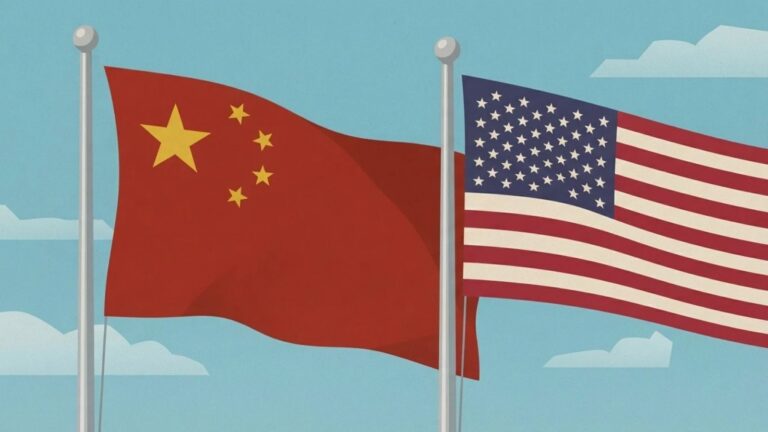
This week, Chinese President Xi Jinping travels to Washington for a state visit with President Trump, their second face-to-face meeting this year. Energy is likely to be high...
Columbia Energy Exchange Podcast
• September 22, 2026

Relevant
Publications
Fossil Fuels Dominated the Energy Discussion at the Trump-Xi Summit: Q&A
Last week's summit between US President Trump and Chinese President Xi was the second meeting between the two leaders since the US and Israel attacked Iran.
Jason Bordoff on the Geopolitics of Energy
In this edition of Global Institute Dialogues Jason Bordoff discusses how the Iran crisis, China’s electrification strategy, and the US shale revolution have changed energy geopolitics.

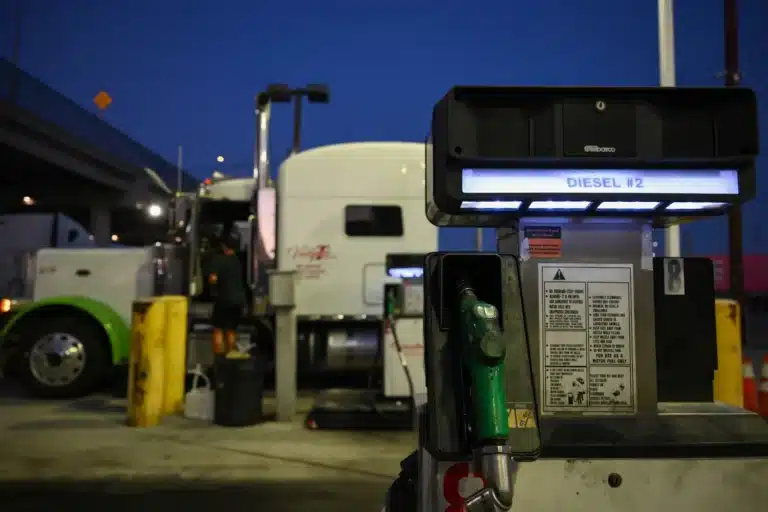
Don’t Ban Diesel Exports
As inventories run dry and the Iran war continues to disrupt transit routes, oil has surged back to more than $100 per barrel. Diesel fuel—the workhorse of the agricultural and trucking sectors—has now soared to historic highs, pushing U.S. exports to record levels.
The US-Saudi Nuclear Cooperation Agreement Would Serve US Interests
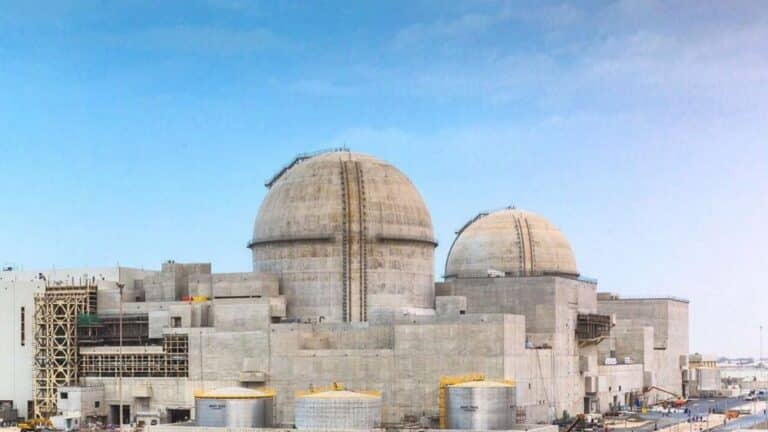
The Trump administration has submitted to Congress a new nuclear energy cooperation agreement with Saudi Arabia.