This website uses cookies as well as similar tools and technologies to understand visitors’ experiences. By continuing to use this website, you consent to Columbia University’s usage of cookies and similar technologies, in accordance with the Columbia University Website Cookie Notice.
Energy Explained
Get the latest as our experts share their insights on global energy policy.
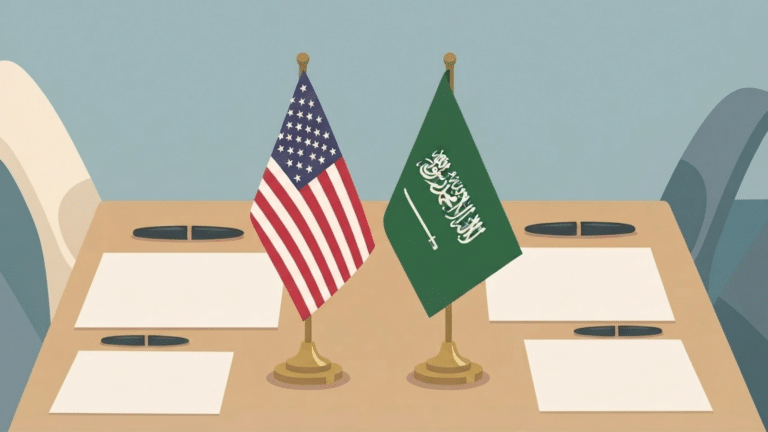
What a US-Saudi Arabia Nuclear Agreement Could Mean
The Trump administration and Saudi leadership have reportedly agreed to a nuclear agreement that could enable US nuclear technology transfers to Saudi Arabia.
Podcasts
Hear in-depth conversations with the world’s top energy and climate leaders from government, business, academia, and civil society.
DOE’s Audrey Robertson on Growing US Critical Mineral Supply
Advanced technologies, a return to domestic manufacturing, and the race to control energy production while also confronting surging demand for electricity—all of these factors mean that for the...
Columbia Energy Exchange Podcast
• September 1, 2026
Events
Find out more about our upcoming and past events.
September 10, 2026
• 10:00 am - 11:00 am
edt
Carbon Markets Webinar: The Path Forward for Carbon Credit Markets
PCCMs facilitate the generation, trading, and retirement of carbon credits from projects that remove, reduce, or avoid greenhouse gas emissions. By creating a revenue stream from verified climate...
Event

Podcast
Bob McNally and Jason Bordoff on Handling an Energy Crisis
May 5, 2026
Guests

Jason Bordoff
Founding Director, Center on Global Energy Policy;...

-
Transcript
-
Bob McNally:
One thing I learned I didn’t expect going in, is that half of good policymaking is avoiding bad policy.
Jason Bordoff:
When you can get something done, few things can have the impact that federal legislation or a White House action can, across the country.
Bill Loveless:
In moments of geopolitical crisis, energy is never just a backdrop. It’s often at the center of the story. Today, as conflict involving Iran sends shockwaves through global oil markets and raises fears of supply disruptions, the stakes for policymakers in Washington couldn’t be higher. Prices are rising, risks are multiplying. And as we’ve seen in recent weeks, there are no easy solutions when energy and national security collide. So what does effective decision-making look like inside the White House at times like these? To help answer that question, we’re joined by two people who have been there. This is Columbia Energy Exchange, a weekly podcast from the Center on Global Energy Policy at Columbia University. I’m Bill Loveless.
Today on the show, Bob McNally and our own Jason Bordorf. Bob McNally is the founder and president of Rapidan Energy Group, an independent energy consulting and market advisory firm. From 2001 to 2003, during the administration of George W. Bush, he served on the White House National Economic Council as special assistant to the president. And in 2003, he was the Senior Director for International Energy on the National Security Council. Bob’s 2017 award-winning book, Crude Volatility: The History and the Future of Boom Bust Oil Prices examines the history of oil price swings.
Jason is the founding director of the Center on Global Energy Policy at Columbia University School of International and Public Affairs, where he is a professor of professional practice. He is also on the faculty of the Columbia Climate School where he is co-founding dean emeritus. He previously served as special assistant to President Barack Obama and senior director for energy and climate change on the staff of the National Security Council. And of course, he’s the co-host of this podcast.
Both Bob and Jason have sat in the room at the White House when decisions had to be made quickly, often with imperfect information and enormous consequences. In this conversation, we look back at the lessons from those years and explore what they can teach us about navigating today’s crisis, how policymakers think about oil shocks, what tools they actually have at their disposal, and where those tools fall short when the world is on edge. Here’s our conversation.
Jason, it’s always good to see you.
Jason Bordoff (03:04):
You too. It’s strange to be on the other side of this podcast.
Bill Loveless (03:08):
And I always find it fun to turn the table and have you as a guest here rather than a host.
Jason Bordoff (03:14):
Well, I can now learn from your skill, seeing it directly put into action
Bill Loveless (03:17):
And Bob, welcome back to the Columbia Energy Exchange.
Bob McNally (03:24):
Thank you, Bill. And thank you, Jason. It’s great to be back. And it was great to be with you in person recently, at your fabulous energy conference in New York recently. That was just terrific. So good to be back.
Bill Loveless (03:35):
Well, Bob, like Jason, you’ve been busy on many media discussing the Iran conflict and its implications for energy markets. So it’s good to have a chance to step back and talk to both of you about what it’s like to advise a president amid critical times for energy.
Bob, let’s start with you. When you went to work for President George W. Bush in 2001, energy prices were rising, shortages were projected, and the reliance on foreign oil was pretty heavy. In California, there was an electricity crisis. How real did the fear of energy scarcity feel inside the White House then?
Bob McNally (04:14):
Well, it felt quite real. Actually, I was introduced to President Bush on the Monday morning, the very first meeting of his administration as the guy who was going to fix the California electricity crisis. And Bill and Jason, as you know, I’m a barrel counter. So I, like Jason, I suspect you learn to find smart people who can help you. And so, as we took office and I came in, we were dealing with brownouts and blackouts in electricity. Then of course we had 9/11. Now I can’t believe it’s been 25 years coming up. And then getting ready for the liberation of Iraq. And we also, of course, in between 9/11 and the liberation of Iraq, we lost Venezuela as a supplier. And so we were very concerned because we knew we were going to attack Iraq about a conflict in the Middle East, a loss of energy supply at a time we’d just been through trauma on electricity and so forth. So it was all quite real for me back then.
Bill Loveless (05:15):
Yeah. You had, within months. I mean, the president was no sooner in office, but he ordered up a special study led by Vice President Cheney, right?
Bob McNally (05:23):
Right. So he ordered the creation of a national energy policy development group. And so Vice President Cheney was in charge of that. And he had wonderful staffers there, Andrew Lundquist and Karen Knudsen. But I was working for the president, so I was part of that triumvirate of staffers, if you will, but I was catching spears on electricity in California. But also we had had, you may recall, coming out of the big oil price collapse in the late 1990s, OPEC was kind of getting its act together and implementing some surprise cuts to kind of get prices back up from the floor. Remember they had been about $10 a barrel at the end of the 1990s. And so we got surprised a little bit by areas I knew better, OPEC+, or OPEC, I should say. So we were dealing with rising energy prices, California blackouts, and then of course 9/11, and then the invasion of Iraq.
(06:13):
Very busy time. While we did a comprehensive energy policy: renewables, fusion, hydrogen cars, solar – incentives for solar energy. Fuel economy standards had been frozen by law. We unfroze them and taking into account the National Academy of Sciences findings about some safety penalties in the old design, we redesigned them and posed them. So I have to say this. I say this to friends who work in the administration – Jason, I hope you agree – if you’re going to serve, you don’t do it to make money and you don’t do it to spend quality time with your family, but you do it. If you’re going to do it, let your area be really active. Have a really exciting, challenging time where your issue area, whatever it is, is hopping and popping, if you will. And energy. I was both on the National Economic Council doing domestic energy and the National Security Council.
(07:10):
I know Jason had broad responsibilities as well. If you think about 2001 to 2003, just about every type of domestic and international emergency or energy policy was under consideration or being dealt with then, and I’m very grateful. My only other job in government had been the Peace Corps, and I was glad to have that other two and a half years in the White House.
Bill Loveless (07:29):
Yeah. Yeah. Certainly there was so much going on back then. Jason, when you entered the White House in 2009, the core problem for the Obama administration was economic recovery. Given that, how did energy security and climate change fit into the president’s agenda?
Jason Bordoff (07:44):
Yeah. I mean, it was quite abroad and varied energy and climate agenda with a lot of overlapping imperatives, economic recovery, energy security, and a strong push in the Obama administration on climate change. I’ll echo what Bob said, which is what a privilege it is to serve. And I’ve been lucky to be part of some pretty great organizations in my career like Columbia University or McKinsey or Brookings. And I’m not sure I’ve ever sort of been around as brilliant a group of people as dedicated to a common mission and purpose as I saw in government. It’s frustrating because it’s hard to get things done, but when you can get something done, a few things can have the impact that federal legislation or White House action can, across the country. So that’s pretty exciting. I started in the Council on Environmental Quality and then moved later in the first term of the Obama administration to the job that Bob had, which was senior director for Energy at the National Security Council and the National Economic Council.
(08:53):
So that was an interesting perspective to come at these issues through multiple perspectives because that’s what makes energy so interesting. There’s so many equities involved. It is a critically important economic issue, national security issue, and of course, environmental issue. And as you said, when we came into office in the Obama administration, a key priority through the transition and then taking office was the Recovery Act, putting a huge amount of fiscal stimulus. It seemed huge at the time – maybe it’s chump change these days – behind putting people to work and economic recovery, but trying to see how you could maybe kill two birds with one stone and make sure that you were doing things like employing people to do energy efficiency in houses that would have an employment impact, but also a positive environmental impact. This was also 2009, as folks may recall, kind of the very early days of the shale boom.
(09:44):
And I remember calling meetings about the surging outlook for domestic natural gas production. In the beginning, it seemed shale was mostly about natural gas. It took a couple of years to realize this was going to be an oil boom as well. And the question is what the administration’s posture would be on that. We were hearing a lot of things from a lot of people about how many jobs it would create, about the potential environmental harms and impacts. So trying to create a fact base to understand what the shale revolution was all about so you could figure out from an energy policy standpoint, what your posture would be to it, eventually doing to things like whether you would export energy and natural gas, which was an issue that came on the Obama administration’s plate early on, trying to move a climate agenda forward. You had legislative action like a cap and trade program, the executive action through the Clean Power Plan, the international diplomacy, the Copenhagen meeting, and then leading up over several years to the Paris Agreement.
(10:42):
And then as Bob I think would attest all too well, you can have all the plans you want until you get punched in the face and you have things like deep water horizon happen a year into the administration, which kind of sucked up all the oxygen for a very long time to deal with that environmental disaster.
Bill Loveless (10:58):
Yeah. Bob, when you were dealing with scarcity price bikes and import dependence, Jason, you were handling shale abundance, as you mentioned, climate pressure and clean energy investments. Bob, did it feel like you were managing a crisis versus a transition at that time?
Bob McNally (11:17):
So you have to break it down. I think no question electricity was a crisis. I mean, we would be monitoring the electricity markets in California and every day, when it got to be sort of rush hour going home, we just knew there were going to be massive brownouts and blackouts. And we were trying to do everything to alleviate that. And that was just frustrating because what you learn is there are not a lot of good tools to control the influence the price of oil. There’s almost nothing on electricity. I mean, there’s no storage. And so when you have parts of North California, excuse me, can’t send electricity to Los Angeles because there’s a little transmission corridor called Path 15 and it’s going to take months to get that fixed. It’s just dismaying to watch it and not have any tools to deal with it. So that was definitely managing a crisis.
(12:18):
And in crises, you sometimes get pressure to put in place bad policies. And one thing I learned, Jason, and Bill, I don’t know if Jason, you found it the same, is one thing I learned I didn’t expect going in that half of good policymaking is avoiding bad policy in my view and price controls or other extreme measures that you have to fight or at least make sure there’s a robust debate on. So that was crisis management. After nine eleven, when we had to literally restart the NIMEX, I got to the point where I was pleading with a New York police officer who, by the way, his last name was Diesel, Officer Diesel, no kidding, to please allow a barge with a diesel generator to go up the street so we could restart the New York Stock Exchange and then the NIMEX, New York Mercantile Exchange.
(13:17):
I mean, literally to that point, and then getting ready for the attack on invasion of Iraq. And we were tracking every oil installation in Iraq as the troops were covering ground, I would get a call from the Pentagon on which gas oil separation plant we had seized. And with each one that we seized, there was a reduced risk. They were going to have a catastrophic energy supply interruption, and I would go and run and brief senior White House staff on that. And so I had plenty of crisis management. Enron was the largest bankruptcy in our country’s history at the time. And I was the number one respondent under the subpoena and I was clean as a whistle, but you don’t feel that way when you got Department of Justice and FBI looking at you in your emails and everything. I was clean as a whistle, but boy, no fun to go through.
(14:10):
So then you had other issues though. And there on things like how do we improve fuel economy standards to remove the safety penalty that the National Academy of Sciences had found? Interesting. This fusion test reactor, should we get in it or not? Where should we put it? How promising is fusion energy? Is that the role for the conservatives to support? A role for federal government? Should we use eminent domain to cite high speed transmission lines, bulk transmission lines between states? How do we balance our interests in private property and state’s rights with the need for a reliable and secure grid? So Bill, I was lucky. I had, again, I was sort of like a buffet. I had some crises to keep things interesting. And then I had broader, bigger issues where you were allowed to do some more thinking that were more structural. Again, like Jason said, I’m just so grateful for the opportunity to have served, so grateful to President Bush for giving me that opportunity, and I’m very grateful for the issues I had to deal with when I was there.
Jason Bordoff (15:22):
And Bob did, I’ll just say he did a great job on 60 Minutes not long ago talking about the Iran crisis. And I remember, Bob, one of the things you told the host, I forget which of the 60 minutes correspondence interviewed you, was when you have an oil crisis of this scale or smaller, and we haven’t quite seen anything of this scale, there’s one or two things you can do that help maybe release strategic reserves. There are some things that are symbolic and kind of look like you’re trying to help. And then there are things that are harmful and as you said, a big part of policy is try to avoid the political pressure to go and do the harmful things. And I think that’s what you were just saying a moment ago.
Bill Loveless (16:02):
Jason, for you, was it just the opposite that you were handling a transition versus a crisis?
Jason Bordoff (16:10):
Well, I think there were certainly crises that came up. Obviously, I mentioned Deepwater Horizon oil spill, which took all the attention of energy and climate and other leaders throughout the administration to focus on dealing with that. And then Bob was talking about getting on the phone and calling people to release cargos and stuff. And just at the tail end of my service in the first term of the Obama White House, you had the Superstorm Sandy, which hit New York and disrupted all sorts of, had all sorts of energy implications in the power sector flows of refined product by ship into New York Harbor. And I remember we were operating with not great information trying to figure out which gasoline stations had power and which didn’t, and was the problem getting fuel to the right places and what would it take to do that? And you’re kind of on the phone.
(17:03):
I was actually in New York for part of that because at that point I was commuting back and forth between my family in New York and DC. And I was getting in a car and driving around to sort of just get a firsthand sense of where fuel was available and where it wasn’t and report back to colleagues in the administration I was working with like Dan Poneman, who you guys know and other people. So it was some of both. And then there was the longer term things that really require a large team and hopefully some good rigorous analysis to figure out how to make good policy. There were ideas during the Recovery Act like Cash for Clunkers, which in theory, and I sort of take this lesson with me, the practitioner lesson and now I’m sitting in an academic institution, the question is what are things that seem on paper like they make a lot of sense, but it turns out the administrability is a lot harder than you think.
(17:56):
And the sort of keep it simple, stupid moniker works pretty well because if it’s hard to administer policy, there’s going to be unintended consequences, even if it makes a lot of sense in theory on paper. How could you, in that case, use government incentives to encourage someone to scrap an old fuel efficient car and buy a new fuel efficient one instead, which might stimulate demand at a time that you’re trying to stimulate the economy, support the auto industry, hopefully have environmental benefits by leading to incremental fuel economy gains, but could have potential downside. If you announce that program is coming, people will wait for a car they otherwise would have bought because they know a tax benefit is coming and it’s also infra marginal spending, meaning you’re spending tax dollars to do something the consumer was going to do anyway. All of that takes some actual hard thinking and some analysis to figure out what the right answer is.
(18:56):
Should we allow the export of US natural gas, which required understanding something at pretty early uncertain time about the shape of the US supply curve for gas. If we were to increase demand for gas exports, would it push up the price of gas for US consumers and manufacturers? What would the environmental impacts of that be? Would it substitute for coal or renewables abroad? All of these are sort of very interesting analytic questions. That’s what makes the job, among other things, so much fun, trying to develop the social cost of carbon. Very interesting, important economic exercise. And we were doing all of that with multiple working groups that we were trying to put the analytic framework together. And look, I’m not going to pretend in the end, there’s always, at some point, a political calculus that comes into making policy as well. But one of the things that I appreciated and hope Bob found true as well is the sense that yes, we have to think about politics, but let’s start analytically with thinking about what the right answer is first from a policy standpoint.
(19:57):
And that’s certainly an approach that we try to take to heart here at the Center on Global Energy Policy and teach my students.
Bill Loveless (20:04):
I’m interested in how central OPEC behavior was to your day-to-day work. I can recall as a reporter at Platts, we would chase the energy secretary of the day around asking him, trying to hone and advance our questions about oil markets, hoping to move the market with some important information on prices and all. And if I had come across you, Bob McNally at a meeting, and I recall having run across you a few times when I was a reporter and you were at the White House, I would probably come up and try to question you on some of these matters. Jason, how did the shale boom change the way the White House thought about OPEC and global oil markets?
Jason Bordoff (20:46):
Well, it was a process and it was first starting. I remember, I think it was 2012, the Obama State of the Union where President Obama was talking about the importance of climate change and moving to a low carbon economy, decarbonizing, reducing oil use through higher fuel economy standards and electric vehicles. But he said at the time, “This is a long-term transition and it’s going to take a while to get there. And while it is going on, it’s better for the US from an economic standpoint and a national security standpoint to produce more oil rather than import it and put more people to work here in that industry at home.” So he put out a goal to reduce US oil imports and to increase partly through efficiency and partly through increasing domestic production. And I remember the conversation was every president since Nixon has promised to be energy independent and we’ll just do everything ourselves.
(21:47):
And we thought, there’s no way that’s going to be possible. So let’s try to really talk to the EIA and talk to other analysts and get the best sense we can about what the data actually shows and put out an ambitious but realistic goal for how that outlook could change with supportive policy. And as I recall, the goal he articulated was reducing oil imports by a third by 2020. I’ll go back and double check that’s right.
(22:17):
And of course, we became a net exporter roughly by that timeframe. Was it 2019, Bob? Roughly around that timeframe. So there was just no sense at the time about how big and transformative this was going to be. I’ll give you another example. I remember it’s a big topic of interest today that there was questions, as I mentioned a moment ago, should we approve LNG exports? Still an important and somewhat controversial question, and what would it do to domestic gas prices? What would it do to the economy and to the environment? So there was analysis done and there were scenarios, low, medium to high. And I think the high scenario for LNG export capacity was 12 BCF a day. We’re almost at 20 now and we’re going to 30 or 35. So I think generally speaking, the analysis was correct and most of the decisions we made are holding up with the test of time, including recommendations to President Obama about the national security benefits for our allies.
(23:18):
In scenarios like Russia cutting off gas supply to Europe, what would it mean if you had US LNG in the global market that created, allowed market forces to work so that people in response to price signals could access supplies when they needed them? That’s exactly the scenario that played out in 2022. So directionally, I think the analysis holds up, but the scale and magnitude of it was certainly not appreciated at the time.
Bill Loveless (23:43):
Bob, how central was OPEC behavior to you in your day-to-day work?
Bob McNally (23:48):
It was pretty central. As I said, when I was there at the beginning of the first Bush term, oil prices were climbing out of this bust that they had been in. And Saudi Arabia had arranged with a non- OPEC member, Mexico, to join with Venezuela in a sort of extra cuts. And the awesome host of the panel I had the honor to speak on at the Senate’s conference recently, Carlos Pascual, if I’m not mistaken, was the ambassador then. I remember being on the phone, I’m pretty sure, with Carlos Pascual, ambassador to Mexico, trying to figure out why Mexico was lining up with Saudi Arabia to cut oil production. And so that is an area that I was familiar with. And so I was glad to field that ball, if you will. And I remember being in the situation room with cabinet secretaries and principals, everyone was there.
(24:50):
Jason, maybe he found it the same. With oil prices, it’s almost like we have two switches or two modes, both at the White House and maybe even at the broader political level, broader public level. We’re either oblivious, we just don’t care. It’s just, it’s fine. Or we’re just freaked out and panicked because prices are rising. And it’s to say it’s for the population and for the White House. Well, a sudden and unexpected price in oil, price rise in oil got everybody’s attention. And so there was a lot of debate. Now, we had remembered at the end of the Clinton administration, you may recall, there were some high profile, let’s say, lobbying and communications from Secretary Richardson, famously calling OPEC members during meetings and pulling Saudis out and so forth. And we wanted to have a more subtle approach. But as I explained, briefing those cabinet secretaries on why their prices were rising and what influence I said, we actually have very little influence over the price of oil and perhaps our most important leverage over short-term prices.
(26:00):
And I think at one point I literally drew a picture of a telephone. This is an old-fashioned telephone with a cord and everything. And I said, “It’s calling up OPEC members, especially the most important ones, and just talking about the markets quietly and just letting them know that you’re concerned. It’s important to have that dialogue.” And so we did do that. We ended up having a subtle dialogue with leading OPEC countries. And then of course, as we were going into Iraq, invading Iraq in March 2003, obviously coordination with Saudi Arabia, UAE and other countries, very important. One of the big policy calls we had to make that was somewhat controversial is whether when we lost Venezuela in 2002, so December of 2002, their PDVSA, which was then resisting Hugo Chávez’s efforts to sort of nationalize the industry and take it over, they had a strike.
(26:55):
And suddenly we lost all our imports and we were a huge importer from Venezuela back then, and that’s four sailing days away. And some of us thought this is an appropriate use for the strategic petroleum reserve. In other words, you would lend importers who suddenly lost oil supplies from four days away and then have them pay it back in a month or two and maybe with some more oil. And however, we were at the same time looking to liberate Iraq. And with that came a risk of a major supply interruption in the Middle East and both events, one looming, one real, were happening at the same time. And so that required a policy call. Do you use the SPR? How would OPEC perceive that? They don’t typically like it when we use the SPR. And in the end, we decided not to use the SPR and that we hoped would encourage Saudi Arabia and other countries with spirit capacity to increase their production so that if we had a problem in Iraq, we would’ve started those offsetting barrels flowing to market sooner.
(27:58):
So yeah, those are some interests where we were dealing with OPEC. Now, I was gone by the time crude oil prices during the Bush term, they had almost quintupled. I left and they were under $40 a barrel. At the end of the Bush term, they got to $147 a barrel and that was a very different … I know the president was visiting Saudi Arabia pleading, but then you got into the problem where, and Minister Abdulaziz, the current Saudi oil minister speaks to this often, this episode where the price of oil is rising. Saudi Arabia has a little bit of spare production capacity left. In other word, Saudi Arabia is producing just about all it can. It’s holding only a little bit back. And there’s pressure on Saudi Arabia to put what little spare it has back in the market. And the problem is when they put that little bit of spare, prices would still go up because everyone would say, “Oh my gosh, there’s even less spare capacity.” So they couldn’t win.
(28:59):
If they didn’t increase production, prices would go up because they weren’t increasing production. If they did, prices went up because there was now less spare. So it was a lose, lose. I was outside at that point. I was working at a hedge fund, Tudor Investment, and I was analyzing this, but I’m glad I wouldn’t have to deal with that in the White House.
Jason Bordoff (29:17):
I was just going to say, the closest analog I guess we had, Bob, was the Libyan Civil War in 2011, which took out about a million and a half barrels a day. That seemed enormous at the time. Of course, we have roughly 10 times that amount today, and that led to an extensive process to try to figure out whether and how to release stocks from the strategic petroleum reserve. It’s kind of interesting that the political appointees who come in, there’s of course great career staff at the Department of Energy who manage those things, but the playbook, how do you do that? What is the assessment? What’s the analytics Framework you used, does it make sense? Would it help the market? Would it not? It’s hard to pick up the phone and call a bunch of people on Wall Street and say, hypothetically, if we release 60 million barrels of crude, what would that do to price?
(30:05):
It kind of sends a signal to the market about what you’re thinking, which you don’t want to do. So even gathering information can be hard and sensitive to figure out if a certain approach makes sense or not. And then a lot of diplomacy with OPEC, particularly at the time with Saudi Arabia, to see if they might increase production to deal with that loss supply, to deal with other players in the global market to make sure they didn’t just buy up all that supply and put it into inventories, but it would actually replace Libyan barrels. And even with all of that work, right, Bob, the Civil War happened in February and the Obama administration was committed to trying to do this in partnership with the International Energy Agency. And that required a lot of diplomacy and discussions that people here, like my colleague, Jon Elkind and friends like Dan Poneman were involved. Carlos Pascual.
(30:52):
That was hard and not everyone was on the same page. And so the release didn’t happen until June. And if you’re dealing with an emergency oil supply disruption, February to June is a pretty long time to try to have any impact on the market.
Bill Loveless (31:05):
What’s past is prologue, as they say, when you look at what’s happening today with the Iran conflict and the difficulties in the Strait of Hormuz and all, and even as we’re speaking today, we learned that the United Emirates has dropped out of OPEC. What are you thinking about? What was your experience, some of which you just described a minute ago when you were inside the White House? And what do you think about some of the decisions, the deliberations that need to take place there today?
Bob McNally (31:40):
Well, I have a lot of empathy for my successor and my friends in the White House right now. I think that both Jason and I had exciting times we discussed, but nothing compares to literally the largest energy supply disruption in history, both oil and gas. And then of course, there’s an agricultural and a fertilizer and an industrial input side to this as well. And this was an operation that we chose to undertake. And so as you reflect on it, as Jason was saying, and as I kind of mentioned on 60 Minutes, when you have a supply interruption, if it’s Libya or a smaller case, Venezuela, as I mentioned back in 2000, we had the option. We could have bridged them with an SPR, we didn’t. With Libya, it took a little while and you got to a release. But when you’re talking about the loss of 15 million barrels a day of crude and products, there’s no solution to that.
(32:48):
And there’s just nothing really you can do other than unblock the Strait of Hormuz, which is really a military issue. And again, it gets back to that powerlessness feeling that I had with California. There’s just nothing you could do, really, to stop blackouts because people were going to try and get in the elevator and go home and flip on their microwaves and cook dinner. And the load was going to go up and there was inadequate generation and there was no story. You knew with a mathematical certainty, some bad things were going to happen, at least for the time being, and your tools to mitigate it. And so I feel for my friends in the White House now and the administration treasury trying to deal with this. Now, there will be a time in the future, I think, mainly to go back and look at how and why this was planned and dealt with from an energy security standpoint.
(33:37):
I do think at this point that we can look back and say, thankfully we had a all the above approach to the shale revolution. President Bush, President Obama could have strangled it, but didn’t. And I think a shining and towering success, perhaps the only one in recent time in bipartisan energy policy that directly helps us today is getting rid of that crude oil export ban under President Obama with Republican Congress because that really removed a threat to the growth of the shale industry. And while our consumers are still feeling the high oil prices, and I’m afraid they’ll get worse before they get better, from an economic standpoint, we are more resilient and better off than because we are a net exporter of oil. And with gas, it’s even better, our gas prices are actually falling because unlike oil with gas, you can enjoy lower costs here than abroad because the transportation costs are so high that you don’t have that fungibility and that sort of law of one price that applies to oil.
(34:39):
So boy, was that a good thing? And then I’m sure veterans of the Bush administration and the Obama administration early on there, looking back and those early years that way welcomed that shale revolution, they removed threats to it, is paying dividends now. Now then you could look at other things like, was it a good idea for us to drain the SPR, which we have done both on a bipartisan basis in terms of just frittering away reserves from the SPR to pay for non-energy expenses. And then President Biden more aggressively sold down the SPR after Russia invaded Ukraine, even after it became clear we weren’t going to have a major disruption from Ukraine. So again, we get out of the debate, but I think it’s fair to say on both parties kind of went in the wrong direction. And I think if there’s a silver lining on this crisis, it will be, we ought to have an ample strategic petroleum reserve.
(35:33):
We ought to cooperate in its use with other countries. I would even put China in this category where we’re all in the same boat in some ways as consumers of oil, whether we’re an importer like China or an export of the United States, our economies are vulnerable to these price spikes. And when we have especially massive disruptions like this, you want to have an ample strategic reserve and coordinate in its use. And so maybe we’ve learned some lessons here that’ll carry forward in future administrations, but this is definitely on a scale that’s hard to imagine.
(36:11):
I had to do the analysis when we looked at Iraq and you talk to the military folks, you say, “Okay, what are our scenarios for this war that’s coming in the Gulf? What could we lose? How much?” And then you talk to the oil folks and you say, “Okay, what’s our workarounds? What’s our redirects? What can we put through pipelines? What’s our spare? What’s our inventories?” And my firm at Rapidan, we did this last June for Hormuz because we saw Hormuz was coming. It was a matter of time before we were going to go at it. And to us anyway, it was pretty clear, and this came up in the 60 Minutes interview that assuming we started on day one to sort of protect Hormuz from Iran’s ability, which it has many abilities, many asymmetric layered assets, it can use boats, mines, missiles, drones, to interfere with that shipping, we just assumed that we would start that protection, if you will, of Hormuz, the suppression of Iran’s ability from day one.
(37:12):
And even then, it would be a four week interruption. So even we were thinking, if you’re going to do this, whatever the reasons, you have to anticipate a closure of the world’s most by far commodity, really, not just energy, but a commodity, artery. And the military folks are telling you it’s going to be many weeks at least before we can ensure safe passage. You want to fold that into your thinking. And so again, there’ll be armchair quarterbacking aplenty. And I think we can look back though and say, we did some things right that helped us prepare for this. Perhaps we did some things we’d regret as all crises, there can be opportunities to learn.
Jason Bordoff (37:46):
Yeah. I would just add to what Bob said by … I think it shows the importance of coordination across so many different parts of a government, which is what roles sitting in the National Security Council are all about. It’s a much smaller staff today than it was in the past. And I don’t know, maybe Bob has thoughts about the pros and cons of that, and I don’t know what kind of planning happened. I’m curious, Bob, if you agree with the observation that if you were to have … If an administration were contemplating a military action that had a high probability of disrupting the Strait of Hormuz, it seems to me there would be some things that one from an energy standpoint might want to do in advance of that, like prepositioning ships outside rather than inside the strait, making sure inventories and ships were full with crude.
(38:33):
So you have a buffer to work with. I’m not sure as much of that was done as could have been done. And of course, you made the comment that you have sympathy for people in our shows, our former shoes dealing with the crisis. And I don’t mean this … Bob and I have a great friendship and agree on a million things, so I don’t mean this to sound like a partisan comment. I will make the observation that my sympathy is slightly limited because I think this was a disruption of choice, which seems now headed toward some sort of agreement with a deal that leaves proxies and missiles on the side and tries to focus on a nuclear program in exchange for lifting sanctions and unfreezing funds, which looks a lot like the deal Trump tore up a decade ago.
Bob McNally (39:20):
Yes. Well, so I would say, again, I said on 60 Minutes, I’m sympathetic with ensuring Iran doesn’t get a nuclear weapon, so I’ll leave it at that. And I’m not reading classified. I don’t really know what the trade-offs were and where they were and everything, but I’m certainly not opposed to use of military force. However, you have a valid point. Look, they saw this coming, and we have the Wall Street Journal. The Wall Street Journal reported, and I have not seen this refuted anywhere, that the military went to President Trump and said, sir, they’re going to close Hormuz. They could … Several times. I have no doubt. I know talking with military folks, the military has been planning for a war over Hormuz for decades, okay? There’s no doubt in my mind. And they went to the president, and according to the Wall Street Journal, the president said, no, they will capitulate before they close the Hormuz Straight.
(40:13):
And if they do it, we’ll clean it up easily. It’ll be easy to take care of. And if that’s true, that’s shocking. And what the record shows anyway, is we only began to prioritize the security of the Strait of Hormuz many weeks into the conflict. And then we paused some of those efforts during the ceasefire. I understand we’re still doing underwater demining. We have these underwater drones and we’re still doing some demining, but we haven’t really begun that sustained four to five weeks of intense military activity that you need to undertake for a hope of getting Hormuz open. And I guess historians will just have to unpack what was going into thinking on that. From my perch, I don’t understand it. Also, I think it was wise. This is certainly a case for use of strategic reserves, and we did have the announcement of the largest ever IEA release.
(41:10):
However, I feel that that could have been coordinated a little better, and I think we should have gone to great lengths to encourage China to line up with those IEA countries, China with this 1.2 billion barrels, which it wisely has been stockpiling, and have them contribute to a release would have been beneficial if we could have worked that deal. So I feel that there could have been better preparation, as you said, preparation to brace for this, make the oil and gas industry and market as resilient as possible, and to plan both from an energy security standpoint and from a military standpoint to shorten what would obviously be the world’s largest disruption.
Jason Bordoff (41:58):
By the way, I’ll just add to one other thing Bob said, because he mentioned the crude oil export ban and lifting that and why he thought that was good policy. I wrote and testified saying the same at the time, but we should also remember part of that was a deal, a deal across the aisle for long-term tax credits to support renewable energy, which have been a game changer for US energy prices and the grid and the energy oil intensity of our economy. So it was a win-win and it was kind of a model of cooperation across the aisle that is getting harder and harder to see, unfortunately.
Bill Loveless (42:37):
Do you think it’s much more difficult today for people holding the positions that you once did at the White House on energy matters to operate effectively, just given the polarization we see politically throughout the country and certainly in Washington and the inability of Congress to, it seems, to act on just about anything?
Bob McNally (42:55):
I think so. I think we’re seeing increasing use of executive power by the president. It’s gotten more and more intense with every president. It’s just the pendulum swings further and further. Congress plays less and less of a role. Jason described, we had the congressional deal on lifting the export banner exchange for renewable tax incentives. We did energy bills in the Bush administration. Now we don’t do bills anymore. We do executive orders and we change sides, we kill the old executive orders and we put in more intense, one would say extreme, depending on your point of view, new executive orders. And fair to say, President Trump has in his second term especially moved the bounds of executive power beyond anything that most of us thought, whether you agree with it or not, as he just has. And so we’re testing through the courts and everything, kind of the limits of executive power here.
(43:55):
And I don’t see that changing, unfortunately. I will say one underlying dynamic I think that is slightly improving is there is a focus on security and affordability that I think is shared in both parties. I think from the period of about the Paris Agreement, 2015, until 2020, I think one of the sort of structural polarizing elements in our politics, in addition to this increasing authority of the executive branch and use of executive branch instruments, was climate change. And everything was just through the prism of climate change and everyone just lined up on one side or the other and everything became a climate change battle. And not the climate change has gone away by any means. It absolutely has not, especially when we look at young people. It absolutely has not. However, I would say since the Russian invasion of Ukraine, since the oil price spikes, the gas price spikes, now with Iran and so forth, with issues of electricity, affordability and so forth, I think the polity, if you will, our people, our conversation and our leaders are being sort of moved back, not necessarily away from climate, but back to where we’re talking about affordability and security.
(45:18):
And those can be areas where you can get bipartisan agreement. It’s possible there, a little harder in climate change, especially if you have different ideas about how urgent the problem is, how big of externality is, and therefore what kind of costs should be borne to address it. But when it comes to keeping the lights on or … I think you see both in our country and maybe countries like Canada, Europe, you start to see, I think their energy security and/or affordability could be a grounds for perhaps … I don’t want to get too Pollyannish here. I don’t want to end on too happy of a note, but could be grounds for a little more bipartisan kind of action.
Bill Loveless (45:55):
Yeah. I mean, what advice would you give to current policymakers trying to balance affordability, security, and decarbonization, Bob?
Bob McNally (46:02):
Well, that’s a tough one. I believe that the basis of it is unbiased sound analysis and science. And I know everyone says, “Oh, but Republicans are against sound science.” And we could go on for another hour about who is distorting the science about what, but I have confidence in logic, reason, data, and I think that if we allowed a space where we decided a problem was so significant that we really had to understand it and understand objective data and analysis, externalities like climate change, and we took politics out of the science and the distortion of science and analysis, I guess I’m confident that smart people can get together, understand an issue, and come to reason. Look, our whole republic is founded on the idea that reason can guide us data analysis and we’re going to argue, we’re going to differ, but at the end of the day, going back to Congress, a friend of mine is Andrew Lundquist, a great friend who had worked in the Hill, unlike me.
(47:15):
And he said, “Bob, at the end of the day, either you have the votes, you either deal or you die.” And if you want to get deals done and the country hasn’t given power to one party or the other, you have to do compromises. And if we’re guided by reason and analysis, I remain optimistic about it because I know enough people who believe in that. And I think that when problems become pressing enough and things get very serious, I’m confident that serious people using objective data and analysis, if they can be allowed to operate and have leadership that will allow them to operate free of these kind of hyper-politicized times, I am still confident we can come to reasonable solutions. The problems will impose themselves and we’ll be forced to do so, and I believe we can rise to occasions. So I remain hopeful there.
Jason Bordoff (48:05):
Yeah, I would build on what Bob said, and as usual, agree with a lot with a caveat or two, on the ability to get things done, it is very difficult. And Bob is right, we’re using executive authority on both sides of the aisle. I think Trump’s taken that to a new level, not trying to use legislation and Congress to take actions for which I think Congress is better suited and intended for. And even when things require legislation and the courts say they do, I think Bob would agree we’re by no means doing this through so-called regular order. The idea that there are committees of expertise and jurisdiction where experts like Bob and myself should come testify and you gather the expertise you need to make good policy decisions and goes from a committee to a full floor vote, we’re using these tools of budget reconciliation to smush together 10 different issues and pass bills that are very difficult for most people to read or understand, including those who may be voting on them, and they have enormous consequences.
(49:08):
And I think that’s not good for the lawmaking process. Back when I was in government, we had Congress working to try to get a cap-and-trade bill passed. It passed the House, but not the Senate with people in the Senate like John McCain or Senator Graham trying to move these pieces of legislation forward. So that is unfortunate that we’ve lost sight of that. I wouldn’t have let, after leaving government, started a research institute if I didn’t think that everything Bob said, science and evidence and research was critically important to good policymaking. You need good information about everything, whether it’s how much exporting natural gas might raise domestic natural gas prices to the impacts of climate change. And there we do have some, there’s always degrees of uncertainty in scientific literature, but a very strong base of scientific literature that climate change is a severe threat and going to cause quite significant suffering and adverse consequences.
(50:07):
And we’re not taking it nearly seriously enough. And we’re in a political environment now in which organizations that work on that issue fear retaliation or funding cuts if they lean too far forward and talk about those things. And I think that’s really problematic.
Bill Loveless (50:24):
I’ve got a question that it’s maybe a little bit tricky. What did you believe at the time when you were at the White House that turned out to be wrong? Was there something that you felt so confident about when you were there, but because of developments and experience, it just turned out to be a lot different than you anticipated it would be when you first started doing that work.
Bob McNally (50:47):
I’ll go first on that one. Again, I had never worked in government other than as a Peace Corps volunteer in a mud hut in Senegal, West Africa, which doesn’t really count for understanding Washington, right? Although I’d lived in Washington and had many friends and everything, so I hadn’t worked, but I thought that I would be doing partisan battles. I would be a warrior in a partisan battle, and everything would be the Republicans against the Democrats, and I was going to be unsheathing my sword and debating, fighting, if you will, in a civil sense, Democrats. And what I learned was so much of energy policy is not partisan, not ideologically partisan. It is regional. It is the coasts having a different view about ethanol than the heartland. It is the state of Alaska having different ideas about whether we should have a federal tax price floor for natural gas to support the building of a natural gas pipeline.
(51:55):
It could be intra-Republican debates or regional debates. And so what I discovered was, yes, there was partisanship, but especially when it comes to electricity, how much of our energy policy debate here is, and I think most of this is domestic, not so much international, is regional and how much I was spending on intra-Republican debates and controversies and issues. So that was one thing that surprised me.
Jason Bordoff (52:24):
Yeah. Jason? Yeah. I thought you were asking about policy issues or things you’ve changed your mind about. Maybe I misunderstood the question and there I think there was a … I grew up in a policy world working in the Treasury Department as a young person led by folks like Bob Rubin and Larry Summers, Peter Orszag, Jason Furman, people like that. And what might be broadly defined as sort of a neoliberal economics framework. And I still believe a lot of that is right and makes sense. And there are benefits to free trade and to global economic integration. But as Jake Sullivan, our former national security advisor discussed in one of his better known speeches at Brookings about a small yard with a high fence, there are certain assumptions that were made about what is broadly kind of understood to be neoliberal economics that probably in a world of geopolitical fragmentation and competition need to be rethought.
(53:30):
Perhaps China isn’t playing by all the rules that one thought they would play by when they joined the WTO and were granted permanent normal trade relations status. And so the ideas of industrial policy and the role of the state in the economy, I think sometimes are painted with too broad a brush and are used for an excuse for purely protectionist reasons like protecting winning an election in Michigan or Pennsylvania, and you call protecting jobs national security. But there are clearly issues of national and economic security that require a little bit of a rethink in how one thinks about broad approaches to economic policy, which has huge implications for energy and energy supply chains. I think that kind of classic economic approach too of, again, I mentioned earlier, the analytic effort to develop a social cost of carbon. You emit a ton of CO2 into the air and it causes a certain amount of damage.
(54:26):
Let’s crunch the numbers and figure out what those damages are and then price the externality, put a carbon tax on it and markets will solve that problem. And I think it is not quite that simple and probably an additional suite of policy tools are needed for many reasons, including as my colleague Noah Kaufman has often written, including in The Atlantic a few months ago, economists have a lot of trouble modeling with any specific accuracy future damages with a high degree of uncertainty that are going to take place over a very long period of time. So it requires a little bit of modesty and humility that requires approaching big policy questions, climate being one with a lot of uncertainty and then trying to build policy tools that account for that uncertainty.
Bill Loveless (55:18):
Well, there’s so much going on these days when it comes to energy, not just this conflict in the Middle East, but so many other challenges that we face here in the US, as well as in other countries. And it’s always helpful to learn from the experience of others who’ve had to deal with very difficult issues when they were either in power or close to those corridors of power here in Washington. So we learned a lot from your experience, Jason, and your experience as well, Bob. So Bob McNally, thanks for joining us again on Columbia Energy Exchange. And Jason, I’ll turn the table back to you as the host, but it’s good to have you here to give us your own insight as well. Thank you.
Jason Bordoff (56:02):
Thanks. Thanks for taking the time to talk with us and really thanks, Bob, to you for your service. The job you did in the White House was a really important one. I know it well and it was fantastic.
Bob McNally (56:13):
Well, Jason and Bill, thank you. And again, Jason, I knew you before the White House, during the White House while you were there and afterwards, and I’ve seen what you built at Columbia. And just this conversation is just the latest example of, I think, the convening power you do in bringing folks together from different stripes to have a civil and reflective conversation. So thank you for that. Thank you, Bill. No one better than Bill to do this too, and I look forward to future ones. Thank you guys.
Bill Loveless (56:46):
That’s it for this week’s episode of Columbia Energy Exchange. Thank you again, Bob McNally and Jason Bordoff, and thank you for listening. The show is brought to you by the Center on Global Energy Policy at the Columbia University School of International and Public Affairs. The show is hosted by Jason Bordolf and me, Bill Loveless. Mary Catherine O’Connor produced the show, Gregg Vilfranc engineered it. Additional support from Caroline Pitman and Kyu Lee. For more information about the show or the Center on Global Energy Policy, visit us online at energypolicy.columbia.edu or follow us on social media at @ColumbiaUEnergy. If you like this episode, leave us a rating on Apple, Spotify, or wherever you get your podcasts. You can also share it with a friend or colleague to help us reach more listeners. Either way, we appreciate your support. Thanks again for listening. See you next week.
In moments of geopolitical crisis, energy is never just a backdrop. It’s often at the center of the story. Today, as conflict involving Iran sends shockwaves through global oil markets and raises fears of supply disruptions, the stakes for policymakers in Washington couldn’t be higher.
Prices are rising, risks are multiplying. And as we’ve seen in recent weeks, there are no easy solutions when energy and national security collide. So what does effective decision-making look like inside the White House at times like these?
Today on the show, to help answer that question, Bill Loveless speaks with Bob McNally and Jason Bordoff. Both of them served as energy advisors during past US administrations. They joined Bill to reflect on what they learned about navigating energy crises from inside the White House.
Bob McNally is the founder and president of Rapidan Energy Group, an independent energy consulting and market advisory firm. From 2001 to 2003 he served on the White House National Economic Council as special assistant to President George W. Bush. And in 2003, he was the senior director for international energy on the National Security Council. His 2017 book, Crude Volatility: The History and the Future of Boom Bust Oil Prices, examines the history of oil price swings.
Jason Bordoff is Columbia Energy Exchange co-host and the founding director of the Center on Global Energy Policy at Columbia University School of International and Public Affairs, where he is a professor of professional practice. He is also on the faculty of the Columbia Climate School where he is co-founding dean emeritus. He previously served as special assistant to President Barack Obama and senior director for energy and climate change on the staff of the National Security Council.
More Episodes
DOE’s Audrey Robertson on Growing US Critical Mineral Supply
Advanced technologies, a return to domestic manufacturing, and the race to control energy production while also confronting surging demand for electricity—all of these factors mean that for the...
Columbia Energy Exchange Podcast
• September 1, 2026
Editor’s Pick: Rajiv Shah on Delivering Universal Abundant Energy Access
Energy abundance means different things in today’s global context than it did even a decade ago. It is about expanding electricity access while meeting rising energy demand. It...
Columbia Energy Exchange Podcast
• August 25, 2026
Matthew Yglesias on Abundance and the Politics of Energy
Abundance and affordability have become buzzwords among policymakers, who often have sharply different interpretations of how to attain them. To some, an energy abundance agenda means fewer regulatory...

Luisa Palacios on Rebuilding Venezuela’s Oil Industry After the Quakes
It started last year as a pressure campaign at sea, with the United States seizing tankers as part of what President Trump called a “total and complete blockade”...
Relevant
Publications
What a US-Saudi Arabia Nuclear Agreement Could Mean
The Trump administration and Saudi leadership have reportedly agreed to a nuclear agreement that could enable US nuclear technology transfers to Saudi Arabia.
The Long Shadow of the Iran Shock
By almost any measure, the world should be suffering a far more severe energy crisis.

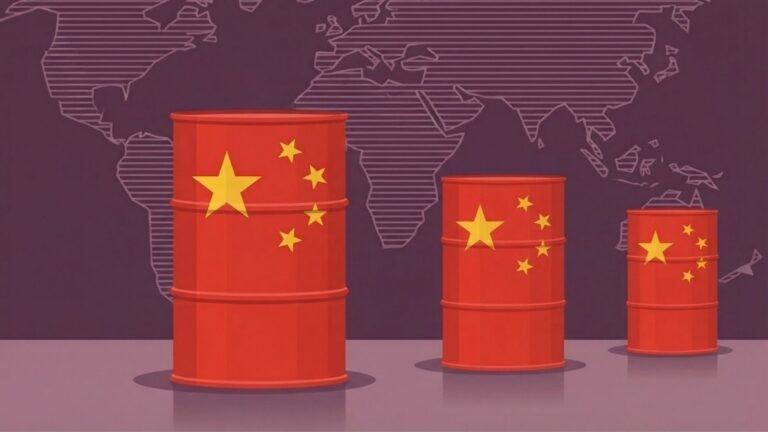
How China Is Managing Lower Oil Imports
The ongoing disruption of oil exports through the Strait of Hormuz has caused a substantial decline in China's crude oil imports.