Trump promoted fossil fuels. His war is pushing the world away from them.
As oil prices spike, governments are slashing fuel use and eyeing renewables — threatening to erode global demand for fossil energy.
Get the latest as our experts share their insights on global energy policy.
On February 28, the US and Israel launched new attacks on Iran targeting primarily the country's leadership, security forces, and missile program.

Hear in-depth conversations with the world’s top energy and climate leaders from government, business, academia, and civil society.
While US and Israeli forces have significantly degraded Iran’s military and nuclear capability, the global energy landscape remains in a precarious position. For weeks, the Strait of Hormuz...

Find out more about our upcoming and past events.
This roundtable is open only to currently enrolled Columbia University students. To register, you must sign in with your UNI. Join the Center on Global Energy Policy’s Women...

External Publications with Kong Chyong • November 08, 2023
Britain has been a global leader in reducing emissions, but little progress has been made on heat, which accounts for almost one-third of UK emissions and the largest single share is domestic heat, which is responsible for 17% of the national total.
Britain has been a global leader in reducing emissions, but little progress has been made on heat, which accounts for almost one-third of UK emissions and the largest single share is domestic heat, which is responsible for 17% of the national total. Given the UK’s 2050 “Net-Zero” commitment, decarbonizing heat is becoming urgent and currently one of the main pathways involves its electrification. Here, we present a spatially explicit optimization model that investigates the implications of electrifying domestic heat on the operation of the power sector. Using hourly historical gas demand data, we conclude that the domestic peak heat demand is almost 50% lower than widely cited values. A 100% electrification pathway can be achieved with only a 1.3-fold increase in generation capacity compared to a power-only decarbonization scenario, but only by leveraging the role of thermal energy storage technologies without which a further 40% increase would be needed.
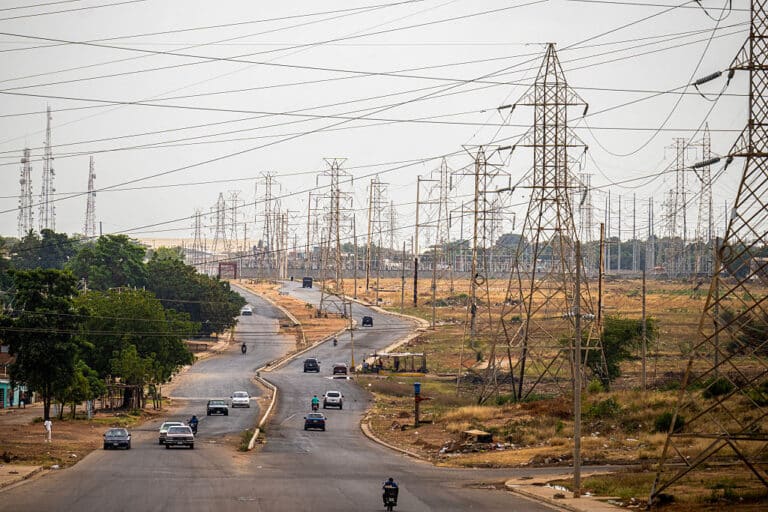
Having enough electricity is key to the nation’s post-Maduro recovery. Two experts offer a way forward.
As the US and Europe navigate a difficult and uneven shift toward full battery electric vehicles (BEVs), the US and EU auto markets are under heavy pressure.

Full report
External Publications with Kong Chyong • November 08, 2023