This website uses cookies as well as similar tools and technologies to understand visitors’ experiences. By continuing to use this website, you consent to Columbia University’s usage of cookies and similar technologies, in accordance with the Columbia University Website Cookie Notice.
Energy Explained
Get the latest as our experts share their insights on global energy policy.
New US Tariffs on Solar Products Establish Price Floors, but Onshoring Will Require Capacity Build-out
President Trump issued a proclamation on August 6 imposing tariffs on polysilicon and solar products.

Podcasts
Hear in-depth conversations with the world’s top energy and climate leaders from government, business, academia, and civil society.
Editor’s Pick: Rajiv Shah on Delivering Universal Abundant Energy Access
Energy abundance means different things in today’s global context than it did even a decade ago. It is about expanding electricity access while meeting rising energy demand. It...
Columbia Energy Exchange Podcast
• August 25, 2026
Events
Find out more about our upcoming and past events.
September 10, 2026
• 10:00 am - 11:00 am
edt
Carbon Markets Webinar: The Path Forward for Carbon Credit Markets
PCCMs facilitate the generation, trading, and retirement of carbon credits from projects that remove, reduce, or avoid greenhouse gas emissions. By creating a revenue stream from verified climate...
Event

Podcast
Javier Blas on CERAWeek and the Energy Market’s Reckoning
March 27, 2026
Guest
Javier Blas
Opinion Columnist, Bloomberg News
-
Transcript
-
Javier Blas:
As one of the executives of the industry said, “I like high oil prices. I like $100 oil, but I don’t like $100 oil like this. Because there is a massive crisis in the Middle East and it could be that the economy goes into recession.”
Jason Bordoff:
This week, as efforts to broker a ceasefire in Iran failed and US oil and gasoline prices whipsawed, energy industry leaders gathered in Houston for CERAWeek, the annual event sometimes described as the Davos of energy. Energy Secretary Chris Wright said that the current supply disruptions would be short term, framing rising energy costs as a trade-off for the administration’s goal of regime change in Iran. Meanwhile, some oil and gas CEOs warned of coming shortages and said the supply shock is not yet reflected in energy prices.
So aside from the prevailing sense of instability, what are the takeaways from this year’s CERAWeek? Where’s the energy crisis headed from here? What have the supply shocks changed about how the industry thinks about risk and resource planning? How are the events in the Gulf changing the renewable, coal, and nuclear markets? And what does it all mean for global energy security?
This is a special edition of Columbia Energy Exchange from the Center on Global Energy Policy at Columbia University. I’m Jason Bordoff. Today on the show, Javier Blas. Javier is an opinion columnist for Bloomberg covering energy and commodities. He was previously at the financial times. Javier joined me from CERAWeek in Houston on the afternoon of Thursday, March 26th, to recap the events of the past week.
We talked about the current supply disruptions and about what Javier calls the White House’s “verbal interventions” that have impacted the market. We talked about how the conflict could impact the energy transition and net zero goals in Europe and elsewhere. We looked at what the crisis means for the US market and the scale of demand destruction that may lie ahead both here and abroad. I hope you enjoy our conversation.
Javier Blas, welcome back to Columbia Energy Exchange. Great to see you, my friend. Thanks for making time from a very busy week at CERAWeek in Houston.
Javier Blas (02:22):
Pleasure to be back.
Jason Bordoff (02:23):
So tell everyone listening what’s going on, CERAWeek, biggest energy conference by far internationally. And there’s always a different vibe, a different focus, a different sense of the conference, depending on whether people are talking more or less about the energy transition, depending on whether oil prices are high or low, what’s happening on the ground this year.
Javier Blas (02:44):
Well, CERAWeek just ended in Houston. And I think that this will be the first time since I have been coming to the conference, and that’s more than a decade ago, that I will struggle for a theme because everyone was trying to not talk too much. First of all, there were a lot of cancellations. All of the people, all the executives from the Middle East have to stay home, some of them joined by video conference, but obviously it’s not the same. And then everyone else, it’s very difficult whatever you are doing in the energy industry, whether you are fossil fuels or the renewable side to make any planning because you could construct scenarios, quite realistic scenarios in which the price of oil is somewhere around $75 if you are listening this next week because the war is over and almost miraculously, no more destruction has happened.
(03:44):
And suddenly, you could also construct a scenario in which the price of all is already at $200 and we are heading to something that really looks like 1973 redux. And in that situation, you have to forgive executives to basically trying to say a few pleasantries and no more than that.
Jason Bordoff (04:03):
And I mean, you’re talking about executives and often the people that get the most media attention are the kind of CEOs of the biggest energy companies, but few people know the world of commodities and energy trading quite like you do, having written a fantastic book about it. So what does that world mean for that world of commodities, oil, gas, other commodities, and all the trading houses that you talk to all the time when you have no idea if things are $75 or $200 in a few days?
Javier Blas (04:29):
Well, I mean, those are the guys who are going to be making the great arbitrage. We are losing, despite the White House having implemented a number of policies which have been quite successful, not least coordinated release of the International Energy Agency, strategic research, the largest ever, and also easing sanctions on Russian and Iranian oil barrels among other policy actions. But the White House has been very successful in keeping … to talking the market down, just using verbal interventions, leaks, tweets or social media posts on Trump on social media, just to keep the market down. But still, the truth of the matter is that we are losing every day at least, and this is best case scenario, we are losing around 10 million barrels a day of oil and refined products. That’s 10% of the global typical consumption. And we are losing a good, probably about 20 million, sorry, about 20% of the world’s LNG.
(05:35):
Commodity trades are going to have to arbitrage and find those barrels somewhere else if they can bring it to the market. This location means that margins are increasing for the trading business. Refiners are paying record high premiums to secure spot barrels. And these companies are going to probably do very well, but it’s also true that the risk of getting it wrong is massive. We have seen the oil price move in a single day, more than $15 a barrel. That kind of moves if you are on the wrong side, wipe out the whole profitability of the year just in a few hours.
Jason Bordoff (06:14):
And you said 10% roughly of the world’s oil supply, and people will have heard things like 20% of the world’s oil goes through the Strait of Hormuz. And I imagine the math you’re doing includes some of the workarounds we have available to us, like a pipeline to the Red Sea or a pipeline to Fujairah and some other things. But even with that scale of disruption, 10% not 20%, oil is a little over $100 a barrel in a somewhat steady range, at least the last couple of days. Talk about why that is, including a comment you just made in passing, but you had an interesting column about, which is the so-called “verbal intervention” as people refer to it.
Javier Blas (06:56):
Well, talking first about the verbal intervention, I think that the White House has been very successful on that, on talking down the market. If you create a perception, I mean, you listen to the president. The president has been almost telling us that the world was over for the last 20 days and the world continues. And at one point was, I think that the quote was, “We are almost done. We’re considering winding down. The war will end very soon.” And particularly those messages are on a Friday trying to send the market down or Monday when the market opens very, very sharply up that the president will try to knock it down.
Jason Bordoff (07:34):
Well, he seems to have said, “I’m going to go hard on the electricity infrastructure in Iran” on a Friday. And then Monday morning very early [will] say, “Nevermind. We almost have a deal just before the market’s open.”
Javier Blas (07:49):
Exactly. I mean, it was quite interesting that the ultimatum was sent when just the market, the oil market was closing or have already settled for the week. There’s still a bit of residual trading, but not much. So he sends the ultimatum, which, if that has been sent a few hours earlier, we have sent the oil market absolutely ballistic. He sent it when the market is closed and then immediately on Monday morning before really the real trading activity pick up, then says, “Nevermind, we are going to give it another five days.” So it has been very successful. And he’s right, President Trump, in saying, he said, “I expected this to be much worse in terms of the price impact.” And to be honest, even if Brent crude, which is the global benchmark traded in London, is around $105 or thereabouts, prices, you look at then from a historical perspective, prices are not as high as probably most of us will have thought.
Jason Bordoff (08:49):
And what’s the reason for that other than Trump’s comment at 7:00 AM on a Monday?
Javier Blas (08:54):
Well, the reason for that, I mean, I think that certainly the use of the international energy agency oil reserves have helped. The fact that the White House lifted sanctions on Russian and Iranian oil has helped because there was an amount of barrels of oil that were not having a buyer were effectively in tankers on the high seas and those tankers have turned it into a floating storage facility. The moment that the sensors were ease on those barrels, those barrels were available for refiners to buy, and that creates a stock. But for a few days, a few weeks, that can be transformed into a flow. And effectively, we are getting a few extra barrels, but it’s a flow that is going to last only a few days and then it’s going to disappear. We are also, I mean, you were to knock down a lot of the global supply of oil around this time of the year is viewed the best time because we have already emerged for the winter, but we have not really started to prepare for the big pickup in demand, particularly for gasoline and jet fuel that comes with the spring and certainly the summer in the northern hemisphere.
(10:01):
So the timing is good. The market was over supply, so that’s creating a bit of extra buffer. But at the end of the day, the biggest reason that the price reaction has been contained so far is the hope, and I emphasize hope, that this disruption is going to be short-lived. But we went on week one, week two, week two and a half, week three, week four, and then it starts to be complicated. The other positive, you mentioned also the bypass pipelines which are helping is that there has not been much damage for production facilities, oil production facilities. Refining has been hit, but oil production facilities have not been hit yet and emphasis again on jet in the conflict
(10:49):
And that means that if they Strait of Hormuz was to reopen, then the oil flows and so on. But the longer that this goes, those barbal interventions will start to fade, will not have the same impact. Paper barrels don’t run well on a refinery. You need actual oil barrels. And also at the end of the day, we are talking about huge losses of oil supply. Those losses will materialize. We are going through buffers, we are going through inventories, but at some point those inventories run and then we face the shortage and prices will simply have to go higher to convince me not to drive my car.
Jason Bordoff (11:32):
In your column, you kind of pointed out there’s only so many times I assume you can “jawbone” as you put it or express sentiment that this might be over soon before a physical reality catches up. Maybe say a word for people listening about the difference between what’s referred to as paper barrels and physical barrels. And you had another column recently about how in some of the refined product markets, we’re starting to see what happens when you have shortages, whatever the price of Brent or WTI benchmarks are.
Javier Blas (12:00):
So when we talk about physical barrels, actual barrels, tho they are traded not in barrels anymore. Obviously for many, many decades, century, we have not traded in barrels, although it will be nice to still do it in wooden barrels.
Jason Bordoff (12:16):
People can go read the first book in our book series by Bob McNally for the history of why they were referred to in barrels.
Javier Blas (12:23):
Bob, is very good … By the way, kudos to Bob, because he has been calling this market really well. But yes, his book tells the whole story of why we still measure oil production in barrels per day rather than tanker per day. But if we think about refinance by tankers of oil, one million, two million barrels a piece, those are the actual barrels that keep the global economy running. In the exchanges of London and New York, we traded paper barrels effectively some kind of, I owe you of the oil wall where you are betting on the price of a barrel of oil for later delivery, and that’s what we refer typically for the price of brand on West Texas intermediate. The question that you mentioned on refined products, I think is very important because although we obsess about the price of oil, of crude oil, really the price of oil itself is irrelevant to almost everyone in the global economy.
(13:30):
Only if you are an oil producer, say Saudi Arabia, or you are an oil refiner, say, one of the largest American refiners, Marathon petroleum or Valero, you care about the price of a barrel of oil. For everyone else, what we care is the price of refined products, because that’s why you and I buy directly, because maybe we go to a gas station and pull and fill up the car with gas or diesel, or we buy it as part of a wider service like an airline ticket which has embedded the cost of jet fuel, or we go to the supermarket and buy some apples and someone has transported that. We care about the price of refined products. And the cost of refined products has gone up quite a lot more than the price of oil. So although oil prices seem contained, if you look in the plumbing of the oil market, things are starting to get a lot more expensive.
(14:26):
And particularly for what we call the middle and the bottom of the barrel, that is the area of what we call middle destillate. So diesel, jet fuel, and then at the bottom fuel oil, which is used for shipping, those products are going up
(14:43):
Faster than anything else. It’s almost ironic because typically what the White House or any president will be worried about is the price of gasoline. And in this crisis, the refined product that is going up more slowly is gasoline. It’s everything else that is getting more expensive faster.
Jason Bordoff (15:01):
But you would expect gasoline eventually to go up too, and at least what I’ve been saying, but tell me if you agree, is at some point the physical reality of supply shortages as large as 10, 12 million barrels a day have to catch up to reality even if traders have different expectations and that’s restraining the benchmark price like Brent or WTI.
Javier Blas (15:22):
We cannot continue losing that kind of volume without a price action sooner or later, and I think it will be sooner if this continues as we are recording, the price will need to go higher because simply put, there is not enough gasoline for everyone today, and therefore the market needs to do what the market always does, which is increase the price. So some people just cannot afford the gasoline and the demand gets raised. We are already seeing that happening in Asia. In some Asian countries, prices have reached the level where demand rationing is happening, but we have not seen that happening yet in Europe or the United States, which is also important because this crisis, the kind of the epicenter of this crisis is the Middle East and Asia, and it’s going to take a bit more time for the Western side, what we call … We typically divide the oil market in very colonial terms is east of Suez and west of Suez is still kind of, as the British Empire was still around.
(16:38):
This is a crisis that is just really hitting east of Suez very hard right now, but slowly it’s going to travel west. It will hit first Europe, and I think that that will start to happen in the first couple of weeks of April, and finally will also arrive to the western hemisphere to the Americas, but probably not until … We’ll think that around the second half of April.
Jason Bordoff (17:01):
And of course, there’s a distributional, not just geographic effect where when you talk about Asia and Southeast Asia, middle to lower income countries, Pakistan, Bangladesh, these are countries that are hurt particularly hard from spikes in the price of oil, gas, and coal as well, because that’s often the substitute when the other fuel, particularly natural gas, spikes.
Javier Blas (17:23):
Yes. I mean, poor countries are going to suffer the most, particularly poor countries that rely on imports of refined products. They don’t have their own refineries. So we are seeing a number of countries already in Southwest Asia, Pakistan and Bangladesh, perhaps the two most notable examples really suffering and suffering shortages. There is just not enough fuel there and people cannot buy, but we are beginning to see the same problems in some, a bit more affluent countries in Southeast Asia, Philippines and Vietnam being examples. And typically, rich countries do not suffer shortages just because they are able to price out everyone else. In the West, I mean, I will expect that Japan would not suffer any actual shortage. There will be availability of all the refined products. It’s just that it’s going to be much more expensive than today.
Jason Bordoff (18:20):
I mean, that’s what happened with natural gas in 2022 when Russia cut off a lot of the supply to Europe.
Javier Blas (18:27):
And then Europe went to take effectively what Asia thought that they were their cargos and Germany priced out effectively everyone else in the developing world, in particularly in Asia.
Jason Bordoff (18:40):
And there’s a lot of discussion about what might come next and the possibility of the US using boots on the ground, trying to find ways through special forces and military actions to go after the highly enriched uranium to take some of the islands around Iran, all of which suggests this may be over soon and oil goes to $75, but there are many scenarios where things get worse before they get better and oil prices keep marching upward as that physical reality bites and catches up to the traded price. So I’m just curious, you’re sitting in zero week with all of these energy executives and maybe when they book their arrangements, prices were around $70, now they’re over a hundred. So is everyone really, really happy and feeling good there?
Javier Blas (19:25):
Not really. I mean, look, the industry is going to make a lot more money and it very much depends on how long this lasts. And we have had about 25 days of higher prices and really about 10 days of really high prices. But the industry is one that I think that knows, because it has been here before, it has seen this in 2008, very high prices and then a collapse. It saw it in 2022. It saw we go farther back the first Gulf War in 1919, 1991. And I think that the main concern of the industry is if the price of oil goes to a level that means not only an inflationary problem, but an economic recession, that is not good for any industry. Also, we don’t know … I mean, some of the companies that I have been talking to are the companies that have assets in the Persian Gulf and those assets have been already attacked, in some cases, blown up.
(20:29):
You think about the cases of ExxonMobil and Shell, where they have assets in Qatar, and those assets have suffered significant damage. And in one case, and the assets of Exxon, they may take between three and five years to repair. In the case of the assets of Shell, it’s at least one year to repair. So I think there is a lot of concern on that, that who is going to be next on the line if the attacks happen. So just generally, I think that the industry was very unhappy with low prices when we were heading to perhaps $60 oil and that was a big concern, but I don’t think that they are celebrating $100 oil. Or at least as one of the executives of the industry said, “I like high oil prices. I like $100 oil, but I don’t like $100 oil like this because there is a massive crisis in the Middle East and it could be that the economy goes into recession.”
Jason Bordoff (21:19):
As you said, several people from the Gulf were unable to travel to Houston, and then lots of people who traveled to Houston couldn’t get out of Houston, but that’s a problem with America’s ability to fund its government, but you’re still in touch with a lot of people in the Gulf. And we heard Dr. Sultan Al Jaber from the United Arab Emirates give a speech in DC, I think, that got a lot of attention for some of the language he used about where this should go from here and the message he was delivering to the Trump administration. I’m curious what you’re hearing from conversations you’re having with leaders in the Gulf countries.
Javier Blas (21:53):
The consensus conversation I’m hearing where a lot of the governments in the region are very concerned is what happened on the day after. I think that a lot of people on the Gulf are worried that the Trump administration may withdraw soon from the conflict to avoid economic losses via high oil prices living effectively the Strait of Hormuz in a bit of a vacuum situation. I think that there are a lot of concerns from countries like the UAE, Kuwait, Saudi Arabia, that Iran may try to rewrite the rules of international shipping and effectively impose a custom and a tool process in the Strait of Hormuz, where Iran is the one that decides which ships go and which ships don’t go. And also collecting a fee for every vessel that goes through the Strait of Hormuz, which I think Iran is trying to describe as an administrative fee, but I think that everyone else in the Persian Gulf is going to see it as extortion money.
Jason Bordoff (23:00):
So we’ve talked a lot about oil markets, but I want to talk about natural gas and other commodities too. And as you said, 20% of the world’s LNG. We’re relatively insulated from that in the United States. There is an important distinction between oil and natural gas, particularly after the shale revolution where we still face a high price at the pump here when oil prices spike, even though we’re a huge net exporter, but gas markets don’t really work that way. And so the gas price here is really cheap, but it’s going up significantly in Europe and Asia. How are you seeing power markets and natural gas markets in Europe and Asia cope with, respond to this? What does that mean for Europe? And let’s start with Europe, which is just coming out of another energy crisis and already trying to recover from some of the economic destruction of that.
Javier Blas (23:48):
I mean, I think that you are absolutely right. I mean, it’s almost incredible to see the current crisis and watch the price of natural gas in the United States and it’s hovering around $3 per MBTU, which is among the lowest prices, I mean, between two and threes among the lowest prices that this country has enjoyed in 15 years, while the rest of the world is panicking about the price of natural gas because we have lost a significant amount of Qatari gas, which comes in the form of liquefy natural gas or LNG. The price of gas at the moment in the international market for Europe and Asian countries is around 18, $19 per MBTU in the US is three.That is incredible. That’s a significant gap. And that’s going to give a massive competitive advantage to any company, particularly heavy industry, chemical industry in the United States.
(24:49):
Well, all of those industries are going to be suffering a lot in Europe, China, Northeast Asia, places like Japan, South Korea.
(24:59):
The economy, particularly here in Texas is booming. And in certain corners of the United States, just because there is so much production and so little pipeline capacity, prices are even lower. I mean, there is a corner of West Texas, the corner of West Texas and southeast New Mexico, there is so much gas coming from the Permian and so little local consumption there and constraints on a pipeline capacity that the price is negative. Producers are paying a consumer, “Please take away the gas, take it from my hands.” The hub, the pricing point is a network of pipelines we call Waha. And the price of natural gas in Waha in West Texas has been negative for 35 consecutive days, which is-
Jason Bordoff (25:53):
Negative meaning you will pay someone to take it for you?
Javier Blas (25:56):
Yes. If I was producer of natural gas, you see mine, I have my lovely gas lease and I have drill and I have owned the well, all the things that you see in the seriously landmine, I will produce it and you are the consumer, you’re a power station, I will be paying you so you could take the gas out of my hands. It will be like going to the supermarket to do the shop, the grocery, and then you go to the counter and then you say, “I’m taking this kilogram of apples or carrots.” And the person on the counter rather than saying, “It’s X amount of dollars.” And then you have to pay the person on the counter, the cashier gives you $5 and say, “Thank you so much for taking the carrots away from the supermarket because we have too many of carrots.
(26:45):
So thank you. ” That is what is happening in a corner of the US gas market used at the same time as everyone else in the world, but particularly Europe and Asia, I think that the world is freaking out with the potential for gas. Said that there are a couple of buffers that they are really keeping the market from really going up on the same way that it happened in 2022 when Russia invaded Ukraine, where the price of gas in the international market went up to around $70 per MBTU. We are around 18, 19 at the moment. One is that again, similar to oil, if we are going to have a disruption of supply, right now is like the best time to have it in terms that it causes the least damage. And it’s because we have just emerged, we are finishing the winter in the northern Emissary.
(27:43):
So demand of gas is going down by the day as the spring weather is arriving, but it’s not hot enough that we need a lot of gas for power generation, for air conditioning, et cetera, et cetera. So we are in a few weeks of lull where the demand is low and therefore the impact of the supply disruption is not as big. The other reason for the other big buffer is that countries in Asia can switch from gas into coal. And that’s what we are seeing. Countries like Korea, Philippines, Japan are bringing coal power stations that they have not been using in the past, bringing them into production so they can reduce the demand for gas, increase the demand from coal, which is plentiful and not a problem. Obviously that’s going to have a huge impact in terms of CO2 emissions and climate change, but that’s the solution that a lot of countries in Asia are adopting now to deal with the shortage.
Jason Bordoff (28:41):
Do you see the potential for it to also to lead to more renewables changing the way people think about nuclear electrification? You know Spain better than anyone, kind enough to give my daughter recommendations for the semester she’s living there right now. How much of a buffer can renewables provide? We saw the surge in solar capacity in Spain maybe help and insulated from some of these gas. Is that a model for elsewhere?
Javier Blas (29:08):
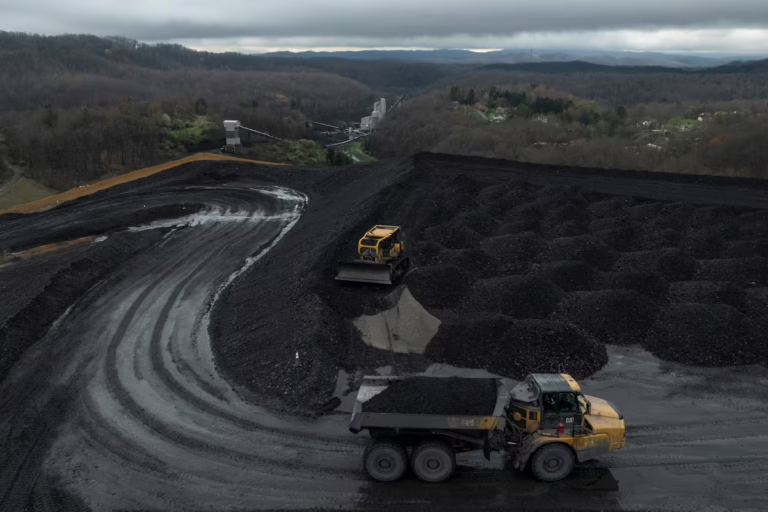
It does. I mean, look, I think that we are going to have the crisis … Let’s not forget that this is the second crisis to hit on gas. The first one was 2022, second one is 2026. I think that for many countries, it’s not going to be a third one. I mean fool me once, fool me twice, but not a third time. I think that countries are going to vote that LNG supplies are too uncertain. And I think that there’s going to be a double reaction short term. We are going to see more coal, retirements of coal plants are going to slow down. And I think that some countries that they were planning to reduce the dependency on call, that is for the short term going to abate, and I will expect that coal demand is going to be higher than we expected. And I more or less expect that more across the world, The other thing that we are going to see is that particularly solar and batteries that put together solar plus batteries are going to become even more popular.
(30:10):
And I think that we are going to see them with mass adoption in the developing world because in 2022, we started to see it, but four years later in 2026, that technology has matured a lot, the price have gone down and also the combination of solar and batteries is better understood how it can work. And I think that we are going to see a lot of that. So I will expect that we get a gas squeeze out of power generation. We see the electrification continuing, but I don’t believe that it’s going to be a decarbonization because we are going to see both coal and solar simultaneously in great demand. We may see more nuclear. The problem is nuclear is expensive, takes time. And what you can resolve with nuclear is more the problem of 10 years from now rather than the current problem. The problem with nuclear is that we always, when we hit the crisis, oh, it’s too late for nuclear because it takes 10 years.
(31:13):
And then 10 years later, we have not built the nuclear power plants that we get another problem. And it’s like, wow, we still do that. I think that I will expect some countries in the developing world will push a bit harder on nuclear.
(31:27):
India comes to mind, but is it going to really move the needle? I don’t think it’s going to move the needle as much as solar and coal are going to do.
Jason Bordoff (31:35):
Obviously on an energy podcast or an energy conference like CERA, there’s a lot of talk about oil and gas and this conflict, but the Strait of Hormuz is a critical choke point for so many other materials and metals we don’t really think too much about until something goes wrong. Just help give people a sense of how consequential this closure is for a much wider set of products.
Javier Blas (31:56):
So we have things that we don’t even think too much. I mean, the Middle East is a huge producer of aluminum or aluminum, which is very important also for the energy transition because we use it to lighten everything. So electric vehicles use a significant proportion of aluminum rather than steel just to make the vehicle lighter. Middle East benefits with abundance of energy. So you could use gas to produce electricity. And at the end of the day, aluminum is effectively electricity made metal because you need to consume a lot of power to produce a ton of aluminum. So we are losing quite a lot of production. Prices are going up. That’s going to have an impact on anything that we buy that has the gray metal, as we call it, aluminum. The Middle East is also a huge producer of sulfur, which doesn’t matter what it matters for a number of other chemical applications.
(32:51):
And even for some metallurgic application, for example, sulfur is very important for the production of copper, and we need copper for all the electrification. We need copper for all the wiring. So that is – if it continues, we may have trouble. And then the Strait of Hormuz is the top point for about one third of the world’s helium. And helium is dramatically important. It’s one of those commodities, those gases that no one really pays attention to. I don’t lose a lot of sleep and I cover commodities all the time. It’s not something that I look at the price constantly as I do with oil, but you cannot make microchips without helium. And the shortage is real. It’s a third of the world’s supply. There are supplies elsewhere, but Qatar is the world’s largest producer. Another top three producer is Russia. So effectively, we have really messed up the world’s helium supply.
(33:52):
I don’t think that it becomes a problem unless we assume that the Strait of Hormuz is going to be closed for a quarter or even longer. In which case, yes, we are going to have trouble manufacturing micro chips, but if the Strait of Hormuz was to be closed for three or more months, I think that my much bigger concern will be that the global economy is running into recession just because the price of oil will be much higher.
Jason Bordoff (34:22):
Obviously in recent years, there’s been a growing amount of conversation about the energy transition at a conference like CERAWeek. You’ve mentioned it a few times. Are you still hearing that conversation? Was there much discussion? There’s been a shift in general and obviously an energy crisis like Iran sucks a lot of oxygen out of the room, but just give us people listening a feel for what the conversation about clean energy was at CERAWeek this year.
Javier Blas (34:48):
It has taken a step back. I mean, the whole movement started around 2022 because the focus had been in recent years on affordability. Just governments try to square a triangle when it comes to energy. You have sustainability, the climate change environment, you have affordability, the price, and you don’t have reliability or security or supply. Will you get the energy that you need? In the last few years, there has been a lot of focus on sustainability on the environment, climate change. That started to shift a bit because the price of energy got very expensive after Russia, but it was not a lot of focus at that point on security of supply. The main focus was about the affordability, the price, the cost of living. I think that now the pendulum is swinging farther into the affordability and the security of supply. And I think that perhaps sustainability has taken a step back.
(35:48):
However, I think that there is a kind of turnaround or a way where the pendulum swings back into the energy transition and is that we are beginning to realize and something that we knew very well that supply chains for fossil fuels are unreliable, that from time to time we have big supply disruptions. And you do not need to rely on fossil fuels and you could rely on wind and solar and hydro and geothermal and nuclear, you may be insulated from some of these geopolitical impacts. So it has been an interesting change of pace where I think there is a lot more focus on energy security, but also with an acknowledgement that the energy transition plays a role on energy security and renewables play a role, particularly for solar, which I think is right now the most popular form of renewable energy. What I do think that has taken a step back is the conversation around net zero by 2050.
(36:55):
And I think that there is an acknowledgement across many people in policymaking that achieving that target, it’s almost practically impossible. And many people are effectively lobbying quite hard to abandon the target and provide something that they will say is more realistic, which means a delay. And obviously what we never address when we talk about a more realistic target is what that means in terms of the extra impact on climate change.
Jason Bordoff (37:25):
Do you think this will lead to significant policy change from a climate standpoint or an energy standpoint? Russia, Europe was supposed to cease the import of Russian gas by next year. Do you see big changes in energy and climate policy coming out of this in, let’s say Europe or Asia?
Javier Blas (37:44):
No, I think that in the terms of the security, I will expect that Europe will still try to continue removing fossil fuels from Russia, from his imports. I mean, Europe is still importing today, fossil fuels from Russia and paying from it, which then the Kremlin is recycling into fighting a war against Ukraine. What I do think that we will see changes is price of CO2 in Europe, most likely we are going to see the implementation of some measures to reduce the price or to provide more support to the heavy industry. I think that in Asia, we’re going to see, again, an interest of coal as an energy secure because for most countries, either they produce quite a lot of the coal that they need, say China and India, or they can import it from regional players. I mean, Japan needs to import most of the cold that it consumes, but it can import within the Asia-Pacific region going to Indonesia and Australia, and that feels a lot more secure than buying Middle East oil from countries inside the Persian Gulf.
Jason Bordoff (38:57):
And just where we are in this conflict again and where things might head, curious what you’re hearing, what you’re reporting is showing for whether we’re headed toward an off-ramp or an escalation and what might that look like in terms of the energy implications we were talking about at the start of the program?
Javier Blas (39:14):
Well, one of the executives of S&P Global, which is the company behind CERAWeek was mentioning to me that we added a bit of this irrational optimism regarding the crisis in Hormuz, because we all are kind of hoping for the best and then thinking, well, prices are not going to spike much higher and may just come down, assuming that the Strait of Hormuz is going to reopen, that the war is going to end relatively soon, because the alternative scenario that the world goes for months, perhaps forever, that the United States attacks energy facilities in Iran, Kharg Island, which is the main export terminal of Iran and other big facilities. And then Iran retaliates effectively destroying the oil fields of Saudi Arabia and the countries in the region. That is scenario is so daunting. It’s so damaging to the global economy, which I can say it personally.
(40:21):
I mean, I don’t want to think about it. I almost have this almost physical impossibility in mind that the scenario because I do know what it means in terms of energy. It means that the price of oil most likely had to start with that too, and we face serious sources of energy for months to come. Poor countries face a massive shortage of energy, the global economy goes into recession, et cetera, et cetera. So the negative scenario, the scenario where the war spirals out of control is so bad that a lot of people, including myself, perhaps, we are refusing to even to contemplate it. So we are grasping to this hope that it’s going to be quick and then prices can go down. And perhaps we are just making a huge mistake because so far all what we are seeing is escalation. The only thing I will add is, and again, you never know what the administration in Washington is really thinking.
(41:26):
At the end of the day, it all depends on what is the mind of President Trump. But I think that his advisors are very aware of the amount of energy supply that we are losing every day and that the next couple of weeks is absolutely crucial and is kind of make or break of the energy. And that even if so far it has been quite successful in talking down the market and keeping prices within historical ranges, we have not even surpassed the peaks of 2022, let alone the all time high of 2008. But I do think that people in the administration know that the risk is increasing by the day.
Jason Bordoff (42:10):
And there’s really no other kind of tools in the toolkit that would really do anything if prices really soar above $150 toward $200 and becomes a huge economic and political issue. Other than reopen the strait, I’m not sure what the administration could do about it.
Javier Blas (42:26):
I think that the administration has used all the influence that it has making verbal interventions. I think that the most effective tools have been already deployed. I mean, a farther release of the strategic petroleum reserves can be done. I will not be surprised if we see a further announcement from Japan in particular or more, because Japan is sitting on a huge, huge strategic petroleum reserve. I mean, typically countries that they are members of the international area agency held between 90 and 100 and 105 days of imports. Japan before this crisis was holding 254 days of oil imports. So Japan has a lot of stockpiles that can be mobilized. I would not be surprised if they do another, a second release, which will help, but the White House has used most of the tools that I will think that they are effective and they’re not counterproductive.
(43:28):
I mean, there is still a couple of tools that they can be used, but those come with a lot of bad things associated. And those are export bans either on crude oil or refined products where they will be very effective for a short period in depressing prices inside America, but at the cost of sending the cost of oil and refined products elsewhere, absolutely through the roof, the net impact of all of that probably will be that countries in Asia and Europe go into recession. And yes, the American economy will be insulated for a bit, but ultimately it will just succumb to also an economic meltdown.
Jason Bordoff (44:11):
China, of course, has pretty large strategic reserves, the largest in the world and hasn’t really released those as far as I’m aware. How do you think China’s thinking about all of this right now?
Javier Blas (44:22):
China is helping on a very peculiar way. I don’t think that they want to release their strategic petroleum reserves. As you say, they’re the largest in the world, larger than the United States and Japan, because I think that will be tantamount to help President Trump military, as he call it, excursion is his word of choice, some would prefer to call it. But at the same time, what China is doing is reducing refinery runs. So what effectively that means is that it’s instructing the refineries in the country to process a bit less oil, around 10%. They are not exporting refined products. They are drawing down inventories of refined products locally. The net result is that China is demanding a bit less oil from the global market, and that is reducing a bit of pressure. So China is not doing a release of the strategic inventories, but it is somehow reducing the pool of barrels from his economy.
(45:19):
So there are a few more barrels available to other countries in Asia. That will be China going full in and releasing their strategic petroleum research. That will be a very good policy tool, but that’s not available to the White House or at least not available without conversation with Beijing. And I’m sure that Beijing will be asking something in return.
Jason Bordoff (45:39):
Did easing or waving sanctions on Iranian and Russian oil have any real impact? And did that strike you as contradictory as it did to many other people?
Javier Blas (45:48):
I mean, it is not only sounds contradictory, it is contradictory. I mean, it’s just really hanging Vladimir Putin putting a huge victory. I mean, Putin was struggling to sell some of his oil. That oil was sitting on top of oil tankers on the high seas precisely because there were no buyers. And India, for example, which has been a huge buyer of Russian oil was reducing the consumption of Russian oil significantly because of the pressure of the White House. And all of a sudden, not only the pressure has gone, but India has been encouraged to buy those barrels. Barrels that before the water started Vladimir Putin was trying to sell for less than $60 a barrel. Now he’s selling then for more than $100 per barrel. So he’s making quite a lot of money. I mean, the measure have held. It has transformed several million barrels of oil that they were effectively stranded on the high seas of Russian oil into something that is akin to a flow of oil, but obviously that flow just lasts a few weeks.
(46:55):
I mean, I don’t think that that is going to be with us for more than perhaps the next couple of weeks in which we have gone through all the stock and then there is no more and then the flow immediately stock. With Iran, I’m a bit more skeptical because I think that most of that oil was going into China. The numbers that the US government have talked about of Iranian oil available, it’s all the Iranian oil that is floating on the way to China, but that’s not really available to the global market, that oil has been already purchased to China. It will be like the treasury saying that the groceries that I bought in the supermarket, while I am driving back to my home, they belong to the global oil market. I would say, “No, no, sorry, Mr. Secretary, I bought those groceries. They are just going from the supermarket into my house, but those have already an owner and a destination.” When Secretary Bessent was saying that there are millions of barrels of Iranian oil floating, well, they were floating on their way to China.
(47:58):
I think that what the easing of those sanctions was really was an act of desperation. And again, I think that Tehran read that as a sign that the administration was reaching pain level with oil. And that’s what I think that the Islamic Republic is really keeping very, very hard their grip on the Strait of Hormuz because they know that the price of oil is reaching that kind of threshold where it’s beginning to be painful for the warehouse.
Jason Bordoff (48:30):
So your view is this is production that probably would have been sold at some point. It just kind of got sold faster, and so it’s bringing supply a little quicker to help the market, but probably giving Iran and Russia a better price for it also.
Javier Blas (48:43):
Yeah, that’s a significant cause of giving both countries a much higher price. And also it is a band aid, but those barrels equal only a few days of what we are losing. I mean, there is no long-term solution to the Strait of Hormuz that is not reopening the Strait of Hormuz. It’s just so much oil. Even with all the buffers, with all the bypass pipelines, even we use the most optimistic numbers, we are losing anywhere from 10 to 15 million barrels a day, say 10, which is a very, very optimistic number. I think that we are losing more, but let’s use that round number. 10 million borrows a day, we do not have anything long term to fight against that. We have measures that can alleviate, that they can cushion buffer the crisis for days and weeks, but we do not have instruments that can alleviate that for months, certainly not quarters.
Jason Bordoff (49:43):
You mentioned earlier that the pain has sort of felt east of the Suez before west and if a lot of the physical flows from the Strait of Hormuz go east, particularly after the shale revolution brought so much supply to market. On the other hand, it’s a globally priced commodity and prices at the pump are set by that globally price commodity. So not for natural gas because we’ve already explained why it’s quite different, very low price here, a high price elsewhere. But for oil and all the products that come from it, is the US in a much, much better place today to deal with a crisis like this because it has gone from a huge importer to a huge exporter or actually you’re still exposed because it’s a global market?
Javier Blas (50:24):
Yes and no. The reason that we are just hovering around $100 oil is in part because the US has increased global production of oil significantly over the last few years. The market is better supplied. We were oversupply when the crisis started, and that means that just generally the oil market is just the availability of barrels have increased just because the US has increased production significantly. Also, the US buys less on the Middle East, which I think that politically has an impact and also the kind of the market perception, we will see a lot more trading in New York panicking if the United States was buying as much oil as it was buying 10, 20 years ago that is buying today.
Jason Bordoff (51:13):
You don’t think Trump would have been free to even do this, it sounds like.
Javier Blas (51:18):
I think that it will have been very difficult for any other president. I mean, when President Trump said that he was the only brave one to do it, I think that probably he was the only foolish one to try it, but certainly the oil market will have a stop any other White House much earlier have not the US been producing, we count all liquids more than 20 million barrels a day compared to 10 million barrels a day, only 12, 15 years ago.
(51:43):
But at the end of the day, you are absolutely right. This is a global market where a shortage of a barrel anywhere is a shortage of a barrel everywhere. The barrel is priced marginally, and that means that the United States gets impacted as much as everyone else. I just think that the way that the oil market was, we’ll see this is like the tide. It’s spreading from Asia, just going to go into Europe and the US and prices will incrementally increase as Asian refiners would typically were buying from the Middle East, they need to reach out to the Atlantic basin, to the Gulf of Mexico for supplies, and slowly they put more pressure into the market and different benchmarks react to that pressure. But ultimately, the United States, maybe the world’s largest oil producer of oil, but it was going to pay the same price as the country that doesn’t produce a single barrel of oil.
Jason Bordoff (52:45):
Wrap us up by just telling us what’s on your mind we haven’t talked about. What should we be looking for in the next column or two or three that you’re contemplating?
Javier Blas (52:55):
I think that if the crisis is not resolved, if we don’t have a ceasefire or a truce or whatever, diplomatically the three parties in the conflict can find a compromise to slow down the conflict and get some oil flow from Hormuz. I think that the next phase will be probably what I will call the phase of demand destruction. We have gone through several phases already in the conflict. I think that the first one was the margins of the disruption, the closure of the Strait of Hormuz. Then we have the policy responses, the release of the strategic petroleum reserve, the easing of the sanctions, the waivers. Then simultaneously, we have a third phase which was verbal interventions, job bonding, try to promise the market that this is going to be over soon, so no need to panic, but we are still losing millions of barrels of oil every day.
(53:55):
So demand needs to come down to a level similar to supply. We need to destroy demand, and that means that we all need to consume less. And typically the only way to achieve that is through mandate. We reduce the speed at highway, so we consume less. We go easier on the accelerator on our cars. We may use mandate, work from home one or two days a week, or only even numbers of place can drive one day a week and the others can drive another day. I mean, we implemented a lot of those measure in ’73 and ’79, and ultimately we are going to need just much higher prices to displace demand. And that typically means that poorer countries will reduce their demand much sharply than richer countries. But I think that the next phase of the crisis, if it continuous is going to be the phase of demand destruction.
Jason Bordoff (54:57):
And as we talked about earlier in the program, that demand destruction may be in some parts of the world, as I would say simple, but on a relative basis, less painful as odd even days or something like that.
Javier Blas (55:11):
Just the size of the demand destruction that we need. Let’s go back to the round number that I mentioned earlier, which I think is optimistic. Probably we are losing more supply, but let’s say that we are losing 10 million dollars a day. The size of the demand destruction that we need to do is similar to the demand that disappeared during COVID.
(55:34):
It is to reduce. It may sound that $10 million a day or 10% of global supply is not a lot, but it is a huge amount of demand destruction. I mean, when we were … I was in lockdown in London in the United Kingdom where I live, most of Europe was on lockdown, chunks of the United States, Canada, the whole of Japan, the whole of China, places in the developing world. And we only reduce global demand when we measure it on a monthly basis by about, I think at the worst point, perhaps 12, 13 million dollars a day, and that was in March, April of 2020, we will need to bring down demand almost on a similar fashion if this continues. That is the kind of effort that we need to do. And we know what it took in 2020 to reduce demand as such. And I think that’s the big concern.
(56:32):
I mean, some mandatory policies may help, but ultimately, if we need to do it the hard way via much higher prices, prices are just going to go to incredibly high levels because just to put it, so we all understand what we are talking about effectively, if we reach to that situation where we need to destroy that amount of demand, the market needs to convince me and you that we don’t take the car for several days or weeks as long as the conflict goes. And it’s how high the price of a gallon of gasoline or a literal gasoline needs to go so you don’t drive. And that’s the price.
Jason Bordoff (57:15):
And that’s the point I was getting at. You made a comment about taking your foot off the gas or something like that, and there will be those choices to make in the US or in Europe. But coming back to what we talked about earlier, it’s going to mean the fishermen who doesn’t have fuel to take their boat out and no longer has income or the farmer or businesses and factories, real economic activity shutting down.
Javier Blas (57:36):
Yes. The economic activity is going to suffer. And then we’re talking about spillovers. I mean, planting season is about to come in the United States. Diesel prices are sky high and you do not want to see farmers not planting enough or not planting the usual acreage because fuel is too expensive because then down the road, when it comes harvest time for corn and soybean in the fall, then we are not going to have the crop that we were expecting. So it’s not just the impact of not having enough fuel or having to pay a lot. It’s just going to be all the spillovers that they could have really dire consequences, not just now, but months from now.
Jason Bordoff (58:15):
Well, that is why energy matters as much as it does and why you and I find it so interesting to talk and think about it. And I always learned an enormous amount talking to you about it as I did in this hour. So thank you. And that’s why we hope there’s an off-ramp and we hope there’s a resolution to this before things get to the levels you just described. But as I said, I always just learned a huge amount having a chance to talk with you, Javier, and I appreciate your taking time from a very busy week at CERAWeek in Houston to explain it to everyone listening.
Javier Blas (58:45):
Thank you, Jason. It was my pleasure.
Jason Bordoff (58:52):
Thank you again, Javier Blas, and thanks to all of you for listening to this special edition of Columbia Energy Exchange. The show is brought to you by the Center on Global Energy Policy at Columbia University. The show’s hosted by me, Jason Bordoff, and by Bill Loveless. Mary Catherine O’Connor, Caroline Pitman, and Kyu Lee produced the show. Gregory Vilfranc engineers the show. For more information about the podcast or the Center on Global Energy Policy, please visit us online at energypolicy.columbia.edu or follow us on social media @ColumbiaUenergy. And please, if you feel in kind, give us a rating on Apple or Spotify or wherever you get your podcasts. It really helps us out. Thanks again for listening. We’ll see you next week.
Today marks the last day of CERAWeek, the annual energy industry conference sometimes described as the Davos of energy. As oil and gas CEOs and government officials gathered in Houston, efforts to broker a ceasefire in Iran failed, and US oil and gasoline prices whipsawed.
Speaking at the conference, Energy Secretary Chris Wright said that the current supply disruptions would be short term, framing rising energy costs as a trade-off for the administration’s goal of regime change in Iran. Meanwhile, some oil and gas CEOs warned of coming shortages and said the supply shock is not yet reflected in energy prices.
So, aside from a prevailing sense of instability, what are the takeaways from this year’s CERAWeek? Where is the energy crisis headed from here? What have the supply shocks changed about how the industry thinks about risk and resource planning? How are events in the Gulf affecting the renewable, coal, and nuclear energy markets? And what does it all mean for global energy security?
Today, in a special edition of Columbia Energy Exchange, Jason Bordoff talks to Bloomberg opinion columnist Javier Blas to recap the events of the past week and to discuss how oil and gas supply disruptions are reverberating across the industry.
Prior to joining Bloomberg in 2015, Javier held a number of roles at the Financial Times, including Africa editor and the commodities editor. He is also the co-author of The World for Sale: Money, Power and the Traders Who Barter the Earth’s Resources.
More Episodes
Editor’s Pick: Rajiv Shah on Delivering Universal Abundant Energy Access
Energy abundance means different things in today’s global context than it did even a decade ago. It is about expanding electricity access while meeting rising energy demand. It...
Columbia Energy Exchange Podcast
• August 25, 2026
Matthew Yglesias on Abundance and the Politics of Energy
Abundance and affordability have become buzzwords among policymakers, who often have sharply different interpretations of how to attain them. To some, an energy abundance agenda means fewer regulatory...

Luisa Palacios on Rebuilding Venezuela’s Oil Industry After the Quakes
It started last year as a pressure campaign at sea, with the United States seizing tankers as part of what President Trump called a “total and complete blockade”...

Javier Blas on Lessons from Closing Hormuz (So Far)
Over the past five months, the Strait of Hormuz has been closed for extended stretches of time, disrupting roughly 10 to 15 million barrels of oil supply each...

Relevant
Publications
The Long Shadow of the Iran Shock
By almost any measure, the world should be suffering a far more severe energy crisis.

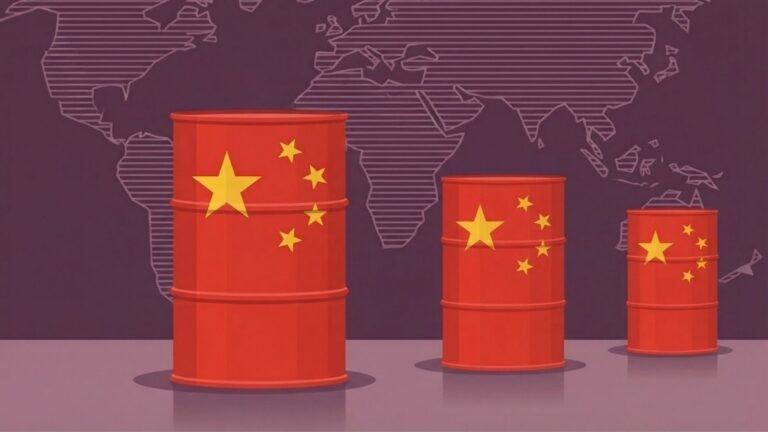
How China Is Managing Lower Oil Imports
The ongoing disruption of oil exports through the Strait of Hormuz has caused a substantial decline in China's crude oil imports.