This website uses cookies as well as similar tools and technologies to understand visitors’ experiences. By continuing to use this website, you consent to Columbia University’s usage of cookies and similar technologies, in accordance with the Columbia University Website Cookie Notice.
Energy Explained
Get the latest as our experts share their insights on global energy policy.
G7 Progress on Critical Minerals Diversification Overlooks Demand Side
This Energy Explained post represents the research and views of the author(s). It does not necessarily represent the views of the Center on Global Energy Policy. The piece...
Podcasts
Hear in-depth conversations with the world’s top energy and climate leaders from government, business, academia, and civil society.
Michael Cembalest Does the Math on the Energy Transition
The energy transition is in the midst of its own transition. Spiking electricity demand and geopolitical events are driving up energy prices, while debates over the best sources...
Events
Find out more about our upcoming and past events.
June 25, 2026
• 11:30 am - 12:30 pm
est
The Cost of Power: Rising Electricity Prices, AI, and the Grid
This event will take place in-person in Washington DC, at the Rayburn House Office Building, Room 2168 (Gold Room). Advance registration is required. Announcing New Columbia University Publications...
Event
• Rayburn House Office Building, Room 2168 (Gold Room)
Washington, D.C.
Washington, D.C.
The Fracking Debate:The Risks, Benefits, and Uncertainties of the Shale Revolution Over roughly the past decade, oil and gas production in the United States has surged dramatically—thanks largely to technological advances such as high-volume hydraulic fracturing, more commonly known as “fracking.” This rapid increase has generated widespread debate, with proponents touting economic and energy-security benefits and opponents highlighting the environmental and social risks of increased oil and gas production. Despite the heated debate, neither side has a monopoly on the facts. In this book, Daniel Raimi gives a balanced and accessible view of oil and gas development, clearly and thoroughly explaining the key issues surrounding the shale revolution. The Fracking Debate directly addresses the most common questions and concerns associated with fracking: What is fracking? Does fracking pollute the water supply? Will fracking make the United States energy independent? Does fracking cause earthquakes? How is fracking regulated? Is fracking good for the economy? Coupling a deep understanding of the scholarly research with lessons from his travels to every major U.S. oil- and gas-producing region, Raimi highlights stories of the people and communities affected by the shale revolution, for better and for worse. The Fracking Debate provides the evidence and context that have so frequently been missing from the national discussion of the future of oil and gas production, offering readers the tools to make sense of this critical issue. *** Read Daniel’s op-ed in The Hill: Fracking comes with risks, but it can benefit the economy — and the environment Read Daniel’s Q&A in the Houston Chronicle: Q&A: On balance, shale revolution has been a benefit, author says |
Relevant
Publications
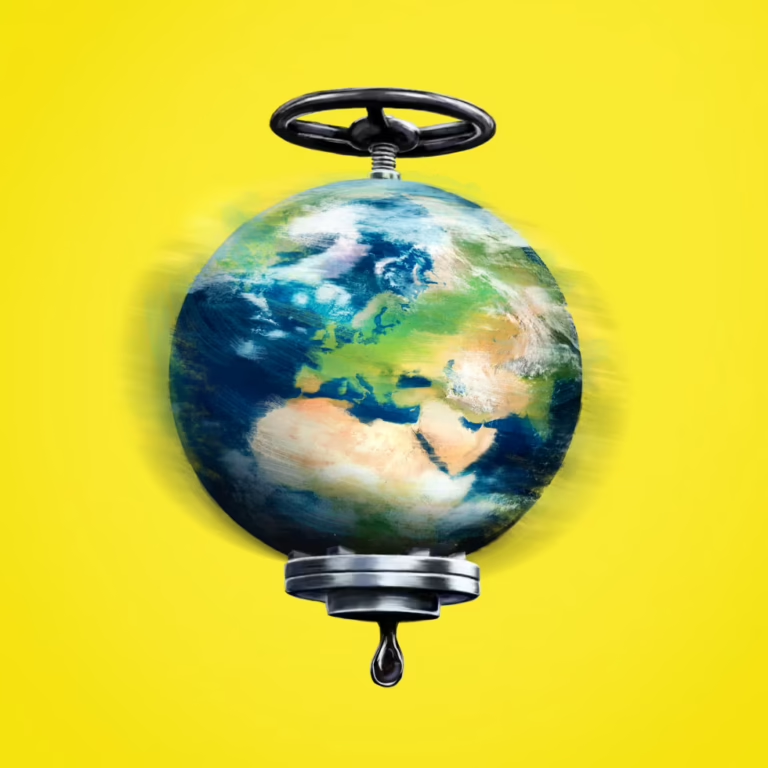
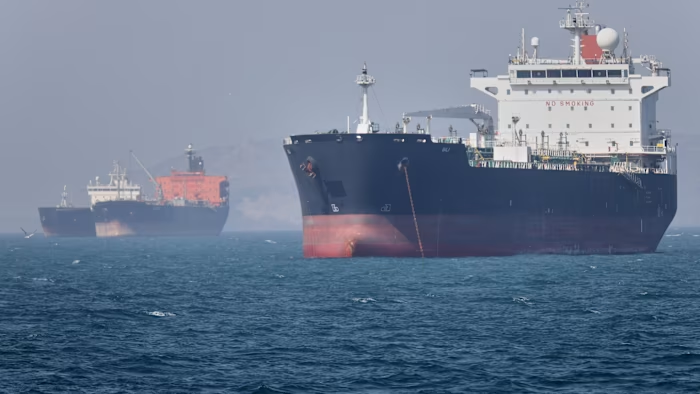
If OPEC Falls Apart, It’ll Cost Us All
The White House declared last week that President Trump finally "broke OPEC" after the United Arab Emirates withdrew from the cartel.